
Process for production of ethyl acetate
The novel process for producing ethyl acetate from ethanol through dehydrogenation and selective hydrogenation, combined with pressure swing adsorption, addresses the challenges of byproduct formation and separation, achieving high purity and economic viability.
Patent Information
- Application Number
- PCT/US2024/047914
- Authority / Receiving Office
- WO · WO
- Patent Type
- Applications
- Current Assignee / Owner
- Priority Date
- 2023-09-26
- Filing Date
- 2024-09-23
- Publication Date
- 2025-04-03
AI Technical Summary
Existing processes for producing ethyl acetate face challenges such as byproduct formation, separation constraints for achieving desired product purity, and the need for multiple raw materials, which affect economic viability and environmental impact.
A novel process that converts ethanol to ethyl acetate through dehydrogenation, followed by selective hydrogenation of byproducts to facilitate easier separation, and utilizes pressure swing adsorption to minimize water content and protect the catalyst.
This process achieves high purity ethyl acetate (>99.5 wt%) with reduced catalyst deactivation and lower costs by simplifying raw material handling and minimizing byproduct formation, thereby enhancing economic viability and environmental sustainability.
Smart Images
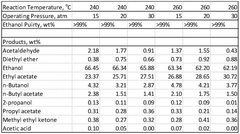
Figure IMGF000016_0001 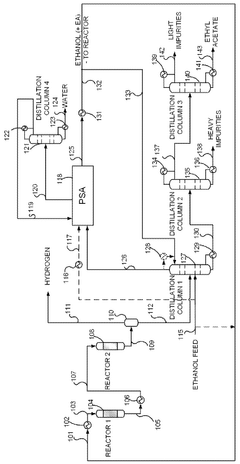
Figure 00000023_0000 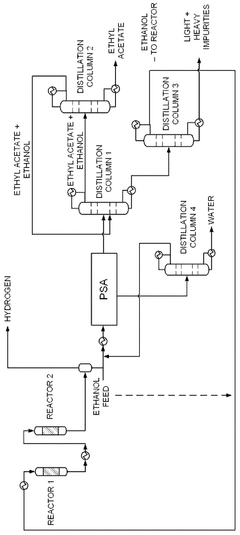
Figure 00000024_0000
Abstract
Description
PROCESS FOR PRODUCTION OF ETHYL ACETATECROSS-REFERENCE TO RELATED APPLICATIONS
[0001] This application claims priority to and the benefit of U.S. Provisional Application No. 63 / 585,276 filed on September 26, 2023, and entitled, “Process for Production of Ethyl Acetate,” which is incorporated herein by reference in its entirety.STATEMENT REGARDING GOVERNMENTALLY SPONSORED RESEARCH OR DEVELOPMENT
[0002] None.BACKGROUND OF THE INVENTIONThe following discussion is provided solely to assist the understanding of the reader, and does not constitute an admission that any of the information discussed or references cited constitute prior art to the present invention.
[0003] Several options have been studied in the production of ethyl acetate, which is a critical bulk chemical used as a solvent and diluent. However, factors such as byproduct formation, separation constraints to obtain desired product purity and the ease of availability of feedstock, all dictate the viability of the process. This invention aims to achieve all the above desired characteristics in a single process.
[0004] Based on the availability of feedstock, production of ethyl acetate can be from either ethanol, acetaldehyde or acetic acid, or a mixture of two. When ethanol and acetic acid are both readily available as feedstock, ethanol can be esterified with acetic acid to produce ethyl acetate, by the conventional esterification process of ethanol and acetic acid to ethyl acetate and water (CH3CH2OH + CH3COOH CH3COOCH2CH3+ H2O). This is reaction catalyzed by an acidic catalyst. Product ethyl acetate, unreacted reactants and by-products are separated distillation. Acetic acid is produced using fossil-based resources such as coal and natural gas and thereby release carbon dioxide, a greenhouse gas into the air. The disadvantage of the esterification reaction is that it requires two raw materials (acetic acid and ethanol) and the associated storage or production facilities, which may make it economically less viable. Biologically derived ethanol or acetaldehyde, or a mixture of both can instead be used to produce ethyl acetate by dehydrogenating ethanol that produces hydrogen as a byproduct. Ethylacetate can be produced from acetaldehyde according to the Tischenko reaction (2CH3CHO CH3COOCH2CH3). Alternately, ethanol can also react with acetaldehyde to produce ethyl acetate and hydrogen. Oxidation of ethanol is another alternate route to manufacture ethyl acetate over precious metal catalysts. However, the high cost of the catalyst and the costly separation of water from the product stream (due to azeotropes) also makes this process uneconomical. Similarly, the Tischenko reaction to produce ethyl acetate by dimerizing acetaldehyde is slightly more tedious due to lack of acetaldehyde availability and its toxicity.
[0005] Conversion of ethanol to ethyl acetate via acetaldehyde by Tischenko reaction using a copper catalyst is described by K. Takeshita in the Bulletin of the Chemical Society of Japan, (1978) vol. 51(9), pp 2622-2627.
[0006] Oxidation of alcohols can also be used to generate ethyl acetate. U.S. Pat. No. 4,996,007 describes a process for the oxidation of primary alcohols (1-dodecanol) using ethylene oxide, with a suitable catalyst selected from ruthenium, rhodium, platinum, palladium, rhenium and their mixtures. U.S. Pat. No. 5,334,751 describes production of ethyl acetate by reaction of ethanol and oxygen in the presence of a palladium catalyst that contains crystalline TiP2O7. U.S. Pat. No. 5,770,761 describes oxidation of ethanol to acetic acid (CH3CH2OH + O2CH3COOH + H2O), and subsequent reaction of the two to generate ethyl acetate in the presence of a noble metal catalyst on a hydrophobic support.
[0007] Another route for ethyl acetate generation, is that of catalyzed dehydrogenation of ethanol. U.S. Pat. No. 4,220,803 describes the coproduction of acetaldehyde and acetic acid by dehydrogenation of ethanol, catalyzed by copper oxide. U.S. Pat. No. 4,052,424 describes a silver-cadmium alloy catalyzed reaction of a primary alkanol in the vapor phase to produce alkyl alkanoate esters. Other dehydrogenation processes also use a vapor phase process using a reduced-metal catalyst with an activator such as zinc, magnesium or uranium oxide wherein the gas-vapor byproduct hydrogen is also partially removed and recycled. Alcohol and aldehyde can also be dehydrogenated together to generate an ester according to U.S. Pat. No. 4,440,946 using a silver-cadmium-zinc-zirconium catalyst, whereas U.S. Pat. No. 8,680,317 describes a process for hydrogenating acetic acid to form ethyl acetate. Depending on the catalyst and process conditions employed, the hydrogenation reaction may produce ethanol in addition to ethyl acetate.
[0008] Separation to obtain pure ethyl acetate product depends on the unreacted reactants as well as byproducts formed in the process. The presence of azeotropes between ethanol, ethyl acetate and water make the separation difficult. Extractive distillation with an extractive agent comprising polyethylene glycol, dipropylene glycol, diethylene glycol, or triethylene glycol as described in U.S. Pat. No. 4,569,726, or with an extractive agent containing dimethyl sulphoxide as described in U.S. Pat. No. 4,379,028, can be used to separate them. Azeotropic distillation can also be used for the separation of ethyl acetate from the above mixture by utilizing the two-phase nature of the azeotropes with water as disclosed in JP-A-05 / 186392.
[0009] When monocarboxylate esters are produced from olefins by carbonylation, byproducts aldehydes and acetals are formed as indicated in EP-A-0331021. A further treatment with an acidic agent is used to convert the byproducts to ethers and aldols, that are further hydrogenated at elevated temperatures to byproducts that are easily separated (EP-A-0101910).
[0010] U.S. Pat. No. 8,558,025B2 describes the use of reactive distillation to produce high purity ethyl acetate in the presence of a heterogeneous catalyst, by dehydrogenation of ethanol wherein hydrogen gas is removed at the top of the column. Ethyl acetate is continuously removed from the bottom of the column as a liquid bottoms product. Contaminating byproducts present following reaction of the ethanol over the dehydrogenation catalyst can be reacted over a suitable hydrogenation catalyst in the lower part of the column or in a separate hydrogenation reactor. The hydrogenation can convert difficult to separate by-products into species which are easier to separate from the ethyl acetate. Consequently, the process can also include purifying the ethyl acetate by distilling out resulting hydrogenated by-products.SUMMARY OF THE INVENTION
[0011] The desired product, ethyl acetate, is a precursor for many products even though ethanol is available in sufficient quantity. Additionally, if a more novel route can be designed to produce ethyl acetate from ethanol directly, a separate acetic acid or acetaldehyde plant would not be necessary, and a more valuable precursor would be available. This would not only cut down the costs, it would also simplify the number of raw materials handled, and thus the process itself. The product purity of desired ethyl acetate, however, is required to be high. This application describes a process that provides a simpler method of achieving that desired high purity by reacting the by-products of the reaction mixture that are close in boiling points and azeotrope-forming with other components in the mixture. The by-products in the reaction product mixture may comprise of esters, alcohols, aldehydes, and ketones and may be generated either by the dehydrogenation reaction or be present in the ethanol feed. The high product purity desired of ethyl acetate, also requires the water content to be extremely low level in the product. Water is produced in the side-reactions to aldehydes and ketones or may also be present in the feed ethanol. However, the water is damaging to the dehydrogenation catalyst and needs to be removed prior to the reaction. This application seeks to solve both these problems with improvement in the process.
[0012] The present invention seeks to provide a novel process for production of ethyl acetate from ethanol, enabling production of ethyl acetate at a relatively low cost, with a readily available feedstock, without the need for another costly process for a second reactant. Another objective of the present invention is to provide an improved process to produce high purity ethyl acetate from ethanol, with fewer impurities, by hydrogenating the impurities to byproducts that can be more easily separated out. A further objective is to minimize the presence of impurity water prior to the reaction to minimize catalyst deactivation.BRIEF DESCRIPTION OF THE DRAWINGSFor a detailed description of the preferred embodiments of the invention, reference will now be made to the accompanying drawings in which:
[0013] Figure 1 illustrates a process flow diagram showing an overall process according to some embodiments.
[0014] Figure 2 illustrates a process flow diagram showing an overall process according to some embodiments.
[0015] Figure 3 illustrates a process flow diagram showing an overall process according to some embodiments.
[0016] Figure 4 illustrates the conversion of 2-butanone (or MEK) over time without addition of excess hydrogen.DESCRIPTION
[0001] As used herein, the terms “pressure swing adsorption” may be abbreviated “PSA”, “boiling point” may be abbreviated “b.p ”, “degrees Celsius” may be abbreviated “°C”, “percent” may be abbreviated “%”, “weight” may be abbreviated “wt”, “atmospheres” may be abbreviated “atm”, “example” may be abbreviated as “e.g ”, “liquid hourly space velocity” may be abbreviated “LHSV”, and “per hour” may be abbreviated “h"1”.
[0017] According to the present invention a process for conversion of ethanol to ethyl acetate is described which comprises: a. converting ethanol into ethyl acetate using dehydrogenation while reducing the formation of acetaldehyde and other byproducts; b. directly passing product stream from the dehydrogenation reactor containing ethanol, ethyl acetate, hydrogen and byproducts into a cooler to reduce stream temperature; c. sending the cooled stream with no additional feed additions into a hydrogenation reactor where byproducts comprising ketones and aldehydes are selectively converted to corresponding alcohols; d. removing unconverted hydrogen from the hydrogenation reactor products; e. using distillation to produce a first composition comprising ethanol, ethyl acetate and water and a second composition comprising substantial portion of ethyl acetate and byproducts comprising butanols and butyl acetate; f. purifying the second composition in step (e) using distillation to produce high purity ethyl acetate. g. using pressure swing adsorption to remove additional water from the first composition in step (e) before recycling the effluent to the dehydrogenation reactor after dehydration;
[0018] Reactions from the process are as follows:2CH3CH2OH CH3COOCH2CH3+ 2H2. (1)CH3CH2OH CH3CHO + H2. (2)2CH3CHO CH3COOCH2CH3. (3)CH3CH2OH + CH3CHO CH3COOCH2CH3+ H2. (4)2CH3CH2OH CH3COCH2CH3+ H2O + H2. (5)2CH3CH2OH CH3CH2CH2CHO + H2O + H2. (6)CH3COCH2CH3+ H2^ CH3CH(OH CH2CH3. (7)CH3CH2CH2CHO + H2^ CH3CH2CH2CH2OH . (8)CH3CH OH)CH2CH3+ CH3COOCH2CH3CH3COOCH3CH2CH2CH2+ CH3CH2OH . (9)2CH3CH2OH CH3CH2OCH2CH3+ H20 . (10)Reaction 1 is dehydrogenation of ethanol to ethyl acetateReaction 2 is dehydrogenation of ethanol to acetaldehydeReaction 3 is Tischenko reaction of acetaldehyde to ethyl acetateReaction 4 is dehydrogenation reaction of ethanol and acetaldehyde to ethyl acetateReaction 5,6 are dehydration and dehydrogenation of ethanol to 2-butanone and n- butyraldehydeReaction 7,8 are hydrogenation of 2-butanone and n-butyraldehyde to 2-butanol and n- butanolReaction 9 is the transesterification reaction of 2-butanol and ethyl acetate to give butyl acetate and ethanolReaction 10 is dehydration of ethanol to diethyl ether
[0019] In step (a) of the process of the invention the ethanol feedstock is converted to ethyl acetate by dehydrogenation as shown by Reaction 1, while minimizing the acetaldehyde formation (by Reaction 2). Acetaldehyde can also produce ethyl acetate by Tischenko reaction (Reaction 3) and ethyl acetate on further reaction with ethanol (Reaction 4). The main byproducts of the ethanol dehydrogenation reaction are 2-butanone (b.p. 79.6°C) and n- butyraldehyde (b.p. 75.7°C) (Reactions 5, 6) which are close-boiling to ethyl acetate (b.p. 77.1 °C) and are difficult to separate. Such by-products are not produced during production of ethyl acetate by esterification of ethanol with acetic acid. In the further step (e) of this invention, byproducts 2-butanol (b.p. 100°C) (formed by Reactions 7, 8) and butyl acetate (b.p. 126°C) (formed by Reaction 9) are then removed as heavies by separation.
[0020] In further embodiments of this invention, the source of ethanol feedstock also determines the separation process and placement of the feed. Whether the ethanol feedstock is a product of fermentation of a carbohydrate source, or produced from syngas or ethylene, it may contain, besides ethanol, minor amounts of water and impurities formed as by-products during the ethanol formation reaction. In order to avoid the impurities either getting dehydrogenated to form additional byproducts or degrade the catalyst performance, it is prudent that depending on the composition and quality of the fresh ethanol feed impurities they may be removed first via distillation. If the ethanol feed contains heavy impurities, which are also known to severely degrade the catalyst performance and lifetime, heavy impurities are recovered in the bottoms product and subsequently purged from the process. If water, but no heavy impurities, are present in the fresh ethanol feed, then it can be vaporized and combined with the vapor feed and removed via pressure swing adsorption. Finally, if the fresh ethanol feed is free of any heavy impurities and the water content is < 0.2 wt%, then the fresh feed may be directly fed to the reactor along with the ethanol recycle from separation. The process defined in this invention aims to achieve a high product purity (99.5wt% or greater).
[0021] Impurities present in the ethanol feedstock may include, heavier alcohols (such as propanols or butanols), ethers (diethyl or diisopropyl ether), esters (isopropyl or butyl acetate) and ketones (acetone, 2-butanone, or 2-pentanone). A very high purity ethyl acetate product is impaired by the presence of these impurities, even when they are present in low amounts, because they have boiling points or form close-boiling azeotropes.
[0022] In another embodiment of this invention, vapor-phased dehydrogenation reaction of ethanol to ethyl acetate is conducted in the first reactor at a temperature of 200-300°C, preferably at a temperature of 240-270°C.
[0023] The dehydrogenation catalyst comprises copper, chromium, manganese, aluminium, zinc, nickel, zirconium or a combination of two or more of these metals. Preferred catalysts comprise copper, zirconium, chromium and aluminium supported on alumina or silica.
[0024] In another embodiment of this invention, ethanol liquid hourly space velocity (LHSV) of about 0.5 hr-1 to about 1.5 hr-1 is desired in the dehydrogenation reactor.
[0025] Products from the dehydrogenation reactor containing ethanol, ethyl acetate, hydrogenand byproducts are then cooled in step (b) to reduce stream temperature prior to passing into the selective hydrogenation reaction in the further step (c) of this invention, where byproducts 2-butanone and n-butyraldehyde are hydrogenated to 2-butanol (b.p. 100°C) and n-butanol (b.p. 117.7°C). In this embodiment of the invention, vapor-phased hydrogenation reaction of byproducts 2-butanone and n-butyraldehyde to 2-butanol and n-butanol is conducted in a second reactor at a temperature of 80-200°C, preferably at a temperature of 100-135°C.
[0026] Suitable heterogeneous catalysts for selectively hydrogenating impurities in step (c) of the process of the invention but relatively poor at hydrogenating ethyl acetate are chosen. These comprise of metals nickel, palladium, platinum, ruthenium, rhodium and rhenium. These are supported on carbon, alumina or silica. Preferred catalyst includes nickel supported on alumina with weight of nickel greater than 20wt%.
[0027] The selective hydrogenation reaction uses a stoichiometric excess of hydrogen, with a reaction product mixture to hydrogen molar ratio about 1 : 1 to 50: 1.
[0028] In both the hydrogenation and dehydrogenation reactors in this invention, the desired pressure of operation is in the range of 10-50atm, with a preferred range of 15-30atm.
[0029] The effluent from the hydrogenation reactor is subsequently phase separated to yield a hydrogen rich vapor stream in step (d) and a liquid stream comprising ethanol, ethyl acetate, water and byproducts. The reactor effluent may be cooled prior to phase separation. The hydrogen rich vapor stream leaving the phase separator can be used either as fuel for the process, or can be further purified to produce a high purity hydrogen product.
[0030] In another embodiment, the hydrogenation reactor (second reactor) effluent may be cooled prior to phase separation (not shown in Figure 1).
[0031] In another embodiment (not shown in Figure 1), the dehydrogenation reactor (first reactor) effluent is phased separated to yield a vapor comprising primarily hydrogen and a liquid stream comprising ethanol, ethyl acetate, 2-butanone and water. In this configuration, the liquid stream, and a fraction of the vapor stream are fed to Reactor 2, where 2-butanone is hydrogenated in the presence of a second catalyst. The vapor stream leaving Reactor 2, comprises primarily hydrogen, is combined with the vapor stream from the separator.
[0032] The liquid hourly space velocity (LHSV) for the selective byproduct hydrogenation is from about 0.1 hr-1 to about 1.0 hr-1.
[0033] Step (d) of the process of the present invention comprises recovering from the selective hydrogenation zone a selectively hydrogenated reaction product mixture comprising ethyl acetate, ethanol, hydrogen and hydrogenated by-products. Typically, this includes a condensation step in order to separate liquefiable materials from a gaseous stream containing unreacted hydrogen which can be recycled for dehydrogenation or for selective hydrogenation.
[0034] In a further embodiment of the invention, effluent from the hydrogenation reactor after phase separation is sent to a distillation column where it produces a first vapor distillate composition in step (e), containing ethanol, ethyl acetate and water (typically in the form of a minimum boiling azeotrope) while a second composition of product ethyl acetate, and light and heavy impurities is recovered in the bottom product of the column. This separation is carried out at a high pressure (> 15 atm, preferably about 25 atm). In another embodiment of this invention, the pressure and temperature of the vapor product from the first distillation column may be reduced to those required for the downstream PSA (Pressure Swing Adsorption) system, and the stream is then sent to a conventional PSA system, where water is adsorbed on a mole sieve.
[0035] The effluent from the PSA system is a vapor comprising ethanol and ethyl acetate, with a water composition < 0.2 wt%. This stream is condensed, and a fraction of the subsequent stream may be used as reflux for the distillation column in step (e). Note that this reflux stream may be the entire reflux for this column, or just a fraction of the reflux, with the rest of the required reflux provided using a partial condenser. It is also possible that the entire reflux for the distillation column in step (e) is provided by the partial condenser. The remainder of the condensed liquid stream in step (g) from the PSA is recycled to the dehydrogenation reactor.
[0036] Purifying the second composition in step (e) using distillation in a subsequent second distillation column in step (f), where the ethyl acetate, along with the light impurities, including any residual ethanol, is recovered as the distillate product, and the heavy impurities are removed in the bottoms product, and purged from the process. The maximum operating pressure for this column is about 8atm, with a preferred operating pressure of about 1 atm.The distillate from the above second column is further purified in a third distillation column, where any light impurity along with any residual ethanol (which may not have been recovered in the first column, or may have formed in the subsequent distillation columns) and water, are removed in the distillate and purged from the process. A high purity ethyl acetate product is recovered as either the bottoms product, or as a side stream product from the bottom section of the third distillation column. The maximum operating pressure for this column is about 8 atm, with a preferred operating pressure of about latm.
[0037] In another embodiment of this invention, depending on the composition and quantity of the light and / or heavy impurities, it may be possible to combine the second and third distillation columns into a single distillation column, and recover high purity ethyl acetate as a side stream product (not shown in the figure).
[0038] In another embodiment of this invention, depending on the composition and quality of the fresh ethanol feed it may be fed to either the first distillation column (to remove the impurities prior to the reactor to prevent the impurities, especially the heavy impurities, from degrading the catalyst performance); vaporized and combined with feed to the PSA (to remove the water prior to the reactor); or combined with the recycle to the reactor (if the fresh ethanol feed is free of any heavy impurities and the water content is < 0.2 wt%).
[0039] The water that is adsorbed in the PSA system in step (g) can be desorbed by reducing the pressure and using a fraction of the dehydrated ethanol and ethyl acetate stream. Water from this stream is recovered as the bottoms product of a fourth distillation column, and purged from the process. The distillate from this column comprises ethanol, ethyl acetate and small amounts of water (due to the presence of the ethanol -water azeotrope and the subsequent distillation boundary). This stream is recycled to the PSA unit. The effluent from the PSA system is a vapor comprising ethanol and ethyl acetate, with a water composition < 0.2 wt% which is then recycled partially back to the reactor and partially as reflux to the first distillation column. The operating pressure for the fourth distillation column is between latm and lOatm.
[0040] In the flowsheet in Figure 1, the heavy impurities are removed first, followed by the light impurities (i.e., an indirect sequence). In another embodiment, the order of the separations could be reversed, with the light impurities removed as the distillate in first column, the heavy impurities removed as the bottoms product in the second distillationcolumn, and high purity ethyl acetate recovered as the distillate from the second column (i.e., the direct sequence). The only potential issue with this sequence is that the heavy impurities (depending on the species present) can potentially react with ethyl acetate to form ethanol and / or other light impurities, which would then subsequently end up in the ethyl acetate product. Depending on the extent of this reaction, the presence of ethanol and / or light impurities may result in the ethyl acetate product not meeting the desired specifications. In that case, depending on the composition of these species, high purity ethyl acetate may be recovered either as a side stream product from the second distillation column, or as the bottoms product from an additional third distillation column.
[0041] In the flowsheet in Figure 2, the liquid effluent from the byproduct hydrogenation reactor is vaporized and sent directly to a PSA system, where water is adsorbed on a mole sieve. The effluent from the PSA system is a vapor comprising ethanol and ethyl acetate with water composition less than 0.2wt %. Fresh ethanol containing water can also be directly sent to the PSA before the ethanol is reacted in the first reactor. The dehydrated vapor effluent from the PSA is sent to the first distillation column to yield a distillate product comprising ethanol and ethyl acetate, and a bottoms product comprising ethanol, light and heavy impurities. This separation is carried out at a pressure less than 15 atm. The distillate from the first column goes to a second distillation column where high purity ethyl acetate product is recovered as a bottoms product (as shown in Figure 2) or as a side stream product from the bottom section of the column (not shown in the figure). The distillate from the second distillation column comprises ethanol and ethyl acetate, and is recycled, either as a liquid or a vapor stream, to the first distillation column. In this configuration, the operating pressure for the second distillation column, must be greater than the operating pressure for the first distillation column. The bottoms product from the first distillation column goes to a third distillation column, where it is separated to yield a distillate comprising ethanol and a bottoms product comprising heavy impurities. The bottoms stream is purged from the process, while the distillate is recycled to the dehydrogenation reactor vaporizer. The adsorbed water in the PSA system can be desorbed by reducing the pressure and using a fraction of the dehydrated ethanol stream. This stream then goes to fourth distillation column, where water is recovered as the bottoms product and purged from the process. The distillate from this column comprises ethanol, ethyl acetate and small amounts of water (due to the presence of the ethanol-water azeotrope and the subsequent distillation boundary). This stream is recycled to the PSA unit. The operating pressure for this column is betweenlatm and lOatm.
[0042] In the flowsheet in Figure 3, the liquid effluent from the reactor is sent to a first distillation column, where the distillate product comprises ethanol, ethyl acetate and water, whereas the bottoms product comprises ethanol and light and heavy impurities. This separation is carried out at a pressure of less than 15atm pressure. Fresh ethanol (which may contain extra water or impurities) is sent to this distillation column. The distillate from the first distillation column goes to the second distillation column where high purity ethyl acetate is recovered either as the bottoms product (as shown in Figure 3) or as a side stream product from the bottom section of the column (not shown in the figure). A stream comprising ethanol, water and ethyl acetate is recovered as a vapor distillate product. The operating pressure for the second distillation column must be greater than the operating pressure for the first distillation column as well as the operating pressure for the PSA process. The pressure and temperature of the vapor product from the second distillation column may be reduced to those required for PSA, and the stream is then sent to a conventional PSA system, where water is adsorbed on a mole sieve. The effluent from the PSA system is a vapor comprising ethanol and ethyl acetate, with a water composition < 0.2 wt%. A fraction of this vapor stream may be condensed and used as reflux for the second distillation column. Note that this reflux stream may be the entire reflux for the second distillation column, or just a fraction of the reflux, with the rest of the required reflux provided using a partial condenser. The remainder of the dehydrated vapor stream from the PSA unit is recycled to the first distillation column. The bottoms product from the first distillation column goes to the third distillation column, where it is separated, via distillation, to yield a distillate comprising ethanol and a bottoms product comprising heavy impurities. The bottoms stream is purged from the process, while the distillate is recycled to the dehydrogenation reactor vaporizer. In an alternative configuration (not shown in this Figure), the third distillation column is operated at a pressure greater that the operating pressure of the dehydrogenation reactor. At these conditions, the heavy impurities are recovered as the bottoms product, the distillate comprises ethanol, while an ethanol rich recycle stream is recovered as a side vapor product from the top section of the column. In this scenario, the vapor side product is heated to about the first reactor temperature, and recycled to the first reactor. The adsorbed water in the PSA system can be desorbed by reducing the pressure and using a fraction of the dehydrated ethanol and ethyl acetate stream. This stream then goes to the fourth distillation column, where water is recovered as the bottoms product and purged from the process. The distillatefrom this column comprises ethanol, ethyl acetate and small amounts of water (due to the presence of the ethanol-water azeotrope and the subsequent distillation boundary). This stream is recycled to the PSA unit. The operating pressure for this column is between latm and lOatm.EXAMPLES
[0043] The disclosure having been generally described, the following examples are given as particular embodiments of the disclosure and to demonstrate the practice and advantages thereof. It is understood that the examples are given by way of illustration and are not intended to limit the specification or the claims in any manner.EXAMPLE 1
[0044] In the first example, catalyst performance for the dehydrogenation of ethanol was investigated using a fixed bed reactor. The reactor was constructed using stainless steel and heated brass block was used around the reactor to maintain reaction temperature as the reaction is endothermic. Pelletized copper oxide catalyst was first reduced at a temperature of 200°C and atmospheric pressure. The ethanol dehydrogenation test was conducted at a pressure of 20 atm and the reactor temperature was varied between 240°C and 260°C.Ethanol was fed using a HPLC pump and vaporized inside the reactor before contacting the catalyst. Reaction Table 1 shows the performance of the catalyst over changing temperature and pressure.Table 1EXAMPLE 2
[0045] In the second example the selective hydrogenation of aldehydes and ketones, andparticularly 2-butanone (or MEK) was determined using a hydrogenation reactor. The reactor was constructed out of stainless steel and designed for high pressure operations. The feed to the hydrogenation reactor consisted of the outlet of the dehydrogenation reaction described in above first example. No additional hydrogen was added to the hydrogenation reactor and the hydrogenation is carried out exclusively using the hydrogen that was generated in the dehydrogenation reaction. The reactor was maintained at 110°C by using an electric band heater to overcome heat losses. The reactor was filled with 50 g of supported Ni catalyst and pressure of 15 atm was maintained using a backpressure regulator. The catalyst was fully reduced using hydrogen before the hydrogenation reaction was conducted. An LHSV of Ihr- 1 was utilized during the test. The reaction product was cooled and condensed before GC analysis. Figure 4 shows the conversion of 2-butanone (or MEK) over time.EXAMPLE 3
[0046] As seen in Figure 1, an ethanol stream (101), comprising primarily ethanol and ethyl acetate, is vaporized (131) and superheated (102), and then sent to Reactor 1 (104), where it dehydrogenates in the presence of a heterogeneous catalyst to form primarily ethyl acetate and hydrogen. In addition, the reaction also forms small amounts of water, light impurities (e.g. 2- propanol) and heavy impurities (e.g., 2-butanol). The reactor operates at a temperature of 240°C, at a pressure of 30 atm. This is an endothermic reaction, and can be carried out in either an isothermal reactor with heating or in a series of adiabatic reactors with heating between the reactors. The reaction in Reactor 1 also forms a small amount of 2-butanone (also called methyl ethyl ketone, MEK).
[0047] The stream (105) leaving Reactor 1 is cooled to about 120°C in cooler (106) and the resulting two-phase mixture is fed to Reactor 2 in stream (107), where 2-butanone is hydrogenated in the presence of a selective hydrogenation catalyst. The effluent (109) from Reactor 2 is subsequently phase separated to yield a hydrogen rich vapor stream (111) and a liquid stream (112) comprising ethanol, ethyl acetate, and water. The hydrogen rich vapor stream (111) leaves the phase separator.
[0048] The liquid stream (112) from Reactor 2 is sent to a separation system, where it is separated to yield a high purity ethyl acetate product, an ethanol recycle stream containing <0.2 wt% water, a water purge, and one or more organic purge streams comprising the light and heavy impurities. The separation system for this flowsheet comprises a series of distillation columns and a pressure swing adsorption (PSA) system.
[0049] The liquid effluent (112) from Reactor 2 is fed to Distillation Column 1, where ethanol and water, along with some ethyl acetate, is recovered as a vapor distillate product (126), while ethyl acetate and the light and heavy impurities are recovered in the bottom product (130). This separation is carried out at a high pressure (> 15 atm, preferred at 25 atm). The vapor stream (126) is then sent to a conventional PSA system (118), where water is adsorbed on a mole sieve. The effluent from the PSA system is a vapor (125) comprising ethanol and ethyl acetate, with a water composition < 0.2 wt%. This stream is condensed, and a fraction of the subsequent stream (133) may be used as reflux for Distillation Column 1. Note that this reflux stream may be the entire reflux for Distillation Column 1, or just a fraction of the reflux, with the rest of the required reflux provided using a partial condenser. It is also possible that the entire reflux for Distillation Column 1 is provided by the partial condenser (128). The remainder of the condensed liquid stream (101) from the PSA is recycled to Reactor 1.
[0050] The bottoms product (130) from Distillation Column 1 goes to Distillation Column 2, where the ethyl acetate, along with the light impurities, including any residual ethanol, is recovered as the distillate product (137), and the heavy impurities are removed in the bottoms product (138), and purged from the process. The operating pressure for this column is about 1 atm.
[0051] The distillate (137) from Distillation Column 2 goes to Distillation Column 3, where any light impurity along with any residual ethanol (which may not have been recovered in Distillation Column 1, or may have formed in Distillation Column 2 and / or Distillation Column 3) and water are removed in the distillate and purged from the process (142). A high purity ethyl acetate product (143) is recovered as either the bottoms product, or as a side stream product from the bottom section of this column. The operating pressure for this column is about latm.
[0052] In the embodiment shown in Figure 1, the fresh ethanol feed (115) is fed to either Distillation Column 1; vaporized and combined with feed to the PSA; or combined with the recycle to the reactor (as shown with a dotted line in Figure 1). In the separation process shownin Figure 1, the heavy impurities are removed first, followed by the light impurities (i.e., an indirect sequence).
[0053] The adsorbed water in the PSA system can be desorbed by reducing the pressure and using a fraction of the dehydrated ethanol and ethyl acetate stream. This stream then goes to Distillation Column 4, where water is recovered as the bottoms product and purged from the process. The distillate from this column comprises ethanol, ethyl acetate and small amounts of water (due to the presence of the ethanol-water azeotrope and the subsequent distillation boundary). This stream is recycled to the PSA unit. The operating pressure for this column is between latm and lOatm.
Claims
CLAIMS1. A process for the conversion of ethanol to ethyl acetate comprising of: a. converting ethanol into ethyl acetate using dehydrogenation while reducing the formation of acetaldehyde and other byproducts; b. directly passing product stream from the dehydrogenation reactor containing ethanol, ethyl acetate, hydrogen and byproducts into a cooler to reduce stream temperature; c. sending the cooled stream with no additional feed additions into a hydrogenation reactor where byproducts comprising ketones and aldehydes are selectively converted to corresponding alcohols; d. removing unconverted hydrogen from the hydrogenation reactor products; e. using distillation to produce a first composition comprising ethanol, ethyl acetate and water and a second composition comprising substantial portion of ethyl acetate and byproducts comprising butanols and butyl acetate; f. purifying the second composition in step (e) using distillation to produce high purity ethyl acetate. g. using pressure swing adsorption to remove additional water from the first composition in step (e) before recycling the effluent to the dehydrogenation reactor after dehydration;2. A process according to Claim 1 where the pressures in both the dehydrogenation reactor and the hydrogenation reactor are between 5 atm and 50 atm, with a preferred pressure of 10-30atm.
3. A process according to Claim 1 where the temperature in the dehydrogenation reactor is between 200-300°C, with a preferred temperature of 230-280°C.
4. A process according to Claim 1 where the temperature in the hydrogenation reactor is between 80-200°C, with a preferred temperature of 100-150°C.
5. A process according to Claim 2 wherein no additional hydrogen is added to the inlet of the dehydrogenation reactor.
6. A process according to Claim 2 wherein no additional hydrogen is added to the outlet of the dehydrogenation reactor before it enters the hydrogenation reactor.
7. A process according to Claim 1, wherein the dehydrogenation catalyst comprises at least one catalytic component selected from the group consisting of: copper, copper oxide, aluminum, aluminum oxide, chromium, chromium oxide, cadmium, cadmium oxide,magnesium, magnesium oxide, silicon, silicon oxide, manganese, manganese oxide, molybdenum, molybdenum oxide, zinc, zinc oxide, zirconium, zirconium oxide, and any mixture thereof.
8. A process according to Claim 1, wherein the dehydrogenation catalyst comprises copper and wherein the catalyst has a copper weight loading of more than 50% of the catalyst.
9. A process according to Claim 1, wherein the dehydrogenation catalyst comprises copper oxide, zirconium oxide, and alumina.
10. A process according to Claim 1, wherein the hydrogenation catalyst comprises at least one catalytic component selected from the group consisting of: nickel, nickel oxide, palladium, platinum, gold, ruthenium, and rhodium.
11. A process according to Claim 1, wherein the dehydrogenation and hydrogenation catalysts can be supported or bound using alumina or silica.
12. A process according to Claim 10, wherein the catalyst comprises nickel on alumina.
13. A process according to Claim 1, wherein step (d) comprises cooling hydrogenated product mixture prior to a vapor-liquid separator so that hydrogen can be separated from the heavier boiling components in the liquid phase.
14. A process according to Claim 1, wherein step (e) comprises distilling products from hydrogenation reactor in a first distillation column to obtain a first composition comprising ethanol, water and some ethyl acetate in the distillate, and a second composition comprising ethyl acetate and light and heavy byproducts in the bottoms stream.
15. A process according to Claim 1, wherein step (f) comprises distilling pure ethyl acetate product by removing heavy impurities as a bottom composition in a second distillation column and light impurities as a first composition in a third distillation column.
16. A process according to Claim 1, wherein step (g) comprises a dehydration system where pressure swing adsorption is used to remove additional water which is purified in a fourth distillation column, and the effluent comprising ethanol is recycled to the dehydrogenation reactor.
17. A process according to Claim 14, wherein the pressure for the first column is above 10 atm.
18. A process according to Claim 15, wherein the pressure for both second and third columns is less than 4 atm.
19. A process according to Claim 14, wherein the pressure for the fourth distillation column is between 1 and 10 atm.
20. A process according to Claim 1 where the feed ethanol is sent to the first distillation column whereby impurities and water in ethanol can be removed before ethanol reacts in thedehydrogenation reactor.
21. A process according to Claim 1 where the effluent from the dehydrogenation reactor is phased separated to yield a vapor comprising primarily hydrogen and a liquid stream comprising ethanol, ethyl acetate, 2-butanone and water, the liquid stream and a fraction of the vapor stream subsequently being fed to the hydrogenation reactor. The vapor stream leaving the first reactor, comprising primarily hydrogen, is combined with the vapor stream from the separator.
22. A process according to Claim 14 where the light boiling impurities in ethanol can be removed as a vent stream at the top of the first distillation column.
23. A process according to Claim 1 where the reaction products from the hydrogenation reactor are separated in the following order: a. A vapor liquid flash to recover hydrogen in vapor form; b. Liquid from the vapor-liquid flash is sent to a first distillation column where it is optionally mixed with fresh feed ethanol; c. Ethanol and water are obtained as a distillate of the first distillation column which is sent to a dehydration system; d. The bottoms stream from the first distillation column with relatively low ethanol content is sent to a second distillation column that separates heavy impurities such as butanol, butyl acetate, etc., into a bottoms stream; e. Distillate from the second distillation column containing majority of the ethyl acetate is sent to the third distillation column where high purity ethyl acetate is obtained as a bottoms product and light impurities are obtained as the distillate. f. Water is removed from the dehydration system and purified in an optional fourth distillation column to improve ethanol recovery from the distillation system;24. A process according to Claim 1 where the liquid reaction products from the vaporliquid flash after the hydrogenation reactor are separated in the following order: a. After optionally mixing with fresh feed ethanol, water is removed from the dehydration system; b. The effluent of the dehydration system comprising ethanol, ethyl acetate and impurities is sent to a first distillation column, wherein ethyl acetate and ethanol are separated as distillate and ethanol and impurities as a bottoms product; c. The distillate stream from the first distillation column comprising majority of the ethyl acetate is sent to a second distillation column where high purity ethyl acetate is obtained as a bottoms product and ethyl acetate and ethanol distillate is recycled back to thecolumn; d. Bottoms product from the second distillation column comprising ethanol and heavy impurities such as butanol, butyl acetate, etc., is sent to the third distillation column where ethanol in the distillate is recycled to the dehydrogenation reactor, whereas the impurities are removed as column bottoms; e. Water from the dehydration system can be purified and removed as a bottoms product in an optional fourth distillation column;25. A process according to Claim 1 where the liquid reaction products from the vapor-liquid flash after the hydrogenation reactor are separated in the following order: a. After optionally mixing with fresh feed ethanol, the stream is sent to a first distillation column where ethanol, ethyl acetate and water are obtained as a distillate b. Distillate of the first distillation column is sent to a second distillation column where pure product ethyl acetate is obtained as the bottoms product. c. Bottoms product from the first distillation column containing ethanol and impurities is sent to a third distillation column where the ethanol obtained as a distillate is recycled back to the dehydrogenation reactor whereas heavy impurities such as butanol, butyl acetate, etc. are separated into a bottoms stream; d. Distillate of the second distillation column is sent to a dehydration system to improve ethanol recovery from the distillation system, the effluent of which containing ethanol and ethyl acetate is recycled to the first distillation column feed. e. Water removed from the dehydration system is purified in an optional fourth distillation column;26. A process according to Claim 23, where process integration between ethanol dehydration system and the distillation system is utilized to reduce capital and operating costs.
Citation Information
Patent Citations
Processing biomass
US10612050B2
Process for the conversion of ethanol to acetic acid
US20100130775A1
Process for the preparation of ethyl acetate
US6809217B1
Catalyst supports having crystalline support modifiers
US8569549B2
Ethyl acetate production
US9079851B2