
High-rate sodium battery precursor and positive electrode material, and preparation method and use therefor
By using porous structured sodium-electric precursor materials in sodium-ion batteries, the problem of performance degradation of sodium-ion batteries in the prior art under high-ratio conditions is solved, and the effect of high-ratio charging and discharging is achieved.
Patent Information
- Application Number
- PCT/CN2023/134334
- Authority / Receiving Office
- WO · WO
- Patent Type
- Applications
- Current Assignee / Owner
- Filing Date
- 2023-11-27
- Publication Date
- 2025-06-05
AI Technical Summary
Existing sodium ion batteries show performance degradation and irreversible structural transformation under high-speed conditions, which cannot meet the market demand for high-speed sodium ion batteries.
The sodium-electric precursor material with a porous structure is NixFeyMnzO2, and a rich pore network is formed by calcining nickel ferromanganzine hydroxide, which improves the transmission efficiency of sodium ions, reduces the migration barrier and improves the ion diffusion coefficient.
The high-rate charging and discharging performance of sodium ion batteries is achieved, which significantly improves the battery's rate performance.
Smart Images
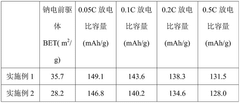
Figure PCTCN2023134334-FTAPPB-I100001 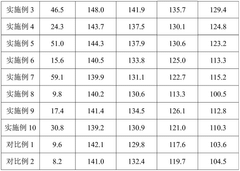
Figure PCTCN2023134334-FTAPPB-I100002
Abstract
Description
A High-Rate Sodium-Ion Battery Precursor and Cathode Material, Their Preparation Methods and Applications Technical Field
[0001] This application belongs to the technical field of batteries, and relates to a high-rate sodium-ion battery precursor and cathode material, their preparation methods and applications. Background Art
[0002] Sodium-ion batteries have attracted extensive attention due to their low cost and similar chemical properties to lithium. Among them, for the cathode materials of sodium-ion batteries, layered oxide materials are widely used due to their low cost, low toxicity, and high theoretical specific capacity. As a layered oxide material, nickel-iron-manganese-based materials have good cycling performance, but obvious performance degradation and irreversible structural transformation often occur in the high voltage region (>4.0V). In the prior art, single-element doping such as titanium replacing manganese not only increases the lattice spacing but also improves the working voltage, inhibits the irreversible structural transformation, thereby improving the cycling performance and increasing the energy density.
[0003] For example, CN 113921781A discloses a titanium-doped modified P2-type layered sodium-ion battery cathode material and its preparation method. The chemical formula of the sodium-ion battery cathode material is Na , 0.17 Ni 0.17 Mn 0.83-x Ti x O2, where 0 < x ≤ 0.2. Through the doping of metal titanium, the partial trivalent manganese ions in the material are replaced by Ti ions to inhibit the Jahn Taller effect, thereby improving the cycling stability of the material. At the same time, the volume change caused by the P2 O2 phase transition is also inhibited, thereby improving the cycling stability of the material and further enhancing the electrochemical performance of the material.
[0004] In addition, co-doping of multiple elements is an effective strategy to obtain samples with excellent comprehensive performance to obtain higher energy density to meet the needs of practical applications. For example, CN 116805684A discloses an Al, Zn, Ti, and Fe co-doped dual-phase layered oxide sodium-ion battery high-entropy cathode material, which has a P2 / O3 two-phase composite structure and the chemical formula is Na 0.796 Ni 0.33-x Zn x Mn 0.47 Al 0.03 Fe 0.1 Ti 0.07 O2 (0 < x ≤ 0.1). Through multi-element doping, the obtained cathode material has high capacity, average discharge voltage, energy density, and good cycling stability in terms of electrochemical performance, and the synthesis route is simple and the cost is low, which is a potential cathode material for sodium-ion batteries.
[0005] However, the sodium-ion batteries in the existing technology are all focused on improving the cycle performance and energy density, which cannot meet the market demand for high-rate sodium-ion batteries. The high-rate performance needs to be further improved.
[0006] Based on the above research, it is necessary to provide a high-rate sodium battery precursor, which has a lower migration barrier and a higher ion diffusion coefficient, thereby improving the rate performance of sodium ion batteries.
[0007] Summary of the Invention
[0008] The following is a summary of the subject matter described in detail herein. This summary is not intended to limit the scope of the claims.
[0009] The purpose of this application is to provide a high-rate sodium battery precursor and positive electrode material and their preparation method and application. The high-rate sodium battery precursor is a sodium battery precursor material with a porous structure. The porous structure facilitates the transport of sodium ions and enables the sodium battery layered oxide material to have a lower migration barrier and a higher ion diffusion coefficient, thereby enabling high-rate charge and discharge of sodium ion batteries.
[0010] To achieve this goal, this application adopts the following technical solutions:
[0011] In the first aspect, the present application provides a high-rate sodium battery precursor, wherein the high-rate sodium battery precursor has a porous structure and the chemical formula of the high-rate sodium battery precursor is Ni x Fe y Mn z O2, where 0<x≤0.6, 0<y≤0.4, 0<z≤0.7.
[0012] The high-rate sodium battery precursor described in this application has a porous structure, and the rich pore network serves as an ion diffusion channel, which helps to efficiently transport sodium ions with a larger radius than lithium ions in the positive electrode, so that the sodium battery layered oxide material has a lower migration barrier and a higher ion diffusion coefficient, thereby achieving high-rate charging and discharging.
[0013] The general chemical formula of the high-rate sodium electrolyte precursor is Ni x Fe y Mn z O2, wherein 0<x≤0.6, for example, it can be 0.1, 0.2, 0.3, 0.4, 0.5 or 0.6, 0<y≤0.4, for example, it can be 0.1, 0.2, 0.3 or 0.4, 0<z≤0.7, for example, it can be 0.1, 0.2, 0.3, 0.4, 0.5, 0.6 or 0.7, but is not limited to the listed values, and other unlisted values within the numerical range are also applicable.
[0014] In one embodiment, the high-rate sodium electrolyte precursor has a microporous and / or mesoporous structure.
[0015] The high-rate sodium electrolyte precursor described in the present application has a variety of pore structures, and the multiple pore structures are interconnected to form a pore network, so that the high-rate sodium electrolyte precursor has a higher BET.
[0016] In one embodiment, the average particle size of the high-rate sodium electrolyte precursor is 3-10 μm, for example, 3 μm, 5 μm, 8 μm or 10 μm, but is not limited to the listed values, and other unlisted values within the numerical range are also applicable.
[0017] In one embodiment, the BET of the high rate sodium electrolyte precursor is 25-50m 2 / g, for example, it can be 25m 2 / g、35m 2 / g、45m 2 / g or 50m 2 / g, but is not limited to the listed values, and other unlisted values within the numerical range are also applicable.
[0018] In a second aspect, the present application provides a method for preparing the high-rate sodium electrolyte precursor as described in the first aspect, the preparation method comprising the following steps:
[0019] Nickel-iron-manganese-zinc hydroxide is calcined in a reducing atmosphere to obtain a high-rate sodium electrode precursor.
[0020] In this application, the hydroxide precursor is first calcined, and small pores or micropores are formed through the Kirkendall Effect during the calcination process. The calcination is carried out in a reducing atmosphere, and the zinc with a low boiling point (907°C) is reduced and volatilized by calcination, thereby forming a larger pore structure in the precursor, and finally obtaining a nickel-iron-manganese-based sodium electrical precursor material with a high BET.
[0021] In one embodiment, the chemical formula of the nickel-iron-manganese-zinc hydroxide is Ni x Fe y Mn z Zn k (OH)2, wherein 0<x≤0.6, for example, it can be 0.1, 0.2, 0.3, 0.4, 0.5 or 0.6, 0<y≤0.4, for example, it can be 0.1, 0.2, 0.3 or 0.4, 0<z≤0.7, for example, it can be 0.1, 0.2, 0.3, 0.4, 0.5, 0.6 or 0.7, 0.02<k<0.04, for example, it can be 0.021, 0.025, 0.03, 0.035, 0.038 or 0.039, but is not limited to the listed values, and other unlisted values within the numerical range are equally applicable.
[0022] In one embodiment, the reducing atmosphere comprises hydrogen.
[0023] In one embodiment, the calcination temperature is 920-1000°C, for example, 930°C, 950°C, 970°C, 990°C or 1000°C, and the calcination time is 0.5-2h, for example, 0.8h, 1h, 1.5h or 2h, but is not limited to the listed values, and other unlisted values within the numerical range are also applicable.
[0024] The calcination temperature of this application will affect the volatilization of the reduced zinc metal, thereby affecting the pore structure and BET of the material. If the calcination temperature is too low, the reduced zinc metal cannot be effectively volatilized, affecting the pore structure and BET size. If the calcination temperature is too high, it may cause the internal part or even the entire crystal phase structure to change, affecting lithium ion transmission.
[0025] In one embodiment, the nickel-iron-manganese hydroxide is prepared by the following method:
[0026] Mixing the mixed metal salt solution, the precipitant solution and the complexing agent solution to carry out a coprecipitation reaction to obtain the nickel-iron-manganese-zinc hydroxide;
[0027] The mixed metal salt solution includes nickel salt, iron salt, manganese salt and zinc salt.
[0028] In the present application, zinc is doped during the co-precipitation preparation of the hydroxide precursor, which enables zinc to be evenly distributed within the particles, thereby enabling uniform pore formation during the calcination process and forming a porous network in the positive electrode particles.
[0029] In one embodiment, the concentration of the precipitant solution is 3-5 mol / L, for example, 3.5 mol / L, 4.5 mol / L or 5 mol / L, but is not limited to the listed values, and other values not listed within the numerical range are also applicable.
[0030] In one embodiment, the concentration of the complexing agent solution is 8-12 mol / L, for example, 9 mol / L, 10 mol / L, 11 mol / L or 12 mol / L, but is not limited to the listed values, and other values not listed within the numerical range are also applicable.
[0031] In one embodiment, the coprecipitation reaction temperature is 40-70°C, for example, 40°C, 50°C, 60°C or 70°C, the time is 60-120h, for example, 60h, 80h, 100h or 120h, the stirring speed is 200-400rpm, for example, 250rpm, 300rpm, 350rpm or 400rpm, and the pH is maintained in the range of 8-12, which means that the pH of the coprecipitation reaction is at least 8, for example, 8, 8.3, 8.5, 8.7 or 9, and the maximum is below 12, for example, 12, 11.7, 11.5, 11.3 or 11, but is not limited to the listed values, and other values not listed within the numerical range are also applicable.
[0032] In one embodiment, the metal salt in the mixed metal salt solution includes any one of nitrate, acetate, sulfate or oxalate, or a combination of at least two thereof.
[0033] In one embodiment, the precipitant solution comprises sodium hydroxide and / or potassium hydroxide.
[0034] In one embodiment, the complexing agent solution comprises aqueous ammonia.
[0035] As an optional technical solution of the preparation method described in this application, the preparation method comprises the following steps:
[0036] (1) Mixing a mixed metal salt solution, a precipitant solution and a complexing agent solution, and performing a coprecipitation reaction to obtain nickel iron manganese zinc hydroxide, wherein the chemical formula of the nickel iron manganese zinc hydroxide is Ni x Fe y Mn z Zn k (OH)2, where 0 < x ≤ 0.6, 0 < y ≤ 0.4, 0 < z ≤ 0.7, 0.02 < k < 0.04;
[0037] The mixed metal salt solution includes nickel salt, iron salt, manganese salt and zinc salt, the coprecipitation reaction temperature is 40-70°C, the time is 60-120h, the stirring speed is 200-400rpm, and the pH is maintained in the range of 8-12;
[0038] (2) Under a reducing atmosphere, calcining the nickel-iron-manganese-zinc hydroxide described in step (1) at 920-1000° C. for 0.5-2 h to obtain a high-rate sodium electrode precursor.
[0039] In a third aspect, the present application provides a positive electrode material, which is obtained by mixing a sodium source and the high-rate sodium electrode precursor as described in the first aspect and heat-treating the mixture.
[0040] In one embodiment, the amount of the sodium source added is 2-8 wt% in excess of the theoretical amount added, for example, 2 wt%, 4 wt%, 6 wt% or 8 wt%, but is not limited to the listed values, and other unlisted values within the numerical range are also applicable.
[0041] In one embodiment, the heat treatment is performed in an air atmosphere.
[0042] In one embodiment, the heat treatment temperature is 800-1200°C, for example, 800°C, 900°C, 1000°C, 1100°C or 1200°C, and the time is 6-15h, for example, 8h, 10h, 12h or 15h, but is not limited to the listed values, and other unlisted values within the numerical range are also applicable.
[0043] In a fourth aspect, the present application provides a sodium ion battery, which includes the positive electrode material as described in the third aspect.
[0044] Compared with the prior art, this application has the following beneficial effects:
[0045] This application constructs a porous structure so that the rich pore network inside the particles serves as an ion diffusion channel, which helps to efficiently transport sodium ions, which have a larger radius than lithium ions, in the positive electrode, so that the sodium-ion layered oxide material has a lower migration barrier and a higher ion diffusion coefficient, thereby achieving high-rate charge and discharge of sodium-ion batteries.
[0046] Still other aspects will become apparent upon reading and understanding the detailed description. DETAILED DESCRIPTION
[0047] The technical solution of the present application is further described below through specific implementation methods. Those skilled in the art should understand that the embodiments are only used to help understand the present application and should not be regarded as specific limitations of the present application.
[0048] Example 1
[0049] This embodiment provides a positive electrode material. The precursor material for preparing the positive electrode material is a high-rate sodium battery precursor. The high-rate sodium battery precursor has a porous structure. The chemical formula of the high-rate sodium battery precursor is Ni 0.33 Fe 0.33 Mn 0.33 O2, average particle size 6 μm;
[0050] The preparation method of the positive electrode material comprises the following steps:
[0051] (1) Mixing a mixed metal salt solution, a sodium hydroxide solution and an ammonia solution to carry out a coprecipitation reaction, transferring the material in the reactor to an aging tank for aging after the reaction is completed, and then centrifugally washing and drying to obtain nickel-iron-manganese-zinc hydroxide, wherein the chemical formula of the nickel-iron-manganese-zinc hydroxide is Ni 0.33 Fe 0.33 Mn 0.33 Zn 0.03 (OH)2;
[0052] The mixed metal salt solution includes sulfates of nickel, iron, manganese and zinc, and the molar ratio of nickel ion, iron ion, manganese ion and zinc ion is 0.33:0.33:0.33:0.03; the coprecipitation reaction temperature is 50°C, the time is 90 hours, the stirring speed is 300 rpm, and the pH is maintained in the range of 11-11.5;
[0053] (2) calcining the nickel-iron-manganese-zinc hydroxide described in step (1) at 970° C. for 1.5 h under a hydrogen atmosphere to obtain a high-rate sodium electrode precursor;
[0054] (3) Sodium carbonate is mixed in an amount of 4 wt% excess over the theoretical addition amount with the high-rate sodium battery precursor described in step (2), and then heat-treated at a temperature of 1000° C. for 10 h in an air atmosphere to obtain the positive electrode material.
[0055] Example 2
[0056] This embodiment provides a positive electrode material. The precursor material for preparing the positive electrode material is a high-rate sodium battery precursor. The high-rate sodium battery precursor has a porous structure. The chemical formula of the high-rate sodium battery precursor is Ni 0.33 Fe 0.33 Mn 0.33 O2, average particle size 3 μm;
[0057] The preparation method of the positive electrode material comprises the following steps:
[0058] (1) Mixing a mixed metal salt solution, a sodium hydroxide solution and an ammonia solution to carry out a coprecipitation reaction, transferring the material in the reactor to an aging tank for aging after the reaction is completed, and then centrifugally washing and drying to obtain nickel-iron-manganese-zinc hydroxide, wherein the chemical formula of the nickel-iron-manganese-zinc hydroxide is Ni 0.33 Fe 0.33 Mn 0.33 Zn 0.022 (OH)2;
[0059] The mixed metal salt solution includes sulfates of nickel, iron, manganese, and zinc, wherein the molar ratio of nickel ion, iron ion, manganese ion, and zinc ion is 0.33:0.33:0.33:0.022; the coprecipitation reaction temperature is 70° C., the time is 60 hours, the stirring speed is 400 rpm, and the pH is maintained in the range of 10-11;
[0060] (2) calcining the nickel-iron-manganese-zinc hydroxide described in step (1) at 1000° C. for 0.5 h under a hydrogen atmosphere to obtain a high-rate sodium electrode precursor;
[0061] (3) Sodium carbonate is mixed in an amount of 8 wt% excess over the theoretical addition amount with the high-rate sodium battery precursor described in step (2), and then heat-treated at a temperature of 1200° C. for 6 h in an air atmosphere to obtain the positive electrode material.
[0062] Example 3
[0063] This embodiment provides a positive electrode material. The precursor material for preparing the positive electrode material is a high-rate sodium battery precursor. The high-rate sodium battery precursor has a porous structure. The chemical formula of the high-rate sodium battery precursor is Ni 0.33 Fe 0.33 Mn 0.33 O2, average particle size 10 μm;
[0064] The preparation method of the positive electrode material comprises the following steps:
[0065] (1) Mixing a mixed metal salt solution, a sodium hydroxide solution and an ammonia solution to carry out a coprecipitation reaction, transferring the material in the reactor to an aging tank for aging after the reaction is completed, and then centrifugally washing and drying to obtain nickel-iron-manganese-zinc hydroxide, wherein the chemical formula of the nickel-iron-manganese-zinc hydroxide is Ni 0.33 Fe 0.33 Mn 0.33 Zn 0.038 (OH)2;
[0066] The mixed metal salt solution includes sulfates of nickel, iron, manganese, and zinc, wherein the molar ratio of nickel ion, iron ion, manganese ion, and zinc ion is 0.33:0.33:0.33:0.038; the coprecipitation reaction is carried out at a temperature of 40° C., a time of 20 hours, a stirring speed of 200 rpm, and a pH maintained in the range of 11.5-12;
[0067] (2) calcining the nickel-iron-manganese-zinc hydroxide described in step (1) at 920° C. for 2 h under a hydrogen atmosphere to obtain a high-rate sodium electrode precursor;
[0068] (3) Sodium carbonate is mixed in an amount of 2 wt% excess over the theoretical addition amount with the high-rate sodium battery precursor described in step (2), and then heat-treated at 800° C. for 15 h in an air atmosphere to obtain the positive electrode material.
[0069] Example 4
[0070] This embodiment provides a positive electrode material, wherein in addition to the preparation method thereof, the chemical formula of the nickel-iron-manganese-zinc hydroxide in step (1) is Ni 0.33 Fe 0.33 Mn 0.33 Zn 0.02 (OH)2, so that the obtained positive electrode material adapts to changes, the rest is the same as Example 1.
[0071] Example 5
[0072] This embodiment provides a positive electrode material, wherein in addition to the preparation method thereof, the chemical formula of the nickel-iron-manganese-zinc hydroxide in step (1) is Ni 0.33 Fe 0.33 Mn 0.33 Zn 0.04 (OH)2, so that the obtained positive electrode material adapts to changes, the rest is the same as Example 1.
[0073] Example 6
[0074] This embodiment provides a positive electrode material, wherein in addition to the preparation method thereof, the chemical formula of the nickel-iron-manganese-zinc hydroxide in step (1) is Ni 0.33 Fe 0.33 Mn 0.33 Zn 0.01 (OH)2, so that the obtained positive electrode material adapts to changes, the rest is the same as Example 1.
[0075] Example 7
[0076] This embodiment provides a positive electrode material, wherein in addition to the preparation method thereof, the chemical formula of the nickel-iron-manganese-zinc hydroxide in step (1) is Ni 0.33 Fe 0.33 Mn 0.33 Zn 0.05 (OH)2, so that the obtained positive electrode material adapts to changes, the rest is the same as Example 1.
[0077] Example 8
[0078] This embodiment provides a positive electrode material. In addition to the preparation method of the positive electrode material, the mixed metal salt solution in step (1) does not contain zinc salt, and the coprecipitated product obtained is a chemical formula of Ni 0.33Fe 0.33 Mn 0.33 Except that the adaptability of the obtained positive electrode material is changed by using nickel iron manganese hydroxide (OH)2, the rest is the same as Example 1.
[0079] Example 9
[0080] This embodiment provides a positive electrode material. The positive electrode material is the same as that in Example 1 except that the calcination temperature in step (2) of the preparation method is 910° C. to adapt the obtained positive electrode material.
[0081] Example 10
[0082] This embodiment provides a positive electrode material. The positive electrode material is the same as that in embodiment 1 except that the calcination temperature in step (2) of the preparation method is 1100° C. to adapt the obtained positive electrode material.
[0083] Comparative Example 1
[0084] This comparative example provides a positive electrode material, which is the same as Example 1 except that step (2) is not performed in the preparation method thereof, so that the adaptability of the obtained positive electrode material is changed.
[0085] Comparative Example 2
[0086] This comparative example provides a positive electrode material, which is the same as Example 1 except that in its preparation method, the calcination atmosphere in step (1) is an argon atmosphere to change the adaptability of the obtained positive electrode material.
[0087] The BET of the sodium electrode precursor material obtained in step (2) of the above embodiments and comparative examples is shown in the following table; the positive electrode materials obtained in the above embodiments and comparative examples are prepared into positive electrode sheets, and the metallic sodium sheet is used as the negative electrode, and assembled into a CR2032 button battery, and then the rate performance test is carried out at 25°C, 2.5-4.35V voltage window, and 0.05C / 0.1C / 0.2C / 0.5C conditions.
[0088] The test results are shown in the following table:
[0089] Table 1
[0090] From the above table we can see that:
[0091] The sodium battery precursor material obtained in the present application has a large BET and can significantly improve the rate performance of sodium ion batteries; it can be seen from Example 1 and Comparative Examples 1-2 that if the hydroxide precursor is not calcined or calcined under a reducing atmosphere, a porous structure cannot be formed, thereby reducing the rate performance of the battery; it can be seen from Example 1 and Examples 4-7 that the amount of zinc added will affect the pore structure in the particles, thereby affecting ion transport and battery performance; it can be seen from Example 1 and Example 8 that when zinc is not contained in the hydroxide precursor, larger pores and higher BET materials cannot be obtained, which will affect the battery performance; it can be seen from Example 1 and Examples 9-10 that the calcination temperature of the hydroxide precursor will also affect the pore structure of the material, thereby affecting the battery performance.
[0092] In summary, the present application provides a high-rate sodium battery precursor and positive electrode material, as well as a preparation method and application thereof. The high-rate sodium battery precursor is a sodium battery precursor material with a porous structure. The porous structure facilitates the transport of sodium ions and enables the sodium battery layered oxide material to have a lower migration barrier and a higher ion diffusion coefficient, thereby enabling high-rate charge and discharge of sodium ion batteries.
[0093] The above description is only a specific implementation method of the present application, but the protection scope of the present application is not limited thereto. Those skilled in the art should understand that any changes or replacements that can be easily thought of by those skilled in the art within the technical scope disclosed in the present application fall within the protection scope and disclosure scope of the present application.
Claims
1. A high-rate sodium battery precursor, the high-rate sodium battery precursor has a porous structure, and the chemical general formula of the high-rate sodium battery precursor is Ni x Fe y Mn z O 2 , Among them, 0 < x ≤ 0.6, 0 < y ≤ 0.4, 0 < z ≤ 0.
7.
2. The high-rate sodium battery precursor according to claim 1, wherein, the high-rate sodium battery precursor has a microporous and / or mesoporous structure; optionally, the average particle size of the high-rate sodium battery precursor is 3 - 10 μm; Optionally, the BET of the high magnification sodium battery precursor is 25-50m 2 / g.
3. A method for preparing the high-rate sodium battery precursor according to claim 1 or 2, comprising the following steps: Calcining nickel-iron-manganese-zinc hydroxide in a reducing atmosphere to obtain the high-rate sodium battery precursor.
4. According to the preparation method described in claim 3, wherein, The chemical formula of the nickel-iron-manganese-zinc hydroxide is Ni x Fe y Mn z Zn k (OH) 2 , where 0 < x ≤ 0.6, 0 < y ≤ 0.4, 0 < z ≤ 0.7, 0.02 < k < 0.04; optionally, the calcination temperature is 920 - 1000 °C and the time is 0.5 - 2 h; optionally, the reducing atmosphere includes hydrogen.
5. According to the preparation method described in claim 3 or 4, wherein, the nickel-iron-manganese hydroxide is prepared by the following method: Mixing a mixed metal salt solution, a precipitant solution and a complexing agent solution, and performing a coprecipitation reaction to obtain the nickel-iron-manganese-zinc hydroxide; the mixed metal salt solution includes nickel salt, iron salt, manganese salt and zinc salt.
6. According to the preparation method described in claim 5, wherein, the concentration of the precipitant solution is 3 - 5 mol / L; optionally, the concentration of the complexing agent solution is 8 - 12 mol / L; optionally, the temperature of the coprecipitation reaction is 40 - 70 °C, the time is 60 - 120 h, the stirring speed is 200 - 400 rpm, and the pH is maintained within the range of 8 - 12.
7. According to the preparation method described in claim 5 or 6, wherein, the metal salts in the mixed metal salt solution include any one or a combination of at least two of nitrates, acetates, sulfates or oxalates; optionally, the precipitant solution includes sodium hydroxide and / or potassium hydroxide; optionally, the complexing agent solution includes ammonia water.
8. According to the preparation method described in any one of claims 3 - 7, wherein, the preparation method includes the following steps: (1) Mix the mixed metal salt solution, precipitant solution and complexing agent solution, and carry out a coprecipitation reaction to obtain nickel-iron-manganese-zinc hydroxide. The chemical formula of the nickel-iron-manganese-zinc hydroxide is Ni x Fe y Mn z Zn k (OH) 2 , where 0 < x ≤ 0.6, 0 < y ≤ 0.4, 0 < z ≤ 0.7, 0.02 < k < 0.04; the mixed metal salt solution includes nickel salt, iron salt, manganese salt and zinc salt, the temperature of the coprecipitation reaction is 40 - 70 °C, the time is 60 - 120 h, the stirring speed is 200 - 400 rpm, and the pH is maintained within the range of 8 - 12; (2) Calcining the nickel-iron-manganese-zinc hydroxide obtained in step (1) at 920 - 1000 °C for 0.5 - 2 h in a reducing atmosphere to obtain the high-rate sodium battery precursor.
9. A cathode material obtained by mixing and heat-treating a sodium source and the high-rate sodium battery precursor according to claim 1 or 2.
10. A sodium ion battery including the cathode material according to claim 9.
Citation Information
Patent Citations
Sodium-ion battery positive electrode material precursor and preparation method thereof, and preparation method of sodium-ion battery positive electrode material
CN115072805A
Nickel-iron-manganese ternary precursor as well as preparation method and application thereof
CN115818737A
Nickel manganese oxide positive electrode material and preparation method and application thereof
CN115939374A
NaMn1-x-yNixFeyO2 as well as preparation method and application thereof
CN116282208A
Positive electrode material precursor and preparation method therefor, positive electrode material and preparation method therefor
WO2023143469A1