

Advanced diagnostics for monitoring electrolyzer stack performance
SEP 3, 20259 MIN READ
Generate Your Research Report Instantly with AI Agent
PatSnap Eureka helps you evaluate technical feasibility & market potential.
Electrolyzer Diagnostics Background and Objectives
Electrolyzer technology has evolved significantly over the past decades, transitioning from laboratory-scale demonstrations to commercial-scale implementations. The fundamental principle of water electrolysis—splitting water into hydrogen and oxygen using electricity—has remained unchanged since its discovery in the early 19th century. However, the efficiency, durability, and cost-effectiveness of electrolyzers have seen remarkable improvements, particularly in the last decade with the growing emphasis on hydrogen as a clean energy carrier.
The development trajectory shows three primary electrolyzer technologies dominating the market: alkaline electrolyzers (AEL), proton exchange membrane electrolyzers (PEMEL), and solid oxide electrolyzers (SOEL). Each technology represents different generations of development, with alkaline being the most mature but PEMEL and SOEL offering advantages in efficiency and integration with renewable energy sources.
Advanced diagnostics for monitoring electrolyzer stack performance has become increasingly critical as hydrogen production scales up for industrial applications. Traditional monitoring approaches focused primarily on overall system efficiency and basic operational parameters, lacking the granularity needed for optimizing performance and predicting failures at the stack level.
The technical objectives for advanced electrolyzer diagnostics encompass several dimensions. First, real-time monitoring capabilities that can detect performance degradation at the cell and stack level before catastrophic failure occurs. Second, diagnostic tools that can differentiate between various failure modes, including membrane degradation, catalyst poisoning, and electrode delamination. Third, non-invasive monitoring techniques that do not require system shutdown or disassembly.
Current technological trends point toward integrated sensor systems that combine electrochemical impedance spectroscopy (EIS), distributed temperature sensing, and pressure differential measurements. These systems aim to provide comprehensive health monitoring while minimizing additional complexity and cost to electrolyzer systems.
The expected outcomes from advanced diagnostic development include extending electrolyzer stack lifetime by 20-30% through early intervention, reducing maintenance costs by enabling condition-based rather than time-based maintenance schedules, and improving overall system efficiency by maintaining optimal operating conditions. Additionally, these diagnostics are expected to generate valuable operational data that can inform next-generation electrolyzer designs.
As green hydrogen initiatives accelerate globally, the development of sophisticated diagnostic tools represents a critical enabling technology for the hydrogen economy, potentially reducing the levelized cost of hydrogen production and improving the reliability of electrolyzer systems in grid-balancing applications.
The development trajectory shows three primary electrolyzer technologies dominating the market: alkaline electrolyzers (AEL), proton exchange membrane electrolyzers (PEMEL), and solid oxide electrolyzers (SOEL). Each technology represents different generations of development, with alkaline being the most mature but PEMEL and SOEL offering advantages in efficiency and integration with renewable energy sources.
Advanced diagnostics for monitoring electrolyzer stack performance has become increasingly critical as hydrogen production scales up for industrial applications. Traditional monitoring approaches focused primarily on overall system efficiency and basic operational parameters, lacking the granularity needed for optimizing performance and predicting failures at the stack level.
The technical objectives for advanced electrolyzer diagnostics encompass several dimensions. First, real-time monitoring capabilities that can detect performance degradation at the cell and stack level before catastrophic failure occurs. Second, diagnostic tools that can differentiate between various failure modes, including membrane degradation, catalyst poisoning, and electrode delamination. Third, non-invasive monitoring techniques that do not require system shutdown or disassembly.
Current technological trends point toward integrated sensor systems that combine electrochemical impedance spectroscopy (EIS), distributed temperature sensing, and pressure differential measurements. These systems aim to provide comprehensive health monitoring while minimizing additional complexity and cost to electrolyzer systems.
The expected outcomes from advanced diagnostic development include extending electrolyzer stack lifetime by 20-30% through early intervention, reducing maintenance costs by enabling condition-based rather than time-based maintenance schedules, and improving overall system efficiency by maintaining optimal operating conditions. Additionally, these diagnostics are expected to generate valuable operational data that can inform next-generation electrolyzer designs.
As green hydrogen initiatives accelerate globally, the development of sophisticated diagnostic tools represents a critical enabling technology for the hydrogen economy, potentially reducing the levelized cost of hydrogen production and improving the reliability of electrolyzer systems in grid-balancing applications.
Market Analysis for Advanced Electrolyzer Monitoring Solutions
The global market for advanced electrolyzer monitoring solutions is experiencing robust growth, driven by the accelerating transition toward hydrogen-based energy systems. Current market valuations indicate that the electrolyzer monitoring segment represents approximately 15-20% of the overall hydrogen production equipment market, with particularly strong demand emerging in regions with aggressive decarbonization targets such as Europe, Japan, and parts of North America.
The primary market drivers include increasing deployment of green hydrogen production facilities, stringent regulatory requirements for efficiency and safety in industrial processes, and the growing need for predictive maintenance solutions to maximize electrolyzer uptime and longevity. Industry analysts project a compound annual growth rate of 22-25% for advanced monitoring solutions through 2030, outpacing the broader electrolyzer market growth of 17-19%.
End-user segmentation reveals distinct market needs across various sectors. Industrial hydrogen producers prioritize continuous operation and efficiency metrics, while research institutions focus on detailed performance analytics and experimental data collection capabilities. Renewable energy integrators, meanwhile, seek monitoring systems that can handle variable loads and provide grid-balancing intelligence.
Pricing structures in this market segment typically follow a tiered model, with basic monitoring packages starting at entry-level price points and premium solutions with advanced diagnostics and predictive capabilities commanding significant premiums. The total cost of ownership calculation increasingly favors sophisticated monitoring systems as they demonstrate clear return on investment through extended equipment life and reduced downtime.
Regional market analysis shows Europe leading adoption with approximately 40% market share, driven by ambitious hydrogen strategies in Germany, France, and the Netherlands. Asia-Pacific represents the fastest-growing region at 28-30% annual growth, with China, South Korea, and Australia making substantial investments in hydrogen infrastructure.
Customer purchasing behavior indicates a shift toward integrated solutions that combine hardware sensors, data analytics platforms, and service components. Decision-making increasingly involves multiple stakeholders, including operations technology teams, sustainability officers, and C-suite executives, reflecting the strategic importance of hydrogen production in corporate energy transitions.
Market barriers include high initial implementation costs, integration challenges with legacy systems, and the need for specialized expertise to interpret diagnostic data. These factors have created opportunities for monitoring-as-a-service business models that reduce capital expenditure requirements while providing access to expert analysis and support.
The primary market drivers include increasing deployment of green hydrogen production facilities, stringent regulatory requirements for efficiency and safety in industrial processes, and the growing need for predictive maintenance solutions to maximize electrolyzer uptime and longevity. Industry analysts project a compound annual growth rate of 22-25% for advanced monitoring solutions through 2030, outpacing the broader electrolyzer market growth of 17-19%.
End-user segmentation reveals distinct market needs across various sectors. Industrial hydrogen producers prioritize continuous operation and efficiency metrics, while research institutions focus on detailed performance analytics and experimental data collection capabilities. Renewable energy integrators, meanwhile, seek monitoring systems that can handle variable loads and provide grid-balancing intelligence.
Pricing structures in this market segment typically follow a tiered model, with basic monitoring packages starting at entry-level price points and premium solutions with advanced diagnostics and predictive capabilities commanding significant premiums. The total cost of ownership calculation increasingly favors sophisticated monitoring systems as they demonstrate clear return on investment through extended equipment life and reduced downtime.
Regional market analysis shows Europe leading adoption with approximately 40% market share, driven by ambitious hydrogen strategies in Germany, France, and the Netherlands. Asia-Pacific represents the fastest-growing region at 28-30% annual growth, with China, South Korea, and Australia making substantial investments in hydrogen infrastructure.
Customer purchasing behavior indicates a shift toward integrated solutions that combine hardware sensors, data analytics platforms, and service components. Decision-making increasingly involves multiple stakeholders, including operations technology teams, sustainability officers, and C-suite executives, reflecting the strategic importance of hydrogen production in corporate energy transitions.
Market barriers include high initial implementation costs, integration challenges with legacy systems, and the need for specialized expertise to interpret diagnostic data. These factors have created opportunities for monitoring-as-a-service business models that reduce capital expenditure requirements while providing access to expert analysis and support.
Current Challenges in Electrolyzer Stack Performance Monitoring
Despite significant advancements in electrolyzer technology, monitoring stack performance remains a complex challenge that impedes widespread adoption and optimization of hydrogen production systems. Current monitoring approaches suffer from several critical limitations that affect reliability, efficiency, and operational costs.
Real-time data acquisition presents a fundamental challenge, as conventional sensors often cannot withstand the harsh electrochemical environment within stacks. pH fluctuations, high temperatures, and corrosive conditions frequently lead to sensor degradation and inaccurate readings. This is particularly problematic for polymer electrolyte membrane (PEM) electrolyzers operating at high current densities.
Spatial resolution limitations constitute another significant barrier. Most monitoring systems provide aggregate performance data for the entire stack, failing to identify individual cell anomalies or localized degradation patterns. This lack of granularity makes it difficult to detect early-stage performance issues before they cascade into system-wide failures, resulting in unnecessary downtime and maintenance costs.
Data interpretation complexity further complicates effective monitoring. The interdependence of various operational parameters—temperature, pressure, flow rates, and electrical inputs—creates multidimensional relationships that are difficult to analyze with conventional methods. Many facilities lack sophisticated algorithms capable of distinguishing between normal performance variations and actual degradation indicators.
Durability assessment remains particularly challenging. Accelerated stress tests in laboratory settings often fail to accurately predict real-world degradation mechanisms. The industry lacks standardized protocols for long-term performance evaluation, making it difficult to compare different technologies or establish reliable lifetime projections for stack components.
Cost-effectiveness of monitoring solutions presents a significant market barrier. Advanced diagnostic tools incorporating multiple sensor types, data processing capabilities, and predictive analytics typically require substantial investment, limiting their adoption particularly among smaller hydrogen production facilities. The return on investment for comprehensive monitoring systems remains difficult to quantify, especially for newer electrolyzer technologies with limited operational history.
Integration challenges with existing infrastructure further complicate implementation. Many monitoring solutions operate as standalone systems rather than integrating seamlessly with plant-wide control systems. This creates data silos and prevents holistic optimization of hydrogen production facilities, particularly in retrofitting scenarios where legacy systems must accommodate new monitoring capabilities.
Addressing these challenges requires interdisciplinary approaches combining materials science, sensor technology, data analytics, and systems engineering to develop next-generation monitoring solutions that can enhance electrolyzer performance, reliability, and cost-effectiveness.
Real-time data acquisition presents a fundamental challenge, as conventional sensors often cannot withstand the harsh electrochemical environment within stacks. pH fluctuations, high temperatures, and corrosive conditions frequently lead to sensor degradation and inaccurate readings. This is particularly problematic for polymer electrolyte membrane (PEM) electrolyzers operating at high current densities.
Spatial resolution limitations constitute another significant barrier. Most monitoring systems provide aggregate performance data for the entire stack, failing to identify individual cell anomalies or localized degradation patterns. This lack of granularity makes it difficult to detect early-stage performance issues before they cascade into system-wide failures, resulting in unnecessary downtime and maintenance costs.
Data interpretation complexity further complicates effective monitoring. The interdependence of various operational parameters—temperature, pressure, flow rates, and electrical inputs—creates multidimensional relationships that are difficult to analyze with conventional methods. Many facilities lack sophisticated algorithms capable of distinguishing between normal performance variations and actual degradation indicators.
Durability assessment remains particularly challenging. Accelerated stress tests in laboratory settings often fail to accurately predict real-world degradation mechanisms. The industry lacks standardized protocols for long-term performance evaluation, making it difficult to compare different technologies or establish reliable lifetime projections for stack components.
Cost-effectiveness of monitoring solutions presents a significant market barrier. Advanced diagnostic tools incorporating multiple sensor types, data processing capabilities, and predictive analytics typically require substantial investment, limiting their adoption particularly among smaller hydrogen production facilities. The return on investment for comprehensive monitoring systems remains difficult to quantify, especially for newer electrolyzer technologies with limited operational history.
Integration challenges with existing infrastructure further complicate implementation. Many monitoring solutions operate as standalone systems rather than integrating seamlessly with plant-wide control systems. This creates data silos and prevents holistic optimization of hydrogen production facilities, particularly in retrofitting scenarios where legacy systems must accommodate new monitoring capabilities.
Addressing these challenges requires interdisciplinary approaches combining materials science, sensor technology, data analytics, and systems engineering to develop next-generation monitoring solutions that can enhance electrolyzer performance, reliability, and cost-effectiveness.
State-of-the-Art Diagnostic Solutions for Electrolyzers
01 Electrode materials and configurations for improved performance
The choice of electrode materials and their configurations significantly impacts electrolyzer stack performance. Advanced materials such as noble metal catalysts, mixed metal oxides, and nanostructured surfaces can enhance catalytic activity and reduce overpotential. Optimized electrode geometries, including increased surface area designs and precise spacing between electrodes, contribute to improved current distribution and gas evolution dynamics, resulting in higher efficiency and durability of the electrolyzer stack.- Electrolyzer stack design optimization: Optimizing the design of electrolyzer stacks can significantly improve their performance. This includes considerations such as cell geometry, flow field patterns, and component arrangement within the stack. Advanced designs focus on uniform distribution of reactants, efficient removal of products, and minimizing electrical resistance between cells. These design optimizations can lead to higher conversion efficiencies, improved durability, and overall better performance of the electrolyzer system.
- Materials selection for electrodes and membranes: The selection of appropriate materials for electrodes and membranes plays a crucial role in electrolyzer stack performance. Advanced catalyst materials can reduce activation energy requirements and improve reaction kinetics. Membrane materials with high ionic conductivity and low gas permeability enhance efficiency and safety. Durable materials that resist degradation in harsh operating environments extend the operational lifetime of the stack. Innovations in this area focus on novel composites, coatings, and nanostructured materials to achieve optimal performance.
- Operating conditions and control systems: The performance of electrolyzer stacks is heavily influenced by operating conditions such as temperature, pressure, and current density. Advanced control systems that can precisely regulate these parameters help maintain optimal performance and prevent degradation. Intelligent monitoring systems can detect performance issues in real-time and make automatic adjustments. Strategies for start-up, shutdown, and load-following operations are also critical for maintaining efficiency across different operating regimes and extending stack lifetime.
- Stack integration and system-level performance: The integration of electrolyzer stacks into complete systems affects overall performance. This includes considerations for balance-of-plant components such as power supplies, water management systems, gas separation, and thermal management. Efficient integration minimizes parasitic losses and maximizes system efficiency. Modular designs allow for scalability and easier maintenance. Advanced system architectures can incorporate renewable energy inputs and storage solutions to optimize performance across varying power availability scenarios.
- Performance monitoring and degradation mitigation: Long-term performance of electrolyzer stacks depends on effective monitoring and degradation mitigation strategies. Advanced diagnostic tools can identify performance losses and their root causes. Techniques for in-situ regeneration of catalysts and membranes can extend operational lifetimes. Predictive maintenance approaches based on performance data help prevent catastrophic failures. Understanding degradation mechanisms under various operating conditions enables the development of mitigation strategies and improved stack designs with enhanced durability.
02 Membrane and separator technology advancements
Advanced membrane and separator technologies are crucial for electrolyzer stack performance. High-performance ion exchange membranes with enhanced conductivity and selectivity reduce internal resistance and prevent gas crossover. Innovations in membrane materials, including composite structures and reinforced designs, improve durability under high-pressure and high-temperature operating conditions. These advancements contribute to increased efficiency, longer operational lifetimes, and improved safety of electrolyzer systems.Expand Specific Solutions03 Thermal management and operating conditions optimization
Effective thermal management and optimization of operating conditions are essential for maximizing electrolyzer stack performance. Systems incorporating advanced heat exchangers, temperature sensors, and control algorithms maintain optimal operating temperatures across the stack. Precise control of pressure differentials, flow rates, and humidity levels prevents membrane dehydration and enhances overall efficiency. These thermal management strategies extend component lifetimes and enable stable operation across varying load conditions.Expand Specific Solutions04 Stack design and assembly techniques
Innovative stack design and assembly techniques significantly impact electrolyzer performance. Advanced bipolar plate designs with optimized flow fields improve reactant distribution and product removal. Precision manufacturing methods ensure uniform compression and contact resistance across the stack. Modular architectures allow for scalability and easier maintenance, while novel sealing technologies prevent leakage and enhance operational safety. These design improvements result in higher power density, improved efficiency, and extended operational lifetimes.Expand Specific Solutions05 Monitoring and control systems for performance optimization
Advanced monitoring and control systems enable real-time optimization of electrolyzer stack performance. Integration of sensors for current density, temperature, pressure, and gas purity allows for continuous assessment of operational parameters. Machine learning algorithms analyze performance data to identify degradation patterns and predict maintenance needs. Automated control systems adjust operating conditions in response to changing inputs, maintaining optimal efficiency across varying load profiles and extending stack lifetime through preventive interventions.Expand Specific Solutions
Key Industry Players in Electrolyzer Monitoring Systems
The electrolyzer stack performance monitoring market is in a growth phase, characterized by increasing demand for advanced diagnostics solutions as hydrogen production scales globally. The market size is expanding rapidly, driven by clean energy initiatives and industrial decarbonization efforts. Technologically, the field shows varying maturity levels across different monitoring approaches. Leading players include established industrial technology providers like Hydrogenics (Cummins), Nel Hydrogen Electrolyser, and ABB Group, who bring extensive experience in electrochemical systems and industrial automation. Academic institutions like Central South University and Tsinghua University are advancing fundamental research, while automotive manufacturers including Toyota, Hyundai, and BMW are investing in monitoring technologies to support their hydrogen mobility strategies. Chinese entities such as Sinopec and Shanghai Institute of Ceramics are increasingly active, reflecting China's growing focus on hydrogen infrastructure development.
Hydrogenics Corp.
Technical Solution: Hydrogenics has developed a comprehensive diagnostic system for electrolyzer performance monitoring called HyLYZER® Insight. This platform combines real-time data acquisition with advanced analytics to provide continuous assessment of stack health and efficiency. The system employs multiple sensor arrays that monitor individual cell voltages, current distribution, temperature gradients, and gas quality parameters. A key innovation in their approach is the implementation of reference cell technology that establishes baseline performance metrics against which operational cells are compared. Their diagnostic solution incorporates pressure differential sensors strategically positioned throughout the stack to detect membrane issues and flow blockages before they cause significant performance degradation. Hydrogenics' system also features specialized gas analyzers that continuously monitor hydrogen purity, providing early warning of potential cross-contamination issues that could indicate membrane degradation. The collected data is processed through proprietary algorithms that can distinguish between normal operational variations and actual performance anomalies.
Strengths: Extensive experience with PEM and alkaline electrolyzer technologies; highly sensitive detection of membrane degradation issues; proven track record in industrial applications. Weaknesses: Integration complexity with third-party electrolyzer systems; requires regular calibration of reference sensors to maintain diagnostic accuracy.
Cummins, Inc.
Technical Solution: Following its acquisition of Hydrogenics, Cummins has further enhanced the electrolyzer diagnostic capabilities with its PowerDiagnostics™ platform specifically designed for hydrogen production systems. This technology employs a multi-tiered approach to stack monitoring, combining electrical, thermal, and electrochemical measurements to create a comprehensive performance profile. The system features high-precision current distribution mapping that can identify localized performance issues within individual cells. Cummins' solution incorporates advanced impedance spectroscopy techniques that operate during normal production, eliminating the need for offline testing. Their diagnostic platform utilizes differential pressure transducers with microsecond response times to detect even minor changes in gas flow characteristics that might indicate developing issues. The system also employs specialized humidity sensors to monitor membrane hydration levels, a critical parameter for optimal PEM electrolyzer performance. All monitoring data is processed through Cummins' proprietary digital twin modeling system that compares actual performance against theoretical optimal operation to identify efficiency losses and their root causes.
Strengths: Leverages Cummins' extensive experience in industrial power systems diagnostics; excellent integration with plant-wide monitoring systems; sophisticated digital twin modeling capabilities. Weaknesses: Higher implementation cost compared to simpler monitoring solutions; requires specialized training for maintenance personnel to fully utilize advanced diagnostic features.
Critical Patents and Research in Electrolyzer Performance Monitoring
Method, system and apparatus for diagnostic testing of an electrochemical cell stack
PatentInactiveUS20060210850A1
Innovation
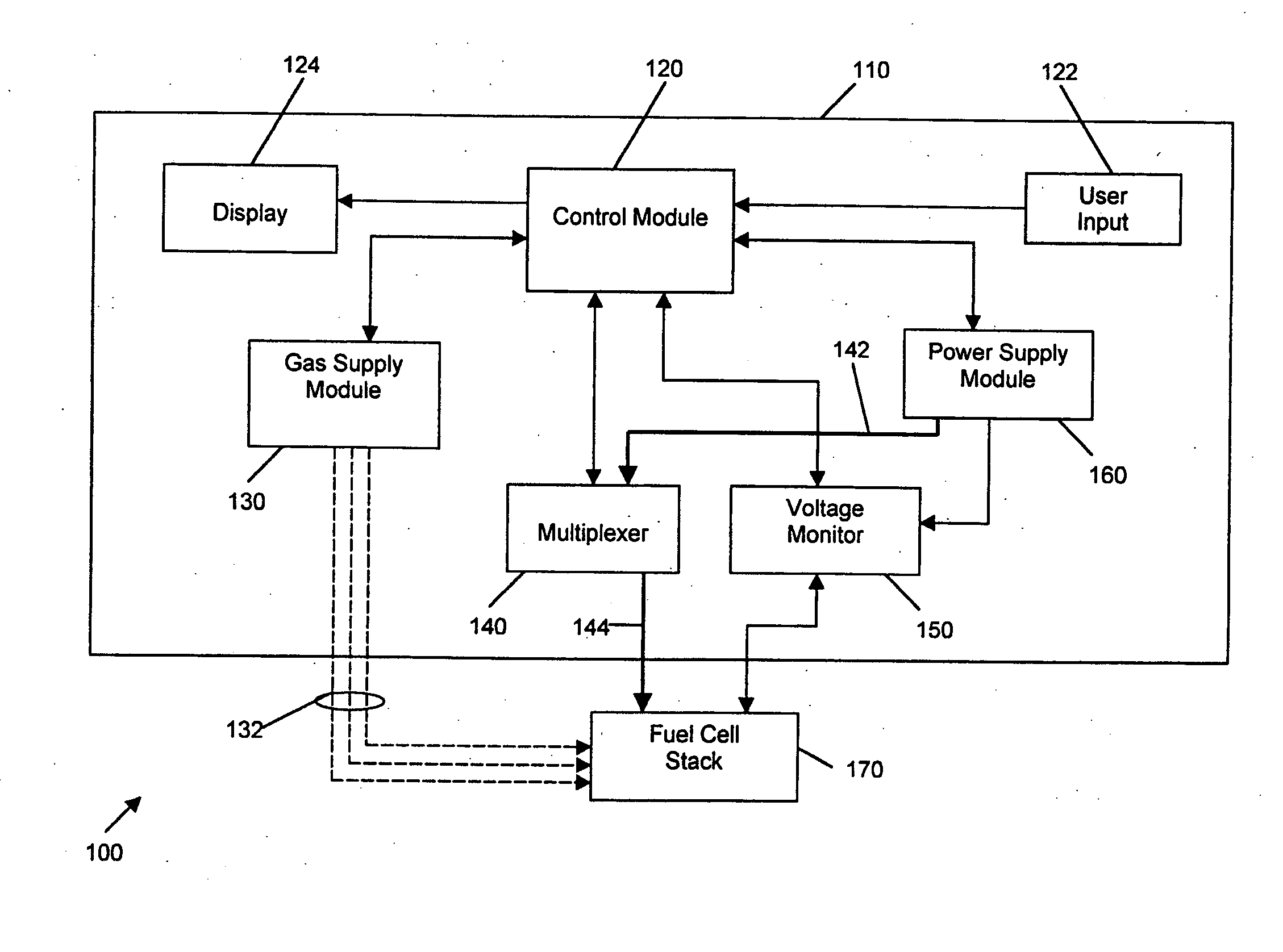
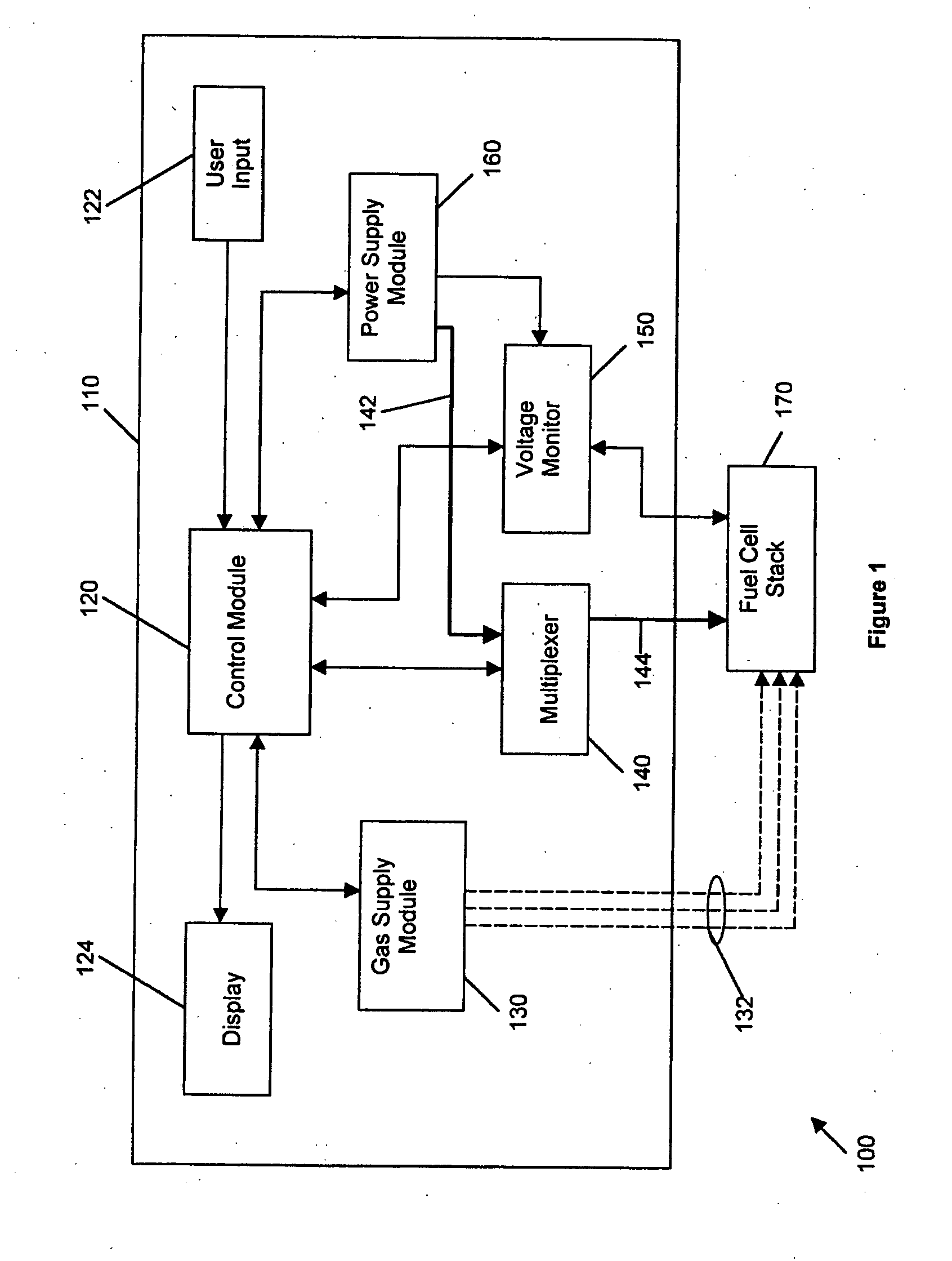
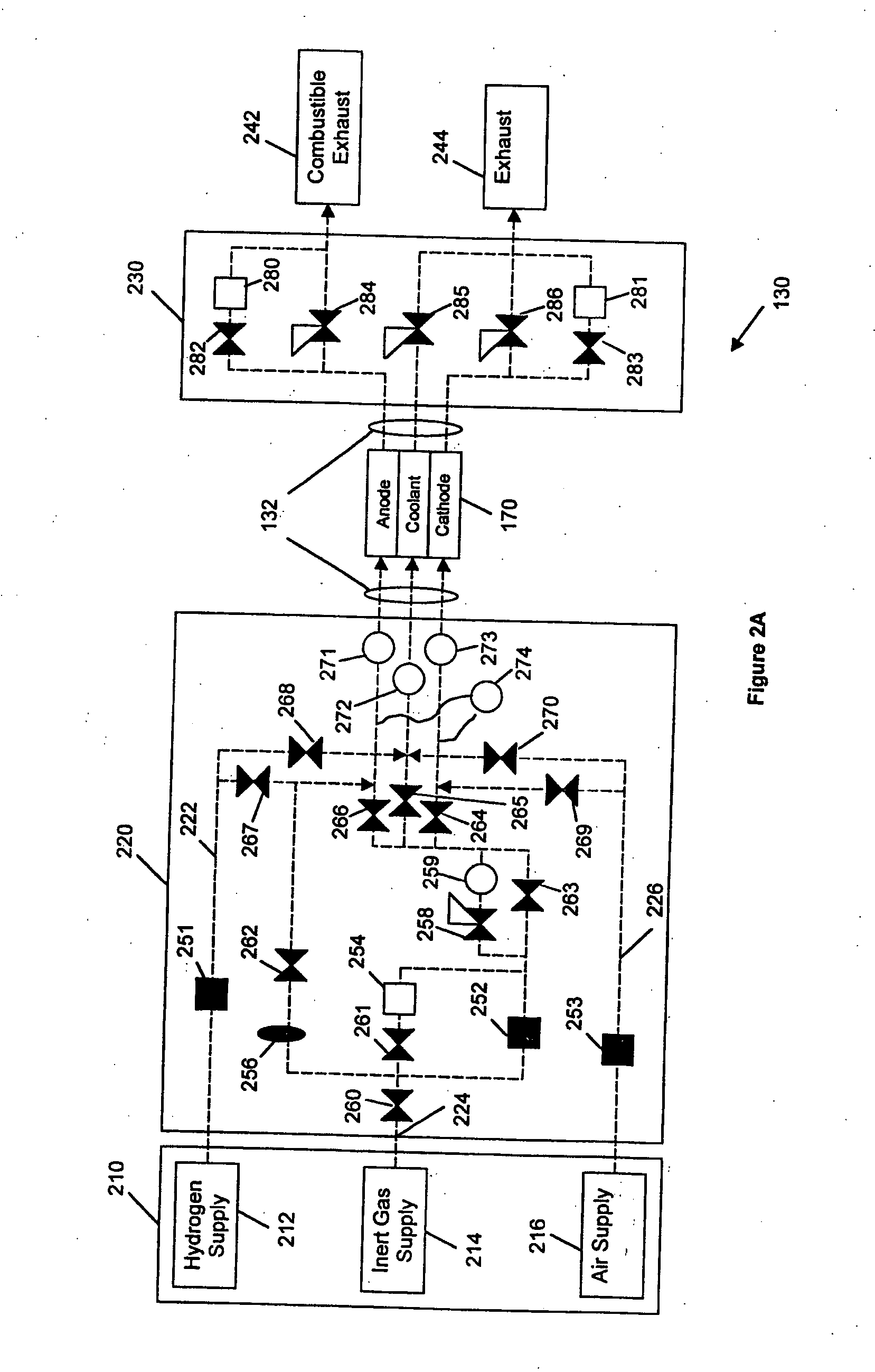
- An automated diagnostic testing system comprising a multiplexer, voltage monitor, power supply module, and control module that switches current and gas supply to electrochemical cells, using transistors for high current tolerance and a computer processor to execute testing protocols, allowing simultaneous testing of multiple parameters without manual intervention.

Control systems and methods for monitoring electrolyzer cell stack conditions and extending operational life
PatentWO2023229879A1
Innovation
- A method utilizing raw measurement sensors and soft sensors, along with historical data, to monitor operating parameters, diagnose abnormalities, and predict the lifespan of electrolysis system components, minimizing the need for additional sensors and leveraging existing sensing technologies, allowing for extended operational life without disassembly.


Efficiency and Durability Metrics for Electrolyzer Evaluation
Efficiency and durability metrics serve as critical benchmarks for evaluating electrolyzer performance in both research and commercial applications. These metrics provide quantitative measures to assess operational capabilities, degradation rates, and overall system viability across different electrolyzer technologies.
Primary efficiency metrics include stack efficiency (typically 65-85% for PEM electrolyzers and 60-80% for alkaline systems), which measures the ratio of energy output as hydrogen to electrical energy input. Voltage efficiency, calculated as the thermoneutral voltage divided by the actual cell voltage, offers insights into electrochemical performance, with state-of-the-art systems achieving 75-90% depending on current density and operating conditions.
Current density capabilities represent another crucial metric, with modern PEM electrolyzers operating at 1-2 A/cm² and advanced systems pushing toward 3-5 A/cm² to reduce stack footprint and capital costs. Faradaic efficiency, measuring the percentage of electrical charge converted to desired products, typically exceeds 99% in well-designed systems but can deteriorate with membrane degradation.
Durability metrics focus on performance stability over time, with voltage degradation rate being the most widely used indicator. Commercial electrolyzers typically exhibit degradation rates of 1-15 μV/h, with research targets aiming for <2 μV/h to ensure 80,000+ hour lifetimes. Stack lifetime projections based on accelerated stress tests provide estimates of operational longevity, with current commercial systems designed for 60,000-80,000 hours.
Membrane and catalyst stability metrics track material degradation through techniques like ICP-MS to measure dissolved catalyst particles and fluoride emission rates to assess membrane breakdown. Advanced diagnostic methods including electrochemical impedance spectroscopy (EIS) enable real-time monitoring of internal resistance changes that signal performance deterioration.
Start-stop cycling capability represents a critical durability metric for intermittent renewable energy applications, with systems evaluated on performance retention after thousands of on-off cycles. Modern electrolyzers aim to maintain >95% of initial performance after 10,000 cycles.
Standardized testing protocols from organizations like IEC, ISO, and NREL are increasingly important for consistent evaluation across different technologies and manufacturers, enabling meaningful comparisons and accelerating technology development through benchmarking against established performance targets.
Primary efficiency metrics include stack efficiency (typically 65-85% for PEM electrolyzers and 60-80% for alkaline systems), which measures the ratio of energy output as hydrogen to electrical energy input. Voltage efficiency, calculated as the thermoneutral voltage divided by the actual cell voltage, offers insights into electrochemical performance, with state-of-the-art systems achieving 75-90% depending on current density and operating conditions.
Current density capabilities represent another crucial metric, with modern PEM electrolyzers operating at 1-2 A/cm² and advanced systems pushing toward 3-5 A/cm² to reduce stack footprint and capital costs. Faradaic efficiency, measuring the percentage of electrical charge converted to desired products, typically exceeds 99% in well-designed systems but can deteriorate with membrane degradation.
Durability metrics focus on performance stability over time, with voltage degradation rate being the most widely used indicator. Commercial electrolyzers typically exhibit degradation rates of 1-15 μV/h, with research targets aiming for <2 μV/h to ensure 80,000+ hour lifetimes. Stack lifetime projections based on accelerated stress tests provide estimates of operational longevity, with current commercial systems designed for 60,000-80,000 hours.
Membrane and catalyst stability metrics track material degradation through techniques like ICP-MS to measure dissolved catalyst particles and fluoride emission rates to assess membrane breakdown. Advanced diagnostic methods including electrochemical impedance spectroscopy (EIS) enable real-time monitoring of internal resistance changes that signal performance deterioration.
Start-stop cycling capability represents a critical durability metric for intermittent renewable energy applications, with systems evaluated on performance retention after thousands of on-off cycles. Modern electrolyzers aim to maintain >95% of initial performance after 10,000 cycles.
Standardized testing protocols from organizations like IEC, ISO, and NREL are increasingly important for consistent evaluation across different technologies and manufacturers, enabling meaningful comparisons and accelerating technology development through benchmarking against established performance targets.
Integration with Renewable Energy Systems
The integration of advanced diagnostic systems for electrolyzer stack performance monitoring with renewable energy systems represents a critical frontier in green hydrogen production. Renewable energy sources such as solar and wind power exhibit inherent intermittency and variability, creating unique challenges for electrolyzer operation. These fluctuations can significantly impact electrolyzer efficiency, degradation rates, and overall system performance, necessitating sophisticated diagnostic approaches tailored to renewable-coupled operations.
When electrolyzers operate under variable power inputs from renewable sources, traditional steady-state diagnostic methods prove inadequate. Advanced diagnostic systems must incorporate real-time adaptation to rapidly changing conditions, including power ramps, partial loads, and frequent start-stop cycles. Machine learning algorithms that can predict system behavior under varying renewable generation profiles have demonstrated particular promise in optimizing electrolyzer performance while maintaining stack integrity.
Grid-connected renewable hydrogen systems benefit from diagnostic tools that can communicate with energy management systems to optimize electrolyzer operation based on both renewable availability and grid conditions. These integrated diagnostic platforms enable strategic operation during periods of renewable energy surplus, potentially reducing hydrogen production costs by 15-30% compared to constant-load operation. Furthermore, such integration facilitates participation in grid services markets, creating additional revenue streams for electrolyzer operators.
Field deployments have demonstrated that electrolyzer stacks coupled with renewable energy benefit from specialized diagnostic approaches focusing on transient response characteristics. High-frequency impedance spectroscopy techniques modified for variable-load conditions can detect subtle changes in membrane conductivity and catalyst activity during renewable power fluctuations. These methods provide critical early warning of potential degradation mechanisms specific to intermittent operation.
Energy storage integration presents another dimension for advanced diagnostics in renewable-coupled electrolyzers. Hybrid systems incorporating batteries or supercapacitors to buffer renewable variability require diagnostic systems that can optimize the interplay between multiple energy pathways. Diagnostic platforms that simultaneously monitor electrolyzer performance and energy storage state-of-health enable more effective system management and extended component lifetimes.
The geographical distribution of renewable resources also influences diagnostic system requirements. Remote installations with limited connectivity benefit from edge computing solutions that can process diagnostic data locally while transmitting only critical information to central monitoring systems. These distributed diagnostic architectures reduce bandwidth requirements while maintaining comprehensive monitoring capabilities across diverse renewable energy landscapes.
When electrolyzers operate under variable power inputs from renewable sources, traditional steady-state diagnostic methods prove inadequate. Advanced diagnostic systems must incorporate real-time adaptation to rapidly changing conditions, including power ramps, partial loads, and frequent start-stop cycles. Machine learning algorithms that can predict system behavior under varying renewable generation profiles have demonstrated particular promise in optimizing electrolyzer performance while maintaining stack integrity.
Grid-connected renewable hydrogen systems benefit from diagnostic tools that can communicate with energy management systems to optimize electrolyzer operation based on both renewable availability and grid conditions. These integrated diagnostic platforms enable strategic operation during periods of renewable energy surplus, potentially reducing hydrogen production costs by 15-30% compared to constant-load operation. Furthermore, such integration facilitates participation in grid services markets, creating additional revenue streams for electrolyzer operators.
Field deployments have demonstrated that electrolyzer stacks coupled with renewable energy benefit from specialized diagnostic approaches focusing on transient response characteristics. High-frequency impedance spectroscopy techniques modified for variable-load conditions can detect subtle changes in membrane conductivity and catalyst activity during renewable power fluctuations. These methods provide critical early warning of potential degradation mechanisms specific to intermittent operation.
Energy storage integration presents another dimension for advanced diagnostics in renewable-coupled electrolyzers. Hybrid systems incorporating batteries or supercapacitors to buffer renewable variability require diagnostic systems that can optimize the interplay between multiple energy pathways. Diagnostic platforms that simultaneously monitor electrolyzer performance and energy storage state-of-health enable more effective system management and extended component lifetimes.
The geographical distribution of renewable resources also influences diagnostic system requirements. Remote installations with limited connectivity benefit from edge computing solutions that can process diagnostic data locally while transmitting only critical information to central monitoring systems. These distributed diagnostic architectures reduce bandwidth requirements while maintaining comprehensive monitoring capabilities across diverse renewable energy landscapes.
Unlock deeper insights with PatSnap Eureka Quick Research — get a full tech report to explore trends and direct your research. Try now!
Generate Your Research Report Instantly with AI Agent
Supercharge your innovation with PatSnap Eureka AI Agent Platform!