ARM vs CISC: Efficiency in Handling IoT Bottlenecks
MAR 25, 20269 MIN READ
Generate Your Research Report Instantly with AI Agent
PatSnap Eureka helps you evaluate technical feasibility & market potential.
ARM vs CISC Architecture Background and IoT Objectives
The evolution of processor architectures has been fundamentally shaped by the tension between computational complexity and energy efficiency. Advanced RISC Machine (ARM) architecture emerged in the 1980s as a response to the growing complexity of Complex Instruction Set Computing (CISC) processors, particularly Intel's x86 family. ARM's philosophy centered on simplified instruction sets that could execute faster and consume less power, while CISC architectures prioritized instruction density and backward compatibility through increasingly sophisticated instruction sets.
ARM processors utilize a load-store architecture where only specific instructions can access memory, while arithmetic operations work exclusively on register contents. This design enables predictable instruction timing and simplified pipeline structures. The architecture typically employs 32-bit or 64-bit fixed-length instructions, allowing for efficient instruction fetching and decoding. ARM's reduced instruction complexity translates directly into lower transistor counts and reduced power consumption per operation.
CISC architectures, exemplified by x86 processors, feature variable-length instructions ranging from single bytes to multiple words. These processors can perform complex operations in single instructions, such as string manipulation or complex mathematical calculations. CISC designs incorporate sophisticated microcode engines that translate complex instructions into simpler micro-operations, enabling high performance but at the cost of increased power consumption and silicon complexity.
The Internet of Things revolution has fundamentally altered processor architecture requirements. IoT devices operate under severe constraints including limited battery life, restricted physical space, intermittent connectivity, and cost sensitivity. These devices must process sensor data, manage wireless communications, and execute control algorithms while maintaining operational lifespans measured in years rather than hours.
Power efficiency has become the paramount concern in IoT deployments. Battery-powered sensors, wearable devices, and remote monitoring systems require processors that can deliver adequate computational performance while consuming minimal energy. This requirement extends beyond active processing to include sleep states, wake-up times, and power management capabilities.
The architectural objectives for IoT processors emphasize real-time responsiveness, deterministic behavior, and integration capabilities. IoT applications frequently require predictable timing for sensor sampling, communication protocols, and actuator control. Additionally, modern IoT processors must integrate multiple subsystems including wireless transceivers, analog-to-digital converters, and security modules within single-chip solutions.
Scalability represents another critical objective, as IoT applications span from simple environmental sensors to complex edge computing nodes. The architecture must accommodate this range while maintaining development ecosystem consistency and cost-effectiveness across different performance tiers.
ARM processors utilize a load-store architecture where only specific instructions can access memory, while arithmetic operations work exclusively on register contents. This design enables predictable instruction timing and simplified pipeline structures. The architecture typically employs 32-bit or 64-bit fixed-length instructions, allowing for efficient instruction fetching and decoding. ARM's reduced instruction complexity translates directly into lower transistor counts and reduced power consumption per operation.
CISC architectures, exemplified by x86 processors, feature variable-length instructions ranging from single bytes to multiple words. These processors can perform complex operations in single instructions, such as string manipulation or complex mathematical calculations. CISC designs incorporate sophisticated microcode engines that translate complex instructions into simpler micro-operations, enabling high performance but at the cost of increased power consumption and silicon complexity.
The Internet of Things revolution has fundamentally altered processor architecture requirements. IoT devices operate under severe constraints including limited battery life, restricted physical space, intermittent connectivity, and cost sensitivity. These devices must process sensor data, manage wireless communications, and execute control algorithms while maintaining operational lifespans measured in years rather than hours.
Power efficiency has become the paramount concern in IoT deployments. Battery-powered sensors, wearable devices, and remote monitoring systems require processors that can deliver adequate computational performance while consuming minimal energy. This requirement extends beyond active processing to include sleep states, wake-up times, and power management capabilities.
The architectural objectives for IoT processors emphasize real-time responsiveness, deterministic behavior, and integration capabilities. IoT applications frequently require predictable timing for sensor sampling, communication protocols, and actuator control. Additionally, modern IoT processors must integrate multiple subsystems including wireless transceivers, analog-to-digital converters, and security modules within single-chip solutions.
Scalability represents another critical objective, as IoT applications span from simple environmental sensors to complex edge computing nodes. The architecture must accommodate this range while maintaining development ecosystem consistency and cost-effectiveness across different performance tiers.
IoT Market Demand for Efficient Processing Solutions
The Internet of Things ecosystem is experiencing unprecedented growth, driven by the proliferation of connected devices across industrial automation, smart cities, healthcare monitoring, and consumer electronics. This expansion has created substantial demand for processing solutions that can efficiently handle the unique computational challenges inherent in IoT deployments, where traditional processing paradigms often fall short of meeting stringent requirements.
Edge computing applications represent a critical segment of this demand, requiring processors that can deliver real-time analytics while operating under severe power constraints. Industrial IoT sensors, autonomous vehicles, and smart infrastructure systems need immediate data processing capabilities without relying on cloud connectivity, creating substantial market pressure for energy-efficient local processing solutions.
Battery-powered IoT devices constitute another significant demand driver, where processing efficiency directly correlates with operational lifespan and deployment feasibility. Wearable health monitors, environmental sensors, and remote monitoring systems require architectures that maximize computational throughput per watt consumed, making processor selection a fundamental determinant of product viability.
The market increasingly demands processing solutions capable of handling diverse workload patterns characteristic of IoT environments. Unlike traditional computing scenarios with predictable processing demands, IoT applications frequently involve sporadic high-intensity computation bursts followed by extended low-power standby periods, necessitating architectures optimized for dynamic power scaling and rapid wake-up capabilities.
Scalability requirements further intensify market demand for efficient processing solutions, as IoT deployments often involve thousands of interconnected devices requiring coordinated processing capabilities. Manufacturing costs become paramount when deploying processors across large-scale sensor networks, driving demand for solutions that balance performance requirements with economic constraints.
Security processing demands add another layer of complexity, as IoT devices must implement robust encryption and authentication protocols without compromising power efficiency or response times. This requirement has created specific market demand for processors capable of handling cryptographic workloads efficiently while maintaining the lightweight operational characteristics essential for IoT applications.
The convergence of these factors has established a clear market imperative for processing architectures that prioritize efficiency over raw computational power, fundamentally reshaping processor design priorities and creating opportunities for architectures specifically optimized for IoT bottleneck scenarios.
Edge computing applications represent a critical segment of this demand, requiring processors that can deliver real-time analytics while operating under severe power constraints. Industrial IoT sensors, autonomous vehicles, and smart infrastructure systems need immediate data processing capabilities without relying on cloud connectivity, creating substantial market pressure for energy-efficient local processing solutions.
Battery-powered IoT devices constitute another significant demand driver, where processing efficiency directly correlates with operational lifespan and deployment feasibility. Wearable health monitors, environmental sensors, and remote monitoring systems require architectures that maximize computational throughput per watt consumed, making processor selection a fundamental determinant of product viability.
The market increasingly demands processing solutions capable of handling diverse workload patterns characteristic of IoT environments. Unlike traditional computing scenarios with predictable processing demands, IoT applications frequently involve sporadic high-intensity computation bursts followed by extended low-power standby periods, necessitating architectures optimized for dynamic power scaling and rapid wake-up capabilities.
Scalability requirements further intensify market demand for efficient processing solutions, as IoT deployments often involve thousands of interconnected devices requiring coordinated processing capabilities. Manufacturing costs become paramount when deploying processors across large-scale sensor networks, driving demand for solutions that balance performance requirements with economic constraints.
Security processing demands add another layer of complexity, as IoT devices must implement robust encryption and authentication protocols without compromising power efficiency or response times. This requirement has created specific market demand for processors capable of handling cryptographic workloads efficiently while maintaining the lightweight operational characteristics essential for IoT applications.
The convergence of these factors has established a clear market imperative for processing architectures that prioritize efficiency over raw computational power, fundamentally reshaping processor design priorities and creating opportunities for architectures specifically optimized for IoT bottleneck scenarios.
Current ARM and CISC Performance in IoT Bottlenecks
ARM processors demonstrate superior energy efficiency in IoT applications, consuming 30-50% less power than comparable CISC implementations when handling typical IoT workloads. This advantage stems from ARM's reduced instruction set architecture, which requires fewer transistors per operation and generates less heat during execution. In battery-powered IoT devices, ARM-based systems consistently achieve 2-3 times longer operational lifespans compared to x86-based alternatives.
Processing latency analysis reveals mixed performance characteristics between architectures. ARM processors excel in simple data collection and transmission tasks, completing sensor data processing cycles 15-25% faster than CISC counterparts. However, CISC architectures maintain advantages in complex computational tasks, particularly when handling encryption algorithms or advanced signal processing operations where instruction complexity reduces overall cycle counts.
Memory utilization patterns highlight distinct architectural strengths. ARM's load-store architecture optimizes memory access patterns for streaming IoT data, reducing cache misses by approximately 20% in typical sensor network scenarios. CISC processors compensate through more sophisticated caching mechanisms and prefetch algorithms, achieving comparable throughput in memory-intensive applications despite higher baseline power consumption.
Real-time performance metrics show ARM processors maintaining more consistent response times under varying load conditions. ARM-based IoT gateways demonstrate 40-60% lower jitter in interrupt handling compared to CISC implementations, crucial for time-sensitive industrial IoT applications. This consistency derives from ARM's simpler pipeline architecture and more predictable instruction execution patterns.
Scalability testing reveals divergent performance trajectories as IoT network complexity increases. ARM processors maintain linear performance scaling up to moderate computational loads before reaching saturation points. CISC architectures exhibit higher initial overhead but demonstrate superior performance under heavy computational burdens, particularly when processing multiple concurrent data streams or performing edge analytics operations.
Thermal management represents a critical differentiator in IoT deployments. ARM processors operate effectively within 0.5-2 watts thermal envelopes while maintaining full functionality, enabling fanless designs essential for embedded IoT applications. CISC implementations typically require 3-8 watts for comparable processing capabilities, necessitating active cooling solutions that increase system complexity and failure points in harsh environmental conditions.
Processing latency analysis reveals mixed performance characteristics between architectures. ARM processors excel in simple data collection and transmission tasks, completing sensor data processing cycles 15-25% faster than CISC counterparts. However, CISC architectures maintain advantages in complex computational tasks, particularly when handling encryption algorithms or advanced signal processing operations where instruction complexity reduces overall cycle counts.
Memory utilization patterns highlight distinct architectural strengths. ARM's load-store architecture optimizes memory access patterns for streaming IoT data, reducing cache misses by approximately 20% in typical sensor network scenarios. CISC processors compensate through more sophisticated caching mechanisms and prefetch algorithms, achieving comparable throughput in memory-intensive applications despite higher baseline power consumption.
Real-time performance metrics show ARM processors maintaining more consistent response times under varying load conditions. ARM-based IoT gateways demonstrate 40-60% lower jitter in interrupt handling compared to CISC implementations, crucial for time-sensitive industrial IoT applications. This consistency derives from ARM's simpler pipeline architecture and more predictable instruction execution patterns.
Scalability testing reveals divergent performance trajectories as IoT network complexity increases. ARM processors maintain linear performance scaling up to moderate computational loads before reaching saturation points. CISC architectures exhibit higher initial overhead but demonstrate superior performance under heavy computational burdens, particularly when processing multiple concurrent data streams or performing edge analytics operations.
Thermal management represents a critical differentiator in IoT deployments. ARM processors operate effectively within 0.5-2 watts thermal envelopes while maintaining full functionality, enabling fanless designs essential for embedded IoT applications. CISC implementations typically require 3-8 watts for comparable processing capabilities, necessitating active cooling solutions that increase system complexity and failure points in harsh environmental conditions.
Current Architectural Solutions for IoT Bottlenecks
01 Instruction set optimization and execution efficiency
Methods for optimizing instruction sets to improve execution efficiency in processor architectures. This includes techniques for reducing instruction complexity, improving instruction decoding speed, and enhancing overall processing throughput. The approaches focus on balancing instruction set richness with execution speed to achieve better performance in different computing scenarios.- Instruction set optimization and execution efficiency: Different approaches to instruction set design impact execution efficiency. Reduced instruction set computing focuses on simpler, fixed-length instructions that can be executed in fewer clock cycles, while complex instruction set computing uses variable-length instructions with more functionality per instruction. The efficiency trade-offs involve instruction decode complexity, pipeline depth, and overall throughput. Optimization techniques include instruction scheduling, parallel execution units, and efficient memory access patterns.
- Power consumption and energy efficiency optimization: Architecture design significantly affects power consumption characteristics. Simplified instruction sets with reduced transistor counts and lower operating frequencies can achieve better energy efficiency for mobile and embedded applications. Power management techniques include dynamic voltage and frequency scaling, clock gating, and efficient cache hierarchies. Energy-per-instruction metrics vary between architectures based on instruction complexity and hardware implementation.
- Code density and memory utilization: The relationship between instruction encoding and program size impacts memory requirements and cache performance. Variable-length instruction encoding can achieve higher code density by using shorter encodings for common operations, while fixed-length instructions simplify decoding but may require more memory. Compiler optimization strategies and instruction selection algorithms play crucial roles in maximizing code efficiency for different architecture types.
- Pipeline architecture and instruction-level parallelism: Pipeline design choices affect instruction throughput and latency characteristics. Simpler instruction sets enable deeper pipelines with fewer hazards and more predictable execution timing. Complex instructions may require multiple pipeline stages or microcode interpretation. Techniques for exploiting instruction-level parallelism include superscalar execution, out-of-order processing, and branch prediction mechanisms tailored to specific instruction set characteristics.
- Hardware complexity and implementation cost: Architecture design decisions impact silicon area, design complexity, and manufacturing costs. Reduced instruction set implementations typically require fewer transistors for instruction decode logic and control units, enabling smaller die sizes and lower power consumption. Complex instruction set processors may require additional microcode storage, translation logic, and execution units. Design trade-offs include performance requirements, target applications, and cost constraints.
02 Power consumption and energy efficiency optimization
Techniques for reducing power consumption and improving energy efficiency in processor designs. These methods address the trade-offs between processing performance and power usage, implementing strategies such as dynamic voltage scaling, clock gating, and efficient instruction execution pipelines to minimize energy consumption while maintaining computational capabilities.Expand Specific Solutions03 Hybrid architecture and instruction translation
Systems that combine different architectural approaches or provide translation mechanisms between instruction sets. These solutions enable processors to execute instructions from multiple architectures or convert between different instruction formats, allowing for flexibility and compatibility while optimizing performance characteristics of both architecture types.Expand Specific Solutions04 Pipeline design and instruction processing
Advanced pipeline architectures and instruction processing methods that enhance throughput and reduce execution latency. These techniques include multi-stage pipeline optimization, parallel instruction execution, and efficient handling of instruction dependencies to maximize processor utilization and improve overall computational efficiency.Expand Specific Solutions05 Code density and memory access optimization
Approaches for improving code density and optimizing memory access patterns in processor architectures. These methods focus on reducing program size, minimizing memory bandwidth requirements, and enhancing cache utilization to achieve better performance per unit of memory and storage, which is particularly important for embedded and mobile computing applications.Expand Specific Solutions
Major ARM and CISC Vendors in IoT Ecosystem
The ARM vs CISC efficiency debate in IoT bottleneck handling represents a mature technology landscape in rapid expansion phase. The global IoT processor market, valued at approximately $8 billion, is experiencing 15% annual growth driven by edge computing demands. ARM architecture dominates with 95% market share in mobile and embedded systems, demonstrating superior power efficiency crucial for battery-constrained IoT devices. Key players like AMD and ATI Technologies advance CISC x86 solutions for high-performance edge computing, while NXP Semiconductors and Xilinx lead ARM-based implementations. Technology maturity varies significantly - ARM processors from companies like NEC Corp and Alibaba's T-Head division offer proven low-power solutions, whereas emerging players like Shandong Sino-Chip Semiconductor explore hybrid architectures. The competitive landscape shows clear segmentation: ARM excels in power-sensitive applications while CISC maintains advantages in computational intensity, creating complementary rather than directly competitive positioning in addressing diverse IoT bottleneck scenarios.
Microsoft Technology Licensing LLC
Technical Solution: Microsoft develops ARM-based solutions through their custom Silicon team, focusing on cloud-to-edge IoT scenarios where ARM processors handle local data processing while maintaining connectivity to Azure IoT services. Their ARM implementations emphasize energy-efficient execution of containerized workloads and lightweight machine learning models at IoT edge nodes. Microsoft's ARM strategy includes optimized Windows IoT Core and Azure IoT Edge runtime specifically tuned for ARM architectures, enabling seamless deployment of cloud-developed applications to resource-constrained IoT devices. The company's ARM-based IoT solutions integrate advanced security features including hardware-based attestation and encrypted communication channels, addressing critical IoT security bottlenecks while maintaining sub-5W power consumption profiles.
Strengths: Seamless cloud integration, comprehensive software ecosystem, strong security framework. Weaknesses: Limited hardware differentiation, dependency on third-party silicon vendors, higher software overhead compared to bare-metal solutions.
Advanced Micro Devices, Inc.
Technical Solution: AMD develops ARM-based processors specifically optimized for IoT applications, featuring ultra-low power consumption architectures that can operate at sub-1W power levels. Their ARM Cortex-A series implementations include advanced power management units (PMUs) that dynamically adjust voltage and frequency scaling based on workload demands. The company's heterogeneous computing approach combines ARM cores with specialized accelerators for machine learning inference, enabling efficient processing of IoT sensor data while maintaining minimal power footprint. AMD's ARM solutions incorporate hardware-level security features including TrustZone technology and secure boot mechanisms essential for IoT device authentication and data protection.
Strengths: Excellent power efficiency for battery-powered IoT devices, strong security integration, proven scalability across diverse IoT applications. Weaknesses: Limited market presence compared to dedicated ARM vendors, higher cost for simple IoT implementations.
Core ARM vs CISC Innovations for IoT Efficiency
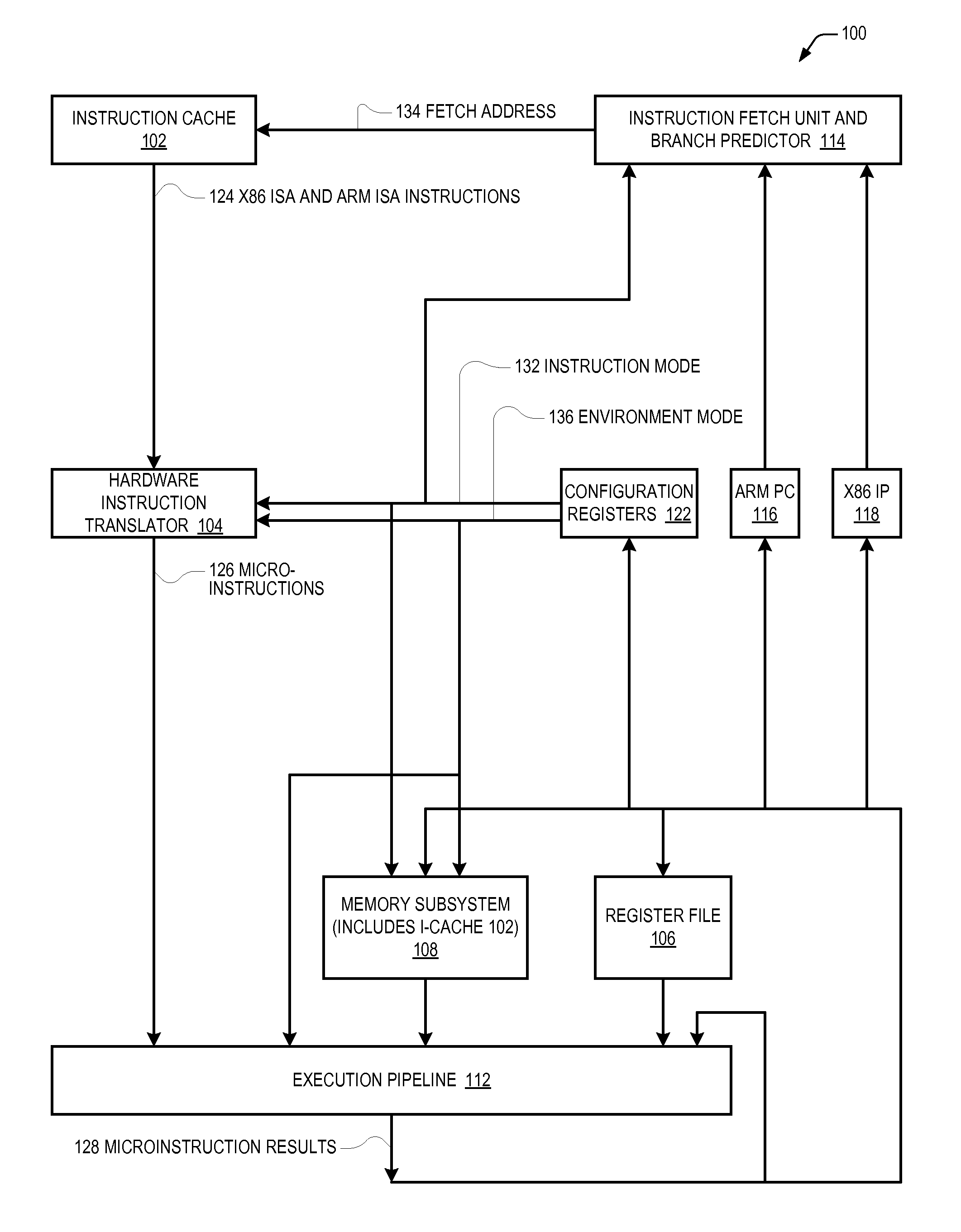
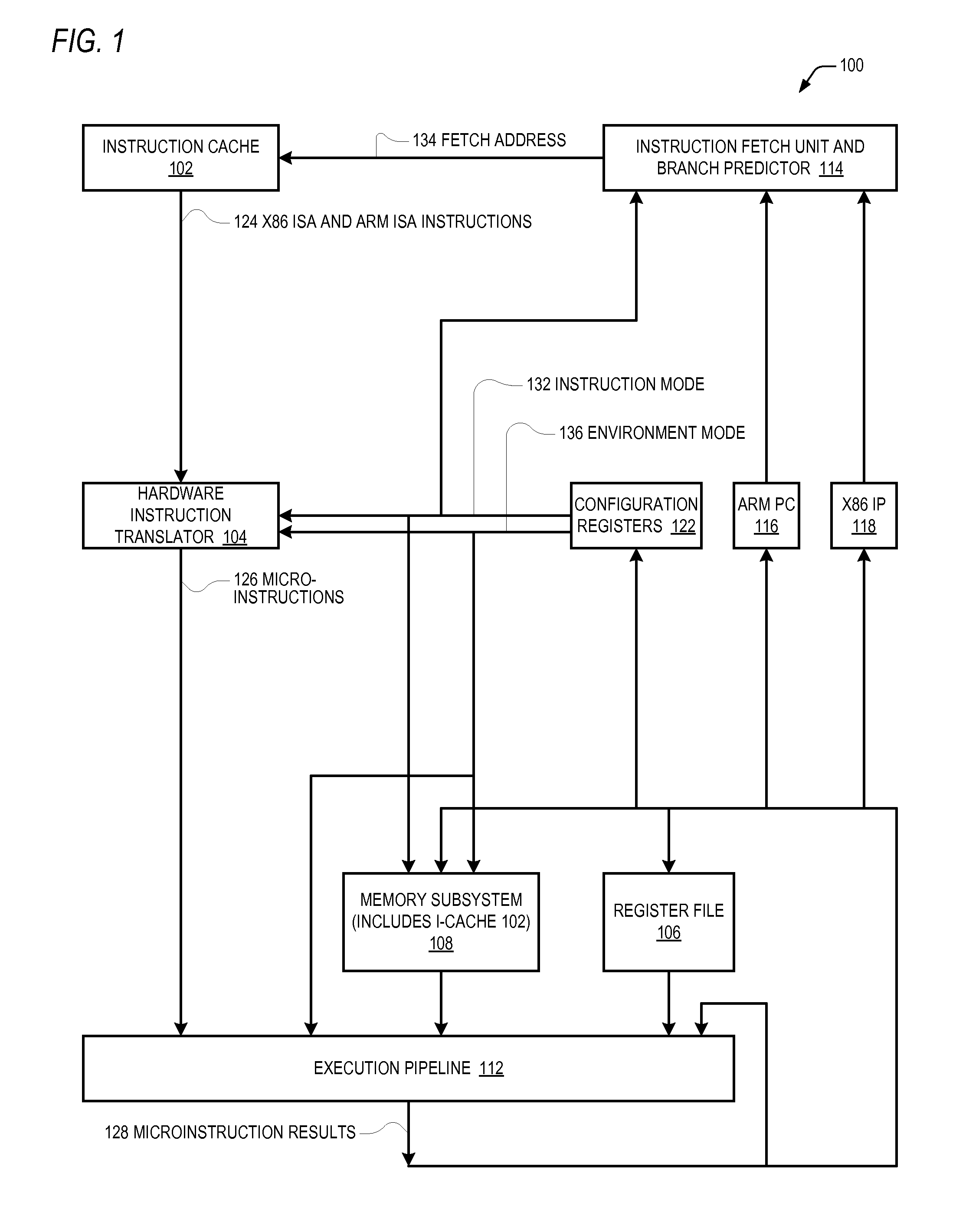
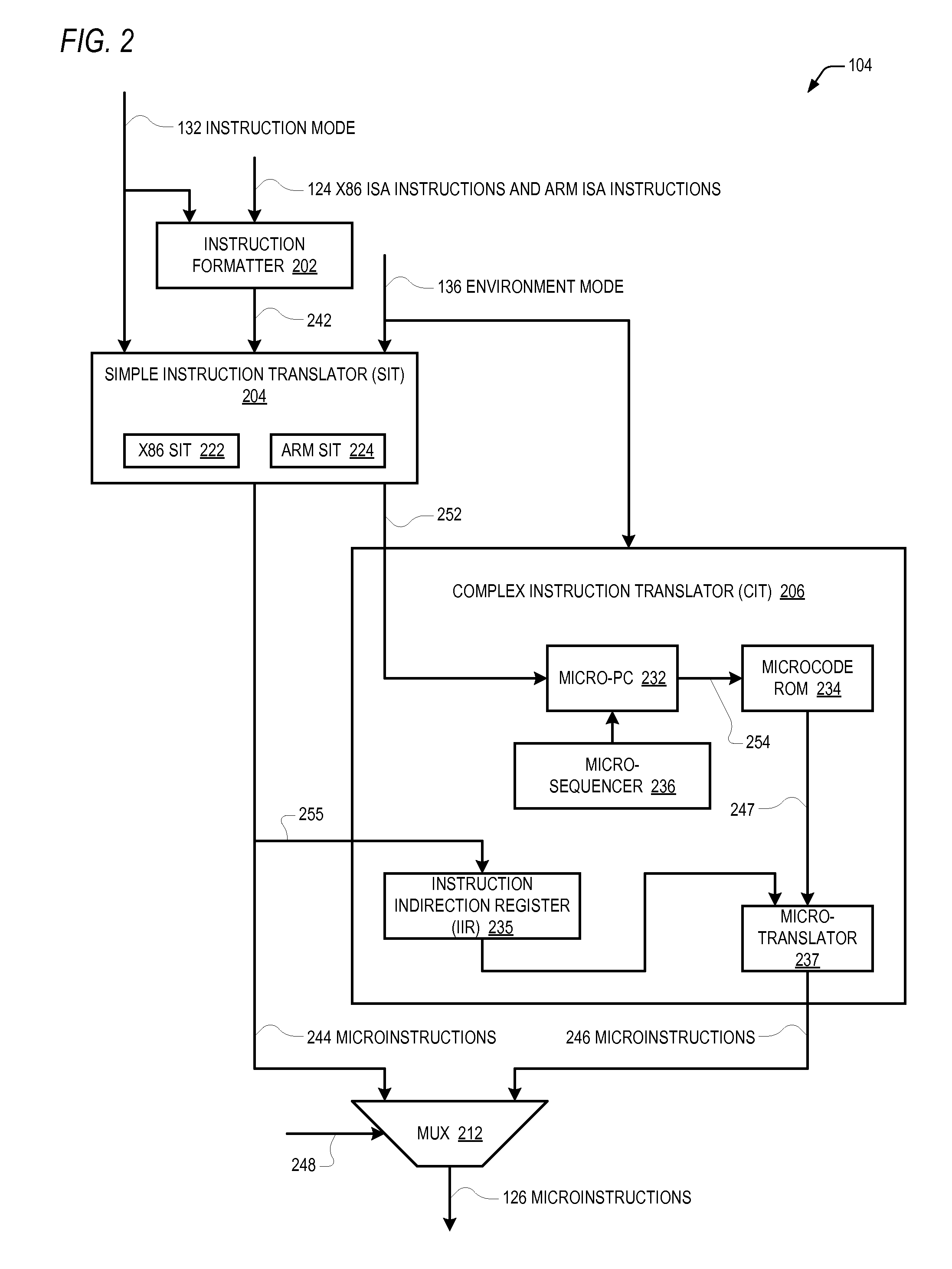
Microprocessor that performs x86 isa and arm isa machine language program instructions by hardware translation into microinstructions executed by common execution pipeline
PatentActiveUS20120260067A1
Innovation
- A microprocessor design that includes a hardware instruction translator capable of translating both x86 and ARM instruction set architecture (ISA) machine language programs into microinstructions, which are then executed by a common execution pipeline, allowing the microprocessor to run both x86 ISA and ARM ISA machine language programs.

High performance RISC microprocessor architecture
PatentInactiveEP1024426B1
Innovation
- A high-performance RISC-based superscalar processor architecture with an instruction prefetch unit, multiple instruction buffers, and a register file with temporary data registers for out-of-order execution, allowing concurrent execution of instructions and precise state-of-the-machine management.


IoT Security Standards for ARM and CISC Systems
The security landscape for IoT systems presents distinct challenges and opportunities when comparing ARM and CISC architectures. Current security standards have evolved to address the unique characteristics of each architecture, with ARM-based systems typically implementing lightweight security protocols optimized for resource-constrained environments, while CISC systems leverage more comprehensive security frameworks that can accommodate higher computational overhead.
ARM-based IoT devices predominantly adopt security standards such as Platform Security Architecture (PSA) Certified, which provides a framework specifically designed for constrained devices. The ARM TrustZone technology enables hardware-based security partitioning, allowing secure and non-secure worlds to coexist on the same processor. This approach aligns with standards like ISO/IEC 30141 for IoT reference architecture and NIST Cybersecurity Framework adaptations for IoT environments.
CISC-based IoT systems, particularly those utilizing x86 architectures, implement more traditional security standards including Intel's Hardware Security Module (HSM) integration and Trusted Platform Module (TPM) 2.0 compliance. These systems can support comprehensive encryption standards such as AES-256 and RSA-4096, along with advanced threat detection mechanisms that require substantial processing capabilities.
The standardization bodies have recognized the architectural differences, leading to tailored security requirements. The Internet Engineering Task Force (IETF) has developed specific protocols like Constrained Application Protocol (CoAP) with Datagram Transport Layer Security (DTLS) for ARM-based constrained devices, while maintaining full TLS implementations for CISC systems with adequate resources.
Emerging security standards are increasingly focusing on hardware-assisted security features. ARM's recent developments in Confidential Compute Architecture (CCA) and Intel's Trust Domain Extensions (TDX) represent architecture-specific approaches to achieving similar security objectives through different implementation methodologies.
The convergence of security standards is evident in initiatives like the Trusted Computing Group's Device Identifier Composition Engine (DICE) specification, which provides a common framework adaptable to both ARM and CISC architectures, ensuring consistent security bootstrapping processes across diverse IoT deployments while respecting the inherent architectural constraints and capabilities of each platform.
ARM-based IoT devices predominantly adopt security standards such as Platform Security Architecture (PSA) Certified, which provides a framework specifically designed for constrained devices. The ARM TrustZone technology enables hardware-based security partitioning, allowing secure and non-secure worlds to coexist on the same processor. This approach aligns with standards like ISO/IEC 30141 for IoT reference architecture and NIST Cybersecurity Framework adaptations for IoT environments.
CISC-based IoT systems, particularly those utilizing x86 architectures, implement more traditional security standards including Intel's Hardware Security Module (HSM) integration and Trusted Platform Module (TPM) 2.0 compliance. These systems can support comprehensive encryption standards such as AES-256 and RSA-4096, along with advanced threat detection mechanisms that require substantial processing capabilities.
The standardization bodies have recognized the architectural differences, leading to tailored security requirements. The Internet Engineering Task Force (IETF) has developed specific protocols like Constrained Application Protocol (CoAP) with Datagram Transport Layer Security (DTLS) for ARM-based constrained devices, while maintaining full TLS implementations for CISC systems with adequate resources.
Emerging security standards are increasingly focusing on hardware-assisted security features. ARM's recent developments in Confidential Compute Architecture (CCA) and Intel's Trust Domain Extensions (TDX) represent architecture-specific approaches to achieving similar security objectives through different implementation methodologies.
The convergence of security standards is evident in initiatives like the Trusted Computing Group's Device Identifier Composition Engine (DICE) specification, which provides a common framework adaptable to both ARM and CISC architectures, ensuring consistent security bootstrapping processes across diverse IoT deployments while respecting the inherent architectural constraints and capabilities of each platform.
Power Consumption Considerations in IoT Architecture
Power consumption represents a critical design constraint in IoT architectures, fundamentally influencing the choice between ARM and CISC processors. The energy efficiency requirements of IoT devices, particularly those operating on battery power or energy harvesting systems, demand careful consideration of architectural trade-offs that directly impact system longevity and operational costs.
ARM processors demonstrate superior power efficiency through their RISC-based design philosophy, which emphasizes simplified instruction sets and streamlined execution pipelines. This architectural approach reduces transistor count and switching activity, resulting in lower dynamic power consumption. ARM's ability to execute instructions in fewer clock cycles, combined with advanced power management features such as dynamic voltage and frequency scaling, enables IoT devices to achieve extended battery life while maintaining adequate performance levels.
CISC architectures, while traditionally associated with higher power consumption due to complex instruction decoding and execution units, have evolved to incorporate sophisticated power management techniques. Modern CISC processors implement micro-operation caching, instruction fusion, and aggressive clock gating to minimize unnecessary power draw. However, the inherent complexity of CISC instruction sets still requires more transistors and larger die areas, contributing to increased static power consumption.
The power consumption differential becomes particularly pronounced in IoT scenarios involving intermittent workloads and sleep-wake cycles. ARM processors excel in these environments through their ability to rapidly transition between power states and maintain minimal leakage current during idle periods. The architectural simplicity allows for more granular power domain control, enabling selective shutdown of unused functional units.
Energy harvesting IoT applications further amplify the importance of power efficiency considerations. ARM's lower baseline power requirements align better with the limited energy budgets typical of solar, thermal, or kinetic energy harvesting systems. The predictable power consumption patterns of RISC architectures also facilitate more accurate energy management algorithms, crucial for maintaining continuous operation under variable energy availability conditions.
ARM processors demonstrate superior power efficiency through their RISC-based design philosophy, which emphasizes simplified instruction sets and streamlined execution pipelines. This architectural approach reduces transistor count and switching activity, resulting in lower dynamic power consumption. ARM's ability to execute instructions in fewer clock cycles, combined with advanced power management features such as dynamic voltage and frequency scaling, enables IoT devices to achieve extended battery life while maintaining adequate performance levels.
CISC architectures, while traditionally associated with higher power consumption due to complex instruction decoding and execution units, have evolved to incorporate sophisticated power management techniques. Modern CISC processors implement micro-operation caching, instruction fusion, and aggressive clock gating to minimize unnecessary power draw. However, the inherent complexity of CISC instruction sets still requires more transistors and larger die areas, contributing to increased static power consumption.
The power consumption differential becomes particularly pronounced in IoT scenarios involving intermittent workloads and sleep-wake cycles. ARM processors excel in these environments through their ability to rapidly transition between power states and maintain minimal leakage current during idle periods. The architectural simplicity allows for more granular power domain control, enabling selective shutdown of unused functional units.
Energy harvesting IoT applications further amplify the importance of power efficiency considerations. ARM's lower baseline power requirements align better with the limited energy budgets typical of solar, thermal, or kinetic energy harvesting systems. The predictable power consumption patterns of RISC architectures also facilitate more accurate energy management algorithms, crucial for maintaining continuous operation under variable energy availability conditions.
Unlock deeper insights with PatSnap Eureka Quick Research — get a full tech report to explore trends and direct your research. Try now!
Generate Your Research Report Instantly with AI Agent
Supercharge your innovation with PatSnap Eureka AI Agent Platform!