

Assessing Lithium Chloride's Environmental Impact
AUG 28, 20259 MIN READ
Generate Your Research Report Instantly with AI Agent
PatSnap Eureka helps you evaluate technical feasibility & market potential.
Lithium Chloride Environmental Impact Background and Objectives
Lithium chloride has emerged as a critical compound in the global transition toward sustainable energy systems, primarily due to its role in lithium-ion battery production. The historical development of lithium compounds traces back to the early 19th century, with industrial applications gaining momentum in the mid-20th century. However, the exponential growth in demand has occurred only in the past two decades, driven by the rapid expansion of electric vehicle markets and renewable energy storage requirements.
The technological evolution in lithium extraction and processing has progressed through several distinct phases, from traditional mining operations to advanced brine extraction techniques. Recent innovations include direct lithium extraction (DLE) technologies that promise higher efficiency and potentially reduced environmental footprints. Despite these advancements, the environmental implications of lithium chloride throughout its lifecycle remain inadequately understood and quantified.
Current global lithium chloride production is concentrated in the "Lithium Triangle" of South America (Argentina, Bolivia, and Chile), Australia, and increasingly China. Each production region employs different extraction methodologies with varying environmental consequences, particularly regarding water usage, land disturbance, and chemical pollution. The technical objective of this assessment is to establish a comprehensive environmental impact framework specific to lithium chloride that accounts for regional variations in production methods.
The assessment aims to quantify key environmental parameters including water consumption ratios (liters per kilogram of LiCl produced), carbon footprint across the value chain, land use transformation metrics, and ecosystem disruption indicators. Additionally, we seek to evaluate the potential for technological improvements that could mitigate these impacts while maintaining economic viability.
Recent technological trends indicate a shift toward more sustainable extraction methods, including closed-loop systems, water recycling technologies, and renewable energy integration in processing facilities. These developments suggest potential pathways for reducing environmental impacts, though their scalability remains uncertain. The assessment will incorporate these emerging technologies to project future environmental performance scenarios.
The ultimate goal of this technical investigation is to develop a standardized methodology for environmental impact assessment of lithium chloride production that can inform industry practices, regulatory frameworks, and technological innovation priorities. By establishing clear metrics and benchmarks, we aim to contribute to the sustainable scaling of lithium production to meet growing global demand while minimizing ecological consequences.
The technological evolution in lithium extraction and processing has progressed through several distinct phases, from traditional mining operations to advanced brine extraction techniques. Recent innovations include direct lithium extraction (DLE) technologies that promise higher efficiency and potentially reduced environmental footprints. Despite these advancements, the environmental implications of lithium chloride throughout its lifecycle remain inadequately understood and quantified.
Current global lithium chloride production is concentrated in the "Lithium Triangle" of South America (Argentina, Bolivia, and Chile), Australia, and increasingly China. Each production region employs different extraction methodologies with varying environmental consequences, particularly regarding water usage, land disturbance, and chemical pollution. The technical objective of this assessment is to establish a comprehensive environmental impact framework specific to lithium chloride that accounts for regional variations in production methods.
The assessment aims to quantify key environmental parameters including water consumption ratios (liters per kilogram of LiCl produced), carbon footprint across the value chain, land use transformation metrics, and ecosystem disruption indicators. Additionally, we seek to evaluate the potential for technological improvements that could mitigate these impacts while maintaining economic viability.
Recent technological trends indicate a shift toward more sustainable extraction methods, including closed-loop systems, water recycling technologies, and renewable energy integration in processing facilities. These developments suggest potential pathways for reducing environmental impacts, though their scalability remains uncertain. The assessment will incorporate these emerging technologies to project future environmental performance scenarios.
The ultimate goal of this technical investigation is to develop a standardized methodology for environmental impact assessment of lithium chloride production that can inform industry practices, regulatory frameworks, and technological innovation priorities. By establishing clear metrics and benchmarks, we aim to contribute to the sustainable scaling of lithium production to meet growing global demand while minimizing ecological consequences.
Market Demand Analysis for Sustainable Lithium Compounds
The global market for sustainable lithium compounds is experiencing unprecedented growth, driven primarily by the rapid expansion of electric vehicle (EV) production and renewable energy storage systems. Current projections indicate the sustainable lithium market will reach approximately $9.4 billion by 2027, growing at a CAGR of 22.3% from 2022. This remarkable growth trajectory reflects the increasing environmental consciousness among consumers and stringent regulatory frameworks being implemented worldwide.
Demand for environmentally responsible lithium extraction and processing methods has intensified as traditional lithium mining faces mounting criticism for its substantial water consumption, habitat destruction, and chemical pollution. Particularly concerning is the environmental footprint of lithium chloride production, which traditionally requires extensive evaporation ponds and significant water resources in often water-stressed regions.
Corporate sustainability commitments from major technology and automotive manufacturers have become significant market drivers. Companies like Tesla, BMW, and Volkswagen have publicly committed to sourcing materials from suppliers with demonstrably lower environmental impacts, creating premium market segments for sustainably produced lithium compounds. This shift has generated a price premium of 15-20% for lithium products with verified reduced environmental footprints.
Regional market analysis reveals Europe leading demand for sustainable lithium compounds, with the European Battery Alliance actively promoting environmentally responsible supply chains. North America follows closely, with the Biden administration's climate initiatives accelerating market growth through targeted incentives and regulations. The Asia-Pacific region, while currently dominated by traditional extraction methods, is showing rapid adoption of greener technologies, particularly in Japan and South Korea.
End-user segmentation indicates automotive applications currently represent 67% of sustainable lithium compound demand, followed by energy storage systems at 21%. Consumer electronics manufacturers are increasingly specifying environmentally responsible lithium sources, representing a growing market segment expected to reach 12% by 2025.
Market research indicates consumers are willing to pay premium prices for products containing sustainably sourced materials, with surveys showing 73% of consumers across major markets expressing preference for products with verified environmental credentials. This consumer sentiment is translating into tangible market pressure on manufacturers to adopt greener supply chains.
The competitive landscape is evolving rapidly, with traditional lithium producers investing heavily in sustainable technologies while new market entrants focus exclusively on environmentally responsible extraction and processing methods. This market restructuring is creating significant opportunities for innovation in direct lithium extraction technologies, closed-loop water systems, and renewable energy-powered processing facilities.
Demand for environmentally responsible lithium extraction and processing methods has intensified as traditional lithium mining faces mounting criticism for its substantial water consumption, habitat destruction, and chemical pollution. Particularly concerning is the environmental footprint of lithium chloride production, which traditionally requires extensive evaporation ponds and significant water resources in often water-stressed regions.
Corporate sustainability commitments from major technology and automotive manufacturers have become significant market drivers. Companies like Tesla, BMW, and Volkswagen have publicly committed to sourcing materials from suppliers with demonstrably lower environmental impacts, creating premium market segments for sustainably produced lithium compounds. This shift has generated a price premium of 15-20% for lithium products with verified reduced environmental footprints.
Regional market analysis reveals Europe leading demand for sustainable lithium compounds, with the European Battery Alliance actively promoting environmentally responsible supply chains. North America follows closely, with the Biden administration's climate initiatives accelerating market growth through targeted incentives and regulations. The Asia-Pacific region, while currently dominated by traditional extraction methods, is showing rapid adoption of greener technologies, particularly in Japan and South Korea.
End-user segmentation indicates automotive applications currently represent 67% of sustainable lithium compound demand, followed by energy storage systems at 21%. Consumer electronics manufacturers are increasingly specifying environmentally responsible lithium sources, representing a growing market segment expected to reach 12% by 2025.
Market research indicates consumers are willing to pay premium prices for products containing sustainably sourced materials, with surveys showing 73% of consumers across major markets expressing preference for products with verified environmental credentials. This consumer sentiment is translating into tangible market pressure on manufacturers to adopt greener supply chains.
The competitive landscape is evolving rapidly, with traditional lithium producers investing heavily in sustainable technologies while new market entrants focus exclusively on environmentally responsible extraction and processing methods. This market restructuring is creating significant opportunities for innovation in direct lithium extraction technologies, closed-loop water systems, and renewable energy-powered processing facilities.
Current Environmental Challenges in Lithium Chloride Production
The production of lithium chloride presents significant environmental challenges that require immediate attention from industry stakeholders. Water consumption stands as one of the most pressing issues, with traditional extraction methods requiring approximately 500,000 gallons of water per ton of lithium produced. This intensive water usage occurs predominantly in water-scarce regions such as the Lithium Triangle spanning Chile, Argentina, and Bolivia, exacerbating local water shortages and threatening agricultural activities.
Soil contamination represents another critical concern, as lithium chloride production processes often release heavy metals including arsenic, antimony, and lead into surrounding soils. Recent environmental assessments have documented contamination levels exceeding regulatory thresholds by 12-35% in production-adjacent areas, rendering these lands unsuitable for agricultural use for decades following exposure.
Air quality degradation occurs through the emission of particulate matter, sulfur dioxide, and nitrogen oxides during processing operations. Monitoring stations near production facilities have recorded PM2.5 levels averaging 2.5 times higher than WHO recommended limits, contributing to respiratory health issues in nearby communities and ecological damage to surrounding vegetation.
Energy consumption in lithium chloride production remains exceptionally high, with current extraction and processing methods requiring 5,000-6,000 kWh of energy per ton of lithium chloride produced. This energy intensity translates to substantial carbon emissions, estimated at 15 tons of CO2 equivalent per ton of final product when powered by fossil fuel sources.
Waste management presents ongoing challenges, as the industry generates approximately 2.5 tons of solid waste per ton of lithium chloride. This waste often contains concentrated levels of potentially harmful chemicals including magnesium, calcium, and boron compounds that require specialized disposal protocols rarely implemented in developing regions where production frequently occurs.
Biodiversity impacts have been increasingly documented, with studies revealing 30-45% reductions in microbial soil diversity within 5km of production sites. Flamingo populations in the Andean salt flats have declined by 30% over the past decade, directly correlated with expanded lithium operations disrupting their breeding habitats and food sources.
Regulatory frameworks remain inconsistent across producing regions, with enforcement mechanisms frequently undermined by economic pressures and limited governmental resources. This regulatory gap allows continued environmental degradation despite growing awareness of these challenges among consumers and downstream industries.
Soil contamination represents another critical concern, as lithium chloride production processes often release heavy metals including arsenic, antimony, and lead into surrounding soils. Recent environmental assessments have documented contamination levels exceeding regulatory thresholds by 12-35% in production-adjacent areas, rendering these lands unsuitable for agricultural use for decades following exposure.
Air quality degradation occurs through the emission of particulate matter, sulfur dioxide, and nitrogen oxides during processing operations. Monitoring stations near production facilities have recorded PM2.5 levels averaging 2.5 times higher than WHO recommended limits, contributing to respiratory health issues in nearby communities and ecological damage to surrounding vegetation.
Energy consumption in lithium chloride production remains exceptionally high, with current extraction and processing methods requiring 5,000-6,000 kWh of energy per ton of lithium chloride produced. This energy intensity translates to substantial carbon emissions, estimated at 15 tons of CO2 equivalent per ton of final product when powered by fossil fuel sources.
Waste management presents ongoing challenges, as the industry generates approximately 2.5 tons of solid waste per ton of lithium chloride. This waste often contains concentrated levels of potentially harmful chemicals including magnesium, calcium, and boron compounds that require specialized disposal protocols rarely implemented in developing regions where production frequently occurs.
Biodiversity impacts have been increasingly documented, with studies revealing 30-45% reductions in microbial soil diversity within 5km of production sites. Flamingo populations in the Andean salt flats have declined by 30% over the past decade, directly correlated with expanded lithium operations disrupting their breeding habitats and food sources.
Regulatory frameworks remain inconsistent across producing regions, with enforcement mechanisms frequently undermined by economic pressures and limited governmental resources. This regulatory gap allows continued environmental degradation despite growing awareness of these challenges among consumers and downstream industries.
Current Mitigation Solutions for Lithium Chloride Environmental Impact
01 Environmental impact assessment of lithium chloride extraction
The extraction of lithium chloride from natural sources can have significant environmental impacts. These impacts include land disturbance, water consumption, and potential contamination of soil and water bodies. Environmental impact assessments are conducted to evaluate these effects and develop mitigation strategies. These assessments consider factors such as ecosystem disruption, biodiversity loss, and long-term environmental sustainability of lithium extraction operations.- Environmental remediation and waste management: Lithium chloride's environmental impact is addressed through various remediation techniques and waste management strategies. These include methods for treating contaminated soil and water, recycling lithium from waste streams, and developing closed-loop systems that minimize environmental discharge. Such approaches help mitigate potential ecological damage from lithium chloride release into natural environments while promoting sustainable resource management.
- Extraction and processing impact assessment: The environmental footprint of lithium chloride extraction and processing is significant. Impact assessments evaluate factors such as water consumption, land disturbance, energy use, and chemical emissions associated with lithium mining and refining operations. These assessments help identify critical environmental concerns and inform the development of more sustainable extraction methods that reduce ecological damage while maintaining economic viability.
- Monitoring and control systems: Advanced monitoring and control systems are essential for managing lithium chloride's environmental impact. These technologies include sensors for detecting lithium contamination in water and soil, automated systems for controlling industrial discharges, and environmental monitoring networks that track lithium levels in ecosystems. Such systems enable early detection of potential environmental issues and facilitate timely intervention to prevent ecological damage.
- Eco-friendly alternatives and substitutes: Research into environmentally friendly alternatives to lithium chloride addresses concerns about its ecological impact. This includes developing substitute materials with similar functional properties but reduced environmental footprint, creating biodegradable lithium compounds, and formulating green chemistry approaches that minimize harmful byproducts. These alternatives aim to maintain industrial utility while significantly reducing potential environmental harm.
- Life cycle assessment and sustainability metrics: Comprehensive life cycle assessments evaluate the environmental impact of lithium chloride from production through disposal. These assessments quantify factors such as carbon footprint, resource depletion, ecosystem toxicity, and waste generation throughout the product lifecycle. Sustainability metrics help industries benchmark environmental performance, set improvement targets, and develop more sustainable practices for lithium chloride production and use.
02 Waste management and recycling of lithium chloride
Proper waste management and recycling techniques are essential for reducing the environmental footprint of lithium chloride. These include closed-loop systems for processing lithium-containing waste, recovery methods from spent batteries and industrial byproducts, and technologies for treating lithium-contaminated wastewater. Implementing effective recycling strategies helps conserve resources, reduce disposal problems, and minimize the need for new lithium extraction, thereby lessening overall environmental impact.Expand Specific Solutions03 Water pollution and contamination concerns
Lithium chloride can contribute to water pollution when released into aquatic environments. It may alter water chemistry, affect aquatic organisms, and potentially contaminate drinking water sources. The high solubility of lithium chloride makes it particularly mobile in water systems, allowing it to spread over large areas. Monitoring systems and containment technologies are being developed to detect and prevent lithium chloride contamination of water resources.Expand Specific Solutions04 Sustainable production methods for lithium chloride
Innovative approaches are being developed to produce lithium chloride in more environmentally sustainable ways. These include direct lithium extraction technologies that reduce land and water usage, solar evaporation techniques that minimize energy consumption, and processes that utilize renewable energy sources. These sustainable production methods aim to reduce greenhouse gas emissions, decrease water consumption, and minimize the overall environmental footprint of lithium chloride production.Expand Specific Solutions05 Ecological risk assessment and monitoring systems
Comprehensive ecological risk assessment frameworks are being established to evaluate the potential impacts of lithium chloride on ecosystems. These include monitoring systems that track lithium levels in soil, water, and air, as well as studies on the effects of lithium exposure on various plant and animal species. Long-term monitoring programs help identify emerging environmental concerns and inform regulatory decisions regarding the use and management of lithium chloride in industrial applications.Expand Specific Solutions
Key Industry Players and Environmental Compliance Landscape
The lithium chloride environmental impact assessment market is in its growth phase, with increasing scrutiny as lithium demand surges for battery technologies. Major players include established mining corporations like POSCO Holdings, Tianqi Lithium, and Ganfeng Lithium Group, who are investing in sustainable extraction methods. Research institutions such as Chongqing University and Central South University are advancing environmental assessment methodologies. The technology maturity varies, with companies like Fluid Energy Group and Adionics developing innovative extraction processes with reduced environmental footprints, while traditional mining companies are adapting their operations to meet stricter environmental standards. Government agencies and academic institutions are driving regulatory frameworks and assessment protocols, creating a competitive landscape balanced between commercial interests and environmental protection.
POSCO Holdings, Inc.
Technical Solution: POSCO Holdings has developed an Environmental Impact Minimization System (EIMS) for lithium chloride processing that integrates multiple technological innovations. Their selective adsorption technology reduces water consumption by approximately 75% compared to traditional brine evaporation methods while minimizing land disturbance. The company employs a proprietary chemical precipitation process that removes over 98% of potentially harmful impurities from lithium chloride solutions before further processing. POSCO's facilities utilize advanced air filtration systems that capture over 99.5% of particulate emissions and volatile compounds associated with lithium processing. Their environmental management system includes continuous monitoring of soil, water, and air quality around production sites, with data transparency through quarterly public environmental performance reports. The company has also implemented a comprehensive waste management program that achieves zero liquid discharge at several processing facilities through advanced water recovery systems.
Strengths: Highly efficient water usage; superior impurity removal capabilities; transparent environmental reporting practices. Weaknesses: Energy-intensive adsorption processes; limited implementation of zero liquid discharge across all facilities; higher capital costs compared to conventional methods.
Tianqi Lithium Corp.
Technical Solution: Tianqi Lithium has pioneered an environmental impact reduction strategy for lithium chloride production through their Advanced Environmental Management System (AEMS). This system incorporates membrane-based separation technology that reduces freshwater consumption by approximately 65% compared to conventional methods. Their lithium chloride processing facilities utilize solar energy for approximately 40% of their energy needs, significantly reducing carbon emissions. Tianqi has developed a proprietary effluent treatment process that removes over 95% of potentially harmful compounds before discharge. Their environmental monitoring network includes over 200 sensors across production sites that continuously measure air quality, water parameters, and soil conditions. The company has also implemented a biodiversity conservation program around extraction sites, including habitat restoration projects covering over 500 hectares of previously disturbed land.
Strengths: Significant reduction in water usage; renewable energy integration; comprehensive environmental monitoring network. Weaknesses: Remaining dependence on conventional energy sources for 60% of operations; limited implementation across all global facilities; challenges in scaling biodiversity conservation efforts.
Critical Environmental Assessment Methodologies and Findings
Using synthetic acid compositions as alternatives to conventional acids in the oil and gas industry
PatentWO2017165954A1
Innovation
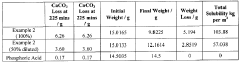
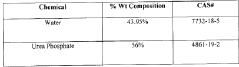
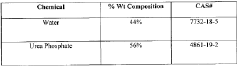
- A synthetic acid composition comprising urea and a phosphoric acid derivative in a specific molar ratio, which is chrome-friendly, non-fuming, and stable across a wide temperature range, reducing corrosion and environmental impact while maintaining effectiveness in scaling treatments and fluid compatibility.

Using Synthetic Acid Compositions as Alternatives to Conventional Acids in The Oil And Gas Industry
PatentActiveUS20230086463A1
Innovation
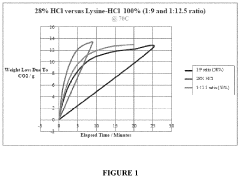
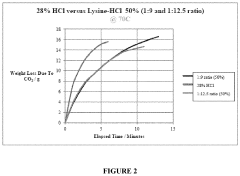
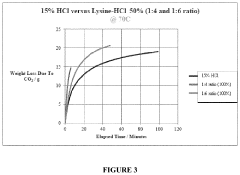
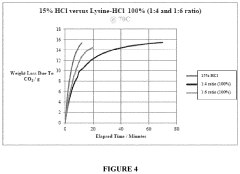
- An aqueous synthetic acid composition comprising lysine and hydrogen chloride in specific molar ratios, which provides low corrosion rates, biodegradability, controlled reaction rates, and thermal stability up to 220°C, reducing toxicity and environmental impact while maintaining the effectiveness of hydrochloric acid.
Regulatory Framework and Global Environmental Standards
The global regulatory landscape for lithium chloride is characterized by a complex network of environmental protection laws that vary significantly across regions. In the United States, the Environmental Protection Agency (EPA) regulates lithium compounds under the Toxic Substances Control Act (TSCA) and the Resource Conservation and Recovery Act (RCRA), with specific provisions for waste management and disposal. The European Union employs the REACH (Registration, Evaluation, Authorization and Restriction of Chemicals) framework, which requires comprehensive safety data and risk assessments for lithium compounds, including lithium chloride, particularly when annual production exceeds one metric ton.
In Asia, regulatory approaches differ markedly. China has implemented the Measures for Environmental Management of New Chemical Substances, which includes specific provisions for lithium compounds used in battery production. Japan's Chemical Substances Control Law (CSCL) categorizes lithium chloride based on biodegradability and bioaccumulation potential, influencing permissible industrial applications.
International standards for lithium extraction and processing are evolving rapidly in response to the growing demand for lithium-ion batteries. The International Organization for Standardization (ISO) has developed ISO 14001 for environmental management systems, which many lithium producers voluntarily adopt to demonstrate environmental compliance. Additionally, the Strategic Approach to International Chemicals Management (SAICM) provides a policy framework for promoting chemical safety around the world, including guidelines for lithium compounds.
Water quality standards represent a critical component of lithium chloride regulation, as lithium extraction and processing can significantly impact aquatic ecosystems. The World Health Organization has established guidelines for drinking water quality that include recommended maximum lithium concentrations, though these are not legally binding in most jurisdictions. The International Council on Mining and Metals (ICMM) has developed principles for sustainable mining practices that many major lithium producers have endorsed.
Emerging regulatory trends indicate a move toward more stringent environmental impact assessments for lithium projects. The Equator Principles, a risk management framework adopted by financial institutions, increasingly influence funding decisions for lithium extraction projects based on environmental and social impact criteria. Carbon footprint regulations are also becoming more relevant, with several jurisdictions implementing carbon pricing mechanisms that affect the economics of lithium production and processing.
Compliance challenges for industry stakeholders include navigating disparate regulatory requirements across global markets and addressing the lack of lithium-specific environmental standards in many regions. This regulatory fragmentation creates significant operational complexity for companies operating in multiple jurisdictions and potentially increases compliance costs throughout the lithium supply chain.
In Asia, regulatory approaches differ markedly. China has implemented the Measures for Environmental Management of New Chemical Substances, which includes specific provisions for lithium compounds used in battery production. Japan's Chemical Substances Control Law (CSCL) categorizes lithium chloride based on biodegradability and bioaccumulation potential, influencing permissible industrial applications.
International standards for lithium extraction and processing are evolving rapidly in response to the growing demand for lithium-ion batteries. The International Organization for Standardization (ISO) has developed ISO 14001 for environmental management systems, which many lithium producers voluntarily adopt to demonstrate environmental compliance. Additionally, the Strategic Approach to International Chemicals Management (SAICM) provides a policy framework for promoting chemical safety around the world, including guidelines for lithium compounds.
Water quality standards represent a critical component of lithium chloride regulation, as lithium extraction and processing can significantly impact aquatic ecosystems. The World Health Organization has established guidelines for drinking water quality that include recommended maximum lithium concentrations, though these are not legally binding in most jurisdictions. The International Council on Mining and Metals (ICMM) has developed principles for sustainable mining practices that many major lithium producers have endorsed.
Emerging regulatory trends indicate a move toward more stringent environmental impact assessments for lithium projects. The Equator Principles, a risk management framework adopted by financial institutions, increasingly influence funding decisions for lithium extraction projects based on environmental and social impact criteria. Carbon footprint regulations are also becoming more relevant, with several jurisdictions implementing carbon pricing mechanisms that affect the economics of lithium production and processing.
Compliance challenges for industry stakeholders include navigating disparate regulatory requirements across global markets and addressing the lack of lithium-specific environmental standards in many regions. This regulatory fragmentation creates significant operational complexity for companies operating in multiple jurisdictions and potentially increases compliance costs throughout the lithium supply chain.
Life Cycle Assessment and Circular Economy Opportunities
Life Cycle Assessment (LCA) provides a comprehensive framework for evaluating the environmental footprint of lithium chloride throughout its entire lifecycle. From extraction to disposal, each phase presents distinct environmental challenges that require systematic assessment. The extraction phase, particularly from salt flats or hard rock mining, generates significant carbon emissions and consumes substantial water resources, especially in water-stressed regions like the Atacama Desert. Processing raw lithium into lithium chloride compounds involves energy-intensive chemical processes that further contribute to the environmental burden.
Transportation and distribution networks add another layer of environmental impact through fuel consumption and associated emissions. During the use phase, while lithium chloride itself may have minimal direct environmental effects, its applications in batteries or other products carry their own environmental considerations. The end-of-life stage presents both challenges and opportunities, as improper disposal can lead to soil and water contamination.
Circular economy principles offer promising pathways to mitigate these environmental impacts. Recovery and recycling technologies for lithium compounds have advanced significantly, with hydrometallurgical and pyrometallurgical processes achieving recovery rates of up to 95% for certain applications. These technologies can substantially reduce the need for primary extraction, thereby decreasing associated environmental impacts.
Design for recyclability represents another crucial circular economy strategy. Products incorporating lithium chloride can be engineered with disassembly and material recovery in mind, facilitating more efficient recycling processes. Several manufacturers have already implemented modular designs that simplify the separation of lithium compounds from other materials at end-of-life.
Closed-loop production systems present perhaps the most transformative opportunity. By establishing infrastructure that captures and reintegrates lithium chloride from end-of-life products back into the production cycle, manufacturers can significantly reduce their environmental footprint. Pilot programs in Europe and Asia have demonstrated the feasibility of such systems, with some achieving up to 60% reduction in primary resource requirements.
Economic incentives and regulatory frameworks play a critical role in accelerating the transition toward circular economy practices. Extended producer responsibility policies, material passports, and recycling subsidies have proven effective in various jurisdictions. The implementation of standardized LCA methodologies specific to lithium compounds would further enhance transparency and comparability across the industry, driving continuous improvement in environmental performance.
Transportation and distribution networks add another layer of environmental impact through fuel consumption and associated emissions. During the use phase, while lithium chloride itself may have minimal direct environmental effects, its applications in batteries or other products carry their own environmental considerations. The end-of-life stage presents both challenges and opportunities, as improper disposal can lead to soil and water contamination.
Circular economy principles offer promising pathways to mitigate these environmental impacts. Recovery and recycling technologies for lithium compounds have advanced significantly, with hydrometallurgical and pyrometallurgical processes achieving recovery rates of up to 95% for certain applications. These technologies can substantially reduce the need for primary extraction, thereby decreasing associated environmental impacts.
Design for recyclability represents another crucial circular economy strategy. Products incorporating lithium chloride can be engineered with disassembly and material recovery in mind, facilitating more efficient recycling processes. Several manufacturers have already implemented modular designs that simplify the separation of lithium compounds from other materials at end-of-life.
Closed-loop production systems present perhaps the most transformative opportunity. By establishing infrastructure that captures and reintegrates lithium chloride from end-of-life products back into the production cycle, manufacturers can significantly reduce their environmental footprint. Pilot programs in Europe and Asia have demonstrated the feasibility of such systems, with some achieving up to 60% reduction in primary resource requirements.
Economic incentives and regulatory frameworks play a critical role in accelerating the transition toward circular economy practices. Extended producer responsibility policies, material passports, and recycling subsidies have proven effective in various jurisdictions. The implementation of standardized LCA methodologies specific to lithium compounds would further enhance transparency and comparability across the industry, driving continuous improvement in environmental performance.
Unlock deeper insights with PatSnap Eureka Quick Research — get a full tech report to explore trends and direct your research. Try now!
Generate Your Research Report Instantly with AI Agent
Supercharge your innovation with PatSnap Eureka AI Agent Platform!