

Cellulose Acetate: Enabling Next-Generation Filtration Technology
Cellulose Acetate Evolution
Cellulose acetate has undergone a remarkable evolution since its discovery in the late 19th century. Initially developed as a photographic film base, it quickly found applications in various industries due to its unique properties. The journey of cellulose acetate in filtration technology began in the mid-20th century when researchers recognized its potential for creating efficient filter membranes.
In the 1950s and 1960s, cellulose acetate membranes were first used in reverse osmosis applications for water desalination. This marked a significant milestone in the material's evolution, as it demonstrated its capability to selectively filter molecules at the nanoscale. The success in water treatment led to further research and development of cellulose acetate membranes for other filtration applications.
The 1970s and 1980s saw a rapid expansion in the use of cellulose acetate for air and gas filtration. Its ability to form porous structures with controlled pore sizes made it an ideal material for capturing particulate matter and other airborne contaminants. This period also witnessed advancements in the manufacturing processes, allowing for the production of cellulose acetate membranes with more consistent and tailored properties.
As environmental concerns grew in the 1990s and 2000s, cellulose acetate found new applications in sustainable filtration solutions. Its biodegradability became a significant advantage over synthetic polymer alternatives, particularly in single-use filtration products. This period also saw the development of composite membranes, where cellulose acetate was combined with other materials to enhance performance and durability.
The 21st century has brought about a renaissance in cellulose acetate research, driven by the demand for more efficient and environmentally friendly filtration technologies. Recent advancements include the development of nanostructured cellulose acetate membranes with enhanced selectivity and permeability. These innovations have expanded the material's applications into emerging fields such as biomedical filtration, gas separation, and even energy storage systems.
Looking ahead, the evolution of cellulose acetate in filtration technology is poised to continue. Current research focuses on further improving its mechanical properties, chemical resistance, and fouling resistance. Additionally, there is growing interest in developing smart cellulose acetate membranes that can respond to environmental stimuli, potentially revolutionizing the field of adaptive filtration systems.
Filtration Market Analysis
The global filtration market has been experiencing significant growth, driven by increasing environmental concerns, stringent regulations, and the growing demand for clean water and air across various industries. The market is expected to continue its upward trajectory, with cellulose acetate emerging as a key material in next-generation filtration technologies.
In recent years, the filtration market has witnessed a surge in demand from diverse sectors, including water treatment, healthcare, automotive, and industrial processes. This growth is primarily attributed to the rising awareness of the importance of clean air and water, coupled with the need for efficient filtration solutions in manufacturing and processing industries.
The water treatment segment holds a substantial share of the filtration market, as governments worldwide implement stricter regulations on water quality and wastewater management. Cellulose acetate membranes are gaining traction in this sector due to their excellent performance in removing contaminants and their eco-friendly nature.
In the healthcare industry, the demand for high-quality filtration systems has increased dramatically, especially in the wake of the global pandemic. Cellulose acetate-based filters are being increasingly adopted in medical applications, such as blood filtration and pharmaceutical processing, owing to their biocompatibility and efficiency.
The automotive sector is another significant contributor to the filtration market's growth. With the implementation of stringent emission norms and the rising popularity of electric vehicles, there is a growing need for advanced filtration solutions. Cellulose acetate filters are being explored for their potential in improving air quality within vehicles and reducing emissions.
Industrial processes, particularly in the food and beverage, chemical, and oil and gas industries, are driving the demand for innovative filtration technologies. Cellulose acetate membranes are being investigated for their ability to enhance separation processes and improve product quality in these sectors.
The Asia-Pacific region is expected to witness the highest growth rate in the filtration market, fueled by rapid industrialization, urbanization, and increasing environmental regulations in countries like China and India. North America and Europe continue to be significant markets, with a focus on technological advancements and sustainable filtration solutions.
As the filtration market evolves, cellulose acetate is poised to play a crucial role in shaping next-generation filtration technologies. Its versatility, sustainability, and superior performance characteristics make it an attractive option for addressing the growing filtration needs across various industries and applications.
Technical Challenges
Cellulose acetate (CA) has emerged as a promising material for next-generation filtration technology, but its widespread adoption faces several technical challenges. One of the primary obstacles is the optimization of CA's molecular structure to enhance its filtration efficiency while maintaining mechanical stability. The current manufacturing processes struggle to consistently produce CA membranes with uniform pore sizes and distribution, which is crucial for effective filtration across various applications.
Another significant challenge lies in improving the hydrophilicity of CA membranes. While CA naturally possesses some hydrophilic properties, further enhancement is necessary to prevent membrane fouling and increase the overall lifespan of filtration systems. Researchers are exploring various surface modification techniques, but achieving a balance between improved hydrophilicity and maintaining the membrane's structural integrity remains a complex task.
The development of CA-based composite membranes presents another hurdle. Integrating CA with other materials to create hybrid membranes that combine the advantages of multiple components is a promising approach. However, ensuring strong interfacial adhesion between CA and other materials, as well as maintaining the desired properties of each component, requires sophisticated engineering and material science expertise.
Scalability of CA membrane production is also a critical challenge. While laboratory-scale production has shown promising results, translating these processes to industrial-scale manufacturing without compromising quality or increasing costs significantly is proving to be difficult. This includes challenges in maintaining consistent membrane thickness, pore structure, and mechanical properties across large-scale production runs.
Environmental concerns pose additional technical challenges. Although CA is biodegradable, the disposal and recycling of used CA membranes, especially those contaminated with filtered substances, require the development of efficient and eco-friendly processes. Furthermore, reducing the environmental impact of CA production itself, including the use of solvents and energy-intensive processes, is an ongoing area of research and development.
Lastly, the long-term stability and performance of CA membranes under various operating conditions remain a concern. Factors such as chemical resistance, thermal stability, and mechanical durability need to be improved to expand the application range of CA-based filtration technologies. This includes developing CA membranes that can withstand harsh chemical environments, high temperatures, and high-pressure operations without degrading or losing their filtration efficiency.
Current Filtration Solutions
01 Cellulose acetate membrane composition
Cellulose acetate membranes are developed with specific compositions to enhance filtration performance. These membranes may include additives or modified cellulose acetate structures to improve properties such as porosity, mechanical strength, and chemical resistance. The composition can be tailored for various filtration applications, including water purification and gas separation.- Cellulose acetate membrane composition: Cellulose acetate membranes are developed with specific compositions to enhance filtration performance. These membranes may include additives or modified cellulose acetate structures to improve properties such as porosity, mechanical strength, and chemical resistance.
- Filtration process optimization: Various methods are employed to optimize the cellulose acetate filtration process. This includes adjusting parameters such as pressure, temperature, and flow rate, as well as implementing pre-treatment or post-treatment steps to enhance filtration efficiency and extend membrane life.
- Surface modification of cellulose acetate membranes: Techniques for modifying the surface of cellulose acetate membranes are developed to improve their filtration properties. This may involve chemical treatments, plasma treatments, or the application of coatings to enhance selectivity, reduce fouling, or increase hydrophilicity.
- Cellulose acetate blend membranes: Blending cellulose acetate with other polymers or materials is explored to create composite membranes with enhanced properties. These blends can improve mechanical strength, chemical resistance, or specific separation capabilities for various filtration applications.
- Application-specific cellulose acetate filters: Cellulose acetate filters are tailored for specific applications such as water purification, gas separation, or biomedical filtration. This involves optimizing pore size, membrane thickness, and surface properties to meet the requirements of different filtration tasks.
02 Cellulose acetate fiber production for filtration
Methods for producing cellulose acetate fibers specifically designed for filtration applications are developed. These processes focus on controlling fiber diameter, surface properties, and overall structure to optimize filtration efficiency. Techniques may include specialized spinning methods, post-treatment processes, or the incorporation of additional materials during fiber formation.Expand Specific Solutions03 Modification of cellulose acetate for enhanced filtration
Cellulose acetate is modified to improve its filtration characteristics. This can involve chemical treatments, physical modifications, or the incorporation of functional groups. These modifications aim to enhance properties such as hydrophilicity, selectivity, or adsorption capacity, making the cellulose acetate more effective for specific filtration tasks.Expand Specific Solutions04 Cellulose acetate composite membranes
Composite membranes incorporating cellulose acetate are developed for advanced filtration applications. These membranes combine cellulose acetate with other materials such as nanoparticles, polymers, or inorganic compounds to create synergistic effects. The resulting composites often exhibit improved filtration performance, durability, or functionality compared to pure cellulose acetate membranes.Expand Specific Solutions05 Cellulose acetate filter manufacturing processes
Innovative manufacturing processes are developed for producing cellulose acetate filters. These methods focus on creating specific pore structures, optimizing filter geometry, or incorporating multiple layers for enhanced filtration. The processes may involve novel forming techniques, precision control of environmental conditions during production, or the integration of additional components into the filter structure.Expand Specific Solutions
Industry Leaders
The cellulose acetate filtration technology market is in a growth phase, driven by increasing demand for advanced filtration solutions across various industries. The market size is expanding, with significant potential in sectors such as tobacco, pharmaceuticals, and water treatment. Technologically, cellulose acetate filtration is evolving rapidly, with companies like Daicel Corp., EMD Millipore Corp., and Sartorius Stedim Biotech GmbH leading innovation. Major tobacco companies such as R.J. Reynolds, Japan Tobacco, and Philip Morris are also investing heavily in this technology for cigarette filters. The competitive landscape is diverse, with established players and new entrants from different regions contributing to technological advancements and market expansion.
Daicel Corp.
EMD Millipore Corp.
Key Cellulose Acetate Patents
- A cellulose acetate-based ultraviolet separation membrane incorporating a cellulose derivative with a branched polymer chain, such as a polylactone structure, is developed, which controls hydrophilic/hydrophobic balance and microstructure, enhancing water permeability and fouling resistance through a simpler manufacturing process using ionic liquids for solubility and graft copolymerization.


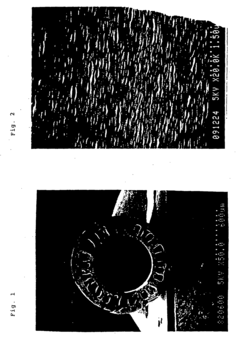
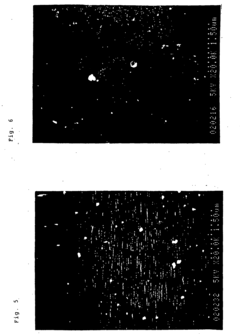
- A cellulose acetate semipermeable membrane with specific properties, including high α-cellulose content, controlled viscosity, and acetylation degree, combined with the use of metallic compounds and solvents like dimethyl sulfoxide, is produced using a double pipe type spinning orifice process, resulting in a hollow fiber membrane with enhanced filtration rate, mechanical strength, and resistance to microbial degradation.


Environmental Impact
Cellulose acetate, as a key material in next-generation filtration technology, presents both significant environmental benefits and potential challenges. The environmental impact of cellulose acetate filtration systems extends across their entire lifecycle, from production to disposal.
In the manufacturing phase, cellulose acetate offers advantages over synthetic polymers. Its production process generally requires less energy and generates fewer greenhouse gas emissions compared to petroleum-based alternatives. The raw material, cellulose, is derived from renewable sources such as wood pulp or cotton linters, contributing to a more sustainable supply chain. However, the acetylation process involves the use of acetic anhydride and acetic acid, which can pose environmental risks if not properly managed.
During the operational phase, cellulose acetate filters demonstrate excellent performance in removing contaminants from water and air. This efficiency translates to reduced energy consumption in filtration systems, as less pressure is required to achieve the desired purification levels. The material's biodegradability also means that it does not persist in the environment for extended periods, unlike many synthetic filter materials.
End-of-life considerations for cellulose acetate filters are generally favorable. Unlike many synthetic polymers, cellulose acetate is biodegradable under certain conditions. In industrial composting facilities, it can break down into harmless components, reducing the burden on landfills. However, the rate of biodegradation can vary significantly depending on environmental conditions, and improper disposal may still contribute to plastic pollution in the short term.
The environmental impact of cellulose acetate filtration technology also extends to its potential for reducing other forms of pollution. By enabling more efficient and effective filtration processes, these systems can help industries and municipalities meet increasingly stringent environmental regulations. This can lead to cleaner water bodies, improved air quality, and overall reduction in pollutant emissions across various sectors.
Despite these benefits, challenges remain. The production of cellulose acetate still relies on chemical processes that generate waste and require careful management. Additionally, while biodegradable, the material may not break down quickly in all environments, particularly in aquatic settings. Research is ongoing to optimize the biodegradation properties of cellulose acetate without compromising its filtration performance.
In conclusion, cellulose acetate filtration technology offers a more environmentally friendly alternative to many current filtration materials. Its renewable sourcing, efficient performance, and biodegradability contribute to a reduced environmental footprint. However, continued research and development are necessary to address remaining challenges and further enhance its environmental benefits throughout its lifecycle.
Regulatory Compliance
Regulatory compliance plays a crucial role in the development and implementation of cellulose acetate-based filtration technologies. As these advanced filtration systems gain traction in various industries, manufacturers and end-users must navigate a complex landscape of regulations to ensure product safety, environmental protection, and consumer confidence.
In the United States, the Food and Drug Administration (FDA) oversees the use of cellulose acetate in food contact applications, including filtration systems for beverages and food processing. Manufacturers must comply with FDA regulations outlined in 21 CFR 177.1200, which specifies the permissible uses and limitations of cellulose acetate in food-related applications. Additionally, the Environmental Protection Agency (EPA) regulates the use of cellulose acetate filters in water treatment systems under the Safe Drinking Water Act.
The European Union has established comprehensive regulations for materials in contact with food through Regulation (EC) No 1935/2004. Cellulose acetate filters used in food and beverage applications must comply with these regulations, ensuring they do not transfer harmful substances to the products they filter. The EU's REACH (Registration, Evaluation, Authorization, and Restriction of Chemicals) regulation also impacts the production and use of cellulose acetate, requiring manufacturers to register and assess the safety of chemical substances used in their products.
In the medical field, cellulose acetate filters used in medical devices and pharmaceutical manufacturing must adhere to stringent regulatory standards. In the US, these filters fall under the purview of the FDA's medical device regulations, while in the EU, they must comply with the Medical Device Regulation (MDR) 2017/745. These regulations ensure the safety and efficacy of filtration systems used in critical medical applications.
Environmental regulations also play a significant role in the development and disposal of cellulose acetate filters. Many countries have implemented regulations to address the environmental impact of single-use plastics, which may affect the production and disposal of certain cellulose acetate filter products. Manufacturers are increasingly required to consider the entire lifecycle of their products, from raw material sourcing to end-of-life disposal or recycling.
As the adoption of cellulose acetate filtration technology expands globally, companies must navigate varying regulatory landscapes across different regions. This includes compliance with local environmental protection laws, workplace safety regulations, and product quality standards. The challenge for manufacturers lies in developing products that not only meet performance requirements but also comply with diverse regulatory frameworks across multiple markets.
To address these regulatory challenges, companies investing in cellulose acetate filtration technology must implement robust quality management systems and maintain thorough documentation of their compliance efforts. Regular audits, testing, and certification processes are essential to ensure ongoing compliance with evolving regulations. Additionally, staying informed about regulatory changes and actively participating in industry associations can help companies anticipate and adapt to new compliance requirements in this rapidly advancing field.