

Maximizing Efficiency in Cellulose Acetate Use for Innovation
Cellulose Acetate Innovation Landscape
Cellulose acetate, a versatile biopolymer derived from natural cellulose, has been a cornerstone material in various industries for over a century. Its journey began in the late 19th century when it was first synthesized, marking the dawn of semi-synthetic polymers. Since then, cellulose acetate has undergone significant technological advancements, evolving from a simple substitute for celluloid to a highly adaptable material with diverse applications.
The evolution of cellulose acetate technology has been driven by the continuous pursuit of enhanced performance, sustainability, and cost-effectiveness. Early developments focused on improving the material's physical properties and production processes. In recent decades, the focus has shifted towards developing more environmentally friendly production methods and expanding the material's functionality.
Current trends in cellulose acetate innovation are centered around three main areas: sustainability, advanced functionalization, and novel applications. Sustainability efforts are aimed at developing bio-based acetylation processes, improving the biodegradability of cellulose acetate products, and enhancing recycling technologies. Advanced functionalization involves the incorporation of nanomaterials, smart polymers, and other additives to create cellulose acetate composites with superior properties.
The technological goals in cellulose acetate innovation are multifaceted. Researchers and industry players are striving to develop cellulose acetate materials with improved mechanical strength, thermal stability, and barrier properties. There is also a strong focus on creating cellulose acetate formulations that are more easily processable and compatible with various manufacturing techniques, including 3D printing and electrospinning.
Another key objective is to expand the application scope of cellulose acetate. While traditionally used in textiles, cigarette filters, and packaging, there is growing interest in exploring its potential in advanced applications such as biomedical devices, smart materials, and energy storage systems. This expansion requires overcoming challenges related to the material's inherent properties and developing new modification techniques.
The path forward for cellulose acetate innovation involves a collaborative approach, combining expertise from materials science, chemistry, biotechnology, and engineering. As the demand for sustainable and high-performance materials continues to grow, cellulose acetate is poised to play an increasingly important role in various industries, driving further research and development in this field.
Market Demand Analysis for Cellulose Acetate
The global market for cellulose acetate has shown significant growth in recent years, driven by its versatile applications across various industries. The demand for cellulose acetate is primarily fueled by its use in textiles, cigarette filters, and packaging materials. In the textile industry, cellulose acetate fibers are valued for their softness, breathability, and moisture-wicking properties, making them popular in clothing and home furnishings.
The cigarette filter segment remains a substantial consumer of cellulose acetate, despite declining smoking rates in some regions. This is due to the material's effectiveness in reducing tar and nicotine intake, as well as its biodegradability compared to synthetic alternatives. However, increasing health awareness and stricter regulations on smoking may impact this sector's growth in the long term.
In the packaging industry, cellulose acetate films are gaining traction as an eco-friendly alternative to traditional plastics. The growing consumer preference for sustainable packaging solutions is driving demand in this sector. Additionally, cellulose acetate's optical clarity and impact resistance make it suitable for eyewear frames and protective equipment, further diversifying its market applications.
The pharmaceutical industry represents another significant growth area for cellulose acetate. Its use in controlled-release drug delivery systems and as a coating for tablets is expanding, driven by advancements in medical technology and the increasing prevalence of chronic diseases requiring long-term medication.
Geographically, Asia-Pacific leads the cellulose acetate market, with China and India being major consumers and producers. The region's rapid industrialization, growing population, and increasing disposable income contribute to the rising demand. North America and Europe follow, with mature markets focusing on high-value applications and sustainable innovations.
Market analysts project a compound annual growth rate (CAGR) for the cellulose acetate market in the mid-single digits over the next five years. This growth is expected to be driven by emerging applications in biodegradable plastics, 3D printing materials, and advanced filtration systems. However, the market faces challenges from fluctuating raw material prices and competition from synthetic alternatives in some applications.
To maximize efficiency in cellulose acetate use for innovation, manufacturers are focusing on developing more sustainable production processes and exploring novel applications. Research into improving the material's properties, such as enhanced durability and flame resistance, is ongoing to expand its potential uses and market share.
Technical Challenges in Cellulose Acetate Efficiency
Cellulose acetate, a versatile biopolymer, faces several technical challenges in maximizing its efficiency for innovative applications. One of the primary obstacles is the optimization of the acetylation process, which directly impacts the properties and quality of the final product. Achieving uniform acetylation across cellulose fibers remains a complex task, often resulting in inconsistent material properties.
The degradation of cellulose acetate during processing and use presents another significant challenge. This material is susceptible to hydrolysis, particularly in high-temperature and high-humidity environments, leading to a reduction in mechanical strength and potential failure of the end product. Developing effective stabilization techniques to enhance the material's durability is crucial for expanding its applications.
Improving the solubility and processability of cellulose acetate is an ongoing technical hurdle. The material's limited solubility in common solvents restricts its use in certain manufacturing processes and applications. Researchers are exploring novel solvent systems and modification techniques to enhance its processability without compromising its desirable properties.
The control of cellulose acetate's degree of substitution (DS) poses a significant challenge in tailoring the material for specific applications. Precise control over DS is essential for achieving desired properties such as biodegradability, mechanical strength, and thermal stability. However, maintaining consistent DS across batches and within individual fibers remains technically demanding.
Environmental concerns associated with cellulose acetate production and disposal present additional challenges. The use of acetic anhydride and other chemicals in the acetylation process raises environmental and safety issues. Furthermore, while cellulose acetate is biodegradable, its rate of decomposition in natural environments is relatively slow, prompting research into accelerating its biodegradation without compromising performance.
The development of high-performance cellulose acetate composites faces technical barriers in achieving effective interfacial adhesion between the cellulose acetate matrix and reinforcing materials. Improving this adhesion is crucial for enhancing the mechanical properties and overall performance of cellulose acetate-based composites.
Scaling up production processes while maintaining product quality and consistency presents significant engineering challenges. Transitioning from laboratory-scale synthesis to industrial-scale production often requires substantial process modifications and optimization, particularly in areas such as reaction kinetics, heat transfer, and mixing efficiency.
Current Efficiency Maximization Techniques
01 Improved cellulose acetate production methods
Various techniques have been developed to enhance the efficiency of cellulose acetate production. These methods focus on optimizing reaction conditions, improving catalysts, and refining purification processes to increase yield and quality of the final product.- Improved cellulose acetate production methods: Various techniques have been developed to enhance the efficiency of cellulose acetate production. These methods focus on optimizing reaction conditions, improving catalyst systems, and refining purification processes to increase yield and quality of the final product.
- Cellulose acetate applications in filtration: Cellulose acetate has shown high efficiency in filtration applications. Research has focused on developing cellulose acetate membranes with improved porosity, selectivity, and durability for use in water treatment, gas separation, and other filtration processes.
- Cellulose acetate in textile and fiber production: Advancements have been made in the use of cellulose acetate for textile and fiber production. These improvements focus on enhancing the material's properties such as strength, elasticity, and moisture absorption, leading to more efficient and sustainable textile manufacturing processes.
- Biodegradability and environmental impact: Research has been conducted to improve the biodegradability of cellulose acetate and reduce its environmental impact. This includes developing more eco-friendly production methods and exploring ways to enhance the material's decomposition in natural environments.
- Cellulose acetate in drug delivery systems: Cellulose acetate has shown promise in drug delivery applications. Studies have focused on improving its efficiency as a carrier material for controlled release formulations, enhancing drug loading capacity, and optimizing release kinetics for various pharmaceutical compounds.
02 Cellulose acetate applications in filtration
Cellulose acetate has shown high efficiency in filtration applications. Research has focused on developing cellulose acetate membranes with improved porosity, selectivity, and durability for use in water treatment, gas separation, and other filtration processes.Expand Specific Solutions03 Cellulose acetate in textile and fiber production
Advancements have been made in using cellulose acetate for textile and fiber production. These improvements focus on enhancing the material's properties such as strength, elasticity, and moisture absorption, leading to more efficient and higher quality textile products.Expand Specific Solutions04 Biodegradability and environmental impact
Research has been conducted to improve the biodegradability of cellulose acetate, making it more environmentally friendly. This includes developing new formulations and processing methods that enhance the material's ability to decompose naturally without compromising its performance in various applications.Expand Specific Solutions05 Cellulose acetate in drug delivery systems
Cellulose acetate has shown promise in drug delivery applications due to its biocompatibility and controlled release properties. Studies have focused on optimizing cellulose acetate formulations for improved drug encapsulation efficiency and targeted release in pharmaceutical applications.Expand Specific Solutions
Key Industry Players and Competitors
The cellulose acetate market is in a mature stage, with a global market size estimated to reach $4.8 billion by 2026. The technology's maturity is evident in the diverse applications across industries, from textiles to packaging. Key players like Daicel Corp., Eastman Chemical Co., and Asahi Kasei Corp. are driving innovation in this field. Research institutions such as the Chinese Academy of Sciences and universities like Beijing University of Chemical Technology are contributing to technological advancements. The competitive landscape is characterized by a mix of established chemical companies and specialized manufacturers, with increasing focus on sustainable and bio-based cellulose acetate production methods. Emerging players from China, such as Nantong Cellulose Fibers Co. Ltd., are also gaining prominence in the market.
Daicel Corp.
Eastman Chemical Co.
Breakthrough Innovations in Cellulose Acetate
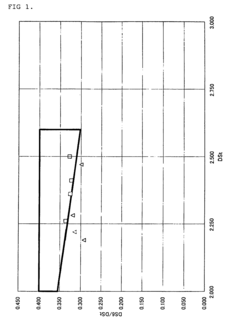
- A cellulose acetate with a total degree of acetyl substitution not greater than 2.7, a specific ratio of acetyl substitution at different positions, and a sulfate component content of 20-400 ppm, along with additives like magnesium oxide and triacetin, enhances biodegradability in seawater.
- A process involving the hydrolysis of cellulose triacetate with controlled amounts of acetic acid and an acetylation catalyst at specific temperatures to produce a 6-position highly acetylated cellulose diacetate with a total degree of acetyl substitution between 2.0 and 2.6, allowing for a high degree of acetyl substitution at the 6-position and sufficient margin for other acyl group introduction at the 2- and 3-positions.



Environmental Impact and Sustainability
Cellulose acetate, a versatile biopolymer derived from natural sources, has gained significant attention in recent years due to its potential for sustainable innovation. However, the environmental impact of its production and use must be carefully considered to maximize efficiency and minimize ecological footprint.
The production of cellulose acetate involves the acetylation of cellulose, typically sourced from wood pulp or cotton linters. This process requires the use of acetic anhydride and acetic acid, which can have environmental implications if not properly managed. Efforts to improve the sustainability of cellulose acetate production have focused on optimizing reaction conditions, reducing solvent use, and exploring alternative raw materials.
One of the key environmental advantages of cellulose acetate is its biodegradability. Unlike many synthetic polymers, cellulose acetate can decompose naturally in the environment, reducing long-term pollution concerns. However, the rate of biodegradation can vary significantly depending on environmental conditions and the degree of acetylation. Research into enhancing the biodegradability of cellulose acetate products without compromising their performance is ongoing.
Water consumption and wastewater management are critical aspects of cellulose acetate production. The industry has made strides in implementing closed-loop systems and advanced water treatment technologies to minimize water usage and reduce the environmental impact of effluents. These efforts not only contribute to sustainability but also offer potential cost savings for manufacturers.
Energy efficiency in cellulose acetate production and processing is another area of focus for environmental improvement. Innovations in process design, such as the development of more efficient reactors and the integration of heat recovery systems, have led to reduced energy consumption and lower greenhouse gas emissions. Additionally, the exploration of renewable energy sources for powering production facilities is gaining traction within the industry.
The end-of-life management of cellulose acetate products is crucial for minimizing their environmental impact. While biodegradability is an advantage, proper disposal and recycling systems are essential to ensure that these materials do not contribute to litter or environmental contamination. Efforts to develop and implement effective collection and recycling programs for cellulose acetate products are underway in various regions.
As the demand for sustainable materials grows, cellulose acetate's potential as a replacement for petroleum-based plastics in certain applications is being explored. This substitution could lead to reduced carbon footprints and decreased reliance on non-renewable resources. However, comprehensive life cycle assessments are necessary to fully understand the environmental trade-offs and ensure that cellulose acetate alternatives truly offer superior sustainability profiles.
Intellectual Property Landscape
The intellectual property landscape surrounding cellulose acetate innovation is characterized by a complex network of patents, trademarks, and trade secrets. Major players in the field have established robust patent portfolios, protecting various aspects of cellulose acetate production, modification, and application. Key areas of patent activity include novel synthesis methods, improved processing techniques, and innovative end-use applications.
Leading chemical companies and specialized cellulose acetate manufacturers dominate the patent landscape. These entities have filed numerous patents covering advancements in cellulose acetate production, such as enhanced acetylation processes, novel plasticizers, and improved solvent recovery systems. Additionally, patents related to cellulose acetate modification, including surface treatments and blending with other polymers, have seen significant growth in recent years.
The application-specific patent landscape is diverse, reflecting the versatility of cellulose acetate. In the textile industry, patents focus on fiber spinning technologies and fabric treatments. The packaging sector sees patents related to biodegradable films and coatings. In the pharmaceutical field, patents cover controlled-release formulations and drug delivery systems utilizing cellulose acetate.
Emerging trends in the intellectual property landscape include a growing emphasis on sustainable and eco-friendly cellulose acetate technologies. Patents addressing bio-based sourcing, reduced environmental impact during production, and improved biodegradability are gaining prominence. This shift aligns with increasing consumer demand for environmentally responsible products and stricter regulatory requirements.
Geographically, patent activity is concentrated in regions with strong chemical and manufacturing industries, such as the United States, Japan, China, and European countries. However, there is a noticeable increase in patent filings from emerging economies, particularly in Asia, indicating a global expansion of cellulose acetate innovation.
The intellectual property landscape also reveals collaborative efforts and cross-licensing agreements between companies, fostering innovation and market growth. These partnerships often combine complementary technologies or expertise to develop novel cellulose acetate applications or improve existing processes.
As the cellulose acetate market evolves, the intellectual property landscape is expected to become increasingly competitive. Companies are likely to focus on developing and protecting technologies that offer significant advantages in terms of efficiency, sustainability, and novel applications. This dynamic environment underscores the importance of continuous innovation and strategic intellectual property management in maintaining a competitive edge in the cellulose acetate industry.