

How to Elevate Material Performance with Cellulose Acetate?
Cellulose Acetate Evolution and Objectives
Cellulose acetate, a versatile biopolymer, has undergone significant evolution since its discovery in the late 19th century. Initially developed as a substitute for celluloid in photographic films, its applications have expanded dramatically over the decades. The journey of cellulose acetate from a niche material to a widely used polymer in various industries reflects the continuous efforts to enhance its performance and broaden its utility.
The early 20th century saw cellulose acetate primarily used in textiles and films. However, as manufacturing processes improved, its potential in other sectors became apparent. The 1950s and 1960s marked a period of rapid advancement in cellulose acetate technology, with researchers focusing on modifying its properties to suit diverse applications. This era witnessed the development of cellulose acetate fibers with improved strength and durability, opening up new possibilities in the textile industry.
In recent years, the focus has shifted towards enhancing the material's environmental profile and performance characteristics. The growing awareness of sustainability has driven research into biodegradable variants of cellulose acetate, aligning with global efforts to reduce plastic waste. Concurrently, there has been a push to improve the material's mechanical properties, thermal stability, and chemical resistance to expand its use in high-performance applications.
The current objectives in cellulose acetate research and development are multifaceted. One primary goal is to further improve its biodegradability without compromising its desirable properties. This involves exploring new acetylation techniques and developing composite materials that combine cellulose acetate with other biodegradable polymers. Another key objective is to enhance the material's mechanical strength and flexibility, making it suitable for more demanding applications in automotive, aerospace, and medical industries.
Researchers are also focusing on modifying cellulose acetate at the molecular level to impart novel functionalities. This includes developing cellulose acetate-based materials with improved barrier properties for packaging applications, enhanced optical properties for use in advanced display technologies, and increased biocompatibility for medical implants and drug delivery systems.
The pursuit of these objectives is driven by the need to address current limitations in material performance while meeting the growing demand for sustainable and high-performance materials. As we look to the future, the evolution of cellulose acetate is likely to continue, with innovations aimed at expanding its applications in emerging technologies and addressing global challenges such as environmental sustainability and resource efficiency.
Market Demand Analysis for Enhanced Materials
The market demand for enhanced materials, particularly those incorporating cellulose acetate, has been steadily growing across various industries. This surge is driven by the increasing need for sustainable, high-performance materials that can meet the evolving requirements of modern applications. Cellulose acetate, a versatile biopolymer derived from natural sources, has garnered significant attention due to its unique properties and potential for performance enhancement.
In the packaging industry, there is a strong demand for cellulose acetate-based materials that offer improved barrier properties, biodegradability, and recyclability. As consumers become more environmentally conscious, brands are seeking alternatives to traditional plastics, creating a substantial market opportunity for enhanced cellulose acetate materials. The food and beverage sector, in particular, is showing keen interest in these materials for their ability to extend shelf life while reducing environmental impact.
The textile industry is another key market driver for enhanced cellulose acetate materials. With the growing emphasis on sustainable fashion, there is a rising demand for fabrics that combine performance with eco-friendliness. Cellulose acetate fibers with improved strength, moisture management, and durability are highly sought after in this sector. The potential for developing wrinkle-resistant, quick-drying, and antimicrobial textiles using enhanced cellulose acetate is attracting significant investment and research efforts.
In the automotive and aerospace industries, the push for lightweight materials with high strength-to-weight ratios has created a niche for enhanced cellulose acetate composites. These materials offer the potential to reduce vehicle weight, improve fuel efficiency, and decrease carbon emissions without compromising on structural integrity. The market for such advanced composites is expected to expand rapidly as manufacturers strive to meet stringent environmental regulations and performance standards.
The electronics industry is also exploring the potential of enhanced cellulose acetate materials for flexible displays, conductive films, and biodegradable electronic components. As the demand for wearable technology and flexible electronics grows, there is a significant market opportunity for materials that can combine flexibility, durability, and environmental sustainability.
The healthcare sector presents another promising market for enhanced cellulose acetate materials. From drug delivery systems to biocompatible implants, there is a growing need for materials that can offer controlled release properties, biocompatibility, and enhanced functionality. The potential for cellulose acetate-based materials in tissue engineering and regenerative medicine is particularly exciting, with ongoing research aimed at developing scaffolds and matrices that can support cell growth and tissue regeneration.
Current Challenges in Cellulose Acetate Performance
Cellulose acetate, despite its widespread use in various industries, faces several significant challenges that limit its performance and broader application. One of the primary issues is its inherent moisture sensitivity. When exposed to humid environments, cellulose acetate tends to absorb water, leading to dimensional instability and potential degradation of its mechanical properties. This hygroscopic nature not only affects the material's structural integrity but also limits its use in moisture-sensitive applications.
Another critical challenge is the material's thermal stability. Cellulose acetate exhibits a relatively low glass transition temperature, which restricts its use in high-temperature environments. This limitation narrows its potential applications in industries where heat resistance is crucial, such as automotive or aerospace sectors. Additionally, the material's tendency to soften and deform under moderate heat further complicates its processing and end-use performance.
The biodegradability of cellulose acetate, while often considered an environmental advantage, presents challenges in terms of long-term durability. In applications requiring extended product lifespans, the material's susceptibility to microbial degradation can be problematic. This characteristic necessitates careful consideration in product design and often requires additional treatments or modifications to enhance longevity.
Mechanical strength is another area where cellulose acetate faces limitations. Compared to some synthetic polymers, it exhibits lower tensile strength and impact resistance. This restricts its use in high-stress applications and necessitates careful engineering to ensure product reliability. The material's brittleness, especially in low humidity conditions, further compounds these mechanical challenges.
From a processing standpoint, cellulose acetate presents difficulties in achieving consistent quality across large production volumes. The material's sensitivity to processing conditions, such as temperature and shear rates, can lead to variations in final product properties. This variability complicates manufacturing processes and can result in increased production costs and quality control issues.
Lastly, the limited chemical resistance of cellulose acetate poses challenges in environments where exposure to solvents or aggressive chemicals is expected. This vulnerability restricts its use in certain industrial applications and requires careful consideration of the material's operating environment. Overcoming these challenges is crucial for expanding the application range of cellulose acetate and enhancing its overall performance in various industrial sectors.
Existing Performance Enhancement Techniques
01 Mechanical properties enhancement
Various methods are employed to improve the mechanical properties of cellulose acetate materials. These include incorporating additives, modifying the manufacturing process, and blending with other polymers. Enhanced mechanical properties result in increased strength, flexibility, and durability of the final product.- Mechanical properties enhancement: Various methods are employed to improve the mechanical properties of cellulose acetate materials. These include blending with other polymers, incorporating reinforcing agents, and optimizing the degree of substitution. Enhanced mechanical properties result in improved strength, flexibility, and durability of cellulose acetate products.
- Thermal stability and flame retardancy: Techniques are developed to enhance the thermal stability and flame retardancy of cellulose acetate materials. This involves the addition of flame retardant additives, surface treatments, or chemical modifications. Improved thermal properties extend the application range of cellulose acetate in high-temperature environments.
- Barrier properties and permeability control: Research focuses on improving the barrier properties of cellulose acetate materials against gases, moisture, and other substances. This is achieved through various methods such as nanocomposite formation, surface modification, or blending with other polymers. Enhanced barrier properties expand the use of cellulose acetate in packaging and membrane applications.
- Biodegradability and environmental impact: Efforts are made to improve the biodegradability of cellulose acetate materials while maintaining their performance characteristics. This includes developing new formulations, incorporating biodegradable additives, or modifying the molecular structure. Enhanced biodegradability reduces the environmental impact of cellulose acetate products.
- Optical and surface properties: Techniques are developed to enhance the optical and surface properties of cellulose acetate materials. This includes improving transparency, controlling refractive index, and modifying surface characteristics such as hydrophobicity or hydrophilicity. These enhancements expand the application of cellulose acetate in optical and functional coating applications.
02 Thermal stability improvement
Techniques are developed to enhance the thermal stability of cellulose acetate materials. This involves the use of heat stabilizers, modification of the cellulose acetate structure, and optimization of processing conditions. Improved thermal stability allows for broader application in high-temperature environments.Expand Specific Solutions03 Barrier properties optimization
Research focuses on enhancing the barrier properties of cellulose acetate materials against gases, moisture, and other substances. This is achieved through surface treatments, incorporation of nanoparticles, and development of multi-layer structures. Improved barrier properties expand the material's use in packaging and protective applications.Expand Specific Solutions04 Biodegradability and environmental performance
Efforts are made to improve the biodegradability and overall environmental performance of cellulose acetate materials. This includes developing bio-based additives, optimizing the degree of substitution, and creating composites with other biodegradable materials. Enhanced environmental performance addresses growing sustainability concerns.Expand Specific Solutions05 Optical and surface properties enhancement
Techniques are developed to improve the optical and surface properties of cellulose acetate materials. This involves modifying the material's transparency, gloss, and surface texture through additives, coatings, and processing methods. Enhanced optical and surface properties expand the material's applications in various industries.Expand Specific Solutions
Key Industry Players and Competitors
The cellulose acetate market is in a mature stage, with established players like Daicel Corp., Eastman Chemical Co., and Cerdia International GmbH dominating the industry. The market size is substantial, driven by diverse applications in textiles, films, and plastics. Technological advancements focus on enhancing material performance, with companies like FUJIFILM Corp. and Asahi Kasei Corp. investing in research and development. The technology's maturity is evident in the presence of specialized manufacturers such as Nantong Cellulose Fibers Co. Ltd. and Zhuhai Cellulose Fibers Co. Ltd. Academic institutions like Donghua University and Hokkaido University contribute to ongoing innovation, while collaborations between industry and research centers, such as CNRS and INSA Lyon, push the boundaries of cellulose acetate applications.
Daicel Corp.
Cerdia International GmbH
Innovative Approaches in Cellulose Acetate Research
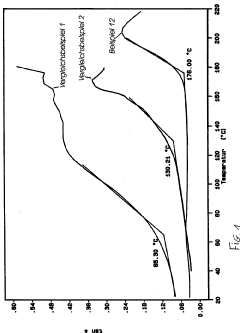
- Development of a molded composite material using cellulose acetate as a binder with natural cellulose fibers, achieving a degree of substitution (DS) of 1.2 to 2.7 and a mass ratio of 10:90 to 90:10, allowing for biodegradability and high Vicat temperatures without the need for external plasticizers, utilizing processing conditions such as moisture content, temperature, and pressure to enhance mechanical and thermal properties.
- A composite material using cellulose acetate as a binder with a degree of substitution between 1.2 and 2.7, combined with natural cellulose fibers, processed without external plasticizers, achieving a Vicat temperature of at least 160°C and improved mechanical properties.
Environmental Impact and Sustainability Considerations
Cellulose acetate, as a biodegradable and renewable material, offers significant environmental advantages over traditional petroleum-based plastics. Its production from natural cellulose sources, such as wood pulp or cotton linters, reduces reliance on fossil fuels and contributes to a more sustainable manufacturing process. The biodegradability of cellulose acetate is a key factor in mitigating environmental impact, as it can decompose in natural environments within months to years, depending on conditions.
However, the environmental benefits of cellulose acetate are not without challenges. The production process involves the use of acetic acid and other chemicals, which can have negative environmental impacts if not properly managed. Manufacturers must implement stringent waste management and recycling protocols to minimize the release of these substances into the environment. Additionally, the energy consumption during production and processing of cellulose acetate should be considered in overall sustainability assessments.
The end-of-life management of cellulose acetate products is crucial for maximizing their environmental benefits. While biodegradable, improper disposal can still lead to accumulation in landfills or marine environments. Developing and promoting effective recycling and composting systems for cellulose acetate products is essential to fully realize their potential as a sustainable material alternative.
Water usage in cellulose acetate production is another important consideration. The manufacturing process requires significant amounts of water, which can strain local water resources if not managed responsibly. Implementing water recycling and conservation measures in production facilities is crucial for improving the overall sustainability profile of cellulose acetate.
As research continues to enhance the material performance of cellulose acetate, it is imperative to maintain focus on sustainability throughout the development process. Innovations should aim not only to improve physical properties but also to reduce environmental impact during production, use, and disposal. This may include developing more efficient production methods, exploring alternative, more environmentally friendly chemical treatments, or creating cellulose acetate blends that maintain biodegradability while enhancing performance characteristics.
The carbon footprint of cellulose acetate production and use should be thoroughly assessed and compared to alternative materials. While its renewable source provides an advantage, the entire life cycle, including transportation and processing, must be considered to accurately gauge its environmental impact. Efforts to reduce carbon emissions throughout the supply chain and production process will further enhance the sustainability credentials of cellulose acetate.
Regulatory Framework for Advanced Materials
The regulatory framework for advanced materials, including cellulose acetate, plays a crucial role in shaping the development, production, and application of these innovative substances. As the demand for high-performance materials grows, governments and international organizations have established comprehensive guidelines to ensure safety, quality, and environmental sustainability.
In the context of cellulose acetate, regulatory bodies such as the U.S. Food and Drug Administration (FDA) and the European Chemicals Agency (ECHA) have set forth specific requirements for its use in various applications. These regulations cover aspects such as purity standards, permissible additives, and maximum residue limits, particularly for food contact materials and pharmaceutical packaging.
Environmental considerations are increasingly prominent in the regulatory landscape for advanced materials. The European Union's REACH (Registration, Evaluation, Authorization, and Restriction of Chemicals) regulation, for instance, mandates thorough safety assessments and registration of cellulose acetate and its derivatives. This ensures that potential risks to human health and the environment are identified and mitigated throughout the material's lifecycle.
Standardization bodies like the International Organization for Standardization (ISO) and ASTM International have developed specific standards for testing and characterizing cellulose acetate materials. These standards provide a common language for manufacturers, researchers, and end-users, facilitating quality control and enabling consistent performance evaluation across different applications.
Intellectual property regulations also significantly impact the development of advanced cellulose acetate materials. Patent offices worldwide have established guidelines for assessing the novelty and inventiveness of new formulations and processing techniques. This regulatory framework encourages innovation while protecting the rights of inventors and companies investing in research and development.
As sustainability becomes a global priority, regulations are evolving to promote the use of bio-based and biodegradable materials. Cellulose acetate, being derived from renewable sources, aligns well with these initiatives. However, manufacturers must navigate complex certification processes to claim bio-based content or biodegradability, adhering to standards set by organizations such as the United States Department of Agriculture (USDA) BioPreferred Program or the European Committee for Standardization (CEN).
The regulatory landscape for advanced materials is dynamic, with ongoing efforts to harmonize standards across different regions and sectors. International collaborations, such as the Strategic Approach to International Chemicals Management (SAICM), aim to create a more cohesive global framework for managing chemical substances, including advanced materials like cellulose acetate.