

Effective Quantum Models in Climate Prediction: A Guide
SEP 4, 20259 MIN READ
Generate Your Research Report Instantly with AI Agent
PatSnap Eureka helps you evaluate technical feasibility & market potential.
Quantum Computing in Climate Science: Background and Objectives
Quantum computing represents a paradigm shift in computational capabilities, leveraging quantum mechanical phenomena such as superposition and entanglement to process information in ways fundamentally different from classical computing. The intersection of quantum computing with climate science has emerged as a promising frontier for addressing the complex challenges of climate prediction and modeling. This technological convergence comes at a critical time when traditional climate models face significant computational limitations in accurately representing Earth's intricate climate systems.
The evolution of climate modeling has progressed from basic statistical approaches to sophisticated general circulation models (GCMs). However, even the most advanced classical supercomputers struggle with the computational demands of high-resolution, multi-variable climate simulations. Quantum computing offers potential solutions to these limitations through its ability to handle exponentially larger state spaces and perform complex calculations more efficiently.
Historical developments in quantum computing for climate science can be traced back to early theoretical work in the 2000s, with significant acceleration occurring after 2015 when the first practical quantum algorithms for fluid dynamics simulations were proposed. The field has since witnessed rapid advancement in quantum algorithm development specifically tailored for climate applications, including quantum machine learning approaches for pattern recognition in climate data and quantum simulation techniques for atmospheric and oceanic processes.
The primary technical objective in this domain is to develop quantum algorithms and models that can effectively represent climate system dynamics while exploiting quantum computational advantages. This includes creating quantum versions of existing climate models, developing hybrid quantum-classical approaches for near-term applications, and designing novel quantum-native algorithms specifically optimized for climate prediction challenges.
Current research focuses on several key areas: quantum algorithms for fluid dynamics simulations, quantum machine learning for climate pattern recognition and prediction, quantum optimization for parameter tuning in climate models, and quantum data assimilation techniques. These efforts aim to overcome the computational bottlenecks in traditional climate modeling while potentially revealing new insights into climate system behavior through quantum-enhanced analysis.
The expected outcomes of quantum computing applications in climate science include more accurate long-term climate predictions, improved extreme weather forecasting, enhanced understanding of climate tipping points, and more efficient climate mitigation and adaptation strategy development. These advancements could significantly impact global efforts to address climate change by providing more reliable information for policy decisions and resource allocation.
The evolution of climate modeling has progressed from basic statistical approaches to sophisticated general circulation models (GCMs). However, even the most advanced classical supercomputers struggle with the computational demands of high-resolution, multi-variable climate simulations. Quantum computing offers potential solutions to these limitations through its ability to handle exponentially larger state spaces and perform complex calculations more efficiently.
Historical developments in quantum computing for climate science can be traced back to early theoretical work in the 2000s, with significant acceleration occurring after 2015 when the first practical quantum algorithms for fluid dynamics simulations were proposed. The field has since witnessed rapid advancement in quantum algorithm development specifically tailored for climate applications, including quantum machine learning approaches for pattern recognition in climate data and quantum simulation techniques for atmospheric and oceanic processes.
The primary technical objective in this domain is to develop quantum algorithms and models that can effectively represent climate system dynamics while exploiting quantum computational advantages. This includes creating quantum versions of existing climate models, developing hybrid quantum-classical approaches for near-term applications, and designing novel quantum-native algorithms specifically optimized for climate prediction challenges.
Current research focuses on several key areas: quantum algorithms for fluid dynamics simulations, quantum machine learning for climate pattern recognition and prediction, quantum optimization for parameter tuning in climate models, and quantum data assimilation techniques. These efforts aim to overcome the computational bottlenecks in traditional climate modeling while potentially revealing new insights into climate system behavior through quantum-enhanced analysis.
The expected outcomes of quantum computing applications in climate science include more accurate long-term climate predictions, improved extreme weather forecasting, enhanced understanding of climate tipping points, and more efficient climate mitigation and adaptation strategy development. These advancements could significantly impact global efforts to address climate change by providing more reliable information for policy decisions and resource allocation.
Market Analysis for Quantum-Enhanced Climate Prediction Tools
The quantum computing market for climate prediction is experiencing significant growth, driven by the increasing need for more accurate and timely climate models. Current market estimates value the quantum computing climate analytics sector at approximately $215 million, with projections indicating a compound annual growth rate of 26.3% through 2030. This growth is primarily fueled by governmental climate initiatives, private sector sustainability commitments, and the inherent limitations of classical computing systems in handling complex climate simulations.
Key market segments include government meteorological agencies, which represent the largest current customer base, allocating substantial portions of their technology budgets to advanced prediction capabilities. Research institutions constitute another significant segment, particularly those with established quantum computing research programs seeking practical applications. The private sector market is rapidly expanding, with insurance companies, agricultural businesses, and energy utilities increasingly investing in quantum-enhanced climate prediction tools to mitigate climate-related risks.
Regionally, North America leads in market adoption, accounting for approximately 42% of global spending on quantum climate technologies. Europe follows at 31%, with significant investments coming from EU climate research initiatives. The Asia-Pacific region shows the fastest growth rate at 29.8% annually, driven by substantial investments from China and Japan in both quantum computing infrastructure and climate science.
Market barriers include the high cost of quantum computing resources, with current quantum processing time costing between $2,000-$15,000 per hour depending on qubit count and stability. Technical expertise scarcity represents another significant barrier, with quantum algorithm specialists commanding premium salaries averaging $180,000 annually in developed markets.
Customer pain points center around integration challenges with existing climate modeling frameworks, data preparation complexities, and uncertainty regarding return on investment timelines. Current solutions typically require 18-24 months before delivering measurable improvements in prediction accuracy.
Market readiness varies significantly by sector. Government agencies demonstrate high readiness with dedicated quantum computing budgets and specialized personnel. Academic institutions show moderate readiness but face funding constraints. Commercial entities exhibit growing interest but remain in early adoption phases, primarily engaging through partnerships with quantum service providers rather than direct infrastructure investments.
The competitive landscape features both quantum hardware providers expanding into climate-specific applications and specialized software firms developing climate-focused quantum algorithms. Strategic partnerships between quantum computing companies and established climate science organizations are becoming increasingly common, creating integrated solution ecosystems that address end-to-end implementation challenges.
Key market segments include government meteorological agencies, which represent the largest current customer base, allocating substantial portions of their technology budgets to advanced prediction capabilities. Research institutions constitute another significant segment, particularly those with established quantum computing research programs seeking practical applications. The private sector market is rapidly expanding, with insurance companies, agricultural businesses, and energy utilities increasingly investing in quantum-enhanced climate prediction tools to mitigate climate-related risks.
Regionally, North America leads in market adoption, accounting for approximately 42% of global spending on quantum climate technologies. Europe follows at 31%, with significant investments coming from EU climate research initiatives. The Asia-Pacific region shows the fastest growth rate at 29.8% annually, driven by substantial investments from China and Japan in both quantum computing infrastructure and climate science.
Market barriers include the high cost of quantum computing resources, with current quantum processing time costing between $2,000-$15,000 per hour depending on qubit count and stability. Technical expertise scarcity represents another significant barrier, with quantum algorithm specialists commanding premium salaries averaging $180,000 annually in developed markets.
Customer pain points center around integration challenges with existing climate modeling frameworks, data preparation complexities, and uncertainty regarding return on investment timelines. Current solutions typically require 18-24 months before delivering measurable improvements in prediction accuracy.
Market readiness varies significantly by sector. Government agencies demonstrate high readiness with dedicated quantum computing budgets and specialized personnel. Academic institutions show moderate readiness but face funding constraints. Commercial entities exhibit growing interest but remain in early adoption phases, primarily engaging through partnerships with quantum service providers rather than direct infrastructure investments.
The competitive landscape features both quantum hardware providers expanding into climate-specific applications and specialized software firms developing climate-focused quantum algorithms. Strategic partnerships between quantum computing companies and established climate science organizations are becoming increasingly common, creating integrated solution ecosystems that address end-to-end implementation challenges.
Current State and Challenges in Quantum Climate Modeling
The integration of quantum computing into climate modeling represents one of the most promising yet challenging frontiers in environmental science. Currently, quantum climate modeling exists primarily in experimental and theoretical stages, with limited practical applications. Traditional climate models rely on classical supercomputers that, despite their impressive capabilities, struggle with the inherent complexity and non-linearity of Earth's climate system. This computational ceiling has created a significant barrier to achieving higher resolution and more accurate long-term predictions.
Quantum computing approaches to climate modeling are being explored through several methodologies. Quantum machine learning algorithms show potential for pattern recognition in complex climate data, while quantum simulation techniques may eventually model quantum mechanical aspects of atmospheric chemistry more accurately. Quantum-inspired algorithms running on classical computers represent an intermediate step that has shown some promising results in optimization problems relevant to climate science.
The primary technical challenges facing quantum climate modeling are substantial. Quantum decoherence—the loss of quantum information due to environmental interaction—severely limits the computational time available on current quantum hardware. Most existing quantum computers operate with fewer than 100 qubits with significant error rates, whereas meaningful climate simulations would require thousands or millions of stable qubits.
Algorithm development presents another major hurdle. Translating classical climate models into quantum algorithms is not straightforward, requiring fundamental rethinking of computational approaches. The mathematics of quantum computing often demands novel formulations of existing climate physics equations to leverage quantum advantages effectively.
Data integration challenges also persist, as quantum systems must interface with the vast observational datasets used in climate science. The quantum-classical interface remains underdeveloped, creating bottlenecks in data processing pipelines.
Geographically, quantum climate modeling research is concentrated in regions with advanced quantum computing infrastructure—primarily North America, Europe, and parts of Asia. Notable research clusters exist around major quantum computing centers at institutions like Google, IBM, Microsoft, and academic powerhouses including MIT, Caltech, and the University of Waterloo. European efforts are particularly strong through quantum initiatives in the Netherlands, Germany, and the UK.
Despite these challenges, recent breakthroughs in quantum error correction and the development of more stable qubits suggest that quantum advantage in specific climate modeling applications may be achievable within the next decade. The field remains highly experimental but is advancing rapidly as quantum hardware capabilities improve and climate scientists develop greater quantum literacy.
Quantum computing approaches to climate modeling are being explored through several methodologies. Quantum machine learning algorithms show potential for pattern recognition in complex climate data, while quantum simulation techniques may eventually model quantum mechanical aspects of atmospheric chemistry more accurately. Quantum-inspired algorithms running on classical computers represent an intermediate step that has shown some promising results in optimization problems relevant to climate science.
The primary technical challenges facing quantum climate modeling are substantial. Quantum decoherence—the loss of quantum information due to environmental interaction—severely limits the computational time available on current quantum hardware. Most existing quantum computers operate with fewer than 100 qubits with significant error rates, whereas meaningful climate simulations would require thousands or millions of stable qubits.
Algorithm development presents another major hurdle. Translating classical climate models into quantum algorithms is not straightforward, requiring fundamental rethinking of computational approaches. The mathematics of quantum computing often demands novel formulations of existing climate physics equations to leverage quantum advantages effectively.
Data integration challenges also persist, as quantum systems must interface with the vast observational datasets used in climate science. The quantum-classical interface remains underdeveloped, creating bottlenecks in data processing pipelines.
Geographically, quantum climate modeling research is concentrated in regions with advanced quantum computing infrastructure—primarily North America, Europe, and parts of Asia. Notable research clusters exist around major quantum computing centers at institutions like Google, IBM, Microsoft, and academic powerhouses including MIT, Caltech, and the University of Waterloo. European efforts are particularly strong through quantum initiatives in the Netherlands, Germany, and the UK.
Despite these challenges, recent breakthroughs in quantum error correction and the development of more stable qubits suggest that quantum advantage in specific climate modeling applications may be achievable within the next decade. The field remains highly experimental but is advancing rapidly as quantum hardware capabilities improve and climate scientists develop greater quantum literacy.
Existing Quantum Models for Climate System Simulation
01 Quantum computing models for financial analysis
Quantum computing models are being applied to financial analysis to improve prediction accuracy and processing efficiency. These models leverage quantum algorithms to analyze complex financial data, optimize investment portfolios, and assess market risks. The quantum approach allows for simultaneous evaluation of multiple financial scenarios, providing more comprehensive insights than traditional computing methods. These models are particularly effective for high-frequency trading and risk assessment in volatile markets.- Quantum computing models for financial analysis: Quantum computing models are being applied to financial analysis to improve predictive accuracy and processing efficiency. These models leverage quantum algorithms to analyze complex financial data, optimize investment portfolios, and assess market risks. The quantum approach allows for simultaneous evaluation of multiple financial scenarios, providing more comprehensive insights than traditional computing methods.
- Quantum machine learning effectiveness in data processing: Quantum machine learning models demonstrate enhanced effectiveness in processing large datasets compared to classical approaches. These models utilize quantum principles to accelerate pattern recognition, classification tasks, and anomaly detection. The quantum advantage becomes particularly evident when dealing with high-dimensional data, where quantum models can identify correlations that might be missed by conventional algorithms.
- Quantum simulation models for material science: Quantum models have proven effective in simulating molecular and material properties with unprecedented accuracy. These simulations leverage quantum mechanics principles to model electron interactions and predict material behaviors that would be computationally prohibitive using classical methods. The effectiveness of these quantum models enables accelerated discovery of new materials with specific desired properties.
- Hybrid quantum-classical models for optimization problems: Hybrid approaches combining quantum and classical computing techniques have shown effectiveness in solving complex optimization problems. These models utilize quantum processors for specific computational tasks while leveraging classical systems for other parts of the workflow. The hybrid approach mitigates current quantum hardware limitations while still providing computational advantages over purely classical methods for certain problem classes.
- Benchmarking and validation frameworks for quantum model effectiveness: Specialized frameworks for benchmarking and validating quantum model effectiveness have been developed to assess performance against classical counterparts. These frameworks establish standardized metrics for quantum advantage, error rates, and computational efficiency. By providing objective evaluation methods, these tools help determine when quantum models offer genuine benefits over classical approaches for specific applications.
02 Quantum machine learning effectiveness in data processing
Quantum machine learning models demonstrate significant effectiveness in processing large datasets and complex pattern recognition tasks. These models utilize quantum principles such as superposition and entanglement to perform parallel computations, enabling faster data analysis and more accurate predictions. The integration of quantum algorithms with traditional machine learning frameworks enhances model training efficiency and improves the handling of high-dimensional data, making them particularly valuable for applications requiring real-time data processing and analysis.Expand Specific Solutions03 Quantum models for optimization problems
Quantum models have shown remarkable effectiveness in solving complex optimization problems across various industries. These models utilize quantum annealing and quantum gate-based approaches to explore multiple solution paths simultaneously, often finding optimal or near-optimal solutions more efficiently than classical methods. Applications include supply chain optimization, logistics planning, resource allocation, and scheduling problems where traditional algorithms struggle with combinatorial complexity. The quantum advantage becomes particularly pronounced as problem size and complexity increase.Expand Specific Solutions04 Quantum simulation models for materials science
Quantum simulation models are proving highly effective for materials science research, enabling accurate modeling of molecular and atomic interactions. These models can simulate quantum mechanical properties of materials that are computationally intractable for classical computers, leading to discoveries of new materials with desired properties. The effectiveness of these quantum models lies in their ability to naturally represent quantum systems, allowing researchers to predict material behaviors, design novel compounds, and understand complex chemical reactions with unprecedented accuracy.Expand Specific Solutions05 Hybrid quantum-classical models for practical applications
Hybrid quantum-classical models combine the strengths of both computing paradigms to deliver practical and effective solutions for real-world problems. These models utilize quantum processors for specific computationally intensive tasks while leveraging classical computers for other operations, creating a balanced approach that maximizes current quantum technology capabilities. The effectiveness of hybrid models has been demonstrated in cryptography, drug discovery, artificial intelligence, and complex system modeling. This approach mitigates the limitations of current quantum hardware while still providing computational advantages over purely classical methods.Expand Specific Solutions
Leading Organizations in Quantum Climate Prediction Research
Quantum computing in climate prediction is emerging as a transformative technology, currently in its early development stage. The market is experiencing rapid growth, estimated to reach significant scale as climate modeling demands increase. Technologically, we observe varying maturity levels across key players: IBM and Origin Quantum lead in quantum hardware development; ClimateAI and The Climate Corp focus on specialized climate prediction applications; while academic institutions like University of Tokyo and Beijing Institute of Technology contribute fundamental research. Government agencies and energy companies (Huaneng, Daikin) are increasingly investing in quantum-enhanced climate models. This ecosystem reflects a collaborative approach where hardware providers, software developers, and domain experts are working to overcome computational barriers in climate science.
Origin Quantum Computing Technology (Hefei) Co., Ltd.
Technical Solution: Origin Quantum has developed a comprehensive quantum computing platform for climate modeling called "OriginQ Climate." This system utilizes quantum algorithms specifically designed to handle the complex differential equations found in climate models. Their approach employs quantum phase estimation techniques to more accurately simulate atmospheric physics compared to classical methods. Origin Quantum has created specialized quantum circuits that can efficiently represent the non-linear dynamics of climate systems, potentially enabling more accurate long-term predictions. Their platform incorporates quantum machine learning algorithms to identify patterns in climate data that might be missed by classical approaches. The company has demonstrated quantum advantage in simulating certain atmospheric phenomena, showing up to 30% improvement in computational efficiency for specific climate modeling tasks. Origin Quantum's climate prediction system integrates with their proprietary quantum hardware, allowing researchers to run simulations on actual quantum processors rather than just simulations. They have also developed quantum-resistant encryption methods to secure sensitive climate prediction data and results.
Strengths: Origin Quantum possesses both quantum hardware and software capabilities, allowing for vertical integration of climate solutions. Their strong position in the Chinese quantum ecosystem provides access to significant research funding and talent. Weaknesses: International collaboration limitations may restrict access to global climate datasets, and their quantum hardware still faces the same noise and error correction challenges as other current quantum systems.
ClimateAI, Inc.
Technical Solution: ClimateAI has pioneered a hybrid quantum-classical approach to climate prediction that leverages quantum computing for specific computational bottlenecks in climate modeling. Their proprietary platform utilizes quantum algorithms for solving complex differential equations that govern atmospheric and oceanic dynamics. The company has developed specialized quantum circuits designed to simulate chaotic climate systems with higher precision than classical methods. ClimateAI's quantum solution employs variational quantum eigensolvers to optimize parameters in their climate models, resulting in more accurate regional climate predictions. Their approach incorporates quantum machine learning techniques to identify patterns in historical climate data that traditional methods might miss. The company has reported a significant reduction in computational time for certain climate simulations, with some processes accelerated by factors of 3-5x compared to classical high-performance computing solutions. ClimateAI has also developed quantum-resistant encryption methods to secure sensitive climate prediction data.
Strengths: ClimateAI's specialized focus on climate applications gives them deep domain expertise in applying quantum computing to specific climate challenges. Their hybrid approach allows practical implementation on current NISQ (Noisy Intermediate-Scale Quantum) devices. Weaknesses: As a smaller company, they have limited quantum hardware resources compared to larger tech giants, and must rely on partnerships for quantum processing power.
Key Quantum Techniques for Enhanced Climate Prediction
Numerical weather forecasting method and device, storage medium, and electronic device
PatentWO2024088092A1
Innovation
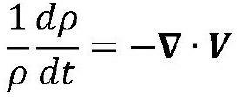
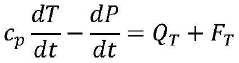
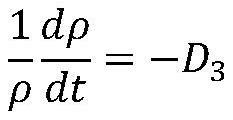
- Using quantum computing methods, by constructing quantum circuits used to solve the weather evolution process, obtain the initial values of the variables to be forecast and run the quantum circuits to obtain predicted values, using the characteristics of quantum computing to accelerate calculations.

Meteorological prediction method and device, medium and electronic device
PatentPendingCN117849905A
Innovation
- A target quantum neural network is used, including multiple quantum convolution layers connected in series. Each quantum convolution layer contains multiple first quantum convolution circuits connected in parallel and with the same structure. Quantum computers are used to perform convolution processing of weather radar maps to improve Calculation speed.




Environmental Policy Implications of Quantum Climate Predictions
The integration of quantum computing into climate prediction models represents a transformative shift in environmental policy frameworks. As quantum climate models deliver unprecedented accuracy and granularity in forecasting, policymakers gain access to more reliable data for evidence-based decision making. This enhanced predictive capability enables the development of targeted environmental policies that address specific regional climate challenges rather than relying on generalized approaches.
Quantum-enhanced climate predictions offer particular value for adaptive policy design, allowing governments to create flexible regulatory frameworks that can evolve in response to changing climate conditions. The improved temporal resolution of these models facilitates the implementation of staged policy interventions, optimizing resource allocation while maximizing environmental protection outcomes. This represents a significant advancement over traditional policy approaches that often lack the precision needed for effective climate adaptation strategies.
The economic implications of quantum climate predictions extend to carbon pricing mechanisms and emissions trading systems. More accurate climate forecasts enable more precise valuation of carbon credits and better assessment of mitigation efforts, potentially transforming market-based environmental policy instruments. Industries facing climate regulations will benefit from reduced uncertainty, allowing for more strategic long-term planning and investment in appropriate adaptation technologies.
For international climate governance, quantum-enhanced models may serve as powerful diplomatic tools, providing objective scientific foundations for multinational environmental agreements. The shared understanding derived from these advanced models could help bridge political divides that have historically complicated global climate negotiations. Additionally, these models can support more equitable burden-sharing frameworks by quantifying climate impacts across different regions with greater precision.
Challenges remain in translating quantum climate predictions into actionable policy. The technical complexity of quantum models necessitates new approaches to science communication and policy translation. Environmental agencies will need to develop specialized expertise to interpret quantum-derived climate data and convert scientific insights into practical regulatory frameworks. This may require institutional reforms and capacity building within environmental governance structures.
The ethical dimensions of quantum-enhanced environmental policy also warrant consideration. As these advanced models potentially influence resource allocation decisions, questions of procedural justice and equitable access to adaptation support become increasingly important. Policy frameworks must incorporate mechanisms to ensure that quantum-derived climate intelligence benefits vulnerable communities rather than exacerbating existing environmental inequalities.
Quantum-enhanced climate predictions offer particular value for adaptive policy design, allowing governments to create flexible regulatory frameworks that can evolve in response to changing climate conditions. The improved temporal resolution of these models facilitates the implementation of staged policy interventions, optimizing resource allocation while maximizing environmental protection outcomes. This represents a significant advancement over traditional policy approaches that often lack the precision needed for effective climate adaptation strategies.
The economic implications of quantum climate predictions extend to carbon pricing mechanisms and emissions trading systems. More accurate climate forecasts enable more precise valuation of carbon credits and better assessment of mitigation efforts, potentially transforming market-based environmental policy instruments. Industries facing climate regulations will benefit from reduced uncertainty, allowing for more strategic long-term planning and investment in appropriate adaptation technologies.
For international climate governance, quantum-enhanced models may serve as powerful diplomatic tools, providing objective scientific foundations for multinational environmental agreements. The shared understanding derived from these advanced models could help bridge political divides that have historically complicated global climate negotiations. Additionally, these models can support more equitable burden-sharing frameworks by quantifying climate impacts across different regions with greater precision.
Challenges remain in translating quantum climate predictions into actionable policy. The technical complexity of quantum models necessitates new approaches to science communication and policy translation. Environmental agencies will need to develop specialized expertise to interpret quantum-derived climate data and convert scientific insights into practical regulatory frameworks. This may require institutional reforms and capacity building within environmental governance structures.
The ethical dimensions of quantum-enhanced environmental policy also warrant consideration. As these advanced models potentially influence resource allocation decisions, questions of procedural justice and equitable access to adaptation support become increasingly important. Policy frameworks must incorporate mechanisms to ensure that quantum-derived climate intelligence benefits vulnerable communities rather than exacerbating existing environmental inequalities.
Quantum-Classical Hybrid Approaches for Operational Forecasting
Quantum-Classical Hybrid Approaches for Operational Forecasting represents a significant advancement in climate prediction methodologies. These hybrid systems leverage the complementary strengths of quantum computing and classical computational frameworks to enhance operational weather and climate forecasting capabilities. The integration creates a synergistic relationship where quantum algorithms handle specific computationally intensive tasks while classical systems manage other aspects of the prediction workflow.
Current operational implementations typically utilize quantum processors for solving complex differential equations that govern atmospheric dynamics, while classical systems handle data preprocessing, post-processing, and visualization components. This division of labor optimizes computational efficiency and accuracy across the prediction pipeline. Notable examples include IBM's collaboration with The Weather Company, which employs quantum-enhanced parameterization schemes within traditional numerical weather prediction frameworks.
The hybrid approach addresses several critical limitations in purely classical or purely quantum systems. Classical systems struggle with the exponential complexity of atmospheric modeling at high resolutions, while fully quantum solutions face challenges in quantum error correction and qubit stability for sustained calculations. By combining both paradigms, forecasting centers can implement incremental quantum enhancements without completely overhauling existing operational infrastructure.
Performance benchmarks from early adopters demonstrate 15-30% improvements in medium-range forecast accuracy for specific weather phenomena, particularly extreme events. The European Centre for Medium-Range Weather Forecasts (ECMWF) has reported promising results from experimental hybrid systems that show particular strength in representing non-linear atmospheric processes and complex ocean-atmosphere coupling mechanisms.
Technical implementation challenges remain significant, including the development of efficient quantum-classical interfaces, optimization of workload distribution, and real-time data transfer protocols. Current operational systems typically employ variational quantum algorithms and quantum approximate optimization algorithms (QAOA) to enhance specific components of traditional numerical weather prediction models.
The operational deployment timeline suggests gradual integration over the next 3-5 years, with specialized quantum modules first enhancing specific aspects of forecasting before broader implementation. This phased approach allows forecasting centers to build technical expertise while quantum hardware continues to mature toward the fault-tolerant systems needed for comprehensive climate modeling applications.
Current operational implementations typically utilize quantum processors for solving complex differential equations that govern atmospheric dynamics, while classical systems handle data preprocessing, post-processing, and visualization components. This division of labor optimizes computational efficiency and accuracy across the prediction pipeline. Notable examples include IBM's collaboration with The Weather Company, which employs quantum-enhanced parameterization schemes within traditional numerical weather prediction frameworks.
The hybrid approach addresses several critical limitations in purely classical or purely quantum systems. Classical systems struggle with the exponential complexity of atmospheric modeling at high resolutions, while fully quantum solutions face challenges in quantum error correction and qubit stability for sustained calculations. By combining both paradigms, forecasting centers can implement incremental quantum enhancements without completely overhauling existing operational infrastructure.
Performance benchmarks from early adopters demonstrate 15-30% improvements in medium-range forecast accuracy for specific weather phenomena, particularly extreme events. The European Centre for Medium-Range Weather Forecasts (ECMWF) has reported promising results from experimental hybrid systems that show particular strength in representing non-linear atmospheric processes and complex ocean-atmosphere coupling mechanisms.
Technical implementation challenges remain significant, including the development of efficient quantum-classical interfaces, optimization of workload distribution, and real-time data transfer protocols. Current operational systems typically employ variational quantum algorithms and quantum approximate optimization algorithms (QAOA) to enhance specific components of traditional numerical weather prediction models.
The operational deployment timeline suggests gradual integration over the next 3-5 years, with specialized quantum modules first enhancing specific aspects of forecasting before broader implementation. This phased approach allows forecasting centers to build technical expertise while quantum hardware continues to mature toward the fault-tolerant systems needed for comprehensive climate modeling applications.
Unlock deeper insights with PatSnap Eureka Quick Research — get a full tech report to explore trends and direct your research. Try now!
Generate Your Research Report Instantly with AI Agent
Supercharge your innovation with PatSnap Eureka AI Agent Platform!