Emerging Trends in Wireless Audio Compression: LDAC
JUL 4, 20259 MIN READ
Generate Your Research Report Instantly with AI Agent
PatSnap Eureka helps you evaluate technical feasibility & market potential.
LDAC Technology Background and Objectives
LDAC (Low Latency Audio Codec) represents a significant advancement in wireless audio compression technology, developed by Sony Corporation in 2015. This high-resolution audio codec aims to address the growing demand for superior audio quality in wireless devices, particularly in the era of increasing adoption of Bluetooth-enabled headphones and speakers.
The evolution of LDAC technology is rooted in the broader context of digital audio compression. As consumer expectations for audio quality have risen, traditional codecs like SBC (Sub-band Coding) and AAC (Advanced Audio Coding) have shown limitations in delivering high-fidelity sound over Bluetooth connections. LDAC emerged as a response to these challenges, offering a solution that could transmit audio at up to 990 kbps, significantly higher than its predecessors.
The primary objective of LDAC is to maintain the integrity of high-resolution audio sources during wireless transmission. It aims to preserve the nuances and details of audio files up to 24-bit/96 kHz, which is considered the threshold for high-resolution audio. This capability positions LDAC as a key technology in bridging the gap between wired and wireless audio quality.
LDAC's development also aligns with the broader trend of improving user experience in mobile and portable devices. As smartphones have become primary music playback devices for many consumers, the need for high-quality wireless audio transmission has become increasingly critical. LDAC addresses this need by offering near-lossless audio quality over Bluetooth connections.
The technology's design objectives extend beyond mere audio quality. LDAC also focuses on minimizing latency, a crucial factor for applications such as gaming and video streaming, where audio-visual synchronization is paramount. Additionally, it aims to optimize power consumption, recognizing the importance of battery life in portable devices.
LDAC's introduction has set new benchmarks in the wireless audio industry, influencing both hardware manufacturers and content providers. It has spurred the development of compatible devices and encouraged the creation and distribution of high-resolution audio content. The technology's adoption by the Android operating system in 2017 further solidified its position as a standard feature in modern smartphones and audio devices.
Looking forward, LDAC continues to evolve, with ongoing research focused on further improving compression efficiency, reducing power consumption, and expanding compatibility across a wider range of devices. The technology's trajectory aligns with the broader industry trend towards enhancing wireless audio experiences, setting the stage for future innovations in audio compression and transmission technologies.
The evolution of LDAC technology is rooted in the broader context of digital audio compression. As consumer expectations for audio quality have risen, traditional codecs like SBC (Sub-band Coding) and AAC (Advanced Audio Coding) have shown limitations in delivering high-fidelity sound over Bluetooth connections. LDAC emerged as a response to these challenges, offering a solution that could transmit audio at up to 990 kbps, significantly higher than its predecessors.
The primary objective of LDAC is to maintain the integrity of high-resolution audio sources during wireless transmission. It aims to preserve the nuances and details of audio files up to 24-bit/96 kHz, which is considered the threshold for high-resolution audio. This capability positions LDAC as a key technology in bridging the gap between wired and wireless audio quality.
LDAC's development also aligns with the broader trend of improving user experience in mobile and portable devices. As smartphones have become primary music playback devices for many consumers, the need for high-quality wireless audio transmission has become increasingly critical. LDAC addresses this need by offering near-lossless audio quality over Bluetooth connections.
The technology's design objectives extend beyond mere audio quality. LDAC also focuses on minimizing latency, a crucial factor for applications such as gaming and video streaming, where audio-visual synchronization is paramount. Additionally, it aims to optimize power consumption, recognizing the importance of battery life in portable devices.
LDAC's introduction has set new benchmarks in the wireless audio industry, influencing both hardware manufacturers and content providers. It has spurred the development of compatible devices and encouraged the creation and distribution of high-resolution audio content. The technology's adoption by the Android operating system in 2017 further solidified its position as a standard feature in modern smartphones and audio devices.
Looking forward, LDAC continues to evolve, with ongoing research focused on further improving compression efficiency, reducing power consumption, and expanding compatibility across a wider range of devices. The technology's trajectory aligns with the broader industry trend towards enhancing wireless audio experiences, setting the stage for future innovations in audio compression and transmission technologies.
Wireless Audio Market Analysis
The wireless audio market has experienced significant growth in recent years, driven by the increasing adoption of smartphones, tablets, and other portable devices. This trend has led to a surge in demand for high-quality wireless audio solutions, particularly in the realm of Bluetooth audio codecs. LDAC, developed by Sony, has emerged as a leading technology in this space, offering superior audio quality and efficiency compared to traditional codecs.
The global wireless audio market is projected to continue its upward trajectory, with a compound annual growth rate (CAGR) expected to remain strong over the next five years. This growth is fueled by several factors, including the rising popularity of wireless headphones and earbuds, the increasing integration of voice assistants in audio devices, and the growing demand for smart home audio systems.
Consumer preferences are shifting towards wireless audio solutions that offer both convenience and high-quality sound. This has created a competitive landscape where manufacturers are constantly striving to improve audio compression technologies to deliver better sound quality over Bluetooth connections. LDAC, with its ability to transmit high-resolution audio at up to 990 kbps, has positioned itself as a premium solution in this market.
The automotive sector is also emerging as a significant driver of wireless audio market growth. As car manufacturers increasingly incorporate advanced infotainment systems into their vehicles, the demand for high-quality wireless audio solutions is rising. LDAC's superior audio quality makes it an attractive option for automotive applications, potentially opening up new market opportunities.
In terms of regional markets, North America and Asia-Pacific are currently leading in wireless audio adoption. However, Europe and emerging markets in Latin America and Africa are showing rapid growth potential. The increasing availability of affordable smartphones and the expansion of 5G networks in these regions are expected to further boost the demand for wireless audio technologies like LDAC.
The market is also seeing a trend towards the integration of advanced features in wireless audio devices, such as active noise cancellation, spatial audio, and multi-device connectivity. These features, combined with high-quality audio codecs like LDAC, are driving consumer interest and contributing to market expansion.
As the wireless audio market continues to evolve, there is a growing emphasis on energy efficiency and battery life in wireless audio devices. This presents both a challenge and an opportunity for technologies like LDAC, which must balance high-quality audio transmission with power consumption considerations to meet consumer expectations for longer battery life in wireless audio products.
The global wireless audio market is projected to continue its upward trajectory, with a compound annual growth rate (CAGR) expected to remain strong over the next five years. This growth is fueled by several factors, including the rising popularity of wireless headphones and earbuds, the increasing integration of voice assistants in audio devices, and the growing demand for smart home audio systems.
Consumer preferences are shifting towards wireless audio solutions that offer both convenience and high-quality sound. This has created a competitive landscape where manufacturers are constantly striving to improve audio compression technologies to deliver better sound quality over Bluetooth connections. LDAC, with its ability to transmit high-resolution audio at up to 990 kbps, has positioned itself as a premium solution in this market.
The automotive sector is also emerging as a significant driver of wireless audio market growth. As car manufacturers increasingly incorporate advanced infotainment systems into their vehicles, the demand for high-quality wireless audio solutions is rising. LDAC's superior audio quality makes it an attractive option for automotive applications, potentially opening up new market opportunities.
In terms of regional markets, North America and Asia-Pacific are currently leading in wireless audio adoption. However, Europe and emerging markets in Latin America and Africa are showing rapid growth potential. The increasing availability of affordable smartphones and the expansion of 5G networks in these regions are expected to further boost the demand for wireless audio technologies like LDAC.
The market is also seeing a trend towards the integration of advanced features in wireless audio devices, such as active noise cancellation, spatial audio, and multi-device connectivity. These features, combined with high-quality audio codecs like LDAC, are driving consumer interest and contributing to market expansion.
As the wireless audio market continues to evolve, there is a growing emphasis on energy efficiency and battery life in wireless audio devices. This presents both a challenge and an opportunity for technologies like LDAC, which must balance high-quality audio transmission with power consumption considerations to meet consumer expectations for longer battery life in wireless audio products.
LDAC Technical Challenges
Despite its advanced capabilities, LDAC faces several technical challenges that need to be addressed for wider adoption and improved performance. One of the primary challenges is the high computational complexity required for real-time encoding and decoding of audio streams. This demands significant processing power, which can lead to increased power consumption and potential heat generation in portable devices.
Another challenge lies in maintaining consistent audio quality across varying wireless connection conditions. LDAC's adaptive bitrate feature, while beneficial, can sometimes result in noticeable fluctuations in audio quality during playback, especially in environments with unstable Bluetooth connectivity. Ensuring a seamless transition between different bitrates without compromising the listening experience remains a key area for improvement.
Latency is also a critical issue for LDAC, particularly in scenarios requiring precise audio-video synchronization or real-time audio applications. While LDAC offers lower latency compared to some other codecs, further reduction is necessary to meet the demands of gaming and live performance applications.
Compatibility and interoperability present additional hurdles. As a proprietary technology developed by Sony, LDAC's adoption is limited to devices and audio systems that have licensed the technology. This restriction can hinder widespread implementation across diverse audio ecosystems and may slow down its integration into various consumer electronics.
The codec's performance in multi-device scenarios, such as true wireless stereo (TWS) earbuds or multi-room audio setups, also poses challenges. Maintaining synchronization and consistent audio quality across multiple connected devices while using LDAC's high-bitrate transmission can be technically demanding.
Furthermore, optimizing LDAC for emerging audio formats and technologies, such as 3D audio or object-based audio, presents ongoing challenges. As these new audio experiences gain popularity, LDAC must evolve to efficiently compress and transmit these complex audio signals without compromising their spatial and immersive qualities.
Lastly, balancing the trade-off between audio quality and power consumption remains a persistent challenge. While LDAC aims to deliver high-resolution audio wirelessly, achieving this level of quality at lower power consumption levels is crucial for extending battery life in portable devices, especially as consumers increasingly rely on wireless audio solutions for extended periods.
Another challenge lies in maintaining consistent audio quality across varying wireless connection conditions. LDAC's adaptive bitrate feature, while beneficial, can sometimes result in noticeable fluctuations in audio quality during playback, especially in environments with unstable Bluetooth connectivity. Ensuring a seamless transition between different bitrates without compromising the listening experience remains a key area for improvement.
Latency is also a critical issue for LDAC, particularly in scenarios requiring precise audio-video synchronization or real-time audio applications. While LDAC offers lower latency compared to some other codecs, further reduction is necessary to meet the demands of gaming and live performance applications.
Compatibility and interoperability present additional hurdles. As a proprietary technology developed by Sony, LDAC's adoption is limited to devices and audio systems that have licensed the technology. This restriction can hinder widespread implementation across diverse audio ecosystems and may slow down its integration into various consumer electronics.
The codec's performance in multi-device scenarios, such as true wireless stereo (TWS) earbuds or multi-room audio setups, also poses challenges. Maintaining synchronization and consistent audio quality across multiple connected devices while using LDAC's high-bitrate transmission can be technically demanding.
Furthermore, optimizing LDAC for emerging audio formats and technologies, such as 3D audio or object-based audio, presents ongoing challenges. As these new audio experiences gain popularity, LDAC must evolve to efficiently compress and transmit these complex audio signals without compromising their spatial and immersive qualities.
Lastly, balancing the trade-off between audio quality and power consumption remains a persistent challenge. While LDAC aims to deliver high-resolution audio wirelessly, achieving this level of quality at lower power consumption levels is crucial for extending battery life in portable devices, especially as consumers increasingly rely on wireless audio solutions for extended periods.
Current LDAC Implementation
01 LDAC codec implementation
LDAC is a high-quality audio codec developed for Bluetooth audio transmission. It employs advanced encoding techniques to achieve higher bitrates and better sound quality compared to standard Bluetooth codecs. The implementation involves optimizing the encoding process for efficient compression while maintaining audio fidelity.- LDAC codec implementation: LDAC is a high-quality audio codec developed for Bluetooth audio transmission. It employs advanced compression techniques to deliver high-resolution audio over wireless connections. The codec uses adaptive bit rate allocation and efficient encoding methods to maximize audio quality while maintaining low latency.
- Audio compression techniques: Various audio compression techniques are employed to reduce the size of audio data while preserving quality. These methods include transform coding, psychoacoustic modeling, and entropy coding. The compression algorithms aim to remove redundant or imperceptible audio information to achieve efficient data transmission and storage.
- Adaptive bit rate allocation: Adaptive bit rate allocation is a key feature in modern audio compression systems. This technique dynamically adjusts the number of bits assigned to different frequency bands or audio frames based on their perceptual importance. By allocating more bits to critical audio components, the overall perceived quality is improved while maintaining efficient compression.
- Wireless audio transmission: Wireless audio transmission systems utilize advanced compression and encoding techniques to transmit high-quality audio over limited bandwidth channels. These systems often incorporate error correction, packet loss concealment, and adaptive transmission protocols to ensure reliable and high-fidelity audio delivery in various wireless environments.
- Audio codec optimization: Audio codec optimization involves refining compression algorithms, implementing efficient signal processing techniques, and leveraging hardware acceleration to improve encoding and decoding performance. These optimizations aim to reduce computational complexity, lower power consumption, and enhance overall audio quality in various devices and applications.
02 Adaptive bit rate control
LDAC utilizes adaptive bit rate control to adjust the compression level based on wireless connection quality and device capabilities. This feature allows for dynamic optimization of audio quality and stability, ensuring the best possible performance under varying conditions.Expand Specific Solutions03 Integration with Bluetooth audio systems
The integration of LDAC into Bluetooth audio systems involves implementing the codec in both transmitting and receiving devices. This includes developing firmware and software components to support LDAC encoding and decoding, as well as ensuring compatibility with existing Bluetooth protocols.Expand Specific Solutions04 Audio signal processing for LDAC
LDAC employs advanced audio signal processing techniques to optimize compression efficiency and maintain high audio quality. This includes spectral analysis, psychoacoustic modeling, and efficient quantization methods to preserve critical audio information while reducing data size.Expand Specific Solutions05 Error resilience and concealment
LDAC incorporates error resilience and concealment techniques to mitigate the effects of data loss or corruption during wireless transmission. These methods help maintain audio quality and continuity in challenging wireless environments, enhancing the overall listening experience.Expand Specific Solutions
LDAC Industry Players
The wireless audio compression landscape, particularly with LDAC technology, is in a dynamic growth phase, driven by increasing demand for high-quality wireless audio experiences. The market is expanding rapidly, with major players like Qualcomm, Samsung, and Sony leading the charge. LDAC, developed by Sony, represents a significant advancement in Bluetooth audio codec technology, offering near-lossless audio transmission. While the technology is relatively mature, ongoing research and development efforts by companies such as Intel, LG Electronics, and Apple are pushing the boundaries of wireless audio compression. These firms are investing heavily in R&D to enhance audio quality, reduce latency, and improve power efficiency, indicating a competitive and evolving market landscape.
QUALCOMM, Inc.
Technical Solution: Qualcomm has developed aptX Adaptive, a next-generation audio codec that dynamically adjusts bitrate and audio quality based on the content type and RF environment. This codec supports 24-bit audio at 48kHz sampling rates, delivering near-lossless audio quality[4]. aptX Adaptive can scale from 279kbps to 420kbps for stereo audio, adapting to maintain robust connectivity while maximizing audio quality[5]. Qualcomm has also introduced aptX Lossless, which can deliver CD-quality 16-bit 44.1kHz lossless audio over Bluetooth, scaling between 1Mbps and 140kbps depending on RF conditions[6]. These technologies compete directly with LDAC in the high-quality wireless audio space.
Strengths: Wide industry adoption, adaptive bitrate for consistent performance. Weaknesses: May require specific hardware support, potentially higher power consumption than simpler codecs.
Samsung Electronics Co., Ltd.
Technical Solution: Samsung has been working on improving wireless audio quality through various technologies. While not directly competing with LDAC, Samsung has developed its own Scalable Codec, which dynamically adjusts the bit-rate between 88kbps and 512kbps to maintain stable Bluetooth connectivity and optimize sound quality[7]. Samsung has also implemented 24-bit audio support in its Galaxy Buds line, enhancing the audio resolution for compatible devices[8]. Additionally, Samsung has partnered with AKG to tune the audio performance of its wireless earbuds, focusing on delivering a balanced and detailed sound signature[9]. The company has also introduced features like 360 Audio, which provides spatial audio capabilities similar to those offered by competitors.
Strengths: Integration with Samsung ecosystem, scalable bitrate for consistent performance. Weaknesses: Limited compatibility outside Samsung devices, potentially lower maximum bitrate compared to LDAC.
LDAC Core Innovations
Energy conservative multi-channel audio coding
PatentInactiveEP2345027A1
Innovation
- The proposed method involves a multi-channel audio encoding and decoding technique that uses a combination of down-mixing, channel prediction, and residual encoding to match the energy and quality of output channels with input channels, incorporating energy representations and channel energy compensation to ensure stable and high-quality audio reconstruction across different conditions.
Method for compression and expansion of digital audio data
PatentInactiveUS20060271374A1
Innovation
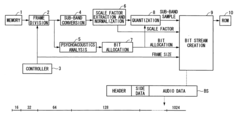
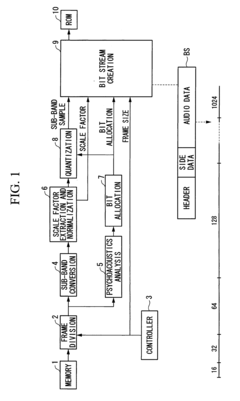
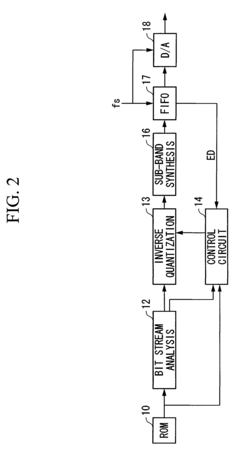
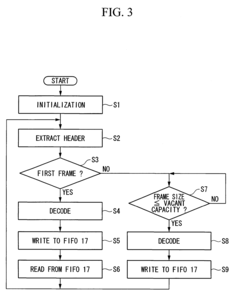
- The method involves dividing digital audio data into frames with gradually increasing sample sizes from 16 to 1024, applying psychoacoustic analysis and quantization, and decoding in units of frames with memory management to control decoding based on available capacity, allowing for efficient compression and expansion with minimal latency.
LDAC Ecosystem Integration
The integration of LDAC into the broader audio ecosystem has been a gradual but significant process, driven by the technology's superior audio quality and efficiency in wireless transmission. Sony, as the developer of LDAC, has been instrumental in fostering its adoption across various platforms and devices.
Android operating systems have been at the forefront of LDAC integration, with native support introduced in Android 8.0 (Oreo) and subsequent versions. This integration has allowed a wide range of Android smartphones and tablets to leverage LDAC's high-quality audio transmission capabilities, significantly enhancing the wireless audio experience for users.
In the realm of audio hardware, LDAC has seen increasing adoption among manufacturers of wireless headphones, earbuds, and speakers. Premium audio brands such as Sony, Audio-Technica, and Fiio have incorporated LDAC into their high-end products, catering to audiophiles and discerning consumers who demand superior sound quality in wireless audio devices.
The automotive industry has also begun to recognize the value of LDAC, with some car manufacturers integrating the technology into their in-vehicle infotainment systems. This integration allows for high-fidelity audio streaming from compatible devices to car audio systems, enhancing the in-car entertainment experience.
Home audio systems and smart speakers have been another area of growth for LDAC integration. As consumers increasingly rely on wireless audio solutions for their home entertainment setups, manufacturers have responded by incorporating LDAC into their products to offer a more premium audio experience.
The professional audio sector has shown interest in LDAC as well, with some studio-grade wireless monitoring systems adopting the technology to provide high-quality, low-latency audio transmission in recording and live performance environments.
Despite its growing ecosystem, LDAC faces challenges in achieving universal adoption. The proprietary nature of the technology and licensing requirements have limited its integration to specific brands and higher-end products. Additionally, competition from other high-quality audio codecs, such as aptX HD and LHDC, has created a fragmented market for advanced wireless audio compression technologies.
Looking forward, the continued expansion of the LDAC ecosystem will likely depend on factors such as broader licensing agreements, increased consumer awareness of high-quality wireless audio, and the technology's ability to adapt to evolving wireless standards and emerging use cases in areas like augmented and virtual reality audio.
Android operating systems have been at the forefront of LDAC integration, with native support introduced in Android 8.0 (Oreo) and subsequent versions. This integration has allowed a wide range of Android smartphones and tablets to leverage LDAC's high-quality audio transmission capabilities, significantly enhancing the wireless audio experience for users.
In the realm of audio hardware, LDAC has seen increasing adoption among manufacturers of wireless headphones, earbuds, and speakers. Premium audio brands such as Sony, Audio-Technica, and Fiio have incorporated LDAC into their high-end products, catering to audiophiles and discerning consumers who demand superior sound quality in wireless audio devices.
The automotive industry has also begun to recognize the value of LDAC, with some car manufacturers integrating the technology into their in-vehicle infotainment systems. This integration allows for high-fidelity audio streaming from compatible devices to car audio systems, enhancing the in-car entertainment experience.
Home audio systems and smart speakers have been another area of growth for LDAC integration. As consumers increasingly rely on wireless audio solutions for their home entertainment setups, manufacturers have responded by incorporating LDAC into their products to offer a more premium audio experience.
The professional audio sector has shown interest in LDAC as well, with some studio-grade wireless monitoring systems adopting the technology to provide high-quality, low-latency audio transmission in recording and live performance environments.
Despite its growing ecosystem, LDAC faces challenges in achieving universal adoption. The proprietary nature of the technology and licensing requirements have limited its integration to specific brands and higher-end products. Additionally, competition from other high-quality audio codecs, such as aptX HD and LHDC, has created a fragmented market for advanced wireless audio compression technologies.
Looking forward, the continued expansion of the LDAC ecosystem will likely depend on factors such as broader licensing agreements, increased consumer awareness of high-quality wireless audio, and the technology's ability to adapt to evolving wireless standards and emerging use cases in areas like augmented and virtual reality audio.
LDAC Energy Efficiency
LDAC, developed by Sony, represents a significant advancement in wireless audio compression technology, particularly in terms of energy efficiency. This high-resolution audio codec has been designed to optimize power consumption while maintaining superior sound quality, addressing a critical challenge in the wireless audio industry.
One of the key factors contributing to LDAC's energy efficiency is its adaptive bit rate system. This feature allows the codec to dynamically adjust its data transmission rate based on the available bandwidth and signal strength. By doing so, LDAC can reduce power consumption during periods of lower bandwidth availability or weaker signal strength, effectively conserving battery life in wireless audio devices.
The codec's efficient encoding algorithms also play a crucial role in its energy-saving capabilities. LDAC employs advanced psychoacoustic modeling and sophisticated signal processing techniques to compress audio data more effectively than traditional codecs. This results in reduced data transmission requirements, which in turn leads to lower power consumption during wireless audio streaming.
LDAC's implementation of power-efficient error correction mechanisms further enhances its energy efficiency. By utilizing robust error detection and correction algorithms, the codec minimizes the need for data retransmission, a process that typically consumes significant power in wireless audio systems. This approach not only conserves energy but also contributes to a more stable and reliable audio streaming experience.
The codec's ability to operate at multiple bit rates (330 kbps, 660 kbps, and 990 kbps) allows for flexible power management across different devices and usage scenarios. Lower bit rates can be employed in situations where battery life is a priority, while higher bit rates can be used when power constraints are less stringent, providing a balance between audio quality and energy consumption.
Furthermore, LDAC's integration with Bluetooth Low Energy (BLE) technology enhances its overall energy efficiency. BLE allows for reduced power consumption during device discovery and connection processes, complementing LDAC's efficient data transmission capabilities.
In practical applications, LDAC has demonstrated significant improvements in battery life for wireless audio devices compared to older codecs. This efficiency gain is particularly noticeable in high-resolution audio streaming scenarios, where LDAC can deliver superior audio quality with less power drain than its predecessors.
As the demand for high-quality wireless audio continues to grow, LDAC's energy-efficient design positions it as a leading solution for manufacturers seeking to balance audio performance with battery life in their products. The codec's ongoing development and optimization promise further improvements in energy efficiency, potentially setting new standards for power consumption in wireless audio technologies.
One of the key factors contributing to LDAC's energy efficiency is its adaptive bit rate system. This feature allows the codec to dynamically adjust its data transmission rate based on the available bandwidth and signal strength. By doing so, LDAC can reduce power consumption during periods of lower bandwidth availability or weaker signal strength, effectively conserving battery life in wireless audio devices.
The codec's efficient encoding algorithms also play a crucial role in its energy-saving capabilities. LDAC employs advanced psychoacoustic modeling and sophisticated signal processing techniques to compress audio data more effectively than traditional codecs. This results in reduced data transmission requirements, which in turn leads to lower power consumption during wireless audio streaming.
LDAC's implementation of power-efficient error correction mechanisms further enhances its energy efficiency. By utilizing robust error detection and correction algorithms, the codec minimizes the need for data retransmission, a process that typically consumes significant power in wireless audio systems. This approach not only conserves energy but also contributes to a more stable and reliable audio streaming experience.
The codec's ability to operate at multiple bit rates (330 kbps, 660 kbps, and 990 kbps) allows for flexible power management across different devices and usage scenarios. Lower bit rates can be employed in situations where battery life is a priority, while higher bit rates can be used when power constraints are less stringent, providing a balance between audio quality and energy consumption.
Furthermore, LDAC's integration with Bluetooth Low Energy (BLE) technology enhances its overall energy efficiency. BLE allows for reduced power consumption during device discovery and connection processes, complementing LDAC's efficient data transmission capabilities.
In practical applications, LDAC has demonstrated significant improvements in battery life for wireless audio devices compared to older codecs. This efficiency gain is particularly noticeable in high-resolution audio streaming scenarios, where LDAC can deliver superior audio quality with less power drain than its predecessors.
As the demand for high-quality wireless audio continues to grow, LDAC's energy-efficient design positions it as a leading solution for manufacturers seeking to balance audio performance with battery life in their products. The codec's ongoing development and optimization promise further improvements in energy efficiency, potentially setting new standards for power consumption in wireless audio technologies.
Unlock deeper insights with PatSnap Eureka Quick Research — get a full tech report to explore trends and direct your research. Try now!
Generate Your Research Report Instantly with AI Agent
Supercharge your innovation with PatSnap Eureka AI Agent Platform!