

How to Implement Superior Audio Adapter Systems Using LDAC?
JUL 4, 20258 MIN READ
Generate Your Research Report Instantly with AI Agent
PatSnap Eureka helps you evaluate technical feasibility & market potential.
LDAC Technology Overview
LDAC is a cutting-edge audio coding technology developed by Sony Corporation, designed to deliver high-resolution audio over Bluetooth connections. This proprietary codec aims to address the limitations of traditional Bluetooth audio transmission, which often results in compromised sound quality due to bandwidth constraints.
At its core, LDAC utilizes advanced compression algorithms and adaptive bit rate allocation to maximize audio quality within the available bandwidth. The technology supports three audio quality modes: 330 kbps, 660 kbps, and 990 kbps, allowing for flexible adaptation to different network conditions and device capabilities.
One of the key features of LDAC is its ability to transmit audio at up to 24-bit/96 kHz resolution, significantly surpassing the capabilities of standard Bluetooth codecs like SBC (Sub-Band Coding). This high-resolution support enables the preservation of subtle audio details and a wider dynamic range, resulting in a more immersive and authentic listening experience.
LDAC employs sophisticated psychoacoustic modeling techniques to optimize the encoding process. By analyzing the human auditory system's perception of sound, the codec can prioritize the most critical audio information, ensuring that the compressed signal retains the essential characteristics of the original audio.
The technology also incorporates error detection and correction mechanisms to maintain signal integrity in challenging wireless environments. This feature enhances the overall stability and reliability of audio transmission, particularly in areas with high electromagnetic interference or when the device is at the edge of its Bluetooth range.
LDAC's implementation in audio adapter systems requires careful consideration of hardware and software components. On the hardware side, compatible Bluetooth chips and digital signal processors (DSPs) are essential for encoding and decoding LDAC streams efficiently. The software stack must include the necessary drivers and middleware to support LDAC's advanced features and ensure seamless integration with the device's audio subsystem.
To fully leverage LDAC's capabilities, audio adapter systems should also incorporate high-quality digital-to-analog converters (DACs) and amplifiers. These components play a crucial role in preserving the fidelity of the high-resolution audio signal throughout the playback chain, from reception to the final output stage.
As LDAC continues to evolve, it is expected to play an increasingly important role in the development of superior audio adapter systems. Its ability to deliver near-lossless audio quality over Bluetooth makes it a valuable technology for a wide range of applications, from high-end headphones and speakers to automotive audio systems and professional audio equipment.
At its core, LDAC utilizes advanced compression algorithms and adaptive bit rate allocation to maximize audio quality within the available bandwidth. The technology supports three audio quality modes: 330 kbps, 660 kbps, and 990 kbps, allowing for flexible adaptation to different network conditions and device capabilities.
One of the key features of LDAC is its ability to transmit audio at up to 24-bit/96 kHz resolution, significantly surpassing the capabilities of standard Bluetooth codecs like SBC (Sub-Band Coding). This high-resolution support enables the preservation of subtle audio details and a wider dynamic range, resulting in a more immersive and authentic listening experience.
LDAC employs sophisticated psychoacoustic modeling techniques to optimize the encoding process. By analyzing the human auditory system's perception of sound, the codec can prioritize the most critical audio information, ensuring that the compressed signal retains the essential characteristics of the original audio.
The technology also incorporates error detection and correction mechanisms to maintain signal integrity in challenging wireless environments. This feature enhances the overall stability and reliability of audio transmission, particularly in areas with high electromagnetic interference or when the device is at the edge of its Bluetooth range.
LDAC's implementation in audio adapter systems requires careful consideration of hardware and software components. On the hardware side, compatible Bluetooth chips and digital signal processors (DSPs) are essential for encoding and decoding LDAC streams efficiently. The software stack must include the necessary drivers and middleware to support LDAC's advanced features and ensure seamless integration with the device's audio subsystem.
To fully leverage LDAC's capabilities, audio adapter systems should also incorporate high-quality digital-to-analog converters (DACs) and amplifiers. These components play a crucial role in preserving the fidelity of the high-resolution audio signal throughout the playback chain, from reception to the final output stage.
As LDAC continues to evolve, it is expected to play an increasingly important role in the development of superior audio adapter systems. Its ability to deliver near-lossless audio quality over Bluetooth makes it a valuable technology for a wide range of applications, from high-end headphones and speakers to automotive audio systems and professional audio equipment.
Audio Market Trends
The global audio market has been experiencing significant growth and transformation in recent years, driven by technological advancements and changing consumer preferences. The increasing demand for high-quality audio experiences across various devices and platforms has led to a surge in the development of advanced audio technologies, including superior audio adapter systems.
One of the key trends in the audio market is the growing popularity of wireless audio solutions. With the widespread adoption of smartphones, tablets, and other portable devices, consumers are increasingly seeking convenient and cable-free audio experiences. This has resulted in a substantial increase in the demand for Bluetooth-enabled audio devices, including headphones, speakers, and soundbars.
The rise of high-resolution audio formats has also been a significant driver in the audio market. Consumers are becoming more discerning about audio quality, leading to a growing demand for audio systems that can deliver superior sound reproduction. This trend has created opportunities for technologies like LDAC, which offers high-quality wireless audio transmission capabilities.
Another notable trend is the integration of smart features and voice assistants in audio devices. The increasing popularity of smart home ecosystems has led to the development of audio products that can seamlessly integrate with voice-controlled platforms, enhancing user convenience and expanding the functionality of audio systems.
The automotive audio market has also been experiencing substantial growth, with car manufacturers focusing on providing premium audio experiences in vehicles. This has led to partnerships between automakers and audio technology companies to develop advanced in-car audio systems that deliver immersive sound experiences.
The professional audio segment has seen a shift towards digital solutions and networked audio systems. This trend has been driven by the need for more flexible and scalable audio setups in various professional environments, including live events, broadcasting, and recording studios.
In the context of superior audio adapter systems using LDAC, the market trends indicate a growing demand for high-quality wireless audio transmission technologies. LDAC's ability to deliver near-lossless audio quality over Bluetooth connections aligns well with the consumer preference for both wireless convenience and superior sound quality.
The increasing adoption of high-resolution audio streaming services and the growing popularity of audiophile-grade portable devices further contribute to the potential market for LDAC-enabled audio adapter systems. As consumers become more aware of the benefits of high-quality audio transmission, the demand for technologies like LDAC is expected to grow across various audio product categories.
One of the key trends in the audio market is the growing popularity of wireless audio solutions. With the widespread adoption of smartphones, tablets, and other portable devices, consumers are increasingly seeking convenient and cable-free audio experiences. This has resulted in a substantial increase in the demand for Bluetooth-enabled audio devices, including headphones, speakers, and soundbars.
The rise of high-resolution audio formats has also been a significant driver in the audio market. Consumers are becoming more discerning about audio quality, leading to a growing demand for audio systems that can deliver superior sound reproduction. This trend has created opportunities for technologies like LDAC, which offers high-quality wireless audio transmission capabilities.
Another notable trend is the integration of smart features and voice assistants in audio devices. The increasing popularity of smart home ecosystems has led to the development of audio products that can seamlessly integrate with voice-controlled platforms, enhancing user convenience and expanding the functionality of audio systems.
The automotive audio market has also been experiencing substantial growth, with car manufacturers focusing on providing premium audio experiences in vehicles. This has led to partnerships between automakers and audio technology companies to develop advanced in-car audio systems that deliver immersive sound experiences.
The professional audio segment has seen a shift towards digital solutions and networked audio systems. This trend has been driven by the need for more flexible and scalable audio setups in various professional environments, including live events, broadcasting, and recording studios.
In the context of superior audio adapter systems using LDAC, the market trends indicate a growing demand for high-quality wireless audio transmission technologies. LDAC's ability to deliver near-lossless audio quality over Bluetooth connections aligns well with the consumer preference for both wireless convenience and superior sound quality.
The increasing adoption of high-resolution audio streaming services and the growing popularity of audiophile-grade portable devices further contribute to the potential market for LDAC-enabled audio adapter systems. As consumers become more aware of the benefits of high-quality audio transmission, the demand for technologies like LDAC is expected to grow across various audio product categories.
LDAC Technical Challenges
LDAC, developed by Sony, represents a significant advancement in Bluetooth audio codec technology. However, implementing superior audio adapter systems using LDAC presents several technical challenges that need to be addressed.
One of the primary challenges is the high bitrate requirement of LDAC. While it offers superior audio quality, it demands a bitrate of up to 990 kbps, which is significantly higher than other Bluetooth codecs. This high bitrate can strain the bandwidth capabilities of Bluetooth connections, potentially leading to instability or dropouts in audio transmission, especially in environments with high electromagnetic interference.
Another challenge lies in the complexity of the LDAC encoding and decoding processes. The codec employs sophisticated algorithms for efficient data compression and decompression, which require substantial computational resources. This can pose difficulties for audio adapter systems with limited processing power, potentially resulting in increased latency or reduced battery life in portable devices.
The adaptive bitrate feature of LDAC, while beneficial for maintaining connection stability, introduces its own set of challenges. Implementing a system that can seamlessly switch between different bitrates (330 kbps, 660 kbps, and 990 kbps) in real-time, based on connection quality, requires intricate software design and robust error handling mechanisms.
Compatibility issues also present a significant hurdle. Not all devices support LDAC, and ensuring backward compatibility with other Bluetooth codecs while prioritizing LDAC when available can be complex. This requires sophisticated codec negotiation protocols and fallback mechanisms to be implemented in the audio adapter system.
Power consumption is another critical challenge, particularly for battery-powered devices. The high-quality audio transmission of LDAC necessitates more energy, which can significantly impact the battery life of portable audio adapters. Balancing audio quality with power efficiency becomes a crucial consideration in system design.
Furthermore, the implementation of Digital Signal Processing (DSP) techniques to fully leverage LDAC's capabilities presents its own set of challenges. Optimizing audio processing algorithms to work efficiently with LDAC's high-resolution audio streams while minimizing latency requires advanced DSP expertise and careful system integration.
Lastly, ensuring consistent audio quality across various audio sources and output devices poses a challenge. LDAC's potential for high-fidelity audio can be compromised by limitations in the audio chain, such as low-quality DACs or amplifiers. Designing an audio adapter system that maintains signal integrity throughout the entire audio path is crucial for realizing the full benefits of LDAC technology.
One of the primary challenges is the high bitrate requirement of LDAC. While it offers superior audio quality, it demands a bitrate of up to 990 kbps, which is significantly higher than other Bluetooth codecs. This high bitrate can strain the bandwidth capabilities of Bluetooth connections, potentially leading to instability or dropouts in audio transmission, especially in environments with high electromagnetic interference.
Another challenge lies in the complexity of the LDAC encoding and decoding processes. The codec employs sophisticated algorithms for efficient data compression and decompression, which require substantial computational resources. This can pose difficulties for audio adapter systems with limited processing power, potentially resulting in increased latency or reduced battery life in portable devices.
The adaptive bitrate feature of LDAC, while beneficial for maintaining connection stability, introduces its own set of challenges. Implementing a system that can seamlessly switch between different bitrates (330 kbps, 660 kbps, and 990 kbps) in real-time, based on connection quality, requires intricate software design and robust error handling mechanisms.
Compatibility issues also present a significant hurdle. Not all devices support LDAC, and ensuring backward compatibility with other Bluetooth codecs while prioritizing LDAC when available can be complex. This requires sophisticated codec negotiation protocols and fallback mechanisms to be implemented in the audio adapter system.
Power consumption is another critical challenge, particularly for battery-powered devices. The high-quality audio transmission of LDAC necessitates more energy, which can significantly impact the battery life of portable audio adapters. Balancing audio quality with power efficiency becomes a crucial consideration in system design.
Furthermore, the implementation of Digital Signal Processing (DSP) techniques to fully leverage LDAC's capabilities presents its own set of challenges. Optimizing audio processing algorithms to work efficiently with LDAC's high-resolution audio streams while minimizing latency requires advanced DSP expertise and careful system integration.
Lastly, ensuring consistent audio quality across various audio sources and output devices poses a challenge. LDAC's potential for high-fidelity audio can be compromised by limitations in the audio chain, such as low-quality DACs or amplifiers. Designing an audio adapter system that maintains signal integrity throughout the entire audio path is crucial for realizing the full benefits of LDAC technology.
Current LDAC Implementations
01 LDAC codec implementation for high-quality audio transmission
LDAC is a high-resolution audio codec developed for Bluetooth audio transmission. It enables the transfer of high-quality audio data over Bluetooth connections, offering better sound quality compared to standard codecs. LDAC supports various bit rates and can adapt to different network conditions to maintain optimal audio quality.- LDAC codec implementation for high-quality audio transmission: LDAC is a high-resolution audio codec developed for Bluetooth audio transmission. It enables the transfer of high-quality audio data at higher bit rates compared to standard codecs. The implementation of LDAC in audio devices can significantly improve the overall audio quality, providing a near lossless listening experience.
- Audio signal processing for LDAC optimization: Various signal processing techniques are employed to optimize LDAC audio quality. These may include advanced noise reduction algorithms, dynamic range compression, and frequency response adjustments. Such processing helps in maintaining audio fidelity while adapting to different listening environments and device capabilities.
- Adaptive bit rate and encoding for LDAC: LDAC employs adaptive bit rate and encoding techniques to maintain optimal audio quality under varying network conditions. The system can dynamically adjust the bit rate and encoding parameters based on available bandwidth, ensuring consistent high-quality audio transmission even in challenging wireless environments.
- Integration of LDAC with audio enhancement technologies: LDAC can be integrated with various audio enhancement technologies to further improve sound quality. This may include spatial audio processing, psychoacoustic modeling, and advanced equalization techniques. The combination of LDAC with these technologies can result in a more immersive and high-fidelity audio experience.
- Quality assessment and optimization for LDAC audio: Methods for assessing and optimizing LDAC audio quality are crucial for maintaining high standards. This involves developing objective quality metrics, conducting subjective listening tests, and implementing feedback mechanisms for continuous improvement. These processes ensure that LDAC-enabled devices consistently deliver superior audio performance.
02 Audio quality enhancement through signal processing
Various signal processing techniques are employed to improve audio quality in LDAC transmissions. These may include noise reduction, dynamic range compression, and frequency response correction. Advanced algorithms are used to optimize the audio signal before encoding, ensuring the best possible sound quality within the constraints of the codec and transmission medium.Expand Specific Solutions03 Adaptive bit rate and sampling frequency selection
LDAC employs adaptive bit rate and sampling frequency selection to maintain optimal audio quality under varying network conditions. The system can dynamically adjust these parameters based on available bandwidth and connection stability, ensuring the best possible audio quality while maintaining a stable connection.Expand Specific Solutions04 Integration with audio playback devices and systems
LDAC technology is integrated into various audio playback devices and systems, including smartphones, wireless headphones, and home audio systems. This integration allows for seamless high-quality audio transmission across different devices and platforms, enhancing the overall user experience in audio playback and streaming scenarios.Expand Specific Solutions05 Compatibility and interoperability with other audio technologies
LDAC is designed to be compatible and interoperable with other audio technologies and standards. This includes integration with various Bluetooth profiles, support for different audio formats, and the ability to work alongside other audio enhancement technologies. Such compatibility ensures a wide range of devices can benefit from LDAC's high-quality audio capabilities.Expand Specific Solutions
Key LDAC Industry Players
The implementation of superior audio adapter systems using LDAC technology is currently in a competitive growth phase, with a market size expanding rapidly due to increasing demand for high-quality wireless audio solutions. The technology's maturity is advancing, with key players like Sony (LDAC's developer), Qualcomm, and MediaTek leading the charge. Companies such as Samsung Electronics, Huawei, and Intel are also investing in this space, indicating a growing interest from major tech firms. The competition is intensifying as more companies seek to integrate LDAC or develop comparable technologies, driving innovation and potentially leading to wider adoption across various audio devices and platforms.
MediaTek, Inc.
Technical Solution: MediaTek has implemented LDAC in their audio solutions, particularly in their Dimensity series of mobile processors. Their approach involves integrating LDAC codec support directly into the SoC, allowing for efficient hardware-accelerated encoding and decoding. This implementation enables high-resolution audio streaming at up to 990 kbps, supporting 24-bit/96 kHz audio quality over Bluetooth connections[1]. MediaTek's solution also includes adaptive bit rate technology, which dynamically adjusts the streaming quality based on the wireless environment to maintain a stable connection[2].
Strengths: Integrated SoC solution for efficient power usage, wide adoption in mobile devices. Weaknesses: Dependent on device manufacturers' adoption, limited to mobile platforms.
QUALCOMM, Inc.
Technical Solution: Qualcomm has incorporated LDAC support into their Snapdragon Sound technology platform. Their implementation focuses on end-to-end optimization, including both the transmitting and receiving ends of the audio chain. Qualcomm's approach includes custom DSP algorithms to enhance LDAC performance, reducing latency to as low as 89 milliseconds[3]. They've also developed Adaptive Active Noise Cancellation technology that works in conjunction with LDAC to provide a superior listening experience. Qualcomm's solution supports LDAC's highest quality 990 kbps mode and includes features like audio calibration and spatial audio rendering[4].
Strengths: Comprehensive end-to-end solution, low latency, additional audio enhancement features. Weaknesses: Requires Qualcomm hardware on both transmitting and receiving devices for full benefit.
LDAC Core Innovations
Headphone device coupled to wireless earphones, operating method therefor, and wireless earphones
PatentWO2024043480A1
Innovation
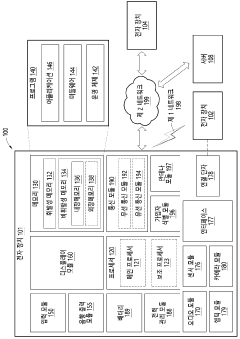
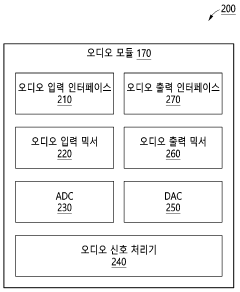
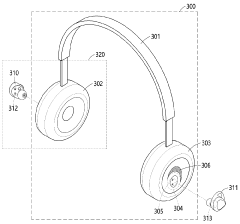
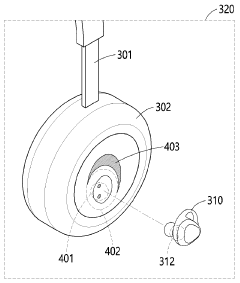
- A headphone device and wireless earphones system is designed with LVDS conversion circuits and DACs to convert signals and power, allowing for efficient data transmission and power sharing between the units, enabling combined operation and improved audio output.
Universal audio adapter system
PatentWO2016110602A1
Innovation
- A universal audio adapter system with integrated analog-to-digital and digital-to-analog conversion capabilities, featuring a USB interface, an amplifier buffer, low-pass filter, and an optional analog preamplifier for improved sound quality, allowing seamless connection and processing of audio signals across different devices without the need for modifications or additional software.


Bluetooth Audio Standards
Bluetooth audio standards have evolved significantly over the years to meet the growing demand for high-quality wireless audio transmission. These standards define the protocols and specifications for transmitting audio data over Bluetooth connections, ensuring compatibility and performance across various devices.
The most widely adopted Bluetooth audio codec is SBC (Sub-Band Coding), which is mandatory for all Bluetooth audio devices. SBC provides a baseline level of audio quality but has limitations in terms of bitrate and overall fidelity. To address these limitations, several advanced codecs have been developed and implemented in modern Bluetooth audio systems.
One such codec is AAC (Advanced Audio Coding), which offers improved audio quality compared to SBC, especially for iOS devices. AAC provides better compression efficiency and higher bitrates, resulting in enhanced audio performance for music streaming and other applications.
Another notable codec is aptX, developed by Qualcomm. aptX and its variants (aptX HD, aptX Adaptive, and aptX Low Latency) offer lower latency and higher audio quality than SBC. These codecs are particularly popular in Android devices and high-end audio equipment.
LDAC, developed by Sony, is a more recent addition to the Bluetooth audio codec landscape. LDAC supports significantly higher bitrates than other codecs, allowing for near-lossless audio transmission over Bluetooth. This codec is particularly relevant for implementing superior audio adapter systems, as it can deliver exceptional audio quality in wireless setups.
The Bluetooth Special Interest Group (SIG) has also introduced the LC3 (Low Complexity Communication Codec) as part of the Bluetooth LE Audio standard. LC3 aims to provide improved audio quality at lower bitrates, making it suitable for a wide range of audio applications, including hearing aids and other low-power devices.
When implementing superior audio adapter systems using LDAC, it is crucial to consider the compatibility and support across different devices and platforms. While LDAC offers excellent audio quality, its adoption is not as widespread as some other codecs. Therefore, a well-designed audio adapter system should support multiple codecs to ensure compatibility with a wide range of devices while leveraging LDAC's capabilities when possible.
The most widely adopted Bluetooth audio codec is SBC (Sub-Band Coding), which is mandatory for all Bluetooth audio devices. SBC provides a baseline level of audio quality but has limitations in terms of bitrate and overall fidelity. To address these limitations, several advanced codecs have been developed and implemented in modern Bluetooth audio systems.
One such codec is AAC (Advanced Audio Coding), which offers improved audio quality compared to SBC, especially for iOS devices. AAC provides better compression efficiency and higher bitrates, resulting in enhanced audio performance for music streaming and other applications.
Another notable codec is aptX, developed by Qualcomm. aptX and its variants (aptX HD, aptX Adaptive, and aptX Low Latency) offer lower latency and higher audio quality than SBC. These codecs are particularly popular in Android devices and high-end audio equipment.
LDAC, developed by Sony, is a more recent addition to the Bluetooth audio codec landscape. LDAC supports significantly higher bitrates than other codecs, allowing for near-lossless audio transmission over Bluetooth. This codec is particularly relevant for implementing superior audio adapter systems, as it can deliver exceptional audio quality in wireless setups.
The Bluetooth Special Interest Group (SIG) has also introduced the LC3 (Low Complexity Communication Codec) as part of the Bluetooth LE Audio standard. LC3 aims to provide improved audio quality at lower bitrates, making it suitable for a wide range of audio applications, including hearing aids and other low-power devices.
When implementing superior audio adapter systems using LDAC, it is crucial to consider the compatibility and support across different devices and platforms. While LDAC offers excellent audio quality, its adoption is not as widespread as some other codecs. Therefore, a well-designed audio adapter system should support multiple codecs to ensure compatibility with a wide range of devices while leveraging LDAC's capabilities when possible.
LDAC Energy Efficiency
LDAC, developed by Sony, is a high-resolution audio codec that aims to deliver superior audio quality over Bluetooth connections. When implementing LDAC in audio adapter systems, energy efficiency is a crucial factor to consider. LDAC operates at different bit rates, ranging from 330 kbps to 990 kbps, allowing for adaptive transmission based on wireless conditions and device capabilities.
The energy efficiency of LDAC is closely tied to its compression algorithm and transmission methods. At higher bit rates, LDAC provides better audio quality but requires more power for processing and transmission. Conversely, lower bit rates consume less energy but may compromise audio fidelity. This trade-off between audio quality and power consumption is a key consideration for audio adapter system designers.
To optimize energy efficiency in LDAC-enabled audio adapters, several strategies can be employed. Implementing intelligent bit rate switching algorithms allows the system to dynamically adjust the transmission rate based on the audio content and available bandwidth. This adaptive approach ensures that energy is not wasted on unnecessarily high bit rates when lower rates suffice.
Power management techniques play a crucial role in enhancing LDAC's energy efficiency. Utilizing low-power microcontrollers and digital signal processors (DSPs) specifically designed for audio applications can significantly reduce overall power consumption. Additionally, implementing sleep modes and power-gating techniques during periods of inactivity can further conserve energy.
The choice of hardware components also impacts energy efficiency. Selecting energy-efficient Bluetooth chipsets and optimizing the RF front-end design can reduce power consumption during wireless transmission. Furthermore, employing high-efficiency audio amplifiers and DACs (Digital-to-Analog Converters) minimizes power losses in the audio output stage.
Software optimization is equally important for improving LDAC's energy efficiency. Streamlining the codec implementation, reducing computational complexity, and optimizing buffer management can lead to substantial power savings. Leveraging hardware acceleration features, when available, can offload processing tasks and reduce CPU usage, thereby lowering overall power consumption.
Battery management strategies are essential for portable audio adapters using LDAC. Implementing accurate battery monitoring and intelligent charging algorithms can extend battery life and improve overall energy efficiency. Additionally, providing user-selectable audio quality modes allows end-users to balance audio fidelity with battery life based on their preferences and usage scenarios.
The energy efficiency of LDAC is closely tied to its compression algorithm and transmission methods. At higher bit rates, LDAC provides better audio quality but requires more power for processing and transmission. Conversely, lower bit rates consume less energy but may compromise audio fidelity. This trade-off between audio quality and power consumption is a key consideration for audio adapter system designers.
To optimize energy efficiency in LDAC-enabled audio adapters, several strategies can be employed. Implementing intelligent bit rate switching algorithms allows the system to dynamically adjust the transmission rate based on the audio content and available bandwidth. This adaptive approach ensures that energy is not wasted on unnecessarily high bit rates when lower rates suffice.
Power management techniques play a crucial role in enhancing LDAC's energy efficiency. Utilizing low-power microcontrollers and digital signal processors (DSPs) specifically designed for audio applications can significantly reduce overall power consumption. Additionally, implementing sleep modes and power-gating techniques during periods of inactivity can further conserve energy.
The choice of hardware components also impacts energy efficiency. Selecting energy-efficient Bluetooth chipsets and optimizing the RF front-end design can reduce power consumption during wireless transmission. Furthermore, employing high-efficiency audio amplifiers and DACs (Digital-to-Analog Converters) minimizes power losses in the audio output stage.
Software optimization is equally important for improving LDAC's energy efficiency. Streamlining the codec implementation, reducing computational complexity, and optimizing buffer management can lead to substantial power savings. Leveraging hardware acceleration features, when available, can offload processing tasks and reduce CPU usage, thereby lowering overall power consumption.
Battery management strategies are essential for portable audio adapters using LDAC. Implementing accurate battery monitoring and intelligent charging algorithms can extend battery life and improve overall energy efficiency. Additionally, providing user-selectable audio quality modes allows end-users to balance audio fidelity with battery life based on their preferences and usage scenarios.
Unlock deeper insights with PatSnap Eureka Quick Research — get a full tech report to explore trends and direct your research. Try now!
Generate Your Research Report Instantly with AI Agent
Supercharge your innovation with PatSnap Eureka AI Agent Platform!