

EREV performance in mountainous terrains
AUG 14, 20259 MIN READ
Generate Your Research Report Instantly with AI Agent
Patsnap Eureka helps you evaluate technical feasibility & market potential.
EREV Mountain Performance Background
Extended Range Electric Vehicles (EREVs) have emerged as a promising solution to address the challenges of electric vehicle adoption, particularly in regions with diverse topography. The performance of EREVs in mountainous terrains has become a critical focus for automotive engineers and researchers, as these environments present unique challenges that can significantly impact vehicle efficiency and range.
Mountainous terrains are characterized by steep gradients, winding roads, and varying altitudes, which place substantial demands on vehicle powertrains. Traditional internal combustion engine vehicles have long struggled with reduced fuel efficiency and increased emissions in these conditions. Electric vehicles, while offering zero tailpipe emissions, face their own set of challenges, primarily related to battery range and power delivery.
EREVs, which combine an electric drivetrain with a small internal combustion engine acting as a range extender, offer a potential solution to these challenges. The electric motor provides instant torque, which is beneficial for climbing steep inclines, while the range extender addresses the issue of limited battery range in remote mountainous areas where charging infrastructure may be scarce.
The development of EREVs for mountainous performance has been driven by several factors. First, the global push towards electrification has led automakers to seek solutions that can work across various terrains and driving conditions. Second, the increasing popularity of outdoor activities and adventure tourism has created a demand for vehicles that can handle challenging terrains while maintaining environmental friendliness.
Historically, the performance of electric vehicles in mountainous regions has been a concern due to the rapid depletion of battery charge when climbing steep grades. This issue has been exacerbated by the limited availability of charging stations in remote areas. EREVs address this by providing an on-board generator that can recharge the battery or directly power the electric motors, ensuring continuous operation even in the absence of external charging infrastructure.
The evolution of EREV technology for mountain performance has seen significant advancements in recent years. Early models struggled with weight distribution and power management, often resulting in suboptimal performance on steep inclines. However, newer generations of EREVs have incorporated sophisticated energy management systems, improved battery technology, and more efficient range-extending engines.
As the automotive industry continues to evolve, the focus on EREV performance in mountainous terrains represents a crucial area of development. It not only addresses the practical needs of drivers in diverse geographical locations but also aligns with global efforts to reduce carbon emissions while maintaining the versatility and range that consumers expect from their vehicles.
Mountainous terrains are characterized by steep gradients, winding roads, and varying altitudes, which place substantial demands on vehicle powertrains. Traditional internal combustion engine vehicles have long struggled with reduced fuel efficiency and increased emissions in these conditions. Electric vehicles, while offering zero tailpipe emissions, face their own set of challenges, primarily related to battery range and power delivery.
EREVs, which combine an electric drivetrain with a small internal combustion engine acting as a range extender, offer a potential solution to these challenges. The electric motor provides instant torque, which is beneficial for climbing steep inclines, while the range extender addresses the issue of limited battery range in remote mountainous areas where charging infrastructure may be scarce.
The development of EREVs for mountainous performance has been driven by several factors. First, the global push towards electrification has led automakers to seek solutions that can work across various terrains and driving conditions. Second, the increasing popularity of outdoor activities and adventure tourism has created a demand for vehicles that can handle challenging terrains while maintaining environmental friendliness.
Historically, the performance of electric vehicles in mountainous regions has been a concern due to the rapid depletion of battery charge when climbing steep grades. This issue has been exacerbated by the limited availability of charging stations in remote areas. EREVs address this by providing an on-board generator that can recharge the battery or directly power the electric motors, ensuring continuous operation even in the absence of external charging infrastructure.
The evolution of EREV technology for mountain performance has seen significant advancements in recent years. Early models struggled with weight distribution and power management, often resulting in suboptimal performance on steep inclines. However, newer generations of EREVs have incorporated sophisticated energy management systems, improved battery technology, and more efficient range-extending engines.
As the automotive industry continues to evolve, the focus on EREV performance in mountainous terrains represents a crucial area of development. It not only addresses the practical needs of drivers in diverse geographical locations but also aligns with global efforts to reduce carbon emissions while maintaining the versatility and range that consumers expect from their vehicles.
Market Analysis for Mountain-Ready EREVs
The market for Extended Range Electric Vehicles (EREVs) in mountainous terrains presents a unique and growing opportunity. As urban areas expand and environmental concerns intensify, there is an increasing demand for vehicles that can handle challenging topography while maintaining eco-friendly performance. Mountainous regions, with their steep inclines and winding roads, pose significant challenges for traditional electric vehicles due to range limitations and power demands.
EREVs offer a compelling solution to these challenges, combining the benefits of electric propulsion with the extended range provided by a small internal combustion engine. This hybrid approach is particularly well-suited for mountainous areas where charging infrastructure may be limited, and range anxiety is a significant concern for potential buyers.
The market potential for mountain-ready EREVs is substantial, driven by several factors. Firstly, there is a growing population of environmentally conscious consumers in mountainous regions who desire vehicles that align with their values while meeting their practical needs. These consumers are often outdoor enthusiasts, adventure seekers, or residents of remote areas who require reliable transportation in challenging terrain.
Additionally, government initiatives and regulations promoting cleaner transportation options are creating a favorable environment for EREV adoption. Many countries and regions are implementing stricter emissions standards and offering incentives for low-emission vehicles, which can significantly boost the appeal of EREVs in mountainous markets.
The tourism industry in mountainous areas also represents a significant market segment for EREVs. Rental companies and tour operators are increasingly looking for vehicles that can provide a comfortable, eco-friendly experience for tourists while handling the demands of mountain roads. EREVs can offer a unique selling point for these businesses, appealing to environmentally conscious travelers.
Market analysis indicates that the potential for growth in this sector is substantial. While specific market size data for mountain-ready EREVs is limited, the broader electric vehicle market is experiencing rapid growth. This trend is likely to extend to specialized segments like mountain-capable EREVs as technology improves and consumer awareness increases.
However, challenges remain in fully realizing this market potential. The higher initial cost of EREVs compared to conventional vehicles can be a barrier to adoption, particularly in price-sensitive markets. Additionally, there is a need for increased consumer education about the benefits and capabilities of EREVs in mountainous conditions to overcome misconceptions and build trust in the technology.
To capitalize on this market opportunity, manufacturers will need to focus on developing EREVs specifically optimized for mountainous terrains. This includes enhancing battery performance in varying temperatures, improving regenerative braking systems for steep descents, and ensuring robust power delivery for uphill climbs. Marketing strategies should emphasize the unique advantages of EREVs in mountainous environments, highlighting their range, performance, and environmental benefits.
EREVs offer a compelling solution to these challenges, combining the benefits of electric propulsion with the extended range provided by a small internal combustion engine. This hybrid approach is particularly well-suited for mountainous areas where charging infrastructure may be limited, and range anxiety is a significant concern for potential buyers.
The market potential for mountain-ready EREVs is substantial, driven by several factors. Firstly, there is a growing population of environmentally conscious consumers in mountainous regions who desire vehicles that align with their values while meeting their practical needs. These consumers are often outdoor enthusiasts, adventure seekers, or residents of remote areas who require reliable transportation in challenging terrain.
Additionally, government initiatives and regulations promoting cleaner transportation options are creating a favorable environment for EREV adoption. Many countries and regions are implementing stricter emissions standards and offering incentives for low-emission vehicles, which can significantly boost the appeal of EREVs in mountainous markets.
The tourism industry in mountainous areas also represents a significant market segment for EREVs. Rental companies and tour operators are increasingly looking for vehicles that can provide a comfortable, eco-friendly experience for tourists while handling the demands of mountain roads. EREVs can offer a unique selling point for these businesses, appealing to environmentally conscious travelers.
Market analysis indicates that the potential for growth in this sector is substantial. While specific market size data for mountain-ready EREVs is limited, the broader electric vehicle market is experiencing rapid growth. This trend is likely to extend to specialized segments like mountain-capable EREVs as technology improves and consumer awareness increases.
However, challenges remain in fully realizing this market potential. The higher initial cost of EREVs compared to conventional vehicles can be a barrier to adoption, particularly in price-sensitive markets. Additionally, there is a need for increased consumer education about the benefits and capabilities of EREVs in mountainous conditions to overcome misconceptions and build trust in the technology.
To capitalize on this market opportunity, manufacturers will need to focus on developing EREVs specifically optimized for mountainous terrains. This includes enhancing battery performance in varying temperatures, improving regenerative braking systems for steep descents, and ensuring robust power delivery for uphill climbs. Marketing strategies should emphasize the unique advantages of EREVs in mountainous environments, highlighting their range, performance, and environmental benefits.
EREV Challenges in Mountainous Terrains
Extended Range Electric Vehicles (EREVs) face significant challenges when operating in mountainous terrains. The primary issue stems from the increased power demand required to overcome steep gradients and maintain performance at higher altitudes. This heightened energy consumption can rapidly deplete the battery, potentially leaving the vehicle stranded if the onboard generator cannot keep up with the power requirements.
One of the key challenges is the management of the powertrain system in these demanding conditions. The electric motor must provide sufficient torque to climb steep inclines, while the generator needs to operate efficiently to recharge the battery and extend the vehicle's range. This delicate balance becomes more difficult to maintain in mountainous environments, where the constant changes in elevation and road conditions require frequent adjustments to the power distribution between the electric motor and the internal combustion engine.
Thermal management presents another significant hurdle for EREVs in mountainous terrains. The combination of increased power demand and potentially cooler ambient temperatures at higher altitudes can strain the vehicle's cooling systems. Both the battery pack and the internal combustion engine require effective cooling to maintain optimal performance and prevent overheating, which can be particularly challenging during extended uphill climbs.
The regenerative braking system, a key feature of EREVs for energy recovery, also faces challenges in mountainous areas. While downhill sections provide opportunities for energy recuperation, the system must be carefully calibrated to handle the prolonged periods of deceleration without overcharging the battery or overheating the braking components. Additionally, the effectiveness of regenerative braking may be reduced in icy or wet conditions, which are more common in mountainous regions.
Vehicle weight becomes a more critical factor in mountainous terrains. The additional weight of the battery pack and generator in EREVs can negatively impact the vehicle's climbing ability and overall efficiency. Engineers must strike a delicate balance between providing sufficient battery capacity for extended electric range and minimizing the vehicle's weight to maintain performance on steep gradients.
Altitude effects on the internal combustion engine's performance also pose a challenge for EREVs. As the air becomes thinner at higher elevations, the engine's power output may decrease, potentially affecting its ability to generate electricity efficiently. This reduction in generator performance can lead to a faster depletion of the battery charge, limiting the vehicle's overall range and capability in mountainous environments.
Lastly, the unpredictable nature of mountainous weather conditions adds another layer of complexity to EREV performance. Sudden temperature changes, strong winds, and precipitation can all impact the vehicle's energy consumption and handling characteristics. These factors necessitate more advanced energy management systems and driver assistance features to ensure safe and efficient operation in challenging mountain terrains.
One of the key challenges is the management of the powertrain system in these demanding conditions. The electric motor must provide sufficient torque to climb steep inclines, while the generator needs to operate efficiently to recharge the battery and extend the vehicle's range. This delicate balance becomes more difficult to maintain in mountainous environments, where the constant changes in elevation and road conditions require frequent adjustments to the power distribution between the electric motor and the internal combustion engine.
Thermal management presents another significant hurdle for EREVs in mountainous terrains. The combination of increased power demand and potentially cooler ambient temperatures at higher altitudes can strain the vehicle's cooling systems. Both the battery pack and the internal combustion engine require effective cooling to maintain optimal performance and prevent overheating, which can be particularly challenging during extended uphill climbs.
The regenerative braking system, a key feature of EREVs for energy recovery, also faces challenges in mountainous areas. While downhill sections provide opportunities for energy recuperation, the system must be carefully calibrated to handle the prolonged periods of deceleration without overcharging the battery or overheating the braking components. Additionally, the effectiveness of regenerative braking may be reduced in icy or wet conditions, which are more common in mountainous regions.
Vehicle weight becomes a more critical factor in mountainous terrains. The additional weight of the battery pack and generator in EREVs can negatively impact the vehicle's climbing ability and overall efficiency. Engineers must strike a delicate balance between providing sufficient battery capacity for extended electric range and minimizing the vehicle's weight to maintain performance on steep gradients.
Altitude effects on the internal combustion engine's performance also pose a challenge for EREVs. As the air becomes thinner at higher elevations, the engine's power output may decrease, potentially affecting its ability to generate electricity efficiently. This reduction in generator performance can lead to a faster depletion of the battery charge, limiting the vehicle's overall range and capability in mountainous environments.
Lastly, the unpredictable nature of mountainous weather conditions adds another layer of complexity to EREV performance. Sudden temperature changes, strong winds, and precipitation can all impact the vehicle's energy consumption and handling characteristics. These factors necessitate more advanced energy management systems and driver assistance features to ensure safe and efficient operation in challenging mountain terrains.
Current EREV Mountain Performance Solutions
01 Powertrain optimization for EREV
Extended Range Electric Vehicles (EREVs) employ advanced powertrain configurations to optimize performance. This includes integrating electric motors, generators, and internal combustion engines to maximize efficiency and range. The system manages power distribution between electric and combustion components, ensuring smooth transitions and optimal energy usage.- Powertrain optimization for EREV: Extended Range Electric Vehicles (EREVs) employ advanced powertrain systems that optimize the interaction between electric motors and range-extending engines. This includes sophisticated control strategies for power distribution, energy management, and seamless transitions between electric and hybrid modes to maximize efficiency and performance.
- Battery management and charging systems: EREVs incorporate advanced battery management systems to enhance performance and longevity. These systems monitor and control battery temperature, state of charge, and power output. Additionally, innovative charging technologies, including fast charging and regenerative braking, are implemented to improve overall vehicle efficiency and range.
- Lightweight materials and aerodynamic design: To improve EREV performance, manufacturers focus on using lightweight materials such as advanced composites and high-strength alloys in vehicle construction. Aerodynamic designs are also implemented to reduce drag and improve energy efficiency, contributing to extended range and better overall performance.
- Intelligent energy management systems: EREVs utilize sophisticated energy management systems that employ artificial intelligence and machine learning algorithms. These systems optimize power distribution, predict energy consumption based on route and driving conditions, and adapt to driver behavior to maximize range and performance.
- Integration of renewable energy sources: Advanced EREV designs incorporate the integration of renewable energy sources, such as solar panels, to supplement the vehicle's power supply. This innovation helps extend the electric range, reduce reliance on grid charging, and improve overall energy efficiency and performance.
02 Battery management and charging systems
Efficient battery management and charging systems are crucial for EREV performance. These systems monitor battery health, optimize charging cycles, and manage power distribution. Advanced charging technologies, including fast charging and regenerative braking, contribute to improved range and overall vehicle efficiency.Expand Specific Solutions03 Control strategies for hybrid operation
Sophisticated control strategies are implemented in EREVs to manage the interplay between electric and combustion power sources. These strategies optimize fuel consumption, reduce emissions, and enhance overall vehicle performance. Adaptive control algorithms adjust power distribution based on driving conditions, battery state, and user preferences.Expand Specific Solutions04 Lightweight materials and aerodynamic design
EREVs utilize lightweight materials and aerodynamic designs to improve performance and extend range. Advanced materials such as high-strength steel, aluminum alloys, and composites reduce vehicle weight. Aerodynamic optimizations, including streamlined body shapes and active air management systems, minimize drag and enhance efficiency.Expand Specific Solutions05 Thermal management and energy recovery systems
Effective thermal management and energy recovery systems play a crucial role in EREV performance. These systems regulate temperature across powertrain components, optimize battery performance, and recover waste heat. Advanced technologies such as heat pumps and thermoelectric generators contribute to improved efficiency and extended electric range.Expand Specific Solutions
Key EREV Manufacturers and Suppliers
The competitive landscape for EREV performance in mountainous terrains is evolving rapidly, with the market in a growth phase as automakers seek to improve electric vehicle capabilities in challenging environments. Key players like GM, FCA, and Nissan are investing heavily in EREV technology, leveraging their extensive automotive experience. Emerging companies such as Taiga Motors and Built Robotics are bringing innovative approaches to electric powertrains for off-road applications. The technology is maturing, with established firms like Caterpillar and LG Chem contributing advancements in power systems and battery technology, while research institutions like China University of Mining & Technology are pushing the boundaries of EREV performance in rugged conditions.
GM Global Technology Operations LLC
Technical Solution: GM has developed an advanced EREV (Extended Range Electric Vehicle) system specifically designed for mountainous terrains. Their technology utilizes a sophisticated power management system that optimizes the use of both electric and gasoline power sources. The system incorporates intelligent terrain mapping and predictive energy management algorithms to anticipate power needs based on upcoming road conditions[1]. GM's EREV for mountainous terrains features an enhanced regenerative braking system that maximizes energy recovery during downhill sections, storing this energy for use during uphill climbs[2]. Additionally, the company has implemented a dual-motor configuration that provides improved torque distribution and traction control, crucial for navigating steep inclines and challenging mountain roads[3].
Strengths: Excellent power management, efficient energy recovery, and superior traction control for mountainous driving. Weaknesses: Potentially higher initial cost due to advanced technology integration, and increased vehicle weight from dual power sources.
Nissan Motor Co., Ltd.
Technical Solution: Nissan has developed a unique EREV system tailored for mountainous terrain performance. Their approach combines a high-capacity lithium-ion battery pack with a compact, efficient gasoline engine generator. The system employs an intelligent power distribution algorithm that continuously adjusts the power split between electric and gasoline modes based on real-time terrain data and driving conditions[4]. Nissan's EREV technology for mountainous areas features an advanced torque vectoring system that enhances vehicle stability and cornering performance on winding mountain roads[5]. The company has also implemented a hill-descent control feature that maintains a steady speed during steep downhill sections, reducing driver fatigue and improving safety[6].
Strengths: Excellent stability and control on mountain roads, efficient power management, and enhanced safety features. Weaknesses: Potential limitations in all-electric range compared to flat terrain performance, and possible complexity in maintenance due to dual powertrain.
Core EREV Mountain Innovations
Flux switching permanent magnet motor suitable for extended range electric vehicle
PatentActiveCN104506011A
Innovation
- Adopting a composite rotor structure and H-shaped modular stator core design, an independent magnetic field is formed through an inner and outer two-layer air gap structure and alternating tangentially magnetized permanent magnets, and a three-phase annular winding is used to improve the torque output capability. and heat dissipation performance to reduce the pulsation of positioning torque.
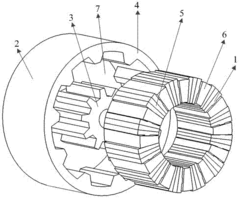
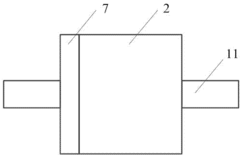
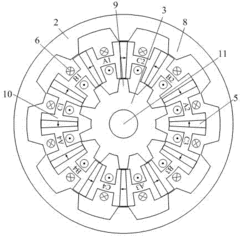
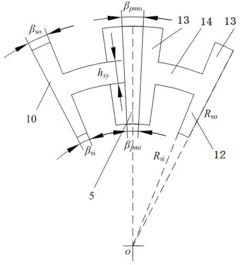
All-terrain vehicle
PatentPendingCN118867423A
Innovation
- A vehicle battery system is designed, which uses a combination of multiple battery modules and liquid cooling modules, connected through high-voltage and low-voltage connectors. The liquid-cooling module dissipates heat on one side, optimizes the structural layout, reduces the overall height, and improves the heat dissipation effect. Reduce space usage.


Environmental Impact of Mountain EREVs
The environmental impact of Extended Range Electric Vehicles (EREVs) in mountainous terrains is a complex issue that requires careful consideration. These vehicles, designed to operate in challenging topographies, present both advantages and potential drawbacks in terms of their ecological footprint.
EREVs in mountainous regions can significantly reduce local air pollution compared to conventional internal combustion engine vehicles. The electric drive mode, particularly effective during uphill climbs, results in zero tailpipe emissions, contributing to improved air quality in often fragile mountain ecosystems. This is especially beneficial in areas prone to temperature inversions, where pollutants can become trapped in valleys.
However, the environmental benefits of EREVs in mountainous terrains are not without caveats. The increased energy demand required to overcome steep gradients and maintain performance at high altitudes can lead to more frequent use of the range extender, typically a small gasoline engine. This may result in higher fuel consumption and emissions compared to EREV operation in flatter terrains.
The production of EREVs, particularly their batteries, also carries environmental implications. The mining of rare earth elements and other materials necessary for battery production can have significant ecological impacts, often in mountainous regions where these resources are found. This raises questions about the overall lifecycle environmental cost of deploying these vehicles in mountain areas.
On the positive side, EREVs in mountainous terrains can contribute to the reduction of noise pollution. Their quieter operation, especially in electric mode, helps preserve the natural soundscape of mountain environments, benefiting both wildlife and human visitors seeking a serene experience.
The environmental impact also extends to infrastructure considerations. The deployment of EREVs in mountainous areas may necessitate the development of charging infrastructure in remote locations. While this can promote eco-tourism and support local economies, it also raises concerns about potential habitat disruption and the visual impact on natural landscapes.
In terms of energy efficiency, EREVs in mountainous terrains can leverage regenerative braking systems more effectively during descents, recovering energy that would otherwise be lost as heat. This feature enhances overall efficiency and can partially offset the increased energy demands of uphill driving.
Lastly, the durability and longevity of EREVs in harsh mountain conditions play a role in their environmental impact. Vehicles that can withstand these challenging environments without frequent replacement or major repairs contribute to reduced waste and resource consumption over time.
EREVs in mountainous regions can significantly reduce local air pollution compared to conventional internal combustion engine vehicles. The electric drive mode, particularly effective during uphill climbs, results in zero tailpipe emissions, contributing to improved air quality in often fragile mountain ecosystems. This is especially beneficial in areas prone to temperature inversions, where pollutants can become trapped in valleys.
However, the environmental benefits of EREVs in mountainous terrains are not without caveats. The increased energy demand required to overcome steep gradients and maintain performance at high altitudes can lead to more frequent use of the range extender, typically a small gasoline engine. This may result in higher fuel consumption and emissions compared to EREV operation in flatter terrains.
The production of EREVs, particularly their batteries, also carries environmental implications. The mining of rare earth elements and other materials necessary for battery production can have significant ecological impacts, often in mountainous regions where these resources are found. This raises questions about the overall lifecycle environmental cost of deploying these vehicles in mountain areas.
On the positive side, EREVs in mountainous terrains can contribute to the reduction of noise pollution. Their quieter operation, especially in electric mode, helps preserve the natural soundscape of mountain environments, benefiting both wildlife and human visitors seeking a serene experience.
The environmental impact also extends to infrastructure considerations. The deployment of EREVs in mountainous areas may necessitate the development of charging infrastructure in remote locations. While this can promote eco-tourism and support local economies, it also raises concerns about potential habitat disruption and the visual impact on natural landscapes.
In terms of energy efficiency, EREVs in mountainous terrains can leverage regenerative braking systems more effectively during descents, recovering energy that would otherwise be lost as heat. This feature enhances overall efficiency and can partially offset the increased energy demands of uphill driving.
Lastly, the durability and longevity of EREVs in harsh mountain conditions play a role in their environmental impact. Vehicles that can withstand these challenging environments without frequent replacement or major repairs contribute to reduced waste and resource consumption over time.
EREV Mountain Safety Standards
The development of Extended Range Electric Vehicles (EREVs) has necessitated the establishment of comprehensive safety standards, particularly for mountainous terrains. These standards address the unique challenges posed by steep gradients, winding roads, and varying altitudes. The primary focus of EREV mountain safety standards is to ensure optimal vehicle performance and passenger safety in these demanding environments.
One key aspect of these standards is the requirement for enhanced regenerative braking systems. EREVs operating in mountainous areas must be equipped with regenerative braking capabilities that can effectively capture and store energy during long descents. This not only improves energy efficiency but also reduces the risk of brake overheating, a common issue in traditional vehicles navigating mountain roads.
Battery thermal management is another critical component of EREV mountain safety standards. The standards mandate sophisticated cooling systems capable of maintaining optimal battery temperature ranges even during prolonged uphill climbs, which can place significant strain on the electric powertrain. Additionally, these systems must be able to handle rapid temperature fluctuations that can occur when transitioning between different altitudes.
The standards also address the need for advanced traction control and stability management systems. EREVs must demonstrate superior handling characteristics on steep, winding roads, often in adverse weather conditions. This includes the ability to distribute torque effectively between wheels and rapidly adjust power output to maintain stability and traction.
Range prediction and energy management are crucial elements covered by the safety standards. EREVs are required to have accurate range estimation systems that account for the significant variations in energy consumption caused by mountainous terrain. These systems must provide drivers with reliable information about remaining range and optimal charging locations, considering the limited charging infrastructure often found in mountainous regions.
Furthermore, the standards emphasize the importance of robust fail-safe mechanisms. In the event of a system malfunction, EREVs must be capable of safely navigating to a secure location, even in challenging mountain environments. This includes backup power systems and emergency braking capabilities designed to function reliably in extreme conditions.
Lastly, the EREV mountain safety standards address the need for enhanced driver assistance features. These include hill-start assist, descent control, and adaptive cruise control systems specifically calibrated for mountainous driving conditions. Such features not only enhance safety but also improve the overall driving experience in these demanding terrains.
One key aspect of these standards is the requirement for enhanced regenerative braking systems. EREVs operating in mountainous areas must be equipped with regenerative braking capabilities that can effectively capture and store energy during long descents. This not only improves energy efficiency but also reduces the risk of brake overheating, a common issue in traditional vehicles navigating mountain roads.
Battery thermal management is another critical component of EREV mountain safety standards. The standards mandate sophisticated cooling systems capable of maintaining optimal battery temperature ranges even during prolonged uphill climbs, which can place significant strain on the electric powertrain. Additionally, these systems must be able to handle rapid temperature fluctuations that can occur when transitioning between different altitudes.
The standards also address the need for advanced traction control and stability management systems. EREVs must demonstrate superior handling characteristics on steep, winding roads, often in adverse weather conditions. This includes the ability to distribute torque effectively between wheels and rapidly adjust power output to maintain stability and traction.
Range prediction and energy management are crucial elements covered by the safety standards. EREVs are required to have accurate range estimation systems that account for the significant variations in energy consumption caused by mountainous terrain. These systems must provide drivers with reliable information about remaining range and optimal charging locations, considering the limited charging infrastructure often found in mountainous regions.
Furthermore, the standards emphasize the importance of robust fail-safe mechanisms. In the event of a system malfunction, EREVs must be capable of safely navigating to a secure location, even in challenging mountain environments. This includes backup power systems and emergency braking capabilities designed to function reliably in extreme conditions.
Lastly, the EREV mountain safety standards address the need for enhanced driver assistance features. These include hill-start assist, descent control, and adaptive cruise control systems specifically calibrated for mountainous driving conditions. Such features not only enhance safety but also improve the overall driving experience in these demanding terrains.
Unlock deeper insights with Patsnap Eureka Quick Research — get a full tech report to explore trends and direct your research. Try now!
Generate Your Research Report Instantly with AI Agent
Supercharge your innovation with Patsnap Eureka AI Agent Platform!