Future‑Proofing Homes with ULED Television Sets
JUN 23, 20259 MIN READ
Generate Your Research Report Instantly with AI Agent
Patsnap Eureka helps you evaluate technical feasibility & market potential.
ULED TV Evolution and Objectives
Ultra Light Emitting Diode (ULED) television technology has emerged as a significant advancement in the realm of home entertainment systems. This innovative display technology combines the best features of OLED and LED-LCD, offering superior picture quality, enhanced brightness, and improved energy efficiency. The evolution of ULED TVs can be traced back to the early 2010s when manufacturers began exploring ways to overcome the limitations of existing display technologies.
The primary objective of ULED technology is to provide consumers with an immersive viewing experience that closely mimics real-life visuals. This is achieved through a combination of advanced local dimming techniques, quantum dot technology, and sophisticated image processing algorithms. As the technology has progressed, ULED TVs have consistently pushed the boundaries of picture quality, color accuracy, and contrast ratios.
One of the key milestones in ULED TV evolution was the introduction of HDR (High Dynamic Range) compatibility, which significantly expanded the range of colors and contrast that could be displayed. This development allowed for more lifelike images with greater depth and detail, particularly in scenes with both bright and dark elements.
Another crucial objective in the development of ULED TVs has been to address the issue of future-proofing. As the pace of technological advancement accelerates, consumers are increasingly seeking products that can adapt to future standards and maintain relevance over extended periods. To this end, ULED TV manufacturers have focused on incorporating modular designs and upgradeable software systems, allowing for easier updates and enhancements without the need for complete hardware replacements.
Energy efficiency has also been a central goal in the evolution of ULED technology. By optimizing power consumption without compromising on picture quality, manufacturers aim to reduce the environmental impact of these devices while also lowering operating costs for consumers. This aligns with broader trends towards sustainability and energy conservation in consumer electronics.
Looking ahead, the objectives for ULED TV technology include further improvements in picture quality, with a focus on achieving even higher peak brightness levels, wider color gamuts, and more precise local dimming capabilities. Additionally, there is a push towards developing larger screen sizes without sacrificing image quality or increasing energy consumption proportionally.
As ULED technology continues to evolve, its integration with smart home ecosystems and AI-driven content optimization are becoming increasingly important objectives. This includes enhancing the TV's ability to adapt to ambient lighting conditions, viewer preferences, and even integrating with other smart devices to create a more seamless and personalized home entertainment experience.
The primary objective of ULED technology is to provide consumers with an immersive viewing experience that closely mimics real-life visuals. This is achieved through a combination of advanced local dimming techniques, quantum dot technology, and sophisticated image processing algorithms. As the technology has progressed, ULED TVs have consistently pushed the boundaries of picture quality, color accuracy, and contrast ratios.
One of the key milestones in ULED TV evolution was the introduction of HDR (High Dynamic Range) compatibility, which significantly expanded the range of colors and contrast that could be displayed. This development allowed for more lifelike images with greater depth and detail, particularly in scenes with both bright and dark elements.
Another crucial objective in the development of ULED TVs has been to address the issue of future-proofing. As the pace of technological advancement accelerates, consumers are increasingly seeking products that can adapt to future standards and maintain relevance over extended periods. To this end, ULED TV manufacturers have focused on incorporating modular designs and upgradeable software systems, allowing for easier updates and enhancements without the need for complete hardware replacements.
Energy efficiency has also been a central goal in the evolution of ULED technology. By optimizing power consumption without compromising on picture quality, manufacturers aim to reduce the environmental impact of these devices while also lowering operating costs for consumers. This aligns with broader trends towards sustainability and energy conservation in consumer electronics.
Looking ahead, the objectives for ULED TV technology include further improvements in picture quality, with a focus on achieving even higher peak brightness levels, wider color gamuts, and more precise local dimming capabilities. Additionally, there is a push towards developing larger screen sizes without sacrificing image quality or increasing energy consumption proportionally.
As ULED technology continues to evolve, its integration with smart home ecosystems and AI-driven content optimization are becoming increasingly important objectives. This includes enhancing the TV's ability to adapt to ambient lighting conditions, viewer preferences, and even integrating with other smart devices to create a more seamless and personalized home entertainment experience.
Smart Home Integration Demand
The integration of ULED television sets into smart home ecosystems has become a significant driver of consumer demand in the rapidly evolving home entertainment market. As households increasingly seek seamless connectivity and automation, the ability of ULED TVs to serve as central hubs for smart home operations has emerged as a key selling point. This trend is reflected in the growing number of consumers who prioritize smart home compatibility when making purchasing decisions for high-end televisions.
Market research indicates that the smart home market is expected to continue its robust growth trajectory, with a compound annual growth rate (CAGR) projected to remain in the double digits over the next five years. This growth is fueled by increasing consumer awareness of the benefits of connected devices, as well as the proliferation of affordable smart home technologies. ULED TV manufacturers are capitalizing on this trend by incorporating advanced connectivity features and smart home protocols into their latest models.
The demand for smart home integration in ULED TVs is driven by several key factors. Firstly, consumers are seeking centralized control of their home environments, with the television serving as a natural focal point for managing various smart devices. This includes controlling lighting, thermostats, security systems, and other IoT devices directly through the TV interface. Secondly, there is a growing desire for personalized and context-aware viewing experiences, where the TV can adjust settings based on ambient conditions or user preferences detected by other smart home devices.
Voice control capabilities have become a standard expectation for smart home-integrated ULED TVs, with consumers demanding seamless interaction with popular voice assistants like Amazon Alexa, Google Assistant, and Apple's Siri. This hands-free control extends beyond simple TV functions to encompass broader smart home commands, enhancing the overall user experience and convenience.
Another significant aspect of smart home integration demand is the ability of ULED TVs to serve as information displays for various household systems. Consumers are showing interest in features such as doorbell camera feeds, energy consumption monitoring, and smart appliance status updates being accessible through their television screens. This convergence of home management and entertainment functions is reshaping the role of the TV in modern households.
The market is also witnessing a growing demand for interoperability between ULED TVs and other smart home devices from different manufacturers. Consumers are increasingly looking for televisions that support open standards and protocols, ensuring compatibility with a wide range of smart home ecosystems. This trend is pushing ULED TV manufacturers to adopt more inclusive approaches to connectivity and integration.
Market research indicates that the smart home market is expected to continue its robust growth trajectory, with a compound annual growth rate (CAGR) projected to remain in the double digits over the next five years. This growth is fueled by increasing consumer awareness of the benefits of connected devices, as well as the proliferation of affordable smart home technologies. ULED TV manufacturers are capitalizing on this trend by incorporating advanced connectivity features and smart home protocols into their latest models.
The demand for smart home integration in ULED TVs is driven by several key factors. Firstly, consumers are seeking centralized control of their home environments, with the television serving as a natural focal point for managing various smart devices. This includes controlling lighting, thermostats, security systems, and other IoT devices directly through the TV interface. Secondly, there is a growing desire for personalized and context-aware viewing experiences, where the TV can adjust settings based on ambient conditions or user preferences detected by other smart home devices.
Voice control capabilities have become a standard expectation for smart home-integrated ULED TVs, with consumers demanding seamless interaction with popular voice assistants like Amazon Alexa, Google Assistant, and Apple's Siri. This hands-free control extends beyond simple TV functions to encompass broader smart home commands, enhancing the overall user experience and convenience.
Another significant aspect of smart home integration demand is the ability of ULED TVs to serve as information displays for various household systems. Consumers are showing interest in features such as doorbell camera feeds, energy consumption monitoring, and smart appliance status updates being accessible through their television screens. This convergence of home management and entertainment functions is reshaping the role of the TV in modern households.
The market is also witnessing a growing demand for interoperability between ULED TVs and other smart home devices from different manufacturers. Consumers are increasingly looking for televisions that support open standards and protocols, ensuring compatibility with a wide range of smart home ecosystems. This trend is pushing ULED TV manufacturers to adopt more inclusive approaches to connectivity and integration.
ULED Technology Challenges
ULED (Ultra Light Emitting Diode) technology, while promising significant advancements in display quality and energy efficiency, faces several challenges in its development and implementation for future-proofing homes with television sets. One of the primary obstacles is the complexity of manufacturing processes required to produce ULED panels at scale. The intricate nature of ULED structures demands precision engineering and advanced fabrication techniques, which currently limit production capacity and increase costs.
Another significant challenge lies in the optimization of ULED's color reproduction capabilities. While ULED technology offers the potential for a wider color gamut and higher contrast ratios than traditional LED displays, achieving consistent and accurate color representation across various content types and viewing conditions remains a technical hurdle. This is particularly crucial for ensuring a superior viewing experience in home environments with varying lighting conditions.
Heat management presents a formidable challenge in ULED technology. As ULED displays aim to deliver higher brightness levels and more vivid colors, they generate considerable heat. Developing effective thermal management solutions that can dissipate heat efficiently without compromising the slim profile of modern TV designs is a complex engineering task. Failure to address this issue could lead to reduced lifespan of ULED panels and potential performance degradation over time.
The integration of ULED technology with existing smart home ecosystems poses another challenge. As homes become increasingly connected, ensuring seamless compatibility and interoperability between ULED TVs and other smart devices is crucial for future-proofing. This requires not only hardware considerations but also the development of robust software platforms and standardized communication protocols.
Durability and longevity of ULED displays in home environments are also areas of concern. The technology must be able to withstand prolonged use, varying environmental conditions, and potential physical impacts without significant degradation in performance or visual quality. Developing protective coatings and resilient panel structures that do not compromise picture quality is an ongoing challenge for manufacturers.
Lastly, the challenge of cost-effectiveness looms large in the ULED landscape. While the technology promises superior performance, the current production costs make ULED TVs significantly more expensive than conventional LED or OLED alternatives. Bridging this price gap through technological advancements and economies of scale is crucial for widespread adoption in home settings. Manufacturers must find ways to reduce production costs without compromising the quality and features that make ULED technology attractive to consumers.
Another significant challenge lies in the optimization of ULED's color reproduction capabilities. While ULED technology offers the potential for a wider color gamut and higher contrast ratios than traditional LED displays, achieving consistent and accurate color representation across various content types and viewing conditions remains a technical hurdle. This is particularly crucial for ensuring a superior viewing experience in home environments with varying lighting conditions.
Heat management presents a formidable challenge in ULED technology. As ULED displays aim to deliver higher brightness levels and more vivid colors, they generate considerable heat. Developing effective thermal management solutions that can dissipate heat efficiently without compromising the slim profile of modern TV designs is a complex engineering task. Failure to address this issue could lead to reduced lifespan of ULED panels and potential performance degradation over time.
The integration of ULED technology with existing smart home ecosystems poses another challenge. As homes become increasingly connected, ensuring seamless compatibility and interoperability between ULED TVs and other smart devices is crucial for future-proofing. This requires not only hardware considerations but also the development of robust software platforms and standardized communication protocols.
Durability and longevity of ULED displays in home environments are also areas of concern. The technology must be able to withstand prolonged use, varying environmental conditions, and potential physical impacts without significant degradation in performance or visual quality. Developing protective coatings and resilient panel structures that do not compromise picture quality is an ongoing challenge for manufacturers.
Lastly, the challenge of cost-effectiveness looms large in the ULED landscape. While the technology promises superior performance, the current production costs make ULED TVs significantly more expensive than conventional LED or OLED alternatives. Bridging this price gap through technological advancements and economies of scale is crucial for widespread adoption in home settings. Manufacturers must find ways to reduce production costs without compromising the quality and features that make ULED technology attractive to consumers.
Current ULED Implementation
01 ULED display technology
ULED (Ultra Light Emitting Diode) technology is an advanced form of LED display used in television sets. It offers improved brightness, contrast, and color accuracy compared to traditional LED displays. ULED TVs utilize local dimming techniques and quantum dot technology to enhance picture quality and energy efficiency.- ULED display technology: ULED (Ultra Light Emitting Diode) technology is an advanced form of LED display used in television sets. It offers improved picture quality, enhanced brightness, and better contrast ratios compared to traditional LED TVs. ULED displays utilize local dimming techniques and quantum dot technology to achieve superior color reproduction and deeper blacks.
- Image processing and enhancement: ULED TVs incorporate advanced image processing algorithms and techniques to enhance picture quality. These may include motion interpolation, noise reduction, color enhancement, and HDR (High Dynamic Range) processing. Such technologies aim to provide a more immersive viewing experience with smoother motion, improved detail, and more vibrant colors.
- Smart TV features and connectivity: Modern ULED televisions often include smart TV capabilities, allowing users to access internet-based content, streaming services, and applications. These TVs may feature built-in Wi-Fi, Ethernet connectivity, and support for various wireless protocols to enable seamless integration with other smart home devices and content sources.
- Energy efficiency and power management: ULED TVs incorporate energy-efficient designs and power management systems to reduce power consumption while maintaining high picture quality. This may include adaptive backlight control, ambient light sensing, and power-saving modes that adjust the display's brightness and contrast based on viewing conditions and content.
- Audio technology integration: ULED television sets often feature advanced audio technologies to complement their high-quality visual displays. This may include built-in sound systems with multiple speakers, support for surround sound formats, and audio enhancement technologies to provide a more immersive viewing and listening experience.
02 Image processing and enhancement
Advanced image processing techniques are employed in ULED TVs to improve picture quality. These may include algorithms for noise reduction, color enhancement, motion smoothing, and upscaling of lower resolution content. Such processing helps to deliver sharper, more vibrant images with better detail and depth.Expand Specific Solutions03 Smart TV features and connectivity
ULED TVs often incorporate smart features, allowing users to access streaming services, browse the internet, and connect to other devices. These TVs may include voice control, app integration, and support for various wireless connectivity options such as Wi-Fi and Bluetooth.Expand Specific Solutions04 Energy efficiency and power management
ULED TVs are designed with energy efficiency in mind. They may incorporate advanced power management systems to reduce energy consumption during operation and in standby mode. This can include features like automatic brightness adjustment based on ambient light conditions and selective backlighting.Expand Specific Solutions05 Display panel design and construction
The physical design and construction of ULED TV panels play a crucial role in their performance. This includes the arrangement of LED backlights, the use of quantum dot layers, and the implementation of local dimming zones. The panel design also considers factors such as viewing angles, reflection reduction, and overall durability.Expand Specific Solutions
ULED TV Market Leaders
The future-proofing of homes with ULED television sets is an emerging market in the early growth stage, characterized by rapid technological advancements and increasing consumer interest. The global ULED TV market is expanding, driven by demand for superior picture quality and energy efficiency. Technologically, ULED is maturing, with key players like Samsung Electronics, Sony Group, and Hisense Visual Technology leading innovation. These companies are investing heavily in R&D to enhance ULED technology, focusing on improved color accuracy, contrast ratios, and energy efficiency. Other significant contributors include Sharp, VIZIO, and Konka Group, who are actively developing competitive ULED solutions to capture market share in this evolving segment.
Samsung Electronics Co., Ltd.
Technical Solution: Samsung's ULED (Ultra LED) technology for future-proofing homes combines Quantum Dot technology with advanced local dimming techniques. Their ULED TVs utilize a quantum dot layer to enhance color accuracy and brightness, while sophisticated local dimming algorithms optimize contrast by controlling individual LED zones. Samsung also incorporates AI-powered upscaling to enhance lower resolution content, and implements HDMI 2.1 features for gaming and high frame rate content. Additionally, their Tizen smart TV platform ensures regular software updates and compatibility with emerging smart home technologies.
Strengths: Superior picture quality, wide color gamut, and high brightness. Advanced gaming features and smart home integration. Weaknesses: Higher cost compared to standard LED TVs, potential for blooming effects in high contrast scenes.
Sony Group Corp.
Technical Solution: Sony's approach to future-proofing homes with ULED technology centers on their Cognitive Processor XR, which uses AI to analyze and optimize picture quality in real-time. Their ULED TVs feature full-array local dimming with XR Contrast Booster technology, enhancing brightness and black levels. Sony also employs XR Triluminos Pro for expanded color reproduction and XR 4K Upscaling to improve lower resolution content. Their BRAVIA Core streaming service offers near-lossless 4K HDR content, future-proofing the viewing experience. Sony's TVs also include HDMI 2.1 features and run on the Google TV platform, ensuring long-term software support and smart home compatibility.
Strengths: Exceptional picture processing, accurate colors, and immersive sound quality. Robust smart TV platform. Weaknesses: Premium pricing, potentially complex user interface for some consumers.
Key ULED Innovations
Systems and methods for enhancing television display for video conferencing and video watch party applications
PatentPendingUS20220270556A1
Innovation
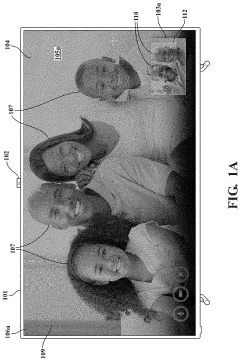
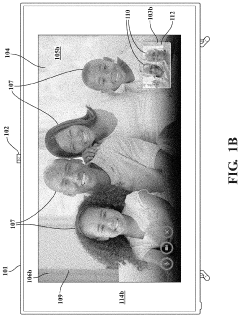
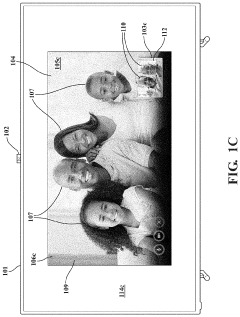
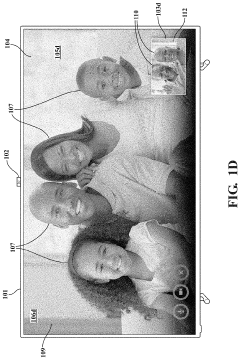
- Utilizing the pixels of a television display, such as LCD or OLED TVs, to selectively illuminate subjects by adjusting pixel parameters like luminance and RGB values, and creating a border of white pixels to provide additional lighting, allowing for improved illumination without the need for external lighting systems.
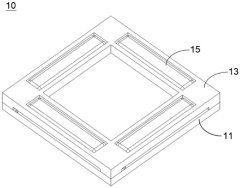
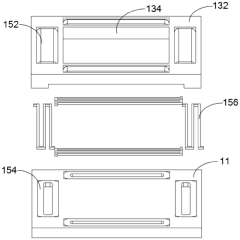
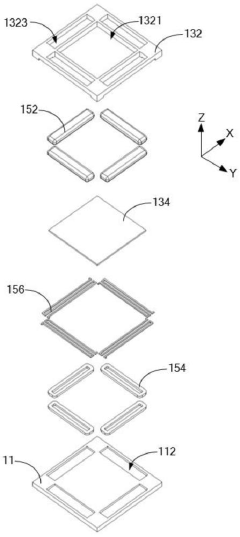
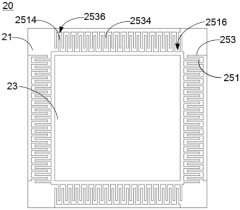
ULED packaging structure and imaging device
PatentPendingCN116741909A
Innovation
- By introducing a drive reset component into the uLED packaging structure, the drive frame moves in the second direction relative to the substrate to provide a reset force, using the persistence of vision of the human eye to reduce the impact of unlit uLEDs, stabilize imaging quality, and achieve a compact structure. change.
Energy Efficiency Standards
Energy efficiency standards play a crucial role in future-proofing homes with ULED television sets. As consumers increasingly prioritize sustainability and energy conservation, manufacturers are compelled to develop more efficient technologies. The evolution of these standards has significantly impacted the design and performance of ULED TVs, driving innovation in the industry.
Current energy efficiency standards for ULED TVs vary across regions, with some of the most stringent regulations found in the European Union and North America. These standards typically focus on power consumption during active use and standby modes, as well as the overall energy efficiency rating of the device. The implementation of these standards has led to substantial improvements in ULED TV energy performance over the past decade.
One of the key challenges in developing energy-efficient ULED TVs is balancing power consumption with picture quality and brightness. Manufacturers have responded by implementing advanced technologies such as local dimming, which selectively illuminates specific areas of the screen, reducing overall power usage without compromising visual performance. Additionally, the integration of ambient light sensors allows ULED TVs to automatically adjust brightness levels based on room conditions, further optimizing energy consumption.
The adoption of more efficient LED backlighting systems has been a significant factor in meeting increasingly stringent energy standards. ULED technology, which utilizes ultra-thin LED arrays, has enabled manufacturers to create displays that consume less power while maintaining high levels of brightness and color accuracy. This advancement has been particularly important in the development of larger screen sizes, which traditionally consumed more energy.
Looking ahead, future energy efficiency standards for ULED TVs are likely to become even more demanding. Industry experts anticipate a focus on reducing the environmental impact of these devices throughout their entire lifecycle, including manufacturing processes and end-of-life recycling. This holistic approach to energy efficiency may lead to the development of more sustainable materials and modular designs that facilitate easier repairs and upgrades.
As smart home integration becomes more prevalent, energy efficiency standards may also expand to encompass the TV's role within a connected ecosystem. This could include requirements for more efficient networking capabilities and improved power management when interacting with other smart devices. Such standards would encourage manufacturers to develop ULED TVs that not only consume less energy individually but also contribute to overall household energy optimization.
Current energy efficiency standards for ULED TVs vary across regions, with some of the most stringent regulations found in the European Union and North America. These standards typically focus on power consumption during active use and standby modes, as well as the overall energy efficiency rating of the device. The implementation of these standards has led to substantial improvements in ULED TV energy performance over the past decade.
One of the key challenges in developing energy-efficient ULED TVs is balancing power consumption with picture quality and brightness. Manufacturers have responded by implementing advanced technologies such as local dimming, which selectively illuminates specific areas of the screen, reducing overall power usage without compromising visual performance. Additionally, the integration of ambient light sensors allows ULED TVs to automatically adjust brightness levels based on room conditions, further optimizing energy consumption.
The adoption of more efficient LED backlighting systems has been a significant factor in meeting increasingly stringent energy standards. ULED technology, which utilizes ultra-thin LED arrays, has enabled manufacturers to create displays that consume less power while maintaining high levels of brightness and color accuracy. This advancement has been particularly important in the development of larger screen sizes, which traditionally consumed more energy.
Looking ahead, future energy efficiency standards for ULED TVs are likely to become even more demanding. Industry experts anticipate a focus on reducing the environmental impact of these devices throughout their entire lifecycle, including manufacturing processes and end-of-life recycling. This holistic approach to energy efficiency may lead to the development of more sustainable materials and modular designs that facilitate easier repairs and upgrades.
As smart home integration becomes more prevalent, energy efficiency standards may also expand to encompass the TV's role within a connected ecosystem. This could include requirements for more efficient networking capabilities and improved power management when interacting with other smart devices. Such standards would encourage manufacturers to develop ULED TVs that not only consume less energy individually but also contribute to overall household energy optimization.
Content Ecosystem for ULED
The content ecosystem for ULED (Ultra Light Emitting Diode) television sets is a critical component in future-proofing homes with this advanced display technology. As ULED technology continues to evolve, the content landscape must adapt to fully leverage its capabilities and provide viewers with an immersive experience.
One of the primary drivers of the ULED content ecosystem is the increasing demand for high-resolution content. With ULED displays capable of delivering stunning 8K resolution and beyond, content creators are pushed to produce ultra-high-definition material that can showcase the technology's full potential. This has led to a surge in 8K content production across various genres, including nature documentaries, sports broadcasts, and cinematic releases.
HDR (High Dynamic Range) content plays a crucial role in the ULED ecosystem. ULED's ability to display a wider color gamut and higher contrast ratios necessitates content that can take advantage of these features. As a result, there has been a significant increase in HDR content production, with streaming platforms and broadcasters investing heavily in HDR-compatible programming.
The gaming industry has also become a key player in the ULED content ecosystem. Next-generation gaming consoles and high-end PCs are now capable of outputting games in 4K and even 8K resolution, with advanced HDR implementation. This has led to a new era of visually stunning games that can fully utilize ULED displays' capabilities, providing gamers with an unparalleled level of immersion.
Virtual and augmented reality content is another area that is rapidly evolving to complement ULED technology. As ULED displays offer improved clarity and color accuracy, VR and AR experiences become more lifelike and engaging. This has spurred development in areas such as virtual tourism, immersive education, and advanced visualization tools for various industries.
The rise of AI-enhanced content creation tools is also shaping the ULED content ecosystem. These tools are enabling content creators to upscale existing content to higher resolutions and enhance visual quality, making it possible to adapt older content for ULED displays. This not only expands the available content library but also breathes new life into classic media.
To support the growing demand for high-quality content, streaming platforms and content delivery networks are continuously upgrading their infrastructure. This includes improvements in compression technologies to efficiently deliver ultra-high-definition content without overwhelming bandwidth limitations.
As the ULED content ecosystem continues to evolve, we can expect to see further innovations in content creation, distribution, and consumption. This dynamic landscape will play a crucial role in ensuring that ULED television sets remain at the forefront of home entertainment technology, providing viewers with an ever-improving visual experience that keeps pace with advancements in display technology.
One of the primary drivers of the ULED content ecosystem is the increasing demand for high-resolution content. With ULED displays capable of delivering stunning 8K resolution and beyond, content creators are pushed to produce ultra-high-definition material that can showcase the technology's full potential. This has led to a surge in 8K content production across various genres, including nature documentaries, sports broadcasts, and cinematic releases.
HDR (High Dynamic Range) content plays a crucial role in the ULED ecosystem. ULED's ability to display a wider color gamut and higher contrast ratios necessitates content that can take advantage of these features. As a result, there has been a significant increase in HDR content production, with streaming platforms and broadcasters investing heavily in HDR-compatible programming.
The gaming industry has also become a key player in the ULED content ecosystem. Next-generation gaming consoles and high-end PCs are now capable of outputting games in 4K and even 8K resolution, with advanced HDR implementation. This has led to a new era of visually stunning games that can fully utilize ULED displays' capabilities, providing gamers with an unparalleled level of immersion.
Virtual and augmented reality content is another area that is rapidly evolving to complement ULED technology. As ULED displays offer improved clarity and color accuracy, VR and AR experiences become more lifelike and engaging. This has spurred development in areas such as virtual tourism, immersive education, and advanced visualization tools for various industries.
The rise of AI-enhanced content creation tools is also shaping the ULED content ecosystem. These tools are enabling content creators to upscale existing content to higher resolutions and enhance visual quality, making it possible to adapt older content for ULED displays. This not only expands the available content library but also breathes new life into classic media.
To support the growing demand for high-quality content, streaming platforms and content delivery networks are continuously upgrading their infrastructure. This includes improvements in compression technologies to efficiently deliver ultra-high-definition content without overwhelming bandwidth limitations.
As the ULED content ecosystem continues to evolve, we can expect to see further innovations in content creation, distribution, and consumption. This dynamic landscape will play a crucial role in ensuring that ULED television sets remain at the forefront of home entertainment technology, providing viewers with an ever-improving visual experience that keeps pace with advancements in display technology.
Unlock deeper insights with Patsnap Eureka Quick Research — get a full tech report to explore trends and direct your research. Try now!
Generate Your Research Report Instantly with AI Agent
Supercharge your innovation with Patsnap Eureka AI Agent Platform!