Gate valve interoperability challenges across diverse industrial sectors
AUG 20, 20259 MIN READ
Generate Your Research Report Instantly with AI Agent
PatSnap Eureka helps you evaluate technical feasibility & market potential.
Gate Valve Evolution and Interoperability Goals
Gate valves have undergone significant evolution since their inception in the late 19th century. Initially designed for simple on-off control in water distribution systems, these valves have progressively adapted to meet the diverse needs of various industrial sectors. The primary goal of gate valve evolution has been to enhance reliability, efficiency, and versatility across a wide range of applications.
In the oil and gas industry, gate valves have evolved to withstand extreme pressures and corrosive environments. This sector has driven innovations in materials science, leading to the development of high-performance alloys and coatings that extend valve lifespan and reduce maintenance requirements. Concurrently, the chemical processing industry has necessitated advancements in sealing technologies to prevent leakage of hazardous substances.
The power generation sector, particularly nuclear power plants, has pushed for improvements in valve actuation systems. This has resulted in the development of sophisticated pneumatic and hydraulic actuators, as well as advanced electronic control systems that allow for precise and remote operation. These innovations have significantly enhanced safety and operational efficiency in critical environments.
Interoperability challenges have emerged as a key focus area in recent years. As industrial processes become increasingly interconnected and automated, there is a growing need for gate valves that can seamlessly integrate with diverse control systems and communication protocols. This has led to the development of smart valves equipped with sensors and digital interfaces, capable of real-time monitoring and data transmission.
The goal of achieving universal interoperability across different industrial sectors presents several technical challenges. Standardization of communication protocols, data formats, and control interfaces is crucial to ensure that gate valves can operate effectively within various industrial ecosystems. Additionally, there is a need to develop adaptive technologies that can bridge the gap between legacy systems and modern digital infrastructure.
Looking forward, the evolution of gate valves is likely to focus on enhancing their adaptability and intelligence. This may involve the integration of artificial intelligence and machine learning algorithms to enable predictive maintenance and self-optimization. Furthermore, advancements in materials science and manufacturing techniques, such as 3D printing, may lead to more customizable and efficient valve designs tailored to specific industrial requirements.
In the oil and gas industry, gate valves have evolved to withstand extreme pressures and corrosive environments. This sector has driven innovations in materials science, leading to the development of high-performance alloys and coatings that extend valve lifespan and reduce maintenance requirements. Concurrently, the chemical processing industry has necessitated advancements in sealing technologies to prevent leakage of hazardous substances.
The power generation sector, particularly nuclear power plants, has pushed for improvements in valve actuation systems. This has resulted in the development of sophisticated pneumatic and hydraulic actuators, as well as advanced electronic control systems that allow for precise and remote operation. These innovations have significantly enhanced safety and operational efficiency in critical environments.
Interoperability challenges have emerged as a key focus area in recent years. As industrial processes become increasingly interconnected and automated, there is a growing need for gate valves that can seamlessly integrate with diverse control systems and communication protocols. This has led to the development of smart valves equipped with sensors and digital interfaces, capable of real-time monitoring and data transmission.
The goal of achieving universal interoperability across different industrial sectors presents several technical challenges. Standardization of communication protocols, data formats, and control interfaces is crucial to ensure that gate valves can operate effectively within various industrial ecosystems. Additionally, there is a need to develop adaptive technologies that can bridge the gap between legacy systems and modern digital infrastructure.
Looking forward, the evolution of gate valves is likely to focus on enhancing their adaptability and intelligence. This may involve the integration of artificial intelligence and machine learning algorithms to enable predictive maintenance and self-optimization. Furthermore, advancements in materials science and manufacturing techniques, such as 3D printing, may lead to more customizable and efficient valve designs tailored to specific industrial requirements.
Cross-Industry Demand Analysis for Standardized Gate Valves
The demand for standardized gate valves across diverse industrial sectors has been steadily increasing due to the growing need for interoperability and efficiency in various applications. Industries such as oil and gas, water treatment, chemical processing, and power generation have shown significant interest in adopting standardized gate valve solutions to address compatibility issues and streamline operations.
In the oil and gas sector, the demand for standardized gate valves is driven by the need for consistent performance and reliability in high-pressure environments. Offshore platforms and refineries require valves that can withstand harsh conditions while maintaining compatibility with existing systems. The standardization of gate valves in this sector has the potential to reduce maintenance costs and improve overall operational efficiency.
The water treatment industry has also expressed a strong demand for standardized gate valves, particularly in municipal water systems and wastewater treatment plants. Standardization in this sector can lead to improved water quality control, reduced leakage, and more efficient distribution networks. The ability to easily integrate standardized gate valves into existing infrastructure is a key factor driving demand in this sector.
Chemical processing plants have shown increasing interest in standardized gate valves due to the need for precise flow control and corrosion resistance. The compatibility of these valves with various chemical compounds and the ability to maintain consistent performance under different operating conditions are crucial factors influencing demand in this sector.
The power generation industry, including both conventional and renewable energy sources, has identified standardized gate valves as a critical component in improving plant efficiency and reducing downtime. Nuclear power plants, in particular, require highly reliable and standardized valve solutions to ensure safety and compliance with stringent regulations.
Cross-industry demand for standardized gate valves is also driven by the need for improved supply chain management and reduced inventory costs. By adopting standardized components, companies can streamline their procurement processes and minimize the variety of spare parts required for maintenance and repairs.
The growing emphasis on sustainability and energy efficiency across industries has further fueled the demand for standardized gate valves. These valves can contribute to reduced energy consumption and minimized fluid losses, aligning with global efforts to improve industrial sustainability.
As industries continue to evolve and adopt digital technologies, there is an emerging demand for smart, standardized gate valves that can integrate with Industrial Internet of Things (IIoT) systems. This trend is expected to drive further innovation in valve design and functionality, creating new opportunities for standardization across sectors.
In the oil and gas sector, the demand for standardized gate valves is driven by the need for consistent performance and reliability in high-pressure environments. Offshore platforms and refineries require valves that can withstand harsh conditions while maintaining compatibility with existing systems. The standardization of gate valves in this sector has the potential to reduce maintenance costs and improve overall operational efficiency.
The water treatment industry has also expressed a strong demand for standardized gate valves, particularly in municipal water systems and wastewater treatment plants. Standardization in this sector can lead to improved water quality control, reduced leakage, and more efficient distribution networks. The ability to easily integrate standardized gate valves into existing infrastructure is a key factor driving demand in this sector.
Chemical processing plants have shown increasing interest in standardized gate valves due to the need for precise flow control and corrosion resistance. The compatibility of these valves with various chemical compounds and the ability to maintain consistent performance under different operating conditions are crucial factors influencing demand in this sector.
The power generation industry, including both conventional and renewable energy sources, has identified standardized gate valves as a critical component in improving plant efficiency and reducing downtime. Nuclear power plants, in particular, require highly reliable and standardized valve solutions to ensure safety and compliance with stringent regulations.
Cross-industry demand for standardized gate valves is also driven by the need for improved supply chain management and reduced inventory costs. By adopting standardized components, companies can streamline their procurement processes and minimize the variety of spare parts required for maintenance and repairs.
The growing emphasis on sustainability and energy efficiency across industries has further fueled the demand for standardized gate valves. These valves can contribute to reduced energy consumption and minimized fluid losses, aligning with global efforts to improve industrial sustainability.
As industries continue to evolve and adopt digital technologies, there is an emerging demand for smart, standardized gate valves that can integrate with Industrial Internet of Things (IIoT) systems. This trend is expected to drive further innovation in valve design and functionality, creating new opportunities for standardization across sectors.
Current Interoperability Challenges and Technical Barriers
Gate valve interoperability challenges across diverse industrial sectors present significant technical barriers that hinder seamless integration and efficient operation. One of the primary challenges is the lack of standardization in communication protocols and data formats. Different industries often employ proprietary systems and protocols, making it difficult for gate valves from various manufacturers to communicate effectively with control systems and other equipment.
The absence of a unified interface standard further exacerbates the interoperability issue. Gate valves may use different physical connectors, electrical signals, or software interfaces, requiring custom integration solutions for each implementation. This lack of uniformity increases installation complexity, maintenance costs, and the potential for errors in system configuration.
Another significant barrier is the diversity of operational requirements across industries. Gate valves used in oil and gas applications, for instance, may have vastly different specifications and performance criteria compared to those used in water treatment or chemical processing. This variability makes it challenging to develop universal solutions that can address the needs of all sectors simultaneously.
Legacy systems pose a substantial obstacle to interoperability. Many industrial facilities rely on older equipment and control systems that may not be compatible with modern gate valve technologies. Upgrading these systems to accommodate new interoperable valves can be cost-prohibitive and disruptive to ongoing operations.
Cybersecurity concerns also present a significant challenge. As gate valves become more connected and integrated into digital systems, they become potential entry points for cyber attacks. Ensuring robust security measures while maintaining interoperability across different security protocols and standards is a complex task that requires ongoing attention and development.
The rapid pace of technological advancement further complicates interoperability efforts. New features and capabilities are continually being introduced, making it difficult for standards and integration practices to keep pace. This constant evolution can lead to compatibility issues between newer and older gate valve systems, even within the same industry.
Lastly, the lack of comprehensive testing and certification processes for interoperability creates uncertainty in the market. Without standardized methods to verify and validate interoperability claims, end-users may be hesitant to invest in new technologies, slowing adoption rates and impeding progress towards more integrated industrial systems.
The absence of a unified interface standard further exacerbates the interoperability issue. Gate valves may use different physical connectors, electrical signals, or software interfaces, requiring custom integration solutions for each implementation. This lack of uniformity increases installation complexity, maintenance costs, and the potential for errors in system configuration.
Another significant barrier is the diversity of operational requirements across industries. Gate valves used in oil and gas applications, for instance, may have vastly different specifications and performance criteria compared to those used in water treatment or chemical processing. This variability makes it challenging to develop universal solutions that can address the needs of all sectors simultaneously.
Legacy systems pose a substantial obstacle to interoperability. Many industrial facilities rely on older equipment and control systems that may not be compatible with modern gate valve technologies. Upgrading these systems to accommodate new interoperable valves can be cost-prohibitive and disruptive to ongoing operations.
Cybersecurity concerns also present a significant challenge. As gate valves become more connected and integrated into digital systems, they become potential entry points for cyber attacks. Ensuring robust security measures while maintaining interoperability across different security protocols and standards is a complex task that requires ongoing attention and development.
The rapid pace of technological advancement further complicates interoperability efforts. New features and capabilities are continually being introduced, making it difficult for standards and integration practices to keep pace. This constant evolution can lead to compatibility issues between newer and older gate valve systems, even within the same industry.
Lastly, the lack of comprehensive testing and certification processes for interoperability creates uncertainty in the market. Without standardized methods to verify and validate interoperability claims, end-users may be hesitant to invest in new technologies, slowing adoption rates and impeding progress towards more integrated industrial systems.
Existing Solutions for Enhancing Gate Valve Compatibility
01 Standardization of gate valve interfaces
Standardizing interfaces for gate valves enhances interoperability across different manufacturers and systems. This includes standardizing connection types, control protocols, and communication interfaces, allowing for easier integration and replacement of components from various sources.- Communication protocols for gate valve control: Implementing standardized communication protocols to enable interoperability between different gate valve systems. This allows for seamless integration and control of gate valves from various manufacturers within a single network or control system.
- Wireless connectivity for gate valves: Incorporating wireless technologies to enhance gate valve interoperability. This enables remote monitoring, control, and data exchange between gate valves and central control systems, improving operational efficiency and reducing the need for physical connections.
- Standardized interfaces for gate valve components: Developing standardized mechanical and electrical interfaces for gate valve components. This ensures compatibility between different parts and allows for easier replacement, maintenance, and integration of components from various manufacturers.
- Software-defined gate valve control systems: Implementing software-defined control systems for gate valves to enhance interoperability. This approach allows for greater flexibility in configuring and managing gate valves across different platforms and manufacturers, enabling easier integration and customization.
- Data standardization for gate valve information exchange: Establishing standardized data formats and protocols for exchanging information between gate valves and control systems. This ensures consistent interpretation of data across different platforms and enables seamless integration of gate valves into various industrial control and monitoring systems.
02 Wireless communication protocols for valve control
Implementing wireless communication protocols enables remote monitoring and control of gate valves, improving interoperability in complex systems. This approach allows for seamless integration with various control systems and facilitates real-time data exchange for efficient valve management.Expand Specific Solutions03 Software-defined networking for valve systems
Utilizing software-defined networking principles in valve control systems enhances interoperability by providing a flexible and programmable infrastructure. This approach allows for dynamic configuration and management of valve networks, improving adaptability to different operational requirements.Expand Specific Solutions04 Modular design for gate valve components
Adopting a modular design approach for gate valve components improves interoperability by allowing easy replacement and upgrade of individual parts. This design philosophy enables compatibility between different manufacturers' components and simplifies maintenance and system upgrades.Expand Specific Solutions05 Open-source protocols for valve control systems
Developing and implementing open-source protocols for valve control systems promotes interoperability by creating a common language for different devices and manufacturers. This approach facilitates easier integration of gate valves into diverse industrial control systems and encourages innovation in the field.Expand Specific Solutions
Key Manufacturers and Industry Stakeholders
The gate valve interoperability market is in a mature stage, with established players and standardized technologies. However, challenges persist across diverse industrial sectors due to varying requirements and specifications. The global industrial valve market, which includes gate valves, is projected to reach $85 billion by 2025, driven by industrial automation and infrastructure development. Technologically, major companies like Cameron International Corp., NOV, Inc., and Halliburton Energy Services, Inc. are focusing on improving valve reliability, efficiency, and digital integration. These industry leaders, along with regional specialists like Yuhuan Huifeng Valve Co., Ltd. and Zhejiang Xinbo Valve Co., Ltd., are continuously innovating to address interoperability issues and meet sector-specific demands.
Cameron International Corp.
Technical Solution: Cameron International Corp. has developed advanced gate valve solutions to address interoperability challenges across diverse industrial sectors. Their technology focuses on standardized valve designs with modular components, allowing for easy integration and compatibility across different systems. The company's ValvePro™ system incorporates smart sensors and actuators that enable real-time monitoring and control, enhancing interoperability with various industrial control systems[1]. Cameron's gate valves feature universal mounting patterns and standardized communication protocols, facilitating seamless integration with equipment from different manufacturers[2]. Additionally, their valves incorporate advanced sealing technologies and materials that ensure consistent performance across a wide range of operating conditions, temperatures, and pressures[3].
Strengths: Standardized designs, smart technology integration, and wide compatibility. Weaknesses: Potential higher initial costs and complexity in implementation for some legacy systems.
NOV, Inc.
Technical Solution: NOV, Inc. has developed innovative solutions to address gate valve interoperability challenges in diverse industrial sectors. Their approach focuses on creating a unified valve control system that can integrate with various industrial protocols and communication standards. NOV's gate valves feature advanced digital interfaces that support multiple industrial communication protocols such as PROFIBUS, FOUNDATION Fieldbus, and HART, enabling seamless integration with different control systems[4]. The company has also implemented a modular design philosophy, allowing for easy customization and adaptation of their gate valves to specific industry requirements. NOV's valves incorporate smart diagnostics and predictive maintenance capabilities, enhancing overall system reliability and reducing downtime across different industrial applications[5].
Strengths: Multi-protocol support, modular design, and advanced diagnostics. Weaknesses: May require specialized training for maintenance personnel and potential cybersecurity concerns with increased connectivity.
Innovative Approaches to Universal Gate Valve Design
Gate valve and slide valve
PatentWO2012121410A1
Innovation
- A gate valve design featuring a neutral valve body with movable valve portions and biasing mechanisms that allow for adjustable sealing and reduced complexity, including air cylinders and seal portions for efficient operation and easy assembly, along with a rotating shaft and connecting member configuration for simplified attachment.
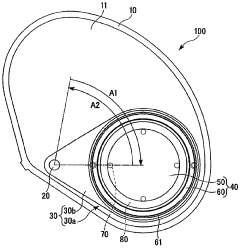
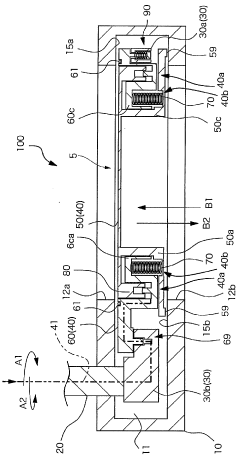
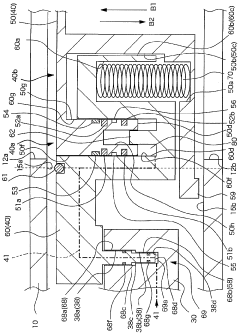
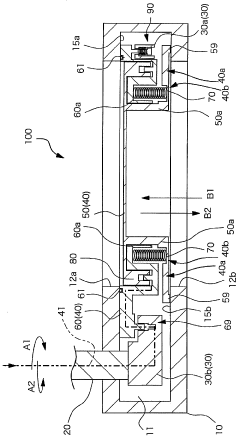
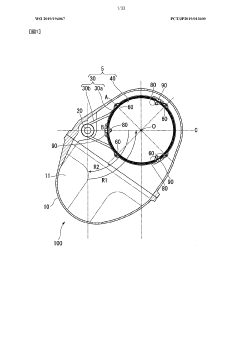
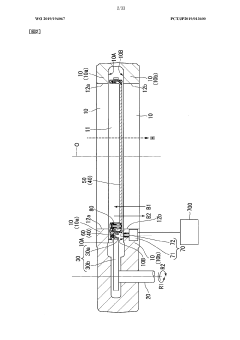
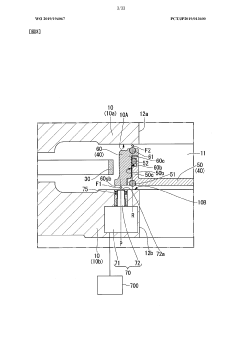
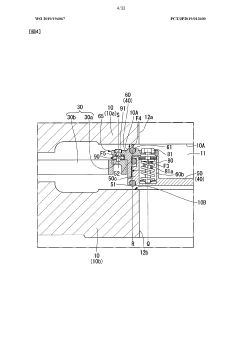
Gate valve
PatentWO2019194067A1
Innovation
- A gate valve design featuring a neutral valve body with an electric actuator, incompressible fluid biasing, and a counterweight, allowing for a normally closed operation without a secondary power source, reducing weight and energy consumption, and incorporating adjustable biasing sections for improved impact absorption.
Regulatory Framework for Industrial Valve Standards
The regulatory framework for industrial valve standards plays a crucial role in addressing gate valve interoperability challenges across diverse industrial sectors. These standards are designed to ensure consistency, safety, and reliability in valve manufacturing, installation, and operation across various industries.
International organizations such as the International Organization for Standardization (ISO) and the American Society of Mechanical Engineers (ASME) have developed comprehensive standards for industrial valves. These standards cover a wide range of aspects, including design, materials, testing, and performance requirements.
One of the key standards addressing gate valve interoperability is ISO 5208, which specifies the pressure testing requirements for industrial valves. This standard ensures that valves from different manufacturers can withstand similar pressure conditions, promoting interchangeability across sectors.
ASME B16.34 is another important standard that provides guidelines for the design, materials, and pressure-temperature ratings of valves. By adhering to this standard, manufacturers can produce gate valves that are compatible with various industrial applications, reducing interoperability issues.
The API 6D standard, developed by the American Petroleum Institute, specifically addresses the design and operation of pipeline valves, including gate valves. This standard is widely adopted in the oil and gas industry and helps ensure compatibility between valves used in different parts of the supply chain.
To address the challenges of electronic integration and smart valve technologies, the IEC 61508 standard provides guidelines for functional safety of electrical/electronic/programmable electronic safety-related systems. This standard is particularly relevant for industries adopting advanced valve control and monitoring systems.
Regulatory bodies in different countries also play a role in enforcing these standards and developing region-specific requirements. For instance, the European Pressure Equipment Directive (PED) sets safety standards for pressure equipment, including industrial valves, used within the European Union.
The implementation of these standards helps mitigate interoperability challenges by creating a common language and set of requirements across industries. However, the diverse nature of industrial sectors still presents challenges, as specific industries may have unique requirements that go beyond general standards.
To further improve interoperability, industry-specific working groups and consortia are actively working on developing more targeted standards and guidelines. These efforts aim to address the unique challenges faced by sectors such as chemical processing, water treatment, and power generation.
International organizations such as the International Organization for Standardization (ISO) and the American Society of Mechanical Engineers (ASME) have developed comprehensive standards for industrial valves. These standards cover a wide range of aspects, including design, materials, testing, and performance requirements.
One of the key standards addressing gate valve interoperability is ISO 5208, which specifies the pressure testing requirements for industrial valves. This standard ensures that valves from different manufacturers can withstand similar pressure conditions, promoting interchangeability across sectors.
ASME B16.34 is another important standard that provides guidelines for the design, materials, and pressure-temperature ratings of valves. By adhering to this standard, manufacturers can produce gate valves that are compatible with various industrial applications, reducing interoperability issues.
The API 6D standard, developed by the American Petroleum Institute, specifically addresses the design and operation of pipeline valves, including gate valves. This standard is widely adopted in the oil and gas industry and helps ensure compatibility between valves used in different parts of the supply chain.
To address the challenges of electronic integration and smart valve technologies, the IEC 61508 standard provides guidelines for functional safety of electrical/electronic/programmable electronic safety-related systems. This standard is particularly relevant for industries adopting advanced valve control and monitoring systems.
Regulatory bodies in different countries also play a role in enforcing these standards and developing region-specific requirements. For instance, the European Pressure Equipment Directive (PED) sets safety standards for pressure equipment, including industrial valves, used within the European Union.
The implementation of these standards helps mitigate interoperability challenges by creating a common language and set of requirements across industries. However, the diverse nature of industrial sectors still presents challenges, as specific industries may have unique requirements that go beyond general standards.
To further improve interoperability, industry-specific working groups and consortia are actively working on developing more targeted standards and guidelines. These efforts aim to address the unique challenges faced by sectors such as chemical processing, water treatment, and power generation.
Economic Impact of Improved Gate Valve Interoperability
The economic impact of improved gate valve interoperability across diverse industrial sectors is substantial and far-reaching. Enhanced interoperability leads to significant cost reductions in procurement, installation, and maintenance processes. Companies can streamline their supply chains by sourcing components from a wider range of manufacturers, fostering increased competition and potentially lowering prices. This flexibility also reduces the risk of supply chain disruptions, as businesses are not dependent on a single supplier for critical components.
Operational efficiency gains are another key economic benefit. Improved interoperability allows for easier integration of gate valves into existing systems, reducing downtime during upgrades or replacements. This translates to increased productivity and output across industries such as oil and gas, water treatment, and chemical processing. The standardization of interfaces and protocols also simplifies training procedures, potentially lowering labor costs and minimizing human errors in valve operation and maintenance.
From a broader industry perspective, enhanced interoperability can drive innovation and market growth. As barriers to entry are lowered, smaller manufacturers and startups can more easily enter the market with compatible products, fostering healthy competition and technological advancement. This environment encourages research and development investments, potentially leading to breakthroughs in valve design, materials, and smart technologies.
The impact on global trade is also noteworthy. Improved interoperability facilitates easier compliance with international standards, potentially opening up new markets for manufacturers and reducing trade barriers. This can lead to increased exports and economic growth for countries with strong valve manufacturing sectors.
In terms of lifecycle costs, improved interoperability can significantly reduce the total cost of ownership for industrial systems utilizing gate valves. The ability to easily replace or upgrade components without overhauling entire systems extends the lifespan of industrial infrastructure, deferring large capital expenditures and improving return on investment.
Lastly, there are potential environmental and safety benefits that translate into economic advantages. Better interoperability can lead to more efficient systems with reduced energy consumption and lower emissions. Additionally, standardized interfaces and protocols can enhance safety features, potentially reducing accidents and associated costs, including insurance premiums and regulatory fines.
Operational efficiency gains are another key economic benefit. Improved interoperability allows for easier integration of gate valves into existing systems, reducing downtime during upgrades or replacements. This translates to increased productivity and output across industries such as oil and gas, water treatment, and chemical processing. The standardization of interfaces and protocols also simplifies training procedures, potentially lowering labor costs and minimizing human errors in valve operation and maintenance.
From a broader industry perspective, enhanced interoperability can drive innovation and market growth. As barriers to entry are lowered, smaller manufacturers and startups can more easily enter the market with compatible products, fostering healthy competition and technological advancement. This environment encourages research and development investments, potentially leading to breakthroughs in valve design, materials, and smart technologies.
The impact on global trade is also noteworthy. Improved interoperability facilitates easier compliance with international standards, potentially opening up new markets for manufacturers and reducing trade barriers. This can lead to increased exports and economic growth for countries with strong valve manufacturing sectors.
In terms of lifecycle costs, improved interoperability can significantly reduce the total cost of ownership for industrial systems utilizing gate valves. The ability to easily replace or upgrade components without overhauling entire systems extends the lifespan of industrial infrastructure, deferring large capital expenditures and improving return on investment.
Lastly, there are potential environmental and safety benefits that translate into economic advantages. Better interoperability can lead to more efficient systems with reduced energy consumption and lower emissions. Additionally, standardized interfaces and protocols can enhance safety features, potentially reducing accidents and associated costs, including insurance premiums and regulatory fines.
Unlock deeper insights with PatSnap Eureka Quick Research — get a full tech report to explore trends and direct your research. Try now!
Generate Your Research Report Instantly with AI Agent
Supercharge your innovation with PatSnap Eureka AI Agent Platform!