

How 5G technology leverages AMOLED display advantages?
JUL 17, 20258 MIN READ
Generate Your Research Report Instantly with AI Agent
PatSnap Eureka helps you evaluate technical feasibility & market potential.
5G and AMOLED Synergy
The convergence of 5G technology and AMOLED displays represents a significant leap forward in mobile device capabilities. 5G's high-speed, low-latency connectivity complements AMOLED's superior visual performance, creating a synergy that enhances overall user experience. This combination enables seamless streaming of high-quality content, immersive augmented reality (AR) and virtual reality (VR) applications, and real-time interactive experiences.
5G's increased bandwidth allows for the transmission of large amounts of data at unprecedented speeds. This capability perfectly aligns with AMOLED displays' ability to render high-resolution, vibrant images with exceptional color accuracy and contrast ratios. As a result, users can enjoy ultra-high-definition video streaming, cloud gaming, and other data-intensive applications without buffering or quality compromises.
The low latency of 5G networks significantly reduces the delay between data transmission and reception. This characteristic is particularly beneficial when paired with AMOLED's fast response times and high refresh rates. The combination minimizes motion blur and enhances the smoothness of animations, making it ideal for fast-paced gaming and interactive AR experiences.
AMOLED displays are known for their energy efficiency, especially when displaying dark content. 5G technology's network slicing capability allows for optimized power consumption by allocating network resources based on specific application needs. This synergy between 5G and AMOLED can lead to improved battery life in mobile devices, despite the increased data consumption and display performance.
The integration of 5G and AMOLED technologies also opens up new possibilities for mobile device form factors. AMOLED's flexibility and thinness, combined with 5G's reduced need for large antennas, enable the development of foldable and rollable devices with seamless connectivity. This convergence supports the trend towards more versatile and adaptable mobile devices.
In the realm of augmented reality, 5G's edge computing capabilities complement AMOLED's high contrast and wide color gamut. This synergy allows for more realistic and responsive AR overlays, enhancing applications in fields such as education, healthcare, and industrial design. The low latency of 5G ensures that AR elements can be rendered and displayed on AMOLED screens with minimal delay, creating a more immersive and believable augmented experience.
As both 5G and AMOLED technologies continue to evolve, their synergy is expected to drive innovation in various sectors. From enhancing remote collaboration through holographic communications to enabling more sophisticated IoT ecosystems with visually rich interfaces, the combination of these technologies is set to redefine the boundaries of mobile computing and display capabilities.
5G's increased bandwidth allows for the transmission of large amounts of data at unprecedented speeds. This capability perfectly aligns with AMOLED displays' ability to render high-resolution, vibrant images with exceptional color accuracy and contrast ratios. As a result, users can enjoy ultra-high-definition video streaming, cloud gaming, and other data-intensive applications without buffering or quality compromises.
The low latency of 5G networks significantly reduces the delay between data transmission and reception. This characteristic is particularly beneficial when paired with AMOLED's fast response times and high refresh rates. The combination minimizes motion blur and enhances the smoothness of animations, making it ideal for fast-paced gaming and interactive AR experiences.
AMOLED displays are known for their energy efficiency, especially when displaying dark content. 5G technology's network slicing capability allows for optimized power consumption by allocating network resources based on specific application needs. This synergy between 5G and AMOLED can lead to improved battery life in mobile devices, despite the increased data consumption and display performance.
The integration of 5G and AMOLED technologies also opens up new possibilities for mobile device form factors. AMOLED's flexibility and thinness, combined with 5G's reduced need for large antennas, enable the development of foldable and rollable devices with seamless connectivity. This convergence supports the trend towards more versatile and adaptable mobile devices.
In the realm of augmented reality, 5G's edge computing capabilities complement AMOLED's high contrast and wide color gamut. This synergy allows for more realistic and responsive AR overlays, enhancing applications in fields such as education, healthcare, and industrial design. The low latency of 5G ensures that AR elements can be rendered and displayed on AMOLED screens with minimal delay, creating a more immersive and believable augmented experience.
As both 5G and AMOLED technologies continue to evolve, their synergy is expected to drive innovation in various sectors. From enhancing remote collaboration through holographic communications to enabling more sophisticated IoT ecosystems with visually rich interfaces, the combination of these technologies is set to redefine the boundaries of mobile computing and display capabilities.
Market Demand Analysis
The convergence of 5G technology and AMOLED displays has sparked significant market demand across various sectors. As 5G networks continue to roll out globally, there is a growing need for devices that can fully leverage the high-speed, low-latency capabilities of this next-generation connectivity. AMOLED displays, with their superior color reproduction, high contrast ratios, and energy efficiency, are particularly well-suited to complement 5G technology.
In the smartphone market, which is at the forefront of 5G adoption, manufacturers are increasingly incorporating AMOLED displays into their flagship and mid-range devices. This trend is driven by consumer demand for immersive viewing experiences that can take advantage of 5G's enhanced streaming capabilities. The combination of 5G and AMOLED technology enables smoother video playback, more vibrant gaming experiences, and improved augmented reality (AR) applications.
The automotive industry is another sector where the synergy between 5G and AMOLED displays is creating new market opportunities. As vehicles become more connected and autonomous, there is a growing demand for high-quality in-car displays that can provide real-time information, entertainment, and navigation services. AMOLED displays, coupled with 5G connectivity, offer the potential for enhanced infotainment systems, heads-up displays, and digital cockpits that can process and display data from various sensors and external sources with minimal lag.
In the realm of wearable technology, the integration of 5G and AMOLED displays is driving innovation in smartwatches, fitness trackers, and augmented reality glasses. These devices benefit from AMOLED's energy efficiency and visibility in various lighting conditions, while 5G enables them to stay constantly connected and receive real-time data updates.
The enterprise and industrial sectors are also showing increased interest in solutions that combine 5G and AMOLED technology. From interactive digital signage to remote monitoring systems, there is a growing market for high-quality displays that can leverage 5G's low latency and high bandwidth to provide real-time information and enhance productivity.
As virtual and augmented reality applications continue to evolve, the demand for high-resolution, low-latency displays that can work seamlessly with 5G networks is expected to grow. This presents a significant opportunity for AMOLED display manufacturers to develop products tailored for VR/AR headsets and other immersive technologies.
The healthcare industry is another area where the combination of 5G and AMOLED displays shows promise. Telemedicine applications, medical imaging, and remote patient monitoring systems can all benefit from the high-quality visual output of AMOLED displays and the reliable, high-speed connectivity provided by 5G networks.
In the smartphone market, which is at the forefront of 5G adoption, manufacturers are increasingly incorporating AMOLED displays into their flagship and mid-range devices. This trend is driven by consumer demand for immersive viewing experiences that can take advantage of 5G's enhanced streaming capabilities. The combination of 5G and AMOLED technology enables smoother video playback, more vibrant gaming experiences, and improved augmented reality (AR) applications.
The automotive industry is another sector where the synergy between 5G and AMOLED displays is creating new market opportunities. As vehicles become more connected and autonomous, there is a growing demand for high-quality in-car displays that can provide real-time information, entertainment, and navigation services. AMOLED displays, coupled with 5G connectivity, offer the potential for enhanced infotainment systems, heads-up displays, and digital cockpits that can process and display data from various sensors and external sources with minimal lag.
In the realm of wearable technology, the integration of 5G and AMOLED displays is driving innovation in smartwatches, fitness trackers, and augmented reality glasses. These devices benefit from AMOLED's energy efficiency and visibility in various lighting conditions, while 5G enables them to stay constantly connected and receive real-time data updates.
The enterprise and industrial sectors are also showing increased interest in solutions that combine 5G and AMOLED technology. From interactive digital signage to remote monitoring systems, there is a growing market for high-quality displays that can leverage 5G's low latency and high bandwidth to provide real-time information and enhance productivity.
As virtual and augmented reality applications continue to evolve, the demand for high-resolution, low-latency displays that can work seamlessly with 5G networks is expected to grow. This presents a significant opportunity for AMOLED display manufacturers to develop products tailored for VR/AR headsets and other immersive technologies.
The healthcare industry is another area where the combination of 5G and AMOLED displays shows promise. Telemedicine applications, medical imaging, and remote patient monitoring systems can all benefit from the high-quality visual output of AMOLED displays and the reliable, high-speed connectivity provided by 5G networks.
5G-AMOLED Integration
The integration of 5G technology with AMOLED displays represents a significant advancement in mobile device capabilities. This synergy leverages the strengths of both technologies to enhance user experience and enable new applications. 5G's high-speed, low-latency connectivity complements AMOLED's superior display quality, creating a powerful combination for next-generation devices.
5G technology provides ultra-fast data transmission rates, allowing for seamless streaming of high-resolution content. This capability is particularly beneficial for AMOLED displays, which excel in producing vibrant colors and deep blacks. The increased bandwidth of 5G networks enables the transmission of 4K and even 8K video content, fully utilizing the high pixel density and color accuracy of AMOLED screens.
The low latency of 5G networks also enhances the responsiveness of touch-based interactions on AMOLED displays. This is especially crucial for applications such as mobile gaming and augmented reality (AR), where minimal delay between user input and visual feedback is essential. The combination of 5G's low latency and AMOLED's fast refresh rates results in a more fluid and immersive user experience.
AMOLED's energy efficiency aligns well with the power demands of 5G technology. As 5G devices require more processing power, the ability of AMOLED displays to selectively illuminate pixels helps conserve battery life. This is particularly important for maintaining device longevity during intensive 5G usage scenarios.
The integration also opens up new possibilities for edge computing applications. 5G's ability to offload processing tasks to the network can be complemented by AMOLED's capacity to display complex, high-fidelity graphics. This combination enables more sophisticated AR and virtual reality (VR) experiences, as well as advanced AI-driven visual applications directly on mobile devices.
Furthermore, the high-speed connectivity of 5G facilitates the implementation of adaptive display technologies on AMOLED screens. Real-time adjustments to brightness, color temperature, and content optimization can be more effectively managed with the increased data throughput, resulting in improved visual comfort and reduced eye strain for users.
In the realm of IoT and smart devices, the 5G-AMOLED integration allows for more advanced and responsive user interfaces. Connected devices with AMOLED displays can leverage 5G's low latency to provide real-time updates and interactive controls, enhancing the overall smart ecosystem experience.
5G technology provides ultra-fast data transmission rates, allowing for seamless streaming of high-resolution content. This capability is particularly beneficial for AMOLED displays, which excel in producing vibrant colors and deep blacks. The increased bandwidth of 5G networks enables the transmission of 4K and even 8K video content, fully utilizing the high pixel density and color accuracy of AMOLED screens.
The low latency of 5G networks also enhances the responsiveness of touch-based interactions on AMOLED displays. This is especially crucial for applications such as mobile gaming and augmented reality (AR), where minimal delay between user input and visual feedback is essential. The combination of 5G's low latency and AMOLED's fast refresh rates results in a more fluid and immersive user experience.
AMOLED's energy efficiency aligns well with the power demands of 5G technology. As 5G devices require more processing power, the ability of AMOLED displays to selectively illuminate pixels helps conserve battery life. This is particularly important for maintaining device longevity during intensive 5G usage scenarios.
The integration also opens up new possibilities for edge computing applications. 5G's ability to offload processing tasks to the network can be complemented by AMOLED's capacity to display complex, high-fidelity graphics. This combination enables more sophisticated AR and virtual reality (VR) experiences, as well as advanced AI-driven visual applications directly on mobile devices.
Furthermore, the high-speed connectivity of 5G facilitates the implementation of adaptive display technologies on AMOLED screens. Real-time adjustments to brightness, color temperature, and content optimization can be more effectively managed with the increased data throughput, resulting in improved visual comfort and reduced eye strain for users.
In the realm of IoT and smart devices, the 5G-AMOLED integration allows for more advanced and responsive user interfaces. Connected devices with AMOLED displays can leverage 5G's low latency to provide real-time updates and interactive controls, enhancing the overall smart ecosystem experience.
Current Tech Solutions
01 Network architecture and protocols for 5G
This category focuses on the fundamental network architecture and protocols specific to 5G technology. It includes innovations in network slicing, software-defined networking (SDN), and network function virtualization (NFV) to enable flexible and efficient 5G network deployment. These advancements allow for improved network performance, reduced latency, and enhanced scalability to support diverse use cases and applications in 5G networks.- Network architecture and protocols for 5G: This category focuses on the fundamental network architecture and protocols specific to 5G technology. It includes innovations in network slicing, software-defined networking (SDN), and network function virtualization (NFV) to enable flexible and efficient 5G network deployment.
- 5G radio access technologies: This point covers advancements in radio access technologies for 5G networks, including massive MIMO, beamforming, and millimeter wave communications. These technologies aim to improve spectral efficiency, increase data rates, and enhance coverage in 5G systems.
- 5G core network and edge computing: This category encompasses innovations in 5G core network architecture and edge computing solutions. It includes technologies for distributed computing, low-latency communications, and integration of mobile edge computing (MEC) with 5G networks to support emerging applications and services.
- 5G security and privacy enhancements: This point focuses on security and privacy technologies specifically designed for 5G networks. It includes advancements in encryption, authentication, and access control mechanisms to protect user data and network infrastructure in the 5G ecosystem.
- 5G application enablement and vertical integration: This category covers technologies that enable various applications and services in 5G networks, as well as integration with vertical industries. It includes innovations in IoT connectivity, ultra-reliable low-latency communications (URLLC), and network slicing for industry-specific use cases.
02 Radio access technology for 5G
This category covers advancements in radio access technology for 5G networks. It includes innovations in massive MIMO (Multiple-Input Multiple-Output), beamforming techniques, and new waveform designs such as OFDM variants. These technologies aim to improve spectral efficiency, increase data rates, and enhance coverage in 5G networks, particularly in high-frequency bands like mmWave.Expand Specific Solutions03 5G device and antenna design
This category focuses on innovations in 5G device and antenna design. It includes advancements in compact antenna arrays, integrated circuit designs for 5G modems, and power-efficient RF front-end modules. These technologies aim to enable smaller form factors, improved energy efficiency, and enhanced performance in 5G-enabled devices such as smartphones, IoT devices, and base stations.Expand Specific Solutions04 5G network security and privacy
This category addresses security and privacy concerns in 5G networks. It includes innovations in encryption algorithms, authentication protocols, and secure key management systems specifically designed for 5G environments. These advancements aim to protect user data, prevent unauthorized access, and ensure the integrity of 5G network communications in an increasingly connected world.Expand Specific Solutions05 5G applications and use cases
This category explores various applications and use cases enabled by 5G technology. It includes innovations in areas such as autonomous vehicles, smart cities, industrial IoT, and immersive AR/VR experiences. These advancements leverage the high-speed, low-latency, and massive connectivity capabilities of 5G networks to enable new services and improve existing ones across different industries and sectors.Expand Specific Solutions
Key Industry Players
The 5G technology and AMOLED display market is in a growth phase, with increasing adoption across various industries. The market size is expanding rapidly, driven by the demand for high-quality displays in smartphones, televisions, and other electronic devices. The technology's maturity is advancing, with key players like Samsung Electronics, BOE Technology Group, and Viettel Group leading innovation. These companies are investing heavily in research and development to enhance 5G capabilities and AMOLED display quality. The integration of 5G and AMOLED technologies is creating new opportunities for improved user experiences, faster data transmission, and more immersive visual content. As the market evolves, we can expect further advancements in display resolution, energy efficiency, and seamless connectivity.
BOE Technology Group Co., Ltd.
Technical Solution: BOE has developed a 5G-compatible AMOLED display technology that focuses on reducing electromagnetic interference (EMI) between the display and 5G antennas. Their solution incorporates a specialized EMI shielding layer within the AMOLED panel structure, allowing for closer proximity between the display and 5G components without signal degradation[2]. BOE's technology also leverages AMOLED's ability to selectively activate pixels to create dynamic antenna apertures, potentially improving 5G signal reception in various device orientations[4]. Additionally, the company has implemented advanced driver ICs that can rapidly adjust display parameters to optimize power consumption based on 5G network conditions and usage patterns[6].
Strengths: Reduced EMI, improved 5G component integration, adaptive power management. Weaknesses: Increased production complexity, potential impact on display thickness.
Amazon Technologies, Inc.
Technical Solution: Amazon has developed a 5G-enabled AMOLED display technology primarily focused on enhancing the e-commerce and augmented reality (AR) shopping experience. Their solution leverages 5G's high bandwidth to stream high-resolution product visualizations to AMOLED displays, taking advantage of the display technology's superior color accuracy and contrast ratios[13]. Amazon's technology includes a low-latency AR overlay system that utilizes 5G connectivity to seamlessly blend virtual product representations with the real world, as viewed through AMOLED-equipped devices[15]. Additionally, the company has implemented an AI-driven content optimization algorithm that adapts the visual quality of streamed product images and videos based on both 5G network conditions and AMOLED display capabilities, ensuring a consistent and high-quality viewing experience[17].
Strengths: Enhanced e-commerce and AR shopping experiences, optimized content delivery for AMOLED displays, AI-driven visual quality adaptation. Weaknesses: Limited application outside of e-commerce and AR, potential for increased data consumption.
Core Innovations
Amoled double-side display
PatentActiveUS20200219957A1
Innovation
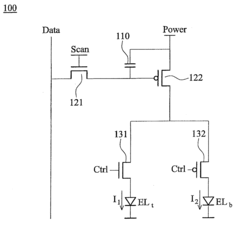
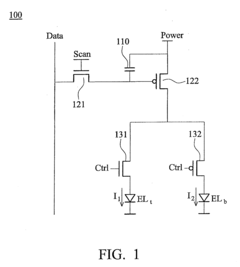
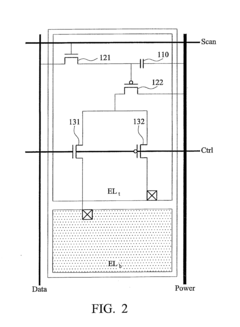
- An AMOLED double-sided display design featuring a substrate with alternating top-emitting and bottom-emitting OLED units, where the anode of top-emitting units is thicker and reflective, and the cathode of bottom-emitting units is thicker and light-transmissive, allowing for single IC control and eliminating mirrored images.
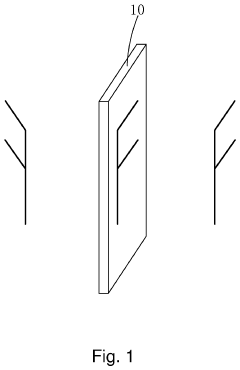
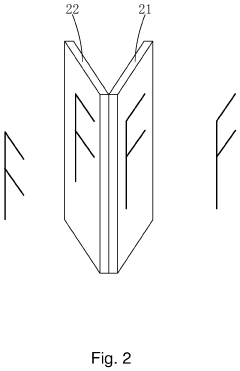
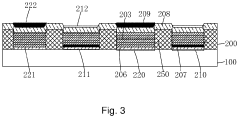
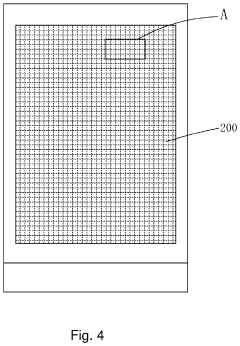
Systems for displaying images
PatentInactiveUS20090045751A1
Innovation
- A pixel unit design comprising a storage capacitor, transistors, switch units, and display units that allow for independent control of light emission in opposite directions using n-type and p-type metal-oxide-semiconductor switch units, enabling efficient light emission towards upward and downward directions during different emission periods.

Energy Efficiency
The integration of 5G technology with AMOLED displays presents significant opportunities for energy efficiency improvements. AMOLED displays are inherently more energy-efficient than traditional LCD screens, as they do not require a backlight and can selectively illuminate only the necessary pixels. When combined with 5G's high-speed, low-latency capabilities, this synergy can lead to even greater power savings.
5G networks enable faster data transmission and processing, allowing for more efficient content delivery to AMOLED displays. This reduced latency means that devices can spend less time in active states, conserving battery life. Additionally, 5G's network slicing feature allows for optimized allocation of network resources, potentially reducing the power consumption of both the network infrastructure and end-user devices.
The high bandwidth of 5G networks also facilitates more sophisticated power management techniques for AMOLED displays. For instance, content-aware dimming algorithms can be implemented more effectively, adjusting brightness and contrast in real-time based on the displayed content and ambient lighting conditions. This dynamic adjustment can significantly reduce power consumption without compromising visual quality.
Furthermore, 5G's enhanced Mobile Edge Computing (MEC) capabilities can offload some processing tasks from the device to the network edge. This redistribution of computational load can reduce the power demands on the device's processor, indirectly benefiting the AMOLED display by extending overall battery life.
The combination of 5G and AMOLED technology also enables more efficient use of Always-On Display (AOD) features. With 5G's ability to deliver timely updates and notifications, AOD functionality can be optimized to display only essential information, leveraging AMOLED's ability to illuminate individual pixels and further conserving energy.
Moreover, 5G's improved connectivity can enhance power-saving modes in devices with AMOLED displays. By allowing for more frequent and faster synchronization with cloud services, devices can enter low-power states more often and for longer durations, while still maintaining up-to-date information for users.
In conclusion, the synergy between 5G technology and AMOLED displays offers substantial potential for energy efficiency gains. By leveraging the strengths of both technologies, device manufacturers can create products that not only provide superior visual experiences but also demonstrate significantly improved battery life and overall power management.
5G networks enable faster data transmission and processing, allowing for more efficient content delivery to AMOLED displays. This reduced latency means that devices can spend less time in active states, conserving battery life. Additionally, 5G's network slicing feature allows for optimized allocation of network resources, potentially reducing the power consumption of both the network infrastructure and end-user devices.
The high bandwidth of 5G networks also facilitates more sophisticated power management techniques for AMOLED displays. For instance, content-aware dimming algorithms can be implemented more effectively, adjusting brightness and contrast in real-time based on the displayed content and ambient lighting conditions. This dynamic adjustment can significantly reduce power consumption without compromising visual quality.
Furthermore, 5G's enhanced Mobile Edge Computing (MEC) capabilities can offload some processing tasks from the device to the network edge. This redistribution of computational load can reduce the power demands on the device's processor, indirectly benefiting the AMOLED display by extending overall battery life.
The combination of 5G and AMOLED technology also enables more efficient use of Always-On Display (AOD) features. With 5G's ability to deliver timely updates and notifications, AOD functionality can be optimized to display only essential information, leveraging AMOLED's ability to illuminate individual pixels and further conserving energy.
Moreover, 5G's improved connectivity can enhance power-saving modes in devices with AMOLED displays. By allowing for more frequent and faster synchronization with cloud services, devices can enter low-power states more often and for longer durations, while still maintaining up-to-date information for users.
In conclusion, the synergy between 5G technology and AMOLED displays offers substantial potential for energy efficiency gains. By leveraging the strengths of both technologies, device manufacturers can create products that not only provide superior visual experiences but also demonstrate significantly improved battery life and overall power management.
User Experience Impact
The integration of 5G technology with AMOLED displays has significantly enhanced the user experience across various applications. The high-speed, low-latency connectivity provided by 5G networks complements the superior visual quality of AMOLED displays, creating a more immersive and responsive interface for users.
In mobile gaming, the combination of 5G and AMOLED technology has revolutionized the gaming experience. The ultra-fast data transmission of 5G enables real-time multiplayer interactions and cloud gaming services, while AMOLED displays deliver vibrant colors, deep blacks, and high refresh rates. This synergy results in smoother gameplay, reduced input lag, and more visually stunning graphics, elevating mobile gaming to console-like quality.
For video streaming applications, 5G's high bandwidth allows for seamless streaming of 4K and even 8K content. AMOLED displays excel in reproducing these high-resolution videos with exceptional color accuracy and contrast ratios. The result is a more cinematic viewing experience on mobile devices, with HDR content particularly benefiting from AMOLED's ability to display a wide color gamut and true blacks.
In augmented reality (AR) and virtual reality (VR) applications, the combination of 5G and AMOLED technology has opened new possibilities. 5G's low latency and high data rates enable real-time rendering of complex AR overlays and VR environments. AMOLED displays provide the necessary high refresh rates and pixel density for smooth, realistic visuals, reducing motion sickness and enhancing immersion in AR/VR experiences.
The impact on productivity applications is equally significant. 5G's improved connectivity allows for seamless cloud-based workflows and real-time collaboration. AMOLED displays offer excellent readability and reduced eye strain during extended use, thanks to their high contrast ratios and customizable color temperatures. This combination enhances the efficiency and comfort of mobile work environments.
Moreover, the energy efficiency of AMOLED displays complements 5G technology's power demands. As 5G networks require more power, AMOLED's ability to selectively illuminate pixels helps conserve battery life, ensuring that users can take full advantage of 5G capabilities without significant compromises in device longevity.
In conclusion, the synergy between 5G technology and AMOLED displays has substantially improved the user experience across various applications. From gaming and multimedia consumption to productivity and immersive technologies, this combination delivers faster, more responsive, and visually superior interactions, setting new standards for mobile device capabilities and user expectations.
In mobile gaming, the combination of 5G and AMOLED technology has revolutionized the gaming experience. The ultra-fast data transmission of 5G enables real-time multiplayer interactions and cloud gaming services, while AMOLED displays deliver vibrant colors, deep blacks, and high refresh rates. This synergy results in smoother gameplay, reduced input lag, and more visually stunning graphics, elevating mobile gaming to console-like quality.
For video streaming applications, 5G's high bandwidth allows for seamless streaming of 4K and even 8K content. AMOLED displays excel in reproducing these high-resolution videos with exceptional color accuracy and contrast ratios. The result is a more cinematic viewing experience on mobile devices, with HDR content particularly benefiting from AMOLED's ability to display a wide color gamut and true blacks.
In augmented reality (AR) and virtual reality (VR) applications, the combination of 5G and AMOLED technology has opened new possibilities. 5G's low latency and high data rates enable real-time rendering of complex AR overlays and VR environments. AMOLED displays provide the necessary high refresh rates and pixel density for smooth, realistic visuals, reducing motion sickness and enhancing immersion in AR/VR experiences.
The impact on productivity applications is equally significant. 5G's improved connectivity allows for seamless cloud-based workflows and real-time collaboration. AMOLED displays offer excellent readability and reduced eye strain during extended use, thanks to their high contrast ratios and customizable color temperatures. This combination enhances the efficiency and comfort of mobile work environments.
Moreover, the energy efficiency of AMOLED displays complements 5G technology's power demands. As 5G networks require more power, AMOLED's ability to selectively illuminate pixels helps conserve battery life, ensuring that users can take full advantage of 5G capabilities without significant compromises in device longevity.
In conclusion, the synergy between 5G technology and AMOLED displays has substantially improved the user experience across various applications. From gaming and multimedia consumption to productivity and immersive technologies, this combination delivers faster, more responsive, and visually superior interactions, setting new standards for mobile device capabilities and user expectations.
Unlock deeper insights with PatSnap Eureka Quick Research — get a full tech report to explore trends and direct your research. Try now!
Generate Your Research Report Instantly with AI Agent
Supercharge your innovation with PatSnap Eureka AI Agent Platform!