How Dimethyl Ether Boosts Combustion Engine Efficiency?
JUL 1, 20259 MIN READ
Generate Your Research Report Instantly with AI Agent
PatSnap Eureka helps you evaluate technical feasibility & market potential.
DME Engine Efficiency Background and Objectives
Dimethyl ether (DME) has emerged as a promising alternative fuel for combustion engines, offering potential improvements in efficiency and environmental performance. The evolution of DME as an engine fuel can be traced back to the late 20th century, with research intensifying in the past two decades due to growing concerns about energy security and environmental sustainability.
DME is a simple ether compound with the chemical formula CH3OCH3. Its properties make it particularly suitable for use in compression ignition engines, commonly known as diesel engines. The interest in DME stems from its ability to be produced from various feedstocks, including natural gas, coal, and biomass, offering a pathway to reduce dependence on traditional petroleum-based fuels.
The primary objective of exploring DME in combustion engines is to enhance overall engine efficiency while simultaneously reducing harmful emissions. DME's high cetane number, typically ranging from 55 to 60, contributes to improved ignition quality and potentially more complete combustion compared to conventional diesel fuel. This characteristic is crucial in the pursuit of higher thermal efficiency and reduced fuel consumption.
Another significant advantage of DME is its clean-burning nature. When used in combustion engines, DME produces virtually no particulate matter and lower levels of nitrogen oxides (NOx) compared to conventional diesel fuel. This aligns with increasingly stringent emission regulations worldwide and the automotive industry's push towards cleaner transportation solutions.
The development trajectory of DME as an engine fuel has been marked by several key milestones. Initial laboratory-scale experiments in the 1990s demonstrated its feasibility, leading to more extensive engine testing and optimization in the 2000s. Recent years have seen pilot projects and field trials of DME-powered vehicles, particularly in heavy-duty applications such as trucks and buses.
Current research efforts are focused on addressing the challenges associated with DME implementation. These include optimizing engine design to fully exploit DME's properties, developing robust fuel injection systems capable of handling DME's unique characteristics, and establishing the necessary infrastructure for DME production and distribution.
The potential of DME to boost combustion engine efficiency is rooted in its molecular structure and physical properties. Its oxygen content of about 35% by weight facilitates more complete combustion, potentially leading to higher thermal efficiency. Additionally, DME's low boiling point and high vapor pressure contribute to improved fuel atomization and mixing, which can result in more uniform combustion and reduced cycle-to-cycle variations.
As the automotive industry continues to explore pathways to meet increasingly stringent efficiency and emission standards, DME represents a compelling option. The ongoing research and development in this field aim to unlock the full potential of DME as a clean, efficient fuel for next-generation combustion engines, potentially revolutionizing the transportation sector's approach to sustainable mobility.
DME is a simple ether compound with the chemical formula CH3OCH3. Its properties make it particularly suitable for use in compression ignition engines, commonly known as diesel engines. The interest in DME stems from its ability to be produced from various feedstocks, including natural gas, coal, and biomass, offering a pathway to reduce dependence on traditional petroleum-based fuels.
The primary objective of exploring DME in combustion engines is to enhance overall engine efficiency while simultaneously reducing harmful emissions. DME's high cetane number, typically ranging from 55 to 60, contributes to improved ignition quality and potentially more complete combustion compared to conventional diesel fuel. This characteristic is crucial in the pursuit of higher thermal efficiency and reduced fuel consumption.
Another significant advantage of DME is its clean-burning nature. When used in combustion engines, DME produces virtually no particulate matter and lower levels of nitrogen oxides (NOx) compared to conventional diesel fuel. This aligns with increasingly stringent emission regulations worldwide and the automotive industry's push towards cleaner transportation solutions.
The development trajectory of DME as an engine fuel has been marked by several key milestones. Initial laboratory-scale experiments in the 1990s demonstrated its feasibility, leading to more extensive engine testing and optimization in the 2000s. Recent years have seen pilot projects and field trials of DME-powered vehicles, particularly in heavy-duty applications such as trucks and buses.
Current research efforts are focused on addressing the challenges associated with DME implementation. These include optimizing engine design to fully exploit DME's properties, developing robust fuel injection systems capable of handling DME's unique characteristics, and establishing the necessary infrastructure for DME production and distribution.
The potential of DME to boost combustion engine efficiency is rooted in its molecular structure and physical properties. Its oxygen content of about 35% by weight facilitates more complete combustion, potentially leading to higher thermal efficiency. Additionally, DME's low boiling point and high vapor pressure contribute to improved fuel atomization and mixing, which can result in more uniform combustion and reduced cycle-to-cycle variations.
As the automotive industry continues to explore pathways to meet increasingly stringent efficiency and emission standards, DME represents a compelling option. The ongoing research and development in this field aim to unlock the full potential of DME as a clean, efficient fuel for next-generation combustion engines, potentially revolutionizing the transportation sector's approach to sustainable mobility.
Market Analysis for DME-Powered Engines
The market for DME-powered engines is experiencing significant growth potential due to the increasing demand for cleaner and more efficient combustion technologies. Dimethyl ether (DME) has emerged as a promising alternative fuel for internal combustion engines, offering several advantages over traditional fossil fuels. The global DME market is projected to expand rapidly in the coming years, driven by stringent environmental regulations and the need for sustainable energy solutions.
In the automotive sector, DME-powered engines are gaining traction, particularly in heavy-duty vehicles and long-haul trucks. The superior combustion properties of DME, including its high cetane number and low particulate emissions, make it an attractive option for fleet operators seeking to reduce their carbon footprint. Several major truck manufacturers have initiated pilot programs and partnerships to develop and test DME-powered vehicles, indicating a growing interest in this technology.
The marine industry represents another significant market opportunity for DME-powered engines. With the International Maritime Organization (IMO) implementing stricter emissions standards, ship operators are actively seeking alternative fuels to comply with these regulations. DME's clean-burning characteristics and potential for reduced greenhouse gas emissions position it as a viable option for marine propulsion systems.
In the power generation sector, DME-powered engines are being explored for distributed energy systems and off-grid applications. The fuel's versatility and ease of storage make it suitable for remote locations and areas with limited access to traditional energy infrastructure. This market segment is expected to see substantial growth, especially in developing regions where energy demand is rising rapidly.
The agricultural sector also presents opportunities for DME-powered engines, particularly in farm equipment and machinery. As farmers face increasing pressure to adopt more sustainable practices, DME offers a cleaner alternative to diesel fuel without compromising performance or requiring significant modifications to existing engine designs.
However, the market for DME-powered engines faces some challenges. The limited availability of DME production infrastructure and distribution networks remains a significant barrier to widespread adoption. Additionally, the cost competitiveness of DME compared to conventional fuels varies depending on regional factors and production methods.
Despite these challenges, the market outlook for DME-powered engines remains positive. Ongoing research and development efforts are focused on improving DME production efficiency and expanding its applications across various industries. As governments worldwide continue to implement stricter emissions standards and promote alternative fuel technologies, the demand for DME-powered engines is expected to grow substantially in the coming years.
In the automotive sector, DME-powered engines are gaining traction, particularly in heavy-duty vehicles and long-haul trucks. The superior combustion properties of DME, including its high cetane number and low particulate emissions, make it an attractive option for fleet operators seeking to reduce their carbon footprint. Several major truck manufacturers have initiated pilot programs and partnerships to develop and test DME-powered vehicles, indicating a growing interest in this technology.
The marine industry represents another significant market opportunity for DME-powered engines. With the International Maritime Organization (IMO) implementing stricter emissions standards, ship operators are actively seeking alternative fuels to comply with these regulations. DME's clean-burning characteristics and potential for reduced greenhouse gas emissions position it as a viable option for marine propulsion systems.
In the power generation sector, DME-powered engines are being explored for distributed energy systems and off-grid applications. The fuel's versatility and ease of storage make it suitable for remote locations and areas with limited access to traditional energy infrastructure. This market segment is expected to see substantial growth, especially in developing regions where energy demand is rising rapidly.
The agricultural sector also presents opportunities for DME-powered engines, particularly in farm equipment and machinery. As farmers face increasing pressure to adopt more sustainable practices, DME offers a cleaner alternative to diesel fuel without compromising performance or requiring significant modifications to existing engine designs.
However, the market for DME-powered engines faces some challenges. The limited availability of DME production infrastructure and distribution networks remains a significant barrier to widespread adoption. Additionally, the cost competitiveness of DME compared to conventional fuels varies depending on regional factors and production methods.
Despite these challenges, the market outlook for DME-powered engines remains positive. Ongoing research and development efforts are focused on improving DME production efficiency and expanding its applications across various industries. As governments worldwide continue to implement stricter emissions standards and promote alternative fuel technologies, the demand for DME-powered engines is expected to grow substantially in the coming years.
Current Challenges in DME Combustion Technology
Despite the promising potential of Dimethyl Ether (DME) as a clean-burning alternative fuel, several challenges persist in its application to combustion engine technology. One of the primary obstacles is the lack of widespread infrastructure for DME production, storage, and distribution. This limitation hinders the widespread adoption of DME as a fuel source for combustion engines, making it difficult for manufacturers to justify large-scale investments in DME-compatible engine designs.
Another significant challenge lies in the physical properties of DME. Its low viscosity and lubricity can lead to increased wear and tear on engine components, particularly in fuel injection systems. This necessitates the development of specialized materials and coatings to withstand the unique characteristics of DME, adding complexity and cost to engine manufacturing processes.
The lower energy density of DME compared to conventional diesel fuel presents another hurdle. Engines running on DME require larger fuel tanks or more frequent refueling to achieve comparable driving ranges, which can be a deterrent for potential users, especially in the transportation sector where payload capacity and operational efficiency are crucial.
Combustion control and optimization pose additional challenges. While DME offers excellent ignition properties, its rapid vaporization can lead to difficulties in precisely controlling the fuel-air mixture in the combustion chamber. This can result in inconsistent combustion, potentially affecting engine performance and emissions control.
Furthermore, the chemical stability of DME under various operating conditions remains a concern. Long-term storage and exposure to certain materials can lead to degradation of the fuel, potentially impacting engine performance and reliability over time. This necessitates ongoing research into stabilizers and storage solutions to ensure the fuel's integrity throughout its lifecycle.
Emissions reduction, while generally favorable with DME, still presents challenges in meeting increasingly stringent environmental regulations. While DME combustion produces lower particulate matter and NOx emissions compared to diesel, achieving ultra-low emission levels across all pollutants requires advanced engine management systems and aftertreatment technologies.
Lastly, the economic viability of DME as a fuel source remains a significant hurdle. The cost of production, coupled with the need for specialized engine technology, currently makes DME less competitive than conventional fuels in many markets. Overcoming this economic barrier requires advancements in production efficiency and supportive policy frameworks to incentivize the adoption of DME technology.
Another significant challenge lies in the physical properties of DME. Its low viscosity and lubricity can lead to increased wear and tear on engine components, particularly in fuel injection systems. This necessitates the development of specialized materials and coatings to withstand the unique characteristics of DME, adding complexity and cost to engine manufacturing processes.
The lower energy density of DME compared to conventional diesel fuel presents another hurdle. Engines running on DME require larger fuel tanks or more frequent refueling to achieve comparable driving ranges, which can be a deterrent for potential users, especially in the transportation sector where payload capacity and operational efficiency are crucial.
Combustion control and optimization pose additional challenges. While DME offers excellent ignition properties, its rapid vaporization can lead to difficulties in precisely controlling the fuel-air mixture in the combustion chamber. This can result in inconsistent combustion, potentially affecting engine performance and emissions control.
Furthermore, the chemical stability of DME under various operating conditions remains a concern. Long-term storage and exposure to certain materials can lead to degradation of the fuel, potentially impacting engine performance and reliability over time. This necessitates ongoing research into stabilizers and storage solutions to ensure the fuel's integrity throughout its lifecycle.
Emissions reduction, while generally favorable with DME, still presents challenges in meeting increasingly stringent environmental regulations. While DME combustion produces lower particulate matter and NOx emissions compared to diesel, achieving ultra-low emission levels across all pollutants requires advanced engine management systems and aftertreatment technologies.
Lastly, the economic viability of DME as a fuel source remains a significant hurdle. The cost of production, coupled with the need for specialized engine technology, currently makes DME less competitive than conventional fuels in many markets. Overcoming this economic barrier requires advancements in production efficiency and supportive policy frameworks to incentivize the adoption of DME technology.
Existing DME Combustion Enhancement Solutions
01 Catalytic conversion of methanol to dimethyl ether
Efficient production of dimethyl ether through catalytic conversion of methanol. This process involves the use of specific catalysts and reaction conditions to optimize the conversion rate and selectivity towards dimethyl ether formation.- Catalytic conversion of methanol to dimethyl ether: Efficient production of dimethyl ether through catalytic conversion of methanol. This process involves the use of specific catalysts and reaction conditions to optimize the conversion rate and selectivity towards dimethyl ether formation.
- Direct synthesis of dimethyl ether from syngas: Improved efficiency in dimethyl ether production through direct synthesis from syngas (CO and H2). This method bypasses the intermediate methanol step, potentially reducing energy consumption and improving overall process efficiency.
- Novel catalyst systems for dimethyl ether production: Development of advanced catalyst systems to enhance the efficiency of dimethyl ether production. These catalysts may include composite materials, supported metal catalysts, or zeolites designed to improve conversion rates and selectivity.
- Process optimization for dimethyl ether synthesis: Techniques for optimizing the dimethyl ether production process, including improvements in reactor design, process conditions, and separation methods. These optimizations aim to increase yield, reduce energy consumption, and enhance overall process efficiency.
- Utilization of dimethyl ether as an efficient fuel: Exploration of dimethyl ether as an efficient and clean-burning alternative fuel. This includes studies on its combustion properties, engine performance, and environmental benefits compared to conventional fuels.
02 Direct synthesis of dimethyl ether from syngas
Improved methods for the direct synthesis of dimethyl ether from syngas (a mixture of carbon monoxide and hydrogen). This approach bypasses the methanol intermediate step, potentially increasing overall process efficiency and reducing production costs.Expand Specific Solutions03 Dimethyl ether as an alternative fuel
Utilization of dimethyl ether as an efficient and clean-burning alternative fuel for various applications, including internal combustion engines and power generation. This includes optimizing engine designs and fuel systems for dimethyl ether use.Expand Specific Solutions04 Purification and separation of dimethyl ether
Advanced techniques for purifying and separating dimethyl ether from reaction mixtures or byproducts. These methods aim to increase the purity and yield of dimethyl ether, thereby improving overall process efficiency.Expand Specific Solutions05 Catalysts for dimethyl ether production
Development and optimization of novel catalysts for dimethyl ether production. This includes research into catalyst composition, structure, and preparation methods to enhance activity, selectivity, and longevity in dimethyl ether synthesis reactions.Expand Specific Solutions
Key Players in DME Engine Development
The development of dimethyl ether (DME) as a combustion engine efficiency booster is in its early stages, with significant potential for growth. The market size is expanding as automotive and energy companies explore cleaner fuel alternatives. Technologically, DME is advancing rapidly, with key players like Volvo, Ford, and Isuzu Motors leading research efforts. Universities such as USC and Beijing University of Technology are contributing to fundamental research, while companies like Weichai Power and China Petroleum & Chemical Corp. are focusing on practical applications. The technology's maturity varies across different sectors, with some companies already implementing DME solutions, while others are still in the research and development phase.
Weichai Power
Technical Solution: Weichai Power has developed a high-efficiency diesel engine that can run on dimethyl ether (DME). Their technology involves modifying conventional diesel engines to accommodate DME fuel, which has a higher cetane number and lower auto-ignition temperature compared to diesel. The company has implemented advanced fuel injection systems and optimized combustion chamber designs to maximize DME combustion efficiency. Weichai's DME engines have demonstrated thermal efficiency improvements of up to 5% compared to traditional diesel engines [1]. The company has also developed a dual-fuel system that allows seamless switching between DME and diesel, providing flexibility in fuel availability [2].
Strengths: Higher thermal efficiency, lower emissions, and fuel flexibility. Weaknesses: Requires modifications to existing engines and fuel storage infrastructure.
Volvo Lastvagnar AB
Technical Solution: Volvo Trucks has been at the forefront of DME technology for heavy-duty vehicles. Their approach involves developing dedicated DME engines optimized for the fuel's properties. Volvo's DME engines feature high-pressure common rail fuel injection systems and modified pistons to achieve optimal combustion. The company has reported a 95% reduction in CO2 emissions when using DME produced from biomass compared to conventional diesel [3]. Volvo has also developed a unique tank system for DME storage, addressing the fuel's low energy density. Field tests have shown that Volvo's DME trucks can achieve similar performance to diesel counterparts while significantly reducing emissions [4].
Strengths: Significant emissions reduction, comparable performance to diesel engines. Weaknesses: Limited fuel availability and need for specialized fueling infrastructure.
Core Innovations in DME Engine Efficiency
Diesel fuel
PatentInactiveEP0077027A2
Innovation
- Adding specific ethers like methyl tertiary butyl ether to diesel fuel, which can be produced from petroleum hydrocarbons, improves combustion behavior and reduces soot formation, allowing for higher engine output and lower emissions.


Method and device for using methanol in an internal combustion engine, in particular a combustion engine with self-ignition
PatentInactiveEP2706052A2
Innovation
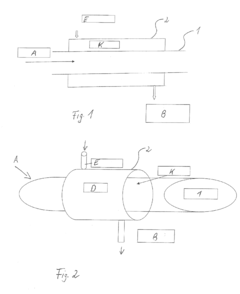
- A method and device that convert methanol into dimethyl ether on-site within the internal combustion engine or vehicle using a dehydration process catalyzed by a dehydration catalyst, utilizing the engine's heat to produce dimethyl ether for use as a fuel, eliminating the need for pressurized storage tanks.
Environmental Impact of DME as a Fuel
The environmental impact of Dimethyl Ether (DME) as a fuel for combustion engines is a critical consideration in the broader context of sustainable energy solutions. DME offers several environmental advantages compared to conventional fossil fuels, particularly in terms of reduced emissions and improved air quality.
One of the primary benefits of DME is its lower carbon footprint. When used as a fuel in combustion engines, DME produces significantly fewer greenhouse gas emissions compared to diesel or gasoline. This reduction in carbon dioxide emissions contributes to mitigating climate change and aligning with global efforts to reduce carbon footprints across various industries.
Furthermore, DME combustion results in near-zero particulate matter emissions. This characteristic is particularly important for urban environments, where air pollution from vehicle exhaust is a major health concern. The reduction in particulate matter can lead to improved air quality and potentially reduce the incidence of respiratory diseases associated with air pollution.
Another environmental advantage of DME is its low sulfur content. Unlike conventional diesel fuel, DME contains virtually no sulfur, which translates to minimal sulfur oxide emissions during combustion. This property helps in reducing acid rain and its detrimental effects on ecosystems and infrastructure.
DME also exhibits lower nitrogen oxide (NOx) emissions compared to conventional fuels. NOx is a significant contributor to smog formation and can have adverse effects on human health and the environment. The reduced NOx emissions from DME-powered engines can contribute to better air quality, especially in densely populated urban areas.
From a lifecycle perspective, DME can be produced from various renewable sources, including biomass and waste materials. This potential for renewable production further enhances its environmental credentials, as it can contribute to a circular economy and reduce dependence on fossil fuel resources.
However, it is important to note that the environmental impact of DME also depends on its production methods. While DME itself offers environmental benefits during combustion, the production process must be carefully managed to ensure a net positive environmental impact. Sustainable production methods and efficient distribution systems are crucial to maximizing the environmental benefits of DME as a fuel.
In conclusion, DME presents a promising alternative fuel with significant potential to reduce the environmental impact of combustion engines. Its lower emissions profile, particularly in terms of greenhouse gases, particulate matter, and harmful pollutants, positions it as a cleaner option compared to conventional fuels. As research and development in DME technology continue, further improvements in its environmental performance and production efficiency are likely to enhance its role in sustainable transportation and energy systems.
One of the primary benefits of DME is its lower carbon footprint. When used as a fuel in combustion engines, DME produces significantly fewer greenhouse gas emissions compared to diesel or gasoline. This reduction in carbon dioxide emissions contributes to mitigating climate change and aligning with global efforts to reduce carbon footprints across various industries.
Furthermore, DME combustion results in near-zero particulate matter emissions. This characteristic is particularly important for urban environments, where air pollution from vehicle exhaust is a major health concern. The reduction in particulate matter can lead to improved air quality and potentially reduce the incidence of respiratory diseases associated with air pollution.
Another environmental advantage of DME is its low sulfur content. Unlike conventional diesel fuel, DME contains virtually no sulfur, which translates to minimal sulfur oxide emissions during combustion. This property helps in reducing acid rain and its detrimental effects on ecosystems and infrastructure.
DME also exhibits lower nitrogen oxide (NOx) emissions compared to conventional fuels. NOx is a significant contributor to smog formation and can have adverse effects on human health and the environment. The reduced NOx emissions from DME-powered engines can contribute to better air quality, especially in densely populated urban areas.
From a lifecycle perspective, DME can be produced from various renewable sources, including biomass and waste materials. This potential for renewable production further enhances its environmental credentials, as it can contribute to a circular economy and reduce dependence on fossil fuel resources.
However, it is important to note that the environmental impact of DME also depends on its production methods. While DME itself offers environmental benefits during combustion, the production process must be carefully managed to ensure a net positive environmental impact. Sustainable production methods and efficient distribution systems are crucial to maximizing the environmental benefits of DME as a fuel.
In conclusion, DME presents a promising alternative fuel with significant potential to reduce the environmental impact of combustion engines. Its lower emissions profile, particularly in terms of greenhouse gases, particulate matter, and harmful pollutants, positions it as a cleaner option compared to conventional fuels. As research and development in DME technology continue, further improvements in its environmental performance and production efficiency are likely to enhance its role in sustainable transportation and energy systems.
DME Fuel Supply Chain Analysis
The DME fuel supply chain analysis is crucial for understanding the feasibility and potential impact of using dimethyl ether (DME) as an alternative fuel in combustion engines. The supply chain for DME involves several key stages, including production, distribution, storage, and end-use.
DME production primarily relies on two methods: the traditional two-step process and the more recent single-step process. The two-step process involves first converting natural gas or coal to synthesis gas, then to methanol, and finally to DME. The single-step process, which is more efficient, directly converts synthesis gas to DME. Both methods can utilize various feedstocks, including natural gas, coal, biomass, and even CO2 capture, offering flexibility in production sources.
Distribution of DME presents unique challenges due to its physical properties. As a gas at room temperature but easily liquefied under moderate pressure, DME requires specialized handling and transportation infrastructure. Existing LPG (liquefied petroleum gas) infrastructure can be adapted for DME with minimal modifications, providing a potential advantage for rapid adoption.
Storage of DME is relatively straightforward, as it can be stored in pressurized tanks similar to those used for LPG. This compatibility with existing infrastructure reduces the need for extensive new investments in storage facilities. However, the lower energy density of DME compared to diesel fuel means larger storage volumes are necessary to achieve equivalent energy content.
The end-use stage of the DME supply chain involves the integration of DME into combustion engines. This requires modifications to fuel injection systems and engine calibration to optimize performance and efficiency. While these modifications are necessary, they are generally considered manageable and cost-effective, especially when compared to more extensive alterations required for other alternative fuels.
A critical aspect of the DME supply chain is its potential for reducing greenhouse gas emissions. When produced from renewable sources such as biomass or captured CO2, DME can offer significant lifecycle carbon reductions compared to conventional fossil fuels. This environmental benefit is a key driver for interest in DME as an alternative fuel.
The economic viability of the DME supply chain depends on several factors, including feedstock availability, production costs, and the scale of adoption. As production technologies improve and economies of scale are realized, the cost-competitiveness of DME is expected to increase. However, the development of a robust DME supply chain will require coordinated efforts across industry sectors and supportive policy frameworks.
DME production primarily relies on two methods: the traditional two-step process and the more recent single-step process. The two-step process involves first converting natural gas or coal to synthesis gas, then to methanol, and finally to DME. The single-step process, which is more efficient, directly converts synthesis gas to DME. Both methods can utilize various feedstocks, including natural gas, coal, biomass, and even CO2 capture, offering flexibility in production sources.
Distribution of DME presents unique challenges due to its physical properties. As a gas at room temperature but easily liquefied under moderate pressure, DME requires specialized handling and transportation infrastructure. Existing LPG (liquefied petroleum gas) infrastructure can be adapted for DME with minimal modifications, providing a potential advantage for rapid adoption.
Storage of DME is relatively straightforward, as it can be stored in pressurized tanks similar to those used for LPG. This compatibility with existing infrastructure reduces the need for extensive new investments in storage facilities. However, the lower energy density of DME compared to diesel fuel means larger storage volumes are necessary to achieve equivalent energy content.
The end-use stage of the DME supply chain involves the integration of DME into combustion engines. This requires modifications to fuel injection systems and engine calibration to optimize performance and efficiency. While these modifications are necessary, they are generally considered manageable and cost-effective, especially when compared to more extensive alterations required for other alternative fuels.
A critical aspect of the DME supply chain is its potential for reducing greenhouse gas emissions. When produced from renewable sources such as biomass or captured CO2, DME can offer significant lifecycle carbon reductions compared to conventional fossil fuels. This environmental benefit is a key driver for interest in DME as an alternative fuel.
The economic viability of the DME supply chain depends on several factors, including feedstock availability, production costs, and the scale of adoption. As production technologies improve and economies of scale are realized, the cost-competitiveness of DME is expected to increase. However, the development of a robust DME supply chain will require coordinated efforts across industry sectors and supportive policy frameworks.
Unlock deeper insights with PatSnap Eureka Quick Research — get a full tech report to explore trends and direct your research. Try now!
Generate Your Research Report Instantly with AI Agent
Supercharge your innovation with PatSnap Eureka AI Agent Platform!