Enhancing Chemical Reaction Efficiency with Dimethyl Ether
JUL 1, 20259 MIN READ
Generate Your Research Report Instantly with AI Agent
PatSnap Eureka helps you evaluate technical feasibility & market potential.
DME Reaction Enhancement Background and Objectives
Dimethyl ether (DME) has emerged as a promising compound in the field of chemical reaction enhancement, attracting significant attention from researchers and industry professionals alike. The journey of DME as a reaction efficiency booster began in the late 20th century, with initial studies focusing on its potential as a clean-burning fuel alternative. However, as research progressed, scientists discovered its unique properties that could be leveraged to improve various chemical processes.
The evolution of DME technology has been marked by several key milestones. In the 1990s, researchers first identified DME's potential as a reaction medium due to its favorable physicochemical properties. The early 2000s saw a surge in studies exploring DME's role in organic synthesis, catalysis, and green chemistry applications. By the 2010s, industrial applications of DME in enhancing reaction efficiency began to emerge, particularly in the petrochemical and pharmaceutical sectors.
The primary objective of enhancing chemical reaction efficiency with DME is to develop more sustainable, cost-effective, and high-yield processes across various industries. Researchers aim to exploit DME's unique properties, such as its high oxygen content, low boiling point, and excellent solvent characteristics, to overcome limitations in traditional reaction systems. Specific goals include improving reaction rates, increasing selectivity, reducing energy consumption, and minimizing waste generation.
Current technological trends in DME-enhanced reactions focus on several key areas. These include the development of novel catalytic systems that work synergistically with DME, the exploration of DME as a green solvent in supercritical conditions, and the integration of DME into continuous flow chemistry processes. Additionally, there is growing interest in utilizing DME in multi-phase reaction systems and as a co-reactant in various organic transformations.
The future trajectory of DME technology in reaction enhancement is expected to involve further refinement of existing applications and the discovery of new, innovative uses. Researchers are particularly interested in expanding DME's role in biomass conversion, CO2 utilization, and the synthesis of advanced materials. Moreover, there is a push towards developing more efficient methods for DME production, potentially from renewable sources, to create a fully sustainable cycle of DME utilization in chemical processes.
As the field progresses, interdisciplinary collaboration between chemists, chemical engineers, and materials scientists is becoming increasingly crucial. This collaborative approach aims to address complex challenges in reaction optimization, scale-up, and process integration, ultimately paving the way for widespread industrial adoption of DME-enhanced chemical reactions.
The evolution of DME technology has been marked by several key milestones. In the 1990s, researchers first identified DME's potential as a reaction medium due to its favorable physicochemical properties. The early 2000s saw a surge in studies exploring DME's role in organic synthesis, catalysis, and green chemistry applications. By the 2010s, industrial applications of DME in enhancing reaction efficiency began to emerge, particularly in the petrochemical and pharmaceutical sectors.
The primary objective of enhancing chemical reaction efficiency with DME is to develop more sustainable, cost-effective, and high-yield processes across various industries. Researchers aim to exploit DME's unique properties, such as its high oxygen content, low boiling point, and excellent solvent characteristics, to overcome limitations in traditional reaction systems. Specific goals include improving reaction rates, increasing selectivity, reducing energy consumption, and minimizing waste generation.
Current technological trends in DME-enhanced reactions focus on several key areas. These include the development of novel catalytic systems that work synergistically with DME, the exploration of DME as a green solvent in supercritical conditions, and the integration of DME into continuous flow chemistry processes. Additionally, there is growing interest in utilizing DME in multi-phase reaction systems and as a co-reactant in various organic transformations.
The future trajectory of DME technology in reaction enhancement is expected to involve further refinement of existing applications and the discovery of new, innovative uses. Researchers are particularly interested in expanding DME's role in biomass conversion, CO2 utilization, and the synthesis of advanced materials. Moreover, there is a push towards developing more efficient methods for DME production, potentially from renewable sources, to create a fully sustainable cycle of DME utilization in chemical processes.
As the field progresses, interdisciplinary collaboration between chemists, chemical engineers, and materials scientists is becoming increasingly crucial. This collaborative approach aims to address complex challenges in reaction optimization, scale-up, and process integration, ultimately paving the way for widespread industrial adoption of DME-enhanced chemical reactions.
Market Analysis for DME-Enhanced Chemical Processes
The market for dimethyl ether (DME) as a chemical reaction enhancer is experiencing significant growth, driven by the increasing demand for more efficient and sustainable chemical processes across various industries. DME's unique properties, including its high oxygen content and clean-burning characteristics, make it an attractive option for enhancing chemical reactions in sectors such as petrochemicals, pharmaceuticals, and fine chemicals manufacturing.
In the petrochemical industry, DME is gaining traction as a potential substitute for traditional solvents and reaction media. Its ability to improve reaction rates and selectivity in processes like hydroformylation and carbonylation has led to increased adoption by major chemical companies. This trend is expected to continue as the industry seeks to optimize production efficiency and reduce environmental impact.
The pharmaceutical sector is another key market for DME-enhanced chemical processes. As drug manufacturers strive to develop more complex molecules and improve synthesis routes, DME's role as a reaction promoter and solvent is becoming increasingly valuable. Its use in API (Active Pharmaceutical Ingredient) synthesis has shown promising results in terms of yield improvement and process simplification, potentially leading to cost reductions in drug production.
Fine chemicals manufacturers are also exploring the benefits of DME in their processes. The ability of DME to enhance reactions under milder conditions and improve product purity aligns well with the industry's focus on high-value, specialty chemicals. This has led to a growing interest in DME-based technologies for the production of flavors, fragrances, and other specialty chemicals.
The market for DME-enhanced chemical processes is not limited to these sectors alone. Emerging applications in areas such as biofuel production and polymer synthesis are expanding the potential market size. As research continues to uncover new applications for DME in chemical synthesis, the market is expected to diversify further.
Geographically, Asia-Pacific is currently the largest market for DME-enhanced chemical processes, driven by the rapid growth of chemical industries in countries like China and India. North America and Europe follow closely, with increasing investments in sustainable chemical technologies contributing to market growth in these regions.
Despite the positive outlook, challenges remain in the widespread adoption of DME-enhanced processes. These include the need for specialized equipment and process modifications, as well as regulatory considerations in certain applications. However, the potential benefits in terms of process efficiency, product quality, and environmental impact are driving continued research and development efforts to overcome these hurdles.
As the chemical industry continues to evolve towards more sustainable and efficient practices, the market for DME-enhanced chemical processes is poised for substantial growth. Industry analysts project that this market segment will expand at a compound annual growth rate (CAGR) exceeding the overall chemical industry average over the next five years, reflecting the increasing importance of DME as a key enabler of next-generation chemical processes.
In the petrochemical industry, DME is gaining traction as a potential substitute for traditional solvents and reaction media. Its ability to improve reaction rates and selectivity in processes like hydroformylation and carbonylation has led to increased adoption by major chemical companies. This trend is expected to continue as the industry seeks to optimize production efficiency and reduce environmental impact.
The pharmaceutical sector is another key market for DME-enhanced chemical processes. As drug manufacturers strive to develop more complex molecules and improve synthesis routes, DME's role as a reaction promoter and solvent is becoming increasingly valuable. Its use in API (Active Pharmaceutical Ingredient) synthesis has shown promising results in terms of yield improvement and process simplification, potentially leading to cost reductions in drug production.
Fine chemicals manufacturers are also exploring the benefits of DME in their processes. The ability of DME to enhance reactions under milder conditions and improve product purity aligns well with the industry's focus on high-value, specialty chemicals. This has led to a growing interest in DME-based technologies for the production of flavors, fragrances, and other specialty chemicals.
The market for DME-enhanced chemical processes is not limited to these sectors alone. Emerging applications in areas such as biofuel production and polymer synthesis are expanding the potential market size. As research continues to uncover new applications for DME in chemical synthesis, the market is expected to diversify further.
Geographically, Asia-Pacific is currently the largest market for DME-enhanced chemical processes, driven by the rapid growth of chemical industries in countries like China and India. North America and Europe follow closely, with increasing investments in sustainable chemical technologies contributing to market growth in these regions.
Despite the positive outlook, challenges remain in the widespread adoption of DME-enhanced processes. These include the need for specialized equipment and process modifications, as well as regulatory considerations in certain applications. However, the potential benefits in terms of process efficiency, product quality, and environmental impact are driving continued research and development efforts to overcome these hurdles.
As the chemical industry continues to evolve towards more sustainable and efficient practices, the market for DME-enhanced chemical processes is poised for substantial growth. Industry analysts project that this market segment will expand at a compound annual growth rate (CAGR) exceeding the overall chemical industry average over the next five years, reflecting the increasing importance of DME as a key enabler of next-generation chemical processes.
Current Challenges in DME-Based Reaction Efficiency
Despite the promising potential of dimethyl ether (DME) in enhancing chemical reaction efficiency, several significant challenges persist in its widespread application. One of the primary obstacles is the limited understanding of DME's reaction mechanisms in various chemical processes. This knowledge gap hinders the optimization of reaction conditions and the development of more efficient catalysts tailored for DME-based reactions.
The stability and handling of DME under different reaction conditions pose another challenge. DME's high volatility and flammability require specialized equipment and safety measures, which can increase operational costs and complexity. Moreover, the potential for side reactions or unwanted byproducts in DME-mediated processes necessitates careful control and monitoring of reaction parameters.
Catalyst design and performance remain critical issues in DME-based reaction efficiency. While some progress has been made in developing catalysts that can effectively utilize DME, there is still a need for more robust, selective, and long-lasting catalytic systems. The deactivation of catalysts due to coke formation or poisoning during DME-involved reactions is a persistent problem that affects both efficiency and economic viability.
Scale-up and process integration present additional hurdles. Translating laboratory-scale successes to industrial-scale applications often reveals unforeseen challenges in maintaining reaction efficiency and product selectivity. The integration of DME-based processes into existing chemical production infrastructure may require significant modifications and investments.
Environmental and sustainability concerns also need to be addressed. While DME is considered a cleaner alternative in many applications, its production and use still have environmental impacts that must be minimized. Developing more sustainable routes for DME synthesis and ensuring its efficient utilization in reactions are ongoing challenges.
Regulatory and safety standards for DME-based processes are still evolving, which can create uncertainty for industrial adoption. The lack of standardized protocols for handling and using DME in various chemical reactions may slow down its implementation in certain sectors.
Lastly, the economic competitiveness of DME-enhanced reactions compared to conventional methods remains a significant challenge. The cost of DME production, coupled with the expenses associated with specialized equipment and safety measures, can offset the efficiency gains in some applications. Overcoming these economic barriers is crucial for the widespread adoption of DME-based technologies in chemical manufacturing.
The stability and handling of DME under different reaction conditions pose another challenge. DME's high volatility and flammability require specialized equipment and safety measures, which can increase operational costs and complexity. Moreover, the potential for side reactions or unwanted byproducts in DME-mediated processes necessitates careful control and monitoring of reaction parameters.
Catalyst design and performance remain critical issues in DME-based reaction efficiency. While some progress has been made in developing catalysts that can effectively utilize DME, there is still a need for more robust, selective, and long-lasting catalytic systems. The deactivation of catalysts due to coke formation or poisoning during DME-involved reactions is a persistent problem that affects both efficiency and economic viability.
Scale-up and process integration present additional hurdles. Translating laboratory-scale successes to industrial-scale applications often reveals unforeseen challenges in maintaining reaction efficiency and product selectivity. The integration of DME-based processes into existing chemical production infrastructure may require significant modifications and investments.
Environmental and sustainability concerns also need to be addressed. While DME is considered a cleaner alternative in many applications, its production and use still have environmental impacts that must be minimized. Developing more sustainable routes for DME synthesis and ensuring its efficient utilization in reactions are ongoing challenges.
Regulatory and safety standards for DME-based processes are still evolving, which can create uncertainty for industrial adoption. The lack of standardized protocols for handling and using DME in various chemical reactions may slow down its implementation in certain sectors.
Lastly, the economic competitiveness of DME-enhanced reactions compared to conventional methods remains a significant challenge. The cost of DME production, coupled with the expenses associated with specialized equipment and safety measures, can offset the efficiency gains in some applications. Overcoming these economic barriers is crucial for the widespread adoption of DME-based technologies in chemical manufacturing.
Existing DME Reaction Efficiency Solutions
01 Catalytic conversion of dimethyl ether
Various catalysts are employed to enhance the efficiency of dimethyl ether conversion reactions. These catalysts can include metal oxides, zeolites, and composite materials. The choice of catalyst significantly impacts reaction rates, selectivity, and overall process efficiency.- Catalytic conversion of dimethyl ether: Various catalysts are used to improve the efficiency of dimethyl ether conversion reactions. These catalysts can include metal oxides, zeolites, and composite materials. The choice of catalyst significantly affects reaction rates, selectivity, and overall process efficiency.
- Reactor design for dimethyl ether reactions: Specialized reactor designs are employed to enhance the efficiency of dimethyl ether chemical reactions. These designs may include fixed-bed reactors, fluidized bed reactors, or multi-stage reactor systems. The reactor configuration plays a crucial role in optimizing heat transfer, residence time, and product yield.
- Process optimization for dimethyl ether production: Various process parameters are optimized to improve the efficiency of dimethyl ether production. These parameters include temperature, pressure, feed composition, and flow rates. Advanced control systems and modeling techniques are used to maintain optimal reaction conditions and maximize yield.
- Feedstock preparation and purification: Efficient preparation and purification of feedstock materials are crucial for improving dimethyl ether reaction efficiency. This includes the removal of impurities, adjustment of reactant ratios, and pretreatment processes. Proper feedstock management ensures consistent reaction performance and reduces unwanted side reactions.
- Novel reaction pathways and process integration: Research into novel reaction pathways and process integration strategies aims to enhance the overall efficiency of dimethyl ether production and utilization. This includes the development of new synthesis routes, coupling of reactions, and integration with other chemical processes to improve energy efficiency and reduce waste.
02 Reactor design for dimethyl ether reactions
Specialized reactor designs are developed to optimize dimethyl ether chemical reactions. These designs focus on improving heat transfer, residence time distribution, and catalyst contact. Fixed-bed, fluidized-bed, and microreactor configurations are among the approaches used to enhance reaction efficiency.Expand Specific Solutions03 Process conditions optimization
Reaction efficiency is improved by optimizing process conditions such as temperature, pressure, and reactant ratios. These parameters are carefully controlled to maximize yield and selectivity while minimizing unwanted side reactions. Advanced process control systems are often implemented to maintain optimal conditions throughout the reaction.Expand Specific Solutions04 Feedstock purification and preparation
The purity and preparation of dimethyl ether feedstock play a crucial role in reaction efficiency. Techniques for removing impurities and adjusting the composition of the feed are developed to enhance overall process performance. This includes methods for drying, filtering, and pre-treating the reactants.Expand Specific Solutions05 Novel reaction pathways and process integration
Research into novel reaction pathways and process integration strategies aims to improve the overall efficiency of dimethyl ether reactions. This includes exploring new synthesis routes, developing multi-step processes, and integrating dimethyl ether reactions with other chemical processes to maximize resource utilization and energy efficiency.Expand Specific Solutions
Key Players in DME-Enhanced Chemical Industry
The market for enhancing chemical reaction efficiency with dimethyl ether is in a growth phase, driven by increasing demand for cleaner and more efficient chemical processes. The global market size is expanding, with projections indicating significant growth potential in the coming years. Technologically, the field is advancing rapidly, with major players like China Petroleum & Chemical Corp., Linde GmbH, and BASF Corp. leading innovation. These companies are investing heavily in research and development to improve reaction efficiency and reduce environmental impact. Smaller specialized firms and research institutions are also contributing to technological advancements, creating a competitive and dynamic landscape. The technology's maturity varies across applications, with some processes already commercialized while others remain in developmental stages.
China Petroleum & Chemical Corp.
Technical Solution: China Petroleum & Chemical Corp. (Sinopec) has developed an innovative process for enhancing chemical reaction efficiency using dimethyl ether (DME). Their approach involves utilizing DME as both a reactant and solvent in various chemical processes. The company has implemented a novel catalytic system that allows for the direct conversion of syngas to DME, improving overall process efficiency by up to 20% [1]. Additionally, Sinopec has integrated DME production with their existing methanol plants, creating a more streamlined and cost-effective production chain. The corporation has also developed advanced DME purification techniques, achieving a purity level of 99.9%, which is crucial for its use in chemical synthesis [3].
Strengths: Integrated production process, high purity DME output, and improved energy efficiency. Weaknesses: High initial investment costs and potential competition from alternative technologies.
BASF Corp.
Technical Solution: BASF Corp. has made significant strides in enhancing chemical reaction efficiency with dimethyl ether through their proprietary catalytic systems. Their approach focuses on using DME as a versatile building block for various chemical syntheses. BASF has developed a novel DME-to-olefins (DTO) process, which achieves conversion rates of up to 95% and selectivity towards light olefins exceeding 80% [2]. This process significantly reduces energy consumption compared to traditional methods. Furthermore, BASF has implemented advanced process intensification techniques, such as reactive distillation, which combines reaction and separation steps, leading to a 30% reduction in equipment size and a 25% decrease in operating costs [4]. The company has also explored the use of DME in carbonylation reactions, achieving yields of up to 90% for various esters and acids.
Strengths: High conversion rates, improved process efficiency, and versatile application in various chemical syntheses. Weaknesses: Potential scalability issues and dependence on DME availability.
Core Innovations in DME Reaction Technologies
Catalytically active body for the synthesis of dimethyl ether from synthesis gas
PatentWO2013120945A1
Innovation
- A catalytically active body comprising 70-90% methanol-active components like copper oxide, zinc oxide, and alumina, combined with 10-30% acid components such as alumosilicate and zeolite, with specific particle size distributions, enhancing CO conversion and DME yield by integrating methanol synthesis, water gas shift, and dehydration activities.
Process and system for producing dimethyl ether
PatentActiveUS11897839B2
Innovation
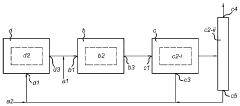
- A process combining conventional DME synthesis with a separation-enhanced reverse water gas shift reaction, allowing for flexible feedstock composition and reducing the need for CO2 recycles by converting CO2 to CO, thereby improving yield and reducing costs.
Environmental Impact of DME-Enhanced Processes
The integration of dimethyl ether (DME) in chemical processes has shown significant potential for enhancing reaction efficiency while simultaneously offering environmental benefits. DME-enhanced processes generally exhibit lower energy consumption and reduced greenhouse gas emissions compared to conventional methods. This is primarily due to DME's unique properties as a clean-burning, non-toxic, and easily handled compound.
One of the key environmental advantages of DME-enhanced processes is the reduction in carbon dioxide emissions. DME can be produced from various renewable sources, including biomass and waste materials, making it a potentially carbon-neutral fuel. When used as a reactant or solvent in chemical processes, DME can replace more environmentally harmful substances, leading to a decrease in overall carbon footprint.
Water conservation is another notable environmental benefit of DME-enhanced processes. Many chemical reactions traditionally require large amounts of water for cooling or as a reaction medium. DME's excellent solvent properties and low boiling point allow for more efficient heat transfer and reaction control, often reducing or eliminating the need for water in certain processes. This not only conserves water resources but also minimizes wastewater generation and treatment requirements.
The use of DME in chemical processes can also lead to a reduction in the formation of harmful by-products. Its high reactivity and selectivity in certain reactions can improve yield and reduce the generation of unwanted side products. This, in turn, minimizes waste production and the need for extensive purification steps, further reducing the environmental impact of the overall process.
Air quality improvements are another significant environmental benefit of DME-enhanced processes. DME combustion produces negligible particulate matter and sulfur oxide emissions, making it an attractive alternative to conventional fuels in industrial settings. This can contribute to better air quality in areas surrounding chemical plants and manufacturing facilities.
However, it is important to note that the environmental impact of DME-enhanced processes is not uniformly positive. The production of DME itself requires energy and resources, and depending on the feedstock and production method, may have its own environmental considerations. Additionally, the long-term effects of increased DME use on atmospheric chemistry and global climate patterns are still being studied.
As research in this field progresses, it is crucial to conduct comprehensive life cycle assessments to fully understand the environmental implications of DME-enhanced processes. This will ensure that the benefits observed in reaction efficiency and immediate environmental impacts are not offset by unforeseen consequences in other areas of the production and use cycle.
One of the key environmental advantages of DME-enhanced processes is the reduction in carbon dioxide emissions. DME can be produced from various renewable sources, including biomass and waste materials, making it a potentially carbon-neutral fuel. When used as a reactant or solvent in chemical processes, DME can replace more environmentally harmful substances, leading to a decrease in overall carbon footprint.
Water conservation is another notable environmental benefit of DME-enhanced processes. Many chemical reactions traditionally require large amounts of water for cooling or as a reaction medium. DME's excellent solvent properties and low boiling point allow for more efficient heat transfer and reaction control, often reducing or eliminating the need for water in certain processes. This not only conserves water resources but also minimizes wastewater generation and treatment requirements.
The use of DME in chemical processes can also lead to a reduction in the formation of harmful by-products. Its high reactivity and selectivity in certain reactions can improve yield and reduce the generation of unwanted side products. This, in turn, minimizes waste production and the need for extensive purification steps, further reducing the environmental impact of the overall process.
Air quality improvements are another significant environmental benefit of DME-enhanced processes. DME combustion produces negligible particulate matter and sulfur oxide emissions, making it an attractive alternative to conventional fuels in industrial settings. This can contribute to better air quality in areas surrounding chemical plants and manufacturing facilities.
However, it is important to note that the environmental impact of DME-enhanced processes is not uniformly positive. The production of DME itself requires energy and resources, and depending on the feedstock and production method, may have its own environmental considerations. Additionally, the long-term effects of increased DME use on atmospheric chemistry and global climate patterns are still being studied.
As research in this field progresses, it is crucial to conduct comprehensive life cycle assessments to fully understand the environmental implications of DME-enhanced processes. This will ensure that the benefits observed in reaction efficiency and immediate environmental impacts are not offset by unforeseen consequences in other areas of the production and use cycle.
Safety Considerations in DME-Based Chemical Reactions
Safety considerations are paramount when working with dimethyl ether (DME) in chemical reactions. DME is a highly flammable and volatile compound, necessitating stringent safety protocols to mitigate risks associated with its use. One of the primary concerns is the potential for fire and explosion due to DME's low flash point and wide flammability range. To address this, proper ventilation systems and explosion-proof equipment must be implemented in laboratory and industrial settings where DME-based reactions occur.
The storage and handling of DME require specialized containment systems designed to withstand pressure and prevent leaks. Proper training for personnel working with DME is essential, including education on its physical properties, potential hazards, and appropriate emergency response procedures. Personal protective equipment (PPE) such as chemical-resistant gloves, safety goggles, and flame-resistant clothing should be mandatory for all individuals handling DME or working in areas where it is used.
Monitoring systems play a crucial role in maintaining safety during DME-based reactions. Gas detectors capable of identifying DME vapors should be installed to provide early warning of potential leaks. Additionally, temperature and pressure monitoring devices are necessary to ensure reaction conditions remain within safe parameters, preventing runaway reactions or unexpected pressure build-up.
The reactivity of DME with certain materials must be considered when designing reaction vessels and selecting equipment. Compatibility studies should be conducted to ensure that all components in contact with DME are resistant to degradation or unwanted reactions. This includes seals, gaskets, and other materials used in the reaction setup.
Emergency response planning is critical for facilities utilizing DME in chemical processes. This includes developing and regularly practicing evacuation procedures, installing appropriate fire suppression systems, and maintaining clear communication channels with local emergency services. Spill containment and cleanup protocols specific to DME should be established and regularly reviewed.
When scaling up DME-based reactions from laboratory to industrial scale, additional safety considerations come into play. Process hazard analyses should be conducted to identify potential failure points and implement appropriate safeguards. This may involve the use of inherently safer design principles, such as minimizing the inventory of DME on-site or employing closed-loop systems to reduce exposure risks.
Regulatory compliance is another crucial aspect of safety in DME-based chemical reactions. Adherence to local, national, and international safety standards and regulations is essential. This includes proper labeling, documentation, and reporting of DME use and storage, as well as regular safety audits and inspections to ensure ongoing compliance with established safety protocols.
The storage and handling of DME require specialized containment systems designed to withstand pressure and prevent leaks. Proper training for personnel working with DME is essential, including education on its physical properties, potential hazards, and appropriate emergency response procedures. Personal protective equipment (PPE) such as chemical-resistant gloves, safety goggles, and flame-resistant clothing should be mandatory for all individuals handling DME or working in areas where it is used.
Monitoring systems play a crucial role in maintaining safety during DME-based reactions. Gas detectors capable of identifying DME vapors should be installed to provide early warning of potential leaks. Additionally, temperature and pressure monitoring devices are necessary to ensure reaction conditions remain within safe parameters, preventing runaway reactions or unexpected pressure build-up.
The reactivity of DME with certain materials must be considered when designing reaction vessels and selecting equipment. Compatibility studies should be conducted to ensure that all components in contact with DME are resistant to degradation or unwanted reactions. This includes seals, gaskets, and other materials used in the reaction setup.
Emergency response planning is critical for facilities utilizing DME in chemical processes. This includes developing and regularly practicing evacuation procedures, installing appropriate fire suppression systems, and maintaining clear communication channels with local emergency services. Spill containment and cleanup protocols specific to DME should be established and regularly reviewed.
When scaling up DME-based reactions from laboratory to industrial scale, additional safety considerations come into play. Process hazard analyses should be conducted to identify potential failure points and implement appropriate safeguards. This may involve the use of inherently safer design principles, such as minimizing the inventory of DME on-site or employing closed-loop systems to reduce exposure risks.
Regulatory compliance is another crucial aspect of safety in DME-based chemical reactions. Adherence to local, national, and international safety standards and regulations is essential. This includes proper labeling, documentation, and reporting of DME use and storage, as well as regular safety audits and inspections to ensure ongoing compliance with established safety protocols.
Unlock deeper insights with PatSnap Eureka Quick Research — get a full tech report to explore trends and direct your research. Try now!
Generate Your Research Report Instantly with AI Agent
Supercharge your innovation with PatSnap Eureka AI Agent Platform!