
How Geometric Isomers Impact Glycan Structure and Function
AUG 4, 20259 MIN READ
Generate Your Research Report Instantly with AI Agent
Patsnap Eureka helps you evaluate technical feasibility & market potential.
Glycan Isomerism Background
Glycans, also known as carbohydrates or sugars, are complex biomolecules that play crucial roles in various biological processes. The structural diversity of glycans arises from the numerous ways in which monosaccharides can be linked together, including the formation of geometric isomers. Geometric isomerism in glycans refers to the spatial arrangement of atoms or groups around a double bond or ring structure, resulting in molecules with the same molecular formula but different three-dimensional configurations.
The study of glycan isomerism has its roots in the early 20th century, with the pioneering work of Emil Fischer on sugar stereochemistry. However, it wasn't until the advent of advanced analytical techniques in the latter half of the century that researchers could fully appreciate the impact of geometric isomers on glycan structure and function. The development of nuclear magnetic resonance (NMR) spectroscopy, X-ray crystallography, and mass spectrometry has been instrumental in elucidating the intricate details of glycan isomerism.
Geometric isomers in glycans can arise from various structural features, including anomeric configurations, ring conformations, and glycosidic linkages. The anomeric carbon, typically C1 in monosaccharides, can adopt either an α or β configuration, leading to distinct geometric isomers. These anomeric differences can significantly influence the overall shape and properties of the glycan molecule. Similarly, the conformation of sugar rings, such as the chair or boat forms in pyranoses, contributes to the geometric diversity of glycans.
The importance of glycan isomerism extends beyond structural considerations, as it profoundly impacts biological function. Different geometric isomers can exhibit varying degrees of recognition by enzymes, receptors, and other biomolecules. This selectivity is crucial in numerous biological processes, including cell-cell recognition, immune response, and protein folding. For instance, the specific anomeric configuration of a glycosidic linkage can determine whether a particular glycan serves as a substrate for an enzyme or a ligand for a receptor.
Understanding the relationship between glycan isomerism and function has become increasingly important in fields such as glycobiology, immunology, and drug development. Researchers have discovered that subtle changes in glycan geometry can lead to significant alterations in biological activity. This knowledge has opened up new avenues for therapeutic interventions, as well as the development of glycan-based diagnostics and vaccines.
As our understanding of glycan isomerism continues to evolve, new challenges and opportunities emerge. The complexity of glycan structures and the dynamic nature of their interactions with biological systems necessitate ongoing research and technological advancements. Future directions in this field may include the development of more sophisticated analytical tools, computational modeling of glycan-protein interactions, and the exploration of glycan isomerism in the context of personalized medicine.
The study of glycan isomerism has its roots in the early 20th century, with the pioneering work of Emil Fischer on sugar stereochemistry. However, it wasn't until the advent of advanced analytical techniques in the latter half of the century that researchers could fully appreciate the impact of geometric isomers on glycan structure and function. The development of nuclear magnetic resonance (NMR) spectroscopy, X-ray crystallography, and mass spectrometry has been instrumental in elucidating the intricate details of glycan isomerism.
Geometric isomers in glycans can arise from various structural features, including anomeric configurations, ring conformations, and glycosidic linkages. The anomeric carbon, typically C1 in monosaccharides, can adopt either an α or β configuration, leading to distinct geometric isomers. These anomeric differences can significantly influence the overall shape and properties of the glycan molecule. Similarly, the conformation of sugar rings, such as the chair or boat forms in pyranoses, contributes to the geometric diversity of glycans.
The importance of glycan isomerism extends beyond structural considerations, as it profoundly impacts biological function. Different geometric isomers can exhibit varying degrees of recognition by enzymes, receptors, and other biomolecules. This selectivity is crucial in numerous biological processes, including cell-cell recognition, immune response, and protein folding. For instance, the specific anomeric configuration of a glycosidic linkage can determine whether a particular glycan serves as a substrate for an enzyme or a ligand for a receptor.
Understanding the relationship between glycan isomerism and function has become increasingly important in fields such as glycobiology, immunology, and drug development. Researchers have discovered that subtle changes in glycan geometry can lead to significant alterations in biological activity. This knowledge has opened up new avenues for therapeutic interventions, as well as the development of glycan-based diagnostics and vaccines.
As our understanding of glycan isomerism continues to evolve, new challenges and opportunities emerge. The complexity of glycan structures and the dynamic nature of their interactions with biological systems necessitate ongoing research and technological advancements. Future directions in this field may include the development of more sophisticated analytical tools, computational modeling of glycan-protein interactions, and the exploration of glycan isomerism in the context of personalized medicine.
Glycobiology Market Analysis
The glycobiology market has been experiencing significant growth in recent years, driven by increasing research and development activities in the field of glycoscience. This market encompasses a wide range of products and services related to the study of glycans, including enzymes, instruments, kits, and reagents used in glycan analysis and modification.
The global glycobiology market is projected to expand at a compound annual growth rate (CAGR) of over 12% from 2021 to 2026. This growth is primarily attributed to the rising prevalence of chronic diseases, advancements in proteomics and glycomics research, and increasing investments in pharmaceutical and biotechnology sectors.
North America currently dominates the glycobiology market, accounting for the largest market share. This is due to the presence of major pharmaceutical and biotechnology companies, well-established research infrastructure, and substantial funding for glycobiology research in the region. Europe follows closely, with significant contributions from countries like Germany, the UK, and France.
The Asia-Pacific region is expected to witness the fastest growth in the coming years, driven by increasing healthcare expenditure, growing awareness about glycobiology, and rising investments in life sciences research in countries such as China, Japan, and India.
Key players in the glycobiology market include Thermo Fisher Scientific, Merck KGaA, Agilent Technologies, New England Biolabs, and Shimadzu Corporation. These companies are focusing on product innovations, strategic collaborations, and mergers and acquisitions to strengthen their market position and expand their product portfolios.
The market is segmented based on product type, application, and end-user. Enzymes and kits for glycan analysis constitute a significant portion of the market, while applications in drug discovery and development, diagnostics, and immunology are driving market growth. Academic and research institutions, pharmaceutical and biotechnology companies, and clinical laboratories are the primary end-users of glycobiology products and services.
Emerging trends in the glycobiology market include the development of high-throughput glycan analysis technologies, increasing focus on personalized medicine, and growing applications of glycomics in cancer research. The integration of artificial intelligence and machine learning in glycan structure analysis is also expected to create new opportunities in the market.
However, the market faces challenges such as the high cost of glycobiology instruments and the complexity of glycan structures, which require specialized expertise for analysis and interpretation. Despite these challenges, the increasing recognition of the importance of glycans in various biological processes and disease mechanisms is expected to drive continued growth in the glycobiology market.
The global glycobiology market is projected to expand at a compound annual growth rate (CAGR) of over 12% from 2021 to 2026. This growth is primarily attributed to the rising prevalence of chronic diseases, advancements in proteomics and glycomics research, and increasing investments in pharmaceutical and biotechnology sectors.
North America currently dominates the glycobiology market, accounting for the largest market share. This is due to the presence of major pharmaceutical and biotechnology companies, well-established research infrastructure, and substantial funding for glycobiology research in the region. Europe follows closely, with significant contributions from countries like Germany, the UK, and France.
The Asia-Pacific region is expected to witness the fastest growth in the coming years, driven by increasing healthcare expenditure, growing awareness about glycobiology, and rising investments in life sciences research in countries such as China, Japan, and India.
Key players in the glycobiology market include Thermo Fisher Scientific, Merck KGaA, Agilent Technologies, New England Biolabs, and Shimadzu Corporation. These companies are focusing on product innovations, strategic collaborations, and mergers and acquisitions to strengthen their market position and expand their product portfolios.
The market is segmented based on product type, application, and end-user. Enzymes and kits for glycan analysis constitute a significant portion of the market, while applications in drug discovery and development, diagnostics, and immunology are driving market growth. Academic and research institutions, pharmaceutical and biotechnology companies, and clinical laboratories are the primary end-users of glycobiology products and services.
Emerging trends in the glycobiology market include the development of high-throughput glycan analysis technologies, increasing focus on personalized medicine, and growing applications of glycomics in cancer research. The integration of artificial intelligence and machine learning in glycan structure analysis is also expected to create new opportunities in the market.
However, the market faces challenges such as the high cost of glycobiology instruments and the complexity of glycan structures, which require specialized expertise for analysis and interpretation. Despite these challenges, the increasing recognition of the importance of glycans in various biological processes and disease mechanisms is expected to drive continued growth in the glycobiology market.
Geometric Isomers in Glycans
Geometric isomers play a crucial role in shaping the structure and function of glycans, which are complex carbohydrate molecules found on cell surfaces and in various biological processes. These isomers, characterized by different spatial arrangements of atoms within a molecule, can significantly impact the overall conformation and properties of glycan structures.
In glycan biosynthesis, the formation of geometric isomers occurs primarily through the action of specific enzymes that catalyze the addition of monosaccharide units to growing glycan chains. The orientation of these sugar units, particularly at branch points, can lead to distinct geometric configurations. These configurations are often determined by the stereochemistry of glycosidic linkages, which can exist in either α or β conformations.
The presence of geometric isomers in glycans can profoundly influence their three-dimensional structure and, consequently, their biological functions. For instance, the spatial arrangement of sugar residues can affect the accessibility of specific binding sites, altering the glycan's ability to interact with proteins, enzymes, or other molecules. This, in turn, can impact various cellular processes, including cell-cell recognition, signaling pathways, and immune responses.
One notable example of the impact of geometric isomers on glycan function is observed in the case of blood group antigens. The ABO blood group system is determined by the presence or absence of specific sugar residues on red blood cells, with the geometric configuration of these sugars playing a critical role in antigen recognition and immune system responses.
Furthermore, the geometric isomerism of glycans can influence their stability and susceptibility to enzymatic degradation. Certain isomeric forms may be more resistant to hydrolysis, affecting the glycan's half-life and persistence in biological systems. This property has implications for the design of glycan-based therapeutics and the development of strategies to modulate glycan-mediated processes.
Recent advances in analytical techniques, such as high-resolution mass spectrometry and nuclear magnetic resonance spectroscopy, have greatly enhanced our ability to characterize and distinguish between geometric isomers in complex glycan structures. These tools have provided valuable insights into the subtle structural variations that can arise from isomerism and their potential functional consequences.
Understanding the impact of geometric isomers on glycan structure and function is essential for various fields, including glycobiology, immunology, and drug development. As research in this area continues to progress, it is likely to reveal new opportunities for manipulating glycan structures to achieve desired biological outcomes and develop novel therapeutic approaches.
In glycan biosynthesis, the formation of geometric isomers occurs primarily through the action of specific enzymes that catalyze the addition of monosaccharide units to growing glycan chains. The orientation of these sugar units, particularly at branch points, can lead to distinct geometric configurations. These configurations are often determined by the stereochemistry of glycosidic linkages, which can exist in either α or β conformations.
The presence of geometric isomers in glycans can profoundly influence their three-dimensional structure and, consequently, their biological functions. For instance, the spatial arrangement of sugar residues can affect the accessibility of specific binding sites, altering the glycan's ability to interact with proteins, enzymes, or other molecules. This, in turn, can impact various cellular processes, including cell-cell recognition, signaling pathways, and immune responses.
One notable example of the impact of geometric isomers on glycan function is observed in the case of blood group antigens. The ABO blood group system is determined by the presence or absence of specific sugar residues on red blood cells, with the geometric configuration of these sugars playing a critical role in antigen recognition and immune system responses.
Furthermore, the geometric isomerism of glycans can influence their stability and susceptibility to enzymatic degradation. Certain isomeric forms may be more resistant to hydrolysis, affecting the glycan's half-life and persistence in biological systems. This property has implications for the design of glycan-based therapeutics and the development of strategies to modulate glycan-mediated processes.
Recent advances in analytical techniques, such as high-resolution mass spectrometry and nuclear magnetic resonance spectroscopy, have greatly enhanced our ability to characterize and distinguish between geometric isomers in complex glycan structures. These tools have provided valuable insights into the subtle structural variations that can arise from isomerism and their potential functional consequences.
Understanding the impact of geometric isomers on glycan structure and function is essential for various fields, including glycobiology, immunology, and drug development. As research in this area continues to progress, it is likely to reveal new opportunities for manipulating glycan structures to achieve desired biological outcomes and develop novel therapeutic approaches.
Current Glycan Analysis Methods
01 Structural diversity of glycan isomers
Glycans exhibit a wide range of geometric isomers due to their complex branching structures and various linkage possibilities. These structural variations contribute to the diverse functions of glycans in biological systems, including cell recognition, signaling, and protein folding. Understanding the structural diversity of glycan isomers is crucial for elucidating their specific roles in cellular processes.- Structural analysis of glycan geometric isomers: Advanced analytical techniques are employed to elucidate the structural characteristics of glycan geometric isomers. These methods help in distinguishing between different spatial arrangements of sugar molecules within glycans, providing insights into their three-dimensional structures and conformations. Such structural analysis is crucial for understanding the functional implications of glycan isomerism.
- Functional differences between glycan geometric isomers: Geometric isomers of glycans can exhibit distinct biological functions despite having the same molecular formula. These functional differences arise from variations in their spatial arrangements, which affect their interactions with proteins, enzymes, and other biomolecules. Understanding these functional disparities is essential for developing targeted glycan-based therapies and diagnostics.
- Synthesis and modification of glycan geometric isomers: Various methods are developed for the synthesis and modification of glycan geometric isomers. These techniques allow for the creation of specific isomeric forms, enabling researchers to study their properties and potential applications. Controlled synthesis of glycan isomers is crucial for investigating structure-function relationships and developing novel carbohydrate-based materials.
- Glycan isomer recognition in biological systems: Biological systems have evolved mechanisms to recognize and differentiate between glycan geometric isomers. This recognition plays a crucial role in various cellular processes, including cell signaling, immune responses, and protein-carbohydrate interactions. Understanding these recognition mechanisms is vital for developing targeted therapies and improving our knowledge of glycobiology.
- Applications of glycan geometric isomers in biotechnology: Glycan geometric isomers have diverse applications in biotechnology, including drug development, vaccine design, and biomarker discovery. The unique properties of different isomeric forms can be exploited to create more effective therapeutics and diagnostic tools. Research in this area focuses on harnessing the potential of glycan isomers for various biomedical applications.
02 Analytical methods for glycan isomer characterization
Advanced analytical techniques are employed to characterize and differentiate glycan geometric isomers. These methods include mass spectrometry, nuclear magnetic resonance spectroscopy, and chromatographic separations. Such techniques enable researchers to elucidate the precise structures of glycan isomers and their distribution in biological samples, facilitating the study of their structure-function relationships.Expand Specific Solutions03 Functional implications of glycan isomerism
The geometric isomerism of glycans significantly influences their biological functions. Different isomers can interact with proteins and other biomolecules in distinct ways, affecting processes such as enzyme recognition, immune responses, and cell-cell interactions. Understanding these functional implications is essential for developing targeted therapies and diagnostic tools based on glycan structures.Expand Specific Solutions04 Synthetic approaches for glycan isomers
Researchers have developed various synthetic strategies to produce specific glycan isomers. These approaches include enzymatic synthesis, chemical glycosylation, and chemoenzymatic methods. The ability to synthesize defined glycan isomers enables the production of standards for analytical comparisons and the creation of glycan-based materials for therapeutic and research applications.Expand Specific Solutions05 Computational modeling of glycan isomers
Computational methods play a crucial role in predicting and analyzing the structures and properties of glycan geometric isomers. Molecular dynamics simulations and quantum mechanical calculations are used to model glycan conformations, energetics, and interactions with other molecules. These computational approaches complement experimental studies and provide insights into the behavior of glycan isomers in biological systems.Expand Specific Solutions
Key Players in Glycomics
The field of geometric isomers' impact on glycan structure and function is in a nascent stage of development, with growing market potential as the importance of glycobiology in drug discovery and biotechnology becomes more apparent. The global glycobiology market is projected to expand significantly in the coming years, driven by increasing research activities and pharmaceutical applications. Companies like GlyTech, Inc. and Novozymes A/S are at the forefront of this field, leveraging their expertise in glycoscience and enzyme technology. Academic institutions such as MIT and Sichuan University are contributing fundamental research, while pharmaceutical giants like Janssen Biotech and Genentech are exploring glycan-based therapeutics. The technology is still evolving, with ongoing efforts to develop more sophisticated analytical tools and synthesis methods for complex glycan structures.
Massachusetts Institute of Technology
Technical Solution: MIT has developed advanced computational models to study the impact of geometric isomers on glycan structure and function. Their approach combines molecular dynamics simulations with machine learning algorithms to predict how subtle changes in glycan geometry affect protein-glycan interactions[1]. This method allows for high-throughput screening of glycan conformations and their functional implications. MIT researchers have also pioneered the use of cryo-electron microscopy techniques to visualize glycan structures at near-atomic resolution, providing unprecedented insights into the spatial arrangements of geometric isomers[3].
Strengths: Cutting-edge computational and imaging technologies; interdisciplinary approach combining biology, chemistry, and computer science. Weaknesses: Computational models may require extensive experimental validation; high-cost infrastructure needed for advanced imaging techniques.
Agency for Science, Technology & Research
Technical Solution: A*STAR has developed a comprehensive glycomics platform that integrates high-resolution mass spectrometry with advanced bioinformatics tools to analyze the structural diversity of glycans, including geometric isomers[2]. Their approach utilizes ion mobility-mass spectrometry to separate and identify isomeric glycan structures with high precision. Additionally, A*STAR researchers have created a database of glycan conformations and their associated biological functions, which serves as a valuable resource for predicting the impact of geometric isomers on glycan-protein interactions[4].
Strengths: Robust analytical platform combining multiple technologies; extensive glycan structure-function database. Weaknesses: May be limited by the availability of pure glycan standards; challenges in interpreting complex glycan mixtures in biological samples.
Isomer Impact on Function
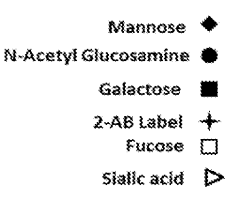
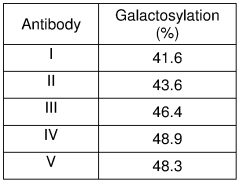
Process of obtaining glycoprotein composition with increased galactosylation content
PatentWO2014170866A2
Innovation
- A cell culture process involving culturing cells at a first temperature for a period, followed by a temperature shift to a second temperature with a pCO2 greater than 70 mmHg, and harvesting at suitable viability, which may include adding a feed medium, to increase the percentage of galactosylated glycans in the glycoprotein composition.

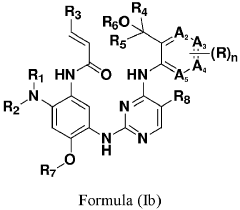
Erbb/BTK inhibitors
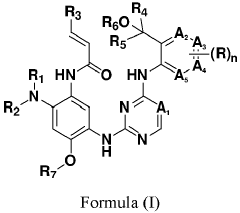
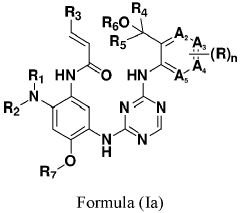
PatentPendingEP4356975A2
Innovation
- Development of compounds represented by Formula (I) and its pharmaceutically acceptable salts, esters, hydrates, and stereoisomers, which are used in pharmaceutical compositions to inhibit ErbB family kinases and BTK, particularly targeting mutant forms to enhance therapeutic efficacy.

Glycomics in Drug Development
Glycomics, the comprehensive study of glycans in biological systems, has emerged as a crucial field in drug development. The intricate structures of glycans, including their geometric isomers, play a significant role in determining their functions and interactions with potential drug molecules.
In the pharmaceutical industry, glycomics has become an essential tool for identifying new drug targets, optimizing drug delivery, and improving therapeutic efficacy. The structural diversity of glycans, influenced by geometric isomers, offers unique opportunities for developing highly specific and effective drugs.
One of the key applications of glycomics in drug development is the identification of disease-specific glycan signatures. These signatures can serve as biomarkers for early disease detection and monitoring treatment progress. By understanding how geometric isomers impact glycan structure, researchers can develop more accurate diagnostic tools and personalized treatment strategies.
Glycan-based drug design is another area where glycomics plays a crucial role. The three-dimensional arrangement of glycan structures, influenced by geometric isomers, affects their binding properties to target molecules. This knowledge enables the development of drugs that can selectively interact with specific glycan structures, potentially reducing side effects and improving therapeutic outcomes.
Furthermore, glycomics has revolutionized the field of biopharmaceuticals, particularly in the production and quality control of glycoprotein-based drugs. The precise control of glycan structures, including their geometric isomers, is essential for maintaining the stability, efficacy, and safety of these complex biologics.
The impact of geometric isomers on glycan structure and function also has implications for drug metabolism and pharmacokinetics. The spatial arrangement of glycan structures can influence how drugs are processed in the body, affecting their absorption, distribution, and elimination. This knowledge is crucial for optimizing drug formulations and dosing regimens.
In vaccine development, glycomics has opened new avenues for creating more effective and targeted immunizations. By understanding the role of geometric isomers in glycan recognition by the immune system, researchers can design vaccines that elicit stronger and more specific immune responses.
As the field of glycomics continues to advance, it is expected to play an increasingly important role in drug discovery and development. The integration of glycomics with other omics technologies and artificial intelligence is likely to accelerate the identification of novel drug targets and the development of more effective therapeutic strategies.
In the pharmaceutical industry, glycomics has become an essential tool for identifying new drug targets, optimizing drug delivery, and improving therapeutic efficacy. The structural diversity of glycans, influenced by geometric isomers, offers unique opportunities for developing highly specific and effective drugs.
One of the key applications of glycomics in drug development is the identification of disease-specific glycan signatures. These signatures can serve as biomarkers for early disease detection and monitoring treatment progress. By understanding how geometric isomers impact glycan structure, researchers can develop more accurate diagnostic tools and personalized treatment strategies.
Glycan-based drug design is another area where glycomics plays a crucial role. The three-dimensional arrangement of glycan structures, influenced by geometric isomers, affects their binding properties to target molecules. This knowledge enables the development of drugs that can selectively interact with specific glycan structures, potentially reducing side effects and improving therapeutic outcomes.
Furthermore, glycomics has revolutionized the field of biopharmaceuticals, particularly in the production and quality control of glycoprotein-based drugs. The precise control of glycan structures, including their geometric isomers, is essential for maintaining the stability, efficacy, and safety of these complex biologics.
The impact of geometric isomers on glycan structure and function also has implications for drug metabolism and pharmacokinetics. The spatial arrangement of glycan structures can influence how drugs are processed in the body, affecting their absorption, distribution, and elimination. This knowledge is crucial for optimizing drug formulations and dosing regimens.
In vaccine development, glycomics has opened new avenues for creating more effective and targeted immunizations. By understanding the role of geometric isomers in glycan recognition by the immune system, researchers can design vaccines that elicit stronger and more specific immune responses.
As the field of glycomics continues to advance, it is expected to play an increasingly important role in drug discovery and development. The integration of glycomics with other omics technologies and artificial intelligence is likely to accelerate the identification of novel drug targets and the development of more effective therapeutic strategies.
Glycan Informatics Advances
Recent advancements in glycan informatics have revolutionized our understanding of glycan structure and function, particularly in relation to geometric isomers. These developments have significantly enhanced our ability to analyze, predict, and manipulate glycan structures with unprecedented precision.
One of the key areas of progress is in the development of sophisticated algorithms for glycan structure prediction. These algorithms now incorporate geometric isomer considerations, allowing for more accurate modeling of three-dimensional glycan structures. This has led to improved predictions of glycan-protein interactions and their functional implications.
Machine learning approaches have also been instrumental in advancing glycan informatics. By leveraging large datasets of known glycan structures and their associated functions, these methods can now predict the impact of specific geometric isomers on glycan properties with high accuracy. This has proven particularly valuable in the field of glycoengineering, where precise control over glycan structure is crucial.
High-throughput glycan sequencing technologies have benefited greatly from informatics advances. New computational tools can now rapidly process and analyze complex glycan mixtures, distinguishing between geometric isomers that were previously indistinguishable. This has opened up new possibilities for glycomics research and biomarker discovery.
Glycan databases have also evolved to incorporate detailed information on geometric isomers. These databases now provide researchers with comprehensive resources for exploring the relationships between glycan structure, including isomeric forms, and their biological functions. This has facilitated more targeted and efficient glycan research across various fields.
Molecular dynamics simulations have been enhanced to better account for the flexibility and conformational changes of glycans, including the behavior of different geometric isomers. These simulations provide valuable insights into how isomeric differences can affect glycan-protein interactions and overall glycan function in biological systems.
The integration of glycan informatics with other -omics fields has led to a more holistic understanding of biological systems. By combining glycomics data with genomics, proteomics, and metabolomics information, researchers can now paint a more complete picture of how geometric isomers influence cellular processes and disease states.
One of the key areas of progress is in the development of sophisticated algorithms for glycan structure prediction. These algorithms now incorporate geometric isomer considerations, allowing for more accurate modeling of three-dimensional glycan structures. This has led to improved predictions of glycan-protein interactions and their functional implications.
Machine learning approaches have also been instrumental in advancing glycan informatics. By leveraging large datasets of known glycan structures and their associated functions, these methods can now predict the impact of specific geometric isomers on glycan properties with high accuracy. This has proven particularly valuable in the field of glycoengineering, where precise control over glycan structure is crucial.
High-throughput glycan sequencing technologies have benefited greatly from informatics advances. New computational tools can now rapidly process and analyze complex glycan mixtures, distinguishing between geometric isomers that were previously indistinguishable. This has opened up new possibilities for glycomics research and biomarker discovery.
Glycan databases have also evolved to incorporate detailed information on geometric isomers. These databases now provide researchers with comprehensive resources for exploring the relationships between glycan structure, including isomeric forms, and their biological functions. This has facilitated more targeted and efficient glycan research across various fields.
Molecular dynamics simulations have been enhanced to better account for the flexibility and conformational changes of glycans, including the behavior of different geometric isomers. These simulations provide valuable insights into how isomeric differences can affect glycan-protein interactions and overall glycan function in biological systems.
The integration of glycan informatics with other -omics fields has led to a more holistic understanding of biological systems. By combining glycomics data with genomics, proteomics, and metabolomics information, researchers can now paint a more complete picture of how geometric isomers influence cellular processes and disease states.
Unlock deeper insights with Patsnap Eureka Quick Research — get a full tech report to explore trends and direct your research. Try now!
Generate Your Research Report Instantly with AI Agent
Supercharge your innovation with Patsnap Eureka AI Agent Platform!