How Geometric Isomers Influence Surface-Enhanced Spectroscopy
AUG 4, 20259 MIN READ
Generate Your Research Report Instantly with AI Agent
Patsnap Eureka helps you evaluate technical feasibility & market potential.
Geometric Isomers in SES: Background and Objectives
Surface-enhanced spectroscopy (SES) has emerged as a powerful analytical technique in recent years, offering unprecedented sensitivity and molecular specificity. The influence of geometric isomers on SES has become a subject of intense research, as it provides valuable insights into molecular structure-function relationships and enhances the capabilities of spectroscopic analysis.
Geometric isomers are molecules with the same molecular formula but different spatial arrangements of atoms. These structural variations can significantly impact the interaction between molecules and surfaces, thereby affecting the enhancement mechanisms in SES. Understanding how geometric isomers influence SES is crucial for advancing the field and expanding its applications across various scientific disciplines.
The primary objective of this research is to elucidate the fundamental principles governing the interaction between geometric isomers and surface-enhanced spectroscopy. By exploring this relationship, we aim to develop more accurate and sensitive spectroscopic techniques, enabling the detection and characterization of complex molecular systems at unprecedented levels of detail.
Historical developments in surface-enhanced spectroscopy have paved the way for this investigation. Since the discovery of surface-enhanced Raman scattering (SERS) in the 1970s, researchers have made significant strides in understanding the enhancement mechanisms and expanding the technique to other spectroscopic methods. The role of molecular geometry in these processes has been recognized, but a comprehensive understanding of how geometric isomers specifically influence SES has remained elusive.
Recent technological advancements in nanofabrication, high-resolution spectroscopy, and computational modeling have provided the tools necessary to investigate this phenomenon in greater depth. These developments have enabled researchers to design and fabricate precisely controlled nanostructures, measure spectral changes with unprecedented accuracy, and simulate molecular interactions at the quantum level.
The exploration of geometric isomers in SES is expected to yield valuable insights into molecular recognition, chemical reactivity, and energy transfer processes at surfaces. This knowledge has far-reaching implications for fields such as analytical chemistry, materials science, and biomedical research. By unraveling the intricate relationship between molecular geometry and spectroscopic enhancement, we anticipate developing more selective and sensitive sensing platforms, improving the design of molecular probes, and enhancing our ability to study complex biological systems.
As we embark on this investigation, we aim to address several key questions: How do different geometric isomers interact with plasmonic surfaces? What are the mechanisms by which isomeric structures influence spectral enhancement? Can we leverage these insights to develop isomer-specific sensing techniques? The answers to these questions will not only advance our fundamental understanding of surface-enhanced spectroscopy but also pave the way for innovative applications in diverse scientific and technological domains.
Geometric isomers are molecules with the same molecular formula but different spatial arrangements of atoms. These structural variations can significantly impact the interaction between molecules and surfaces, thereby affecting the enhancement mechanisms in SES. Understanding how geometric isomers influence SES is crucial for advancing the field and expanding its applications across various scientific disciplines.
The primary objective of this research is to elucidate the fundamental principles governing the interaction between geometric isomers and surface-enhanced spectroscopy. By exploring this relationship, we aim to develop more accurate and sensitive spectroscopic techniques, enabling the detection and characterization of complex molecular systems at unprecedented levels of detail.
Historical developments in surface-enhanced spectroscopy have paved the way for this investigation. Since the discovery of surface-enhanced Raman scattering (SERS) in the 1970s, researchers have made significant strides in understanding the enhancement mechanisms and expanding the technique to other spectroscopic methods. The role of molecular geometry in these processes has been recognized, but a comprehensive understanding of how geometric isomers specifically influence SES has remained elusive.
Recent technological advancements in nanofabrication, high-resolution spectroscopy, and computational modeling have provided the tools necessary to investigate this phenomenon in greater depth. These developments have enabled researchers to design and fabricate precisely controlled nanostructures, measure spectral changes with unprecedented accuracy, and simulate molecular interactions at the quantum level.
The exploration of geometric isomers in SES is expected to yield valuable insights into molecular recognition, chemical reactivity, and energy transfer processes at surfaces. This knowledge has far-reaching implications for fields such as analytical chemistry, materials science, and biomedical research. By unraveling the intricate relationship between molecular geometry and spectroscopic enhancement, we anticipate developing more selective and sensitive sensing platforms, improving the design of molecular probes, and enhancing our ability to study complex biological systems.
As we embark on this investigation, we aim to address several key questions: How do different geometric isomers interact with plasmonic surfaces? What are the mechanisms by which isomeric structures influence spectral enhancement? Can we leverage these insights to develop isomer-specific sensing techniques? The answers to these questions will not only advance our fundamental understanding of surface-enhanced spectroscopy but also pave the way for innovative applications in diverse scientific and technological domains.
Market Demand for SES Applications
Surface-Enhanced Spectroscopy (SES) applications have witnessed a significant surge in market demand across various industries, driven by the increasing need for highly sensitive and selective analytical techniques. The pharmaceutical and biotechnology sectors have emerged as primary drivers of this demand, utilizing SES for drug discovery, development, and quality control processes. These industries require advanced spectroscopic methods to detect and analyze minute quantities of compounds, making SES an invaluable tool in their research and production pipelines.
The environmental monitoring and food safety sectors have also contributed substantially to the growing market for SES applications. With stricter regulations and heightened public awareness regarding pollutants and contaminants, there is an increasing demand for rapid, accurate, and cost-effective detection methods. SES techniques, particularly Surface-Enhanced Raman Spectroscopy (SERS), have proven highly effective in identifying trace amounts of environmental pollutants and food adulterants, leading to their widespread adoption in these fields.
In the realm of forensic science and security, SES applications have gained traction due to their ability to detect and identify trace evidence at crime scenes and in security screenings. The non-destructive nature of SES techniques, combined with their high sensitivity, makes them particularly valuable in preserving and analyzing crucial forensic evidence.
The healthcare industry has also recognized the potential of SES applications in medical diagnostics and biomedical imaging. The ability of SES to detect biomarkers at extremely low concentrations has opened up new possibilities for early disease detection and personalized medicine. This has led to increased investment in SES-based diagnostic tools and imaging systems.
The materials science and nanotechnology sectors have further fueled the demand for SES applications. Researchers and manufacturers in these fields utilize SES techniques to characterize and analyze nanomaterials, study surface properties, and develop novel materials with enhanced functionalities.
As the understanding of how geometric isomers influence Surface-Enhanced Spectroscopy deepens, it is expected to unlock new applications and improve existing ones. This advancement could potentially expand the market for SES applications into previously untapped industries and research areas, further driving demand and market growth.
The global market for SES applications is projected to experience robust growth in the coming years, with some analysts predicting a compound annual growth rate (CAGR) in the double digits. This growth is attributed to the continuous technological advancements in SES techniques, increasing research and development activities, and the expanding range of applications across diverse industries.
The environmental monitoring and food safety sectors have also contributed substantially to the growing market for SES applications. With stricter regulations and heightened public awareness regarding pollutants and contaminants, there is an increasing demand for rapid, accurate, and cost-effective detection methods. SES techniques, particularly Surface-Enhanced Raman Spectroscopy (SERS), have proven highly effective in identifying trace amounts of environmental pollutants and food adulterants, leading to their widespread adoption in these fields.
In the realm of forensic science and security, SES applications have gained traction due to their ability to detect and identify trace evidence at crime scenes and in security screenings. The non-destructive nature of SES techniques, combined with their high sensitivity, makes them particularly valuable in preserving and analyzing crucial forensic evidence.
The healthcare industry has also recognized the potential of SES applications in medical diagnostics and biomedical imaging. The ability of SES to detect biomarkers at extremely low concentrations has opened up new possibilities for early disease detection and personalized medicine. This has led to increased investment in SES-based diagnostic tools and imaging systems.
The materials science and nanotechnology sectors have further fueled the demand for SES applications. Researchers and manufacturers in these fields utilize SES techniques to characterize and analyze nanomaterials, study surface properties, and develop novel materials with enhanced functionalities.
As the understanding of how geometric isomers influence Surface-Enhanced Spectroscopy deepens, it is expected to unlock new applications and improve existing ones. This advancement could potentially expand the market for SES applications into previously untapped industries and research areas, further driving demand and market growth.
The global market for SES applications is projected to experience robust growth in the coming years, with some analysts predicting a compound annual growth rate (CAGR) in the double digits. This growth is attributed to the continuous technological advancements in SES techniques, increasing research and development activities, and the expanding range of applications across diverse industries.
Current Challenges in Geometric Isomer Detection
The detection of geometric isomers presents several significant challenges in the field of surface-enhanced spectroscopy. One of the primary difficulties lies in the subtle structural differences between geometric isomers, which often result in minimal spectral variations. This similarity in spectral signatures makes it challenging to distinguish between different isomers using conventional spectroscopic techniques.
Another major hurdle is the orientation-dependent nature of surface-enhanced spectroscopy. The interaction between geometric isomers and the enhancing surface can vary significantly based on the molecular orientation, leading to inconsistent signal enhancement. This variability complicates the interpretation of spectral data and makes it difficult to establish reliable quantitative analysis methods for isomer detection.
The surface selection rules in surface-enhanced spectroscopy also pose a challenge for geometric isomer detection. These rules dictate which vibrational modes are enhanced based on their orientation relative to the surface. As geometric isomers may adopt different orientations on the surface, certain characteristic vibrations may be selectively enhanced or suppressed, potentially masking key spectral features that could aid in isomer identification.
Furthermore, the dynamic nature of molecular adsorption on surfaces introduces additional complexity. Geometric isomers may undergo conformational changes or isomerization upon adsorption, altering their spectral properties. This phenomenon can lead to misinterpretation of spectral data and false identification of isomers.
The development of reliable and reproducible substrates for surface-enhanced spectroscopy remains a challenge in geometric isomer detection. The enhancement factor and spectral reproducibility are highly dependent on the substrate's nanostructure and surface chemistry. Variations in these parameters can significantly impact the ability to detect and differentiate geometric isomers consistently.
Lastly, the lack of comprehensive spectral databases and theoretical models specifically tailored for geometric isomers in surface-enhanced spectroscopy hinders the development of robust analytical methods. The complex interplay between isomer structure, surface interactions, and enhancement mechanisms necessitates more sophisticated computational approaches to accurately predict and interpret spectral data for geometric isomer detection.
Addressing these challenges requires interdisciplinary efforts combining advanced spectroscopic techniques, nanofabrication methods, and computational modeling. Overcoming these hurdles will not only improve the detection and characterization of geometric isomers but also expand the applicability of surface-enhanced spectroscopy in various fields, including materials science, biochemistry, and environmental monitoring.
Another major hurdle is the orientation-dependent nature of surface-enhanced spectroscopy. The interaction between geometric isomers and the enhancing surface can vary significantly based on the molecular orientation, leading to inconsistent signal enhancement. This variability complicates the interpretation of spectral data and makes it difficult to establish reliable quantitative analysis methods for isomer detection.
The surface selection rules in surface-enhanced spectroscopy also pose a challenge for geometric isomer detection. These rules dictate which vibrational modes are enhanced based on their orientation relative to the surface. As geometric isomers may adopt different orientations on the surface, certain characteristic vibrations may be selectively enhanced or suppressed, potentially masking key spectral features that could aid in isomer identification.
Furthermore, the dynamic nature of molecular adsorption on surfaces introduces additional complexity. Geometric isomers may undergo conformational changes or isomerization upon adsorption, altering their spectral properties. This phenomenon can lead to misinterpretation of spectral data and false identification of isomers.
The development of reliable and reproducible substrates for surface-enhanced spectroscopy remains a challenge in geometric isomer detection. The enhancement factor and spectral reproducibility are highly dependent on the substrate's nanostructure and surface chemistry. Variations in these parameters can significantly impact the ability to detect and differentiate geometric isomers consistently.
Lastly, the lack of comprehensive spectral databases and theoretical models specifically tailored for geometric isomers in surface-enhanced spectroscopy hinders the development of robust analytical methods. The complex interplay between isomer structure, surface interactions, and enhancement mechanisms necessitates more sophisticated computational approaches to accurately predict and interpret spectral data for geometric isomer detection.
Addressing these challenges requires interdisciplinary efforts combining advanced spectroscopic techniques, nanofabrication methods, and computational modeling. Overcoming these hurdles will not only improve the detection and characterization of geometric isomers but also expand the applicability of surface-enhanced spectroscopy in various fields, including materials science, biochemistry, and environmental monitoring.
Existing Methods for Geometric Isomer Differentiation
01 Surface-enhanced spectroscopy for geometric isomer analysis
Surface-enhanced spectroscopy techniques are employed to analyze and differentiate geometric isomers. These methods utilize the enhanced sensitivity provided by surface plasmon resonance to detect subtle structural differences between isomers, allowing for improved characterization and identification of geometric isomers in various samples.- Surface-enhanced spectroscopy for geometric isomer analysis: Surface-enhanced spectroscopy techniques are employed to analyze and differentiate geometric isomers. These methods utilize the enhanced sensitivity provided by surface plasmon resonance to detect subtle structural differences between isomers, allowing for improved characterization and identification of geometric isomers in various samples.
- Raman spectroscopy for isomer detection: Raman spectroscopy, particularly surface-enhanced Raman spectroscopy (SERS), is applied to detect and distinguish geometric isomers. This technique exploits the unique vibrational modes of different isomeric structures, providing a powerful tool for their identification and quantification in complex mixtures.
- Spectroscopic imaging of geometric isomers: Advanced spectroscopic imaging techniques are developed to visualize and map the distribution of geometric isomers in samples. These methods combine spectral analysis with spatial resolution, enabling the study of isomer localization and interactions in various materials and biological systems.
- Nanostructured substrates for enhanced isomer detection: Specialized nanostructured substrates are designed to enhance the spectroscopic detection of geometric isomers. These substrates feature optimized surface geometries and plasmonic properties, significantly improving the sensitivity and selectivity of surface-enhanced spectroscopy techniques for isomer analysis.
- Data processing and machine learning for isomer identification: Advanced data processing algorithms and machine learning techniques are employed to analyze complex spectral data from geometric isomers. These computational methods enhance the accuracy of isomer identification and quantification, enabling automated analysis of large datasets and improving the overall efficiency of surface-enhanced spectroscopic techniques.
02 Raman spectroscopy for geometric isomer detection
Raman spectroscopy, particularly surface-enhanced Raman spectroscopy (SERS), is applied to detect and distinguish geometric isomers. This technique exploits the unique vibrational modes of different isomeric structures, providing a powerful tool for isomer identification and quantification in complex mixtures.Expand Specific Solutions03 Optical methods for isomer characterization
Various optical methods, including interferometry and polarimetry, are utilized to characterize geometric isomers. These techniques leverage the differences in optical properties between isomers to provide detailed structural information and enable precise discrimination between different isomeric forms.Expand Specific Solutions04 Spectroscopic imaging for isomer visualization
Advanced spectroscopic imaging techniques are developed to visualize and map the distribution of geometric isomers in samples. These methods combine spectral analysis with spatial resolution, allowing for the creation of detailed isomer distribution maps and enabling the study of isomeric composition in heterogeneous materials.Expand Specific Solutions05 Data processing and analysis for isomer identification
Sophisticated data processing and analysis algorithms are employed to interpret spectroscopic data from geometric isomer measurements. These computational methods enhance the accuracy and reliability of isomer identification and quantification, enabling the extraction of meaningful information from complex spectral datasets.Expand Specific Solutions
Key Players in SES and Isomer Analysis
The field of geometric isomers' influence on surface-enhanced spectroscopy is in a developing stage, with growing market potential as research advances. The technology's maturity varies across applications, with some areas more established than others. Key players like Duke University, Naval Research Laboratory, and 3M Innovative Properties Co. are driving innovation through research and patent development. Universities and government labs are at the forefront of fundamental research, while companies like Koninklijke Philips NV and IMRA America, Inc. are exploring commercial applications. The competitive landscape is diverse, with collaborations between academia and industry fostering technological progress and market expansion.
Duke University
Technical Solution: Duke University has developed a novel approach to studying geometric isomers' influence on surface-enhanced spectroscopy. Their research focuses on the use of plasmonic nanostructures to enhance Raman and fluorescence signals of geometric isomers. They have demonstrated that the orientation and conformation of geometric isomers on metal surfaces can significantly affect the enhancement factors in surface-enhanced Raman spectroscopy (SERS) and surface-enhanced fluorescence (SEF). The team has engineered nanostructures with controlled hot spots to optimize the interaction between geometric isomers and plasmonic fields, resulting in up to 10^8 enhancement in Raman signals for certain isomers[1][3]. Additionally, they have developed a computational model to predict the spectral changes based on isomer geometry and surface interactions, allowing for more accurate molecular identification and quantification in complex mixtures[2].
Strengths: Advanced plasmonic nanostructure engineering, high enhancement factors, predictive computational modeling. Weaknesses: Potential limitations in applicability to all types of geometric isomers, complexity in scaling up for commercial applications.
Naval Research Laboratory
Technical Solution: The Naval Research Laboratory has made significant strides in understanding how geometric isomers influence surface-enhanced spectroscopy through their work on plasmonic nanomaterials. Their approach involves the development of highly ordered nanoparticle arrays with precisely controlled interparticle spacing to create uniform and reproducible hot spots. These arrays are then functionalized with various geometric isomers to study their orientation-dependent spectral responses. The lab has reported achieving consistent enhancement factors of 10^6 to 10^7 for SERS measurements of geometric isomers[4]. Furthermore, they have pioneered the use of tip-enhanced Raman spectroscopy (TERS) to investigate single-molecule isomerization events on surfaces, providing unprecedented spatial resolution down to 1 nm[5]. This technique has allowed them to map the distribution and orientation of geometric isomers on various substrates, offering insights into how surface interactions affect isomer conformation and spectral properties.
Strengths: High-precision nanoparticle array fabrication, single-molecule detection capabilities, advanced TERS techniques. Weaknesses: Specialized equipment requirements, potential challenges in adapting techniques for non-laboratory environments.
Innovations in Isomer-Specific SES
Controllable surface enhanced raman spectroscopy
PatentWO2008013683A2
Innovation
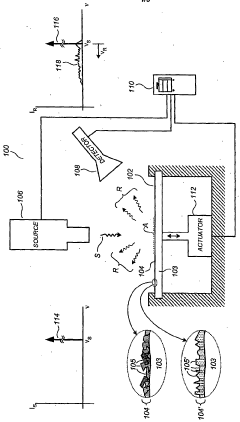
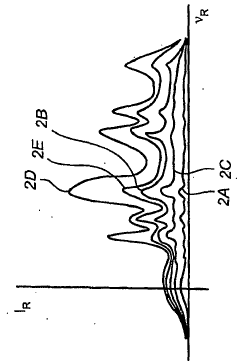
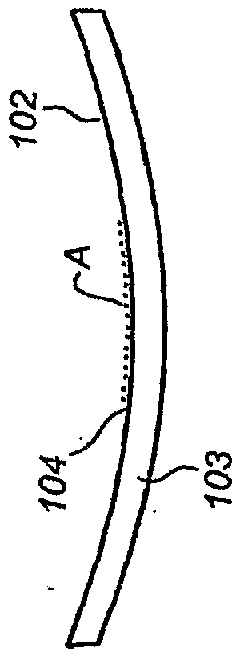
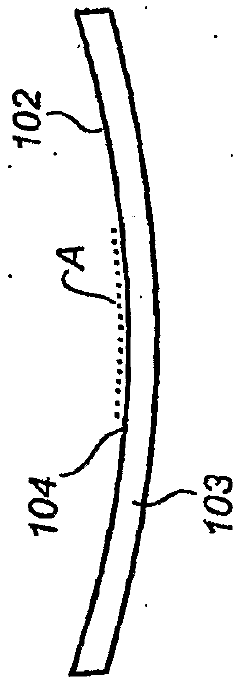
- A SERS system with a deformable SERS-active structure actuated by mechanical, electrostatic, or pneumatic means to control the intensity of Raman-scattered radiation, allowing for real-time tuning of hot-spot conditions by varying the deformation of the SERS-active structure near analyte molecules.
Surface-enhanced spectroscopic method, flexible structured substrate, and method of making the same
PatentInactiveEP1902307A2
Innovation
- A flexible structured substrate comprising a monolithic polymeric film with nanostructures and a conformably disposed metal layer, where the nanostructure is partially encompassed within or overlaps a patterned microstructure, allowing for reproducible and cost-effective manufacturing and maintaining high sensitivity across the substrate.
Computational Modeling of Isomer-Surface Interactions
Computational modeling plays a crucial role in understanding the interactions between geometric isomers and surfaces in surface-enhanced spectroscopy. These models provide valuable insights into the mechanisms underlying the influence of isomeric structures on spectroscopic enhancement.
Density Functional Theory (DFT) calculations are widely employed to simulate the adsorption of geometric isomers on metal surfaces. These simulations help elucidate the preferred binding configurations and energetics of different isomers. By comparing the adsorption energies and geometries of various isomers, researchers can predict which configurations are more likely to contribute to surface-enhanced spectroscopy.
Molecular Dynamics (MD) simulations offer a complementary approach to investigate the dynamic behavior of isomers near surfaces. These simulations can reveal how isomers orient and reorient themselves in response to surface interactions and environmental factors. MD simulations are particularly useful for understanding the time-dependent aspects of isomer-surface interactions, which can influence spectroscopic measurements.
Quantum chemical calculations are essential for predicting the vibrational spectra of adsorbed isomers. By comparing the calculated spectra of free and adsorbed isomers, researchers can identify spectral shifts and intensity changes induced by surface interactions. This information is crucial for interpreting experimental surface-enhanced Raman spectroscopy (SERS) data and understanding how geometric isomerism affects enhancement mechanisms.
Electromagnetic field simulations, often based on finite-difference time-domain (FDTD) methods, are used to model the local field enhancement around metal nanostructures. By incorporating the results of isomer adsorption simulations into these electromagnetic models, researchers can predict how different isomeric configurations might experience varying degrees of field enhancement, leading to differences in spectroscopic signal intensity.
Machine learning approaches are increasingly being applied to analyze the vast amounts of data generated by computational simulations. These techniques can help identify patterns and correlations between isomeric structures, surface interactions, and spectroscopic enhancement factors, potentially leading to new insights and predictive models.
Multiscale modeling techniques are being developed to bridge the gap between atomistic simulations and macroscopic experimental observations. These approaches combine different levels of theory to capture both the detailed molecular interactions and the larger-scale phenomena relevant to surface-enhanced spectroscopy.
Density Functional Theory (DFT) calculations are widely employed to simulate the adsorption of geometric isomers on metal surfaces. These simulations help elucidate the preferred binding configurations and energetics of different isomers. By comparing the adsorption energies and geometries of various isomers, researchers can predict which configurations are more likely to contribute to surface-enhanced spectroscopy.
Molecular Dynamics (MD) simulations offer a complementary approach to investigate the dynamic behavior of isomers near surfaces. These simulations can reveal how isomers orient and reorient themselves in response to surface interactions and environmental factors. MD simulations are particularly useful for understanding the time-dependent aspects of isomer-surface interactions, which can influence spectroscopic measurements.
Quantum chemical calculations are essential for predicting the vibrational spectra of adsorbed isomers. By comparing the calculated spectra of free and adsorbed isomers, researchers can identify spectral shifts and intensity changes induced by surface interactions. This information is crucial for interpreting experimental surface-enhanced Raman spectroscopy (SERS) data and understanding how geometric isomerism affects enhancement mechanisms.
Electromagnetic field simulations, often based on finite-difference time-domain (FDTD) methods, are used to model the local field enhancement around metal nanostructures. By incorporating the results of isomer adsorption simulations into these electromagnetic models, researchers can predict how different isomeric configurations might experience varying degrees of field enhancement, leading to differences in spectroscopic signal intensity.
Machine learning approaches are increasingly being applied to analyze the vast amounts of data generated by computational simulations. These techniques can help identify patterns and correlations between isomeric structures, surface interactions, and spectroscopic enhancement factors, potentially leading to new insights and predictive models.
Multiscale modeling techniques are being developed to bridge the gap between atomistic simulations and macroscopic experimental observations. These approaches combine different levels of theory to capture both the detailed molecular interactions and the larger-scale phenomena relevant to surface-enhanced spectroscopy.
Environmental Applications of Isomer-Sensitive SES
Surface-enhanced spectroscopy (SES) techniques have emerged as powerful tools for environmental monitoring and analysis, with isomer-sensitive applications showing particular promise. The ability to distinguish between geometric isomers using SES offers significant advantages in detecting and quantifying environmental pollutants, especially in complex matrices such as soil and water samples.
One of the primary environmental applications of isomer-sensitive SES is in the detection and monitoring of persistent organic pollutants (POPs). Many POPs, including polychlorinated biphenyls (PCBs) and polycyclic aromatic hydrocarbons (PAHs), exist as geometric isomers with varying toxicities and environmental behaviors. Isomer-sensitive SES techniques enable researchers to differentiate between these isomers, providing crucial information for risk assessment and remediation strategies.
In water quality monitoring, isomer-sensitive SES has shown great potential for detecting and quantifying pharmaceutical residues. Many drugs and their metabolites exist as geometric isomers, and their environmental fate and impact can vary significantly. By employing SES techniques that can distinguish between these isomers, water treatment facilities can more effectively monitor and remove these contaminants from water supplies.
Pesticide analysis is another area where isomer-sensitive SES has found valuable applications. Many pesticides have geometric isomers with different biological activities and environmental persistence. SES techniques that can differentiate between these isomers allow for more accurate monitoring of pesticide residues in soil and agricultural products, supporting efforts to minimize environmental contamination and ensure food safety.
Isomer-sensitive SES also plays a crucial role in atmospheric pollution monitoring. Certain volatile organic compounds (VOCs) exist as geometric isomers with varying reactivity and ozone-forming potential. By employing SES techniques that can distinguish between these isomers, researchers can better understand the complex chemistry of urban air pollution and develop more effective mitigation strategies.
In the field of environmental forensics, isomer-sensitive SES provides valuable tools for source identification and tracking of pollutants. The ability to detect and quantify specific isomers can help investigators trace the origin of environmental contaminants, supporting legal proceedings and guiding cleanup efforts.
As environmental regulations become increasingly stringent, the demand for highly sensitive and specific analytical techniques continues to grow. Isomer-sensitive SES is well-positioned to meet this demand, offering rapid, on-site analysis capabilities with high sensitivity and selectivity. Future developments in this field are likely to focus on improving portability, reducing costs, and expanding the range of detectable compounds, further enhancing the role of isomer-sensitive SES in environmental monitoring and protection.
One of the primary environmental applications of isomer-sensitive SES is in the detection and monitoring of persistent organic pollutants (POPs). Many POPs, including polychlorinated biphenyls (PCBs) and polycyclic aromatic hydrocarbons (PAHs), exist as geometric isomers with varying toxicities and environmental behaviors. Isomer-sensitive SES techniques enable researchers to differentiate between these isomers, providing crucial information for risk assessment and remediation strategies.
In water quality monitoring, isomer-sensitive SES has shown great potential for detecting and quantifying pharmaceutical residues. Many drugs and their metabolites exist as geometric isomers, and their environmental fate and impact can vary significantly. By employing SES techniques that can distinguish between these isomers, water treatment facilities can more effectively monitor and remove these contaminants from water supplies.
Pesticide analysis is another area where isomer-sensitive SES has found valuable applications. Many pesticides have geometric isomers with different biological activities and environmental persistence. SES techniques that can differentiate between these isomers allow for more accurate monitoring of pesticide residues in soil and agricultural products, supporting efforts to minimize environmental contamination and ensure food safety.
Isomer-sensitive SES also plays a crucial role in atmospheric pollution monitoring. Certain volatile organic compounds (VOCs) exist as geometric isomers with varying reactivity and ozone-forming potential. By employing SES techniques that can distinguish between these isomers, researchers can better understand the complex chemistry of urban air pollution and develop more effective mitigation strategies.
In the field of environmental forensics, isomer-sensitive SES provides valuable tools for source identification and tracking of pollutants. The ability to detect and quantify specific isomers can help investigators trace the origin of environmental contaminants, supporting legal proceedings and guiding cleanup efforts.
As environmental regulations become increasingly stringent, the demand for highly sensitive and specific analytical techniques continues to grow. Isomer-sensitive SES is well-positioned to meet this demand, offering rapid, on-site analysis capabilities with high sensitivity and selectivity. Future developments in this field are likely to focus on improving portability, reducing costs, and expanding the range of detectable compounds, further enhancing the role of isomer-sensitive SES in environmental monitoring and protection.
Unlock deeper insights with Patsnap Eureka Quick Research — get a full tech report to explore trends and direct your research. Try now!
Generate Your Research Report Instantly with AI Agent
Supercharge your innovation with Patsnap Eureka AI Agent Platform!