
How LDAC Revolutionizes Television Audio Streaming?
JUL 4, 20258 MIN READ
Generate Your Research Report Instantly with AI Agent
Patsnap Eureka helps you evaluate technical feasibility & market potential.
LDAC Audio Evolution
LDAC, developed by Sony in 2015, represents a significant leap in audio streaming technology, particularly for television applications. This codec has evolved from its initial introduction to become a cornerstone in high-quality wireless audio transmission. The evolution of LDAC is characterized by continuous improvements in data transfer rates, sound quality, and compatibility with various devices.
In its early stages, LDAC was primarily focused on mobile audio applications, offering a maximum transfer rate of 990 kbps. This was a substantial improvement over existing Bluetooth codecs, providing near CD-quality audio over wireless connections. As the technology matured, Sony expanded its capabilities to support higher bitrates and a wider range of audio formats.
The adaptation of LDAC for television audio streaming marked a pivotal moment in its evolution. This transition addressed the growing demand for high-fidelity audio in home entertainment systems, where traditional Bluetooth codecs often fell short. LDAC's ability to transmit audio at up to 24-bit/96kHz resolution became particularly valuable in this context, allowing for a more immersive and detailed soundstage in TV audio.
A key milestone in LDAC's evolution was its adoption by the Bluetooth Special Interest Group (SIG) in 2017. This integration into the Bluetooth standard significantly expanded LDAC's reach, making it available to a broader range of device manufacturers and consumers. The move also facilitated better interoperability between different brands and devices, a crucial factor in the fragmented TV and audio equipment market.
Recent developments in LDAC have focused on optimizing its performance for specific use cases in television audio. These include improvements in latency reduction, crucial for maintaining lip-sync in video content, and enhanced stability in challenging wireless environments typical in home settings. The codec has also seen advancements in power efficiency, an important consideration for battery-powered devices like wireless headphones and speakers often used with TVs.
The latest iterations of LDAC have introduced adaptive bitrate technology, allowing the codec to dynamically adjust its data transfer rate based on the wireless connection quality. This feature is particularly beneficial in television applications, where maintaining consistent audio quality is essential for an uninterrupted viewing experience. Additionally, LDAC has expanded its support for multi-channel audio formats, aligning with the trend towards more sophisticated home theater setups.
In its early stages, LDAC was primarily focused on mobile audio applications, offering a maximum transfer rate of 990 kbps. This was a substantial improvement over existing Bluetooth codecs, providing near CD-quality audio over wireless connections. As the technology matured, Sony expanded its capabilities to support higher bitrates and a wider range of audio formats.
The adaptation of LDAC for television audio streaming marked a pivotal moment in its evolution. This transition addressed the growing demand for high-fidelity audio in home entertainment systems, where traditional Bluetooth codecs often fell short. LDAC's ability to transmit audio at up to 24-bit/96kHz resolution became particularly valuable in this context, allowing for a more immersive and detailed soundstage in TV audio.
A key milestone in LDAC's evolution was its adoption by the Bluetooth Special Interest Group (SIG) in 2017. This integration into the Bluetooth standard significantly expanded LDAC's reach, making it available to a broader range of device manufacturers and consumers. The move also facilitated better interoperability between different brands and devices, a crucial factor in the fragmented TV and audio equipment market.
Recent developments in LDAC have focused on optimizing its performance for specific use cases in television audio. These include improvements in latency reduction, crucial for maintaining lip-sync in video content, and enhanced stability in challenging wireless environments typical in home settings. The codec has also seen advancements in power efficiency, an important consideration for battery-powered devices like wireless headphones and speakers often used with TVs.
The latest iterations of LDAC have introduced adaptive bitrate technology, allowing the codec to dynamically adjust its data transfer rate based on the wireless connection quality. This feature is particularly beneficial in television applications, where maintaining consistent audio quality is essential for an uninterrupted viewing experience. Additionally, LDAC has expanded its support for multi-channel audio formats, aligning with the trend towards more sophisticated home theater setups.
TV Audio Market Trends
The television audio market has witnessed significant growth and transformation in recent years, driven by advancements in technology and changing consumer preferences. As viewers increasingly demand immersive and high-quality audio experiences, the market for TV audio solutions has expanded rapidly. This trend is particularly evident in the rise of soundbars and home theater systems, which have become popular alternatives to built-in TV speakers.
The global TV audio market is experiencing steady growth, with a notable shift towards wireless and smart audio solutions. Consumers are increasingly seeking seamless connectivity between their TVs and audio devices, leading to a surge in demand for Bluetooth-enabled soundbars and wireless surround sound systems. This trend aligns with the broader smart home ecosystem, where interconnected devices offer enhanced user experiences and convenience.
Another key trend in the TV audio market is the growing adoption of object-based audio technologies, such as Dolby Atmos and DTS:X. These technologies provide a more immersive audio experience by creating a three-dimensional soundscape, which has become a significant selling point for high-end audio systems and premium televisions. As content creators increasingly produce media with these advanced audio formats, consumer demand for compatible audio equipment continues to rise.
The market is also seeing a shift towards more compact and aesthetically pleasing audio solutions. Slim soundbars and discreet satellite speakers are gaining popularity among consumers who desire improved audio quality without compromising their living space aesthetics. This trend has led to innovations in speaker design and audio processing technologies to deliver powerful sound from smaller form factors.
Voice control and AI integration are emerging as important features in TV audio products. Many manufacturers are incorporating virtual assistants like Amazon Alexa and Google Assistant into their soundbars and audio systems, allowing users to control their TV audio setup and access other smart home functions through voice commands. This integration is part of a broader trend towards more intuitive and hands-free user interfaces in home entertainment systems.
The COVID-19 pandemic has had a notable impact on the TV audio market. With more people spending time at home, there has been an increased focus on enhancing home entertainment experiences. This has led to a surge in sales of high-quality audio equipment as consumers invest in upgrading their home theater setups. The trend towards remote work and online entertainment is likely to have lasting effects on consumer behavior and preferences in the TV audio market.
The global TV audio market is experiencing steady growth, with a notable shift towards wireless and smart audio solutions. Consumers are increasingly seeking seamless connectivity between their TVs and audio devices, leading to a surge in demand for Bluetooth-enabled soundbars and wireless surround sound systems. This trend aligns with the broader smart home ecosystem, where interconnected devices offer enhanced user experiences and convenience.
Another key trend in the TV audio market is the growing adoption of object-based audio technologies, such as Dolby Atmos and DTS:X. These technologies provide a more immersive audio experience by creating a three-dimensional soundscape, which has become a significant selling point for high-end audio systems and premium televisions. As content creators increasingly produce media with these advanced audio formats, consumer demand for compatible audio equipment continues to rise.
The market is also seeing a shift towards more compact and aesthetically pleasing audio solutions. Slim soundbars and discreet satellite speakers are gaining popularity among consumers who desire improved audio quality without compromising their living space aesthetics. This trend has led to innovations in speaker design and audio processing technologies to deliver powerful sound from smaller form factors.
Voice control and AI integration are emerging as important features in TV audio products. Many manufacturers are incorporating virtual assistants like Amazon Alexa and Google Assistant into their soundbars and audio systems, allowing users to control their TV audio setup and access other smart home functions through voice commands. This integration is part of a broader trend towards more intuitive and hands-free user interfaces in home entertainment systems.
The COVID-19 pandemic has had a notable impact on the TV audio market. With more people spending time at home, there has been an increased focus on enhancing home entertainment experiences. This has led to a surge in sales of high-quality audio equipment as consumers invest in upgrading their home theater setups. The trend towards remote work and online entertainment is likely to have lasting effects on consumer behavior and preferences in the TV audio market.
LDAC Technical Challenges
LDAC, while revolutionary in its approach to high-quality audio streaming, faces several technical challenges in its implementation for television audio. One of the primary hurdles is the need for increased bandwidth to transmit the high-resolution audio data. LDAC's ability to stream audio at up to 990 kbps requires a robust and stable wireless connection, which may not always be available in typical home environments where televisions are used.
Another significant challenge lies in the power consumption of devices implementing LDAC technology. The complex encoding and decoding processes required for LDAC's high-bitrate audio transmission can lead to increased power drain, particularly in battery-operated devices such as wireless headphones or portable speakers connected to televisions.
Latency is a critical issue that LDAC must address in the context of television audio streaming. While LDAC offers impressive audio quality, the processing time required for encoding and decoding can introduce noticeable delays between the video and audio, potentially disrupting the viewing experience. This becomes particularly problematic in interactive content or live broadcasts where synchronization is crucial.
Compatibility presents another hurdle for LDAC in the television ecosystem. As a proprietary technology developed by Sony, widespread adoption across different television brands and audio devices may be limited. This fragmentation in the market could slow down the technology's integration into mainstream television audio systems.
The complexity of LDAC's adaptive bitrate system, which adjusts the audio quality based on connection stability, poses challenges in maintaining consistent audio quality during television viewing. Fluctuations in wireless signal strength could lead to noticeable changes in audio fidelity, potentially detracting from the overall viewing experience.
Furthermore, the implementation of LDAC in television systems requires specialized hardware and software integration. This necessitates significant investment from television manufacturers to incorporate the technology, which may impact product costs and potentially slow market adoption.
Lastly, the challenge of educating consumers about the benefits of LDAC technology in television audio streaming remains significant. Many users may not perceive the difference in audio quality or understand the value proposition, especially given the potential increase in product costs or complexity of setup.
Another significant challenge lies in the power consumption of devices implementing LDAC technology. The complex encoding and decoding processes required for LDAC's high-bitrate audio transmission can lead to increased power drain, particularly in battery-operated devices such as wireless headphones or portable speakers connected to televisions.
Latency is a critical issue that LDAC must address in the context of television audio streaming. While LDAC offers impressive audio quality, the processing time required for encoding and decoding can introduce noticeable delays between the video and audio, potentially disrupting the viewing experience. This becomes particularly problematic in interactive content or live broadcasts where synchronization is crucial.
Compatibility presents another hurdle for LDAC in the television ecosystem. As a proprietary technology developed by Sony, widespread adoption across different television brands and audio devices may be limited. This fragmentation in the market could slow down the technology's integration into mainstream television audio systems.
The complexity of LDAC's adaptive bitrate system, which adjusts the audio quality based on connection stability, poses challenges in maintaining consistent audio quality during television viewing. Fluctuations in wireless signal strength could lead to noticeable changes in audio fidelity, potentially detracting from the overall viewing experience.
Furthermore, the implementation of LDAC in television systems requires specialized hardware and software integration. This necessitates significant investment from television manufacturers to incorporate the technology, which may impact product costs and potentially slow market adoption.
Lastly, the challenge of educating consumers about the benefits of LDAC technology in television audio streaming remains significant. Many users may not perceive the difference in audio quality or understand the value proposition, especially given the potential increase in product costs or complexity of setup.
LDAC Implementation
01 LDAC codec implementation for high-quality audio streaming
LDAC is a high-resolution audio codec developed for Bluetooth audio streaming. It enables the transmission of high-quality audio data at higher bitrates compared to standard Bluetooth codecs. LDAC supports various sampling rates and bit depths, allowing for near-lossless audio transmission over Bluetooth connections.- LDAC codec implementation for high-quality audio streaming: LDAC is a high-resolution audio codec developed for Bluetooth audio streaming. It enables the transmission of high-quality audio data over Bluetooth connections, offering better sound quality compared to standard codecs. LDAC supports various bit rates and can adapt to different network conditions to maintain optimal audio performance.
- Audio streaming system architecture and protocols: The architecture for LDAC audio streaming involves components such as audio sources, encoders, transmitters, receivers, and decoders. Specific protocols are implemented to ensure efficient data transmission, synchronization, and error correction. These systems may include features for managing multiple audio streams and devices simultaneously.
- Integration with mobile and wireless devices: LDAC audio streaming technology is integrated into various mobile and wireless devices, including smartphones, tablets, and wireless headphones. This integration involves hardware and software components that enable seamless connectivity and high-quality audio playback across different devices and platforms.
- Audio quality enhancement techniques: Various techniques are employed to enhance the quality of LDAC audio streaming. These may include advanced signal processing algorithms, adaptive bit rate control, and methods for reducing latency and jitter. Such enhancements aim to provide a more immersive and high-fidelity audio experience for users.
- Network optimization for LDAC streaming: Optimizing network performance is crucial for maintaining high-quality LDAC audio streaming. This involves techniques for efficient bandwidth utilization, reducing packet loss, and managing network congestion. Advanced algorithms may be used to adapt the streaming quality based on network conditions and device capabilities.
02 Audio streaming system architecture and protocols
The architecture for LDAC audio streaming involves components such as audio source devices, Bluetooth transmitters, receivers, and playback devices. It includes protocols for device pairing, connection establishment, and data transmission. The system may also incorporate adaptive bitrate selection based on connection quality and device capabilities.Expand Specific Solutions03 Integration with mobile devices and applications
LDAC audio streaming can be integrated into mobile devices and applications, allowing users to stream high-quality audio from their smartphones or tablets to compatible audio devices. This integration may include user interfaces for selecting audio quality settings, managing connected devices, and controlling playback.Expand Specific Solutions04 Compatibility and interoperability with other audio systems
LDAC audio streaming technology can be designed to be compatible with various audio systems and standards. This includes interoperability with other Bluetooth codecs, support for different audio formats, and integration with existing audio processing chains in devices such as smartphones, headphones, and speakers.Expand Specific Solutions05 Power management and optimization for LDAC streaming
Implementing power management techniques for LDAC audio streaming is crucial for mobile devices. This may involve optimizing the encoding and decoding processes, managing Bluetooth radio power consumption, and implementing adaptive power-saving modes based on usage patterns and battery levels.Expand Specific Solutions
Key LDAC Industry Players
The LDAC technology for television audio streaming is in a mature development stage, with significant market potential due to the growing demand for high-quality audio experiences in home entertainment. The market size is expanding rapidly, driven by the increasing adoption of smart TVs and advanced audio systems. Major players like Sony, LG Electronics, and Samsung Electronics are at the forefront of implementing LDAC technology in their products, leveraging their strong positions in the consumer electronics market. Other companies such as Qualcomm and Apple are also contributing to the ecosystem with complementary technologies. The competitive landscape is characterized by ongoing innovation and partnerships among technology providers and device manufacturers to enhance audio streaming capabilities and user experiences.
Samsung Electronics Co., Ltd.
Technical Solution: While Samsung does not use LDAC specifically, it has developed its own Scalable Codec technology for high-quality audio streaming in televisions. The Scalable Codec adapts the bit-rate between 88kbps and 512kbps based on Bluetooth connection quality[6]. Samsung's Q-Symphony technology synchronizes audio from the TV speakers with compatible soundbars, creating an immersive sound experience[7]. The company has also implemented Adaptive Sound+ in its TVs, which analyzes audio signals and optimizes sound quality based on content type[8]. For wireless audio streaming, Samsung utilizes Bluetooth 5.0 technology in its latest TV models, offering improved range and stability compared to previous versions[9].
Strengths: Proprietary audio enhancement technologies, seamless integration with Samsung ecosystem. Weaknesses: Lower maximum bit-rate compared to LDAC, limited compatibility with non-Samsung devices.
QUALCOMM, Inc.
Technical Solution: Qualcomm has made significant strides in television audio streaming with its aptX audio codecs. The aptX Adaptive codec, in particular, offers dynamic bit rate adjustment between 279kbps and 420kbps for 48kHz audio, balancing quality and robustness[13]. Qualcomm's Snapdragon Sound technology integrates various audio innovations, including support for 24-bit/96kHz audio streaming over Bluetooth[14]. The company has also developed the QCC515x series of Bluetooth audio SoCs, which support aptX Adaptive and are designed for use in smart TVs and soundbars[15]. These chips feature integrated DSPs for audio processing and low-power wake-word detection, enhancing the overall TV audio experience[16].
Strengths: Widespread adoption in mobile devices, low latency options, scalable audio quality. Weaknesses: Lower maximum bit rate compared to LDAC, requires compatible hardware on both transmitting and receiving ends.
LDAC Core Technologies
Audio cancellation and content recognition of audio received over HDMI/arc
PatentWO2020060904A1
Innovation
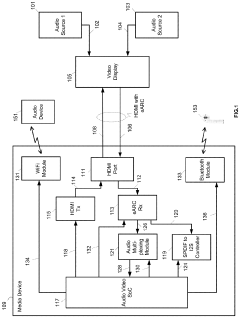
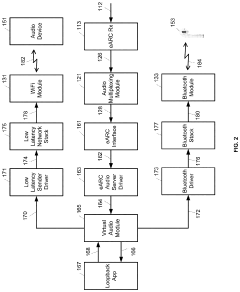
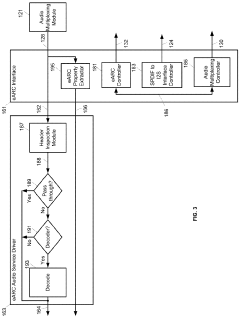
- A media device configured to receive and process audio streams from HDMI/ARC ports, enabling audio cancellation and content recognition by decoding, re-encoding, and fingerprinting audio signals, allowing voice-enabled speakers to distinguish voice commands and offer personalized content recommendations.


Audio Return Channel Data Loopback
PatentActiveUS20210098011A1
Innovation
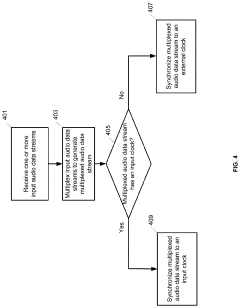
- A media device substitutes an externally generated clock derived from a local crystal oscillator for the missing sampling clock, synchronizing it with the input sampling clock frequency, and switches back when the input clock reappears, while inserting zero padding to mitigate sound glitches, and optionally buffers audio data during clock transitions to maintain sound continuity.
LDAC Compatibility
LDAC compatibility is a crucial aspect of its implementation in television audio streaming. This advanced audio codec, developed by Sony, is designed to deliver high-quality wireless audio transmission. However, its adoption and integration into various devices and platforms require careful consideration of compatibility issues.
LDAC is primarily compatible with Android devices running Android 8.0 (Oreo) or later. This broad compatibility with the Android ecosystem has significantly contributed to its widespread adoption in mobile devices. However, when it comes to television systems, compatibility becomes more nuanced.
Many modern smart TVs now support LDAC, especially those running on Android TV operating systems. These televisions can directly stream high-quality audio to LDAC-compatible headphones or speakers. However, the compatibility extends beyond just the TV itself. External devices connected to the TV, such as streaming boxes, game consoles, or Blu-ray players, must also support LDAC for seamless audio transmission.
For non-Android TV systems, LDAC compatibility can be achieved through external transmitters or receivers. These devices act as intermediaries, enabling LDAC streaming capabilities for TVs that don't natively support the codec. This solution expands LDAC's reach to a broader range of television setups.
Compatibility also extends to audio output devices. A growing number of wireless headphones, earbuds, and speakers now support LDAC. This includes products from Sony, as well as other manufacturers who have licensed the technology. The increasing availability of LDAC-compatible audio devices has been instrumental in driving its adoption in the television audio streaming market.
It's worth noting that LDAC's compatibility is not universal. Apple devices and ecosystems, for instance, do not support LDAC, instead favoring their own AAC codec. This limitation can impact the codec's adoption in households with mixed ecosystems of devices.
Looking forward, efforts are being made to expand LDAC compatibility across different platforms and devices. This includes potential integration into more TV brands and operating systems, as well as increased support in various audio streaming services and applications. As compatibility continues to improve, LDAC's role in revolutionizing television audio streaming is likely to grow, offering high-quality wireless audio to a broader audience.
LDAC is primarily compatible with Android devices running Android 8.0 (Oreo) or later. This broad compatibility with the Android ecosystem has significantly contributed to its widespread adoption in mobile devices. However, when it comes to television systems, compatibility becomes more nuanced.
Many modern smart TVs now support LDAC, especially those running on Android TV operating systems. These televisions can directly stream high-quality audio to LDAC-compatible headphones or speakers. However, the compatibility extends beyond just the TV itself. External devices connected to the TV, such as streaming boxes, game consoles, or Blu-ray players, must also support LDAC for seamless audio transmission.
For non-Android TV systems, LDAC compatibility can be achieved through external transmitters or receivers. These devices act as intermediaries, enabling LDAC streaming capabilities for TVs that don't natively support the codec. This solution expands LDAC's reach to a broader range of television setups.
Compatibility also extends to audio output devices. A growing number of wireless headphones, earbuds, and speakers now support LDAC. This includes products from Sony, as well as other manufacturers who have licensed the technology. The increasing availability of LDAC-compatible audio devices has been instrumental in driving its adoption in the television audio streaming market.
It's worth noting that LDAC's compatibility is not universal. Apple devices and ecosystems, for instance, do not support LDAC, instead favoring their own AAC codec. This limitation can impact the codec's adoption in households with mixed ecosystems of devices.
Looking forward, efforts are being made to expand LDAC compatibility across different platforms and devices. This includes potential integration into more TV brands and operating systems, as well as increased support in various audio streaming services and applications. As compatibility continues to improve, LDAC's role in revolutionizing television audio streaming is likely to grow, offering high-quality wireless audio to a broader audience.
LDAC User Experience
LDAC technology has significantly enhanced the user experience of television audio streaming, offering a level of audio quality that was previously unattainable in wireless audio transmission. The high-resolution audio codec provides listeners with a rich, detailed soundscape that closely mimics the original studio recording.
One of the most notable improvements is the expanded frequency range that LDAC supports. Traditional Bluetooth codecs often limit audio to 20 kHz, but LDAC can transmit frequencies up to 40 kHz. This extended range allows for the reproduction of subtle harmonics and overtones, resulting in a more natural and immersive listening experience. Viewers can now perceive the nuanced timbres of instruments and voices, adding depth and realism to their audio experience.
The increased bit depth and sampling rate of LDAC also contribute to a more dynamic and precise audio reproduction. With support for up to 24-bit/96 kHz audio, LDAC preserves the subtle gradations in volume and tone that are often lost in compressed audio formats. This results in a wider dynamic range, allowing for both whisper-quiet moments and thunderous crescendos to be faithfully reproduced without distortion.
Latency, a common issue in wireless audio transmission, is significantly reduced with LDAC. This low-latency performance ensures that audio remains in sync with the video content, eliminating the frustrating lip-sync issues that can occur with other wireless audio solutions. The seamless integration of audio and video enhances the overall viewing experience, particularly for content such as live sports, action movies, and music performances where timing is crucial.
LDAC's adaptive bit rate feature further enhances the user experience by dynamically adjusting the audio quality based on the wireless environment. This ensures a stable connection and continuous playback even in challenging conditions, such as when there are multiple wireless devices in use or when the user moves around the room.
The technology also supports multi-channel audio, allowing for immersive surround sound setups without the need for complex wiring. This enables users to create a home theater experience with greater flexibility in speaker placement and room configuration.
For audiophiles and discerning listeners, LDAC provides a level of transparency that approaches wired audio quality. The ability to stream high-resolution audio files directly from a television to wireless speakers or headphones without significant loss in quality has opened up new possibilities for home audio setups.
Moreover, the improved audio quality offered by LDAC has the potential to enhance various aspects of television content. Dialogue becomes clearer and more intelligible, background sounds and ambient effects are more distinct, and music scores are reproduced with greater fidelity. This heightened audio experience can lead to increased engagement with content and a more emotionally impactful viewing experience.
One of the most notable improvements is the expanded frequency range that LDAC supports. Traditional Bluetooth codecs often limit audio to 20 kHz, but LDAC can transmit frequencies up to 40 kHz. This extended range allows for the reproduction of subtle harmonics and overtones, resulting in a more natural and immersive listening experience. Viewers can now perceive the nuanced timbres of instruments and voices, adding depth and realism to their audio experience.
The increased bit depth and sampling rate of LDAC also contribute to a more dynamic and precise audio reproduction. With support for up to 24-bit/96 kHz audio, LDAC preserves the subtle gradations in volume and tone that are often lost in compressed audio formats. This results in a wider dynamic range, allowing for both whisper-quiet moments and thunderous crescendos to be faithfully reproduced without distortion.
Latency, a common issue in wireless audio transmission, is significantly reduced with LDAC. This low-latency performance ensures that audio remains in sync with the video content, eliminating the frustrating lip-sync issues that can occur with other wireless audio solutions. The seamless integration of audio and video enhances the overall viewing experience, particularly for content such as live sports, action movies, and music performances where timing is crucial.
LDAC's adaptive bit rate feature further enhances the user experience by dynamically adjusting the audio quality based on the wireless environment. This ensures a stable connection and continuous playback even in challenging conditions, such as when there are multiple wireless devices in use or when the user moves around the room.
The technology also supports multi-channel audio, allowing for immersive surround sound setups without the need for complex wiring. This enables users to create a home theater experience with greater flexibility in speaker placement and room configuration.
For audiophiles and discerning listeners, LDAC provides a level of transparency that approaches wired audio quality. The ability to stream high-resolution audio files directly from a television to wireless speakers or headphones without significant loss in quality has opened up new possibilities for home audio setups.
Moreover, the improved audio quality offered by LDAC has the potential to enhance various aspects of television content. Dialogue becomes clearer and more intelligible, background sounds and ambient effects are more distinct, and music scores are reproduced with greater fidelity. This heightened audio experience can lead to increased engagement with content and a more emotionally impactful viewing experience.
Unlock deeper insights with Patsnap Eureka Quick Research — get a full tech report to explore trends and direct your research. Try now!
Generate Your Research Report Instantly with AI Agent
Supercharge your innovation with Patsnap Eureka AI Agent Platform!