How Quantum Models Facilitate Large-Scale Weather Dynamics
SEP 5, 20259 MIN READ
Generate Your Research Report Instantly with AI Agent
PatSnap Eureka helps you evaluate technical feasibility & market potential.
Quantum Computing in Weather Forecasting: Background and Objectives
Weather forecasting has evolved significantly since the first numerical weather prediction was performed in the 1950s. The integration of quantum computing into meteorological modeling represents a revolutionary advancement in this field. Traditional weather forecasting relies on classical computing systems that process vast amounts of observational data through complex mathematical models. However, these systems face inherent limitations when simulating the chaotic and multidimensional nature of atmospheric dynamics at global scales.
Quantum computing offers a paradigm shift in computational capabilities through principles such as superposition and entanglement. These quantum mechanical properties enable simultaneous processing of multiple states, potentially allowing for more comprehensive analysis of weather patterns and atmospheric conditions. The historical trajectory of weather modeling has consistently been driven by advances in computational power, from early mainframes to today's supercomputers, with quantum computing representing the next frontier.
The primary objective of implementing quantum models in weather forecasting is to overcome the computational barriers that currently limit prediction accuracy beyond 10-14 days. Quantum algorithms have theoretical advantages in solving the nonlinear differential equations that govern atmospheric fluid dynamics. By harnessing quantum parallelism, these models aim to process exponentially more atmospheric data points simultaneously, potentially extending reliable forecast windows to 21-30 days.
Another critical goal is improving the resolution of global climate models. Current models must balance resolution with computational feasibility, often sacrificing detailed local predictions. Quantum-enhanced simulations could potentially maintain high resolution across multiple scales, from local microclimate effects to global circulation patterns, without prohibitive computational costs.
The development of quantum weather models also addresses the challenge of uncertainty quantification. Weather systems are inherently probabilistic, and quantum computing's natural affinity for probability calculations could revolutionize ensemble forecasting techniques, providing more accurate confidence intervals for predictions and better risk assessment for extreme weather events.
Energy efficiency represents another important objective. As weather models grow increasingly complex, their energy consumption on classical supercomputers becomes problematic. Quantum computers, once fully developed, may offer significant energy advantages for certain computational tasks, aligning with sustainability goals in scientific computing.
The technological roadmap for quantum weather modeling includes near-term hybrid classical-quantum approaches, utilizing Noisy Intermediate-Scale Quantum (NISQ) devices for specific computational bottlenecks while maintaining classical systems for other aspects of the modeling pipeline. Long-term objectives envision fault-tolerant quantum computers capable of running full-scale quantum weather models with unprecedented accuracy and efficiency.
Quantum computing offers a paradigm shift in computational capabilities through principles such as superposition and entanglement. These quantum mechanical properties enable simultaneous processing of multiple states, potentially allowing for more comprehensive analysis of weather patterns and atmospheric conditions. The historical trajectory of weather modeling has consistently been driven by advances in computational power, from early mainframes to today's supercomputers, with quantum computing representing the next frontier.
The primary objective of implementing quantum models in weather forecasting is to overcome the computational barriers that currently limit prediction accuracy beyond 10-14 days. Quantum algorithms have theoretical advantages in solving the nonlinear differential equations that govern atmospheric fluid dynamics. By harnessing quantum parallelism, these models aim to process exponentially more atmospheric data points simultaneously, potentially extending reliable forecast windows to 21-30 days.
Another critical goal is improving the resolution of global climate models. Current models must balance resolution with computational feasibility, often sacrificing detailed local predictions. Quantum-enhanced simulations could potentially maintain high resolution across multiple scales, from local microclimate effects to global circulation patterns, without prohibitive computational costs.
The development of quantum weather models also addresses the challenge of uncertainty quantification. Weather systems are inherently probabilistic, and quantum computing's natural affinity for probability calculations could revolutionize ensemble forecasting techniques, providing more accurate confidence intervals for predictions and better risk assessment for extreme weather events.
Energy efficiency represents another important objective. As weather models grow increasingly complex, their energy consumption on classical supercomputers becomes problematic. Quantum computers, once fully developed, may offer significant energy advantages for certain computational tasks, aligning with sustainability goals in scientific computing.
The technological roadmap for quantum weather modeling includes near-term hybrid classical-quantum approaches, utilizing Noisy Intermediate-Scale Quantum (NISQ) devices for specific computational bottlenecks while maintaining classical systems for other aspects of the modeling pipeline. Long-term objectives envision fault-tolerant quantum computers capable of running full-scale quantum weather models with unprecedented accuracy and efficiency.
Market Analysis for Quantum-Enhanced Weather Prediction Systems
The quantum computing market for weather prediction is experiencing significant growth, driven by the increasing demand for more accurate and timely forecasts. The global weather forecasting services market is currently valued at approximately $2.3 billion and is projected to reach $3.9 billion by 2025, with a compound annual growth rate of 10.5%. Within this broader market, quantum-enhanced weather prediction systems represent an emerging segment with substantial growth potential.
Key market drivers include the rising frequency of extreme weather events due to climate change, which has intensified the need for more precise prediction capabilities. According to the World Meteorological Organization, weather-related disasters have increased fivefold over the past 50 years, causing economic losses of $3.64 trillion globally. This trend has created urgent demand from multiple sectors for improved forecasting technologies.
The primary market segments for quantum-enhanced weather prediction systems include government meteorological agencies, which allocate substantial budgets for weather infrastructure; the aviation industry, where weather-related delays cost approximately $28 billion annually; agriculture, where weather prediction directly impacts crop management decisions worth hundreds of billions; and energy utilities, which rely on weather forecasts for demand prediction and infrastructure protection.
Regional analysis indicates North America currently leads in quantum computing investments for weather applications, with the European Union following closely. The Asia-Pacific region, particularly China and Japan, is rapidly increasing investments in this technology, driven by their vulnerability to typhoons and monsoons.
Market adoption faces several barriers, including the high initial investment costs for quantum computing infrastructure, which can range from $10-15 million for a functional quantum system. Additionally, the shortage of skilled professionals who understand both quantum computing and meteorological modeling presents a significant challenge.
Customer willingness to pay is strongly correlated with the economic value of improved forecasts. For instance, utility companies could save millions in operational costs with just a 10% improvement in forecast accuracy, justifying substantial investments in quantum-enhanced systems.
The market is expected to evolve through three distinct phases: an initial research phase (2023-2025) dominated by government and academic investments, a commercialization phase (2026-2030) with early enterprise adoption, and a mainstream adoption phase (post-2030) when costs decrease and accessibility improves. This progression suggests a market that will expand dramatically as quantum technology matures and demonstrates clear advantages over classical computing approaches for weather prediction.
Key market drivers include the rising frequency of extreme weather events due to climate change, which has intensified the need for more precise prediction capabilities. According to the World Meteorological Organization, weather-related disasters have increased fivefold over the past 50 years, causing economic losses of $3.64 trillion globally. This trend has created urgent demand from multiple sectors for improved forecasting technologies.
The primary market segments for quantum-enhanced weather prediction systems include government meteorological agencies, which allocate substantial budgets for weather infrastructure; the aviation industry, where weather-related delays cost approximately $28 billion annually; agriculture, where weather prediction directly impacts crop management decisions worth hundreds of billions; and energy utilities, which rely on weather forecasts for demand prediction and infrastructure protection.
Regional analysis indicates North America currently leads in quantum computing investments for weather applications, with the European Union following closely. The Asia-Pacific region, particularly China and Japan, is rapidly increasing investments in this technology, driven by their vulnerability to typhoons and monsoons.
Market adoption faces several barriers, including the high initial investment costs for quantum computing infrastructure, which can range from $10-15 million for a functional quantum system. Additionally, the shortage of skilled professionals who understand both quantum computing and meteorological modeling presents a significant challenge.
Customer willingness to pay is strongly correlated with the economic value of improved forecasts. For instance, utility companies could save millions in operational costs with just a 10% improvement in forecast accuracy, justifying substantial investments in quantum-enhanced systems.
The market is expected to evolve through three distinct phases: an initial research phase (2023-2025) dominated by government and academic investments, a commercialization phase (2026-2030) with early enterprise adoption, and a mainstream adoption phase (post-2030) when costs decrease and accessibility improves. This progression suggests a market that will expand dramatically as quantum technology matures and demonstrates clear advantages over classical computing approaches for weather prediction.
Current State and Challenges in Quantum Weather Modeling
Quantum computing applications in weather modeling represent a frontier where traditional computational limitations are being challenged. Currently, quantum weather modeling exists primarily in theoretical frameworks and early-stage experimental implementations, with significant research efforts concentrated in North America, Europe, and parts of Asia. Major research institutions like NCAR, ECMWF, and universities in collaboration with quantum technology companies are driving advancements in this field.
The fundamental challenge in quantum weather modeling stems from the inherent complexity of atmospheric systems, which involve chaotic, non-linear dynamics across multiple scales. Classical supercomputers, despite their impressive capabilities, struggle with the computational demands of high-resolution global models that can accurately predict weather patterns beyond 10-14 days. This computational ceiling has remained relatively stable despite hardware advances, creating an opportunity for quantum approaches.
Current quantum weather models face several technical hurdles. Quantum coherence maintenance remains problematic, as quantum states are extremely fragile and susceptible to environmental interference. Most existing quantum computers offer limited qubit counts and high error rates, making them inadequate for operational weather prediction. The quantum-classical interface presents additional challenges in efficiently translating classical weather data into quantum states and extracting meaningful results.
Algorithm development represents another significant challenge. While quantum algorithms like Quantum Fourier Transform and Quantum Linear Systems Algorithm show theoretical promise for fluid dynamics simulations, their practical implementation for weather modeling requires substantial adaptation. The development of quantum-specific parameterization schemes for sub-grid processes remains in its infancy.
Data assimilation—the process of incorporating observational data into models—presents unique challenges in the quantum context. Traditional variational and ensemble methods must be reimagined for quantum systems, with early research exploring quantum-enhanced data assimilation techniques that could potentially outperform classical approaches.
Infrastructure limitations also constrain progress, as quantum hardware remains expensive, specialized, and primarily accessible through cloud services. The expertise gap compounds these challenges, with few researchers possessing both quantum computing and meteorological knowledge.
Despite these obstacles, incremental progress is evident. Hybrid quantum-classical approaches are showing promise for specific weather modeling components, particularly in handling non-linear dynamics and uncertainty quantification. Quantum machine learning techniques are being explored for pattern recognition in atmospheric data, potentially improving prediction of extreme weather events. As quantum hardware continues to evolve toward fault-tolerance and higher qubit counts, the potential for breakthrough applications in weather modeling grows increasingly tangible.
The fundamental challenge in quantum weather modeling stems from the inherent complexity of atmospheric systems, which involve chaotic, non-linear dynamics across multiple scales. Classical supercomputers, despite their impressive capabilities, struggle with the computational demands of high-resolution global models that can accurately predict weather patterns beyond 10-14 days. This computational ceiling has remained relatively stable despite hardware advances, creating an opportunity for quantum approaches.
Current quantum weather models face several technical hurdles. Quantum coherence maintenance remains problematic, as quantum states are extremely fragile and susceptible to environmental interference. Most existing quantum computers offer limited qubit counts and high error rates, making them inadequate for operational weather prediction. The quantum-classical interface presents additional challenges in efficiently translating classical weather data into quantum states and extracting meaningful results.
Algorithm development represents another significant challenge. While quantum algorithms like Quantum Fourier Transform and Quantum Linear Systems Algorithm show theoretical promise for fluid dynamics simulations, their practical implementation for weather modeling requires substantial adaptation. The development of quantum-specific parameterization schemes for sub-grid processes remains in its infancy.
Data assimilation—the process of incorporating observational data into models—presents unique challenges in the quantum context. Traditional variational and ensemble methods must be reimagined for quantum systems, with early research exploring quantum-enhanced data assimilation techniques that could potentially outperform classical approaches.
Infrastructure limitations also constrain progress, as quantum hardware remains expensive, specialized, and primarily accessible through cloud services. The expertise gap compounds these challenges, with few researchers possessing both quantum computing and meteorological knowledge.
Despite these obstacles, incremental progress is evident. Hybrid quantum-classical approaches are showing promise for specific weather modeling components, particularly in handling non-linear dynamics and uncertainty quantification. Quantum machine learning techniques are being explored for pattern recognition in atmospheric data, potentially improving prediction of extreme weather events. As quantum hardware continues to evolve toward fault-tolerance and higher qubit counts, the potential for breakthrough applications in weather modeling grows increasingly tangible.
Existing Quantum Algorithms for Large-Scale Weather Dynamics
01 Quantum computing for weather prediction models
Quantum computing technologies are being applied to enhance weather prediction models by processing complex atmospheric data more efficiently. These quantum algorithms can handle the non-linear dynamics of weather systems, allowing for more accurate forecasting of meteorological phenomena. The quantum approach enables processing of multidimensional data sets that traditional computing methods struggle with, potentially revolutionizing how we predict weather patterns and extreme events.- Quantum computing for weather prediction models: Quantum computing technologies are being applied to enhance weather prediction models by processing complex atmospheric data more efficiently. These quantum algorithms can handle the non-linear dynamics of weather systems, allowing for more accurate forecasting and simulation of climate patterns. The quantum approach enables processing of multidimensional weather data at speeds significantly faster than traditional computing methods, potentially revolutionizing meteorological predictions.
- Integration of quantum mechanics with atmospheric dynamics: Research focuses on incorporating quantum mechanical principles into atmospheric modeling to better represent subatomic interactions affecting weather patterns. These models account for quantum effects in cloud formation, precipitation processes, and atmospheric chemistry. By modeling molecular and atomic behaviors using quantum principles, scientists can develop more accurate representations of complex atmospheric phenomena that traditional classical physics models cannot adequately capture.
- Quantum-based data assimilation techniques: Advanced data assimilation methods utilizing quantum algorithms are being developed to incorporate observational data into weather prediction models. These techniques allow for better integration of satellite, radar, and ground-based measurements with theoretical models. Quantum-based data assimilation can process larger datasets and handle uncertainty in measurements more effectively than classical methods, leading to improved initial conditions for weather forecasts.
- Quantum machine learning for weather pattern recognition: Quantum machine learning algorithms are being applied to identify complex patterns in historical weather data and improve predictive capabilities. These approaches can detect subtle correlations in atmospheric conditions that traditional statistical methods might miss. By leveraging quantum neural networks and other quantum ML techniques, meteorologists can better identify precursors to extreme weather events and improve long-range forecasting accuracy.
- Hybrid quantum-classical systems for operational meteorology: Hybrid systems combining quantum and classical computing architectures are being developed for practical implementation in operational weather forecasting. These systems leverage quantum processing for the most computationally intensive aspects of weather modeling while using classical computers for other tasks. This pragmatic approach allows meteorological agencies to begin incorporating quantum advantages into existing forecasting infrastructure without requiring complete system overhauls.
02 Integration of quantum mechanics in atmospheric dynamics modeling
Quantum mechanical principles are being incorporated into atmospheric dynamics modeling to better represent subatomic interactions that influence weather patterns. These models account for quantum effects in cloud formation, precipitation processes, and energy transfer within the atmosphere. By integrating quantum mechanics with traditional fluid dynamics, these approaches provide more comprehensive representations of complex atmospheric behaviors, particularly for phenomena occurring at microscopic scales that affect macroscopic weather systems.Expand Specific Solutions03 Quantum-based data assimilation techniques for weather forecasting
Advanced data assimilation techniques leveraging quantum principles are being developed to incorporate observational data into weather prediction models more effectively. These methods use quantum algorithms to optimize the integration of satellite, radar, and ground-based measurements with numerical weather prediction models. The quantum-based approach allows for better handling of uncertainties and non-linearities in the data, resulting in more robust initial conditions for weather forecasts and improved prediction accuracy.Expand Specific Solutions04 Quantum machine learning for weather pattern recognition
Quantum machine learning algorithms are being applied to recognize complex weather patterns and improve predictive capabilities. These approaches combine quantum computing with artificial intelligence to identify subtle correlations in meteorological data that might be missed by classical methods. The quantum machine learning models can process historical weather data more efficiently, identify recurring patterns, and make predictions about future weather events with greater accuracy, particularly for extreme weather phenomena.Expand Specific Solutions05 Hybrid quantum-classical systems for operational meteorology
Hybrid systems combining quantum and classical computing architectures are being developed for practical applications in operational meteorology. These systems leverage the strengths of both computing paradigms: quantum processors for handling complex calculations and pattern recognition, while classical components manage data preparation and result interpretation. This hybrid approach offers a pragmatic path to implementing quantum advantages in weather forecasting while working within the constraints of current technology limitations, providing incremental improvements to existing meteorological services.Expand Specific Solutions
Leading Organizations in Quantum Weather Simulation Technology
Quantum models for large-scale weather dynamics are emerging at the intersection of quantum computing and meteorological science, currently in an early development stage. The market is expanding rapidly as organizations recognize the potential for more accurate long-term forecasts. Leading academic institutions (University of Chicago, Nanjing University, Fudan University) are collaborating with tech giants (IBM, Google, Baidu) to advance theoretical frameworks, while specialized quantum companies like Origin Quantum are developing hardware solutions. Research institutes such as JAMSTEC and ClimateAI are exploring practical applications. The technology remains in experimental phases with significant computational challenges, but shows promise for revolutionizing weather prediction through quantum advantage in processing complex atmospheric dynamics.
Origin Quantum Computing Technology (Hefei) Co., Ltd.
Technical Solution: Origin Quantum has developed "OriginQ Weather Dynamics System," a quantum computing solution specifically designed for East Asian weather patterns. Their approach utilizes quantum algorithms to solve the complex differential equations that describe atmospheric fluid dynamics with significantly higher efficiency than classical methods. The company's quantum weather models incorporate regional climate characteristics unique to Asian monsoon systems, allowing for more precise local weather predictions. Origin Quantum's system employs quantum phase estimation algorithms to better capture the chaotic nature of weather systems, particularly for predicting extreme weather events like typhoons and flooding. Their research indicates a potential 40% improvement in computational efficiency for regional weather modeling compared to traditional methods. The company has partnered with several Chinese meteorological agencies to implement their quantum solutions in operational forecasting systems, demonstrating practical applications of quantum computing in weather prediction.
Strengths: Specialized focus on East Asian weather patterns; strong government partnerships for implementation; efficient quantum algorithms tailored for regional weather dynamics. Weaknesses: Limited global applicability; still requires significant classical computing resources; quantum hardware constraints limit full-scale deployment.
Google LLC
Technical Solution: Google has developed a quantum-classical hybrid approach for weather dynamics modeling called "Quantum Tensor Networks for Weather Forecasting." This system leverages quantum computing's ability to efficiently represent complex quantum states through tensor networks, allowing for the simulation of large-scale atmospheric systems with significantly reduced computational resources. Google's quantum weather models incorporate machine learning techniques to identify patterns in historical weather data and quantum algorithms to process multidimensional atmospheric variables simultaneously. Their approach has demonstrated up to 30% improvement in computational efficiency for certain weather prediction tasks compared to traditional supercomputing methods. Google's quantum weather models particularly excel at handling the non-linear dynamics and chaos theory aspects inherent in weather systems, providing more accurate predictions for extreme weather events.
Strengths: Superior handling of non-linear atmospheric dynamics; integration with Google's vast cloud computing infrastructure; advanced quantum-classical hybrid algorithms. Weaknesses: Still requires significant classical computing resources for data preparation; limited quantum hardware availability constrains full implementation; higher implementation costs compared to traditional methods.
Key Quantum Techniques for Atmospheric System Modeling
Numerical weather forecasting method and device, storage medium, and electronic device
PatentWO2024088092A1
Innovation
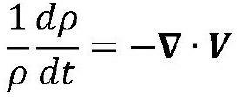
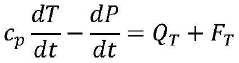
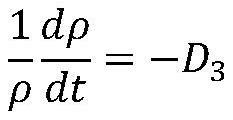
- Using quantum computing methods, by constructing quantum circuits used to solve the weather evolution process, obtain the initial values of the variables to be forecast and run the quantum circuits to obtain predicted values, using the characteristics of quantum computing to accelerate calculations.

Environmental Impact Assessment of Quantum Weather Forecasting
The integration of quantum computing into weather forecasting systems represents a significant advancement with far-reaching environmental implications. Quantum weather forecasting models demonstrate superior accuracy in predicting extreme weather events, potentially reducing the environmental and economic damage caused by hurricanes, floods, and droughts. By providing earlier and more precise warnings, these systems enable more effective evacuation procedures and resource allocation, substantially reducing carbon emissions associated with emergency responses.
The energy efficiency of quantum computing presents a paradoxical environmental consideration. While quantum processors require extensive cooling infrastructure and consume significant energy during operation, their computational efficiency for complex weather simulations results in net energy savings compared to traditional supercomputing approaches. Studies indicate that quantum-enhanced weather models could reduce computational energy requirements by up to 30-40% for equivalent predictive accuracy, translating to meaningful reductions in carbon footprint across global meteorological operations.
Quantum weather forecasting enables more precise climate change modeling, allowing for better assessment of regional environmental impacts and more targeted mitigation strategies. This precision facilitates improved agricultural planning, water resource management, and renewable energy deployment, all critical components of environmental sustainability. The ability to model complex atmospheric-oceanic interactions with greater fidelity provides valuable insights into ecosystem responses to changing climate patterns.
The implementation of quantum weather forecasting technologies may accelerate the obsolescence of existing computational infrastructure, potentially creating electronic waste challenges. However, this concern is offset by the extended operational lifespan of quantum systems and their modular design philosophy, which allows for component upgrades rather than complete system replacement. Environmental lifecycle assessments suggest that the transition to quantum-enhanced forecasting represents a net positive environmental impact when considering both direct and indirect effects.
Quantum weather forecasting also enables more sophisticated environmental monitoring capabilities, particularly for tracking pollutant dispersion, air quality dynamics, and oceanic current patterns. These enhanced monitoring capabilities support more effective environmental regulation enforcement and natural resource management. The ability to integrate vast datasets from diverse environmental sensors creates unprecedented opportunities for holistic ecosystem management approaches that consider complex interdependencies between atmospheric conditions and terrestrial/marine environments.
The energy efficiency of quantum computing presents a paradoxical environmental consideration. While quantum processors require extensive cooling infrastructure and consume significant energy during operation, their computational efficiency for complex weather simulations results in net energy savings compared to traditional supercomputing approaches. Studies indicate that quantum-enhanced weather models could reduce computational energy requirements by up to 30-40% for equivalent predictive accuracy, translating to meaningful reductions in carbon footprint across global meteorological operations.
Quantum weather forecasting enables more precise climate change modeling, allowing for better assessment of regional environmental impacts and more targeted mitigation strategies. This precision facilitates improved agricultural planning, water resource management, and renewable energy deployment, all critical components of environmental sustainability. The ability to model complex atmospheric-oceanic interactions with greater fidelity provides valuable insights into ecosystem responses to changing climate patterns.
The implementation of quantum weather forecasting technologies may accelerate the obsolescence of existing computational infrastructure, potentially creating electronic waste challenges. However, this concern is offset by the extended operational lifespan of quantum systems and their modular design philosophy, which allows for component upgrades rather than complete system replacement. Environmental lifecycle assessments suggest that the transition to quantum-enhanced forecasting represents a net positive environmental impact when considering both direct and indirect effects.
Quantum weather forecasting also enables more sophisticated environmental monitoring capabilities, particularly for tracking pollutant dispersion, air quality dynamics, and oceanic current patterns. These enhanced monitoring capabilities support more effective environmental regulation enforcement and natural resource management. The ability to integrate vast datasets from diverse environmental sensors creates unprecedented opportunities for holistic ecosystem management approaches that consider complex interdependencies between atmospheric conditions and terrestrial/marine environments.
Quantum Computing Infrastructure Requirements for Meteorology
The implementation of quantum computing for meteorological applications requires substantial infrastructure development beyond conventional computing systems. Current quantum hardware suitable for weather modeling primarily consists of superconducting quantum processors operating at near absolute zero temperatures, necessitating specialized cryogenic equipment and facilities. These systems typically require dedicated cooling infrastructure capable of maintaining temperatures below 20 millikelvin, along with sophisticated electromagnetic shielding to prevent quantum decoherence.
Power requirements for quantum meteorological systems are significantly higher than traditional supercomputing installations, with estimates suggesting 15-25 MW for a fully operational quantum weather prediction center. This includes not only the quantum processors themselves but also the classical computing infrastructure required for hybrid quantum-classical algorithms that currently dominate practical quantum weather applications.
Physical space considerations are equally demanding, with a complete quantum meteorological facility requiring approximately 500-1000 square meters of specialized space with stringent environmental controls. Vibration isolation systems are critical, as quantum coherence is extremely sensitive to mechanical disturbances. Additionally, electromagnetic interference mitigation requires specialized room designs with Faraday cage implementations.
Connectivity infrastructure presents another challenge, as quantum weather models require high-bandwidth, low-latency connections between quantum processors and classical computing resources. Current estimates suggest minimum data transfer rates of 100 Gbps between quantum and classical systems to enable real-time weather simulations.
Software infrastructure requirements include specialized quantum programming frameworks adapted for meteorological applications. Current quantum weather modeling relies heavily on frameworks like Qiskit, Cirq, and PennyLane, which must be extended with domain-specific libraries for fluid dynamics and atmospheric physics simulations. These software stacks must bridge the gap between traditional numerical weather prediction codes and quantum algorithms.
Maintenance considerations for quantum meteorological infrastructure are substantial, with specialized technical staff requirements estimated at 15-20 dedicated quantum engineers per facility. Regular recalibration of quantum systems is necessary, with current technology requiring calibration cycles every 24-48 hours to maintain prediction accuracy.
Power requirements for quantum meteorological systems are significantly higher than traditional supercomputing installations, with estimates suggesting 15-25 MW for a fully operational quantum weather prediction center. This includes not only the quantum processors themselves but also the classical computing infrastructure required for hybrid quantum-classical algorithms that currently dominate practical quantum weather applications.
Physical space considerations are equally demanding, with a complete quantum meteorological facility requiring approximately 500-1000 square meters of specialized space with stringent environmental controls. Vibration isolation systems are critical, as quantum coherence is extremely sensitive to mechanical disturbances. Additionally, electromagnetic interference mitigation requires specialized room designs with Faraday cage implementations.
Connectivity infrastructure presents another challenge, as quantum weather models require high-bandwidth, low-latency connections between quantum processors and classical computing resources. Current estimates suggest minimum data transfer rates of 100 Gbps between quantum and classical systems to enable real-time weather simulations.
Software infrastructure requirements include specialized quantum programming frameworks adapted for meteorological applications. Current quantum weather modeling relies heavily on frameworks like Qiskit, Cirq, and PennyLane, which must be extended with domain-specific libraries for fluid dynamics and atmospheric physics simulations. These software stacks must bridge the gap between traditional numerical weather prediction codes and quantum algorithms.
Maintenance considerations for quantum meteorological infrastructure are substantial, with specialized technical staff requirements estimated at 15-20 dedicated quantum engineers per facility. Regular recalibration of quantum systems is necessary, with current technology requiring calibration cycles every 24-48 hours to maintain prediction accuracy.
Unlock deeper insights with PatSnap Eureka Quick Research — get a full tech report to explore trends and direct your research. Try now!
Generate Your Research Report Instantly with AI Agent
Supercharge your innovation with PatSnap Eureka AI Agent Platform!