How to Align ULED Developments with Market Needs?
JUN 20, 20259 MIN READ
Generate Your Research Report Instantly with AI Agent
Patsnap Eureka helps you evaluate technical feasibility & market potential.
ULED Technology Evolution
Ultra-LED (ULED) technology has undergone significant evolution since its inception, driven by the continuous pursuit of improved display performance and energy efficiency. The journey of ULED began with the development of traditional LED backlighting systems for LCD displays, which offered enhanced brightness and color reproduction compared to older technologies like CCFL.
As market demands shifted towards thinner and more energy-efficient displays, ULED technology advanced to incorporate local dimming capabilities. This innovation allowed for more precise control over backlight zones, resulting in improved contrast ratios and deeper blacks. The introduction of quantum dot technology further enhanced color gamut and accuracy, pushing ULED displays closer to OLED-like performance while maintaining the advantages of LED technology.
In recent years, the evolution of ULED has focused on miniaturization and increased pixel density. Mini-LED backlighting emerged as a significant milestone, offering thousands of individually controllable local dimming zones. This advancement dramatically improved HDR performance and reduced blooming effects, addressing key market needs for high-end displays in both consumer and professional sectors.
The latest frontier in ULED development is micro-LED technology, which promises to revolutionize display manufacturing. Micro-LEDs offer self-emissive pixels at a microscopic scale, potentially combining the best attributes of OLED and LCD technologies. This direction aligns with market demands for ultra-high resolution, perfect blacks, and exceptional energy efficiency across various display sizes.
Throughout its evolution, ULED technology has consistently adapted to meet changing market needs. From improving color accuracy for content creators to enhancing energy efficiency for mobile devices, each advancement has been driven by specific industry requirements. The push for larger, higher resolution displays in the home entertainment sector has also influenced ULED development, leading to innovations in scalable backlight solutions and improved viewing angles.
As the display market continues to diversify, ULED technology is evolving to address niche demands. Flexible and transparent displays are emerging as potential growth areas, prompting research into adaptable ULED configurations. Additionally, the increasing focus on sustainability has led to the development of more eco-friendly manufacturing processes and materials for ULED components.
The alignment of ULED developments with market needs is an ongoing process, requiring continuous innovation and adaptation. As consumer expectations and industry standards evolve, ULED technology must remain agile, anticipating future requirements while addressing current demands for superior image quality, energy efficiency, and form factor versatility.
As market demands shifted towards thinner and more energy-efficient displays, ULED technology advanced to incorporate local dimming capabilities. This innovation allowed for more precise control over backlight zones, resulting in improved contrast ratios and deeper blacks. The introduction of quantum dot technology further enhanced color gamut and accuracy, pushing ULED displays closer to OLED-like performance while maintaining the advantages of LED technology.
In recent years, the evolution of ULED has focused on miniaturization and increased pixel density. Mini-LED backlighting emerged as a significant milestone, offering thousands of individually controllable local dimming zones. This advancement dramatically improved HDR performance and reduced blooming effects, addressing key market needs for high-end displays in both consumer and professional sectors.
The latest frontier in ULED development is micro-LED technology, which promises to revolutionize display manufacturing. Micro-LEDs offer self-emissive pixels at a microscopic scale, potentially combining the best attributes of OLED and LCD technologies. This direction aligns with market demands for ultra-high resolution, perfect blacks, and exceptional energy efficiency across various display sizes.
Throughout its evolution, ULED technology has consistently adapted to meet changing market needs. From improving color accuracy for content creators to enhancing energy efficiency for mobile devices, each advancement has been driven by specific industry requirements. The push for larger, higher resolution displays in the home entertainment sector has also influenced ULED development, leading to innovations in scalable backlight solutions and improved viewing angles.
As the display market continues to diversify, ULED technology is evolving to address niche demands. Flexible and transparent displays are emerging as potential growth areas, prompting research into adaptable ULED configurations. Additionally, the increasing focus on sustainability has led to the development of more eco-friendly manufacturing processes and materials for ULED components.
The alignment of ULED developments with market needs is an ongoing process, requiring continuous innovation and adaptation. As consumer expectations and industry standards evolve, ULED technology must remain agile, anticipating future requirements while addressing current demands for superior image quality, energy efficiency, and form factor versatility.
ULED Market Demand Analysis
The ULED (Ultra Light Emitting Diode) market is experiencing rapid growth and transformation, driven by increasing demand for high-quality display technologies across various sectors. To effectively align ULED developments with market needs, a comprehensive analysis of current and projected market demands is essential.
The consumer electronics sector represents a significant portion of the ULED market demand. Smartphones, tablets, and laptops are increasingly adopting ULED technology due to its superior color accuracy, brightness, and energy efficiency compared to traditional LED displays. The automotive industry is another key driver of ULED demand, with manufacturers integrating these advanced displays into infotainment systems, digital dashboards, and heads-up displays to enhance the driving experience and vehicle safety.
In the commercial sector, there is a growing demand for ULED displays in digital signage, retail environments, and control rooms. The technology's ability to deliver vibrant, high-contrast images even in bright ambient light conditions makes it particularly attractive for these applications. Additionally, the healthcare industry is showing increased interest in ULED technology for medical imaging devices, where accurate color reproduction and high resolution are critical.
The entertainment and gaming industries are also significant contributors to ULED market demand. High-end televisions and gaming monitors are incorporating ULED technology to provide immersive viewing experiences with enhanced color gamut and HDR capabilities. As virtual and augmented reality technologies continue to evolve, ULED displays are expected to play a crucial role in creating more realistic and engaging visual experiences.
Market research indicates that the Asia-Pacific region, particularly countries like China, South Korea, and Japan, is leading in ULED adoption and production. However, North America and Europe are also showing substantial growth in ULED demand, driven by technological advancements and increasing consumer awareness of display quality.
To align ULED developments with market needs, manufacturers must focus on addressing key consumer demands such as improved energy efficiency, longer lifespan, and reduced production costs. There is also a growing emphasis on environmental sustainability, with consumers and regulators pushing for more eco-friendly manufacturing processes and materials in ULED production.
The integration of ULED technology with other emerging technologies, such as 5G, IoT, and AI, presents new opportunities and challenges. Developers must consider how ULED displays can enhance user experiences in smart homes, connected vehicles, and industrial IoT applications. This convergence of technologies is expected to create new market segments and applications for ULED displays in the coming years.
The consumer electronics sector represents a significant portion of the ULED market demand. Smartphones, tablets, and laptops are increasingly adopting ULED technology due to its superior color accuracy, brightness, and energy efficiency compared to traditional LED displays. The automotive industry is another key driver of ULED demand, with manufacturers integrating these advanced displays into infotainment systems, digital dashboards, and heads-up displays to enhance the driving experience and vehicle safety.
In the commercial sector, there is a growing demand for ULED displays in digital signage, retail environments, and control rooms. The technology's ability to deliver vibrant, high-contrast images even in bright ambient light conditions makes it particularly attractive for these applications. Additionally, the healthcare industry is showing increased interest in ULED technology for medical imaging devices, where accurate color reproduction and high resolution are critical.
The entertainment and gaming industries are also significant contributors to ULED market demand. High-end televisions and gaming monitors are incorporating ULED technology to provide immersive viewing experiences with enhanced color gamut and HDR capabilities. As virtual and augmented reality technologies continue to evolve, ULED displays are expected to play a crucial role in creating more realistic and engaging visual experiences.
Market research indicates that the Asia-Pacific region, particularly countries like China, South Korea, and Japan, is leading in ULED adoption and production. However, North America and Europe are also showing substantial growth in ULED demand, driven by technological advancements and increasing consumer awareness of display quality.
To align ULED developments with market needs, manufacturers must focus on addressing key consumer demands such as improved energy efficiency, longer lifespan, and reduced production costs. There is also a growing emphasis on environmental sustainability, with consumers and regulators pushing for more eco-friendly manufacturing processes and materials in ULED production.
The integration of ULED technology with other emerging technologies, such as 5G, IoT, and AI, presents new opportunities and challenges. Developers must consider how ULED displays can enhance user experiences in smart homes, connected vehicles, and industrial IoT applications. This convergence of technologies is expected to create new market segments and applications for ULED displays in the coming years.
ULED Technical Challenges
Ultra-Light Emitting Diodes (ULEDs) represent a cutting-edge technology in the field of display and lighting. However, their development faces several significant technical challenges that need to be addressed to align with market needs effectively.
One of the primary challenges is achieving high efficiency and brightness while maintaining ultra-thin profiles. ULEDs are expected to deliver superior luminance compared to traditional LEDs, but the ultra-thin structure poses difficulties in heat dissipation and current distribution. Engineers must develop innovative thermal management solutions and optimize current spreading layers to ensure uniform light emission across the entire device.
Another critical challenge lies in the manufacturing process. The production of ULEDs requires precise control over nanoscale structures, which is difficult to achieve consistently at scale. Developing reliable and cost-effective manufacturing techniques that can produce ULEDs with consistent quality and performance is crucial for meeting market demands.
Color accuracy and stability present another set of challenges. ULEDs need to deliver a wide color gamut with high color fidelity, but achieving this while maintaining long-term stability is technically demanding. Researchers are working on developing new materials and structures that can provide stable and accurate color reproduction over the device's lifetime.
Power efficiency is a key concern, especially for battery-powered devices. While ULEDs are inherently more energy-efficient than traditional LEDs, further improvements are necessary to meet the stringent power requirements of modern portable electronics. This involves optimizing the quantum efficiency of the emitting materials and reducing energy losses in the device structure.
Flexibility and durability are increasingly important for emerging applications such as foldable displays and wearable devices. Developing ULEDs that can withstand repeated bending and folding without degradation in performance or lifespan is a significant technical hurdle. This requires innovations in both materials science and device architecture.
Integration with existing display and lighting technologies poses another challenge. ULEDs need to be compatible with current manufacturing processes and control systems to facilitate adoption. This includes developing appropriate driving circuits, addressing schemes, and interface technologies that can seamlessly incorporate ULEDs into various applications.
Lastly, ensuring long-term reliability and stability under various operating conditions remains a critical challenge. ULEDs must maintain their performance characteristics over extended periods, resisting degradation from factors such as heat, humidity, and electrical stress. This necessitates extensive research into degradation mechanisms and the development of robust encapsulation and protection techniques.
One of the primary challenges is achieving high efficiency and brightness while maintaining ultra-thin profiles. ULEDs are expected to deliver superior luminance compared to traditional LEDs, but the ultra-thin structure poses difficulties in heat dissipation and current distribution. Engineers must develop innovative thermal management solutions and optimize current spreading layers to ensure uniform light emission across the entire device.
Another critical challenge lies in the manufacturing process. The production of ULEDs requires precise control over nanoscale structures, which is difficult to achieve consistently at scale. Developing reliable and cost-effective manufacturing techniques that can produce ULEDs with consistent quality and performance is crucial for meeting market demands.
Color accuracy and stability present another set of challenges. ULEDs need to deliver a wide color gamut with high color fidelity, but achieving this while maintaining long-term stability is technically demanding. Researchers are working on developing new materials and structures that can provide stable and accurate color reproduction over the device's lifetime.
Power efficiency is a key concern, especially for battery-powered devices. While ULEDs are inherently more energy-efficient than traditional LEDs, further improvements are necessary to meet the stringent power requirements of modern portable electronics. This involves optimizing the quantum efficiency of the emitting materials and reducing energy losses in the device structure.
Flexibility and durability are increasingly important for emerging applications such as foldable displays and wearable devices. Developing ULEDs that can withstand repeated bending and folding without degradation in performance or lifespan is a significant technical hurdle. This requires innovations in both materials science and device architecture.
Integration with existing display and lighting technologies poses another challenge. ULEDs need to be compatible with current manufacturing processes and control systems to facilitate adoption. This includes developing appropriate driving circuits, addressing schemes, and interface technologies that can seamlessly incorporate ULEDs into various applications.
Lastly, ensuring long-term reliability and stability under various operating conditions remains a critical challenge. ULEDs must maintain their performance characteristics over extended periods, resisting degradation from factors such as heat, humidity, and electrical stress. This necessitates extensive research into degradation mechanisms and the development of robust encapsulation and protection techniques.
Current ULED Solutions
01 ULED structure and composition
Ultra Light Emitting Diodes (ULEDs) are advanced semiconductor devices with unique structural and compositional features. They are designed to emit light with high efficiency and brightness while maintaining a compact size. The structure typically includes multiple layers of semiconductor materials, optimized for enhanced light emission and reduced power consumption.- ULED structure and composition: Ultra Light Emitting Diodes (ULEDs) are advanced semiconductor devices with unique structural and compositional features. They are designed to emit light with high efficiency and brightness while maintaining a compact form factor. The structure typically includes specialized layers and materials to enhance light output and reduce energy consumption.
- ULED manufacturing processes: The manufacturing of ULEDs involves sophisticated processes to achieve their ultra-light and high-performance characteristics. These may include advanced epitaxial growth techniques, precise doping methods, and specialized packaging processes. The manufacturing techniques aim to optimize light extraction and minimize energy loss.
- ULED applications in display technology: ULEDs are increasingly being utilized in display technologies due to their superior brightness and energy efficiency. They are particularly suitable for high-resolution, thin displays in various electronic devices. The technology enables improved color accuracy, contrast ratios, and overall display performance.
- Energy efficiency and thermal management in ULEDs: A key feature of ULEDs is their high energy efficiency compared to traditional LEDs. This is achieved through advanced designs that maximize light output while minimizing heat generation. Effective thermal management techniques are crucial in ULED design to maintain performance and longevity, especially in high-power applications.
- Integration of ULEDs in smart lighting systems: ULEDs are being integrated into smart lighting systems, leveraging their compact size and high efficiency. These systems can include advanced control mechanisms, allowing for dynamic adjustment of brightness and color temperature. The integration enables energy-saving features and customizable lighting environments in various settings.
02 ULED manufacturing processes
The manufacturing of ULEDs involves sophisticated processes to achieve their ultra-small size and high performance. These processes may include advanced epitaxial growth techniques, precise doping methods, and nanoscale fabrication technologies. Special attention is given to maintaining high quality and uniformity in production to ensure consistent performance across devices.Expand Specific Solutions03 ULED applications in display technology
ULEDs are increasingly being used in display technologies, offering advantages such as higher brightness, better color accuracy, and improved energy efficiency compared to traditional LEDs. They are particularly suitable for high-resolution displays, including those used in smartphones, televisions, and augmented reality devices. The small size of ULEDs allows for finer pixel density and improved image quality.Expand Specific Solutions04 Energy efficiency and thermal management of ULEDs
ULEDs are designed to be highly energy-efficient, converting a larger proportion of electrical energy into light compared to conventional LEDs. This efficiency reduces heat generation, but thermal management remains crucial for maintaining performance and longevity. Advanced cooling techniques and materials are often incorporated into ULED designs to ensure optimal operation under various conditions.Expand Specific Solutions05 Integration of ULEDs in electronic systems
The integration of ULEDs into various electronic systems presents both opportunities and challenges. Their small size and high performance make them suitable for a wide range of applications, from consumer electronics to automotive lighting. However, integrating ULEDs often requires specialized circuitry and control systems to fully utilize their capabilities while ensuring compatibility with existing technologies.Expand Specific Solutions
Key ULED Industry Players
The ULED (Ultra LED) market is in a dynamic growth phase, driven by increasing demand for high-quality display technologies. The market size is expanding rapidly, with projections indicating significant growth in the coming years. Technologically, ULED is maturing, with key players like Samsung Electronics, Apple, and Hisense Visual Technology leading innovation. Companies such as Lumileds LLC and Barco NV are contributing to advancements in LED technology, while Meta Platforms Technologies and Intel Corp are exploring applications in emerging fields like AR/VR. The competitive landscape is diverse, with established electronics giants competing alongside specialized optoelectronics firms like Appotronics Corp. Ltd. and Xiamen San'an Optoelectronics Co., Ltd. Aligning ULED developments with market needs requires a focus on energy efficiency, color accuracy, and integration with smart technologies to meet evolving consumer and industrial demands.
Lumileds LLC
Technical Solution: Lumileds focuses on developing advanced LED components that enable ULED display manufacturers to meet market demands. Their strategy includes creating high-efficiency, high-brightness LEDs with improved color rendering capabilities. Lumileds has also invested in miniaturization technologies to support the development of Mini-LED and Micro-LED displays. Their LUXEON LED product line offers a wide range of options for different display applications, including automotive, consumer electronics, and large-format displays. Additionally, Lumileds emphasizes sustainability by developing LEDs with longer lifespans and lower power consumption.
Strengths: Expertise in LED component manufacturing, strong partnerships with display manufacturers. Weaknesses: Dependent on adoption rates of new display technologies by OEMs, potential vulnerability to supply chain disruptions.
Samsung Electronics Co., Ltd.
Technical Solution: Samsung has developed a range of ULED (Ultra LED) technologies to align with market needs. Their approach includes Quantum Dot technology for enhanced color accuracy and brightness, Mini-LED backlighting for improved local dimming and contrast, and AI-powered upscaling to enhance picture quality. Samsung's ULED displays also incorporate advanced HDR (High Dynamic Range) capabilities to deliver more vibrant and lifelike images. Additionally, they have focused on energy efficiency and durability to meet consumer demands for sustainable and long-lasting products.
Strengths: Strong brand recognition, extensive R&D capabilities, and vertical integration in display manufacturing. Weaknesses: Higher production costs compared to traditional LED technologies, potential for increased complexity in manufacturing processes.
ULED Core Innovations
Micro light emitting device and display thereof
PatentWO2020015353A1
Innovation
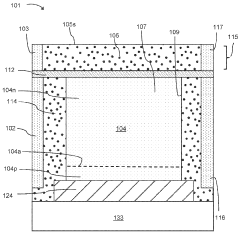
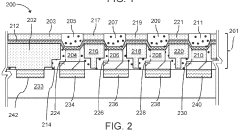
- Using a micro-light-emitting diode structure with a transparent adhesive layer, the blue/green light is converted into red light through photon conversion technology, the AlInGaP-based quantum well layer is used to achieve efficient photon conversion, and anti-reflection and anti-reflection are set on the micro-light-emitting diode. The film layer and light reflective layer optimize the light emission efficiency.
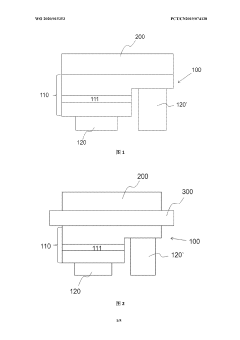
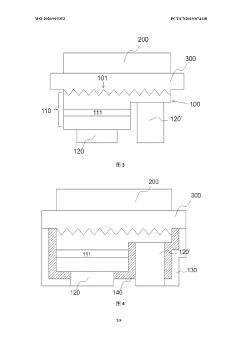
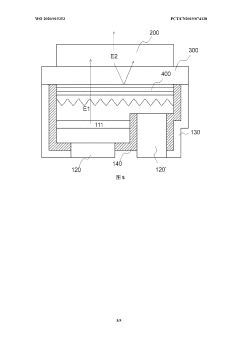
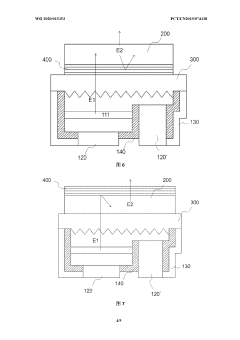
Optical layer for pixels of micro-light emitting diode (LED) devices
PatentWO2024129339A1
Innovation
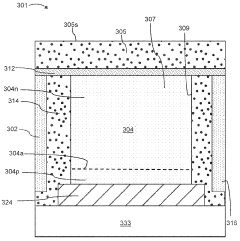
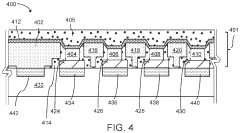
- An optical layer comprising a dielectric material with reflective sidewalls is introduced on the emitting surface of microLED pixels, functioning as a lens or anti-reflective coating to enhance light directionality and extraction efficiency, while also eliminating cross-talk and maximizing brightness.
ULED Supply Chain Analysis
The ULED (Ultra-Light Emitting Diode) supply chain plays a crucial role in aligning technological developments with market needs. This complex network of suppliers, manufacturers, and distributors forms the backbone of the ULED industry, enabling the production and delivery of high-quality, innovative products to meet evolving consumer demands.
At the upstream level, raw material suppliers provide essential components such as semiconductor materials, phosphors, and substrates. These suppliers must continuously innovate to improve the performance and efficiency of ULED technologies. Their ability to develop new materials with enhanced properties directly impacts the final product quality and market competitiveness.
Component manufacturers form the next tier of the supply chain, producing key elements like LED chips, drivers, and optical components. These companies are responsible for translating raw materials into functional parts that meet the stringent requirements of ULED applications. Their expertise in miniaturization, thermal management, and optical design is critical for advancing ULED technology.
ULED module and panel manufacturers integrate these components into complete display units. These firms must balance technological innovation with cost-effectiveness to create products that align with market demands. Their ability to optimize production processes and incorporate new technologies directly influences the affordability and performance of ULED displays.
Original Equipment Manufacturers (OEMs) and Original Design Manufacturers (ODMs) represent the downstream segment of the supply chain. They incorporate ULED panels into various consumer electronics, automotive displays, and professional equipment. Their market insights and product design capabilities are essential for translating technological advancements into marketable products that meet consumer needs.
Distribution channels, including wholesalers and retailers, form the final link in the ULED supply chain. These entities play a crucial role in making ULED products accessible to end-users and providing valuable feedback on market trends and consumer preferences to upstream suppliers.
To effectively align ULED developments with market needs, close collaboration and information sharing across the entire supply chain is essential. This enables rapid response to changing market demands and ensures that technological innovations are directed towards solving real-world problems and enhancing user experiences.
Furthermore, the ULED supply chain must remain agile and adaptable to overcome challenges such as material shortages, geopolitical tensions, and rapidly evolving consumer preferences. Implementing robust risk management strategies and diversifying supplier networks can help mitigate these challenges and ensure a stable supply of ULED products to the market.
At the upstream level, raw material suppliers provide essential components such as semiconductor materials, phosphors, and substrates. These suppliers must continuously innovate to improve the performance and efficiency of ULED technologies. Their ability to develop new materials with enhanced properties directly impacts the final product quality and market competitiveness.
Component manufacturers form the next tier of the supply chain, producing key elements like LED chips, drivers, and optical components. These companies are responsible for translating raw materials into functional parts that meet the stringent requirements of ULED applications. Their expertise in miniaturization, thermal management, and optical design is critical for advancing ULED technology.
ULED module and panel manufacturers integrate these components into complete display units. These firms must balance technological innovation with cost-effectiveness to create products that align with market demands. Their ability to optimize production processes and incorporate new technologies directly influences the affordability and performance of ULED displays.
Original Equipment Manufacturers (OEMs) and Original Design Manufacturers (ODMs) represent the downstream segment of the supply chain. They incorporate ULED panels into various consumer electronics, automotive displays, and professional equipment. Their market insights and product design capabilities are essential for translating technological advancements into marketable products that meet consumer needs.
Distribution channels, including wholesalers and retailers, form the final link in the ULED supply chain. These entities play a crucial role in making ULED products accessible to end-users and providing valuable feedback on market trends and consumer preferences to upstream suppliers.
To effectively align ULED developments with market needs, close collaboration and information sharing across the entire supply chain is essential. This enables rapid response to changing market demands and ensures that technological innovations are directed towards solving real-world problems and enhancing user experiences.
Furthermore, the ULED supply chain must remain agile and adaptable to overcome challenges such as material shortages, geopolitical tensions, and rapidly evolving consumer preferences. Implementing robust risk management strategies and diversifying supplier networks can help mitigate these challenges and ensure a stable supply of ULED products to the market.
ULED Standardization Efforts
Standardization efforts play a crucial role in aligning ULED (Ultra-Light Emitting Diode) developments with market needs. These initiatives aim to establish common specifications, protocols, and performance metrics across the industry, ensuring interoperability and consistency in ULED products and applications.
One of the primary focuses of ULED standardization is the development of uniform measurement and testing methods. This includes standardizing the procedures for evaluating key performance parameters such as luminous efficacy, color rendering, and lifespan. By establishing these common benchmarks, manufacturers can provide comparable data to consumers and industry stakeholders, facilitating informed decision-making and fostering healthy competition.
Another critical aspect of standardization efforts is the establishment of common interfaces and communication protocols. This enables seamless integration of ULED components from different manufacturers into various systems and applications. Standardized interfaces reduce compatibility issues, simplify product development, and ultimately lead to more cost-effective solutions for end-users.
ULED standardization also addresses safety and reliability concerns. Industry-wide standards for electrical safety, thermal management, and electromagnetic compatibility ensure that ULED products meet minimum safety requirements across different markets and applications. This not only protects consumers but also builds trust in the technology, promoting wider adoption.
Environmental considerations are increasingly becoming a focal point in ULED standardization efforts. Standards related to energy efficiency, recyclability, and the use of environmentally friendly materials are being developed to align with global sustainability goals. These standards help manufacturers create more eco-friendly products while meeting market demands for greener technologies.
Standardization initiatives also extend to the realm of color management and light quality. Establishing uniform color spaces, gamut definitions, and color rendering metrics ensures consistency in visual experiences across different ULED displays and lighting applications. This is particularly important in professional markets such as digital cinema, broadcast, and high-end consumer electronics.
To effectively align ULED developments with market needs, standardization bodies are actively engaging with industry stakeholders, including manufacturers, researchers, and end-users. This collaborative approach ensures that standards reflect real-world requirements and technological capabilities. Regular revisions and updates to standards keep pace with rapid advancements in ULED technology, addressing emerging market trends and technological breakthroughs.
One of the primary focuses of ULED standardization is the development of uniform measurement and testing methods. This includes standardizing the procedures for evaluating key performance parameters such as luminous efficacy, color rendering, and lifespan. By establishing these common benchmarks, manufacturers can provide comparable data to consumers and industry stakeholders, facilitating informed decision-making and fostering healthy competition.
Another critical aspect of standardization efforts is the establishment of common interfaces and communication protocols. This enables seamless integration of ULED components from different manufacturers into various systems and applications. Standardized interfaces reduce compatibility issues, simplify product development, and ultimately lead to more cost-effective solutions for end-users.
ULED standardization also addresses safety and reliability concerns. Industry-wide standards for electrical safety, thermal management, and electromagnetic compatibility ensure that ULED products meet minimum safety requirements across different markets and applications. This not only protects consumers but also builds trust in the technology, promoting wider adoption.
Environmental considerations are increasingly becoming a focal point in ULED standardization efforts. Standards related to energy efficiency, recyclability, and the use of environmentally friendly materials are being developed to align with global sustainability goals. These standards help manufacturers create more eco-friendly products while meeting market demands for greener technologies.
Standardization initiatives also extend to the realm of color management and light quality. Establishing uniform color spaces, gamut definitions, and color rendering metrics ensures consistency in visual experiences across different ULED displays and lighting applications. This is particularly important in professional markets such as digital cinema, broadcast, and high-end consumer electronics.
To effectively align ULED developments with market needs, standardization bodies are actively engaging with industry stakeholders, including manufacturers, researchers, and end-users. This collaborative approach ensures that standards reflect real-world requirements and technological capabilities. Regular revisions and updates to standards keep pace with rapid advancements in ULED technology, addressing emerging market trends and technological breakthroughs.
Unlock deeper insights with Patsnap Eureka Quick Research — get a full tech report to explore trends and direct your research. Try now!
Generate Your Research Report Instantly with AI Agent
Supercharge your innovation with Patsnap Eureka AI Agent Platform!