

How to Create Sustained Audio Quality with LDAC?
JUL 4, 20258 MIN READ
Generate Your Research Report Instantly with AI Agent
PatSnap Eureka helps you evaluate technical feasibility & market potential.
LDAC Technology Evolution and Objectives
LDAC, developed by Sony in 2015, represents a significant leap in wireless audio technology. This codec aims to deliver high-resolution audio over Bluetooth connections, addressing the growing demand for superior sound quality in wireless devices. LDAC's evolution is closely tied to the broader advancements in Bluetooth technology and the increasing consumer appetite for high-fidelity audio experiences.
The primary objective of LDAC is to overcome the limitations of standard Bluetooth audio codecs, which often compromise audio quality due to bandwidth constraints. LDAC achieves this by employing adaptive bit rate technology, allowing it to transmit up to 990 kbps of data - significantly higher than conventional codecs. This increased data rate enables the transmission of audio signals with minimal loss, preserving the nuances and details of high-resolution audio sources.
Throughout its development, LDAC has undergone several iterations to improve its performance and compatibility. Initially exclusive to Sony devices, the technology has gradually expanded its reach through partnerships and licensing agreements. A key milestone in LDAC's evolution was its inclusion in the Android Open Source Project (AOSP) with Android 8.0 Oreo, making it more widely available to device manufacturers and developers.
The technology's evolution also reflects the changing landscape of audio consumption. With the rise of streaming services offering high-resolution audio and the increasing popularity of wireless headphones and speakers, LDAC addresses a growing market need for high-quality wireless audio transmission. Its development trajectory has focused on maintaining audio fidelity while optimizing for factors such as power consumption and connection stability.
Looking forward, the objectives for LDAC technology include further improving its efficiency and expanding its compatibility across a broader range of devices. Efforts are being made to reduce latency, enhance power efficiency, and improve the codec's ability to adapt to varying network conditions. Additionally, there is a push to integrate LDAC with emerging audio technologies, such as 3D audio and personalized sound profiles, to create more immersive and tailored listening experiences.
The sustained audio quality that LDAC aims to create is not just about maintaining high bit rates but also about ensuring consistent performance across different usage scenarios. This involves developing robust error correction mechanisms, improving the codec's resilience to interference, and optimizing its performance in challenging environments. As the audio industry continues to evolve, LDAC's objectives align with the broader goal of bridging the gap between wired and wireless audio quality, ultimately providing users with a seamless and high-fidelity listening experience across all their devices.
The primary objective of LDAC is to overcome the limitations of standard Bluetooth audio codecs, which often compromise audio quality due to bandwidth constraints. LDAC achieves this by employing adaptive bit rate technology, allowing it to transmit up to 990 kbps of data - significantly higher than conventional codecs. This increased data rate enables the transmission of audio signals with minimal loss, preserving the nuances and details of high-resolution audio sources.
Throughout its development, LDAC has undergone several iterations to improve its performance and compatibility. Initially exclusive to Sony devices, the technology has gradually expanded its reach through partnerships and licensing agreements. A key milestone in LDAC's evolution was its inclusion in the Android Open Source Project (AOSP) with Android 8.0 Oreo, making it more widely available to device manufacturers and developers.
The technology's evolution also reflects the changing landscape of audio consumption. With the rise of streaming services offering high-resolution audio and the increasing popularity of wireless headphones and speakers, LDAC addresses a growing market need for high-quality wireless audio transmission. Its development trajectory has focused on maintaining audio fidelity while optimizing for factors such as power consumption and connection stability.
Looking forward, the objectives for LDAC technology include further improving its efficiency and expanding its compatibility across a broader range of devices. Efforts are being made to reduce latency, enhance power efficiency, and improve the codec's ability to adapt to varying network conditions. Additionally, there is a push to integrate LDAC with emerging audio technologies, such as 3D audio and personalized sound profiles, to create more immersive and tailored listening experiences.
The sustained audio quality that LDAC aims to create is not just about maintaining high bit rates but also about ensuring consistent performance across different usage scenarios. This involves developing robust error correction mechanisms, improving the codec's resilience to interference, and optimizing its performance in challenging environments. As the audio industry continues to evolve, LDAC's objectives align with the broader goal of bridging the gap between wired and wireless audio quality, ultimately providing users with a seamless and high-fidelity listening experience across all their devices.
High-Quality Audio Market Analysis
The high-quality audio market has experienced significant growth in recent years, driven by increasing consumer demand for premium sound experiences across various devices and platforms. This trend is particularly evident in the rise of high-resolution audio formats and advanced audio codecs like LDAC, which aim to deliver near-lossless audio quality over Bluetooth connections.
The global market for high-quality audio products and services is expanding rapidly, with a compound annual growth rate (CAGR) projected to exceed 8% over the next five years. This growth is fueled by several factors, including the proliferation of streaming services offering high-resolution audio, the increasing adoption of wireless headphones and earbuds, and the growing audiophile community seeking superior sound quality.
In the context of LDAC technology, which was developed by Sony to address the limitations of standard Bluetooth audio transmission, the market potential is substantial. LDAC enables the transmission of high-resolution audio content up to 990 kbps, significantly higher than conventional Bluetooth codecs. This capability has positioned LDAC as a key player in the high-quality wireless audio segment.
The demand for LDAC-enabled devices has been steadily increasing, with major smartphone manufacturers and audio equipment producers integrating this technology into their products. This adoption is driven by consumer expectations for better audio quality in wireless devices, particularly as more users transition from wired to wireless audio solutions.
Market analysis indicates that the Asia-Pacific region, led by countries like Japan and South Korea, is at the forefront of high-quality audio technology adoption, including LDAC. However, North America and Europe are rapidly catching up, with growing awareness and demand for premium audio experiences.
The sustained audio quality offered by LDAC is particularly appealing in several key market segments. These include high-end wireless headphones and earbuds, home audio systems, automotive audio, and professional audio equipment. Each of these segments presents unique opportunities and challenges for LDAC implementation.
Looking at industry trends, there is a clear shift towards integrating advanced audio codecs like LDAC into a wider range of consumer electronics. This integration is expected to drive further market growth and innovation in the high-quality audio sector. As the technology matures and becomes more widely available, it is likely to become a standard feature in mid-range to premium audio products, potentially expanding its market reach.
The global market for high-quality audio products and services is expanding rapidly, with a compound annual growth rate (CAGR) projected to exceed 8% over the next five years. This growth is fueled by several factors, including the proliferation of streaming services offering high-resolution audio, the increasing adoption of wireless headphones and earbuds, and the growing audiophile community seeking superior sound quality.
In the context of LDAC technology, which was developed by Sony to address the limitations of standard Bluetooth audio transmission, the market potential is substantial. LDAC enables the transmission of high-resolution audio content up to 990 kbps, significantly higher than conventional Bluetooth codecs. This capability has positioned LDAC as a key player in the high-quality wireless audio segment.
The demand for LDAC-enabled devices has been steadily increasing, with major smartphone manufacturers and audio equipment producers integrating this technology into their products. This adoption is driven by consumer expectations for better audio quality in wireless devices, particularly as more users transition from wired to wireless audio solutions.
Market analysis indicates that the Asia-Pacific region, led by countries like Japan and South Korea, is at the forefront of high-quality audio technology adoption, including LDAC. However, North America and Europe are rapidly catching up, with growing awareness and demand for premium audio experiences.
The sustained audio quality offered by LDAC is particularly appealing in several key market segments. These include high-end wireless headphones and earbuds, home audio systems, automotive audio, and professional audio equipment. Each of these segments presents unique opportunities and challenges for LDAC implementation.
Looking at industry trends, there is a clear shift towards integrating advanced audio codecs like LDAC into a wider range of consumer electronics. This integration is expected to drive further market growth and innovation in the high-quality audio sector. As the technology matures and becomes more widely available, it is likely to become a standard feature in mid-range to premium audio products, potentially expanding its market reach.
LDAC Technical Challenges and Limitations
LDAC, developed by Sony, represents a significant advancement in Bluetooth audio codecs. However, it faces several technical challenges and limitations in achieving sustained high-quality audio transmission. One of the primary challenges is maintaining consistent audio quality across varying network conditions. LDAC operates at different bit rates (330, 660, and 990 kbps), but dynamically switching between these rates to adapt to network conditions can lead to audible fluctuations in sound quality.
Another limitation is the codec's high computational demands. LDAC's complex encoding and decoding processes require substantial processing power, which can strain the resources of mobile devices and potentially impact battery life. This becomes particularly problematic for smaller, low-power devices that may struggle to handle LDAC's requirements efficiently.
Bluetooth's inherent bandwidth limitations also pose a challenge for LDAC. While LDAC can theoretically support up to 990 kbps, achieving this consistently in real-world scenarios with potential interference and signal degradation is difficult. This limitation can result in compromised audio quality or increased latency when network conditions are less than ideal.
Compatibility issues present another hurdle for LDAC. As a proprietary technology, its adoption is not universal across all devices and platforms. This lack of widespread support can limit the codec's effectiveness in providing high-quality audio across diverse ecosystems.
LDAC also faces challenges in minimizing latency, which is crucial for applications like gaming and video playback. While it performs better than some other Bluetooth codecs in this regard, achieving consistently low latency while maintaining high audio quality remains a technical challenge.
The codec's performance in multi-device scenarios is another area of concern. As more users adopt multiple Bluetooth audio devices, LDAC's ability to maintain high-quality connections across multiple simultaneous connections becomes increasingly important, yet technically challenging.
Lastly, LDAC's effectiveness in preserving audio quality during the compression process, especially for complex audio content like classical music or high-dynamic range recordings, remains an ongoing area of development. Balancing the need for efficient data transmission with the preservation of subtle audio details continues to be a technical challenge for the codec.
Another limitation is the codec's high computational demands. LDAC's complex encoding and decoding processes require substantial processing power, which can strain the resources of mobile devices and potentially impact battery life. This becomes particularly problematic for smaller, low-power devices that may struggle to handle LDAC's requirements efficiently.
Bluetooth's inherent bandwidth limitations also pose a challenge for LDAC. While LDAC can theoretically support up to 990 kbps, achieving this consistently in real-world scenarios with potential interference and signal degradation is difficult. This limitation can result in compromised audio quality or increased latency when network conditions are less than ideal.
Compatibility issues present another hurdle for LDAC. As a proprietary technology, its adoption is not universal across all devices and platforms. This lack of widespread support can limit the codec's effectiveness in providing high-quality audio across diverse ecosystems.
LDAC also faces challenges in minimizing latency, which is crucial for applications like gaming and video playback. While it performs better than some other Bluetooth codecs in this regard, achieving consistently low latency while maintaining high audio quality remains a technical challenge.
The codec's performance in multi-device scenarios is another area of concern. As more users adopt multiple Bluetooth audio devices, LDAC's ability to maintain high-quality connections across multiple simultaneous connections becomes increasingly important, yet technically challenging.
Lastly, LDAC's effectiveness in preserving audio quality during the compression process, especially for complex audio content like classical music or high-dynamic range recordings, remains an ongoing area of development. Balancing the need for efficient data transmission with the preservation of subtle audio details continues to be a technical challenge for the codec.
Current LDAC Implementation Strategies
01 LDAC codec implementation for high-quality audio transmission
LDAC is a high-resolution audio codec developed for Bluetooth audio transmission. It enables the transmission of high-quality audio data by efficiently encoding and compressing audio signals. The codec supports various bit rates and sampling frequencies, allowing for flexible adaptation to different audio sources and transmission conditions.- LDAC codec implementation for high-quality audio transmission: LDAC is a high-resolution audio codec developed for Bluetooth audio transmission. It enables the transmission of high-quality audio data by efficiently encoding and compressing audio signals. The codec supports various bit rates and sampling frequencies, allowing for flexible adaptation to different audio sources and transmission conditions.
- Audio quality enhancement through signal processing: Various signal processing techniques are employed to enhance audio quality in LDAC systems. These may include noise reduction, dynamic range compression, and frequency response correction. Advanced algorithms are used to optimize the audio signal before encoding, ensuring the best possible sound quality within the constraints of the transmission system.
- Adaptive bit rate and sampling frequency selection: LDAC systems incorporate adaptive mechanisms to select optimal bit rates and sampling frequencies based on the audio content and available bandwidth. This dynamic adjustment helps maintain high audio quality while efficiently utilizing the transmission channel, resulting in improved overall performance and user experience.
- Integration with audio playback devices and systems: LDAC technology is integrated into various audio playback devices and systems, including smartphones, headphones, and home audio equipment. This integration involves optimizing hardware and software components to support LDAC encoding and decoding, ensuring seamless high-quality audio reproduction across different devices and platforms.
- Quality assessment and optimization techniques: To maintain and improve LDAC audio quality, various assessment and optimization techniques are employed. These may include perceptual audio quality evaluation, real-time monitoring of transmission parameters, and feedback mechanisms to adjust encoding settings. Such techniques help ensure consistent high-quality audio performance across different usage scenarios.
02 Audio quality enhancement through signal processing
Various signal processing techniques are employed to enhance audio quality in LDAC transmissions. These may include noise reduction, dynamic range compression, and equalization. Advanced algorithms are used to optimize the audio signal before encoding, ensuring the best possible quality within the constraints of the transmission system.Expand Specific Solutions03 Adaptive bit rate and sampling frequency selection
LDAC implements adaptive bit rate and sampling frequency selection to maintain optimal audio quality under varying network conditions. The system dynamically adjusts these parameters based on available bandwidth and connection stability, ensuring the best possible audio experience while minimizing dropouts and artifacts.Expand Specific Solutions04 Integration with audio playback devices and systems
LDAC technology is integrated into various audio playback devices and systems, including smartphones, headphones, and home audio equipment. This integration involves optimizing hardware and software components to support the codec's high-resolution capabilities, ensuring seamless compatibility and performance across different devices and platforms.Expand Specific Solutions05 Quality assessment and optimization techniques
To maintain and improve LDAC audio quality, various assessment and optimization techniques are employed. These may include perceptual audio quality measurements, real-time monitoring of transmission parameters, and feedback mechanisms to adjust codec settings. Such techniques help ensure consistent high-quality audio experiences across different use cases and environments.Expand Specific Solutions
Key Players in Wireless Audio Technology
The competition landscape for creating sustained audio quality with LDAC technology is evolving rapidly, reflecting the growing demand for high-fidelity wireless audio solutions. The market is in a growth phase, with increasing adoption of LDAC in various consumer electronics. Key players like Sony, the developer of LDAC, and other major tech companies such as Samsung, Huawei, and Apple are driving innovation in this space. The technology's maturity is advancing, with companies like Fraunhofer-Gesellschaft, Analog Devices, and MediaTek contributing to its development and implementation across different devices and platforms. As the market expands, we're seeing a blend of established electronics giants and specialized audio technology firms competing to enhance and differentiate their LDAC-enabled products.
Huawei Technologies Co., Ltd.
Technical Solution: Huawei has developed its own implementation of LDAC to enhance audio quality in its smartphones and audio devices. Their approach focuses on optimizing the codec for their Kirin chipsets, enabling efficient processing and power management. Huawei's LDAC implementation supports the full range of bitrates up to 990 kbps, allowing for near-lossless audio transmission[4]. They have also integrated LDAC with their EMUI operating system, providing a seamless user experience for high-quality audio streaming. Huawei has implemented adaptive bitrate selection algorithms that dynamically adjust the audio quality based on the connection stability and device capabilities, ensuring sustained audio quality in various environments[5]. Additionally, Huawei has developed custom DSP (Digital Signal Processing) algorithms to further enhance the audio output when using LDAC, focusing on clarity and spatial audio improvements[6].
Strengths: Optimized for Huawei devices, integrated with EMUI for seamless user experience. Weaknesses: Limited availability on non-Huawei devices, potential compatibility issues with some third-party Bluetooth accessories.
Samsung Electronics Co., Ltd.
Technical Solution: Samsung has incorporated LDAC support into its Galaxy series smartphones and audio devices to provide high-quality Bluetooth audio streaming. Their implementation focuses on maximizing audio quality while maintaining energy efficiency. Samsung's approach includes optimizing LDAC for their Exynos processors, enabling efficient encoding and decoding of high-bitrate audio streams up to 990 kbps[7]. They have also developed adaptive algorithms that dynamically adjust the bitrate based on the connection quality and device capabilities, ensuring sustained audio performance in various environments. Samsung has integrated LDAC with their One UI interface, providing users with easy access to high-quality audio settings and seamless pairing with compatible devices[8]. Additionally, Samsung has implemented advanced error correction and packet loss concealment techniques to maintain audio quality even in challenging wireless environments, reducing dropouts and artifacts[9].
Strengths: Wide availability across Samsung's product range, optimized for Exynos processors. Weaknesses: Performance may vary on non-Samsung devices, potential for increased battery consumption at highest quality settings.
LDAC Core Patents and Technical Innovations
High resolution audio coding
PatentActiveJP2022517992A
Innovation
- The implementation of a Low delay & Low Complexity High resolution Codec (L2HC) that uses linear predictive coding (LPC) techniques, including differential spectral slope and energy difference analysis, to efficiently encode and decode high-resolution audio signals, optimizing bitrates and reducing computational complexity.


Low bitrate audio encoding/decoding scheme having cascaded switches
PatentActiveUS20250061902A1
Innovation
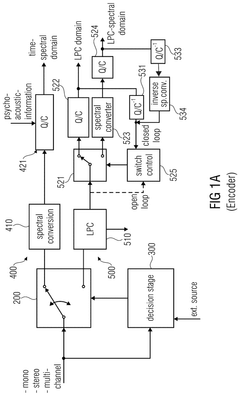
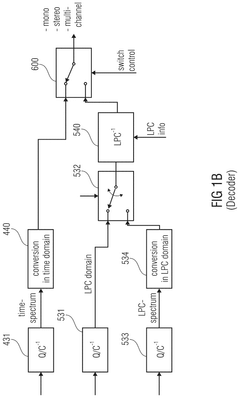
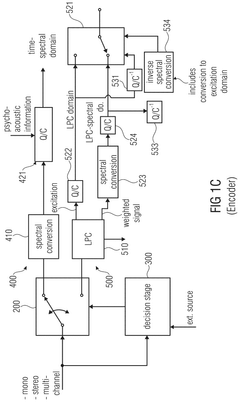
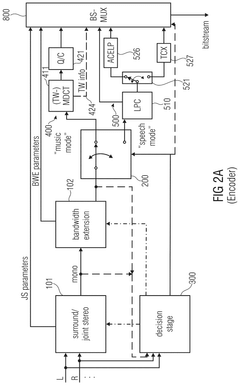
- An audio encoder that employs two distinct coding branches, one using a frequency-domain algorithm and the other using a Linear Predictive Coding (LPC) algorithm, with switches to dynamically select between them based on the audio signal characteristics, allowing for conversion between different domains to optimize encoding.
LDAC Compatibility and Ecosystem
LDAC compatibility and ecosystem play a crucial role in creating sustained audio quality across various devices and platforms. LDAC, developed by Sony, is a high-resolution audio codec that enables the transmission of high-quality audio over Bluetooth connections. Its compatibility extends to a wide range of devices, including smartphones, tablets, wireless headphones, and speakers.
The Android operating system has been a key driver in expanding LDAC's ecosystem. Since Android 8.0 (Oreo), LDAC has been natively supported, allowing any Android device running this version or later to utilize the codec. This integration has significantly increased the number of compatible devices and has made LDAC more accessible to a broader user base.
Many smartphone manufacturers have embraced LDAC technology, incorporating it into their flagship devices. Brands such as Sony, Samsung, LG, and OnePlus have been at the forefront of adopting LDAC, ensuring that their high-end smartphones can deliver superior audio quality when paired with compatible accessories.
In the realm of audio equipment, numerous manufacturers have integrated LDAC into their products. Wireless headphones and earbuds from Sony, Audio-Technica, Sennheiser, and other reputable brands now support LDAC, providing consumers with a wide selection of high-quality audio options. This growing ecosystem of LDAC-compatible devices has contributed to the codec's popularity and sustained audio quality.
The automotive industry has also begun to adopt LDAC technology, with some car manufacturers incorporating it into their in-vehicle entertainment systems. This expansion into the automotive sector further extends the reach of LDAC and enhances the audio experience for consumers across different environments.
To ensure compatibility and maintain audio quality, the LDAC ecosystem relies on certification processes. Devices and accessories that support LDAC must undergo testing and certification to guarantee proper implementation and performance. This certification process helps maintain the integrity of the LDAC ecosystem and ensures that users can expect consistent, high-quality audio experiences across different devices.
As the demand for high-resolution audio continues to grow, the LDAC ecosystem is likely to expand further. This expansion may include integration into smart home devices, gaming consoles, and other audio-centric products. The continued development of the LDAC ecosystem will play a vital role in sustaining audio quality and meeting the evolving needs of consumers in the realm of wireless audio technology.
The Android operating system has been a key driver in expanding LDAC's ecosystem. Since Android 8.0 (Oreo), LDAC has been natively supported, allowing any Android device running this version or later to utilize the codec. This integration has significantly increased the number of compatible devices and has made LDAC more accessible to a broader user base.
Many smartphone manufacturers have embraced LDAC technology, incorporating it into their flagship devices. Brands such as Sony, Samsung, LG, and OnePlus have been at the forefront of adopting LDAC, ensuring that their high-end smartphones can deliver superior audio quality when paired with compatible accessories.
In the realm of audio equipment, numerous manufacturers have integrated LDAC into their products. Wireless headphones and earbuds from Sony, Audio-Technica, Sennheiser, and other reputable brands now support LDAC, providing consumers with a wide selection of high-quality audio options. This growing ecosystem of LDAC-compatible devices has contributed to the codec's popularity and sustained audio quality.
The automotive industry has also begun to adopt LDAC technology, with some car manufacturers incorporating it into their in-vehicle entertainment systems. This expansion into the automotive sector further extends the reach of LDAC and enhances the audio experience for consumers across different environments.
To ensure compatibility and maintain audio quality, the LDAC ecosystem relies on certification processes. Devices and accessories that support LDAC must undergo testing and certification to guarantee proper implementation and performance. This certification process helps maintain the integrity of the LDAC ecosystem and ensures that users can expect consistent, high-quality audio experiences across different devices.
As the demand for high-resolution audio continues to grow, the LDAC ecosystem is likely to expand further. This expansion may include integration into smart home devices, gaming consoles, and other audio-centric products. The continued development of the LDAC ecosystem will play a vital role in sustaining audio quality and meeting the evolving needs of consumers in the realm of wireless audio technology.
Energy Efficiency in LDAC Transmission
Energy efficiency is a critical aspect of LDAC (Low Latency and High-Quality Audio Codec) transmission, particularly in the context of creating sustained audio quality. LDAC, developed by Sony, aims to deliver high-resolution audio wirelessly while maintaining optimal power consumption.
The codec employs adaptive bit rate technology, which dynamically adjusts the transmission rate based on the wireless environment and device capabilities. This adaptability allows LDAC to balance audio quality with energy efficiency, ensuring a more sustainable listening experience.
One of the key strategies for improving energy efficiency in LDAC transmission is the implementation of advanced power management techniques. These include intelligent sleep modes, where the codec can temporarily reduce power consumption during periods of inactivity or when transmitting less complex audio data.
LDAC also utilizes sophisticated compression algorithms that minimize data redundancy without compromising audio quality. By reducing the amount of data that needs to be transmitted, the codec inherently lowers power requirements for both the transmitting and receiving devices.
The codec's ability to operate at different bit rates (330 kbps, 660 kbps, and 990 kbps) allows for further optimization of energy consumption. In scenarios where battery life is a priority, the lower bit rate can be selected, sacrificing some audio quality for extended playback time.
Another important factor in LDAC's energy efficiency is its integration with Bluetooth Low Energy (BLE) technology. This combination allows for reduced power consumption during device discovery and connection establishment phases, contributing to overall energy savings.
LDAC's efficient use of available bandwidth also plays a role in its energy performance. By maximizing data throughput within the constraints of Bluetooth transmission, the codec minimizes the time required for audio data transfer, thereby reducing the overall energy expenditure.
Furthermore, LDAC incorporates error correction and concealment techniques that help maintain audio quality even in challenging wireless environments. This robustness reduces the need for retransmissions, which can be a significant drain on battery life.
As wireless audio technology continues to evolve, ongoing research focuses on further enhancing LDAC's energy efficiency. This includes exploring new compression techniques, optimizing codec operations at the hardware level, and developing more sophisticated power management algorithms.
The codec employs adaptive bit rate technology, which dynamically adjusts the transmission rate based on the wireless environment and device capabilities. This adaptability allows LDAC to balance audio quality with energy efficiency, ensuring a more sustainable listening experience.
One of the key strategies for improving energy efficiency in LDAC transmission is the implementation of advanced power management techniques. These include intelligent sleep modes, where the codec can temporarily reduce power consumption during periods of inactivity or when transmitting less complex audio data.
LDAC also utilizes sophisticated compression algorithms that minimize data redundancy without compromising audio quality. By reducing the amount of data that needs to be transmitted, the codec inherently lowers power requirements for both the transmitting and receiving devices.
The codec's ability to operate at different bit rates (330 kbps, 660 kbps, and 990 kbps) allows for further optimization of energy consumption. In scenarios where battery life is a priority, the lower bit rate can be selected, sacrificing some audio quality for extended playback time.
Another important factor in LDAC's energy efficiency is its integration with Bluetooth Low Energy (BLE) technology. This combination allows for reduced power consumption during device discovery and connection establishment phases, contributing to overall energy savings.
LDAC's efficient use of available bandwidth also plays a role in its energy performance. By maximizing data throughput within the constraints of Bluetooth transmission, the codec minimizes the time required for audio data transfer, thereby reducing the overall energy expenditure.
Furthermore, LDAC incorporates error correction and concealment techniques that help maintain audio quality even in challenging wireless environments. This robustness reduces the need for retransmissions, which can be a significant drain on battery life.
As wireless audio technology continues to evolve, ongoing research focuses on further enhancing LDAC's energy efficiency. This includes exploring new compression techniques, optimizing codec operations at the hardware level, and developing more sophisticated power management algorithms.
Unlock deeper insights with PatSnap Eureka Quick Research — get a full tech report to explore trends and direct your research. Try now!
Generate Your Research Report Instantly with AI Agent
Supercharge your innovation with PatSnap Eureka AI Agent Platform!