How to Evaluate ULED Display Providers?
JUN 20, 20259 MIN READ
Generate Your Research Report Instantly with AI Agent
PatSnap Eureka helps you evaluate technical feasibility & market potential.
ULED Display Evolution
The evolution of ULED (Ultra Light Emitting Diode) display technology represents a significant advancement in the field of visual display systems. This progression can be traced through several key stages, each marked by notable improvements in performance, efficiency, and overall user experience.
In the early stages of ULED development, manufacturers focused on enhancing the basic LED technology to achieve higher brightness levels and improved color accuracy. This phase saw the introduction of local dimming techniques, which allowed for better contrast ratios and deeper blacks compared to traditional LED displays.
As the technology matured, ULED displays began incorporating quantum dot technology. This innovation significantly expanded the color gamut, enabling displays to reproduce a wider range of colors with greater accuracy. The integration of quantum dots also contributed to improved energy efficiency, as less power was required to produce vibrant and lifelike images.
The next major milestone in ULED evolution was the development of mini-LED backlighting. This technology utilizes thousands of tiny LEDs to create more precise local dimming zones, resulting in enhanced contrast and reduced blooming effects. Mini-LED backlighting also allowed for thinner display designs, opening up new possibilities for product form factors.
Recent advancements in ULED technology have focused on improving motion handling and reducing response times. Manufacturers have implemented advanced algorithms and processing techniques to minimize motion blur and enhance the overall clarity of moving images. This has made ULED displays increasingly suitable for fast-paced content such as sports and action movies.
The latest frontier in ULED evolution is the integration of artificial intelligence and machine learning capabilities. These technologies enable real-time image optimization, adjusting brightness, contrast, and color settings based on ambient lighting conditions and content type. This adaptive approach ensures optimal viewing experiences across various environments and usage scenarios.
Looking ahead, the ULED display evolution is likely to continue with further refinements in energy efficiency, picture quality, and smart features. Emerging technologies such as micro-LED may be incorporated into future ULED designs, potentially offering even greater improvements in contrast, color accuracy, and power consumption.
When evaluating ULED display providers, it is crucial to consider their position along this evolutionary timeline. Providers at the forefront of ULED technology are likely to offer displays with the most advanced features and performance characteristics. However, it is equally important to assess the practical benefits of these advancements in relation to specific use cases and requirements.
In the early stages of ULED development, manufacturers focused on enhancing the basic LED technology to achieve higher brightness levels and improved color accuracy. This phase saw the introduction of local dimming techniques, which allowed for better contrast ratios and deeper blacks compared to traditional LED displays.
As the technology matured, ULED displays began incorporating quantum dot technology. This innovation significantly expanded the color gamut, enabling displays to reproduce a wider range of colors with greater accuracy. The integration of quantum dots also contributed to improved energy efficiency, as less power was required to produce vibrant and lifelike images.
The next major milestone in ULED evolution was the development of mini-LED backlighting. This technology utilizes thousands of tiny LEDs to create more precise local dimming zones, resulting in enhanced contrast and reduced blooming effects. Mini-LED backlighting also allowed for thinner display designs, opening up new possibilities for product form factors.
Recent advancements in ULED technology have focused on improving motion handling and reducing response times. Manufacturers have implemented advanced algorithms and processing techniques to minimize motion blur and enhance the overall clarity of moving images. This has made ULED displays increasingly suitable for fast-paced content such as sports and action movies.
The latest frontier in ULED evolution is the integration of artificial intelligence and machine learning capabilities. These technologies enable real-time image optimization, adjusting brightness, contrast, and color settings based on ambient lighting conditions and content type. This adaptive approach ensures optimal viewing experiences across various environments and usage scenarios.
Looking ahead, the ULED display evolution is likely to continue with further refinements in energy efficiency, picture quality, and smart features. Emerging technologies such as micro-LED may be incorporated into future ULED designs, potentially offering even greater improvements in contrast, color accuracy, and power consumption.
When evaluating ULED display providers, it is crucial to consider their position along this evolutionary timeline. Providers at the forefront of ULED technology are likely to offer displays with the most advanced features and performance characteristics. However, it is equally important to assess the practical benefits of these advancements in relation to specific use cases and requirements.
ULED Market Analysis
The ULED (Ultra Light Emitting Diode) display market has been experiencing significant growth in recent years, driven by the increasing demand for high-quality, energy-efficient display solutions across various industries. This emerging technology offers superior brightness, contrast, and color accuracy compared to traditional LED displays, making it particularly attractive for applications in digital signage, automotive displays, and consumer electronics.
Market research indicates that the global ULED display market is projected to expand at a compound annual growth rate (CAGR) of over 20% from 2021 to 2026. This growth is primarily fueled by the rising adoption of ULED technology in premium televisions, smartphones, and automotive infotainment systems. The Asia-Pacific region, particularly China and South Korea, is expected to dominate the market due to the presence of major ULED manufacturers and a strong consumer electronics industry.
One of the key drivers of ULED market growth is the increasing consumer preference for high-quality visual experiences. As content resolution continues to improve, there is a growing demand for display technologies that can accurately reproduce vibrant colors and deep blacks. ULED displays, with their superior contrast ratios and wider color gamuts, are well-positioned to meet these requirements.
The automotive sector is emerging as a significant market for ULED displays. With the trend towards connected and autonomous vehicles, there is a growing need for advanced in-vehicle displays that can provide clear, bright, and easily readable information in various lighting conditions. ULED technology's high brightness and energy efficiency make it an ideal choice for automotive applications, contributing to its market growth.
In the commercial display segment, ULED technology is gaining traction in digital signage and large-format displays. The ability of ULED displays to deliver high brightness and vivid colors even in bright ambient light conditions makes them particularly suitable for outdoor advertising and information displays in public spaces.
However, the ULED market also faces challenges. The high cost of production compared to traditional LED displays remains a significant barrier to widespread adoption. Additionally, the market is highly competitive, with several established players and new entrants vying for market share. This competition is driving rapid technological advancements but also putting pressure on profit margins.
To evaluate ULED display providers effectively, it is crucial to consider factors such as technological capabilities, production capacity, product quality, and after-sales support. Providers with a strong track record of innovation and a robust patent portfolio are likely to be better positioned in this rapidly evolving market. Furthermore, those with established relationships with key component suppliers and a diverse customer base across different industries may offer more stability and growth potential.
Market research indicates that the global ULED display market is projected to expand at a compound annual growth rate (CAGR) of over 20% from 2021 to 2026. This growth is primarily fueled by the rising adoption of ULED technology in premium televisions, smartphones, and automotive infotainment systems. The Asia-Pacific region, particularly China and South Korea, is expected to dominate the market due to the presence of major ULED manufacturers and a strong consumer electronics industry.
One of the key drivers of ULED market growth is the increasing consumer preference for high-quality visual experiences. As content resolution continues to improve, there is a growing demand for display technologies that can accurately reproduce vibrant colors and deep blacks. ULED displays, with their superior contrast ratios and wider color gamuts, are well-positioned to meet these requirements.
The automotive sector is emerging as a significant market for ULED displays. With the trend towards connected and autonomous vehicles, there is a growing need for advanced in-vehicle displays that can provide clear, bright, and easily readable information in various lighting conditions. ULED technology's high brightness and energy efficiency make it an ideal choice for automotive applications, contributing to its market growth.
In the commercial display segment, ULED technology is gaining traction in digital signage and large-format displays. The ability of ULED displays to deliver high brightness and vivid colors even in bright ambient light conditions makes them particularly suitable for outdoor advertising and information displays in public spaces.
However, the ULED market also faces challenges. The high cost of production compared to traditional LED displays remains a significant barrier to widespread adoption. Additionally, the market is highly competitive, with several established players and new entrants vying for market share. This competition is driving rapid technological advancements but also putting pressure on profit margins.
To evaluate ULED display providers effectively, it is crucial to consider factors such as technological capabilities, production capacity, product quality, and after-sales support. Providers with a strong track record of innovation and a robust patent portfolio are likely to be better positioned in this rapidly evolving market. Furthermore, those with established relationships with key component suppliers and a diverse customer base across different industries may offer more stability and growth potential.
ULED Tech Challenges
ULED (Ultra Light Emitting Diode) display technology faces several significant challenges that need to be addressed for widespread adoption and improvement. One of the primary issues is the complexity of manufacturing processes, which directly impacts production costs and scalability. The intricate nature of ULED fabrication requires highly specialized equipment and clean room environments, making it difficult for manufacturers to achieve economies of scale.
Another major challenge lies in the power efficiency of ULED displays. While they offer superior brightness and color accuracy compared to traditional LED displays, ULED panels currently consume more energy, particularly when displaying high-brightness content. This increased power consumption can lead to heat generation issues, potentially affecting the longevity and performance of the displays.
Color uniformity and consistency across large ULED panels remain problematic. As the display size increases, maintaining uniform brightness and color accuracy becomes increasingly challenging. This is particularly evident in applications requiring seamless tiling of multiple ULED panels, such as large-format digital signage or video walls.
Durability and lifespan of ULED displays also present ongoing challenges. The organic materials used in some ULED configurations are susceptible to degradation over time, especially when exposed to moisture or high temperatures. This can result in reduced brightness, color shifts, and even pixel failures, impacting the overall display quality and longevity.
The integration of ULED technology with flexible or curved display formats poses additional technical hurdles. While the potential for creating unique form factors is promising, ensuring consistent performance and durability in non-flat configurations requires further research and development.
Lastly, the industry faces challenges in standardization and interoperability. As different manufacturers develop proprietary ULED technologies, ensuring compatibility across various systems and content formats becomes increasingly complex. This lack of standardization can hinder widespread adoption and limit the ecosystem of compatible products and services.
Addressing these challenges requires collaborative efforts from researchers, manufacturers, and industry stakeholders. Innovations in materials science, manufacturing processes, and display driver technologies will be crucial in overcoming these obstacles and realizing the full potential of ULED display technology.
Another major challenge lies in the power efficiency of ULED displays. While they offer superior brightness and color accuracy compared to traditional LED displays, ULED panels currently consume more energy, particularly when displaying high-brightness content. This increased power consumption can lead to heat generation issues, potentially affecting the longevity and performance of the displays.
Color uniformity and consistency across large ULED panels remain problematic. As the display size increases, maintaining uniform brightness and color accuracy becomes increasingly challenging. This is particularly evident in applications requiring seamless tiling of multiple ULED panels, such as large-format digital signage or video walls.
Durability and lifespan of ULED displays also present ongoing challenges. The organic materials used in some ULED configurations are susceptible to degradation over time, especially when exposed to moisture or high temperatures. This can result in reduced brightness, color shifts, and even pixel failures, impacting the overall display quality and longevity.
The integration of ULED technology with flexible or curved display formats poses additional technical hurdles. While the potential for creating unique form factors is promising, ensuring consistent performance and durability in non-flat configurations requires further research and development.
Lastly, the industry faces challenges in standardization and interoperability. As different manufacturers develop proprietary ULED technologies, ensuring compatibility across various systems and content formats becomes increasingly complex. This lack of standardization can hinder widespread adoption and limit the ecosystem of compatible products and services.
Addressing these challenges requires collaborative efforts from researchers, manufacturers, and industry stakeholders. Innovations in materials science, manufacturing processes, and display driver technologies will be crucial in overcoming these obstacles and realizing the full potential of ULED display technology.
ULED Eval Criteria
01 ULED display structure and manufacturing
ULED displays incorporate advanced structural designs and manufacturing techniques to enhance performance. This includes innovations in pixel arrangement, substrate materials, and fabrication processes to improve display quality, efficiency, and durability.- ULED display structure and manufacturing: ULED displays incorporate advanced structural designs and manufacturing techniques to enhance performance and efficiency. These may include specialized pixel arrangements, improved light-emitting layers, and novel fabrication methods to achieve higher resolution, brightness, and color accuracy.
- Optical components for ULED displays: Various optical components are integrated into ULED displays to optimize light output and viewing experience. These may include micro-lenses, light guide plates, and specialized filters to improve light extraction, uniformity, and viewing angles.
- Driving circuits and control methods for ULED displays: Advanced driving circuits and control methods are developed to efficiently operate ULED displays. These may include innovative pixel addressing schemes, current control mechanisms, and timing algorithms to enhance display performance and reduce power consumption.
- Thermal management in ULED displays: Effective thermal management solutions are implemented in ULED displays to maintain optimal performance and longevity. These may include heat dissipation structures, thermal interface materials, and active cooling systems to regulate temperature and prevent degradation of display components.
- Integration of ULED displays in devices: ULED display technology is integrated into various devices and applications. This includes the development of flexible ULED displays, incorporation into wearable devices, and adaptation for automotive displays, enhancing the versatility and applicability of ULED technology across different sectors.
02 Light emission and color management
ULED technology focuses on optimizing light emission and color management. This involves developing new materials and methods for enhancing brightness, contrast, and color gamut, as well as implementing advanced color calibration and management systems.Expand Specific Solutions03 Power efficiency and heat dissipation
Improving power efficiency and heat dissipation is crucial for ULED displays. Innovations in this area include new circuit designs, power management systems, and thermal management solutions to reduce energy consumption and extend the lifespan of the display.Expand Specific Solutions04 Integration with other technologies
ULED displays are being integrated with other cutting-edge technologies to enhance functionality. This includes combining ULED with touch sensors, flexible substrates, and advanced driver ICs to create more versatile and interactive display solutions.Expand Specific Solutions05 Image processing and display algorithms
Advanced image processing and display algorithms are being developed for ULED technology. These include innovations in local dimming, HDR processing, motion compensation, and AI-enhanced image quality improvements to deliver superior visual experiences.Expand Specific Solutions
ULED Industry Players
The ULED display market is in a growth phase, with increasing demand for high-quality, energy-efficient displays across various industries. The market size is expanding rapidly, driven by advancements in display technology and growing applications in consumer electronics, automotive, and commercial sectors. Technologically, ULED displays are maturing, with key players like BOE Technology Group, Samsung Display, and TCL China Star Optoelectronics leading innovation. Companies such as Lumileds, eLux, and Appotronics are also contributing to technological advancements. The competitive landscape is diverse, with established electronics giants competing alongside specialized display manufacturers and emerging startups, each striving to differentiate through unique features, improved performance, and cost-effectiveness.
BOE Technology Group Co., Ltd.
Technical Solution: BOE has developed advanced ULED (Ultra LED) display technology, which combines quantum dot technology with Mini-LED backlighting. Their ULED displays offer enhanced color gamut, higher contrast ratios, and improved energy efficiency compared to traditional LED displays. BOE's ULED technology uses a proprietary quantum dot film and precise local dimming control to achieve superior picture quality. The company has also invested in advanced manufacturing processes to ensure consistent quality and yield in ULED panel production.
Strengths: Wide color gamut, high contrast, energy efficiency. Weaknesses: Higher production costs, potential for image retention in static content.
TCL China Star Optoelectronics Technology Co., Ltd.
Technical Solution: TCL CSOT has developed its own ULED technology, which they market as QLED. Their approach combines quantum dot technology with Mini-LED backlighting and local dimming. TCL's ULED displays feature thousands of local dimming zones for precise contrast control. They have also implemented advanced color management systems to ensure accurate and vibrant color reproduction. TCL CSOT has focused on improving the manufacturing process to reduce costs while maintaining high quality, making ULED technology more accessible to a wider range of consumers.
Strengths: Good balance of performance and affordability, wide availability. Weaknesses: May not match the peak performance of more premium competitors.
ULED Core Patents
Display panel and display device
PatentActiveCN114038320A
Innovation
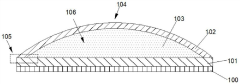
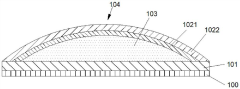
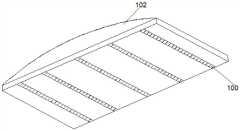
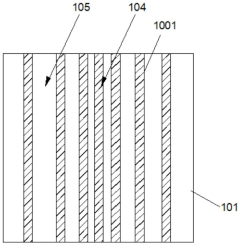
- A display panel is designed, which includes a light enhancement layer with a curved structure on the light exit side of the display screen, and a filling layer between the light enhancement layer and the display screen. The light is scattered through the combined structure of the light enhancement layer and the filling layer. , improve light extraction efficiency. The light enhancement layer has a curved or semi-convex lens structure, and the edge is attached to the display screen. The filling layer material has different light refractive index and is filled in the cavity of the light enhancement layer to enhance the emission of light.
Display judgment method, device and equipment and storage medium
PatentActiveCN112466253A
Innovation
- Through the display judgment method executed by the processor, the display parameters of the first display area and the second display area when the under-screen device is turned off are obtained, the display difference quantification value is calculated, the display screen is judged whether the display is uneven, and the corresponding display of the under-screen device is quantified How the image quality of an area compares with other areas.


ULED Supply Chain
The ULED (Ultra Light Emitting Diode) supply chain plays a crucial role in the production and distribution of advanced display technologies. This complex network involves multiple stakeholders, from raw material suppliers to end-product manufacturers, each contributing to the development of high-quality ULED displays.
At the core of the ULED supply chain are the manufacturers of key components, such as LED chips, drivers, and optical films. These specialized suppliers often invest heavily in research and development to produce cutting-edge materials that meet the stringent requirements of ULED technology. The quality and reliability of these components directly impact the performance of the final display products.
Panel manufacturers form another critical link in the chain, integrating various components to create ULED panels. These companies must maintain strict quality control measures and possess advanced manufacturing capabilities to ensure the production of high-performance displays. Their ability to scale production while maintaining consistency is essential for meeting market demands.
Downstream in the supply chain are the display module assemblers and system integrators. These entities combine ULED panels with other components like control boards and power supplies to create complete display solutions. Their expertise in system design and integration is vital for optimizing the overall performance and reliability of ULED displays.
The logistics and distribution network supporting the ULED supply chain is equally important. Efficient transportation and inventory management systems are necessary to ensure timely delivery of components and finished products across global markets. This aspect of the supply chain becomes increasingly complex as demand for ULED displays grows and production scales up.
Evaluating ULED display providers requires a comprehensive understanding of their position and relationships within this supply chain. Factors to consider include the provider's access to high-quality components, their manufacturing capabilities, and their ability to manage supply chain risks effectively. Providers with strong partnerships across the supply chain and a track record of consistent quality are likely to be more reliable choices.
Additionally, the financial stability and long-term viability of key players in the supply chain should be assessed. Disruptions at any point in the chain can have significant impacts on product availability and quality. Therefore, providers with diversified supplier relationships and robust contingency plans may offer greater stability and resilience.
At the core of the ULED supply chain are the manufacturers of key components, such as LED chips, drivers, and optical films. These specialized suppliers often invest heavily in research and development to produce cutting-edge materials that meet the stringent requirements of ULED technology. The quality and reliability of these components directly impact the performance of the final display products.
Panel manufacturers form another critical link in the chain, integrating various components to create ULED panels. These companies must maintain strict quality control measures and possess advanced manufacturing capabilities to ensure the production of high-performance displays. Their ability to scale production while maintaining consistency is essential for meeting market demands.
Downstream in the supply chain are the display module assemblers and system integrators. These entities combine ULED panels with other components like control boards and power supplies to create complete display solutions. Their expertise in system design and integration is vital for optimizing the overall performance and reliability of ULED displays.
The logistics and distribution network supporting the ULED supply chain is equally important. Efficient transportation and inventory management systems are necessary to ensure timely delivery of components and finished products across global markets. This aspect of the supply chain becomes increasingly complex as demand for ULED displays grows and production scales up.
Evaluating ULED display providers requires a comprehensive understanding of their position and relationships within this supply chain. Factors to consider include the provider's access to high-quality components, their manufacturing capabilities, and their ability to manage supply chain risks effectively. Providers with strong partnerships across the supply chain and a track record of consistent quality are likely to be more reliable choices.
Additionally, the financial stability and long-term viability of key players in the supply chain should be assessed. Disruptions at any point in the chain can have significant impacts on product availability and quality. Therefore, providers with diversified supplier relationships and robust contingency plans may offer greater stability and resilience.
ULED Quality Standards
When evaluating ULED display providers, it is crucial to establish and adhere to rigorous quality standards. These standards serve as benchmarks for assessing the performance, reliability, and overall quality of ULED displays, ensuring that manufacturers meet the necessary requirements for producing high-quality products.
One of the primary quality standards for ULED displays is color accuracy and consistency. This involves measuring the display's ability to reproduce colors accurately across the entire screen and maintaining color consistency over time. Industry-standard color gamut coverage, such as DCI-P3 or Adobe RGB, should be evaluated, along with Delta E values to quantify color accuracy.
Brightness and contrast ratio are also essential quality metrics for ULED displays. The peak brightness, measured in nits, should meet or exceed industry standards for the intended application. Similarly, the contrast ratio, which determines the display's ability to produce deep blacks and bright whites, should be assessed under various lighting conditions to ensure optimal performance.
Resolution and pixel density are critical factors in determining the overall image quality of ULED displays. The number of pixels per inch (PPI) should be evaluated based on the intended viewing distance and application. Higher resolutions and pixel densities generally result in sharper, more detailed images.
Uniformity is another crucial aspect of ULED display quality. This involves assessing the consistency of brightness and color across the entire screen, ensuring that there are no visible hotspots, dark areas, or color shifts. Uniformity measurements should be conducted using specialized equipment and industry-standard test patterns.
Response time and refresh rate are particularly important for applications requiring smooth motion handling, such as gaming or fast-moving content. The response time, measured in milliseconds, should be as low as possible to minimize motion blur. The refresh rate, measured in Hertz, should be sufficiently high to provide a smooth viewing experience.
Longevity and reliability are essential considerations for ULED displays. Quality standards should include assessments of the display's expected lifespan, resistance to image retention or burn-in, and overall durability. Accelerated aging tests and stress tests can be employed to evaluate these factors.
Power efficiency is becoming increasingly important in display technology. ULED quality standards should include measurements of power consumption under various usage scenarios, as well as the display's ability to maintain performance while operating at lower power levels.
Finally, quality standards should address the environmental impact of ULED displays. This includes evaluating the use of eco-friendly materials, energy efficiency during operation, and the recyclability of components at the end of the product's life cycle.
By establishing and adhering to these comprehensive quality standards, manufacturers and consumers can ensure that ULED displays meet the highest levels of performance, reliability, and sustainability in the rapidly evolving display technology market.
One of the primary quality standards for ULED displays is color accuracy and consistency. This involves measuring the display's ability to reproduce colors accurately across the entire screen and maintaining color consistency over time. Industry-standard color gamut coverage, such as DCI-P3 or Adobe RGB, should be evaluated, along with Delta E values to quantify color accuracy.
Brightness and contrast ratio are also essential quality metrics for ULED displays. The peak brightness, measured in nits, should meet or exceed industry standards for the intended application. Similarly, the contrast ratio, which determines the display's ability to produce deep blacks and bright whites, should be assessed under various lighting conditions to ensure optimal performance.
Resolution and pixel density are critical factors in determining the overall image quality of ULED displays. The number of pixels per inch (PPI) should be evaluated based on the intended viewing distance and application. Higher resolutions and pixel densities generally result in sharper, more detailed images.
Uniformity is another crucial aspect of ULED display quality. This involves assessing the consistency of brightness and color across the entire screen, ensuring that there are no visible hotspots, dark areas, or color shifts. Uniformity measurements should be conducted using specialized equipment and industry-standard test patterns.
Response time and refresh rate are particularly important for applications requiring smooth motion handling, such as gaming or fast-moving content. The response time, measured in milliseconds, should be as low as possible to minimize motion blur. The refresh rate, measured in Hertz, should be sufficiently high to provide a smooth viewing experience.
Longevity and reliability are essential considerations for ULED displays. Quality standards should include assessments of the display's expected lifespan, resistance to image retention or burn-in, and overall durability. Accelerated aging tests and stress tests can be employed to evaluate these factors.
Power efficiency is becoming increasingly important in display technology. ULED quality standards should include measurements of power consumption under various usage scenarios, as well as the display's ability to maintain performance while operating at lower power levels.
Finally, quality standards should address the environmental impact of ULED displays. This includes evaluating the use of eco-friendly materials, energy efficiency during operation, and the recyclability of components at the end of the product's life cycle.
By establishing and adhering to these comprehensive quality standards, manufacturers and consumers can ensure that ULED displays meet the highest levels of performance, reliability, and sustainability in the rapidly evolving display technology market.
Unlock deeper insights with PatSnap Eureka Quick Research — get a full tech report to explore trends and direct your research. Try now!
Generate Your Research Report Instantly with AI Agent
Supercharge your innovation with PatSnap Eureka AI Agent Platform!