

How to Implement ULED in Smart TVs?
JUN 23, 20258 MIN READ
Generate Your Research Report Instantly with AI Agent
PatSnap Eureka helps you evaluate technical feasibility & market potential.
ULED Technology Evolution and Objectives
Ultra Light Emitting Diode (ULED) technology has emerged as a significant advancement in display technology, particularly in the realm of Smart TVs. The evolution of ULED can be traced back to the early 2010s when manufacturers began exploring ways to enhance LED backlighting systems to improve picture quality and energy efficiency.
The primary objective of ULED technology is to deliver superior image quality while maintaining energy efficiency. This is achieved through a combination of advanced local dimming techniques, quantum dot technology, and sophisticated image processing algorithms. ULED aims to provide deeper blacks, brighter whites, and a wider color gamut compared to traditional LED displays.
As ULED technology progressed, key milestones included the introduction of more precise local dimming zones, the integration of quantum dot technology for enhanced color reproduction, and the development of AI-powered image processing algorithms. These advancements have collectively contributed to the creation of displays with higher contrast ratios, more vibrant colors, and improved overall picture quality.
The evolution of ULED technology has been driven by consumer demand for increasingly immersive viewing experiences and the competitive landscape of the TV market. Manufacturers have continuously pushed the boundaries of what is possible with LED technology, striving to close the gap with OLED displays in terms of picture quality while maintaining the cost and longevity advantages of LED technology.
Recent developments in ULED technology have focused on increasing the number of local dimming zones, improving the precision of backlight control, and enhancing the efficiency of light transmission through the display panel. These efforts aim to address the historical limitations of LED technology, such as blooming effects and limited contrast in dark scenes.
Looking forward, the objectives for ULED technology in Smart TVs include further refinement of local dimming techniques, potentially increasing the number of dimming zones to the thousands or even millions. Additionally, there is a focus on improving the integration of quantum dot technology to achieve a wider color gamut that approaches or exceeds that of OLED displays.
Another key objective is the development of more sophisticated AI algorithms for real-time image processing and enhancement. These algorithms aim to optimize picture quality based on content type, ambient lighting conditions, and viewer preferences, providing a more tailored and immersive viewing experience.
The primary objective of ULED technology is to deliver superior image quality while maintaining energy efficiency. This is achieved through a combination of advanced local dimming techniques, quantum dot technology, and sophisticated image processing algorithms. ULED aims to provide deeper blacks, brighter whites, and a wider color gamut compared to traditional LED displays.
As ULED technology progressed, key milestones included the introduction of more precise local dimming zones, the integration of quantum dot technology for enhanced color reproduction, and the development of AI-powered image processing algorithms. These advancements have collectively contributed to the creation of displays with higher contrast ratios, more vibrant colors, and improved overall picture quality.
The evolution of ULED technology has been driven by consumer demand for increasingly immersive viewing experiences and the competitive landscape of the TV market. Manufacturers have continuously pushed the boundaries of what is possible with LED technology, striving to close the gap with OLED displays in terms of picture quality while maintaining the cost and longevity advantages of LED technology.
Recent developments in ULED technology have focused on increasing the number of local dimming zones, improving the precision of backlight control, and enhancing the efficiency of light transmission through the display panel. These efforts aim to address the historical limitations of LED technology, such as blooming effects and limited contrast in dark scenes.
Looking forward, the objectives for ULED technology in Smart TVs include further refinement of local dimming techniques, potentially increasing the number of dimming zones to the thousands or even millions. Additionally, there is a focus on improving the integration of quantum dot technology to achieve a wider color gamut that approaches or exceeds that of OLED displays.
Another key objective is the development of more sophisticated AI algorithms for real-time image processing and enhancement. These algorithms aim to optimize picture quality based on content type, ambient lighting conditions, and viewer preferences, providing a more tailored and immersive viewing experience.
Smart TV Market Demand Analysis
The smart TV market has experienced significant growth in recent years, driven by increasing consumer demand for connected and interactive entertainment experiences. As households seek more advanced and feature-rich television sets, the integration of ULED (Ultra Light Emitting Diode) technology in smart TVs has emerged as a potential game-changer in the industry.
Market research indicates a strong upward trend in smart TV adoption globally. Consumers are increasingly gravitating towards larger screen sizes, higher resolutions, and enhanced picture quality, all of which align well with the capabilities of ULED technology. The demand for smart TVs with superior display performance is particularly pronounced in developed markets such as North America, Western Europe, and parts of Asia-Pacific.
The rise of streaming services and the growing popularity of 4K and 8K content have further fueled the demand for high-performance displays. ULED technology, with its ability to deliver improved contrast ratios, wider color gamuts, and enhanced brightness levels, is well-positioned to meet these evolving consumer expectations.
In terms of market segmentation, there is a notable shift towards premium and ultra-premium smart TV segments. Consumers in these categories are willing to invest in cutting-edge display technologies that offer superior viewing experiences. This trend presents a significant opportunity for ULED-equipped smart TVs to capture market share in the high-end segment.
The smart TV market is also witnessing increased demand for energy-efficient solutions. ULED technology's potential to offer improved energy efficiency compared to traditional LED and OLED displays aligns well with this consumer preference and regulatory requirements in many regions.
Another key market driver is the growing integration of smart home ecosystems. Consumers are seeking televisions that can seamlessly connect with other smart devices and serve as central hubs for home entertainment and automation. ULED-equipped smart TVs with advanced connectivity features and AI-powered interfaces are well-positioned to meet this demand.
The COVID-19 pandemic has also had a notable impact on smart TV market dynamics. With more people spending time at home, there has been an increased focus on home entertainment systems, leading to a surge in demand for high-quality smart TVs. This trend is expected to have lasting effects on consumer behavior and preferences in the post-pandemic era.
Looking ahead, market analysts project continued growth in the smart TV sector, with ULED technology poised to play a significant role. As manufacturing costs decrease and consumer awareness increases, ULED-equipped smart TVs are expected to penetrate broader market segments, moving beyond the premium category.
Market research indicates a strong upward trend in smart TV adoption globally. Consumers are increasingly gravitating towards larger screen sizes, higher resolutions, and enhanced picture quality, all of which align well with the capabilities of ULED technology. The demand for smart TVs with superior display performance is particularly pronounced in developed markets such as North America, Western Europe, and parts of Asia-Pacific.
The rise of streaming services and the growing popularity of 4K and 8K content have further fueled the demand for high-performance displays. ULED technology, with its ability to deliver improved contrast ratios, wider color gamuts, and enhanced brightness levels, is well-positioned to meet these evolving consumer expectations.
In terms of market segmentation, there is a notable shift towards premium and ultra-premium smart TV segments. Consumers in these categories are willing to invest in cutting-edge display technologies that offer superior viewing experiences. This trend presents a significant opportunity for ULED-equipped smart TVs to capture market share in the high-end segment.
The smart TV market is also witnessing increased demand for energy-efficient solutions. ULED technology's potential to offer improved energy efficiency compared to traditional LED and OLED displays aligns well with this consumer preference and regulatory requirements in many regions.
Another key market driver is the growing integration of smart home ecosystems. Consumers are seeking televisions that can seamlessly connect with other smart devices and serve as central hubs for home entertainment and automation. ULED-equipped smart TVs with advanced connectivity features and AI-powered interfaces are well-positioned to meet this demand.
The COVID-19 pandemic has also had a notable impact on smart TV market dynamics. With more people spending time at home, there has been an increased focus on home entertainment systems, leading to a surge in demand for high-quality smart TVs. This trend is expected to have lasting effects on consumer behavior and preferences in the post-pandemic era.
Looking ahead, market analysts project continued growth in the smart TV sector, with ULED technology poised to play a significant role. As manufacturing costs decrease and consumer awareness increases, ULED-equipped smart TVs are expected to penetrate broader market segments, moving beyond the premium category.
ULED Implementation Challenges
Implementing ULED (Ultra Light Emitting Diode) technology in Smart TVs presents several significant challenges that manufacturers and engineers must overcome. One of the primary obstacles is the complexity of miniaturizing LED components while maintaining high performance and reliability. The process of creating ultra-small LEDs with consistent quality and brightness across the entire display panel requires advanced manufacturing techniques and precision control.
Another major challenge lies in the thermal management of ULED displays. As the LED components are packed more densely, heat dissipation becomes a critical issue. Excessive heat can lead to reduced lifespan of the LEDs, color shift, and overall degradation of display quality. Developing effective cooling solutions that can be integrated into the slim profile of modern Smart TVs is a significant engineering challenge.
The cost of production is also a substantial hurdle in ULED implementation. The intricate manufacturing process and the need for high-precision equipment contribute to higher production costs compared to traditional LED or OLED technologies. Balancing the cost-effectiveness of ULED displays with their superior performance is crucial for market adoption.
Color management and uniformity pose another set of challenges. Achieving consistent color reproduction across the entire display and maintaining color accuracy over time requires sophisticated calibration techniques and advanced color management systems. This is particularly challenging given the ultra-high resolution and wide color gamut capabilities of ULED displays.
Power efficiency is a critical consideration in ULED implementation. While ULEDs are generally more energy-efficient than traditional LEDs, optimizing power consumption while delivering high brightness and contrast ratios remains a challenge. This is especially important for Smart TVs, where energy ratings play a significant role in consumer decision-making.
The integration of ULED technology with existing Smart TV features and software platforms presents additional challenges. Ensuring compatibility with various content formats, HDR standards, and smart functionalities while leveraging the full potential of ULED displays requires extensive software development and optimization.
Lastly, the durability and longevity of ULED displays in consumer electronics environments are concerns that need to be addressed. Developing robust ULED panels that can withstand daily use, temperature variations, and potential physical impacts while maintaining consistent performance over several years is crucial for consumer acceptance and satisfaction.
Another major challenge lies in the thermal management of ULED displays. As the LED components are packed more densely, heat dissipation becomes a critical issue. Excessive heat can lead to reduced lifespan of the LEDs, color shift, and overall degradation of display quality. Developing effective cooling solutions that can be integrated into the slim profile of modern Smart TVs is a significant engineering challenge.
The cost of production is also a substantial hurdle in ULED implementation. The intricate manufacturing process and the need for high-precision equipment contribute to higher production costs compared to traditional LED or OLED technologies. Balancing the cost-effectiveness of ULED displays with their superior performance is crucial for market adoption.
Color management and uniformity pose another set of challenges. Achieving consistent color reproduction across the entire display and maintaining color accuracy over time requires sophisticated calibration techniques and advanced color management systems. This is particularly challenging given the ultra-high resolution and wide color gamut capabilities of ULED displays.
Power efficiency is a critical consideration in ULED implementation. While ULEDs are generally more energy-efficient than traditional LEDs, optimizing power consumption while delivering high brightness and contrast ratios remains a challenge. This is especially important for Smart TVs, where energy ratings play a significant role in consumer decision-making.
The integration of ULED technology with existing Smart TV features and software platforms presents additional challenges. Ensuring compatibility with various content formats, HDR standards, and smart functionalities while leveraging the full potential of ULED displays requires extensive software development and optimization.
Lastly, the durability and longevity of ULED displays in consumer electronics environments are concerns that need to be addressed. Developing robust ULED panels that can withstand daily use, temperature variations, and potential physical impacts while maintaining consistent performance over several years is crucial for consumer acceptance and satisfaction.
Current ULED Integration Solutions
01 ULED display panel structure
ULED display panels incorporate innovative structural designs to enhance performance and efficiency. These designs may include specialized pixel arrangements, improved light-emitting layers, and optimized electrode configurations. Such structural advancements contribute to better color reproduction, increased brightness, and improved energy efficiency in ULED displays.- ULED display panel structure: ULED (Ultra Light Emitting Diode) display panels incorporate advanced structures to enhance performance and efficiency. These structures may include specialized pixel arrangements, improved light-emitting layers, and optimized electrode configurations. The design aims to achieve better color reproduction, higher brightness, and increased energy efficiency compared to traditional LED displays.
- ULED backlight module design: ULED backlight modules are designed to provide uniform illumination for display panels. These modules may incorporate innovative light guide plates, reflective materials, and optical films to enhance light distribution and efficiency. The design focuses on minimizing light loss, reducing power consumption, and improving overall display quality.
- ULED driving and control systems: Advanced driving and control systems are developed for ULED displays to optimize performance and power efficiency. These systems may include specialized integrated circuits, pulse-width modulation techniques, and intelligent dimming algorithms. The goal is to achieve precise control over individual LEDs, enhance image quality, and reduce energy consumption.
- ULED manufacturing processes: Innovative manufacturing processes are employed to produce high-quality ULED components and displays. These processes may involve advanced deposition techniques, precise patterning methods, and novel materials. The focus is on improving yield rates, reducing production costs, and enhancing the overall quality and consistency of ULED products.
- ULED color management and image processing: Sophisticated color management and image processing techniques are developed for ULED displays to enhance visual quality. These may include advanced color calibration methods, dynamic range expansion algorithms, and content-adaptive processing. The aim is to deliver more accurate colors, improved contrast, and a more immersive viewing experience across various content types.
02 ULED backlight technology
ULED backlight technology focuses on enhancing the illumination system behind the display panel. This may involve the use of advanced LED arrangements, light guide plates, and optical films to achieve uniform brightness distribution, improved contrast, and reduced power consumption. These backlight innovations contribute to the overall picture quality and energy efficiency of ULED displays.Expand Specific Solutions03 ULED color management and enhancement
Color management and enhancement techniques in ULED displays aim to improve color accuracy, gamut, and dynamic range. This may involve advanced color filtering technologies, quantum dot integration, or sophisticated image processing algorithms. These innovations result in more vibrant and lifelike color reproduction in ULED displays.Expand Specific Solutions04 ULED power efficiency and heat management
ULED technology incorporates various methods to improve power efficiency and manage heat generation. This may include advanced power supply designs, intelligent dimming techniques, and innovative thermal management solutions. These improvements contribute to reduced energy consumption, extended lifespan, and improved overall performance of ULED displays.Expand Specific Solutions05 ULED image processing and upscaling
ULED displays employ advanced image processing and upscaling techniques to enhance picture quality. This may include AI-powered algorithms for content optimization, motion handling improvements, and resolution upscaling. These technologies aim to deliver sharper, more detailed images and smoother motion performance in ULED displays.Expand Specific Solutions
Key ULED and Smart TV Manufacturers
The implementation of ULED in Smart TVs is in a growth phase, with increasing market size and technological advancements. The competitive landscape is characterized by major players like TCL, Hisense, and Skyworth leading the charge. These companies are investing heavily in R&D to improve ULED technology, focusing on enhancing picture quality, energy efficiency, and cost-effectiveness. The market is seeing a gradual shift from traditional LED to ULED displays, driven by consumer demand for better visual experiences. While the technology is maturing, there's still room for innovation, particularly in areas such as color gamut, brightness, and contrast ratios. Companies like Huawei and ZTE are also entering the space, potentially disrupting the market with their technological expertise.
Konka Group Co., Ltd.
Technical Solution: Konka has developed a proprietary ULED technology for their smart TVs, which combines Ultra HD resolution with enhanced LED backlighting. Their approach focuses on improving local dimming capabilities, increasing the number of dimming zones to provide better contrast and deeper blacks. Konka's ULED also incorporates quantum dot technology to enhance color gamut and brightness, resulting in more vivid and lifelike images. The company has integrated AI-powered image processing algorithms to optimize picture quality in real-time, adapting to different content types and viewing environments.
Strengths: Improved contrast and black levels, wider color gamut, and AI-enhanced image processing. Weaknesses: Potentially higher production costs and complexity compared to standard LED TVs.
Shenzhen TCL New Technology Co., Ltd.
Technical Solution: TCL's implementation of ULED in smart TVs involves their proprietary Mini-LED backlight technology combined with Quantum Dot display. This approach uses thousands of miniaturized LEDs as the backlight source, allowing for more precise local dimming and improved contrast ratios. TCL's ULED also incorporates their AiPQ Engine, which uses machine learning algorithms to enhance picture quality, optimize color accuracy, and reduce noise in real-time. The company has also focused on improving motion handling through their 120Hz MEMC (Motion Estimation and Motion Compensation) technology, reducing blur and judder in fast-moving scenes.
Strengths: Excellent contrast and HDR performance, advanced AI-driven picture processing, and superior motion handling. Weaknesses: Higher manufacturing costs and potential for blooming effects in some scenes.
Core ULED Patents and Innovations
ULED/OLED integrated light emitting body for display
PatentActiveCN108039359A
Innovation
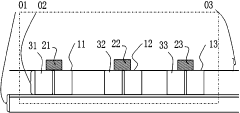
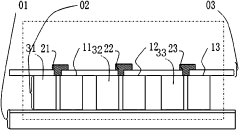
- Using ULED and OLED combined light emitters, by forming an epitaxial barrier crystal film layer and pixel points on the substrate, using micro ULED and OLED to connect in parallel respectively, controlling the combination of micro inorganic light-emitting diodes and organic light-emitting diodes, and using gallium nitride materials to improve Light efficiency, and achieve efficient electrical connection through the electrical interface matrix layer and LED controller.
Pixel Structure for Electronic Display, and Electronic Device Comprising Such Display
PatentPendingUS20230261151A1
Innovation
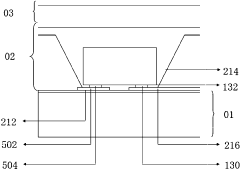
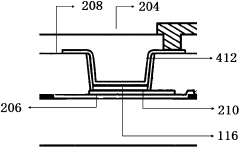
- A pixel structure with LED emitters and wavelength conversion units arranged adjacent to each other on a substrate, allowing for reduced height, improved heat dissipation, and reduced risk of radiation leakage, while using only one type of LED emitter for simpler manufacturing and achieving higher efficiency by directing converted radiation perpendicular to the emission plane.


ULED vs. Competing Display Technologies
ULED (Ultra Light Emitting Diode) technology represents a significant advancement in display technology, offering several advantages over competing display technologies in the smart TV market. When compared to traditional LED and OLED displays, ULED stands out for its superior brightness, contrast ratio, and energy efficiency.
One of the key advantages of ULED is its ability to produce higher peak brightness levels than OLED displays. This is particularly beneficial for HDR content, where high brightness is crucial for delivering a more immersive viewing experience. ULED panels can achieve brightness levels of up to 1,500 nits or more, significantly outperforming OLED displays, which typically max out around 800-1,000 nits.
In terms of contrast ratio, ULED technology employs local dimming techniques to achieve deep blacks and high contrast. While not quite matching the perfect blacks of OLED, ULED displays can produce contrast ratios exceeding 1,000,000:1, offering a visually striking image quality that surpasses traditional LED-LCD displays.
Energy efficiency is another area where ULED excels. The technology utilizes advanced power management systems and more efficient backlighting, resulting in lower power consumption compared to conventional LED displays. This not only reduces electricity costs for consumers but also aligns with growing environmental concerns.
Color reproduction is a critical factor in display technology, and ULED holds its own against competitors. With the ability to display a wide color gamut covering over 100% of the DCI-P3 color space, ULED panels can produce vibrant and accurate colors, rivaling the performance of QLED and OLED displays.
Longevity is an important consideration for consumers investing in high-end TVs. ULED technology addresses concerns about burn-in, which can affect OLED displays over time. The inorganic nature of LED backlights in ULED panels makes them less susceptible to image retention issues, potentially offering a longer lifespan than OLED counterparts.
However, it's worth noting that ULED is not without its limitations. The technology still relies on a backlight system, which can result in some blooming or halo effects around bright objects on dark backgrounds, an issue not present in self-emissive OLED displays. Additionally, viewing angles may not be as wide as those offered by OLED technology.
In the competitive landscape of display technologies, ULED positions itself as a strong contender, offering a balance of high performance, energy efficiency, and longevity. As the technology continues to evolve, it has the potential to further narrow the gap with OLED in areas where it currently lags, while maintaining its advantages in brightness and power efficiency.
One of the key advantages of ULED is its ability to produce higher peak brightness levels than OLED displays. This is particularly beneficial for HDR content, where high brightness is crucial for delivering a more immersive viewing experience. ULED panels can achieve brightness levels of up to 1,500 nits or more, significantly outperforming OLED displays, which typically max out around 800-1,000 nits.
In terms of contrast ratio, ULED technology employs local dimming techniques to achieve deep blacks and high contrast. While not quite matching the perfect blacks of OLED, ULED displays can produce contrast ratios exceeding 1,000,000:1, offering a visually striking image quality that surpasses traditional LED-LCD displays.
Energy efficiency is another area where ULED excels. The technology utilizes advanced power management systems and more efficient backlighting, resulting in lower power consumption compared to conventional LED displays. This not only reduces electricity costs for consumers but also aligns with growing environmental concerns.
Color reproduction is a critical factor in display technology, and ULED holds its own against competitors. With the ability to display a wide color gamut covering over 100% of the DCI-P3 color space, ULED panels can produce vibrant and accurate colors, rivaling the performance of QLED and OLED displays.
Longevity is an important consideration for consumers investing in high-end TVs. ULED technology addresses concerns about burn-in, which can affect OLED displays over time. The inorganic nature of LED backlights in ULED panels makes them less susceptible to image retention issues, potentially offering a longer lifespan than OLED counterparts.
However, it's worth noting that ULED is not without its limitations. The technology still relies on a backlight system, which can result in some blooming or halo effects around bright objects on dark backgrounds, an issue not present in self-emissive OLED displays. Additionally, viewing angles may not be as wide as those offered by OLED technology.
In the competitive landscape of display technologies, ULED positions itself as a strong contender, offering a balance of high performance, energy efficiency, and longevity. As the technology continues to evolve, it has the potential to further narrow the gap with OLED in areas where it currently lags, while maintaining its advantages in brightness and power efficiency.
Energy Efficiency and Sustainability
The implementation of ULED (Ultra Light Emitting Diode) technology in Smart TVs presents significant opportunities for enhancing energy efficiency and sustainability in the consumer electronics industry. ULED displays offer superior brightness and contrast while consuming less power compared to traditional LED and OLED technologies, making them an attractive option for environmentally conscious consumers and manufacturers alike.
ULED technology achieves its energy efficiency through several key innovations. The use of quantum dot materials allows for more precise color reproduction, reducing the need for excessive backlighting and thus lowering power consumption. Additionally, advanced local dimming techniques enable precise control over individual LED zones, further optimizing energy usage by selectively illuminating only the necessary areas of the screen.
Smart TVs equipped with ULED displays can potentially reduce energy consumption by up to 40% compared to conventional LED models. This substantial reduction in power usage not only leads to lower electricity bills for consumers but also contributes to a significant decrease in carbon emissions associated with television usage over the product's lifetime.
The sustainability benefits of ULED technology extend beyond energy efficiency. The longer lifespan of ULED panels, typically lasting up to 100,000 hours, reduces the frequency of TV replacements and subsequently minimizes electronic waste. Furthermore, the materials used in ULED production are generally more environmentally friendly and easier to recycle compared to those used in OLED displays.
Manufacturers implementing ULED in Smart TVs can leverage this technology to meet increasingly stringent energy efficiency standards and environmental regulations. This alignment with sustainability goals can enhance brand reputation and appeal to eco-conscious consumers, potentially driving market growth in the competitive Smart TV sector.
To fully realize the sustainability potential of ULED technology, manufacturers should focus on optimizing the entire product lifecycle. This includes sourcing sustainable materials, implementing energy-efficient manufacturing processes, and designing products for easy disassembly and recycling at the end of their useful life.
As ULED technology continues to evolve, future developments may further enhance its energy efficiency and sustainability profile. Research into advanced quantum dot materials, more efficient backlighting systems, and improved power management algorithms could lead to even greater reductions in energy consumption and environmental impact, solidifying ULED's position as a key technology in the pursuit of sustainable consumer electronics.
ULED technology achieves its energy efficiency through several key innovations. The use of quantum dot materials allows for more precise color reproduction, reducing the need for excessive backlighting and thus lowering power consumption. Additionally, advanced local dimming techniques enable precise control over individual LED zones, further optimizing energy usage by selectively illuminating only the necessary areas of the screen.
Smart TVs equipped with ULED displays can potentially reduce energy consumption by up to 40% compared to conventional LED models. This substantial reduction in power usage not only leads to lower electricity bills for consumers but also contributes to a significant decrease in carbon emissions associated with television usage over the product's lifetime.
The sustainability benefits of ULED technology extend beyond energy efficiency. The longer lifespan of ULED panels, typically lasting up to 100,000 hours, reduces the frequency of TV replacements and subsequently minimizes electronic waste. Furthermore, the materials used in ULED production are generally more environmentally friendly and easier to recycle compared to those used in OLED displays.
Manufacturers implementing ULED in Smart TVs can leverage this technology to meet increasingly stringent energy efficiency standards and environmental regulations. This alignment with sustainability goals can enhance brand reputation and appeal to eco-conscious consumers, potentially driving market growth in the competitive Smart TV sector.
To fully realize the sustainability potential of ULED technology, manufacturers should focus on optimizing the entire product lifecycle. This includes sourcing sustainable materials, implementing energy-efficient manufacturing processes, and designing products for easy disassembly and recycling at the end of their useful life.
As ULED technology continues to evolve, future developments may further enhance its energy efficiency and sustainability profile. Research into advanced quantum dot materials, more efficient backlighting systems, and improved power management algorithms could lead to even greater reductions in energy consumption and environmental impact, solidifying ULED's position as a key technology in the pursuit of sustainable consumer electronics.
Unlock deeper insights with PatSnap Eureka Quick Research — get a full tech report to explore trends and direct your research. Try now!
Generate Your Research Report Instantly with AI Agent
Supercharge your innovation with PatSnap Eureka AI Agent Platform!