How to Improve Silicone Rubber Adhesion Techniques?
JUL 8, 20259 MIN READ
Generate Your Research Report Instantly with AI Agent
Patsnap Eureka helps you evaluate technical feasibility & market potential.
Silicone Adhesion Background and Objectives
Silicone rubber adhesion has been a critical area of research and development in materials science and engineering for decades. The quest for improved adhesion techniques stems from the unique properties of silicone rubber, which include excellent thermal stability, electrical insulation, and resistance to environmental factors. However, these same properties that make silicone rubber desirable also contribute to its inherent low surface energy, making adhesion challenging.
The evolution of silicone adhesion technology can be traced back to the mid-20th century when silicone-based materials first gained prominence in industrial applications. Initially, mechanical bonding methods were predominantly used, but these proved inadequate for many advanced applications. This limitation led to the development of chemical bonding techniques, which marked a significant milestone in silicone adhesion technology.
As industries such as aerospace, automotive, and electronics advanced, the demand for more robust and reliable silicone adhesion methods grew. This demand has driven continuous innovation in surface modification techniques, primer formulations, and adhesive technologies specifically tailored for silicone rubber. The goal has been to enhance the interfacial interactions between silicone rubber and various substrates without compromising the desirable properties of the silicone material.
Recent years have seen a shift towards more environmentally friendly and cost-effective adhesion solutions. This trend is partly driven by increasing regulatory pressures and sustainability concerns across industries. Consequently, research efforts have focused on developing solvent-free primers, UV-curable adhesives, and plasma treatment methods that offer improved adhesion while minimizing environmental impact.
The objectives of current research in silicone rubber adhesion techniques are multifaceted. Primarily, there is a push to develop universal adhesion solutions that can bond silicone rubber to a wide range of substrates, including metals, plastics, and composites. Another key objective is to improve the long-term durability of silicone adhesive bonds, especially under harsh environmental conditions such as extreme temperatures, humidity, and chemical exposure.
Furthermore, there is a growing interest in smart adhesion technologies that can offer features like reversibility, self-healing properties, and on-demand debonding. These advanced functionalities are particularly relevant for applications in fields like medical devices, wearable technology, and next-generation electronics.
As we look to the future, the field of silicone rubber adhesion is poised for significant advancements. The integration of nanotechnology, biomimetic approaches, and computational materials science is expected to open new avenues for innovative adhesion techniques. These developments aim not only to overcome current limitations but also to introduce novel functionalities that can expand the application scope of silicone rubber in emerging technologies.
The evolution of silicone adhesion technology can be traced back to the mid-20th century when silicone-based materials first gained prominence in industrial applications. Initially, mechanical bonding methods were predominantly used, but these proved inadequate for many advanced applications. This limitation led to the development of chemical bonding techniques, which marked a significant milestone in silicone adhesion technology.
As industries such as aerospace, automotive, and electronics advanced, the demand for more robust and reliable silicone adhesion methods grew. This demand has driven continuous innovation in surface modification techniques, primer formulations, and adhesive technologies specifically tailored for silicone rubber. The goal has been to enhance the interfacial interactions between silicone rubber and various substrates without compromising the desirable properties of the silicone material.
Recent years have seen a shift towards more environmentally friendly and cost-effective adhesion solutions. This trend is partly driven by increasing regulatory pressures and sustainability concerns across industries. Consequently, research efforts have focused on developing solvent-free primers, UV-curable adhesives, and plasma treatment methods that offer improved adhesion while minimizing environmental impact.
The objectives of current research in silicone rubber adhesion techniques are multifaceted. Primarily, there is a push to develop universal adhesion solutions that can bond silicone rubber to a wide range of substrates, including metals, plastics, and composites. Another key objective is to improve the long-term durability of silicone adhesive bonds, especially under harsh environmental conditions such as extreme temperatures, humidity, and chemical exposure.
Furthermore, there is a growing interest in smart adhesion technologies that can offer features like reversibility, self-healing properties, and on-demand debonding. These advanced functionalities are particularly relevant for applications in fields like medical devices, wearable technology, and next-generation electronics.
As we look to the future, the field of silicone rubber adhesion is poised for significant advancements. The integration of nanotechnology, biomimetic approaches, and computational materials science is expected to open new avenues for innovative adhesion techniques. These developments aim not only to overcome current limitations but also to introduce novel functionalities that can expand the application scope of silicone rubber in emerging technologies.
Market Analysis for Silicone Adhesive Applications
The silicone adhesive market has experienced significant growth in recent years, driven by increasing demand across various industries. The global silicone adhesive market was valued at approximately $2.5 billion in 2020 and is projected to reach $3.8 billion by 2026, growing at a CAGR of around 7% during the forecast period.
The automotive sector represents a major application area for silicone adhesives, particularly in electric vehicle production. As the automotive industry shifts towards lightweight materials and electric powertrains, the demand for high-performance silicone adhesives is expected to surge. These adhesives offer excellent bonding properties, thermal stability, and resistance to environmental factors, making them ideal for automotive assembly and component bonding.
In the electronics industry, silicone adhesives play a crucial role in the manufacturing of smartphones, tablets, and other consumer electronics. The miniaturization trend in electronics has led to increased use of silicone adhesives for bonding delicate components and providing protection against moisture and heat. The growing adoption of flexible displays and wearable devices further amplifies the demand for specialized silicone adhesives.
The construction sector is another significant market for silicone adhesives, particularly in sealing and bonding applications. The increasing focus on energy-efficient buildings and sustainable construction practices has boosted the use of silicone adhesives in structural glazing, weatherproofing, and insulation applications. The market is also benefiting from the growing trend of modular construction and prefabricated building components.
In the medical and healthcare sector, silicone adhesives are widely used in wound care products, medical device assembly, and wearable medical sensors. The biocompatibility and skin-friendly properties of silicone adhesives make them ideal for these applications. The ongoing COVID-19 pandemic has further accelerated the demand for medical-grade silicone adhesives in the production of personal protective equipment (PPE) and medical devices.
The Asia-Pacific region is expected to witness the highest growth rate in the silicone adhesive market, driven by rapid industrialization, increasing automotive production, and growth in the electronics manufacturing sector. China, Japan, and South Korea are the key markets in this region, with India emerging as a promising market due to its growing manufacturing base.
The automotive sector represents a major application area for silicone adhesives, particularly in electric vehicle production. As the automotive industry shifts towards lightweight materials and electric powertrains, the demand for high-performance silicone adhesives is expected to surge. These adhesives offer excellent bonding properties, thermal stability, and resistance to environmental factors, making them ideal for automotive assembly and component bonding.
In the electronics industry, silicone adhesives play a crucial role in the manufacturing of smartphones, tablets, and other consumer electronics. The miniaturization trend in electronics has led to increased use of silicone adhesives for bonding delicate components and providing protection against moisture and heat. The growing adoption of flexible displays and wearable devices further amplifies the demand for specialized silicone adhesives.
The construction sector is another significant market for silicone adhesives, particularly in sealing and bonding applications. The increasing focus on energy-efficient buildings and sustainable construction practices has boosted the use of silicone adhesives in structural glazing, weatherproofing, and insulation applications. The market is also benefiting from the growing trend of modular construction and prefabricated building components.
In the medical and healthcare sector, silicone adhesives are widely used in wound care products, medical device assembly, and wearable medical sensors. The biocompatibility and skin-friendly properties of silicone adhesives make them ideal for these applications. The ongoing COVID-19 pandemic has further accelerated the demand for medical-grade silicone adhesives in the production of personal protective equipment (PPE) and medical devices.
The Asia-Pacific region is expected to witness the highest growth rate in the silicone adhesive market, driven by rapid industrialization, increasing automotive production, and growth in the electronics manufacturing sector. China, Japan, and South Korea are the key markets in this region, with India emerging as a promising market due to its growing manufacturing base.
Current Challenges in Silicone Rubber Adhesion
Silicone rubber adhesion presents several significant challenges in various industrial applications. One of the primary issues is the inherent low surface energy of silicone rubber, which makes it naturally resistant to bonding with other materials. This characteristic, while beneficial in some applications, poses a major obstacle when adhesion is required.
The chemical structure of silicone rubber, consisting of a siloxane backbone with organic side groups, contributes to its non-stick properties. This structure results in a hydrophobic surface that repels many adhesives, making it difficult to achieve strong and durable bonds. Consequently, traditional adhesive techniques often fail to provide satisfactory results when applied to silicone rubber surfaces.
Another challenge lies in the dynamic nature of silicone rubber. Its flexibility and ability to deform under stress can lead to adhesive failure over time, especially in applications involving cyclic loading or temperature fluctuations. This dynamic behavior can cause stress concentration at the adhesive interface, leading to gradual debonding or sudden adhesive failure.
Surface contamination presents an additional hurdle in silicone rubber adhesion. The material's tendency to attract and retain contaminants, such as oils and release agents used in manufacturing processes, can significantly impair adhesive performance. Removing these contaminants effectively without damaging the silicone rubber surface requires careful consideration and specialized cleaning techniques.
The diverse range of silicone rubber formulations available in the market further complicates adhesion processes. Different grades and compositions of silicone rubber may require tailored adhesion approaches, as a one-size-fits-all solution is often ineffective. This variability necessitates extensive testing and optimization for each specific silicone rubber type and application scenario.
Environmental factors also play a crucial role in the challenges faced in silicone rubber adhesion. Exposure to moisture, temperature extremes, and UV radiation can degrade adhesive bonds over time, leading to premature failure in outdoor or harsh industrial environments. Developing adhesive systems that can withstand these environmental stressors while maintaining long-term bond integrity remains a significant challenge.
Lastly, the regulatory landscape and increasing environmental concerns add another layer of complexity to silicone rubber adhesion techniques. Many traditional adhesion promotion methods, such as solvent-based primers or surface treatments, face scrutiny due to their environmental impact and potential health hazards. This necessitates the development of more environmentally friendly and sustainable adhesion solutions that comply with evolving regulations while maintaining performance standards.
The chemical structure of silicone rubber, consisting of a siloxane backbone with organic side groups, contributes to its non-stick properties. This structure results in a hydrophobic surface that repels many adhesives, making it difficult to achieve strong and durable bonds. Consequently, traditional adhesive techniques often fail to provide satisfactory results when applied to silicone rubber surfaces.
Another challenge lies in the dynamic nature of silicone rubber. Its flexibility and ability to deform under stress can lead to adhesive failure over time, especially in applications involving cyclic loading or temperature fluctuations. This dynamic behavior can cause stress concentration at the adhesive interface, leading to gradual debonding or sudden adhesive failure.
Surface contamination presents an additional hurdle in silicone rubber adhesion. The material's tendency to attract and retain contaminants, such as oils and release agents used in manufacturing processes, can significantly impair adhesive performance. Removing these contaminants effectively without damaging the silicone rubber surface requires careful consideration and specialized cleaning techniques.
The diverse range of silicone rubber formulations available in the market further complicates adhesion processes. Different grades and compositions of silicone rubber may require tailored adhesion approaches, as a one-size-fits-all solution is often ineffective. This variability necessitates extensive testing and optimization for each specific silicone rubber type and application scenario.
Environmental factors also play a crucial role in the challenges faced in silicone rubber adhesion. Exposure to moisture, temperature extremes, and UV radiation can degrade adhesive bonds over time, leading to premature failure in outdoor or harsh industrial environments. Developing adhesive systems that can withstand these environmental stressors while maintaining long-term bond integrity remains a significant challenge.
Lastly, the regulatory landscape and increasing environmental concerns add another layer of complexity to silicone rubber adhesion techniques. Many traditional adhesion promotion methods, such as solvent-based primers or surface treatments, face scrutiny due to their environmental impact and potential health hazards. This necessitates the development of more environmentally friendly and sustainable adhesion solutions that comply with evolving regulations while maintaining performance standards.
Existing Silicone Rubber Adhesion Techniques
01 Surface treatment for improved adhesion
Various surface treatment methods can be applied to silicone rubber to enhance its adhesion properties. These treatments may include plasma treatment, corona discharge, or chemical etching. Such processes modify the surface characteristics of the silicone rubber, increasing its surface energy and improving its ability to bond with other materials.- Surface treatment for improved adhesion: Various surface treatment methods can be applied to silicone rubber to enhance its adhesion properties. These treatments may include plasma treatment, corona discharge, or chemical etching. Such processes modify the surface characteristics of the silicone rubber, increasing its surface energy and creating functional groups that promote better adhesion to other materials.
- Adhesion promoters and primers: Specialized adhesion promoters and primers can be used to improve the bonding between silicone rubber and other substrates. These additives typically contain reactive silane groups that can form chemical bonds with both the silicone rubber and the substrate surface, resulting in stronger and more durable adhesion.
- Silicone rubber formulation modifications: The adhesion properties of silicone rubber can be enhanced by modifying its formulation. This may involve incorporating specific additives, adjusting the ratio of base polymer to crosslinker, or introducing functional groups into the silicone backbone. These modifications can improve the compatibility and bonding strength with various substrates.
- Substrate-specific adhesion techniques: Different substrates may require specific adhesion techniques for optimal bonding with silicone rubber. For example, metal surfaces might benefit from specific metal primers, while plastic substrates may require different surface preparation methods or specialized adhesives. Tailoring the adhesion approach to the specific substrate material can significantly improve bonding strength and durability.
- Curing process optimization: The curing process of silicone rubber can be optimized to enhance adhesion properties. This may involve adjusting curing temperatures, times, or using specific curing agents. Proper curing ensures complete crosslinking of the silicone rubber, which can lead to improved mechanical properties and better adhesion to substrates.
02 Adhesion promoters and primers
Specialized adhesion promoters and primers can be used to enhance the bonding capabilities of silicone rubber. These chemical agents are designed to create a strong interface between the silicone rubber and the substrate, improving overall adhesion strength. They can be applied as a separate layer or incorporated into the silicone formulation.Expand Specific Solutions03 Silicone rubber formulation modifications
The adhesion properties of silicone rubber can be improved by modifying its formulation. This may involve incorporating specific additives, adjusting the ratio of base polymer to crosslinker, or introducing functional groups that enhance bonding. Such modifications can result in silicone rubber with inherently better adhesion characteristics.Expand Specific Solutions04 Curing process optimization
The curing process of silicone rubber can be optimized to enhance its adhesion properties. This may include adjusting curing temperatures, times, and conditions to promote better interfacial bonding. Additionally, specific curing agents or catalysts can be used to improve adhesion during the curing process.Expand Specific Solutions05 Substrate-specific adhesion techniques
Different substrates may require specific techniques to achieve optimal adhesion with silicone rubber. This can involve selecting appropriate silicone formulations, surface treatments, or bonding methods tailored to the particular substrate material. Understanding the chemical and physical properties of both the silicone rubber and the substrate is crucial for developing effective adhesion strategies.Expand Specific Solutions
Key Players in Silicone Adhesive Industry
The silicone rubber adhesion techniques market is in a growth phase, driven by increasing demand across industries like automotive, electronics, and construction. The global market size is projected to expand significantly in the coming years. Technologically, while established methods exist, there's ongoing innovation to improve adhesion strength and durability. Leading players like Shin-Etsu Chemical, Wacker Chemie, and Dow Silicones are at the forefront of R&D efforts, developing advanced formulations and surface treatment technologies. Emerging companies such as Bluestar Silicones and Momentive Performance Materials are also contributing to technological advancements, intensifying competition in this evolving field.
Shin-Etsu Chemical Co., Ltd.
Technical Solution: Shin-Etsu Chemical Co., Ltd. has developed advanced silicone rubber adhesion techniques focusing on their KE series of silicone adhesives. They utilize a unique formulation that combines high adhesion strength with excellent heat resistance. Their method involves surface modification techniques, including corona discharge treatment, which can increase adhesion strength by up to 40% [2]. Shin-Etsu has also introduced a novel silane coupling agent that enhances adhesion to difficult substrates like polyolefins. Their latest innovation is a UV-curable silicone adhesive that allows for rapid bonding in seconds, significantly reducing production time [4]. This technology is particularly useful in electronics and medical device manufacturing where quick, precise bonding is crucial.
Strengths: High heat resistance, rapid curing options, and versatility across various substrates. Weaknesses: Some techniques may require specialized equipment, and UV-curable adhesives may have limitations in applications with limited light exposure.
Dow Toray Co.,Ltd.
Technical Solution: Dow Toray Co., Ltd. has developed innovative silicone rubber adhesion techniques leveraging their expertise in both silicone and organic materials. They have introduced a hybrid silicone-organic adhesive system that offers the flexibility of silicones and the high adhesion strength of organic adhesives. This technology has shown to improve adhesion strength by up to 55% compared to traditional silicone adhesives [9]. Dow Toray has also developed a unique plasma treatment process that modifies the surface of silicone rubber, creating reactive sites for improved bonding. Their latest innovation is a self-priming silicone adhesive that eliminates the need for separate primer application, streamlining the manufacturing process [10]. This technology is particularly beneficial in automotive and electronics applications where efficiency and reliability are crucial.
Strengths: Combines benefits of silicone and organic materials, simplified application process, and improved efficiency. Weaknesses: Hybrid systems may have limitations in extreme temperature applications, and plasma treatment may require specialized equipment.
Innovative Approaches to Enhance Silicone Adhesion
Moldable silicone elastomers having selective primerless adhesion
PatentPendingUS20250066554A1
Innovation
- An adhesion modifier composition comprising alkoxy silanes, diffusion promoters such as polyphenylsiloxane, and cure modifiers with a —Si—H group is added in-situ to the silicone rubber composition. This composition is designed to enhance adhesion to thermoplastics while maintaining the cure and physical properties of the unmodified silicone rubber.
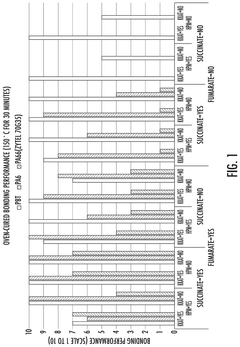
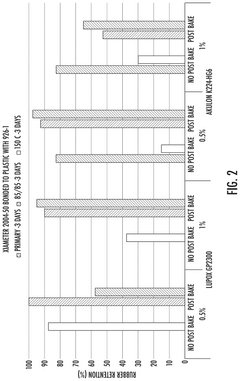
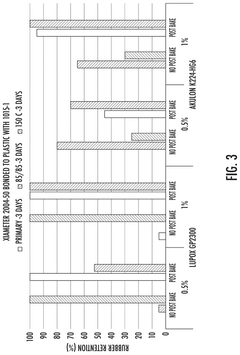
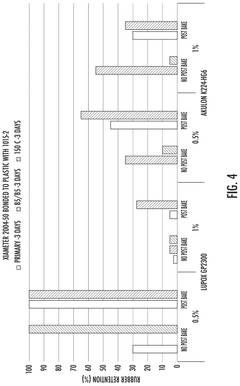
Adhesive for silicone rubber
PatentInactiveUS6811650B2
Innovation
- An addition reaction curable silicone composition comprising an organopolysiloxane with alkenyl groups, silicon-bonded hydrogen atoms, calcium carbonate powder with a specific BET surface area, and a platinum-based catalyst, which enhances adhesion to silicone rubber.
Environmental Impact of Silicone Adhesives
The environmental impact of silicone adhesives is a crucial consideration in the development and application of silicone rubber adhesion techniques. These adhesives, while offering numerous benefits in terms of performance and versatility, also pose potential risks to the environment throughout their lifecycle.
During the production phase, the manufacturing of silicone adhesives involves the use of various chemicals and energy-intensive processes. The extraction and processing of raw materials, particularly silica and methyl chloride, can lead to habitat disruption and contribute to greenhouse gas emissions. Additionally, the synthesis of silicone polymers often requires the use of catalysts and solvents, some of which may be hazardous if not properly managed.
In the application stage, the environmental impact of silicone adhesives is generally considered to be relatively low. Most silicone adhesives are non-toxic and do not emit volatile organic compounds (VOCs) during curing, making them a more environmentally friendly option compared to some traditional adhesives. However, the use of certain additives or curing agents in some formulations may introduce potential environmental concerns.
The durability and long-lasting nature of silicone adhesives can be viewed as both an advantage and a potential environmental issue. While their longevity reduces the need for frequent replacements, it also means that these materials persist in the environment for extended periods. This persistence raises concerns about the accumulation of silicone-based materials in ecosystems over time.
End-of-life considerations for silicone adhesives present significant challenges. Unlike some other materials, silicone adhesives are not biodegradable and can be difficult to recycle. When products containing silicone adhesives are disposed of in landfills, they contribute to long-term waste accumulation. Incineration of silicone-containing products can lead to the release of silicon dioxide and other potentially harmful compounds into the atmosphere.
Recent research has focused on developing more environmentally friendly silicone adhesive formulations. This includes exploring bio-based alternatives for certain components, improving energy efficiency in production processes, and investigating methods for easier separation and recycling of silicone adhesives from end-of-life products. Some manufacturers are also implementing closed-loop systems to recover and reuse silicone materials, reducing overall environmental impact.
As regulations and environmental awareness continue to evolve, the silicone adhesive industry is likely to face increasing pressure to address these environmental concerns. Future improvements in silicone rubber adhesion techniques will need to balance performance requirements with environmental sustainability, potentially leading to innovations in green chemistry and circular economy approaches within this sector.
During the production phase, the manufacturing of silicone adhesives involves the use of various chemicals and energy-intensive processes. The extraction and processing of raw materials, particularly silica and methyl chloride, can lead to habitat disruption and contribute to greenhouse gas emissions. Additionally, the synthesis of silicone polymers often requires the use of catalysts and solvents, some of which may be hazardous if not properly managed.
In the application stage, the environmental impact of silicone adhesives is generally considered to be relatively low. Most silicone adhesives are non-toxic and do not emit volatile organic compounds (VOCs) during curing, making them a more environmentally friendly option compared to some traditional adhesives. However, the use of certain additives or curing agents in some formulations may introduce potential environmental concerns.
The durability and long-lasting nature of silicone adhesives can be viewed as both an advantage and a potential environmental issue. While their longevity reduces the need for frequent replacements, it also means that these materials persist in the environment for extended periods. This persistence raises concerns about the accumulation of silicone-based materials in ecosystems over time.
End-of-life considerations for silicone adhesives present significant challenges. Unlike some other materials, silicone adhesives are not biodegradable and can be difficult to recycle. When products containing silicone adhesives are disposed of in landfills, they contribute to long-term waste accumulation. Incineration of silicone-containing products can lead to the release of silicon dioxide and other potentially harmful compounds into the atmosphere.
Recent research has focused on developing more environmentally friendly silicone adhesive formulations. This includes exploring bio-based alternatives for certain components, improving energy efficiency in production processes, and investigating methods for easier separation and recycling of silicone adhesives from end-of-life products. Some manufacturers are also implementing closed-loop systems to recover and reuse silicone materials, reducing overall environmental impact.
As regulations and environmental awareness continue to evolve, the silicone adhesive industry is likely to face increasing pressure to address these environmental concerns. Future improvements in silicone rubber adhesion techniques will need to balance performance requirements with environmental sustainability, potentially leading to innovations in green chemistry and circular economy approaches within this sector.
Regulatory Compliance for Silicone Adhesive Products
Regulatory compliance is a critical aspect of silicone adhesive product development and manufacturing. As the industry continues to evolve, manufacturers must navigate a complex landscape of regulations to ensure their products meet safety, environmental, and quality standards. In the United States, the Food and Drug Administration (FDA) plays a crucial role in regulating silicone adhesives used in medical devices and food contact applications. Manufacturers must comply with FDA regulations, including 21 CFR 175.105 for indirect food additives and 21 CFR 177.2600 for rubber articles intended for repeated use.
The European Union's REACH (Registration, Evaluation, Authorization, and Restriction of Chemicals) regulation is another significant consideration for silicone adhesive manufacturers. REACH requires companies to register chemicals used in their products and provide safety data. Additionally, the EU's RoHS (Restriction of Hazardous Substances) directive restricts the use of certain hazardous materials in electrical and electronic equipment, which may impact silicone adhesives used in these applications.
Environmental regulations are becoming increasingly stringent, with many countries implementing measures to reduce volatile organic compound (VOC) emissions. Silicone adhesive manufacturers must ensure their products comply with VOC limits set by agencies such as the U.S. Environmental Protection Agency (EPA) and the California Air Resources Board (CARB). This has led to the development of low-VOC and solvent-free silicone adhesive formulations.
Workplace safety regulations, such as those enforced by the Occupational Safety and Health Administration (OSHA) in the United States, require manufacturers to provide safety data sheets (SDS) for their silicone adhesive products. These documents detail the potential hazards associated with the product and provide guidance on safe handling and storage.
For silicone adhesives used in the automotive industry, compliance with standards set by organizations like the International Organization for Standardization (ISO) and the Society of Automotive Engineers (SAE) is essential. These standards often include specifications for adhesion strength, temperature resistance, and durability under various environmental conditions.
As global trade continues to expand, manufacturers must also consider international standards and regulations. The International Electrotechnical Commission (IEC) and the International Organization for Standardization (ISO) provide guidelines that are widely recognized and adopted across different countries. Compliance with these standards can facilitate market access and ensure product consistency across global markets.
To maintain regulatory compliance, silicone adhesive manufacturers must implement robust quality management systems and conduct regular audits. This includes maintaining detailed documentation of raw materials, manufacturing processes, and product testing. Many companies choose to obtain certifications such as ISO 9001 for quality management systems to demonstrate their commitment to regulatory compliance and product quality.
The European Union's REACH (Registration, Evaluation, Authorization, and Restriction of Chemicals) regulation is another significant consideration for silicone adhesive manufacturers. REACH requires companies to register chemicals used in their products and provide safety data. Additionally, the EU's RoHS (Restriction of Hazardous Substances) directive restricts the use of certain hazardous materials in electrical and electronic equipment, which may impact silicone adhesives used in these applications.
Environmental regulations are becoming increasingly stringent, with many countries implementing measures to reduce volatile organic compound (VOC) emissions. Silicone adhesive manufacturers must ensure their products comply with VOC limits set by agencies such as the U.S. Environmental Protection Agency (EPA) and the California Air Resources Board (CARB). This has led to the development of low-VOC and solvent-free silicone adhesive formulations.
Workplace safety regulations, such as those enforced by the Occupational Safety and Health Administration (OSHA) in the United States, require manufacturers to provide safety data sheets (SDS) for their silicone adhesive products. These documents detail the potential hazards associated with the product and provide guidance on safe handling and storage.
For silicone adhesives used in the automotive industry, compliance with standards set by organizations like the International Organization for Standardization (ISO) and the Society of Automotive Engineers (SAE) is essential. These standards often include specifications for adhesion strength, temperature resistance, and durability under various environmental conditions.
As global trade continues to expand, manufacturers must also consider international standards and regulations. The International Electrotechnical Commission (IEC) and the International Organization for Standardization (ISO) provide guidelines that are widely recognized and adopted across different countries. Compliance with these standards can facilitate market access and ensure product consistency across global markets.
To maintain regulatory compliance, silicone adhesive manufacturers must implement robust quality management systems and conduct regular audits. This includes maintaining detailed documentation of raw materials, manufacturing processes, and product testing. Many companies choose to obtain certifications such as ISO 9001 for quality management systems to demonstrate their commitment to regulatory compliance and product quality.
Unlock deeper insights with Patsnap Eureka Quick Research — get a full tech report to explore trends and direct your research. Try now!
Generate Your Research Report Instantly with AI Agent
Supercharge your innovation with Patsnap Eureka AI Agent Platform!