

How To Increase Tungsten-Heavy Alloy Performance?
Tungsten Alloy Evolution
Tungsten alloys have undergone significant evolution since their initial development in the early 20th century. The journey of these alloys has been marked by continuous improvements in composition, processing techniques, and performance characteristics. Initially, tungsten alloys were primarily used in filaments for incandescent light bulbs due to their high melting point and electrical conductivity.
As industrial needs expanded, the focus shifted towards developing tungsten heavy alloys (WHAs) for more demanding applications. The 1940s and 1950s saw the emergence of powder metallurgy techniques, which allowed for better control over the microstructure and properties of tungsten alloys. This period marked the beginning of WHAs' use in military applications, particularly in kinetic energy penetrators and radiation shielding.
The 1960s and 1970s brought about significant advancements in alloying elements and processing methods. Researchers began experimenting with various binder metals, such as nickel, iron, and copper, to enhance the ductility and strength of tungsten alloys. The introduction of liquid phase sintering techniques during this era led to improved densification and mechanical properties.
In the 1980s and 1990s, the focus shifted towards optimizing the microstructure of WHAs. Researchers discovered that controlling the size and distribution of tungsten particles within the matrix could significantly impact the alloy's performance. This period also saw the development of advanced heat treatment processes, which further enhanced the mechanical properties of tungsten alloys.
The turn of the millennium brought about a renewed interest in nanostructured tungsten alloys. Researchers began exploring ways to reduce grain size to the nanoscale, leading to unprecedented improvements in strength and ductility. Simultaneously, efforts to develop more environmentally friendly processing methods gained traction, addressing concerns about the toxicity of some traditional alloying elements.
Recent years have witnessed a surge in research aimed at improving the radiation resistance and high-temperature performance of tungsten alloys. This has been driven by the growing interest in nuclear fusion technology and advanced aerospace applications. Novel approaches, such as the incorporation of rare earth elements and the development of oxide dispersion strengthened (ODS) tungsten alloys, have shown promising results in enhancing high-temperature stability and radiation resistance.
The ongoing evolution of tungsten alloys continues to focus on addressing key challenges, such as improving ductility at low temperatures, enhancing oxidation resistance, and developing more cost-effective production methods. As new applications emerge in fields like additive manufacturing and energy storage, the trajectory of tungsten alloy development is likely to expand into even more diverse and specialized directions.
Market Demand Analysis
The market demand for improved tungsten-heavy alloy (WHA) performance continues to grow across various industries, driven by the unique properties of these materials. In the defense sector, there is a persistent need for enhanced armor-piercing capabilities and increased ballistic performance. As military technologies advance, the demand for WHAs with higher density, improved strength, and better ductility rises to meet the requirements of modern weapon systems and protective equipment.
The aerospace industry also presents significant market opportunities for high-performance WHAs. With the ongoing development of hypersonic vehicles and advanced aircraft, there is a growing demand for materials that can withstand extreme temperatures and maintain structural integrity under high-stress conditions. WHAs with improved heat resistance and reduced thermal expansion are particularly sought after for critical components in aerospace applications.
In the medical field, the use of WHAs in radiation shielding and medical imaging equipment is expanding. As healthcare facilities upgrade their diagnostic and treatment technologies, there is an increasing need for WHAs with enhanced radiation attenuation properties and improved manufacturability to create more efficient and effective medical devices.
The nuclear energy sector represents another key market for advanced WHAs. With the global push towards cleaner energy sources, nuclear power plants require materials that can withstand high radiation environments while maintaining long-term stability. Improved WHAs are essential for reactor components, radiation shielding, and waste containment systems.
Industrial applications, particularly in oil and gas exploration and mining, also drive demand for enhanced WHA performance. These industries require materials with exceptional wear resistance, corrosion resistance, and strength-to-weight ratios for drilling equipment, cutting tools, and heavy machinery components operating in harsh environments.
The electronics industry is emerging as a new frontier for WHA applications. As electronic devices become more compact and powerful, there is a growing need for high-density materials that can provide effective heat dissipation and electromagnetic shielding. WHAs with improved thermal conductivity and tailored electrical properties are increasingly in demand for advanced electronic packaging and thermal management solutions.
Market analysts project steady growth in the global tungsten-heavy alloy market, with particular emphasis on sectors requiring materials with superior mechanical and physical properties. The push for innovation in WHA performance is expected to drive research and development efforts, creating opportunities for manufacturers and material scientists to address evolving industry needs and capture market share in high-value applications.
Current Challenges
Tungsten-heavy alloys (WHAs) face several significant challenges in achieving enhanced performance. One of the primary obstacles is the inherent brittleness of these materials, which limits their application in high-stress environments. This brittleness stems from the weak interfacial bonding between tungsten particles and the matrix, leading to premature failure under dynamic loading conditions.
Another critical challenge is the difficulty in maintaining a fine and uniform microstructure during the manufacturing process. The high melting point of tungsten and the tendency for grain growth at elevated temperatures often result in coarse microstructures, which negatively impact the mechanical properties of the alloy. This issue is particularly pronounced in traditional powder metallurgy techniques, where achieving optimal density and homogeneity remains a persistent challenge.
The corrosion resistance of WHAs, especially in aggressive environments, presents another area of concern. While tungsten itself exhibits good corrosion resistance, the binder phase in WHAs is often more susceptible to chemical attack. This can lead to preferential corrosion of the matrix, compromising the overall integrity and performance of the alloy in certain applications.
Thermal management is a significant challenge in high-performance WHA applications. The high thermal conductivity of tungsten can lead to rapid heat dissipation, which may be beneficial in some cases but can also cause thermal stress and potential failure in others. Balancing thermal properties with mechanical performance remains a complex task for materials engineers.
The high density of WHAs, while advantageous in many applications, poses challenges in terms of weight reduction for certain uses. This is particularly relevant in aerospace and automotive industries where the trade-off between high density and weight savings is crucial. Developing WHAs with reduced density while maintaining their superior mechanical properties is an ongoing challenge.
Manufacturing costs and scalability present additional hurdles. The high melting point of tungsten and the need for specialized processing techniques contribute to increased production costs. Moreover, achieving consistent quality and properties in large-scale production remains challenging, limiting the widespread adoption of WHAs in some industrial sectors.
Lastly, the environmental and health concerns associated with tungsten processing and recycling pose challenges to the sustainable development of WHAs. The potential toxicity of some tungsten compounds and the energy-intensive nature of tungsten production necessitate the development of more environmentally friendly processing methods and improved recycling techniques.
Existing Enhancement
01 Composition and manufacturing of tungsten-heavy alloys
Tungsten-heavy alloys are typically composed of tungsten particles dispersed in a matrix of other metals like nickel, iron, or copper. The manufacturing process often involves powder metallurgy techniques, including mixing, pressing, and sintering. The composition and manufacturing methods significantly influence the alloy's performance characteristics such as density, strength, and ductility.- Composition and manufacturing of tungsten-heavy alloys: Tungsten-heavy alloys are typically composed of tungsten particles dispersed in a matrix of other metals like nickel, iron, or copper. The manufacturing process often involves powder metallurgy techniques, including mixing, pressing, and sintering. The composition and manufacturing methods significantly influence the alloy's performance characteristics such as density, strength, and ductility.
- Mechanical properties and performance enhancement: Tungsten-heavy alloys exhibit high density, strength, and wear resistance. Their performance can be enhanced through various methods such as heat treatment, alloying additions, and microstructure control. These improvements can lead to better mechanical properties, including increased tensile strength, hardness, and impact resistance, making them suitable for applications requiring high performance under extreme conditions.
- Application in radiation shielding and ballistics: Due to their high density and excellent radiation absorption properties, tungsten-heavy alloys are widely used in radiation shielding applications. They are also employed in ballistic applications, such as armor-piercing projectiles and kinetic energy penetrators, where their high density and mechanical strength are advantageous.
- Corrosion resistance and surface treatment: Tungsten-heavy alloys can be prone to corrosion in certain environments. Various surface treatment methods and coatings can be applied to improve their corrosion resistance. These treatments can also enhance other surface properties such as wear resistance and lubricity, further expanding the alloy's range of applications.
- Advanced processing and shaping techniques: Innovative processing and shaping techniques are being developed to improve the performance and expand the applications of tungsten-heavy alloys. These include advanced sintering methods, precision machining, and near-net-shape forming processes. Such techniques allow for the production of complex shapes and components with enhanced properties and reduced material waste.
02 Mechanical properties enhancement
Various techniques are employed to improve the mechanical properties of tungsten-heavy alloys. These include heat treatment processes, alloying with specific elements, and optimizing particle size distribution. Such enhancements can lead to improved strength, hardness, and toughness, making the alloys suitable for high-performance applications in aerospace, defense, and nuclear industries.Expand Specific Solutions03 Radiation shielding performance
Tungsten-heavy alloys are widely used for radiation shielding due to their high density and excellent absorption properties. The performance in this application can be optimized by adjusting the alloy composition, density, and thickness. These alloys are particularly effective in shielding against gamma radiation and X-rays, making them valuable in medical and nuclear applications.Expand Specific Solutions04 Thermal and electrical properties
The thermal and electrical properties of tungsten-heavy alloys are crucial for certain applications. These alloys typically exhibit good thermal conductivity and low thermal expansion, making them suitable for heat management in high-temperature environments. Their electrical properties can be tailored for specific applications, such as electrodes or electrical contacts in harsh conditions.Expand Specific Solutions05 Corrosion resistance and surface treatment
Improving the corrosion resistance of tungsten-heavy alloys is essential for their long-term performance in various environments. This can be achieved through alloying with corrosion-resistant elements or applying surface treatments. Techniques such as coating, plating, or surface modification can enhance the alloy's resistance to oxidation and chemical attack, extending its lifespan and maintaining its performance characteristics.Expand Specific Solutions
Key Industry Players
The tungsten-heavy alloy performance enhancement market is in a growth phase, driven by increasing demand in aerospace, defense, and industrial applications. The market size is expanding, with projections indicating significant growth potential. Technologically, the field is advancing rapidly, with companies like Boeing, Lockheed Martin, and Rheinmetall Waffe Munition leading innovation. Universities such as Central South University and Xi'an Jiaotong University are contributing to fundamental research. The technology maturity varies, with established players like Alcoa and ATI Properties pushing boundaries in alloy development, while newer entrants like Guangzhou Huasite Alloy Products focus on specialized applications. Collaboration between industry and academia, exemplified by the Industry-University Cooperation Foundation Hanyang University, is accelerating progress in this competitive landscape.
Alcoa, Inc.
A.L.M.T. Corp.
Core Innovations
- A modified heat treatment process involving nitrogen atmosphere heat treatment, oil quenching, and subsequent water quenching between swaging steps, which suppresses the formation of detrimental intermetallics and reduces impurity segregation, thereby enhancing mechanical properties like Charpy value, Ultimate Tensile Strength, and elongation without the need for lengthy and costly cyclic processes.


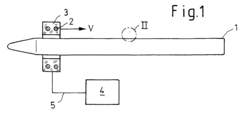
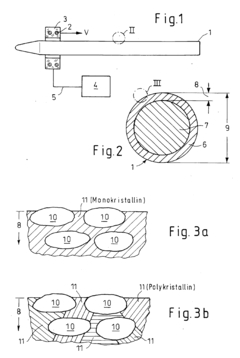
- A method involving cold-forming a tungsten-heavy metal alloy penetrator blank and then heating the near-surface edge layer above its recrystallization temperature to refine binder grains and increase toughness, creating a ductile outer shell without the need for separate cover production or complex attachment.
Material Characterization
Material characterization is a crucial aspect of improving tungsten-heavy alloy performance. This process involves a comprehensive analysis of the alloy's physical, chemical, and mechanical properties to understand its behavior and identify areas for enhancement.
X-ray diffraction (XRD) is a primary technique used to determine the crystal structure and phase composition of tungsten-heavy alloys. This method provides valuable information about the lattice parameters, grain size, and texture of the material. By analyzing XRD patterns, researchers can identify the presence of different phases and their relative proportions, which directly influence the alloy's performance.
Scanning electron microscopy (SEM) coupled with energy-dispersive X-ray spectroscopy (EDS) offers detailed insights into the microstructure and elemental composition of tungsten-heavy alloys. SEM imaging reveals the morphology of tungsten particles, their distribution within the matrix, and the presence of any defects or impurities. EDS analysis complements this by providing quantitative data on the elemental composition across different regions of the alloy.
Transmission electron microscopy (TEM) is employed to investigate the alloy at the nanoscale, revealing grain boundaries, dislocations, and other fine structural features. This technique is particularly useful for studying the interface between tungsten particles and the matrix, which plays a critical role in determining the alloy's mechanical properties.
Mechanical testing is essential for evaluating the performance of tungsten-heavy alloys. Tensile tests provide information on the alloy's strength, ductility, and elastic modulus. Hardness measurements, such as Vickers or Rockwell tests, assess the material's resistance to deformation. Fracture toughness tests determine the alloy's ability to resist crack propagation, a crucial factor in high-stress applications.
Thermal analysis techniques, including differential scanning calorimetry (DSC) and thermogravimetric analysis (TGA), are used to study the alloy's behavior under varying temperature conditions. These methods help in understanding phase transitions, thermal stability, and oxidation resistance, which are critical for applications involving high temperatures.
Advanced characterization techniques like atom probe tomography (APT) and neutron diffraction offer even more detailed insights into the atomic-scale structure and composition of tungsten-heavy alloys. APT provides three-dimensional mapping of elements at near-atomic resolution, while neutron diffraction can penetrate deeper into the material, offering complementary information to XRD.
By combining these characterization techniques, researchers can develop a comprehensive understanding of tungsten-heavy alloys, enabling targeted improvements in composition, processing, and microstructure to enhance overall performance.
Environmental Impact
The environmental impact of increasing tungsten-heavy alloy performance is a critical consideration in the development and application of these materials. Tungsten-heavy alloys (WHAs) are widely used in various industries due to their unique properties, but their production, use, and disposal can have significant environmental implications.
The mining and processing of tungsten ore, a key component in WHAs, can lead to substantial environmental degradation. Open-pit mining, often employed for tungsten extraction, results in landscape alteration, habitat destruction, and potential water pollution. The refining process of tungsten ore involves energy-intensive operations and the use of chemicals, contributing to air and water pollution if not properly managed.
During the manufacturing of tungsten-heavy alloys, energy consumption and emissions are notable environmental concerns. The high melting point of tungsten necessitates substantial energy input for processing, leading to increased carbon footprint. Additionally, the production process may generate hazardous waste materials that require careful handling and disposal to prevent environmental contamination.
The use phase of WHAs generally has a lower direct environmental impact compared to production. However, the application of these alloys in certain industries, such as military and aerospace, can indirectly contribute to environmental issues through their role in activities that may have ecological consequences.
End-of-life management of tungsten-heavy alloys presents both challenges and opportunities. The recycling of WHAs is technically feasible and can significantly reduce the environmental burden associated with primary production. However, the current recycling rates for tungsten alloys are relatively low, primarily due to economic and logistical constraints.
Efforts to increase the performance of tungsten-heavy alloys may have mixed environmental implications. On one hand, improved performance could lead to more efficient use of resources, potentially reducing the overall amount of material needed. This could result in decreased mining and processing activities, thereby lowering environmental impact. On the other hand, enhanced performance might expand the application range of WHAs, potentially increasing their production and associated environmental effects.
Advancements in WHA technology could also focus on developing more environmentally friendly production methods. This might include exploring alternative processing techniques that reduce energy consumption, minimize waste generation, or utilize more benign chemicals. Such innovations could significantly mitigate the environmental footprint of tungsten-heavy alloy production.
In conclusion, while increasing the performance of tungsten-heavy alloys offers potential benefits, it is crucial to consider and address the environmental impacts throughout the entire lifecycle of these materials. Sustainable practices in mining, production, use, and recycling of WHAs are essential for minimizing their ecological footprint and ensuring their long-term viability in various applications.