How to Innovate Display Technology using QNED?
JUN 19, 20259 MIN READ
Generate Your Research Report Instantly with AI Agent
Patsnap Eureka helps you evaluate technical feasibility & market potential.
QNED Display Evolution
QNED (Quantum Nano Emitting Diode) display technology has emerged as a promising innovation in the field of display technology, combining the advantages of quantum dots and micro-LED technologies. The evolution of QNED displays can be traced through several key stages, each marking significant advancements in display performance and manufacturing processes.
In the early stages of QNED development, researchers focused on overcoming the limitations of existing display technologies. Traditional LCD displays suffered from poor contrast ratios and limited color gamut, while OLED displays faced challenges with longevity and burn-in issues. QNED technology aimed to address these shortcomings by leveraging the unique properties of quantum dots and the efficiency of micro-LEDs.
The first major breakthrough in QNED evolution came with the successful integration of quantum dots into micro-LED structures. This integration allowed for precise control over light emission at the nanoscale level, resulting in superior color accuracy and brightness compared to conventional displays. Researchers achieved this by developing novel methods for depositing quantum dots onto micro-LED arrays, ensuring uniform distribution and optimal light conversion efficiency.
As QNED technology progressed, significant improvements were made in manufacturing processes. Early prototypes faced challenges in mass production due to the complexity of combining quantum dots with micro-LEDs. However, advancements in nanofabrication techniques and materials science led to more efficient and scalable production methods. This included the development of new quantum dot materials with enhanced stability and the refinement of micro-LED manufacturing processes to achieve higher yields and lower costs.
Another crucial milestone in QNED display evolution was the enhancement of energy efficiency. By optimizing the quantum dot conversion process and improving the overall system architecture, researchers were able to significantly reduce power consumption while maintaining exceptional display performance. This advancement made QNED displays increasingly attractive for a wide range of applications, from mobile devices to large-scale displays.
Recent developments in QNED technology have focused on expanding the color gamut and improving HDR (High Dynamic Range) capabilities. By fine-tuning the composition and structure of quantum dots, researchers have achieved unprecedented color accuracy and a wider color range. Additionally, advancements in micro-LED control systems have enabled more precise local dimming, resulting in superior contrast ratios and enhanced HDR performance.
Looking ahead, the evolution of QNED displays is expected to continue with further improvements in resolution, refresh rates, and form factor flexibility. Ongoing research is exploring the potential for flexible and transparent QNED displays, opening up new possibilities for innovative device designs and applications. As manufacturing processes continue to mature and costs decrease, QNED technology is poised to become a major player in the next generation of display technologies, offering unparalleled visual quality and energy efficiency.
In the early stages of QNED development, researchers focused on overcoming the limitations of existing display technologies. Traditional LCD displays suffered from poor contrast ratios and limited color gamut, while OLED displays faced challenges with longevity and burn-in issues. QNED technology aimed to address these shortcomings by leveraging the unique properties of quantum dots and the efficiency of micro-LEDs.
The first major breakthrough in QNED evolution came with the successful integration of quantum dots into micro-LED structures. This integration allowed for precise control over light emission at the nanoscale level, resulting in superior color accuracy and brightness compared to conventional displays. Researchers achieved this by developing novel methods for depositing quantum dots onto micro-LED arrays, ensuring uniform distribution and optimal light conversion efficiency.
As QNED technology progressed, significant improvements were made in manufacturing processes. Early prototypes faced challenges in mass production due to the complexity of combining quantum dots with micro-LEDs. However, advancements in nanofabrication techniques and materials science led to more efficient and scalable production methods. This included the development of new quantum dot materials with enhanced stability and the refinement of micro-LED manufacturing processes to achieve higher yields and lower costs.
Another crucial milestone in QNED display evolution was the enhancement of energy efficiency. By optimizing the quantum dot conversion process and improving the overall system architecture, researchers were able to significantly reduce power consumption while maintaining exceptional display performance. This advancement made QNED displays increasingly attractive for a wide range of applications, from mobile devices to large-scale displays.
Recent developments in QNED technology have focused on expanding the color gamut and improving HDR (High Dynamic Range) capabilities. By fine-tuning the composition and structure of quantum dots, researchers have achieved unprecedented color accuracy and a wider color range. Additionally, advancements in micro-LED control systems have enabled more precise local dimming, resulting in superior contrast ratios and enhanced HDR performance.
Looking ahead, the evolution of QNED displays is expected to continue with further improvements in resolution, refresh rates, and form factor flexibility. Ongoing research is exploring the potential for flexible and transparent QNED displays, opening up new possibilities for innovative device designs and applications. As manufacturing processes continue to mature and costs decrease, QNED technology is poised to become a major player in the next generation of display technologies, offering unparalleled visual quality and energy efficiency.
Market Demand Analysis
The market demand for QNED (Quantum Nano-Emitting Diode) display technology is rapidly growing as consumers and industries seek superior visual experiences. QNED combines the benefits of quantum dot and mini-LED technologies, offering enhanced color accuracy, brightness, and contrast ratios compared to traditional LCD and OLED displays. This innovative technology addresses the increasing demand for high-quality displays in various sectors, including consumer electronics, automotive, and professional applications.
In the consumer electronics market, QNED displays are poised to make significant inroads. As streaming services continue to offer more 4K and HDR content, there is a growing need for displays that can accurately reproduce these high-quality visuals. QNED technology's ability to deliver deeper blacks, brighter whites, and a wider color gamut aligns perfectly with this trend. The gaming industry, in particular, stands to benefit from QNED's fast response times and high refresh rates, catering to the demands of competitive gamers and enthusiasts.
The automotive sector presents another substantial market opportunity for QNED technology. As vehicles become more technologically advanced, there is an increasing demand for high-quality, durable displays for infotainment systems, digital dashboards, and heads-up displays. QNED's superior brightness and contrast make it ideal for in-vehicle use, where readability under varying light conditions is crucial. The technology's energy efficiency also aligns with the automotive industry's push towards more sustainable and electric vehicles.
Professional markets, including medical imaging, digital signage, and creative industries, are also showing strong interest in QNED technology. In medical applications, the enhanced color accuracy and contrast can lead to more precise diagnoses. For digital signage, QNED's high brightness and energy efficiency make it an attractive option for both indoor and outdoor displays. Creative professionals in fields such as graphic design, video editing, and photography are likely to appreciate QNED's color accuracy and wide color gamut.
The global display market is expected to see significant growth in the coming years, with QNED technology playing a crucial role. As manufacturers invest in QNED production capabilities, economies of scale are likely to drive down costs, making the technology more accessible to a broader range of consumers and industries. This trend is expected to accelerate the adoption of QNED displays across various applications.
However, the market demand for QNED technology is not without challenges. Competition from established display technologies like OLED and micro-LED remains strong. Additionally, the initial higher cost of QNED displays may slow adoption in price-sensitive markets. Despite these challenges, the unique advantages offered by QNED technology position it well to capture a significant share of the growing display market, particularly in premium and high-performance segments where its superior visual qualities can justify the investment.
In the consumer electronics market, QNED displays are poised to make significant inroads. As streaming services continue to offer more 4K and HDR content, there is a growing need for displays that can accurately reproduce these high-quality visuals. QNED technology's ability to deliver deeper blacks, brighter whites, and a wider color gamut aligns perfectly with this trend. The gaming industry, in particular, stands to benefit from QNED's fast response times and high refresh rates, catering to the demands of competitive gamers and enthusiasts.
The automotive sector presents another substantial market opportunity for QNED technology. As vehicles become more technologically advanced, there is an increasing demand for high-quality, durable displays for infotainment systems, digital dashboards, and heads-up displays. QNED's superior brightness and contrast make it ideal for in-vehicle use, where readability under varying light conditions is crucial. The technology's energy efficiency also aligns with the automotive industry's push towards more sustainable and electric vehicles.
Professional markets, including medical imaging, digital signage, and creative industries, are also showing strong interest in QNED technology. In medical applications, the enhanced color accuracy and contrast can lead to more precise diagnoses. For digital signage, QNED's high brightness and energy efficiency make it an attractive option for both indoor and outdoor displays. Creative professionals in fields such as graphic design, video editing, and photography are likely to appreciate QNED's color accuracy and wide color gamut.
The global display market is expected to see significant growth in the coming years, with QNED technology playing a crucial role. As manufacturers invest in QNED production capabilities, economies of scale are likely to drive down costs, making the technology more accessible to a broader range of consumers and industries. This trend is expected to accelerate the adoption of QNED displays across various applications.
However, the market demand for QNED technology is not without challenges. Competition from established display technologies like OLED and micro-LED remains strong. Additionally, the initial higher cost of QNED displays may slow adoption in price-sensitive markets. Despite these challenges, the unique advantages offered by QNED technology position it well to capture a significant share of the growing display market, particularly in premium and high-performance segments where its superior visual qualities can justify the investment.
QNED Tech Challenges
QNED (Quantum Nano Emitting Diode) technology faces several significant challenges in its development and implementation as an innovative display technology. One of the primary obstacles is the complexity of manufacturing processes required to produce QNED displays at scale. The precise control needed to create uniform quantum dot arrays and integrate them with nanorod LEDs demands advanced fabrication techniques that are not yet fully mature.
Another major challenge lies in achieving consistent color accuracy and stability across the entire display. QNED technology relies on the precise emission of light from quantum dots, which can be sensitive to environmental factors such as temperature and humidity. Ensuring long-term color stability and uniformity under various operating conditions remains a critical hurdle to overcome.
Power efficiency is also a key concern for QNED displays. While the technology promises improved energy consumption compared to traditional LED-backlit LCD displays, further optimization is required to compete with OLED in terms of power efficiency, especially for mobile and portable devices where battery life is crucial.
Durability and lifespan of QNED displays present additional challenges. The quantum dots used in QNED technology can degrade over time, potentially leading to color shifts and reduced brightness. Developing robust encapsulation methods and materials to protect the quantum dots from environmental factors and extend the overall lifespan of the display is essential for commercial viability.
Cost-effectiveness is another significant barrier to widespread adoption of QNED technology. The current manufacturing processes and materials used in QNED displays are relatively expensive compared to established display technologies. Reducing production costs while maintaining high performance is crucial for QNED to compete in the consumer electronics market.
Furthermore, addressing potential health and environmental concerns related to the use of quantum dots, which may contain heavy metals, is necessary to ensure regulatory compliance and consumer acceptance. Developing safer, more environmentally friendly quantum dot materials without compromising performance is an ongoing challenge for researchers and manufacturers.
Lastly, optimizing the optical properties of QNED displays, such as viewing angles, contrast ratios, and response times, to match or exceed the performance of competing technologies like OLED and microLED is crucial for market success. Achieving superior image quality while overcoming the inherent limitations of the technology requires continuous innovation in materials science and display engineering.
Another major challenge lies in achieving consistent color accuracy and stability across the entire display. QNED technology relies on the precise emission of light from quantum dots, which can be sensitive to environmental factors such as temperature and humidity. Ensuring long-term color stability and uniformity under various operating conditions remains a critical hurdle to overcome.
Power efficiency is also a key concern for QNED displays. While the technology promises improved energy consumption compared to traditional LED-backlit LCD displays, further optimization is required to compete with OLED in terms of power efficiency, especially for mobile and portable devices where battery life is crucial.
Durability and lifespan of QNED displays present additional challenges. The quantum dots used in QNED technology can degrade over time, potentially leading to color shifts and reduced brightness. Developing robust encapsulation methods and materials to protect the quantum dots from environmental factors and extend the overall lifespan of the display is essential for commercial viability.
Cost-effectiveness is another significant barrier to widespread adoption of QNED technology. The current manufacturing processes and materials used in QNED displays are relatively expensive compared to established display technologies. Reducing production costs while maintaining high performance is crucial for QNED to compete in the consumer electronics market.
Furthermore, addressing potential health and environmental concerns related to the use of quantum dots, which may contain heavy metals, is necessary to ensure regulatory compliance and consumer acceptance. Developing safer, more environmentally friendly quantum dot materials without compromising performance is an ongoing challenge for researchers and manufacturers.
Lastly, optimizing the optical properties of QNED displays, such as viewing angles, contrast ratios, and response times, to match or exceed the performance of competing technologies like OLED and microLED is crucial for market success. Achieving superior image quality while overcoming the inherent limitations of the technology requires continuous innovation in materials science and display engineering.
Current QNED Solutions
01 QNED structure and composition
QNED displays utilize quantum nano-emitting diodes, which are composed of quantum dots or nanocrystals as the light-emitting material. These nanostructures are typically made of semiconductor materials and are engineered to emit specific colors of light when electrically stimulated. The unique structure of QNEDs allows for improved color purity, brightness, and energy efficiency compared to traditional LED displays.- QNED structure and composition: QNED displays utilize quantum nano-emitting diodes, which are composed of quantum dots or nanocrystals as the light-emitting material. These structures are typically arranged in a matrix or array format to create the display. The quantum dots are often made of semiconductor materials and can be tuned to emit specific colors of light, allowing for high color purity and efficiency in the display.
- Manufacturing processes for QNED displays: The production of QNED displays involves various manufacturing techniques, including deposition methods for quantum dot layers, patterning processes for electrode structures, and encapsulation techniques to protect the sensitive quantum materials. Advanced fabrication methods such as photolithography, inkjet printing, and vapor deposition are often employed to create precise and uniform QNED structures.
- Color enhancement and light management in QNED: QNED technology incorporates sophisticated color enhancement techniques and light management systems. This includes the use of color filters, polarizers, and optical films to improve color gamut, contrast, and viewing angles. Additionally, light extraction and waveguide technologies are implemented to maximize the efficiency of light output from the quantum nano-emitting diodes.
- Integration of QNED with other display technologies: QNED technology is often integrated or combined with other display technologies to enhance overall performance. This includes hybridization with OLED, LCD, or MicroLED technologies. Such integrations aim to leverage the strengths of each technology, potentially offering improved brightness, energy efficiency, and lifespan compared to traditional display technologies.
- Driving and control systems for QNED displays: QNED displays require specialized driving and control systems to manage the quantum nano-emitting diodes effectively. This includes advanced circuitry for precise current control, voltage regulation, and timing management. Additionally, thermal management systems are crucial to maintain optimal operating conditions for the quantum dots and ensure long-term stability and performance of the display.
02 QNED manufacturing processes
The manufacturing of QNED displays involves several advanced processes, including the synthesis of quantum dots, deposition of nanocrystal layers, and integration with electronic components. Techniques such as solution processing, vapor deposition, and lithography are employed to create precise nanostructures and ensure uniform distribution of quantum dots across the display panel. These processes are crucial for achieving high-quality, large-scale QNED production.Expand Specific Solutions03 Color enhancement and control in QNED displays
QNED technology offers superior color performance through precise control of quantum dot emission spectra. By adjusting the size and composition of quantum dots, manufacturers can fine-tune the color output of each pixel. This allows for a wider color gamut, improved color accuracy, and enhanced HDR capabilities. Advanced color management systems and algorithms are implemented to optimize the display's overall visual performance.Expand Specific Solutions04 Energy efficiency and power management
QNED displays are designed to be highly energy-efficient, consuming less power than traditional LED or OLED displays while maintaining excellent brightness and contrast. This is achieved through the inherent properties of quantum dots, which can emit light with high efficiency when electrically stimulated. Advanced power management systems and driving schemes are implemented to further optimize energy consumption and extend the lifespan of QNED displays.Expand Specific Solutions05 Integration with other display technologies
QNED technology can be integrated with existing display technologies to create hybrid solutions that leverage the strengths of multiple approaches. For example, QNED elements can be combined with mini-LED backlighting systems to enhance local dimming capabilities and improve contrast ratios. Additionally, QNED technology can be incorporated into flexible or transparent display designs, expanding its potential applications in various consumer electronics and industrial settings.Expand Specific Solutions
Key QNED Players
The QNED (Quantum Nano Emitting Diode) display technology market is in its early growth stage, with significant potential for innovation and expansion. The global market size for advanced display technologies is projected to grow substantially, driven by increasing demand for high-quality, energy-efficient displays. While QNED technology is still emerging, several key players are actively developing and refining this technology. Companies like BOE Technology Group, TCL China Star Optoelectronics, and Samsung Display are at the forefront of QNED research and development. The technology's maturity is progressing rapidly, with these firms investing heavily in R&D to overcome challenges in mass production and cost-effectiveness. As QNED promises superior image quality and energy efficiency compared to existing technologies, it is poised to disrupt the display industry, attracting attention from both established manufacturers and innovative startups.
BOE Technology Group Co., Ltd.
Technical Solution: BOE has been actively researching QNED (Quantum Nano Emitting Diode) technology as part of their display innovation efforts. Their approach involves using quantum dots as light-emitting materials, combined with nanorod LEDs as the backlight source. This combination allows for precise control of individual pixels, resulting in improved color accuracy, contrast ratios, and energy efficiency. BOE's QNED panels utilize a unique manufacturing process that integrates quantum dot materials directly into the LED structure, enabling better light emission and color purity.
Strengths: Superior color gamut and brightness compared to traditional LCD. Improved energy efficiency. Potential for thinner and lighter displays. Weaknesses: Higher production costs. Challenges in mass production and yield rates.
TCL China Star Optoelectronics Technology Co., Ltd.
Technical Solution: TCL CSOT has developed a QNED display technology that combines quantum dots with mini-LED backlighting. Their approach focuses on enhancing color performance and contrast ratios while maintaining cost-effectiveness. The company's QNED panels use a proprietary quantum dot film layer that works in tandem with precisely controlled mini-LED zones. This configuration allows for local dimming capabilities, resulting in deeper blacks and brighter highlights. TCL CSOT's QNED technology also incorporates advanced color management algorithms to optimize color reproduction across various content types.
Strengths: Improved contrast and color performance over conventional LCDs. More cost-effective than some competing technologies. Leverages existing manufacturing infrastructure. Weaknesses: Not as thin as OLED displays. Potential for blooming effects in high-contrast scenes.
QNED Core Patents
Vertically integrated nanotube and quantum dot LED for active matrix display
PatentActiveUS20180205031A1
Innovation
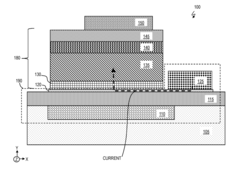
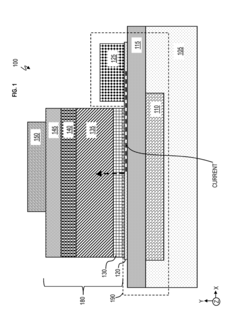
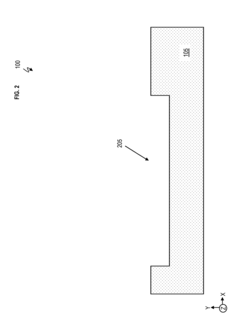
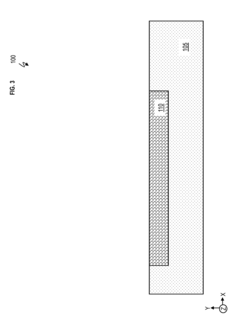
- A vertically integrated device structure using a semiconducting nanotube thin film as the anode for QDLEDs, where the nanotube film is transparent and its conductivity is tuned by an embedded local gate to control the drive current, allowing for effective pixel control and integration into an active matrix display.
Light-emitting apparatus with improved charge transport layer
PatentPendingUS20240138178A1
Innovation
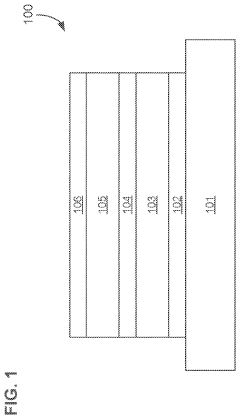
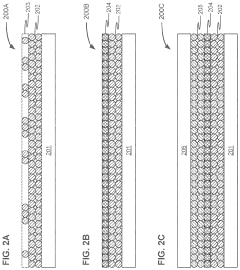
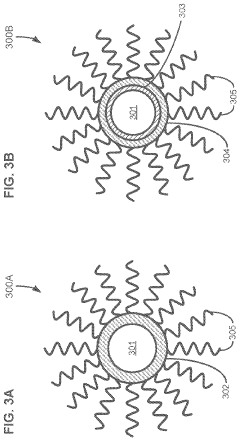
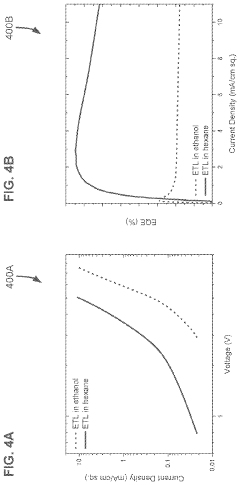
- Incorporating a metal-oxide nanoparticle-based electron transport layer with specific solvent polarity and size characteristics, which improves charge balance and injection efficiency by depositing nanoparticles in a multi-layer structure with varying sizes and polarities, potentially matching or exceeding the size of quantum dots.
QNED Supply Chain
The QNED (Quantum Nano Emitting Diode) supply chain plays a crucial role in the development and production of this innovative display technology. As QNED emerges as a potential successor to OLED and QLED displays, establishing a robust and efficient supply chain is essential for its successful commercialization and widespread adoption.
At the core of the QNED supply chain are the manufacturers of quantum dots and nanorod materials. These specialized components are fundamental to the technology's ability to produce vibrant colors and high contrast ratios. Companies like Nanosys and Samsung have invested heavily in quantum dot production facilities, ensuring a steady supply of these critical materials.
The next stage in the supply chain involves the production of QNED panels. This process requires advanced manufacturing facilities capable of precisely depositing quantum dots and nanorods onto substrates. Major display manufacturers such as Samsung Display and LG Display are at the forefront of developing these production capabilities, leveraging their existing infrastructure and expertise in display manufacturing.
Component suppliers also play a vital role in the QNED supply chain. These include producers of backplanes, color filters, and other essential elements that work in conjunction with the quantum dot and nanorod emitters. Established suppliers in the LCD and OLED industries are adapting their offerings to meet the specific requirements of QNED technology.
The integration of QNED panels into finished products represents another critical link in the supply chain. This involves collaboration between panel manufacturers and consumer electronics brands to incorporate QNED displays into televisions, monitors, and potentially mobile devices. Companies like Samsung Electronics and LG Electronics are well-positioned to lead this integration, given their vertical integration in both display production and consumer electronics.
To support the growth of QNED technology, research institutions and equipment manufacturers are also integral to the supply chain. They provide the necessary tools and knowledge for advancing QNED manufacturing processes and improving panel performance. Partnerships between academic institutions, equipment suppliers, and display manufacturers are driving innovation in areas such as quantum dot synthesis and deposition techniques.
As QNED technology matures, the supply chain is expected to expand and diversify. This may include the emergence of specialized suppliers focused solely on QNED components, as well as the entry of new players into various stages of production. The development of a robust QNED supply chain will be crucial in reducing costs, improving quality, and ultimately driving the widespread adoption of this promising display technology.
At the core of the QNED supply chain are the manufacturers of quantum dots and nanorod materials. These specialized components are fundamental to the technology's ability to produce vibrant colors and high contrast ratios. Companies like Nanosys and Samsung have invested heavily in quantum dot production facilities, ensuring a steady supply of these critical materials.
The next stage in the supply chain involves the production of QNED panels. This process requires advanced manufacturing facilities capable of precisely depositing quantum dots and nanorods onto substrates. Major display manufacturers such as Samsung Display and LG Display are at the forefront of developing these production capabilities, leveraging their existing infrastructure and expertise in display manufacturing.
Component suppliers also play a vital role in the QNED supply chain. These include producers of backplanes, color filters, and other essential elements that work in conjunction with the quantum dot and nanorod emitters. Established suppliers in the LCD and OLED industries are adapting their offerings to meet the specific requirements of QNED technology.
The integration of QNED panels into finished products represents another critical link in the supply chain. This involves collaboration between panel manufacturers and consumer electronics brands to incorporate QNED displays into televisions, monitors, and potentially mobile devices. Companies like Samsung Electronics and LG Electronics are well-positioned to lead this integration, given their vertical integration in both display production and consumer electronics.
To support the growth of QNED technology, research institutions and equipment manufacturers are also integral to the supply chain. They provide the necessary tools and knowledge for advancing QNED manufacturing processes and improving panel performance. Partnerships between academic institutions, equipment suppliers, and display manufacturers are driving innovation in areas such as quantum dot synthesis and deposition techniques.
As QNED technology matures, the supply chain is expected to expand and diversify. This may include the emergence of specialized suppliers focused solely on QNED components, as well as the entry of new players into various stages of production. The development of a robust QNED supply chain will be crucial in reducing costs, improving quality, and ultimately driving the widespread adoption of this promising display technology.
QNED Energy Efficiency
QNED (Quantum Nano Emitting Diode) technology has shown significant potential in improving the energy efficiency of display systems. The energy efficiency of QNED displays is primarily attributed to their unique structure and operating principles, which allow for more precise control of light emission and reduced power consumption compared to traditional display technologies.
QNED displays utilize quantum dots and nanorod LEDs to produce light, resulting in improved color accuracy and brightness while consuming less power. The quantum dots act as color converters, efficiently transforming blue light from the nanorod LEDs into red and green light. This process minimizes energy loss during color conversion, leading to higher overall efficiency.
One of the key factors contributing to QNED's energy efficiency is its ability to achieve high peak brightness levels with lower power consumption. This is particularly beneficial for HDR (High Dynamic Range) content, where traditional display technologies often struggle to maintain energy efficiency while delivering high brightness levels. QNED displays can produce brighter images without significantly increasing power consumption, resulting in improved energy efficiency across various content types.
The local dimming capabilities of QNED displays also play a crucial role in enhancing energy efficiency. By selectively dimming or turning off individual nanorod LEDs in darker areas of the image, QNED displays can reduce power consumption while maintaining excellent contrast ratios. This precise control over light emission allows for more efficient use of energy, particularly in scenes with high contrast or predominantly dark content.
Furthermore, QNED technology benefits from the inherent advantages of LED-based displays, such as rapid response times and long lifespans. These characteristics contribute to overall system efficiency by reducing the need for frequent replacements and minimizing energy waste during transitions between different brightness levels or color states.
The thermal management of QNED displays also contributes to their energy efficiency. The nanorod LED structure allows for better heat dissipation compared to traditional LED displays, reducing the need for active cooling systems and further improving overall system efficiency. This improved thermal performance not only enhances energy efficiency but also contributes to the longevity of the display, reducing the environmental impact associated with frequent replacements.
As QNED technology continues to evolve, researchers and manufacturers are focusing on further improving its energy efficiency through advancements in materials science and manufacturing processes. These efforts include optimizing the quantum dot and nanorod LED structures, enhancing light extraction efficiency, and developing more sophisticated control algorithms for local dimming and color management.
QNED displays utilize quantum dots and nanorod LEDs to produce light, resulting in improved color accuracy and brightness while consuming less power. The quantum dots act as color converters, efficiently transforming blue light from the nanorod LEDs into red and green light. This process minimizes energy loss during color conversion, leading to higher overall efficiency.
One of the key factors contributing to QNED's energy efficiency is its ability to achieve high peak brightness levels with lower power consumption. This is particularly beneficial for HDR (High Dynamic Range) content, where traditional display technologies often struggle to maintain energy efficiency while delivering high brightness levels. QNED displays can produce brighter images without significantly increasing power consumption, resulting in improved energy efficiency across various content types.
The local dimming capabilities of QNED displays also play a crucial role in enhancing energy efficiency. By selectively dimming or turning off individual nanorod LEDs in darker areas of the image, QNED displays can reduce power consumption while maintaining excellent contrast ratios. This precise control over light emission allows for more efficient use of energy, particularly in scenes with high contrast or predominantly dark content.
Furthermore, QNED technology benefits from the inherent advantages of LED-based displays, such as rapid response times and long lifespans. These characteristics contribute to overall system efficiency by reducing the need for frequent replacements and minimizing energy waste during transitions between different brightness levels or color states.
The thermal management of QNED displays also contributes to their energy efficiency. The nanorod LED structure allows for better heat dissipation compared to traditional LED displays, reducing the need for active cooling systems and further improving overall system efficiency. This improved thermal performance not only enhances energy efficiency but also contributes to the longevity of the display, reducing the environmental impact associated with frequent replacements.
As QNED technology continues to evolve, researchers and manufacturers are focusing on further improving its energy efficiency through advancements in materials science and manufacturing processes. These efforts include optimizing the quantum dot and nanorod LED structures, enhancing light extraction efficiency, and developing more sophisticated control algorithms for local dimming and color management.
Unlock deeper insights with Patsnap Eureka Quick Research — get a full tech report to explore trends and direct your research. Try now!
Generate Your Research Report Instantly with AI Agent
Supercharge your innovation with Patsnap Eureka AI Agent Platform!