

How to Manage Distributed Control Systems for Complex Networks
APR 28, 20269 MIN READ
Generate Your Research Report Instantly with AI Agent
PatSnap Eureka helps you evaluate technical feasibility & market potential.
Distributed Control Systems Background and Objectives
Distributed Control Systems (DCS) have emerged as a cornerstone technology for managing complex industrial processes and large-scale networks. The evolution of DCS began in the 1970s when traditional centralized control systems proved inadequate for handling the growing complexity and scale of industrial operations. Early systems were primarily designed for process industries such as oil refining, chemical manufacturing, and power generation, where the need for reliable, real-time control across geographically dispersed assets became critical.
The technological progression from centralized to distributed architectures represents a fundamental shift in control philosophy. Initially, control systems relied on single-point controllers that created bottlenecks and single points of failure. The distributed approach emerged to address these limitations by distributing control functions across multiple interconnected nodes, each capable of autonomous operation while maintaining coordination with the broader system.
Modern DCS architectures have evolved to incorporate advanced networking protocols, redundant communication pathways, and sophisticated algorithms for fault tolerance and load balancing. The integration of Internet of Things (IoT) devices, edge computing capabilities, and artificial intelligence has further expanded the scope and complexity of distributed control challenges. Contemporary systems must manage thousands of interconnected devices while ensuring millisecond-level response times and maintaining system-wide coherence.
The primary objective of managing distributed control systems for complex networks centers on achieving optimal system performance while maintaining stability, reliability, and scalability. This involves developing robust coordination mechanisms that can handle network partitions, communication delays, and component failures without compromising overall system integrity. The goal extends beyond mere operational continuity to encompass adaptive optimization, where the system continuously adjusts its behavior based on changing conditions and performance metrics.
Another critical objective involves establishing effective hierarchical control structures that can seamlessly integrate local autonomous decision-making with global optimization strategies. This requires sophisticated algorithms for consensus building, conflict resolution, and resource allocation across distributed nodes. The challenge lies in balancing local responsiveness with global coherence while minimizing communication overhead and computational complexity.
The ultimate technological target encompasses the development of self-organizing, self-healing distributed control systems capable of autonomous reconfiguration in response to network topology changes, component failures, or evolving operational requirements. This vision includes predictive maintenance capabilities, dynamic load redistribution, and intelligent fault isolation mechanisms that ensure continuous operation even under adverse conditions.
The technological progression from centralized to distributed architectures represents a fundamental shift in control philosophy. Initially, control systems relied on single-point controllers that created bottlenecks and single points of failure. The distributed approach emerged to address these limitations by distributing control functions across multiple interconnected nodes, each capable of autonomous operation while maintaining coordination with the broader system.
Modern DCS architectures have evolved to incorporate advanced networking protocols, redundant communication pathways, and sophisticated algorithms for fault tolerance and load balancing. The integration of Internet of Things (IoT) devices, edge computing capabilities, and artificial intelligence has further expanded the scope and complexity of distributed control challenges. Contemporary systems must manage thousands of interconnected devices while ensuring millisecond-level response times and maintaining system-wide coherence.
The primary objective of managing distributed control systems for complex networks centers on achieving optimal system performance while maintaining stability, reliability, and scalability. This involves developing robust coordination mechanisms that can handle network partitions, communication delays, and component failures without compromising overall system integrity. The goal extends beyond mere operational continuity to encompass adaptive optimization, where the system continuously adjusts its behavior based on changing conditions and performance metrics.
Another critical objective involves establishing effective hierarchical control structures that can seamlessly integrate local autonomous decision-making with global optimization strategies. This requires sophisticated algorithms for consensus building, conflict resolution, and resource allocation across distributed nodes. The challenge lies in balancing local responsiveness with global coherence while minimizing communication overhead and computational complexity.
The ultimate technological target encompasses the development of self-organizing, self-healing distributed control systems capable of autonomous reconfiguration in response to network topology changes, component failures, or evolving operational requirements. This vision includes predictive maintenance capabilities, dynamic load redistribution, and intelligent fault isolation mechanisms that ensure continuous operation even under adverse conditions.
Market Demand for Complex Network Control Solutions
The global market for complex network control solutions is experiencing unprecedented growth driven by the rapid expansion of interconnected systems across multiple industries. Industrial automation, smart grid infrastructure, telecommunications networks, and Internet of Things deployments are creating substantial demand for sophisticated distributed control systems capable of managing intricate network topologies with high reliability and performance standards.
Manufacturing sectors are increasingly adopting Industry 4.0 principles, necessitating advanced control solutions that can coordinate multiple production lines, robotic systems, and quality control processes simultaneously. The automotive industry's transition toward electric vehicles and autonomous driving technologies requires complex network control systems to manage battery management systems, sensor networks, and real-time decision-making processes across distributed vehicle components.
Smart city initiatives worldwide are generating significant market opportunities for distributed control solutions. Urban infrastructure projects including intelligent transportation systems, smart lighting networks, energy distribution grids, and environmental monitoring systems require robust control architectures capable of managing thousands of interconnected devices while maintaining system stability and responsiveness.
The telecommunications industry's deployment of 5G networks and edge computing infrastructure is creating substantial demand for distributed control systems that can manage network slicing, resource allocation, and quality of service across geographically dispersed network elements. Cloud service providers require sophisticated control solutions to manage data center operations, load balancing, and service orchestration across multiple facilities.
Energy sector transformation toward renewable sources and smart grid technologies is driving market demand for control systems capable of managing distributed energy resources, demand response programs, and grid stability mechanisms. The integration of solar panels, wind farms, energy storage systems, and electric vehicle charging infrastructure requires advanced coordination capabilities.
Cybersecurity concerns are increasingly influencing market requirements, with organizations seeking control solutions that incorporate robust security frameworks, anomaly detection capabilities, and resilient communication protocols. The growing complexity of cyber threats targeting critical infrastructure is driving demand for control systems with built-in security features and rapid incident response capabilities.
Market growth is further accelerated by regulatory requirements for improved system reliability, environmental compliance, and operational transparency across various industries, creating sustained demand for advanced distributed control solutions.
Manufacturing sectors are increasingly adopting Industry 4.0 principles, necessitating advanced control solutions that can coordinate multiple production lines, robotic systems, and quality control processes simultaneously. The automotive industry's transition toward electric vehicles and autonomous driving technologies requires complex network control systems to manage battery management systems, sensor networks, and real-time decision-making processes across distributed vehicle components.
Smart city initiatives worldwide are generating significant market opportunities for distributed control solutions. Urban infrastructure projects including intelligent transportation systems, smart lighting networks, energy distribution grids, and environmental monitoring systems require robust control architectures capable of managing thousands of interconnected devices while maintaining system stability and responsiveness.
The telecommunications industry's deployment of 5G networks and edge computing infrastructure is creating substantial demand for distributed control systems that can manage network slicing, resource allocation, and quality of service across geographically dispersed network elements. Cloud service providers require sophisticated control solutions to manage data center operations, load balancing, and service orchestration across multiple facilities.
Energy sector transformation toward renewable sources and smart grid technologies is driving market demand for control systems capable of managing distributed energy resources, demand response programs, and grid stability mechanisms. The integration of solar panels, wind farms, energy storage systems, and electric vehicle charging infrastructure requires advanced coordination capabilities.
Cybersecurity concerns are increasingly influencing market requirements, with organizations seeking control solutions that incorporate robust security frameworks, anomaly detection capabilities, and resilient communication protocols. The growing complexity of cyber threats targeting critical infrastructure is driving demand for control systems with built-in security features and rapid incident response capabilities.
Market growth is further accelerated by regulatory requirements for improved system reliability, environmental compliance, and operational transparency across various industries, creating sustained demand for advanced distributed control solutions.
Current State and Challenges of DCS in Complex Networks
Distributed Control Systems (DCS) have evolved significantly since their inception in the 1970s, transitioning from centralized architectures to highly distributed networks that manage complex industrial processes. Modern DCS implementations face unprecedented challenges as they integrate with Internet of Things (IoT) devices, cloud computing platforms, and artificial intelligence systems. The current landscape reveals a technology at an inflection point, where traditional control paradigms must adapt to handle exponentially increasing data volumes and network complexity.
Contemporary DCS architectures demonstrate remarkable diversity in their implementation approaches. Leading industrial automation companies have developed proprietary solutions that emphasize modularity and scalability, yet interoperability remains a persistent challenge. The integration of legacy systems with modern digital infrastructure creates hybrid environments where decades-old control logic must coexist with cutting-edge analytics platforms. This technological heterogeneity complicates system management and introduces potential vulnerabilities.
Network complexity has emerged as the primary constraint limiting DCS effectiveness in large-scale deployments. Modern industrial facilities often encompass thousands of control points distributed across vast geographical areas, creating communication bottlenecks and latency issues that traditional architectures struggle to address. The proliferation of wireless sensor networks and mobile control devices further compounds these challenges by introducing variable connectivity patterns and bandwidth limitations.
Cybersecurity concerns represent another critical challenge facing contemporary DCS implementations. The convergence of operational technology with information technology networks has expanded the attack surface significantly, exposing critical infrastructure to sophisticated cyber threats. Traditional air-gapped control systems now require robust security frameworks that can protect against both external intrusions and internal vulnerabilities without compromising operational efficiency.
Real-time performance requirements continue to challenge DCS designers as process complexity increases. Modern manufacturing and energy systems demand sub-millisecond response times while simultaneously processing massive data streams from distributed sensors. This creates a fundamental tension between computational thoroughness and operational responsiveness that current architectures struggle to resolve effectively.
The geographical distribution of DCS components across different regions and countries introduces additional complexity layers related to regulatory compliance, data sovereignty, and cross-border communication protocols. These factors significantly impact system design decisions and operational procedures, particularly for multinational industrial operations.
Contemporary DCS architectures demonstrate remarkable diversity in their implementation approaches. Leading industrial automation companies have developed proprietary solutions that emphasize modularity and scalability, yet interoperability remains a persistent challenge. The integration of legacy systems with modern digital infrastructure creates hybrid environments where decades-old control logic must coexist with cutting-edge analytics platforms. This technological heterogeneity complicates system management and introduces potential vulnerabilities.
Network complexity has emerged as the primary constraint limiting DCS effectiveness in large-scale deployments. Modern industrial facilities often encompass thousands of control points distributed across vast geographical areas, creating communication bottlenecks and latency issues that traditional architectures struggle to address. The proliferation of wireless sensor networks and mobile control devices further compounds these challenges by introducing variable connectivity patterns and bandwidth limitations.
Cybersecurity concerns represent another critical challenge facing contemporary DCS implementations. The convergence of operational technology with information technology networks has expanded the attack surface significantly, exposing critical infrastructure to sophisticated cyber threats. Traditional air-gapped control systems now require robust security frameworks that can protect against both external intrusions and internal vulnerabilities without compromising operational efficiency.
Real-time performance requirements continue to challenge DCS designers as process complexity increases. Modern manufacturing and energy systems demand sub-millisecond response times while simultaneously processing massive data streams from distributed sensors. This creates a fundamental tension between computational thoroughness and operational responsiveness that current architectures struggle to resolve effectively.
The geographical distribution of DCS components across different regions and countries introduces additional complexity layers related to regulatory compliance, data sovereignty, and cross-border communication protocols. These factors significantly impact system design decisions and operational procedures, particularly for multinational industrial operations.
Existing DCS Management Solutions for Complex Networks
01 Network communication and data transmission in distributed control systems
Methods and systems for enabling communication between distributed control nodes through various network protocols and data transmission techniques. These approaches focus on establishing reliable communication channels, managing data flow, and ensuring real-time information exchange between different components of the distributed control architecture. The technologies include wireless communication protocols, network topology optimization, and data synchronization mechanisms.- Network communication and data transmission in distributed control systems: Technologies for enabling reliable communication between distributed control nodes, including protocols for data exchange, network architectures, and methods for ensuring data integrity across distributed networks. These systems facilitate real-time information sharing and coordination between multiple control units in industrial environments.
- Fault tolerance and redundancy mechanisms: Methods and systems for implementing fault-tolerant operations in distributed control environments, including backup systems, failover mechanisms, and redundant control pathways. These approaches ensure continuous operation even when individual components fail, maintaining system reliability and safety in critical applications.
- Hierarchical control architectures and coordination: Systems for organizing distributed control elements in hierarchical structures, enabling coordinated decision-making across multiple levels of control. These architectures support scalable control strategies and efficient resource allocation in complex industrial processes and automation systems.
- Real-time monitoring and supervisory control: Technologies for real-time monitoring of distributed systems and supervisory control functions, including data acquisition, process visualization, and remote monitoring capabilities. These systems enable operators to oversee and manage distributed control operations from centralized or remote locations.
- Security and access control in distributed systems: Methods for implementing security measures and access control in distributed control environments, including authentication protocols, encryption techniques, and secure communication channels. These technologies protect against unauthorized access and ensure the integrity of control operations in networked industrial systems.
02 Fault tolerance and redundancy mechanisms
Systems and methods for implementing fault-tolerant operations in distributed control environments through redundancy and backup mechanisms. These solutions provide continuous operation capabilities even when individual components fail, ensuring system reliability and availability. The approaches include redundant controller configurations, automatic failover systems, and distributed backup strategies that maintain system integrity during component failures.Expand Specific Solutions03 Decentralized control algorithms and coordination
Advanced algorithms for coordinating multiple control units in a distributed system without centralized oversight. These methods enable autonomous decision-making at individual nodes while maintaining overall system coherence and performance. The technologies encompass distributed consensus algorithms, multi-agent coordination protocols, and decentralized optimization techniques that allow for scalable and flexible control architectures.Expand Specific Solutions04 Security and access control in distributed systems
Security frameworks and access control mechanisms designed specifically for distributed control environments. These solutions address authentication, authorization, and secure communication between distributed nodes while preventing unauthorized access and cyber threats. The approaches include encryption protocols, secure key management, identity verification systems, and intrusion detection mechanisms tailored for industrial control applications.Expand Specific Solutions05 Real-time monitoring and diagnostic systems
Comprehensive monitoring and diagnostic capabilities for distributed control systems that provide real-time system status, performance metrics, and predictive maintenance features. These systems enable operators to monitor distributed components, detect anomalies, and perform preventive maintenance across the entire control network. The technologies include sensor integration, data analytics, visualization tools, and automated diagnostic procedures.Expand Specific Solutions
Key Players in DCS and Network Control Industry
The distributed control systems market for complex networks is experiencing rapid growth, driven by increasing industrial automation and smart grid deployments. The industry is in a mature expansion phase with significant market opportunities across power generation, manufacturing, and telecommunications sectors. Technology maturity varies considerably among key players, with established leaders like ABB Ltd., Intel Corp., and IBM demonstrating advanced capabilities in industrial automation and edge computing solutions. Traditional power sector companies including State Grid Corp. of China and Korea Electric Power Corp. are actively modernizing their infrastructure, while technology giants such as Huawei Technologies and Microsoft Technology Licensing are advancing cloud-based distributed control architectures. Emerging players like Beijing Sifang Automation and Kyland Technology are developing specialized solutions for industrial IoT integration. The competitive landscape shows a convergence of traditional industrial automation vendors with cloud computing providers, creating a dynamic ecosystem where hardware expertise meets software-defined networking capabilities, positioning the market for continued innovation and consolidation.
International Business Machines Corp.
Technical Solution: IBM's approach to distributed control systems centers on their Watson IoT platform and edge computing solutions, providing hybrid cloud-edge architectures for complex network management. Their system utilizes containerized microservices deployed across distributed nodes, with AI-powered decision-making capabilities and real-time analytics. The platform implements advanced orchestration through Kubernetes, supports multi-protocol communication, and provides automated scaling based on network demands. IBM's solution includes comprehensive security frameworks, data governance tools, and integration capabilities with existing enterprise systems.
Strengths: Strong AI and analytics capabilities, excellent enterprise integration, robust security framework. Weaknesses: Complex implementation process, high total cost of ownership, requires significant IT infrastructure investment.
ABB Ltd.
Technical Solution: ABB provides comprehensive distributed control system solutions through their System 800xA platform, which integrates process control, safety systems, and information management into a unified architecture. The system employs redundant controllers, advanced communication protocols like PROFINET and Ethernet/IP, and distributed I/O modules to ensure high availability and fault tolerance across complex industrial networks. Their approach includes real-time data synchronization, load balancing algorithms, and hierarchical control structures that enable seamless coordination between multiple control nodes while maintaining system integrity even during partial failures.
Strengths: Proven industrial reliability, extensive integration capabilities, strong safety certifications. Weaknesses: High implementation costs, complex configuration requirements, vendor lock-in concerns.
Core Technologies in Distributed Network Control
Distributed network control system with one master controller per logical datapath set
PatentPendingUS20240364591A1
Innovation
- A system that utilizes a network information base (NIB) to virtualize control of shared network switching elements, allowing multiple users to specify logical datapath sets without viewing or controlling each other's switching logic, using a network operating system (NOS) to manage the NIB and propagate modifications to switching elements, and employing Type I and Type II virtualization approaches to map user-defined configurations to physical switching infrastructure.


Method and system for modular interoperable distributed control
PatentActiveUS20160065656A1
Innovation
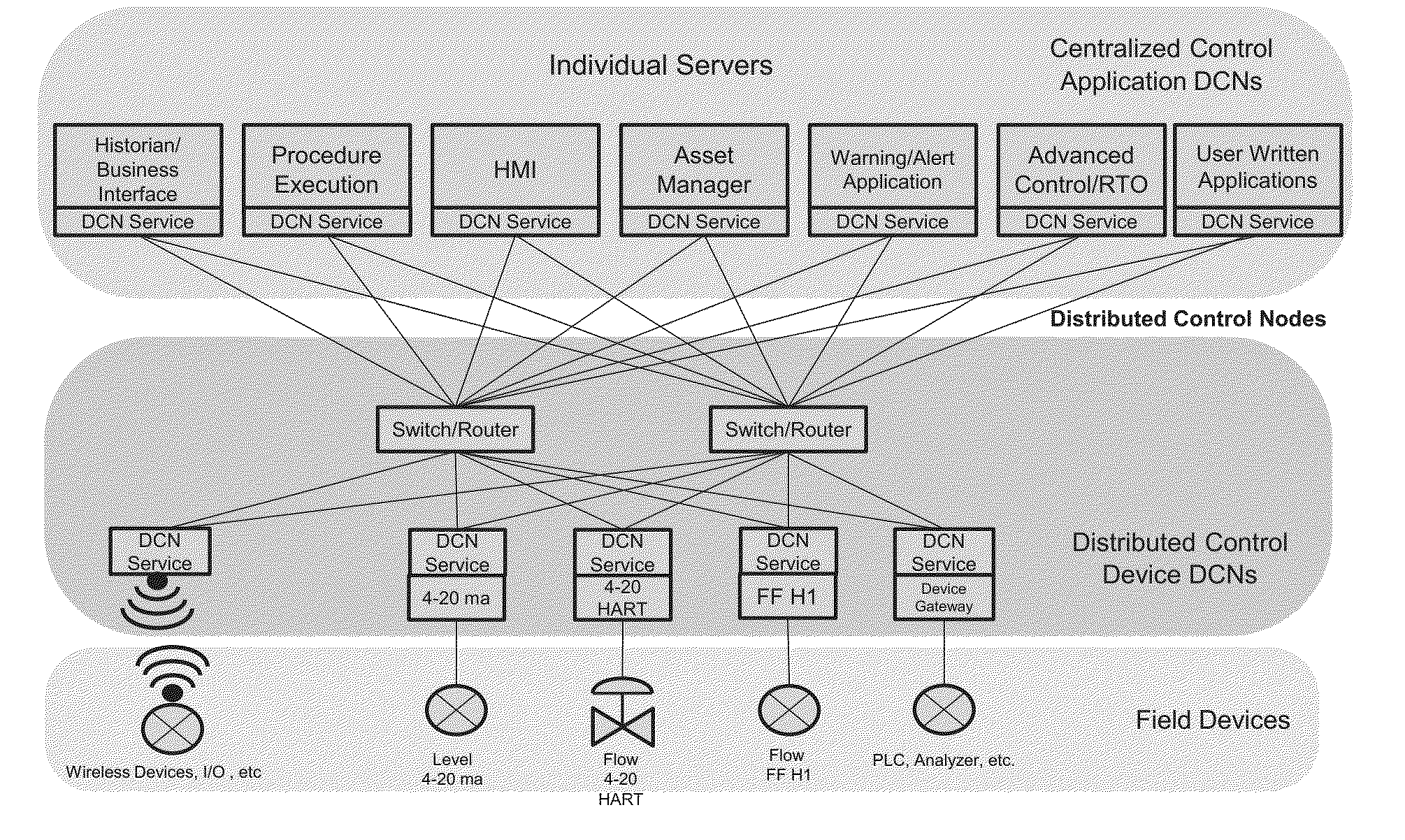
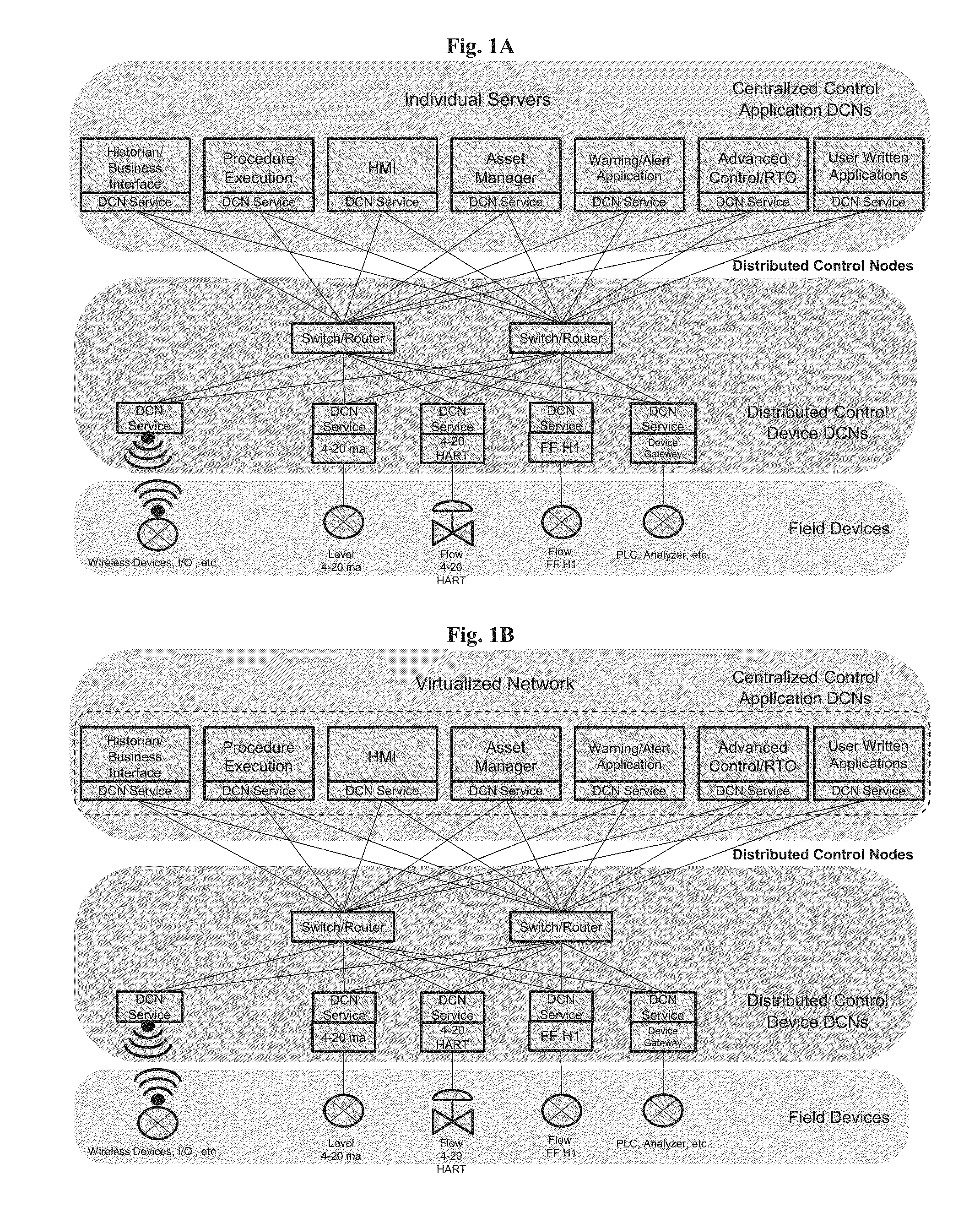
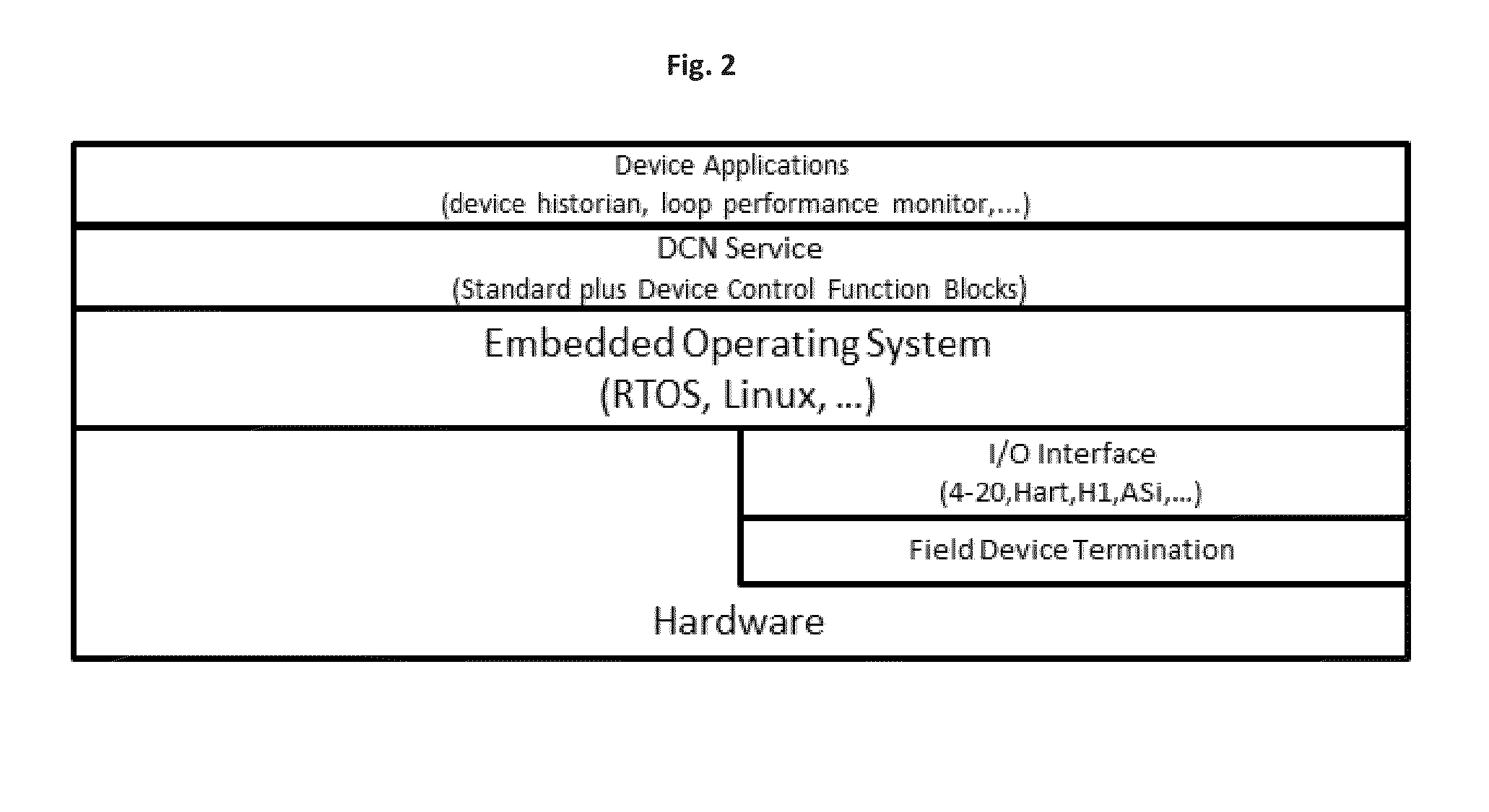
- A modular, interoperable DCS architecture utilizing distributed control nodes (DCNs) with a high-speed Layer 3 Ethernet switch fabric and industry-standard software runtime, enabling flexible integration of applications and I/O interfaces, and allowing for peer-to-peer communication between Device DCNs and Application DCNs using standard function blocks and protocols.

Cybersecurity Standards for Distributed Control Systems
The cybersecurity landscape for distributed control systems has evolved significantly with the proliferation of interconnected industrial networks. Traditional security frameworks, originally designed for isolated systems, have proven inadequate for addressing the complex threat vectors present in modern distributed architectures. The convergence of operational technology and information technology has created new vulnerabilities that require comprehensive standardization efforts.
International standards organizations have developed multiple frameworks specifically targeting distributed control system security. The IEC 62443 series stands as the most comprehensive standard, providing a systematic approach to industrial automation and control system security. This standard establishes security levels, defines risk assessment methodologies, and outlines implementation guidelines for network segmentation and access control in distributed environments.
NIST Cybersecurity Framework has gained widespread adoption across critical infrastructure sectors, offering a risk-based approach to cybersecurity management. The framework's core functions of Identify, Protect, Detect, Respond, and Recover provide a structured methodology for organizations managing complex distributed control networks. Additionally, NERC CIP standards specifically address cybersecurity requirements for bulk electric systems, establishing mandatory compliance measures for critical infrastructure protection.
The ISO/IEC 27001 standard provides foundational information security management principles that complement industry-specific frameworks. When applied to distributed control systems, this standard emphasizes continuous monitoring, risk assessment, and management system integration. The standard's process-oriented approach aligns well with the operational requirements of complex network environments.
Emerging standards focus on specific aspects of distributed system security, including secure communication protocols, device authentication, and incident response procedures. The IEEE 1686 standard addresses intelligent electronic device security capabilities, while IEC 61850 defines communication protocols for electrical substations with built-in security considerations.
Implementation challenges arise from the need to balance operational continuity with security requirements. Standards must accommodate legacy system integration, real-time performance constraints, and diverse vendor ecosystems. Compliance frameworks increasingly emphasize risk-based approaches rather than prescriptive technical requirements, allowing organizations flexibility in addressing their unique operational contexts while maintaining security effectiveness.
International standards organizations have developed multiple frameworks specifically targeting distributed control system security. The IEC 62443 series stands as the most comprehensive standard, providing a systematic approach to industrial automation and control system security. This standard establishes security levels, defines risk assessment methodologies, and outlines implementation guidelines for network segmentation and access control in distributed environments.
NIST Cybersecurity Framework has gained widespread adoption across critical infrastructure sectors, offering a risk-based approach to cybersecurity management. The framework's core functions of Identify, Protect, Detect, Respond, and Recover provide a structured methodology for organizations managing complex distributed control networks. Additionally, NERC CIP standards specifically address cybersecurity requirements for bulk electric systems, establishing mandatory compliance measures for critical infrastructure protection.
The ISO/IEC 27001 standard provides foundational information security management principles that complement industry-specific frameworks. When applied to distributed control systems, this standard emphasizes continuous monitoring, risk assessment, and management system integration. The standard's process-oriented approach aligns well with the operational requirements of complex network environments.
Emerging standards focus on specific aspects of distributed system security, including secure communication protocols, device authentication, and incident response procedures. The IEEE 1686 standard addresses intelligent electronic device security capabilities, while IEC 61850 defines communication protocols for electrical substations with built-in security considerations.
Implementation challenges arise from the need to balance operational continuity with security requirements. Standards must accommodate legacy system integration, real-time performance constraints, and diverse vendor ecosystems. Compliance frameworks increasingly emphasize risk-based approaches rather than prescriptive technical requirements, allowing organizations flexibility in addressing their unique operational contexts while maintaining security effectiveness.
Interoperability Protocols for Multi-Vendor DCS Networks
Interoperability protocols serve as the fundamental communication backbone enabling seamless integration across multi-vendor distributed control systems. These protocols establish standardized communication frameworks that allow disparate control devices, sensors, and management systems from different manufacturers to exchange data and coordinate operations effectively within complex network infrastructures.
The evolution of interoperability standards has been driven by industrial demands for vendor-agnostic solutions that reduce dependency on single suppliers while maximizing operational flexibility. Key protocol families include OPC UA (Open Platform Communications Unified Architecture), which provides secure, reliable data exchange with built-in security features and cross-platform compatibility. Modbus TCP/IP remains widely adopted for its simplicity and broad device support, while Ethernet/IP leverages standard Ethernet infrastructure for real-time industrial communications.
Protocol selection significantly impacts system architecture and performance characteristics. OPC UA excels in enterprise-level integration scenarios requiring complex data modeling and security compliance, supporting both client-server and publish-subscribe communication patterns. DNP3 (Distributed Network Protocol) demonstrates particular strength in utility and SCADA applications, offering robust error handling and time synchronization capabilities essential for critical infrastructure management.
Implementation challenges arise from protocol translation requirements and latency considerations when bridging different communication standards. Gateway devices and protocol converters play crucial roles in enabling multi-protocol environments, though they introduce potential bottlenecks and single points of failure that require careful architectural planning.
Emerging trends focus on time-sensitive networking (TSN) integration and enhanced cybersecurity frameworks. TSN extensions enable deterministic communication over standard Ethernet, addressing real-time requirements previously limited to proprietary fieldbus solutions. Security enhancements incorporate certificate-based authentication, encrypted data transmission, and intrusion detection capabilities to protect against evolving cyber threats targeting industrial control systems.
Future protocol development emphasizes cloud integration capabilities and edge computing support, enabling hybrid architectures that combine on-premises control with cloud-based analytics and management services while maintaining operational reliability and security standards.
The evolution of interoperability standards has been driven by industrial demands for vendor-agnostic solutions that reduce dependency on single suppliers while maximizing operational flexibility. Key protocol families include OPC UA (Open Platform Communications Unified Architecture), which provides secure, reliable data exchange with built-in security features and cross-platform compatibility. Modbus TCP/IP remains widely adopted for its simplicity and broad device support, while Ethernet/IP leverages standard Ethernet infrastructure for real-time industrial communications.
Protocol selection significantly impacts system architecture and performance characteristics. OPC UA excels in enterprise-level integration scenarios requiring complex data modeling and security compliance, supporting both client-server and publish-subscribe communication patterns. DNP3 (Distributed Network Protocol) demonstrates particular strength in utility and SCADA applications, offering robust error handling and time synchronization capabilities essential for critical infrastructure management.
Implementation challenges arise from protocol translation requirements and latency considerations when bridging different communication standards. Gateway devices and protocol converters play crucial roles in enabling multi-protocol environments, though they introduce potential bottlenecks and single points of failure that require careful architectural planning.
Emerging trends focus on time-sensitive networking (TSN) integration and enhanced cybersecurity frameworks. TSN extensions enable deterministic communication over standard Ethernet, addressing real-time requirements previously limited to proprietary fieldbus solutions. Security enhancements incorporate certificate-based authentication, encrypted data transmission, and intrusion detection capabilities to protect against evolving cyber threats targeting industrial control systems.
Future protocol development emphasizes cloud integration capabilities and edge computing support, enabling hybrid architectures that combine on-premises control with cloud-based analytics and management services while maintaining operational reliability and security standards.
Unlock deeper insights with PatSnap Eureka Quick Research — get a full tech report to explore trends and direct your research. Try now!
Generate Your Research Report Instantly with AI Agent
Supercharge your innovation with PatSnap Eureka AI Agent Platform!