

How to Optimize QLED Performance for Maximum Efficiency?
QLED Evolution and Objectives
Quantum Dot Light-Emitting Diodes (QLEDs) have emerged as a revolutionary display technology, offering superior color performance and energy efficiency compared to traditional LED displays. The evolution of QLED technology can be traced back to the early 2000s when researchers first began exploring the potential of quantum dots in display applications.
Initially, QLEDs faced significant challenges in terms of stability, efficiency, and manufacturing scalability. However, continuous advancements in materials science and fabrication techniques have led to remarkable improvements in QLED performance over the past two decades. The technology has progressed from laboratory prototypes to commercially viable products, with major display manufacturers incorporating QLED technology into their high-end televisions and monitors.
The primary objective in QLED development has been to maximize efficiency while maintaining exceptional color quality. This involves optimizing various aspects of the QLED structure, including quantum dot synthesis, charge transport layers, and device architecture. Researchers have focused on enhancing quantum yield, improving charge injection and transport, and reducing energy losses within the device.
One of the key milestones in QLED evolution was the development of core-shell quantum dots, which significantly improved the stability and efficiency of these nanocrystals. This breakthrough allowed for better confinement of excitons and reduced surface defects, leading to higher quantum yields and improved device longevity.
Another critical advancement has been the refinement of charge transport layers, particularly the electron and hole transport materials. Optimizing these layers has been crucial in achieving balanced charge injection and reducing energy losses due to non-radiative recombination. Researchers have explored various organic and inorganic materials to create more efficient and stable device structures.
The ongoing trend in QLED technology is towards achieving higher color purity, increased brightness, and improved power efficiency. Current research efforts are focused on developing new quantum dot materials with narrower emission spectra, enhancing charge injection efficiency, and improving light outcoupling strategies to maximize external quantum efficiency.
Looking forward, the objectives for QLED optimization include further increasing the color gamut coverage, improving the blue QLED efficiency (which has traditionally lagged behind red and green), and enhancing the overall device stability for prolonged operational lifetimes. Additionally, there is a growing emphasis on developing eco-friendly quantum dot materials and manufacturing processes to align with sustainability goals.
As QLED technology continues to mature, the ultimate aim is to surpass the performance of OLED displays in all aspects, including efficiency, color accuracy, and longevity. This ambitious goal drives ongoing research and development efforts in the field, pushing the boundaries of what is possible in display technology.
QLED Market Demand Analysis
The QLED (Quantum Dot Light-Emitting Diode) market has experienced significant growth in recent years, driven by increasing demand for high-quality displays in various consumer electronics and professional applications. The global QLED market is expected to continue its upward trajectory, with a compound annual growth rate (CAGR) projected to remain strong over the next five years.
Consumer electronics, particularly televisions, remain the primary driver of QLED market demand. As consumers seek enhanced viewing experiences with better color accuracy, brightness, and energy efficiency, QLED technology has emerged as a compelling alternative to traditional LED and OLED displays. The growing popularity of 4K and 8K resolution content has further fueled the demand for QLED displays capable of showcasing these high-resolution formats with superior picture quality.
Beyond televisions, the QLED market is expanding into other consumer electronics segments, including smartphones, tablets, and laptops. As manufacturers strive to differentiate their products in highly competitive markets, QLED technology offers a unique selling point by providing vibrant colors and improved energy efficiency compared to conventional display technologies.
The automotive industry represents another significant growth area for QLED technology. As vehicles become increasingly connected and autonomous, the demand for high-quality, durable displays for infotainment systems and digital dashboards is rising. QLED displays offer advantages in terms of brightness, color accuracy, and longevity, making them well-suited for automotive applications.
In the professional and commercial sectors, QLED technology is gaining traction in digital signage, control room displays, and medical imaging equipment. The ability of QLED displays to deliver high brightness and wide color gamut makes them ideal for these applications, where image quality and visibility are paramount.
The market demand for QLED technology is also being driven by ongoing improvements in manufacturing processes and materials. As production costs decrease and performance continues to improve, QLED displays are becoming more accessible to a broader range of consumers and industries. This trend is expected to further accelerate market growth and adoption across various sectors.
Environmental concerns and energy efficiency regulations are additional factors influencing QLED market demand. As governments and consumers alike prioritize sustainability, the energy-efficient nature of QLED technology compared to some alternative display technologies is becoming an increasingly important consideration in purchasing decisions.
QLED Tech Challenges
Quantum Dot Light-Emitting Diodes (QLEDs) have emerged as a promising display technology, offering superior color purity and energy efficiency compared to traditional LED displays. However, the path to optimizing QLED performance for maximum efficiency is fraught with technical challenges that researchers and engineers must overcome.
One of the primary challenges in QLED technology is the stability of quantum dots. These nanocrystals are highly sensitive to environmental factors such as heat, moisture, and oxygen, which can lead to degradation and reduced performance over time. Developing robust encapsulation methods and improving the intrinsic stability of quantum dots are crucial areas of focus for enhancing QLED longevity and maintaining peak efficiency throughout the device's lifetime.
Another significant hurdle is the charge injection and transport within QLED devices. Achieving balanced and efficient charge injection from the electrodes into the quantum dot emissive layer is essential for optimal performance. The interface between the transport layers and the quantum dot layer often suffers from energy level misalignment, leading to charge accumulation and reduced efficiency. Researchers are exploring novel materials and device architectures to improve charge dynamics and minimize energy losses at these interfaces.
The phenomenon of efficiency roll-off at high current densities poses a considerable challenge for QLED optimization. As the current density increases, non-radiative recombination processes become more pronounced, leading to decreased quantum efficiency. This effect limits the maximum brightness achievable while maintaining high efficiency. Addressing this issue requires a multifaceted approach, including the development of advanced quantum dot structures and the optimization of device layer compositions.
Color purity and gamut expansion represent another area of technical difficulty. While QLEDs offer excellent color performance, further improvements in color saturation and the ability to produce a wider color gamut are still sought after. This involves fine-tuning the quantum dot synthesis process to achieve narrower emission spectra and developing new materials capable of emitting light at specific wavelengths with high efficiency.
The manufacturing scalability of QLED technology also presents challenges. Transitioning from laboratory-scale production to large-area, high-volume manufacturing while maintaining consistent performance and yield is a complex task. Issues such as uniformity in quantum dot deposition, precise control of layer thicknesses, and the development of cost-effective production techniques need to be addressed to make QLED technology commercially viable on a large scale.
Lastly, the environmental impact and toxicity of certain quantum dot materials, particularly those containing heavy metals like cadmium, raise concerns. Finding alternative, eco-friendly materials that can match or exceed the performance of traditional quantum dots is an ongoing challenge. This pursuit not only aims to address environmental and regulatory concerns but also to ensure the long-term sustainability of QLED technology in the consumer electronics market.
Current QLED Optimization Techniques
01 Quantum dot composition optimization
Improving QLED efficiency through optimizing the composition of quantum dots. This includes adjusting the core-shell structure, doping with specific elements, and controlling the size distribution of quantum dots to enhance light emission and reduce energy loss.- Quantum dot composition optimization: Improving QLED efficiency through optimizing the composition of quantum dots. This includes adjusting the core-shell structure, doping with specific elements, and controlling the size distribution of quantum dots to enhance light emission and reduce energy loss.
- Hole transport layer engineering: Enhancing QLED efficiency by developing advanced hole transport layers. This involves using novel materials, optimizing layer thickness, and improving the interface between the hole transport layer and the emissive layer to facilitate better charge injection and transport.
- Electron transport layer improvements: Increasing QLED efficiency through advancements in electron transport layers. This includes developing new electron transport materials, optimizing layer structures, and enhancing electron injection to improve overall device performance.
- Light outcoupling enhancement: Boosting QLED efficiency by improving light extraction techniques. This involves implementing novel optical structures, such as microlens arrays or nanostructured surfaces, to reduce internal reflection and increase the amount of light emitted from the device.
- Device architecture optimization: Improving QLED efficiency through innovative device architectures. This includes developing tandem structures, implementing charge balance control layers, and optimizing the overall stack design to enhance charge injection, transport, and recombination within the device.
02 Hole transport layer engineering
Enhancing QLED efficiency by improving the hole transport layer. This involves developing new materials, optimizing layer thickness, and implementing novel deposition techniques to facilitate better charge carrier movement and reduce recombination losses.Expand Specific Solutions03 Electron transport layer optimization
Increasing QLED efficiency through improvements in the electron transport layer. This includes developing new materials with better electron mobility, optimizing layer thickness, and implementing novel doping strategies to enhance electron injection and transport.Expand Specific Solutions04 Light outcoupling enhancement
Boosting QLED efficiency by improving light extraction. This involves implementing various optical structures such as microlens arrays, nanostructured surfaces, or photonic crystals to reduce total internal reflection and increase the amount of light emitted from the device.Expand Specific Solutions05 Device architecture optimization
Enhancing QLED efficiency through novel device architectures. This includes developing tandem structures, implementing intermediate layers for better charge balance, and optimizing the overall stack design to improve charge injection, transport, and recombination within the emissive layer.Expand Specific Solutions
Key QLED Industry Players
The QLED performance optimization landscape is currently in a growth phase, with the market size expanding rapidly due to increasing demand for high-quality displays. The technology maturity varies among key players, with companies like Samsung Display Co., Ltd. and BOE Technology Group Co., Ltd. leading the field. These industry giants are investing heavily in research and development to enhance QLED efficiency. Other significant contributors include Sharp Corp., TCL China Star Optoelectronics Technology Co., Ltd., and OSRAM Opto Semiconductors GmbH, each bringing unique innovations to the table. The competition is fierce, driving continuous improvements in quantum dot technology, color gamut, and energy efficiency. As the market evolves, we can expect further advancements from both established players and emerging companies in the QLED space.
BOE Technology Group Co., Ltd.
Shenzhen China Star Optoelectronics Semicon Display Tech Co.
QLED Efficiency Breakthroughs
- By placing the packaged QLED device in a supercritical reactor, using a combined treatment of supercritical carbon dioxide or supercritical carbon dioxide and trace amounts of water, the pressure and temperature are controlled for supercritical treatment, affecting the zinc oxide layer to reduce electron transport capacity and balance carrier injection.
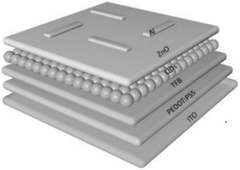
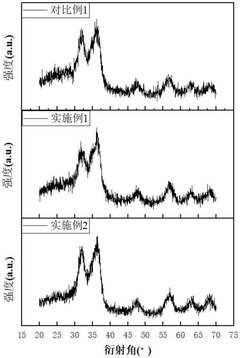
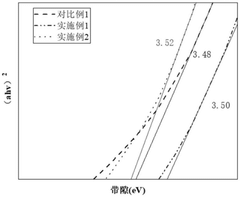
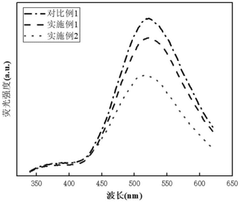
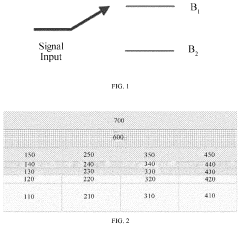
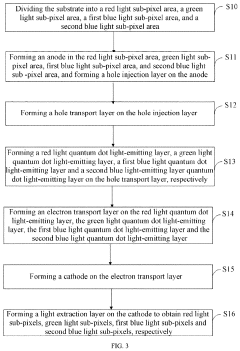
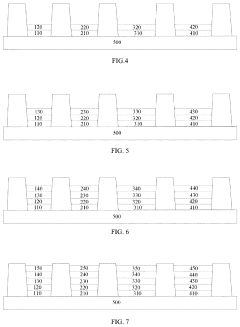
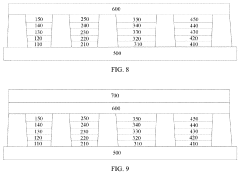
- A display device comprising a plurality of pixels, each including a red light sub-pixel, a green light sub-pixel, a first blue light sub-pixel, and a second blue light sub-pixel, where the first blue light sub-pixel is configured to emit light at high brightness and the second blue light sub-pixel is configured to emit light at low brightness, with the first blue light sub-pixel having high efficiency and the second blue light sub-pixel having a long lifetime, allowing for independent control based on brightness requirements.
QLED Material Advancements
Material advancements in QLED technology have been pivotal in driving performance improvements and efficiency gains. Recent breakthroughs in quantum dot synthesis and composition have led to significant enhancements in color purity, brightness, and overall device efficiency.
One of the key areas of focus has been the development of cadmium-free quantum dots. These materials, typically based on indium phosphide (InP) or other III-V semiconductors, have shown promising results in terms of emission efficiency and color gamut coverage. Researchers have made substantial progress in optimizing the core-shell structure of these quantum dots, resulting in improved photoluminescence quantum yield (PLQY) and enhanced stability.
Another important advancement has been the refinement of quantum dot surface chemistry. Novel ligand designs and passivation techniques have been implemented to reduce surface defects and minimize non-radiative recombination processes. These improvements have led to higher quantum efficiency and better charge transport properties within QLED devices.
The development of perovskite quantum dots has also emerged as a promising direction for QLED material advancement. These materials offer exceptional color purity and tunable emission wavelengths, making them attractive candidates for next-generation displays. Ongoing research is focused on addressing stability issues and improving their integration into device architectures.
Advancements in host materials and charge transport layers have complemented quantum dot improvements. Novel organic and inorganic compounds with optimized energy levels and charge mobility characteristics have been developed to enhance charge injection and transport within QLED devices. These materials play a crucial role in maximizing the overall device efficiency and longevity.
Furthermore, the exploration of quantum dot-polymer composites has opened up new possibilities for solution-processed QLED fabrication. These hybrid materials offer improved processability and the potential for large-area, flexible displays. Researchers are continuously refining the composition and morphology of these composites to achieve optimal device performance.
Recent efforts have also focused on developing quantum dots with narrower emission linewidths, which can lead to improved color saturation and energy efficiency in displays. This has been achieved through careful control of quantum dot size distribution and surface properties during synthesis.
QLED Manufacturing Processes
QLED manufacturing processes play a crucial role in optimizing the performance and efficiency of quantum dot light-emitting diodes (QLEDs). The production of high-quality QLEDs involves several intricate steps, each contributing to the overall device performance.
The first critical stage in QLED manufacturing is the synthesis of quantum dots. This process requires precise control over temperature, reaction time, and precursor concentrations to achieve uniform size distribution and high quantum yield. Advanced colloidal synthesis methods, such as hot-injection and heat-up techniques, are commonly employed to produce quantum dots with desired optical properties.
Following quantum dot synthesis, the next step is the deposition of multiple layers that form the QLED structure. This typically includes the hole transport layer (HTL), electron transport layer (ETL), and the emissive quantum dot layer. Various deposition techniques are utilized, including spin-coating, inkjet printing, and thermal evaporation. Each method offers distinct advantages in terms of precision, scalability, and compatibility with different materials.
The quantum dot layer deposition is particularly critical for device performance. Techniques such as phase-separation-assisted deposition and Langmuir-Blodgett assembly have been developed to achieve uniform and densely packed quantum dot films. These methods help minimize aggregation and ensure optimal energy transfer between quantum dots.
Post-deposition treatments are often employed to enhance QLED performance. These may include thermal annealing, UV-ozone treatment, or solvent vapor annealing. Such processes can improve film morphology, reduce defects, and optimize interfacial properties between layers, leading to enhanced charge transport and emission efficiency.
Encapsulation is a crucial final step in QLED manufacturing, protecting the device from moisture and oxygen degradation. Advanced encapsulation techniques, such as atomic layer deposition (ALD) and thin-film encapsulation, provide superior barrier properties while maintaining device flexibility.
Throughout the manufacturing process, in-situ monitoring and quality control measures are implemented to ensure consistency and optimize performance. This may involve spectroscopic analysis, electrical characterization, and high-resolution imaging techniques to assess layer uniformity, quantum dot distribution, and overall device structure.
Continuous improvement in QLED manufacturing processes focuses on enhancing scalability, reducing costs, and improving device lifetime. Recent advancements include the development of solution-processed quantum dots compatible with roll-to-roll manufacturing, as well as the integration of quantum dots into established OLED production lines to leverage existing infrastructure.