

ICP-MS Sample Prep: Innovation in Acid Digestion Techniques
SEP 19, 20259 MIN READ
Generate Your Research Report Instantly with AI Agent
PatSnap Eureka helps you evaluate technical feasibility & market potential.
ICP-MS Acid Digestion Background and Objectives
Inductively Coupled Plasma Mass Spectrometry (ICP-MS) has evolved significantly since its commercial introduction in the early 1980s, becoming an essential analytical technique for trace element analysis across various industries including environmental monitoring, pharmaceuticals, food safety, and materials science. The sample preparation process, particularly acid digestion, represents a critical pre-analytical step that directly impacts the accuracy, precision, and reliability of ICP-MS results.
Historically, acid digestion techniques for ICP-MS have progressed from conventional hotplate methods to microwave-assisted digestion systems, reflecting the growing demand for faster, more efficient, and environmentally sustainable analytical workflows. The evolution of these techniques has been driven by the need to address increasingly complex sample matrices while maintaining analytical integrity and meeting stricter regulatory requirements.
Current technological trends in acid digestion for ICP-MS focus on minimizing contamination risks, reducing acid consumption, improving digestion efficiency, and enhancing laboratory safety. The industry is witnessing a shift toward automated systems that offer greater reproducibility and throughput while reducing human exposure to hazardous chemicals.
The primary objective of innovation in acid digestion techniques is to develop methodologies that can completely solubilize diverse sample types while preserving analyte integrity and minimizing interferences. This includes addressing challenges associated with refractory materials, volatile elements, and complex organic matrices that have traditionally been difficult to digest completely.
Another significant goal is to align analytical procedures with green chemistry principles by reducing the volume of concentrated acids used, minimizing waste generation, and exploring alternative reagents with lower environmental impact. This ecological consideration has become increasingly important as laboratories worldwide seek to reduce their carbon footprint and comply with stricter environmental regulations.
Technological objectives also include the development of standardized protocols that can be easily validated across different laboratory settings, ensuring consistent results regardless of operator expertise or equipment variations. This standardization is particularly crucial for regulated industries where analytical method validation is a regulatory requirement.
The advancement of acid digestion techniques also aims to bridge the gap between sample preparation and instrumental analysis by developing integrated systems that streamline workflow, reduce turnaround time, and minimize the risk of sample contamination during transfer steps. This integration represents a paradigm shift from traditional compartmentalized analytical approaches toward more holistic analytical solutions.
Historically, acid digestion techniques for ICP-MS have progressed from conventional hotplate methods to microwave-assisted digestion systems, reflecting the growing demand for faster, more efficient, and environmentally sustainable analytical workflows. The evolution of these techniques has been driven by the need to address increasingly complex sample matrices while maintaining analytical integrity and meeting stricter regulatory requirements.
Current technological trends in acid digestion for ICP-MS focus on minimizing contamination risks, reducing acid consumption, improving digestion efficiency, and enhancing laboratory safety. The industry is witnessing a shift toward automated systems that offer greater reproducibility and throughput while reducing human exposure to hazardous chemicals.
The primary objective of innovation in acid digestion techniques is to develop methodologies that can completely solubilize diverse sample types while preserving analyte integrity and minimizing interferences. This includes addressing challenges associated with refractory materials, volatile elements, and complex organic matrices that have traditionally been difficult to digest completely.
Another significant goal is to align analytical procedures with green chemistry principles by reducing the volume of concentrated acids used, minimizing waste generation, and exploring alternative reagents with lower environmental impact. This ecological consideration has become increasingly important as laboratories worldwide seek to reduce their carbon footprint and comply with stricter environmental regulations.
Technological objectives also include the development of standardized protocols that can be easily validated across different laboratory settings, ensuring consistent results regardless of operator expertise or equipment variations. This standardization is particularly crucial for regulated industries where analytical method validation is a regulatory requirement.
The advancement of acid digestion techniques also aims to bridge the gap between sample preparation and instrumental analysis by developing integrated systems that streamline workflow, reduce turnaround time, and minimize the risk of sample contamination during transfer steps. This integration represents a paradigm shift from traditional compartmentalized analytical approaches toward more holistic analytical solutions.
Market Demand Analysis for Advanced Sample Preparation
The global market for advanced sample preparation technologies in ICP-MS analysis has experienced significant growth, driven primarily by increasing demands for accurate trace element analysis across multiple industries. Current market valuations indicate that the sample preparation segment for analytical instrumentation reached approximately 2.3 billion USD in 2022, with acid digestion techniques representing a substantial portion of this market. Industry forecasts project a compound annual growth rate of 5.7% through 2028, reflecting the expanding applications of ICP-MS technology.
Environmental monitoring represents the largest market segment, accounting for nearly 30% of the total demand for advanced sample preparation solutions. This is largely attributed to stringent regulatory requirements for monitoring heavy metals and other contaminants in soil, water, and air samples. The complexity of environmental matrices necessitates more efficient and reliable sample preparation methods to ensure accurate analytical results.
The pharmaceutical and biomedical sectors follow closely, with rapidly increasing demand driven by the need for precise elemental analysis in drug development, quality control, and biomedical research. These industries require sample preparation techniques that can handle complex biological matrices while maintaining high recovery rates and minimal contamination.
Food safety testing has emerged as another significant market driver, particularly in regions with strengthening regulatory frameworks. The detection of trace contaminants in food products requires sophisticated sample preparation to overcome matrix effects and ensure reliable quantification of potentially harmful elements.
Geographically, North America and Europe currently dominate the market for advanced sample preparation technologies, collectively accounting for over 60% of global demand. However, the Asia-Pacific region is experiencing the fastest growth rate, driven by expanding industrial bases, increasing environmental concerns, and strengthening regulatory frameworks in countries like China, India, and South Korea.
Customer pain points consistently identified in market surveys include time-consuming preparation procedures, potential sample contamination, incomplete digestion of complex matrices, and variability in results. These challenges highlight the need for innovations in acid digestion techniques that can provide faster processing times, higher sample throughput, and more consistent results across diverse sample types.
The market is increasingly demanding automated and standardized sample preparation solutions that can reduce human error, minimize analyst exposure to hazardous reagents, and improve laboratory efficiency. This trend is particularly pronounced in high-throughput laboratories where sample preparation represents a significant bottleneck in analytical workflows.
Environmental monitoring represents the largest market segment, accounting for nearly 30% of the total demand for advanced sample preparation solutions. This is largely attributed to stringent regulatory requirements for monitoring heavy metals and other contaminants in soil, water, and air samples. The complexity of environmental matrices necessitates more efficient and reliable sample preparation methods to ensure accurate analytical results.
The pharmaceutical and biomedical sectors follow closely, with rapidly increasing demand driven by the need for precise elemental analysis in drug development, quality control, and biomedical research. These industries require sample preparation techniques that can handle complex biological matrices while maintaining high recovery rates and minimal contamination.
Food safety testing has emerged as another significant market driver, particularly in regions with strengthening regulatory frameworks. The detection of trace contaminants in food products requires sophisticated sample preparation to overcome matrix effects and ensure reliable quantification of potentially harmful elements.
Geographically, North America and Europe currently dominate the market for advanced sample preparation technologies, collectively accounting for over 60% of global demand. However, the Asia-Pacific region is experiencing the fastest growth rate, driven by expanding industrial bases, increasing environmental concerns, and strengthening regulatory frameworks in countries like China, India, and South Korea.
Customer pain points consistently identified in market surveys include time-consuming preparation procedures, potential sample contamination, incomplete digestion of complex matrices, and variability in results. These challenges highlight the need for innovations in acid digestion techniques that can provide faster processing times, higher sample throughput, and more consistent results across diverse sample types.
The market is increasingly demanding automated and standardized sample preparation solutions that can reduce human error, minimize analyst exposure to hazardous reagents, and improve laboratory efficiency. This trend is particularly pronounced in high-throughput laboratories where sample preparation represents a significant bottleneck in analytical workflows.
Current Challenges in Acid Digestion Techniques
Acid digestion techniques represent a critical bottleneck in the ICP-MS analytical workflow, presenting several significant challenges that limit efficiency, accuracy, and throughput. Traditional closed-vessel microwave digestion systems, while effective, suffer from limited sample capacity and throughput constraints, typically processing only 8-24 samples per batch with cycle times of 1-2 hours. This creates substantial workflow bottlenecks in high-volume testing environments such as environmental monitoring and food safety laboratories.
Temperature and pressure limitations constitute another major challenge, with most commercial systems restricted to maximum temperatures of 220-300°C and pressures of 40-100 bar. These constraints prove inadequate for complete dissolution of certain refractory materials, including silicon carbide, zirconium oxide, and some rare earth minerals, leading to incomplete recoveries and analytical inaccuracies.
Cross-contamination remains a persistent issue, particularly in open-vessel digestion systems where volatile elements can escape and redeposit. Even in closed systems, memory effects from previous digestions can compromise analytical integrity, especially when analyzing ultra-trace concentrations where even minimal contamination significantly impacts results.
The handling of hazardous acids presents substantial safety concerns. Concentrated acids like hydrofluoric acid (HF), perchloric acid (HClO₄), and aqua regia require specialized ventilation systems, personal protective equipment, and rigorous safety protocols. The disposal of acid waste further compounds environmental challenges, with neutralization and treatment processes adding complexity and cost to laboratory operations.
Energy consumption represents an often-overlooked challenge, with microwave digestion systems typically consuming 1-3 kWh per digestion cycle. This not only increases operational costs but also contributes to the environmental footprint of analytical laboratories, conflicting with sustainability initiatives.
Sample matrix complexity introduces variable digestion efficiencies, with organic-rich samples requiring different acid combinations and digestion parameters compared to inorganic matrices. This necessitates method development for each sample type, consuming valuable research time and resources.
Automation integration remains limited, with many digestion systems lacking seamless interfaces with sample preparation robots and analytical instruments. This creates workflow discontinuities requiring manual intervention, increasing labor costs and introducing potential error sources.
Standardization challenges persist across laboratories, with different digestion protocols yielding variable analyte recoveries. This complicates inter-laboratory comparisons and method validation, particularly for complex environmental and biological samples where certified reference materials may not adequately represent real-world sample complexity.
Temperature and pressure limitations constitute another major challenge, with most commercial systems restricted to maximum temperatures of 220-300°C and pressures of 40-100 bar. These constraints prove inadequate for complete dissolution of certain refractory materials, including silicon carbide, zirconium oxide, and some rare earth minerals, leading to incomplete recoveries and analytical inaccuracies.
Cross-contamination remains a persistent issue, particularly in open-vessel digestion systems where volatile elements can escape and redeposit. Even in closed systems, memory effects from previous digestions can compromise analytical integrity, especially when analyzing ultra-trace concentrations where even minimal contamination significantly impacts results.
The handling of hazardous acids presents substantial safety concerns. Concentrated acids like hydrofluoric acid (HF), perchloric acid (HClO₄), and aqua regia require specialized ventilation systems, personal protective equipment, and rigorous safety protocols. The disposal of acid waste further compounds environmental challenges, with neutralization and treatment processes adding complexity and cost to laboratory operations.
Energy consumption represents an often-overlooked challenge, with microwave digestion systems typically consuming 1-3 kWh per digestion cycle. This not only increases operational costs but also contributes to the environmental footprint of analytical laboratories, conflicting with sustainability initiatives.
Sample matrix complexity introduces variable digestion efficiencies, with organic-rich samples requiring different acid combinations and digestion parameters compared to inorganic matrices. This necessitates method development for each sample type, consuming valuable research time and resources.
Automation integration remains limited, with many digestion systems lacking seamless interfaces with sample preparation robots and analytical instruments. This creates workflow discontinuities requiring manual intervention, increasing labor costs and introducing potential error sources.
Standardization challenges persist across laboratories, with different digestion protocols yielding variable analyte recoveries. This complicates inter-laboratory comparisons and method validation, particularly for complex environmental and biological samples where certified reference materials may not adequately represent real-world sample complexity.
Current Acid Digestion Methodologies and Protocols
01 Microwave-assisted acid digestion techniques
Microwave-assisted acid digestion is a rapid and efficient method for sample preparation in ICP-MS analysis. This technique uses microwave energy to accelerate the digestion process, allowing for complete dissolution of samples in acid mixtures under controlled temperature and pressure conditions. The method reduces contamination risks and processing time while ensuring complete decomposition of organic matter and dissolution of metals, making it ideal for complex environmental, biological, and geological samples.- Microwave-assisted acid digestion techniques: Microwave-assisted acid digestion is a rapid and efficient method for sample preparation in ICP-MS analysis. This technique uses microwave energy to accelerate the digestion process, allowing for complete decomposition of samples in a closed vessel system. The high temperature and pressure conditions created in the microwave environment enhance the dissolution of complex matrices, reducing digestion time significantly compared to conventional methods. This approach is particularly effective for environmental, biological, and geological samples that require complete mineralization before analysis.
- Multi-acid digestion protocols for complex matrices: Multi-acid digestion protocols involve the sequential or combined use of different acids (such as HNO3, HCl, HF, and H2SO4) to effectively decompose complex sample matrices. This approach is particularly valuable for geological samples, metals, alloys, and environmental samples with high silicate content. The combination of acids with different chemical properties enables the complete dissolution of resistant materials, ensuring accurate quantification of trace elements. The selection of acids and their ratios depends on the specific sample composition and the target analytes for ICP-MS analysis.
- Automated digestion systems for ICP-MS sample preparation: Automated digestion systems streamline the sample preparation process for ICP-MS analysis by controlling temperature, pressure, and reaction conditions with minimal operator intervention. These systems often incorporate programmable heating blocks, pressure sensors, and automated reagent addition capabilities. The automation ensures reproducibility, reduces contamination risks, and increases sample throughput. Modern systems may include integrated cooling mechanisms and safety features to handle exothermic reactions and potentially hazardous acids, making them suitable for routine laboratory analysis of multiple sample types.
- Low-temperature acid digestion methods: Low-temperature acid digestion methods are designed for sensitive samples that may lose volatile elements or undergo unwanted chemical transformations at high temperatures. These techniques typically employ strong oxidizing acids or acid mixtures at temperatures below 100°C, often with extended reaction times to compensate for the reduced kinetics. This approach is particularly valuable for biological samples, pharmaceuticals, and environmental samples where volatile elements like mercury, arsenic, and selenium need to be accurately quantified. The gentle conditions help preserve the integrity of thermally labile analytes while still achieving complete digestion.
- Specialized acid digestion for nanoparticle and advanced material analysis: Specialized acid digestion protocols have been developed for the analysis of nanoparticles, semiconductors, and advanced composite materials that present unique challenges for ICP-MS sample preparation. These methods often combine selective acid mixtures with controlled digestion parameters to maintain the integrity of specific elements while dissolving the matrix. For nanoparticle analysis, techniques may include sequential dissolution steps to characterize both the coating and core materials separately. These approaches enable accurate size distribution analysis, composition determination, and quantification of trace elements in technologically advanced materials.
02 Multi-acid digestion protocols for geological samples
Multi-acid digestion protocols involve the sequential or combined use of different acids (such as HF, HNO3, HCl, and HClO4) to completely dissolve geological and mineral samples for ICP-MS analysis. These protocols are specifically designed to break down silicate matrices, dissolve resistant minerals, and ensure complete extraction of target elements. The choice of acids and digestion conditions depends on the sample composition, with special considerations for refractory minerals and volatile elements.Expand Specific Solutions03 Automated digestion systems for high-throughput analysis
Automated digestion systems streamline the sample preparation process for ICP-MS by handling multiple samples simultaneously with minimal operator intervention. These systems incorporate precise temperature control, programmable digestion protocols, and safety features to manage hazardous acids. Automation improves reproducibility, reduces cross-contamination, and increases laboratory efficiency, making it suitable for routine environmental monitoring, pharmaceutical quality control, and food safety testing applications.Expand Specific Solutions04 Low-temperature acid digestion for volatile elements
Low-temperature acid digestion techniques are specifically developed for samples containing volatile elements that might be lost during conventional high-temperature digestion. These methods utilize mild oxidizing conditions, closed vessel systems, and carefully controlled heating profiles to prevent the loss of elements like mercury, arsenic, and selenium. The approach often combines oxidizing acids with stabilizing agents to maintain analyte integrity while achieving complete sample decomposition.Expand Specific Solutions05 Green chemistry approaches to acid digestion
Green chemistry approaches to acid digestion focus on reducing the environmental impact of sample preparation for ICP-MS by minimizing hazardous reagent use, decreasing acid volumes, and implementing safer alternatives. These methods incorporate dilute acid mixtures, ultrasound-assisted extraction, enzymatic digestion, or subcritical water extraction to achieve effective sample decomposition with reduced waste generation and improved laboratory safety. The techniques are particularly valuable for routine environmental monitoring and food safety applications.Expand Specific Solutions
Key Industry Players in Analytical Chemistry Equipment
The ICP-MS sample preparation market, particularly in acid digestion techniques, is currently in a growth phase characterized by increasing technological maturity and innovation. The market is expanding due to rising demand for precise elemental analysis across pharmaceutical, environmental, and mining sectors, with an estimated global value exceeding $500 million. Leading players include established analytical instrument manufacturers like Shimadzu Corporation and CEM Holdings Corp., who offer comprehensive digestion systems, alongside specialized innovators such as ColdBlock Technologies developing novel rapid digestion methods. Research institutions including KAUST and Colorado State University are advancing fundamental techniques, while industrial players like Pangang Group and Sinopec are implementing these technologies for materials analysis. The competitive landscape shows a blend of traditional acid digestion approaches and emerging technologies focused on efficiency, throughput, and environmental sustainability.
ColdBlock Technologies, Inc.
Technical Solution: ColdBlock Technologies has developed a revolutionary sample digestion technology that represents a significant advancement over traditional acid digestion methods for ICP-MS analysis. Their patented ColdBlock Digestion technology uses focused short-wave infrared radiation combined with cooling condensation to rapidly digest samples in minutes rather than hours. The system applies intense energy directly to the sample while maintaining a cool headspace to prevent analyte loss through volatilization. This technology achieves complete digestion of complex matrices including geological, environmental, and biological samples using smaller acid volumes (typically 50-70% less) and significantly reduced digestion times (10-15 minutes versus hours or days with conventional methods). ColdBlock's approach eliminates the need for specialized microwave vessels or high-pressure containers, improving laboratory safety while maintaining analytical accuracy comparable to or better than traditional methods.
Strengths: Dramatically reduced sample preparation time (up to 95% faster than conventional methods); significantly lower acid consumption; improved laboratory safety with open-vessel design; reduced energy consumption; compatible with a wide range of sample types. Weaknesses: Higher initial capital investment compared to conventional hotplate systems; requires specific training for optimal performance; limited track record in certain specialized applications.
Wuhan Shangpu Analysis Technology Co., Ltd.
Technical Solution: Wuhan Shangpu Analysis Technology has developed specialized acid digestion systems tailored for challenging sample types in ICP-MS analysis. Their SPD series digestion platforms incorporate multi-stage temperature programming with precise control algorithms that adjust heating patterns based on sample reactivity. The company's patented pressure-relief technology allows for controlled venting during exothermic reactions while preventing analyte loss. Their systems feature corrosion-resistant digestion vessels constructed from high-purity PTFE materials that minimize contamination risks during high-temperature acid digestion processes. Shangpu's technology includes specialized vessel designs for different sample matrices, including their SPD-XL vessels for large sample volumes and SPD-HT vessels for high-temperature applications up to 280°C. Their digestion systems incorporate automated acid addition capabilities that precisely control reagent delivery during multi-stage digestion protocols, improving reproducibility and reducing analyst exposure to corrosive chemicals.
Strengths: Excellent performance with challenging matrices like geological and metallurgical samples; cost-effective compared to many Western competitors; flexible configuration options; robust construction suitable for industrial environments. Weaknesses: Less extensive application support compared to larger multinational companies; more limited global service network; less integration with major ICP-MS instrument platforms.
Critical Innovations in Digestion Technology
Inductively coupled plasma mass spectrometry
PatentInactiveJP2020027038A
Innovation
- The method involves tuning the ICP-MS system using a sample solution with a high-concentration acid matrix as a tuning liquid, adjusting carrier gas flow rates and focusing lens settings to control the production rate of coexisting element oxides within a specific range, thereby maximizing detection sensitivity.
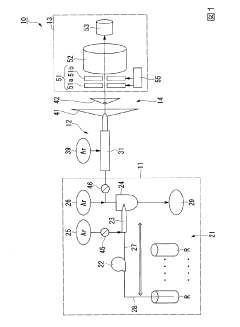
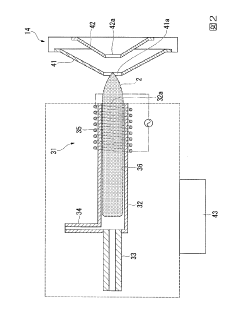
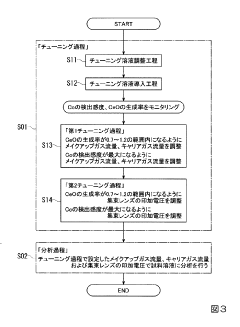
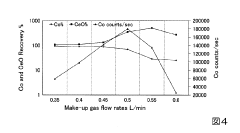
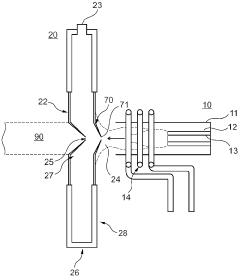
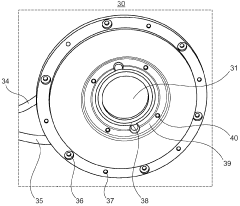
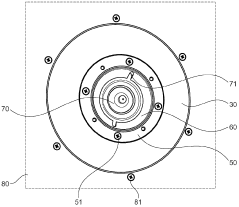
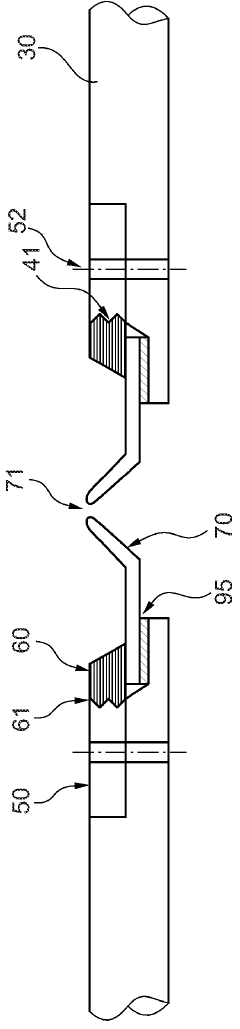
Cooling plate for icp-ms
PatentActiveGB2585327A
Innovation
- A cooling plate made from bronze is used, which provides sufficient thermal conductivity and enhanced chemical resistance, reducing the risk of corrosion and degradation, and eliminating the need for a corrosion-resistant coating.
Environmental Impact and Green Chemistry Approaches
Traditional acid digestion techniques in ICP-MS sample preparation have significant environmental implications that cannot be overlooked in modern analytical chemistry. The conventional use of strong mineral acids such as hydrofluoric, nitric, and perchloric acids presents substantial environmental hazards through toxic vapor emissions, potential water contamination, and considerable waste generation. These acids require specialized handling protocols and disposal procedures that increase both the environmental footprint and operational costs of analytical laboratories.
In response to these challenges, green chemistry approaches have emerged as promising alternatives in ICP-MS sample preparation. These methodologies align with the twelve principles of green chemistry, particularly emphasizing waste prevention, atom economy, and safer chemistry. Microwave-assisted digestion represents a significant advancement, reducing acid consumption by up to 70% compared to traditional hot plate methods while maintaining analytical performance. This technique not only minimizes reagent usage but also decreases energy consumption and processing time.
Ultrasound-assisted extraction has demonstrated considerable potential as another environmentally friendly approach. By utilizing acoustic cavitation to enhance extraction efficiency, this method operates at lower temperatures and pressures than conventional techniques, further reducing energy requirements. Studies indicate that ultrasound-assisted methods can achieve comparable recovery rates while using diluted acids or even aqueous solutions for certain sample matrices.
The implementation of diluted acid procedures represents another significant green chemistry innovation. Research has shown that for many environmental and biological samples, diluted acid mixtures (1-2M) can effectively replace concentrated acids without compromising analytical results. This approach substantially reduces hazardous waste generation and improves laboratory safety conditions.
Enzymatic digestion methods offer perhaps the most environmentally benign alternative for biological samples. These techniques utilize natural enzymes to break down organic matrices at near-neutral pH and ambient temperatures, eliminating the need for harsh chemicals entirely. While currently limited to specific sample types, ongoing research continues to expand their applicability.
The transition toward greener sample preparation techniques is further supported by regulatory pressures and sustainability initiatives within the analytical chemistry community. Organizations such as the American Chemical Society's Green Chemistry Institute are actively promoting research and implementation of environmentally responsible laboratory practices, accelerating the adoption of these innovative approaches across academic and industrial settings.
In response to these challenges, green chemistry approaches have emerged as promising alternatives in ICP-MS sample preparation. These methodologies align with the twelve principles of green chemistry, particularly emphasizing waste prevention, atom economy, and safer chemistry. Microwave-assisted digestion represents a significant advancement, reducing acid consumption by up to 70% compared to traditional hot plate methods while maintaining analytical performance. This technique not only minimizes reagent usage but also decreases energy consumption and processing time.
Ultrasound-assisted extraction has demonstrated considerable potential as another environmentally friendly approach. By utilizing acoustic cavitation to enhance extraction efficiency, this method operates at lower temperatures and pressures than conventional techniques, further reducing energy requirements. Studies indicate that ultrasound-assisted methods can achieve comparable recovery rates while using diluted acids or even aqueous solutions for certain sample matrices.
The implementation of diluted acid procedures represents another significant green chemistry innovation. Research has shown that for many environmental and biological samples, diluted acid mixtures (1-2M) can effectively replace concentrated acids without compromising analytical results. This approach substantially reduces hazardous waste generation and improves laboratory safety conditions.
Enzymatic digestion methods offer perhaps the most environmentally benign alternative for biological samples. These techniques utilize natural enzymes to break down organic matrices at near-neutral pH and ambient temperatures, eliminating the need for harsh chemicals entirely. While currently limited to specific sample types, ongoing research continues to expand their applicability.
The transition toward greener sample preparation techniques is further supported by regulatory pressures and sustainability initiatives within the analytical chemistry community. Organizations such as the American Chemical Society's Green Chemistry Institute are actively promoting research and implementation of environmentally responsible laboratory practices, accelerating the adoption of these innovative approaches across academic and industrial settings.
Quality Control and Validation Frameworks
Quality control and validation frameworks are essential components in the advancement of ICP-MS sample preparation techniques, particularly in acid digestion methodologies. These frameworks ensure that analytical results maintain high levels of accuracy, precision, and reliability across different laboratories and applications. The implementation of robust quality control measures begins with the establishment of standard operating procedures (SOPs) that detail every step of the acid digestion process, from sample collection to final analysis.
Method validation protocols for acid digestion techniques typically include assessments of linearity, detection limits, quantification limits, accuracy, precision, and robustness. These parameters must be systematically evaluated using certified reference materials (CRMs) that closely match the matrix composition of the samples being analyzed. The selection of appropriate CRMs is critical, as matrix effects can significantly influence the efficiency of acid digestion and subsequent ICP-MS analysis.
Statistical quality control tools play a pivotal role in monitoring the performance of acid digestion procedures over time. Control charts, such as Shewhart charts and CUSUM charts, enable analysts to detect systematic errors and drift in analytical systems. Regular analysis of quality control samples, including method blanks, laboratory control samples, and duplicate samples, provides continuous verification of method performance and helps identify potential sources of contamination or analytical bias.
Proficiency testing programs offer an external validation mechanism for laboratories employing innovative acid digestion techniques. Participation in these programs allows laboratories to compare their analytical results with those obtained by other facilities using similar or different methodologies. This inter-laboratory comparison is invaluable for identifying method-specific biases and establishing the comparability of results across different analytical platforms.
Uncertainty estimation represents another critical aspect of quality control frameworks for acid digestion techniques. A comprehensive uncertainty budget should account for all potential sources of error, including sample heterogeneity, weighing errors, volumetric measurements, instrument calibration, and matrix effects. The expanded measurement uncertainty provides a quantitative measure of result reliability and facilitates meaningful interpretation of analytical data.
Documentation and traceability systems ensure that all aspects of the acid digestion process are recorded and can be audited. Electronic laboratory information management systems (LIMS) have revolutionized data handling, allowing for efficient tracking of samples, reagents, and analytical results. These systems also facilitate the implementation of quality control measures by automating data evaluation against predefined acceptance criteria and generating alerts when deviations occur.
Method validation protocols for acid digestion techniques typically include assessments of linearity, detection limits, quantification limits, accuracy, precision, and robustness. These parameters must be systematically evaluated using certified reference materials (CRMs) that closely match the matrix composition of the samples being analyzed. The selection of appropriate CRMs is critical, as matrix effects can significantly influence the efficiency of acid digestion and subsequent ICP-MS analysis.
Statistical quality control tools play a pivotal role in monitoring the performance of acid digestion procedures over time. Control charts, such as Shewhart charts and CUSUM charts, enable analysts to detect systematic errors and drift in analytical systems. Regular analysis of quality control samples, including method blanks, laboratory control samples, and duplicate samples, provides continuous verification of method performance and helps identify potential sources of contamination or analytical bias.
Proficiency testing programs offer an external validation mechanism for laboratories employing innovative acid digestion techniques. Participation in these programs allows laboratories to compare their analytical results with those obtained by other facilities using similar or different methodologies. This inter-laboratory comparison is invaluable for identifying method-specific biases and establishing the comparability of results across different analytical platforms.
Uncertainty estimation represents another critical aspect of quality control frameworks for acid digestion techniques. A comprehensive uncertainty budget should account for all potential sources of error, including sample heterogeneity, weighing errors, volumetric measurements, instrument calibration, and matrix effects. The expanded measurement uncertainty provides a quantitative measure of result reliability and facilitates meaningful interpretation of analytical data.
Documentation and traceability systems ensure that all aspects of the acid digestion process are recorded and can be audited. Electronic laboratory information management systems (LIMS) have revolutionized data handling, allowing for efficient tracking of samples, reagents, and analytical results. These systems also facilitate the implementation of quality control measures by automating data evaluation against predefined acceptance criteria and generating alerts when deviations occur.
Unlock deeper insights with PatSnap Eureka Quick Research — get a full tech report to explore trends and direct your research. Try now!
Generate Your Research Report Instantly with AI Agent
Supercharge your innovation with PatSnap Eureka AI Agent Platform!