

LDAC Technology and Its Impact on Audio Compression
JUL 4, 20258 MIN READ
Generate Your Research Report Instantly with AI Agent
Patsnap Eureka helps you evaluate technical feasibility & market potential.
LDAC Evolution & Objectives
LDAC (Low Latency Audio Codec) technology has emerged as a significant advancement in the field of audio compression, revolutionizing the way we experience high-quality wireless audio. Developed by Sony in 2015, LDAC has evolved from its initial introduction to become a widely adopted standard in the audio industry.
The primary objective of LDAC technology is to overcome the limitations of traditional Bluetooth audio codecs, which often compromise audio quality due to bandwidth constraints. LDAC aims to deliver near-lossless audio quality over Bluetooth connections, bridging the gap between wired and wireless audio experiences.
Throughout its evolution, LDAC has undergone several iterations to improve its performance and compatibility. The initial version of LDAC supported a maximum bitrate of 990 kbps, which was already a significant improvement over existing Bluetooth codecs. Subsequent updates have further enhanced its capabilities, with the current version supporting bitrates up to 990 kbps, 660 kbps, and 330 kbps, allowing for adaptive transmission based on connection quality.
One of the key objectives in LDAC's development has been to maintain high audio fidelity while ensuring low latency. This is particularly crucial for applications such as gaming and video streaming, where audio-visual synchronization is critical. LDAC achieves this by employing advanced encoding techniques and efficient data transmission protocols.
Another important goal in LDAC's evolution has been to expand its ecosystem and compatibility. Initially exclusive to Sony devices, LDAC has since been made available to other manufacturers through licensing agreements. This strategic move has significantly increased LDAC's adoption across various audio devices and platforms, including smartphones, headphones, and speakers.
The technology's evolution also reflects a broader trend in the audio industry towards high-resolution audio. LDAC supports audio sample rates up to 96 kHz and bit depths up to 32 bits, aligning with the growing demand for studio-quality audio reproduction in consumer devices.
As LDAC continues to evolve, its objectives extend beyond mere audio quality improvements. Future developments aim to address power efficiency, further reduce latency, and enhance compatibility with emerging wireless technologies. These advancements are crucial in maintaining LDAC's relevance in an increasingly competitive audio codec landscape.
The primary objective of LDAC technology is to overcome the limitations of traditional Bluetooth audio codecs, which often compromise audio quality due to bandwidth constraints. LDAC aims to deliver near-lossless audio quality over Bluetooth connections, bridging the gap between wired and wireless audio experiences.
Throughout its evolution, LDAC has undergone several iterations to improve its performance and compatibility. The initial version of LDAC supported a maximum bitrate of 990 kbps, which was already a significant improvement over existing Bluetooth codecs. Subsequent updates have further enhanced its capabilities, with the current version supporting bitrates up to 990 kbps, 660 kbps, and 330 kbps, allowing for adaptive transmission based on connection quality.
One of the key objectives in LDAC's development has been to maintain high audio fidelity while ensuring low latency. This is particularly crucial for applications such as gaming and video streaming, where audio-visual synchronization is critical. LDAC achieves this by employing advanced encoding techniques and efficient data transmission protocols.
Another important goal in LDAC's evolution has been to expand its ecosystem and compatibility. Initially exclusive to Sony devices, LDAC has since been made available to other manufacturers through licensing agreements. This strategic move has significantly increased LDAC's adoption across various audio devices and platforms, including smartphones, headphones, and speakers.
The technology's evolution also reflects a broader trend in the audio industry towards high-resolution audio. LDAC supports audio sample rates up to 96 kHz and bit depths up to 32 bits, aligning with the growing demand for studio-quality audio reproduction in consumer devices.
As LDAC continues to evolve, its objectives extend beyond mere audio quality improvements. Future developments aim to address power efficiency, further reduce latency, and enhance compatibility with emerging wireless technologies. These advancements are crucial in maintaining LDAC's relevance in an increasingly competitive audio codec landscape.
Hi-Res Audio Market Analysis
The Hi-Res Audio market has experienced significant growth in recent years, driven by increasing consumer demand for high-quality audio experiences. This trend is particularly evident in the premium audio segment, where discerning listeners seek audio reproduction that closely matches the original studio recording. The market for Hi-Res Audio encompasses a wide range of products, including digital audio players, headphones, speakers, and streaming services.
Consumer awareness of Hi-Res Audio has been steadily rising, with major technology companies and audio manufacturers actively promoting the benefits of high-resolution audio formats. This increased awareness has led to a growing willingness among consumers to invest in Hi-Res Audio capable devices and content. The market has also been bolstered by the proliferation of high-speed internet and advancements in digital audio technology, making it easier for consumers to access and enjoy Hi-Res Audio content.
The adoption of Hi-Res Audio has been particularly strong in regions with mature audio markets, such as North America, Europe, and parts of Asia. Japan, in particular, has been at the forefront of Hi-Res Audio adoption, with a well-established ecosystem of products and services catering to audiophiles. Emerging markets in Southeast Asia and Latin America are also showing increasing interest in Hi-Res Audio, presenting new growth opportunities for manufacturers and content providers.
The market for Hi-Res Audio streaming services has seen substantial growth, with major platforms like Tidal, Amazon Music HD, and Qobuz offering extensive catalogs of high-resolution tracks. This shift towards streaming has been a key driver in making Hi-Res Audio more accessible to a broader audience, moving beyond traditional audiophile circles.
In the hardware segment, the demand for Hi-Res Audio capable devices has led to innovation and competition among manufacturers. Companies are developing new audio codecs, like LDAC, to improve wireless audio quality and bridge the gap between convenience and high-fidelity sound. This has resulted in a diverse range of products, from portable digital audio players to wireless headphones and home audio systems, all designed to support Hi-Res Audio playback.
The automotive industry has also recognized the potential of Hi-Res Audio, with several high-end car manufacturers incorporating Hi-Res Audio systems into their vehicles. This trend is expected to continue as car manufacturers seek to differentiate their offerings and cater to consumers' desire for premium in-car entertainment experiences.
Consumer awareness of Hi-Res Audio has been steadily rising, with major technology companies and audio manufacturers actively promoting the benefits of high-resolution audio formats. This increased awareness has led to a growing willingness among consumers to invest in Hi-Res Audio capable devices and content. The market has also been bolstered by the proliferation of high-speed internet and advancements in digital audio technology, making it easier for consumers to access and enjoy Hi-Res Audio content.
The adoption of Hi-Res Audio has been particularly strong in regions with mature audio markets, such as North America, Europe, and parts of Asia. Japan, in particular, has been at the forefront of Hi-Res Audio adoption, with a well-established ecosystem of products and services catering to audiophiles. Emerging markets in Southeast Asia and Latin America are also showing increasing interest in Hi-Res Audio, presenting new growth opportunities for manufacturers and content providers.
The market for Hi-Res Audio streaming services has seen substantial growth, with major platforms like Tidal, Amazon Music HD, and Qobuz offering extensive catalogs of high-resolution tracks. This shift towards streaming has been a key driver in making Hi-Res Audio more accessible to a broader audience, moving beyond traditional audiophile circles.
In the hardware segment, the demand for Hi-Res Audio capable devices has led to innovation and competition among manufacturers. Companies are developing new audio codecs, like LDAC, to improve wireless audio quality and bridge the gap between convenience and high-fidelity sound. This has resulted in a diverse range of products, from portable digital audio players to wireless headphones and home audio systems, all designed to support Hi-Res Audio playback.
The automotive industry has also recognized the potential of Hi-Res Audio, with several high-end car manufacturers incorporating Hi-Res Audio systems into their vehicles. This trend is expected to continue as car manufacturers seek to differentiate their offerings and cater to consumers' desire for premium in-car entertainment experiences.
LDAC Technical Challenges
LDAC technology, while revolutionary in the field of audio compression, faces several significant technical challenges that impact its widespread adoption and optimal performance. One of the primary hurdles is the high computational complexity required for real-time encoding and decoding of audio streams. This demand for processing power can lead to increased battery consumption in portable devices, potentially limiting its application in low-power or resource-constrained environments.
Another challenge lies in maintaining consistent audio quality across various network conditions. LDAC's adaptive bitrate feature, while innovative, must contend with fluctuating wireless bandwidth, which can result in sudden changes in audio quality during playback. Ensuring a seamless transition between different bitrates without noticeable artifacts or interruptions remains a complex technical issue.
The technology also grapples with compatibility concerns across different devices and platforms. As a proprietary codec developed by Sony, LDAC faces challenges in achieving widespread integration across non-Sony devices and operating systems. This limited ecosystem can hinder its adoption and interoperability with existing audio systems and software.
Furthermore, LDAC's high-resolution audio capabilities present challenges in terms of storage and transmission. The increased file sizes associated with high-quality audio streams require more robust storage solutions and faster data transfer rates, which may not be readily available in all consumer devices or network infrastructures.
The codec's performance in preserving the full spectrum of high-resolution audio also faces scrutiny. While LDAC claims to deliver near-lossless audio quality, achieving this consistently across various audio sources and playback scenarios remains a technical challenge. Maintaining the integrity of complex audio waveforms, especially in the higher frequency ranges, requires continuous refinement of the compression algorithms.
Lastly, LDAC technology must address the challenge of latency, particularly in applications requiring real-time audio processing such as live performances or gaming. Minimizing the delay between audio encoding, transmission, and decoding while maintaining high-quality output is a delicate balance that demands ongoing optimization efforts.
These technical challenges collectively represent the frontiers of LDAC's development, requiring innovative solutions to enhance its performance, broaden its applicability, and solidify its position in the competitive landscape of audio compression technologies.
Another challenge lies in maintaining consistent audio quality across various network conditions. LDAC's adaptive bitrate feature, while innovative, must contend with fluctuating wireless bandwidth, which can result in sudden changes in audio quality during playback. Ensuring a seamless transition between different bitrates without noticeable artifacts or interruptions remains a complex technical issue.
The technology also grapples with compatibility concerns across different devices and platforms. As a proprietary codec developed by Sony, LDAC faces challenges in achieving widespread integration across non-Sony devices and operating systems. This limited ecosystem can hinder its adoption and interoperability with existing audio systems and software.
Furthermore, LDAC's high-resolution audio capabilities present challenges in terms of storage and transmission. The increased file sizes associated with high-quality audio streams require more robust storage solutions and faster data transfer rates, which may not be readily available in all consumer devices or network infrastructures.
The codec's performance in preserving the full spectrum of high-resolution audio also faces scrutiny. While LDAC claims to deliver near-lossless audio quality, achieving this consistently across various audio sources and playback scenarios remains a technical challenge. Maintaining the integrity of complex audio waveforms, especially in the higher frequency ranges, requires continuous refinement of the compression algorithms.
Lastly, LDAC technology must address the challenge of latency, particularly in applications requiring real-time audio processing such as live performances or gaming. Minimizing the delay between audio encoding, transmission, and decoding while maintaining high-quality output is a delicate balance that demands ongoing optimization efforts.
These technical challenges collectively represent the frontiers of LDAC's development, requiring innovative solutions to enhance its performance, broaden its applicability, and solidify its position in the competitive landscape of audio compression technologies.
LDAC Implementation Strategies
01 LDAC codec implementation
LDAC is a high-quality audio codec developed for Bluetooth audio transmission. It enables efficient compression of audio data while maintaining high-resolution sound quality. The technology uses adaptive bit rate allocation and optimized encoding algorithms to achieve better audio performance compared to conventional codecs.- LDAC codec implementation: LDAC is a high-quality audio codec developed for Bluetooth audio transmission. It enables efficient compression of audio data while maintaining high-resolution sound quality. The technology utilizes advanced encoding algorithms to achieve higher bitrates and better audio fidelity compared to standard Bluetooth codecs.
- Audio signal processing for compression: Various signal processing techniques are employed in LDAC technology to compress audio data effectively. These may include spectral analysis, psychoacoustic modeling, and adaptive bit allocation. The processing aims to reduce data size while preserving critical audio information for high-quality playback.
- Bluetooth audio transmission optimization: LDAC technology optimizes Bluetooth audio transmission by implementing efficient data packaging and error correction methods. This ensures reliable wireless audio streaming with minimal latency and reduced susceptibility to interference, enhancing the overall listening experience.
- Adaptive bitrate and quality control: LDAC incorporates adaptive bitrate and quality control mechanisms to adjust compression levels based on network conditions and device capabilities. This feature allows for seamless audio playback across various scenarios, balancing audio quality and transmission stability.
- Integration with audio systems and devices: LDAC technology is designed for integration into various audio systems and devices, including smartphones, headphones, and speakers. The codec's implementation considers compatibility with existing audio processing chains and supports multiple audio formats for versatile application across different platforms.
02 Audio signal processing for LDAC
The LDAC technology involves sophisticated audio signal processing techniques to enhance compression efficiency and sound quality. This includes frequency domain transformation, psychoacoustic modeling, and adaptive quantization. These processes help in reducing data size while preserving critical audio information.Expand Specific Solutions03 Bluetooth audio transmission using LDAC
LDAC is primarily designed for Bluetooth audio transmission. It enables high-resolution audio streaming over Bluetooth connections, supporting various audio formats and sampling rates. The technology aims to overcome bandwidth limitations of Bluetooth while delivering superior audio quality compared to standard Bluetooth codecs.Expand Specific Solutions04 Integration with audio devices and systems
LDAC technology can be integrated into various audio devices and systems, including smartphones, headphones, speakers, and car audio systems. This integration involves hardware and software implementations to support LDAC encoding and decoding, ensuring compatibility and optimal performance across different devices.Expand Specific Solutions05 Adaptive bit rate and quality control
LDAC incorporates adaptive bit rate control mechanisms to optimize audio quality based on available bandwidth and connection stability. This feature allows the codec to dynamically adjust compression levels and bit rates, ensuring consistent audio performance under varying transmission conditions.Expand Specific Solutions
LDAC Industry Leaders
The LDAC (Low Latency Audio Codec) technology market is in a growth phase, with increasing adoption in high-quality audio devices. The market size is expanding as consumer demand for superior audio experiences rises. Technologically, LDAC is relatively mature, with key players like Sony, the technology's developer, leading implementation. Companies such as Samsung, LG Electronics, and Huawei have integrated LDAC into their devices, indicating widespread industry acceptance. Other major tech firms like Microsoft and Intel are also involved, suggesting potential for further market expansion. As audio compression technology evolves, competition among these players is likely to drive innovation and improve LDAC's capabilities.
Samsung Electronics Co., Ltd.
Technical Solution: Samsung has adopted LDAC technology in its Galaxy series smartphones and wearables, enhancing their audio capabilities[4]. The company has focused on optimizing LDAC implementation for mobile devices, ensuring efficient power usage while maintaining high-quality audio output. Samsung has also developed its own audio processing technologies, such as Adapt Sound and UHQ upscaling, which work in conjunction with LDAC to further improve audio performance[5]. By integrating LDAC with its proprietary audio enhancements, Samsung aims to provide a comprehensive high-fidelity audio experience across its ecosystem.
Strengths: Wide adoption in popular mobile devices, integration with proprietary audio technologies. Weaknesses: Dependence on Sony's LDAC license, limited control over core codec development.
Sony Group Corp.
Technical Solution: Sony, as the developer of LDAC technology, has implemented a high-resolution audio codec that can transmit up to 990 kbps of data wirelessly[1]. LDAC uses adaptive bit rate to optimize audio quality based on wireless conditions, supporting 24-bit/96 kHz audio transmission[2]. The technology employs sophisticated encoding and decoding algorithms to maintain audio fidelity while achieving efficient compression. Sony has integrated LDAC into various products, including headphones, speakers, and smartphones, to create a comprehensive ecosystem for high-quality wireless audio[3].
Strengths: Superior audio quality, high data transfer rate, and wide product integration. Weaknesses: Limited compatibility with non-Sony devices and potential for higher power consumption.
LDAC Core Patents & Innovations
Apparatus and method for coding a time-discrete audio signal to obtain coded audio data and for decoding coded audio data
PatentInactiveUS7275036B2
Innovation
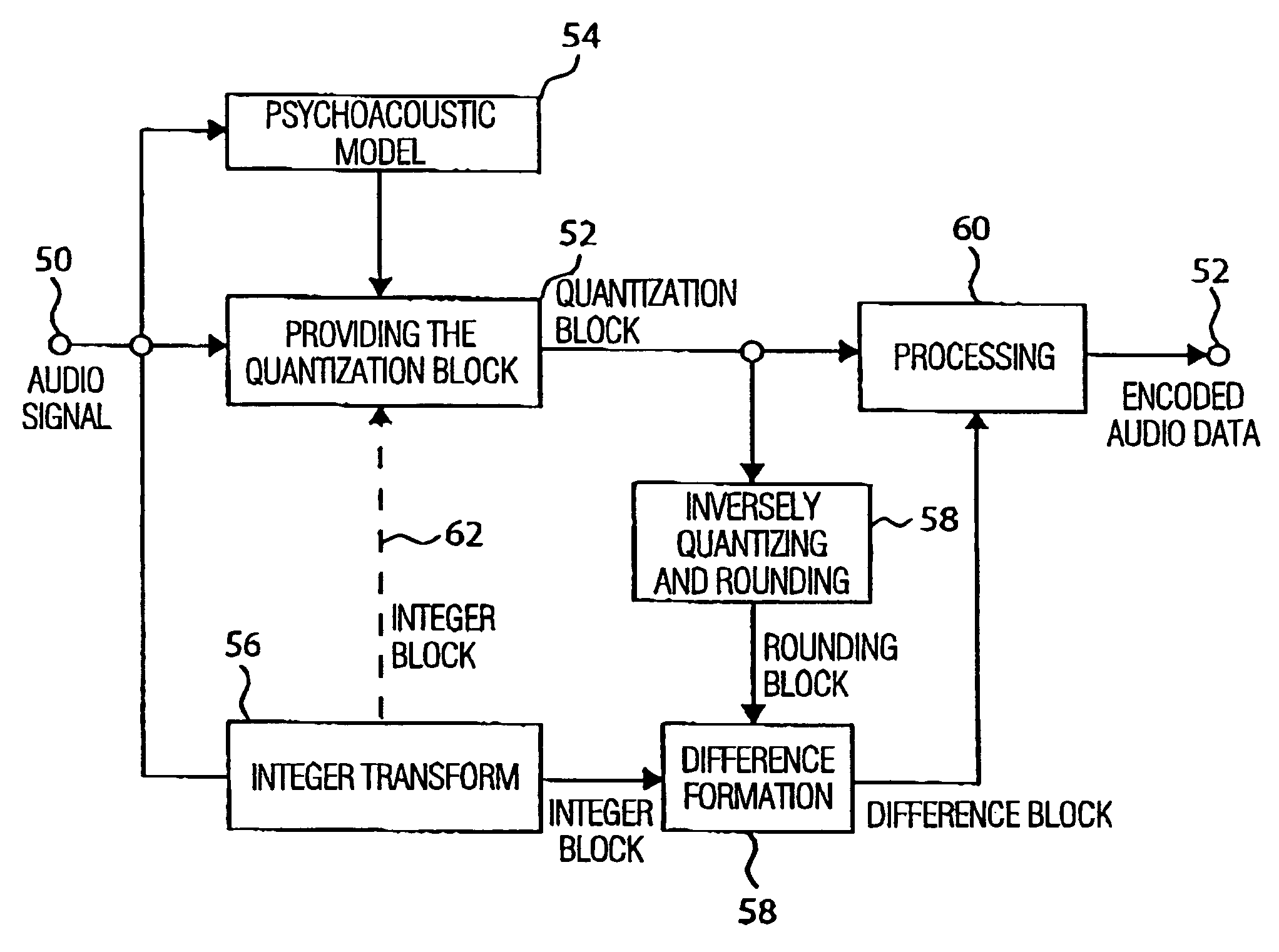
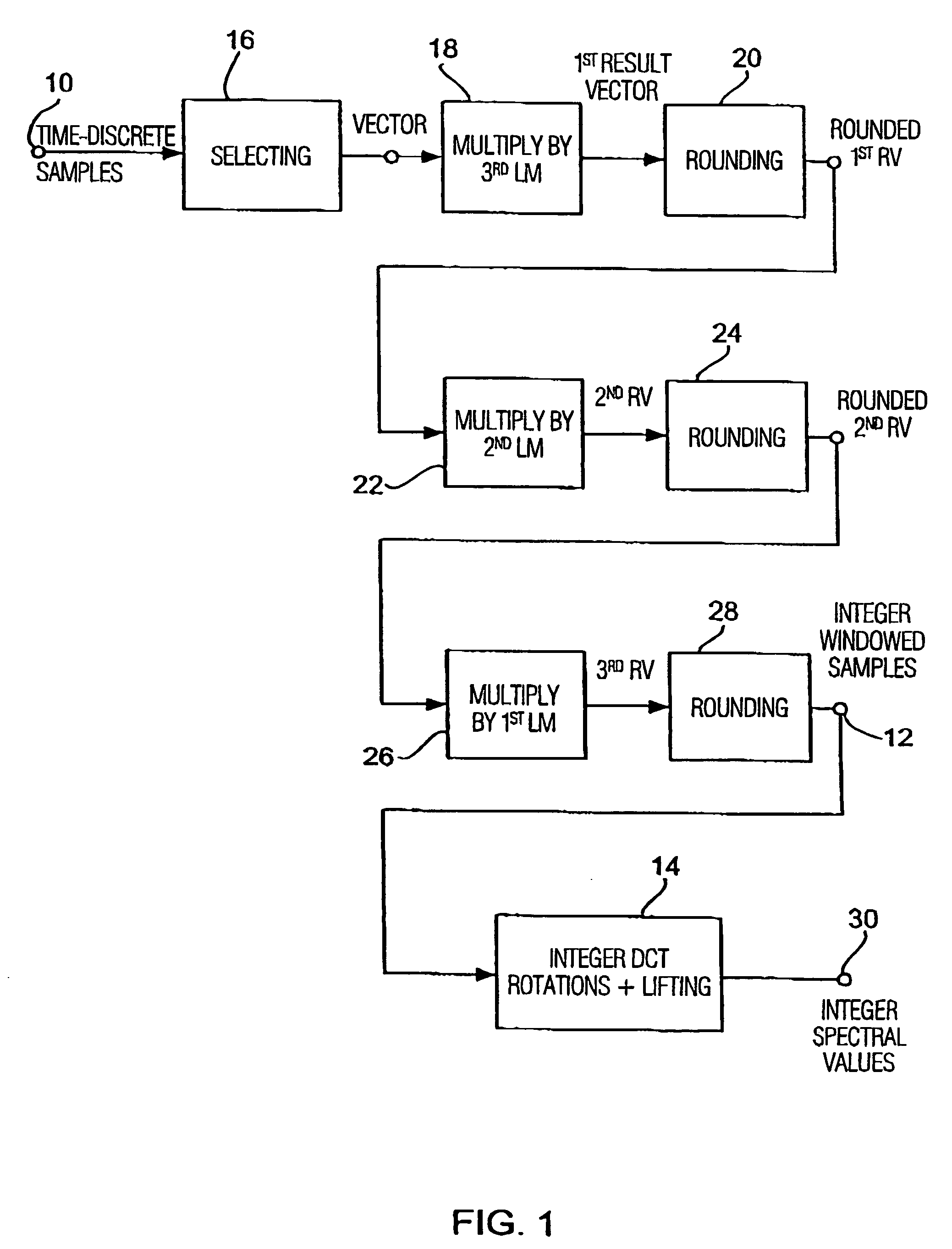
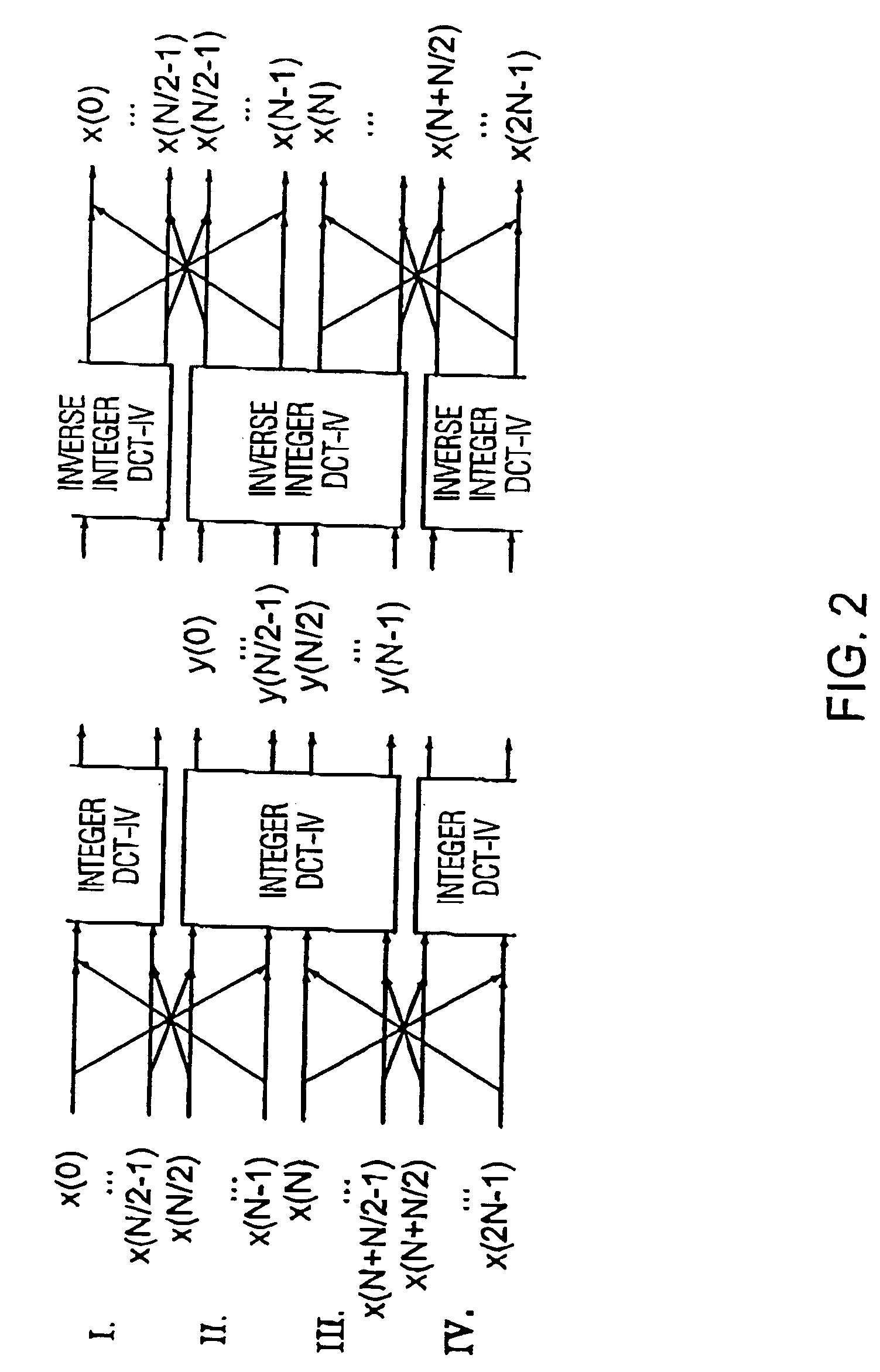
- The proposed solution involves generating coded audio data by quantizing audio signals using a psychoacoustic model, then using an integer transform algorithm to produce integer spectral values, which are combined with rounded inversely quantized values to form a difference block, allowing for entropy coding without the need for inverse filter banks in the coder, and enabling lossless or almost lossless decoding.

Method for compression and expansion of digital audio data
PatentInactiveUS20060271374A1
Innovation
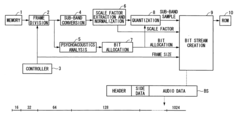
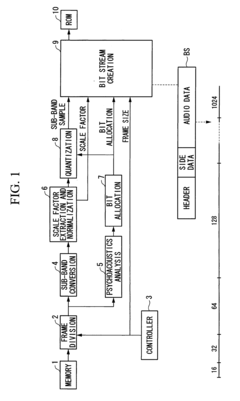
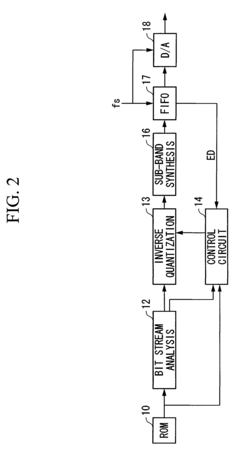
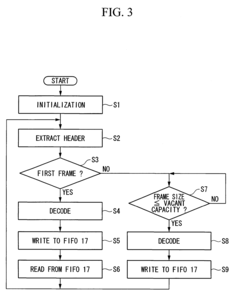
- The method involves dividing digital audio data into frames with gradually increasing sample sizes from 16 to 1024, applying psychoacoustic analysis and quantization, and decoding in units of frames with memory management to control decoding based on available capacity, allowing for efficient compression and expansion with minimal latency.
Bluetooth Audio Standards
Bluetooth audio standards have evolved significantly over the years, with each iteration bringing improvements in audio quality, power efficiency, and connectivity. The introduction of LDAC technology has marked a significant milestone in this evolution, particularly in the realm of high-quality audio compression.
The Bluetooth Special Interest Group (SIG) has been instrumental in developing and maintaining these standards. Initially, Bluetooth audio was limited to low-quality mono audio for voice calls. With the introduction of Advanced Audio Distribution Profile (A2DP) in 2003, stereo audio streaming became possible, albeit with limited quality due to the low bitrate of the SBC codec.
Subsequent versions of Bluetooth introduced enhanced data rates and improved audio codecs. Bluetooth 4.0 brought significant power efficiency improvements, while Bluetooth 5.0 increased range and data throughput. These advancements laid the groundwork for more sophisticated audio compression technologies.
The advent of aptX and AAC codecs improved audio quality, but LDAC technology, developed by Sony, pushed the boundaries even further. LDAC supports bitrates up to 990 kbps, allowing for near-lossless audio transmission over Bluetooth. This is a substantial improvement over previous codecs, which typically operated at much lower bitrates.
LDAC's impact on Bluetooth audio standards has been profound. It has set a new benchmark for wireless audio quality, prompting other manufacturers to develop competing high-bitrate codecs. This competition has driven the overall improvement of Bluetooth audio standards, benefiting consumers with better audio experiences across a wide range of devices.
The Bluetooth SIG has responded to these advancements by introducing Bluetooth LE Audio, which includes the new LC3 codec. While not matching LDAC's bitrate, LC3 offers improved efficiency and quality at lower bitrates, making it suitable for a broader range of devices, including hearing aids and true wireless earbuds.
As Bluetooth continues to evolve, the impact of LDAC and similar high-quality codecs is likely to influence future standards. The focus is shifting towards balancing high-quality audio with power efficiency and universal compatibility, ensuring that Bluetooth remains the dominant standard for wireless audio transmission in consumer electronics.
The Bluetooth Special Interest Group (SIG) has been instrumental in developing and maintaining these standards. Initially, Bluetooth audio was limited to low-quality mono audio for voice calls. With the introduction of Advanced Audio Distribution Profile (A2DP) in 2003, stereo audio streaming became possible, albeit with limited quality due to the low bitrate of the SBC codec.
Subsequent versions of Bluetooth introduced enhanced data rates and improved audio codecs. Bluetooth 4.0 brought significant power efficiency improvements, while Bluetooth 5.0 increased range and data throughput. These advancements laid the groundwork for more sophisticated audio compression technologies.
The advent of aptX and AAC codecs improved audio quality, but LDAC technology, developed by Sony, pushed the boundaries even further. LDAC supports bitrates up to 990 kbps, allowing for near-lossless audio transmission over Bluetooth. This is a substantial improvement over previous codecs, which typically operated at much lower bitrates.
LDAC's impact on Bluetooth audio standards has been profound. It has set a new benchmark for wireless audio quality, prompting other manufacturers to develop competing high-bitrate codecs. This competition has driven the overall improvement of Bluetooth audio standards, benefiting consumers with better audio experiences across a wide range of devices.
The Bluetooth SIG has responded to these advancements by introducing Bluetooth LE Audio, which includes the new LC3 codec. While not matching LDAC's bitrate, LC3 offers improved efficiency and quality at lower bitrates, making it suitable for a broader range of devices, including hearing aids and true wireless earbuds.
As Bluetooth continues to evolve, the impact of LDAC and similar high-quality codecs is likely to influence future standards. The focus is shifting towards balancing high-quality audio with power efficiency and universal compatibility, ensuring that Bluetooth remains the dominant standard for wireless audio transmission in consumer electronics.
LDAC Energy Efficiency
LDAC technology, developed by Sony, has made significant strides in improving energy efficiency in audio compression. This advancement is crucial for portable devices and wireless audio systems where battery life is a critical factor. LDAC's energy efficiency is primarily achieved through its adaptive bit rate system, which allows for optimal compression based on the available bandwidth and device capabilities.
The codec's ability to adjust its bit rate dynamically contributes to its energy-saving properties. When operating at lower bit rates, LDAC requires less processing power, thereby reducing energy consumption. This adaptability ensures that devices can maintain high-quality audio transmission while conserving battery life, especially in challenging wireless environments.
LDAC's efficient encoding and decoding processes also play a role in its energy efficiency. The codec utilizes advanced algorithms that minimize computational complexity while maintaining audio quality. This optimization reduces the processing load on both transmitting and receiving devices, leading to lower power consumption during audio playback and transmission.
Compared to other Bluetooth audio codecs, LDAC demonstrates superior energy efficiency, particularly when transmitting high-resolution audio. Its ability to compress audio data more effectively than traditional codecs means that less data needs to be transmitted over the wireless connection, resulting in reduced power consumption for both the transmitting and receiving devices.
The impact of LDAC's energy efficiency extends beyond individual device performance. In the broader context of wireless audio ecosystems, the widespread adoption of LDAC could lead to significant cumulative energy savings across millions of devices. This has potential implications for reducing overall energy consumption in consumer electronics and contributing to more sustainable technology practices.
However, it's important to note that the energy efficiency of LDAC can vary depending on the specific implementation and device hardware. Manufacturers must optimize their hardware and software integration to fully leverage LDAC's energy-saving potential. As the technology continues to evolve, further improvements in energy efficiency are expected, potentially through more advanced compression algorithms and hardware-level optimizations.
The codec's ability to adjust its bit rate dynamically contributes to its energy-saving properties. When operating at lower bit rates, LDAC requires less processing power, thereby reducing energy consumption. This adaptability ensures that devices can maintain high-quality audio transmission while conserving battery life, especially in challenging wireless environments.
LDAC's efficient encoding and decoding processes also play a role in its energy efficiency. The codec utilizes advanced algorithms that minimize computational complexity while maintaining audio quality. This optimization reduces the processing load on both transmitting and receiving devices, leading to lower power consumption during audio playback and transmission.
Compared to other Bluetooth audio codecs, LDAC demonstrates superior energy efficiency, particularly when transmitting high-resolution audio. Its ability to compress audio data more effectively than traditional codecs means that less data needs to be transmitted over the wireless connection, resulting in reduced power consumption for both the transmitting and receiving devices.
The impact of LDAC's energy efficiency extends beyond individual device performance. In the broader context of wireless audio ecosystems, the widespread adoption of LDAC could lead to significant cumulative energy savings across millions of devices. This has potential implications for reducing overall energy consumption in consumer electronics and contributing to more sustainable technology practices.
However, it's important to note that the energy efficiency of LDAC can vary depending on the specific implementation and device hardware. Manufacturers must optimize their hardware and software integration to fully leverage LDAC's energy-saving potential. As the technology continues to evolve, further improvements in energy efficiency are expected, potentially through more advanced compression algorithms and hardware-level optimizations.
Unlock deeper insights with Patsnap Eureka Quick Research — get a full tech report to explore trends and direct your research. Try now!
Generate Your Research Report Instantly with AI Agent
Supercharge your innovation with Patsnap Eureka AI Agent Platform!