

LDAC Versus Concurrent Audio Transmission Technologies
JUL 4, 20258 MIN READ
Generate Your Research Report Instantly with AI Agent
PatSnap Eureka helps you evaluate technical feasibility & market potential.
LDAC Technology Overview
LDAC (Low Latency Audio Codec) is a cutting-edge audio coding technology developed by Sony Corporation. It is designed to deliver high-quality wireless audio transmission over Bluetooth connections. LDAC aims to address the limitations of traditional Bluetooth audio codecs by offering higher bitrates and improved audio fidelity.
The technology utilizes advanced compression algorithms to transmit audio data at up to 990 kbps, which is significantly higher than standard Bluetooth codecs like SBC (Sub-band Coding) or even aptX. This increased bitrate allows for the transmission of near-lossless audio quality, preserving more of the original sound information.
LDAC supports three audio quality modes: 330 kbps, 660 kbps, and 990 kbps. These modes can be dynamically adjusted based on the wireless connection stability and device capabilities, ensuring optimal performance in various environments. The codec also employs adaptive bit rate technology to maintain a stable connection and minimize dropouts.
One of the key features of LDAC is its ability to transmit 24-bit/96 kHz audio content wirelessly. This high-resolution audio support sets it apart from many other Bluetooth codecs, which are often limited to CD-quality audio or lower. LDAC's enhanced audio capabilities make it particularly appealing for audiophiles and music enthusiasts who demand superior sound quality from their wireless audio devices.
LDAC achieves its high-quality audio transmission through several technical innovations. It employs a hybrid coding scheme that combines lossless and lossy compression techniques. The codec also utilizes psychoacoustic modeling to optimize the encoding process, focusing on preserving the most perceptually important audio information.
In comparison to other concurrent audio transmission technologies, LDAC offers several advantages. It provides higher bitrates than aptX HD (which maxes out at 576 kbps) and AAC (which typically operates at 256 kbps). LDAC also boasts lower latency compared to some competing codecs, making it suitable for applications where audio-video synchronization is critical, such as gaming or video playback.
However, it's worth noting that LDAC's availability is somewhat limited compared to more widely adopted codecs. While it has gained traction in recent years, particularly in Sony devices and some Android smartphones, it is not as universally supported as SBC or AAC. This limitation can affect its practical applicability in certain consumer scenarios.
Despite this, LDAC represents a significant advancement in wireless audio technology, pushing the boundaries of what's possible with Bluetooth audio transmission. Its focus on high-resolution audio and adaptive performance positions it as a forward-looking solution in the evolving landscape of wireless audio technologies.
The technology utilizes advanced compression algorithms to transmit audio data at up to 990 kbps, which is significantly higher than standard Bluetooth codecs like SBC (Sub-band Coding) or even aptX. This increased bitrate allows for the transmission of near-lossless audio quality, preserving more of the original sound information.
LDAC supports three audio quality modes: 330 kbps, 660 kbps, and 990 kbps. These modes can be dynamically adjusted based on the wireless connection stability and device capabilities, ensuring optimal performance in various environments. The codec also employs adaptive bit rate technology to maintain a stable connection and minimize dropouts.
One of the key features of LDAC is its ability to transmit 24-bit/96 kHz audio content wirelessly. This high-resolution audio support sets it apart from many other Bluetooth codecs, which are often limited to CD-quality audio or lower. LDAC's enhanced audio capabilities make it particularly appealing for audiophiles and music enthusiasts who demand superior sound quality from their wireless audio devices.
LDAC achieves its high-quality audio transmission through several technical innovations. It employs a hybrid coding scheme that combines lossless and lossy compression techniques. The codec also utilizes psychoacoustic modeling to optimize the encoding process, focusing on preserving the most perceptually important audio information.
In comparison to other concurrent audio transmission technologies, LDAC offers several advantages. It provides higher bitrates than aptX HD (which maxes out at 576 kbps) and AAC (which typically operates at 256 kbps). LDAC also boasts lower latency compared to some competing codecs, making it suitable for applications where audio-video synchronization is critical, such as gaming or video playback.
However, it's worth noting that LDAC's availability is somewhat limited compared to more widely adopted codecs. While it has gained traction in recent years, particularly in Sony devices and some Android smartphones, it is not as universally supported as SBC or AAC. This limitation can affect its practical applicability in certain consumer scenarios.
Despite this, LDAC represents a significant advancement in wireless audio technology, pushing the boundaries of what's possible with Bluetooth audio transmission. Its focus on high-resolution audio and adaptive performance positions it as a forward-looking solution in the evolving landscape of wireless audio technologies.
Audio Market Trends
The global audio market has been experiencing significant growth and transformation in recent years, driven by technological advancements and changing consumer preferences. The rise of wireless audio devices, particularly true wireless stereo (TWS) earbuds and smart speakers, has been a major catalyst for market expansion. This trend has been further accelerated by the increasing adoption of smartphones and other mobile devices, which serve as primary audio sources for many consumers.
The demand for high-quality audio experiences has been growing steadily, with consumers showing a willingness to invest in premium audio products that offer superior sound quality and advanced features. This has led to a surge in the development and adoption of high-resolution audio technologies, including LDAC and other competing formats. The market has also seen a shift towards personalized audio experiences, with AI-powered sound optimization and noise cancellation technologies gaining traction.
In the professional audio segment, there has been a growing emphasis on networked audio solutions and digital signal processing (DSP) technologies. This trend is particularly evident in the live sound and installed audio markets, where manufacturers are focusing on developing products that offer improved connectivity, flexibility, and audio quality.
The automotive audio market has also been evolving rapidly, with car manufacturers increasingly viewing high-quality audio systems as a key differentiator. This has led to partnerships between automakers and premium audio brands, as well as the integration of advanced audio technologies into vehicle infotainment systems.
The COVID-19 pandemic has had a significant impact on the audio market, accelerating certain trends while creating new challenges. The shift towards remote work and online education has boosted demand for headphones and conferencing audio solutions. Simultaneously, the live events industry has faced unprecedented disruption, leading to increased interest in virtual concert technologies and immersive audio experiences for home entertainment.
Looking ahead, the audio market is expected to continue its growth trajectory, with emerging technologies such as spatial audio, voice-controlled devices, and hearables driving innovation. The integration of audio technologies with other smart home and IoT devices is likely to create new opportunities and use cases. Additionally, the ongoing development of 5G networks is expected to enable new possibilities for high-quality wireless audio streaming and low-latency applications.
As consumer expectations for audio quality continue to rise, technologies like LDAC and its competitors will play an increasingly important role in shaping the future of the audio market. The ability to deliver high-fidelity audio wirelessly will be a key differentiator for manufacturers, potentially leading to further advancements in audio codec technologies and transmission protocols.
The demand for high-quality audio experiences has been growing steadily, with consumers showing a willingness to invest in premium audio products that offer superior sound quality and advanced features. This has led to a surge in the development and adoption of high-resolution audio technologies, including LDAC and other competing formats. The market has also seen a shift towards personalized audio experiences, with AI-powered sound optimization and noise cancellation technologies gaining traction.
In the professional audio segment, there has been a growing emphasis on networked audio solutions and digital signal processing (DSP) technologies. This trend is particularly evident in the live sound and installed audio markets, where manufacturers are focusing on developing products that offer improved connectivity, flexibility, and audio quality.
The automotive audio market has also been evolving rapidly, with car manufacturers increasingly viewing high-quality audio systems as a key differentiator. This has led to partnerships between automakers and premium audio brands, as well as the integration of advanced audio technologies into vehicle infotainment systems.
The COVID-19 pandemic has had a significant impact on the audio market, accelerating certain trends while creating new challenges. The shift towards remote work and online education has boosted demand for headphones and conferencing audio solutions. Simultaneously, the live events industry has faced unprecedented disruption, leading to increased interest in virtual concert technologies and immersive audio experiences for home entertainment.
Looking ahead, the audio market is expected to continue its growth trajectory, with emerging technologies such as spatial audio, voice-controlled devices, and hearables driving innovation. The integration of audio technologies with other smart home and IoT devices is likely to create new opportunities and use cases. Additionally, the ongoing development of 5G networks is expected to enable new possibilities for high-quality wireless audio streaming and low-latency applications.
As consumer expectations for audio quality continue to rise, technologies like LDAC and its competitors will play an increasingly important role in shaping the future of the audio market. The ability to deliver high-fidelity audio wirelessly will be a key differentiator for manufacturers, potentially leading to further advancements in audio codec technologies and transmission protocols.
LDAC vs Competitors
LDAC (Low Latency Audio Codec) stands out as a high-resolution audio codec developed by Sony, offering superior audio quality and lower latency compared to many of its competitors. When examining LDAC against other audio transmission technologies, several key factors come into play.
In terms of audio quality, LDAC supports a maximum bitrate of 990 kbps, significantly higher than its main competitors. Qualcomm's aptX HD, for instance, tops out at 576 kbps, while AAC is limited to 250 kbps. This higher bitrate allows LDAC to transmit audio with greater fidelity, preserving more of the original recording's detail and nuance.
Latency is another crucial aspect where LDAC excels. While exact figures can vary depending on implementation, LDAC generally achieves lower latency than many other Bluetooth codecs. This reduced delay between audio transmission and playback is particularly beneficial for applications like gaming and video streaming, where audio-visual synchronization is critical.
Compatibility is an area where LDAC faces some challenges. As a proprietary Sony technology, it's not as widely supported as some open standards. While it's been adopted by many Android devices since version 8.0, it's notably absent from Apple's ecosystem. In contrast, codecs like SBC (Sub-band Coding) and AAC enjoy near-universal support across devices.
Power efficiency is another consideration. LDAC's high bitrate can potentially lead to increased power consumption compared to lower bitrate codecs. This may impact battery life on both transmitting and receiving devices, although the extent varies based on specific hardware implementations.
In terms of adaptability, LDAC offers three quality settings (330, 660, and 990 kbps), allowing it to adjust based on connection stability and device capabilities. This flexibility is similar to aptX Adaptive, which can dynamically adjust its bitrate, but surpasses fixed-rate codecs like standard aptX or AAC.
When considering market adoption, LDAC has made significant inroads, particularly in high-end audio equipment. However, it still lags behind more established technologies like SBC and AAC in terms of overall device support. The codec's association with high-quality audio has helped it gain traction among audiophiles and in premium audio products.
In summary, LDAC offers superior audio quality and low latency, making it an attractive option for high-fidelity audio transmission. However, its proprietary nature and higher power requirements present challenges in widespread adoption compared to some of its competitors. As the demand for high-quality wireless audio continues to grow, LDAC's position in the market will likely evolve, potentially influencing future developments in audio codec technology.
In terms of audio quality, LDAC supports a maximum bitrate of 990 kbps, significantly higher than its main competitors. Qualcomm's aptX HD, for instance, tops out at 576 kbps, while AAC is limited to 250 kbps. This higher bitrate allows LDAC to transmit audio with greater fidelity, preserving more of the original recording's detail and nuance.
Latency is another crucial aspect where LDAC excels. While exact figures can vary depending on implementation, LDAC generally achieves lower latency than many other Bluetooth codecs. This reduced delay between audio transmission and playback is particularly beneficial for applications like gaming and video streaming, where audio-visual synchronization is critical.
Compatibility is an area where LDAC faces some challenges. As a proprietary Sony technology, it's not as widely supported as some open standards. While it's been adopted by many Android devices since version 8.0, it's notably absent from Apple's ecosystem. In contrast, codecs like SBC (Sub-band Coding) and AAC enjoy near-universal support across devices.
Power efficiency is another consideration. LDAC's high bitrate can potentially lead to increased power consumption compared to lower bitrate codecs. This may impact battery life on both transmitting and receiving devices, although the extent varies based on specific hardware implementations.
In terms of adaptability, LDAC offers three quality settings (330, 660, and 990 kbps), allowing it to adjust based on connection stability and device capabilities. This flexibility is similar to aptX Adaptive, which can dynamically adjust its bitrate, but surpasses fixed-rate codecs like standard aptX or AAC.
When considering market adoption, LDAC has made significant inroads, particularly in high-end audio equipment. However, it still lags behind more established technologies like SBC and AAC in terms of overall device support. The codec's association with high-quality audio has helped it gain traction among audiophiles and in premium audio products.
In summary, LDAC offers superior audio quality and low latency, making it an attractive option for high-fidelity audio transmission. However, its proprietary nature and higher power requirements present challenges in widespread adoption compared to some of its competitors. As the demand for high-quality wireless audio continues to grow, LDAC's position in the market will likely evolve, potentially influencing future developments in audio codec technology.
LDAC Implementation
01 LDAC audio codec implementation
LDAC is a high-quality audio codec developed for Bluetooth audio transmission. It allows for higher bitrates and better audio quality compared to standard codecs. Implementations focus on optimizing encoding and decoding processes for efficient transmission while maintaining audio fidelity.- LDAC audio codec implementation: LDAC is a high-quality audio codec developed for Bluetooth audio transmission. It allows for higher bitrates and better audio quality compared to standard codecs. Implementations focus on optimizing encoding and decoding processes for various devices and platforms.
- LDAC integration in audio systems: LDAC technology is integrated into various audio systems, including wireless speakers, headphones, and car audio systems. This integration aims to improve audio quality and transmission efficiency in Bluetooth-enabled devices.
- LDAC compatibility with mobile devices: Efforts are made to ensure LDAC compatibility with a wide range of mobile devices, including smartphones and tablets. This involves developing software and hardware solutions to enable LDAC support across different operating systems and device manufacturers.
- LDAC in professional audio applications: LDAC technology is adapted for use in professional audio applications, such as recording studios and live sound reinforcement. This involves developing specialized hardware and software solutions to leverage LDAC's high-quality audio transmission capabilities in professional settings.
- LDAC power efficiency improvements: Research and development efforts focus on improving the power efficiency of LDAC implementations, particularly for battery-powered devices. This includes optimizing encoding and decoding algorithms, as well as developing more energy-efficient hardware solutions.
02 LDAC integration in audio devices
Various audio devices, including headphones, speakers, and smartphones, incorporate LDAC technology to enhance wireless audio transmission. This integration involves hardware and software modifications to support the codec, ensuring compatibility and optimal performance.Expand Specific Solutions03 LDAC in automotive audio systems
Automotive manufacturers are implementing LDAC in vehicle infotainment systems to provide high-quality wireless audio streaming. This application focuses on adapting the codec for in-car environments, considering factors such as signal interference and multiple audio zones.Expand Specific Solutions04 LDAC power optimization techniques
Researchers are developing methods to optimize power consumption in devices using LDAC, balancing high-quality audio transmission with energy efficiency. These techniques involve adaptive bitrate selection, efficient signal processing algorithms, and power management strategies.Expand Specific Solutions05 LDAC compatibility with other audio technologies
Efforts are being made to ensure LDAC's compatibility with various audio technologies and standards. This includes integration with different Bluetooth versions, support for multi-channel audio, and interoperability with other high-resolution audio codecs and formats.Expand Specific Solutions
Key Audio Codec Players
The LDAC audio codec market is in a growth phase, with increasing adoption in high-end audio devices. The competitive landscape is characterized by major tech players like Sony, Samsung, and Apple, alongside specialized audio companies. Market size is expanding as demand for high-quality wireless audio transmission grows. Technologically, LDAC is mature but still evolving, with Sony leading development. Companies like Qualcomm, MediaTek, and Texas Instruments are also active in developing competing or complementary audio transmission technologies, driving innovation in this space.
Apple, Inc.
Technical Solution: Apple has developed its own proprietary wireless audio codec called AAC (Advanced Audio Coding) for use in its products. While not as high-bitrate as LDAC, AAC offers efficient compression and good audio quality at 256 kbps[4]. Apple has optimized AAC for low latency in applications like gaming and video streaming. Additionally, Apple has introduced Bluetooth LE Audio support in recent iOS versions, which promises improved audio quality and power efficiency[5]. The company is also working on spatial audio technologies to enhance the listening experience across its ecosystem[6].
Strengths: Seamless integration within Apple ecosystem, optimized for low latency. Weaknesses: Lower bitrate compared to LDAC, limited compatibility outside Apple devices.
Samsung Electronics Co., Ltd.
Technical Solution: Samsung has partnered with AKG to develop their Scalable Codec, which offers adaptive bitrate technology for Bluetooth audio transmission. The Scalable Codec can operate at bitrates up to 512 kbps and dynamically adjusts based on the wireless environment[11]. Samsung has also adopted other high-quality codecs like aptX and AAC in their devices for wider compatibility. Additionally, the company has been investing in UWB (Ultra-Wideband) technology, which could potentially be used for high-bandwidth, low-latency audio transmission in future products[12]. Samsung's approach focuses on balancing audio quality with energy efficiency and seamless connectivity across their ecosystem.
Strengths: Adaptive bitrate for stable connections, integration with Samsung ecosystem. Weaknesses: Lower maximum bitrate compared to LDAC, primarily benefits Samsung device users.
LDAC Core Innovations
RF amplification system and method
PatentInactiveUS20060217061A1
Innovation
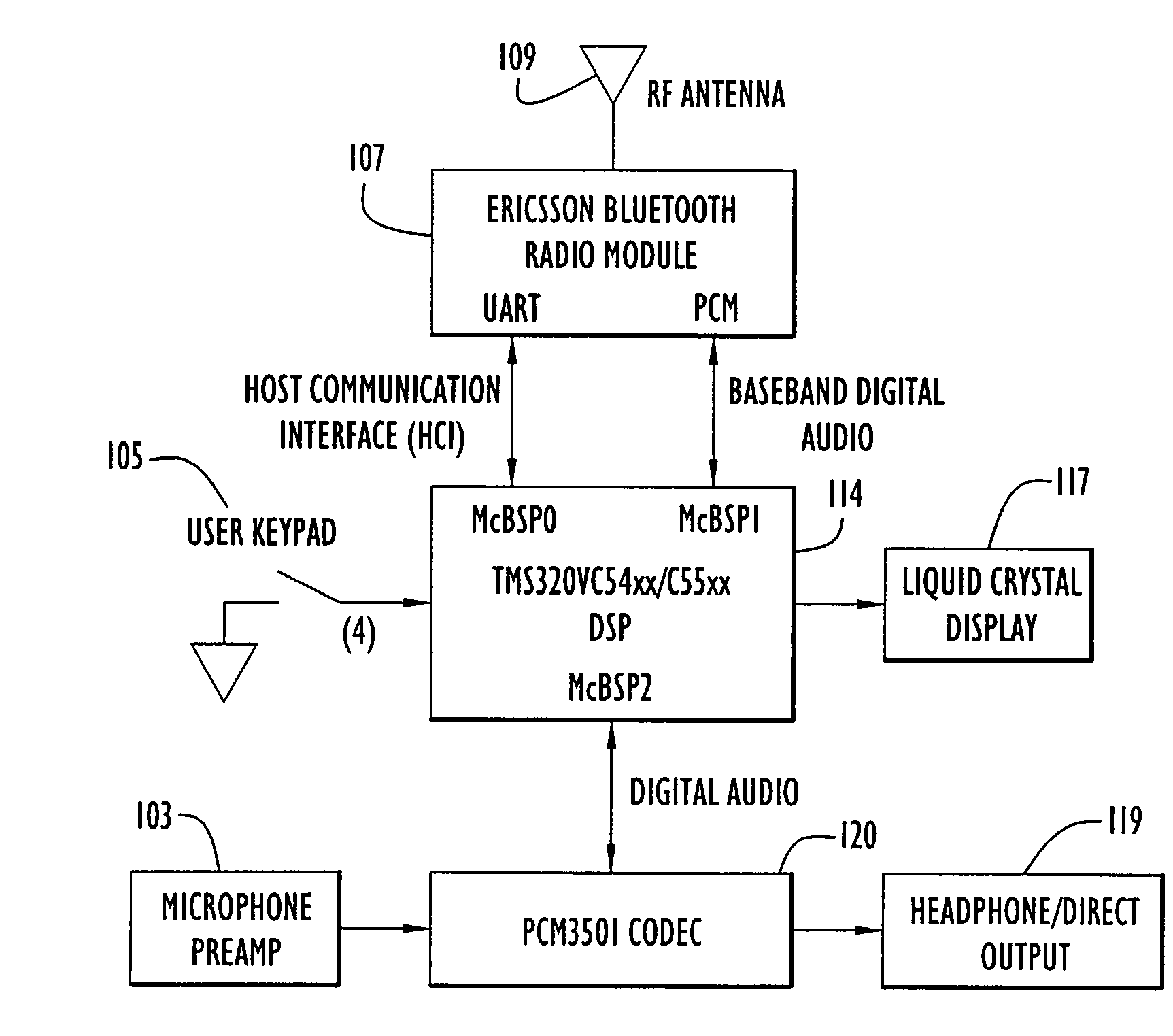
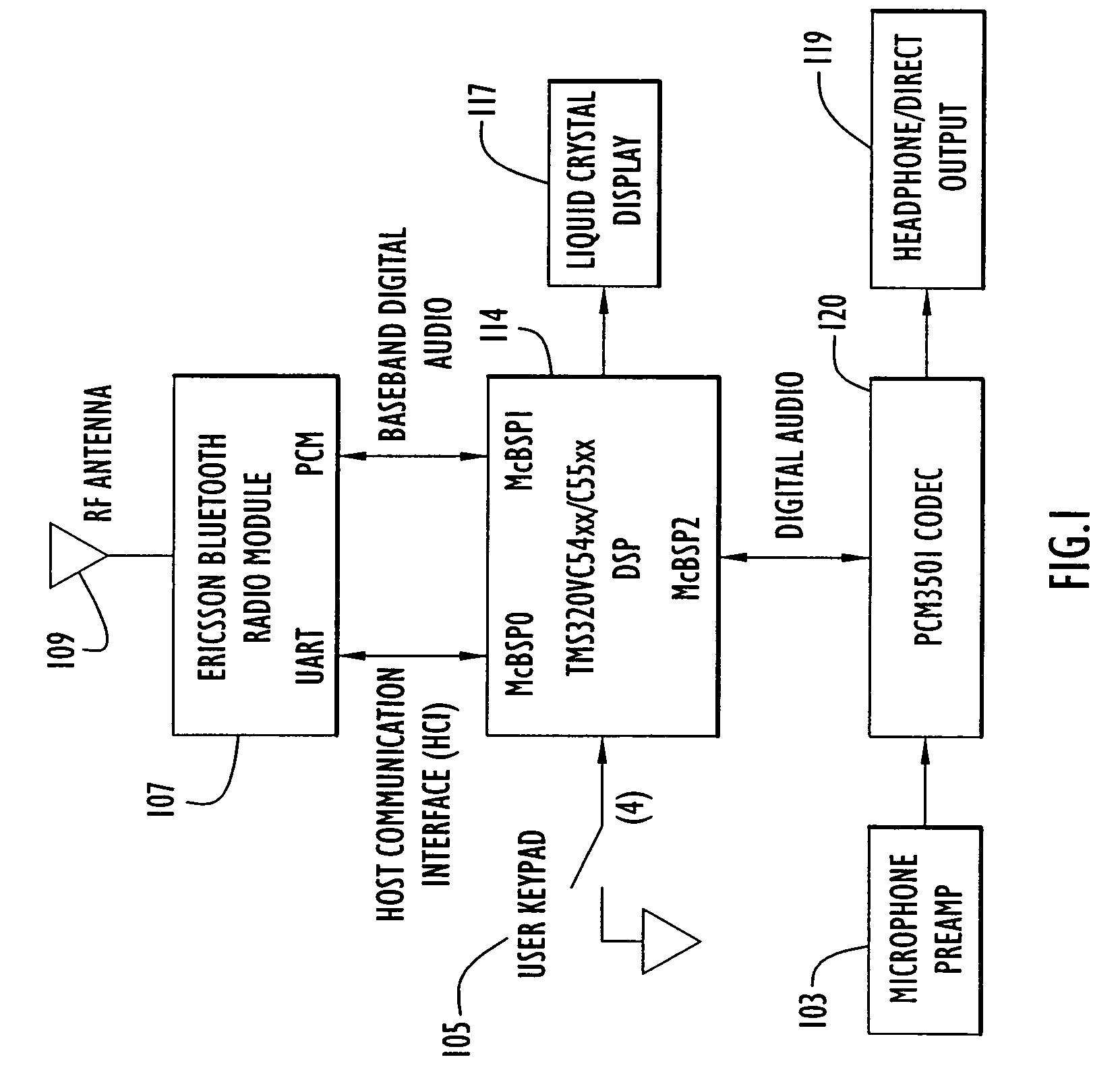
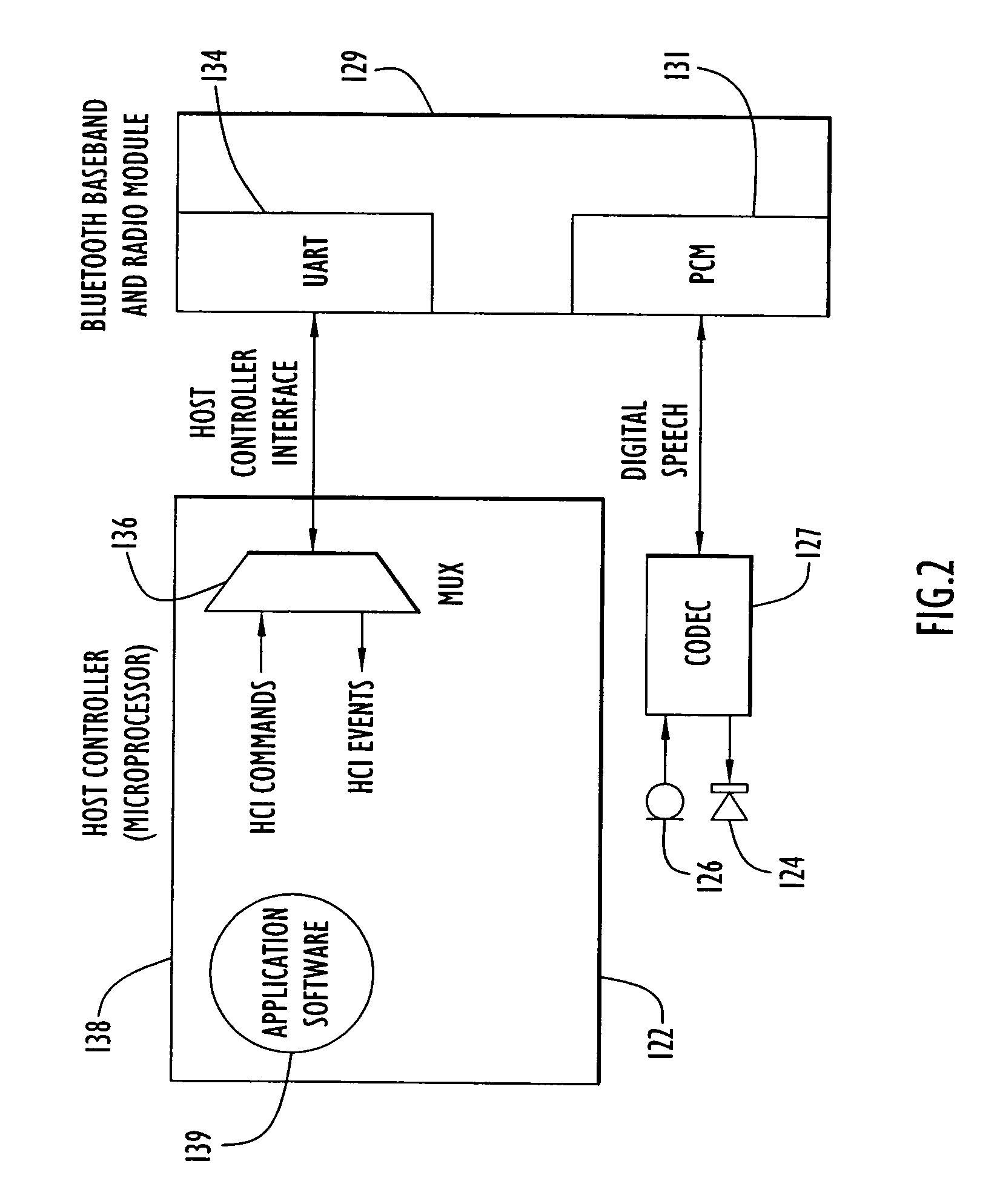
- The use of spread-spectrum technology, specifically direct sequence, frequency hopping, or a combination of both, along with Bluetooth technology in synchronous mode (SCO) or asynchronous mode enabled by chips like the nRF24Z1, to achieve low latency and wide bandwidth, while employing unique identification codes for signal recognition and automatic interference rejection.

Analog and audio mixed-signal front end for 4g/LTE cellular system-on-chip
PatentActiveUS20150194979A1
Innovation
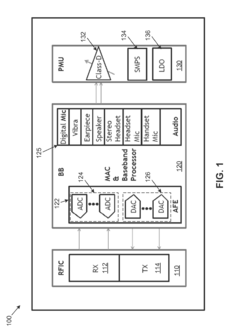
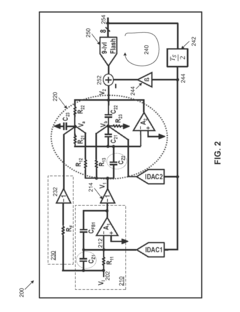
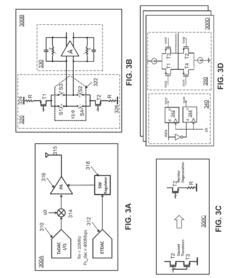
- The integration of a CMOS cellular system-on-chip (SoC) with an embedded analog front-end (AFE) and enhanced audio capabilities, utilizing a wideband sigma-delta architecture for analog-to-digital converters (ADCs) and push-pull digital-to-analog converters (DACs), along with optimized filter structures and power management units, to achieve high signal-to-noise-and-distortion ratio (SNDR) and reduce power consumption.
Wireless Audio Standards
Wireless audio standards play a crucial role in the development and implementation of audio transmission technologies. These standards define the protocols, specifications, and requirements for wireless audio communication, ensuring interoperability and consistent performance across different devices and platforms.
In the context of LDAC and concurrent audio transmission technologies, several wireless audio standards are relevant. Bluetooth, developed by the Bluetooth Special Interest Group (SIG), is one of the most widely adopted standards for short-range wireless communication. The Bluetooth Core Specification includes various audio codecs, such as SBC (Sub-band Coding), AAC (Advanced Audio Coding), and aptX, which are commonly used for wireless audio streaming.
LDAC, developed by Sony, is a proprietary audio coding technology that aims to deliver high-resolution audio over Bluetooth connections. While not a standard itself, LDAC has been incorporated into the Android Open Source Project (AOSP) and is supported by various devices and manufacturers. It offers higher bitrates and improved audio quality compared to traditional Bluetooth codecs.
Wi-Fi-based audio standards have also emerged as alternatives to Bluetooth for wireless audio transmission. Wi-Fi Audio, based on the IEEE 802.11 standards, provides higher bandwidth and longer range compared to Bluetooth. Standards such as Apple's AirPlay and Google's Chromecast Audio utilize Wi-Fi for audio streaming, offering improved audio quality and multi-room capabilities.
The development of wireless audio standards continues to evolve, with a focus on addressing key challenges such as latency, power consumption, and audio quality. The Bluetooth SIG has introduced LE Audio, a new standard that leverages Bluetooth Low Energy (BLE) technology to provide improved audio performance and new features like multi-stream audio and broadcast audio.
As the demand for high-quality wireless audio transmission grows, industry organizations and companies are working on developing new standards and improving existing ones. The adoption and implementation of these standards will shape the future of wireless audio technologies, including LDAC and its competitors, influencing factors such as audio quality, device compatibility, and user experience in the wireless audio ecosystem.
In the context of LDAC and concurrent audio transmission technologies, several wireless audio standards are relevant. Bluetooth, developed by the Bluetooth Special Interest Group (SIG), is one of the most widely adopted standards for short-range wireless communication. The Bluetooth Core Specification includes various audio codecs, such as SBC (Sub-band Coding), AAC (Advanced Audio Coding), and aptX, which are commonly used for wireless audio streaming.
LDAC, developed by Sony, is a proprietary audio coding technology that aims to deliver high-resolution audio over Bluetooth connections. While not a standard itself, LDAC has been incorporated into the Android Open Source Project (AOSP) and is supported by various devices and manufacturers. It offers higher bitrates and improved audio quality compared to traditional Bluetooth codecs.
Wi-Fi-based audio standards have also emerged as alternatives to Bluetooth for wireless audio transmission. Wi-Fi Audio, based on the IEEE 802.11 standards, provides higher bandwidth and longer range compared to Bluetooth. Standards such as Apple's AirPlay and Google's Chromecast Audio utilize Wi-Fi for audio streaming, offering improved audio quality and multi-room capabilities.
The development of wireless audio standards continues to evolve, with a focus on addressing key challenges such as latency, power consumption, and audio quality. The Bluetooth SIG has introduced LE Audio, a new standard that leverages Bluetooth Low Energy (BLE) technology to provide improved audio performance and new features like multi-stream audio and broadcast audio.
As the demand for high-quality wireless audio transmission grows, industry organizations and companies are working on developing new standards and improving existing ones. The adoption and implementation of these standards will shape the future of wireless audio technologies, including LDAC and its competitors, influencing factors such as audio quality, device compatibility, and user experience in the wireless audio ecosystem.
Power Efficiency Analysis
Power efficiency is a critical factor in the evaluation of audio transmission technologies, particularly for portable devices where battery life is a key concern. In the context of LDAC versus concurrent audio transmission technologies, power efficiency analysis reveals significant differences in energy consumption and overall performance.
LDAC, developed by Sony, is known for its high-resolution audio capabilities and efficient use of power. The codec employs adaptive bit rate allocation, which allows it to adjust its data rate based on the audio content and available bandwidth. This dynamic approach contributes to LDAC's power efficiency by optimizing the amount of energy used for data transmission.
Comparative studies have shown that LDAC generally consumes less power than some of its competitors, such as aptX HD and AAC, when transmitting audio at similar quality levels. This efficiency is attributed to LDAC's advanced compression algorithms and its ability to maintain high audio quality at lower bit rates.
However, it's important to note that power consumption can vary depending on the specific implementation and device characteristics. Factors such as the Bluetooth chip used, the audio source, and the receiving device all play roles in overall power efficiency.
When compared to traditional Bluetooth audio codecs like SBC (Sub-Band Coding), LDAC demonstrates superior power efficiency, especially at higher bit rates. This is particularly evident in scenarios where high-quality audio transmission is required, as LDAC can deliver better audio quality with less data, thus reducing the power needed for transmission.
The power efficiency of LDAC becomes even more apparent in real-world usage scenarios. For instance, in mobile devices, where battery life is crucial, LDAC's efficient encoding and transmission processes can lead to extended playback times compared to less efficient codecs.
It's worth noting that while LDAC excels in power efficiency for high-quality audio transmission, there are trade-offs to consider. At its highest quality settings, LDAC may consume more power than simpler codecs operating at lower bit rates. However, the increased power consumption is often justified by the significantly improved audio quality.
In the broader landscape of audio transmission technologies, LDAC's power efficiency places it at the forefront of high-resolution wireless audio solutions. As the demand for high-quality wireless audio continues to grow, the importance of power-efficient codecs like LDAC is likely to increase, driving further innovations in this space.
LDAC, developed by Sony, is known for its high-resolution audio capabilities and efficient use of power. The codec employs adaptive bit rate allocation, which allows it to adjust its data rate based on the audio content and available bandwidth. This dynamic approach contributes to LDAC's power efficiency by optimizing the amount of energy used for data transmission.
Comparative studies have shown that LDAC generally consumes less power than some of its competitors, such as aptX HD and AAC, when transmitting audio at similar quality levels. This efficiency is attributed to LDAC's advanced compression algorithms and its ability to maintain high audio quality at lower bit rates.
However, it's important to note that power consumption can vary depending on the specific implementation and device characteristics. Factors such as the Bluetooth chip used, the audio source, and the receiving device all play roles in overall power efficiency.
When compared to traditional Bluetooth audio codecs like SBC (Sub-Band Coding), LDAC demonstrates superior power efficiency, especially at higher bit rates. This is particularly evident in scenarios where high-quality audio transmission is required, as LDAC can deliver better audio quality with less data, thus reducing the power needed for transmission.
The power efficiency of LDAC becomes even more apparent in real-world usage scenarios. For instance, in mobile devices, where battery life is crucial, LDAC's efficient encoding and transmission processes can lead to extended playback times compared to less efficient codecs.
It's worth noting that while LDAC excels in power efficiency for high-quality audio transmission, there are trade-offs to consider. At its highest quality settings, LDAC may consume more power than simpler codecs operating at lower bit rates. However, the increased power consumption is often justified by the significantly improved audio quality.
In the broader landscape of audio transmission technologies, LDAC's power efficiency places it at the forefront of high-resolution wireless audio solutions. As the demand for high-quality wireless audio continues to grow, the importance of power-efficient codecs like LDAC is likely to increase, driving further innovations in this space.
Unlock deeper insights with PatSnap Eureka Quick Research — get a full tech report to explore trends and direct your research. Try now!
Generate Your Research Report Instantly with AI Agent
Supercharge your innovation with PatSnap Eureka AI Agent Platform!