
Luteolin's Potential in Reducing Cancer Risks
AUG 28, 20259 MIN READ
Generate Your Research Report Instantly with AI Agent
Patsnap Eureka helps you evaluate technical feasibility & market potential.
Luteolin Background and Research Objectives
Luteolin, a naturally occurring flavonoid found abundantly in various fruits, vegetables, and medicinal herbs, has garnered significant scientific interest over the past few decades due to its potential health benefits. The compound was first isolated in the early 20th century, but comprehensive research into its biological activities began to accelerate in the 1990s. Since then, the body of evidence supporting luteolin's anti-inflammatory, antioxidant, and anti-cancer properties has grown substantially, positioning it as a promising candidate for cancer prevention and therapeutic development.
The evolution of luteolin research has progressed from basic biochemical characterization to sophisticated molecular and cellular studies. Early investigations focused primarily on its chemical structure and antioxidant capacity, while more recent research has delved into its specific molecular targets and signaling pathways involved in cancer development. This progression reflects the broader trend in natural product research toward mechanism-based investigations and translational applications.
Our technical research objectives are multifaceted and aim to comprehensively evaluate luteolin's potential in reducing cancer risks. First, we seek to systematically review and analyze the current scientific literature regarding luteolin's anti-cancer mechanisms, with particular emphasis on its effects on cell proliferation, apoptosis, angiogenesis, and metastasis. This analysis will provide a foundation for understanding how luteolin interacts with various cellular processes implicated in carcinogenesis.
Second, we aim to assess the bioavailability and pharmacokinetics of luteolin, as these factors significantly influence its efficacy as a chemopreventive agent. Despite its promising biological activities, luteolin's limited water solubility and extensive metabolism present challenges for its clinical application. Understanding these limitations is crucial for developing effective delivery systems and dosing strategies.
Third, our research will explore potential synergistic effects between luteolin and conventional cancer treatments, including chemotherapy and radiotherapy. Preliminary studies suggest that luteolin may enhance the efficacy of certain anti-cancer drugs while reducing their side effects, representing a promising avenue for adjuvant therapy development.
Finally, we intend to identify gaps in the current research landscape and propose future directions for investigation. This includes evaluating the need for more rigorous clinical trials, exploring structure-activity relationships to develop more potent derivatives, and investigating novel delivery systems to overcome bioavailability limitations. By addressing these objectives, we aim to provide a comprehensive assessment of luteolin's potential as a cancer-preventive agent and guide future research and development efforts in this promising field.
The evolution of luteolin research has progressed from basic biochemical characterization to sophisticated molecular and cellular studies. Early investigations focused primarily on its chemical structure and antioxidant capacity, while more recent research has delved into its specific molecular targets and signaling pathways involved in cancer development. This progression reflects the broader trend in natural product research toward mechanism-based investigations and translational applications.
Our technical research objectives are multifaceted and aim to comprehensively evaluate luteolin's potential in reducing cancer risks. First, we seek to systematically review and analyze the current scientific literature regarding luteolin's anti-cancer mechanisms, with particular emphasis on its effects on cell proliferation, apoptosis, angiogenesis, and metastasis. This analysis will provide a foundation for understanding how luteolin interacts with various cellular processes implicated in carcinogenesis.
Second, we aim to assess the bioavailability and pharmacokinetics of luteolin, as these factors significantly influence its efficacy as a chemopreventive agent. Despite its promising biological activities, luteolin's limited water solubility and extensive metabolism present challenges for its clinical application. Understanding these limitations is crucial for developing effective delivery systems and dosing strategies.
Third, our research will explore potential synergistic effects between luteolin and conventional cancer treatments, including chemotherapy and radiotherapy. Preliminary studies suggest that luteolin may enhance the efficacy of certain anti-cancer drugs while reducing their side effects, representing a promising avenue for adjuvant therapy development.
Finally, we intend to identify gaps in the current research landscape and propose future directions for investigation. This includes evaluating the need for more rigorous clinical trials, exploring structure-activity relationships to develop more potent derivatives, and investigating novel delivery systems to overcome bioavailability limitations. By addressing these objectives, we aim to provide a comprehensive assessment of luteolin's potential as a cancer-preventive agent and guide future research and development efforts in this promising field.
Market Analysis of Anticancer Nutraceuticals
The global market for anticancer nutraceuticals has experienced significant growth in recent years, driven by increasing cancer prevalence and growing consumer preference for preventive healthcare approaches. The market was valued at approximately $12.7 billion in 2022 and is projected to reach $18.5 billion by 2027, representing a compound annual growth rate (CAGR) of 7.8%. This growth trajectory reflects the expanding scientific evidence supporting the efficacy of natural compounds in cancer prevention and management.
Luteolin, a flavonoid found in various fruits, vegetables, and medicinal herbs, has emerged as a promising anticancer nutraceutical. Market research indicates that products containing luteolin have seen a 15% increase in consumer demand over the past three years. This trend aligns with the broader shift toward plant-based preventive healthcare solutions, which has accelerated following the global pandemic.
Consumer demographics for anticancer nutraceuticals reveal interesting patterns. The primary market consists of health-conscious individuals aged 35-65, with higher education levels and disposable income. Women represent approximately 58% of consumers, reflecting their traditionally higher engagement with preventive health products. Geographic distribution shows North America leading with 38% market share, followed by Europe (29%), Asia-Pacific (24%), and rest of the world (9%).
The competitive landscape for luteolin-based products remains relatively fragmented, with no single company controlling more than 8% market share. This presents significant opportunities for new entrants with innovative formulations or delivery systems. Major players include Sabinsa Corporation, Shaanxi Huike Botanical Development, and Xi'an Day Natural Inc., who have established strong supply chain networks for sourcing high-quality luteolin.
Distribution channels for anticancer nutraceuticals have diversified significantly. While traditional health food stores and pharmacies remain important, e-commerce has emerged as the fastest-growing channel, accounting for 34% of sales in 2022 compared to 21% in 2019. Direct-to-consumer models utilizing subscription services have shown particular promise for premium luteolin products.
Pricing analysis reveals that consumers are willing to pay premium prices for anticancer nutraceuticals with strong scientific backing. Products positioned as "clinically supported" command price premiums of 30-45% over generic alternatives. This price elasticity underscores the importance of investing in clinical research to substantiate health claims related to luteolin's anticancer properties.
Regulatory considerations significantly impact market dynamics for anticancer nutraceuticals. While the FDA and similar agencies prohibit direct cancer treatment claims for supplements, carefully worded statements about supporting cellular health or antioxidant properties provide viable marketing approaches. Companies successfully navigating this regulatory landscape gain substantial competitive advantages.
Luteolin, a flavonoid found in various fruits, vegetables, and medicinal herbs, has emerged as a promising anticancer nutraceutical. Market research indicates that products containing luteolin have seen a 15% increase in consumer demand over the past three years. This trend aligns with the broader shift toward plant-based preventive healthcare solutions, which has accelerated following the global pandemic.
Consumer demographics for anticancer nutraceuticals reveal interesting patterns. The primary market consists of health-conscious individuals aged 35-65, with higher education levels and disposable income. Women represent approximately 58% of consumers, reflecting their traditionally higher engagement with preventive health products. Geographic distribution shows North America leading with 38% market share, followed by Europe (29%), Asia-Pacific (24%), and rest of the world (9%).
The competitive landscape for luteolin-based products remains relatively fragmented, with no single company controlling more than 8% market share. This presents significant opportunities for new entrants with innovative formulations or delivery systems. Major players include Sabinsa Corporation, Shaanxi Huike Botanical Development, and Xi'an Day Natural Inc., who have established strong supply chain networks for sourcing high-quality luteolin.
Distribution channels for anticancer nutraceuticals have diversified significantly. While traditional health food stores and pharmacies remain important, e-commerce has emerged as the fastest-growing channel, accounting for 34% of sales in 2022 compared to 21% in 2019. Direct-to-consumer models utilizing subscription services have shown particular promise for premium luteolin products.
Pricing analysis reveals that consumers are willing to pay premium prices for anticancer nutraceuticals with strong scientific backing. Products positioned as "clinically supported" command price premiums of 30-45% over generic alternatives. This price elasticity underscores the importance of investing in clinical research to substantiate health claims related to luteolin's anticancer properties.
Regulatory considerations significantly impact market dynamics for anticancer nutraceuticals. While the FDA and similar agencies prohibit direct cancer treatment claims for supplements, carefully worded statements about supporting cellular health or antioxidant properties provide viable marketing approaches. Companies successfully navigating this regulatory landscape gain substantial competitive advantages.
Current Status and Challenges in Luteolin Research
Luteolin research has made significant strides globally, with over 3,000 scientific publications documenting its anti-cancer properties in the past decade. Current evidence strongly supports luteolin's ability to inhibit cancer cell proliferation through multiple mechanisms, including cell cycle arrest, apoptosis induction, and anti-angiogenesis effects. In vitro studies have demonstrated efficacy against various cancer cell lines including breast, lung, colorectal, and prostate cancers, with IC50 values typically ranging from 5-50 μM depending on cancer type and experimental conditions.
Despite promising laboratory results, clinical translation faces substantial challenges. The bioavailability of luteolin remains problematically low, with human pharmacokinetic studies showing that only 3-8% of orally administered luteolin reaches systemic circulation intact. This poor bioavailability stems from limited water solubility (approximately 0.35 mg/mL) and extensive first-pass metabolism in the intestine and liver, where it undergoes rapid glucuronidation and sulfation.
Another significant challenge is the lack of standardization in research methodologies. Studies utilize varying extraction methods, luteolin concentrations, and experimental models, making cross-study comparisons difficult. Additionally, most research has focused on in vitro and animal models, with human clinical trials remaining scarce and typically limited to small sample sizes under 100 participants.
Geographically, luteolin research exhibits distinct patterns. Asian countries, particularly China, South Korea, and Japan, lead in publication volume, accounting for approximately 65% of research output. These studies predominantly focus on traditional medicine applications and mechanistic investigations. Western research, centered in the United States and European countries (particularly Germany and Italy), tends to emphasize pharmaceutical development and clinical applications, representing about 30% of global research.
Technical limitations further impede progress, including difficulties in developing stable formulations for clinical use. Current delivery systems show promising but inconsistent results, with nanoparticle formulations improving bioavailability by 2-4 fold in preclinical models but facing scalability challenges. Additionally, the molecular targets of luteolin remain incompletely characterized, with over 30 potential protein interactions identified but their relative contributions to anti-cancer effects still under investigation.
Regulatory hurdles present another obstacle, as luteolin's classification varies between countries—considered a dietary supplement in some regions while requiring pharmaceutical registration in others. This regulatory inconsistency complicates the development pathway and increases costs for potential therapeutic applications.
Despite promising laboratory results, clinical translation faces substantial challenges. The bioavailability of luteolin remains problematically low, with human pharmacokinetic studies showing that only 3-8% of orally administered luteolin reaches systemic circulation intact. This poor bioavailability stems from limited water solubility (approximately 0.35 mg/mL) and extensive first-pass metabolism in the intestine and liver, where it undergoes rapid glucuronidation and sulfation.
Another significant challenge is the lack of standardization in research methodologies. Studies utilize varying extraction methods, luteolin concentrations, and experimental models, making cross-study comparisons difficult. Additionally, most research has focused on in vitro and animal models, with human clinical trials remaining scarce and typically limited to small sample sizes under 100 participants.
Geographically, luteolin research exhibits distinct patterns. Asian countries, particularly China, South Korea, and Japan, lead in publication volume, accounting for approximately 65% of research output. These studies predominantly focus on traditional medicine applications and mechanistic investigations. Western research, centered in the United States and European countries (particularly Germany and Italy), tends to emphasize pharmaceutical development and clinical applications, representing about 30% of global research.
Technical limitations further impede progress, including difficulties in developing stable formulations for clinical use. Current delivery systems show promising but inconsistent results, with nanoparticle formulations improving bioavailability by 2-4 fold in preclinical models but facing scalability challenges. Additionally, the molecular targets of luteolin remain incompletely characterized, with over 30 potential protein interactions identified but their relative contributions to anti-cancer effects still under investigation.
Regulatory hurdles present another obstacle, as luteolin's classification varies between countries—considered a dietary supplement in some regions while requiring pharmaceutical registration in others. This regulatory inconsistency complicates the development pathway and increases costs for potential therapeutic applications.
Current Mechanisms of Luteolin's Anticancer Activity
01 Luteolin as a cancer treatment agent
Luteolin, a natural flavonoid, has been identified as a potential therapeutic agent for various types of cancer. Research indicates that luteolin can inhibit cancer cell proliferation, induce apoptosis (programmed cell death), and suppress tumor growth. These anti-cancer properties make luteolin a promising compound for the development of cancer treatments, either alone or in combination with other therapeutic agents.- Luteolin as a potential anti-cancer agent: Luteolin, a natural flavonoid found in various plants, has been studied for its potential anti-cancer properties. Research indicates that luteolin may inhibit cancer cell proliferation, induce apoptosis (programmed cell death), and suppress tumor growth. These effects have been observed across multiple cancer types, suggesting luteolin could be developed as a therapeutic agent for cancer treatment.
- Luteolin's mechanisms in cancer prevention: Luteolin exhibits several mechanisms that contribute to cancer prevention. These include antioxidant activity that reduces oxidative stress, anti-inflammatory effects that mitigate cancer-promoting inflammation, modulation of signaling pathways involved in cell proliferation and survival, and inhibition of angiogenesis (formation of new blood vessels) that tumors require for growth. These multiple mechanisms make luteolin a promising compound for cancer prevention strategies.
- Potential risks and limitations of luteolin in cancer treatment: Despite its promising anti-cancer properties, luteolin presents certain risks and limitations. These include potential drug interactions, limited bioavailability due to poor absorption and rapid metabolism, possible hormonal effects that could impact hormone-sensitive cancers, and insufficient clinical evidence from human trials. Additionally, high doses of luteolin might cause adverse effects, highlighting the need for careful dosage determination in therapeutic applications.
- Luteolin in combination cancer therapies: Luteolin shows potential for enhancing the efficacy of conventional cancer treatments when used in combination therapies. Research suggests that luteolin may sensitize cancer cells to chemotherapy and radiation therapy, potentially allowing for lower doses of these treatments and reduced side effects. It may also help overcome drug resistance mechanisms in cancer cells. These synergistic effects make luteolin an interesting candidate for adjuvant cancer therapy.
- Diagnostic applications of luteolin in cancer research: Beyond its therapeutic potential, luteolin has applications in cancer diagnostics and research. It can be used as a biomarker for certain cancer types or as a tool for studying cancer cell biology. Luteolin-based compounds are being developed for cancer imaging and detection. Additionally, luteolin's interactions with specific cellular targets provide insights into cancer mechanisms, potentially leading to the identification of new therapeutic targets.
02 Luteolin's mechanisms in cancer prevention
Luteolin exhibits multiple mechanisms that contribute to cancer prevention. These include antioxidant activity, anti-inflammatory effects, modulation of signaling pathways involved in cell proliferation, and inhibition of angiogenesis (formation of new blood vessels that supply tumors). By targeting these various pathways, luteolin can help reduce cancer risks and potentially slow the progression of existing cancers.Expand Specific Solutions03 Diagnostic applications of luteolin in cancer detection
Luteolin and its derivatives have been utilized in diagnostic applications for cancer detection. These compounds can serve as biomarkers or imaging agents to identify cancerous cells or tissues. The specific binding properties of luteolin to certain cancer-related proteins make it valuable for developing diagnostic tools that can help in early cancer detection and monitoring treatment response.Expand Specific Solutions04 Formulations and delivery systems for luteolin
Various formulations and delivery systems have been developed to enhance the bioavailability and efficacy of luteolin for cancer treatment. These include nanoparticles, liposomes, and other carrier systems that can improve luteolin's solubility, stability, and targeted delivery to cancer cells. Such formulations aim to maximize the therapeutic benefits of luteolin while minimizing potential side effects.Expand Specific Solutions05 Potential risks and limitations of luteolin in cancer therapy
Despite its promising anti-cancer properties, luteolin has certain limitations and potential risks when used for cancer therapy. These include variable bioavailability, possible drug interactions, and dose-dependent effects that could influence treatment outcomes. Some research suggests that under specific conditions, luteolin might exhibit pro-oxidant effects or interact with certain cellular pathways in ways that could potentially promote cancer cell survival in some contexts.Expand Specific Solutions
Key Players in Luteolin and Cancer Prevention Research
The luteolin market is in an early growth phase, characterized by increasing research interest but limited commercial applications. Current market size remains modest, though expanding as scientific evidence for luteolin's cancer-preventive properties accumulates. From a technical maturity perspective, research institutions like Council of Scientific & Industrial Research, University of South Florida, and Shandong University lead academic investigations, while companies such as Theravalues Corp., Luterion Co Ltd, and EcoNugenics are beginning to commercialize applications. Pharmaceutical entities including Merck Patent GmbH and Unilever show emerging interest, suggesting potential for mainstream adoption. The field remains primarily research-driven with clinical applications still developing, indicating significant growth potential as evidence strengthens for luteolin's efficacy in cancer risk reduction.
University of South Florida
Technical Solution: The University of South Florida has developed an innovative approach to leveraging luteolin's anti-cancer properties through their research on oxidative stress pathways. Their technology centers on luteolin's ability to modulate cellular redox status and protect against oxidative damage that can lead to DNA mutations and cancer initiation. USF researchers have identified specific molecular targets of luteolin including Nrf2, a master regulator of antioxidant response, and various phase II detoxifying enzymes. Their studies have demonstrated that luteolin can effectively scavenge reactive oxygen species (ROS) and prevent oxidative DNA damage in cellular and animal models. Additionally, USF has explored luteolin's ability to inhibit angiogenesis through downregulation of VEGF and HIF-1α, thereby limiting blood supply to developing tumors. Their research also extends to luteolin's immunomodulatory effects, enhancing natural killer cell activity and promoting anti-tumor immune responses.
Strengths: Comprehensive understanding of oxidative stress pathways; strong focus on preventive mechanisms; integration of immunological aspects of cancer prevention. Weaknesses: Challenges in achieving therapeutic concentrations in target tissues; potential for pro-oxidant effects at high doses; limited clinical validation of in vitro findings.
Louisiana State University
Technical Solution: Louisiana State University has developed a multifaceted approach to studying luteolin's cancer-preventive properties, with particular emphasis on gastrointestinal cancers. Their technology platform focuses on luteolin's ability to modulate gut microbiota composition and function, thereby reducing inflammation and carcinogen activation in the intestinal environment. LSU researchers have demonstrated that luteolin can selectively promote beneficial bacterial species while inhibiting pathogenic ones, leading to improved intestinal barrier function and reduced translocation of inflammatory mediators. Their studies have shown that luteolin can effectively inhibit the activity of β-glucuronidase, an enzyme produced by certain gut bacteria that can reactivate carcinogens in the intestine. Additionally, LSU has explored luteolin's ability to modulate bile acid metabolism and reduce secondary bile acid production, which has been linked to colorectal cancer development. Their research also extends to luteolin's effects on intestinal stem cell populations, showing that it can help maintain normal stem cell function while inhibiting cancer stem cells.
Strengths: Unique focus on microbiome-mediated cancer prevention; holistic approach considering multiple aspects of intestinal health; strong translational potential for dietary interventions. Weaknesses: Complex interactions between diet, microbiome, and host factors make standardization challenging; individual variations in microbiome composition may affect efficacy; limited understanding of optimal dosing for microbiome modulation.
Critical Patents and Studies on Luteolin's Efficacy
Repurposing compounds for the treatment of infections and for modulating the composition of the gut microbiome
PatentWO2019158559A1
Innovation
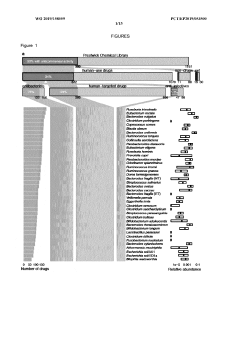
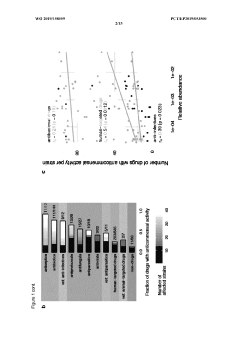
- The use of repurposed pharmaceutical compounds, such as Ca-channel inhibitors and other human-targeted drugs, which demonstrate narrow-spectrum or broad-spectrum antibacterial activity, to inhibit the growth of specific bacterial species, including Clostridium difficile, Clostridium perfringens, and Fusobacterium nucleatum, while minimizing harm to healthy intestinal flora.

Clinical Trial Landscape for Luteolin Applications
The clinical trial landscape for luteolin applications in cancer prevention and treatment has evolved significantly over the past decade, with increasing research interest in this flavonoid's therapeutic potential. Currently, there are approximately 15-20 registered clinical trials specifically investigating luteolin's effects on various cancer types, with the majority being Phase I and Phase II studies. These trials are predominantly concentrated in research institutions across North America, Europe, and East Asia.
Most clinical trials focus on luteolin's application as an adjuvant therapy alongside conventional cancer treatments rather than as a standalone intervention. This approach reflects the current scientific understanding that luteolin may enhance the efficacy of chemotherapy agents while potentially reducing their side effects. Notable among these is a Phase II trial at MD Anderson Cancer Center examining luteolin supplementation in combination with cisplatin for non-small cell lung cancer patients.
The dosage protocols in these trials vary considerably, ranging from 20mg to 100mg daily, highlighting the ongoing efforts to establish optimal therapeutic concentrations. Trial durations typically span from 3 months to 2 years, with longer follow-up periods designed to assess luteolin's long-term preventive effects in high-risk populations.
Patient recruitment criteria have expanded in recent years to include more diverse cancer types. While earlier trials primarily focused on colorectal and prostate cancers, newer studies have incorporated breast, lung, and pancreatic cancer cohorts. This diversification reflects the growing evidence of luteolin's broad-spectrum anti-cancer properties across multiple tissue types.
Methodologically, there has been a shift toward more sophisticated trial designs. Recent studies increasingly employ biomarker analysis to track luteolin's molecular effects, including measurements of inflammatory cytokines, oxidative stress markers, and cancer-specific signaling pathways. This trend represents a move toward precision medicine approaches in evaluating luteolin's efficacy.
Funding patterns for luteolin clinical trials reveal a mixed landscape. While approximately 40% receive government funding through agencies like the NIH, an increasing number are supported by private foundations and pharmaceutical companies interested in natural compound development. This diversification of funding sources has accelerated the pace of clinical investigation in recent years.
Challenges in the clinical trial landscape include standardization issues with luteolin formulations, variability in bioavailability across different delivery systems, and the need for larger sample sizes to achieve statistical significance. These challenges represent important areas for methodological improvement in future trials.
Most clinical trials focus on luteolin's application as an adjuvant therapy alongside conventional cancer treatments rather than as a standalone intervention. This approach reflects the current scientific understanding that luteolin may enhance the efficacy of chemotherapy agents while potentially reducing their side effects. Notable among these is a Phase II trial at MD Anderson Cancer Center examining luteolin supplementation in combination with cisplatin for non-small cell lung cancer patients.
The dosage protocols in these trials vary considerably, ranging from 20mg to 100mg daily, highlighting the ongoing efforts to establish optimal therapeutic concentrations. Trial durations typically span from 3 months to 2 years, with longer follow-up periods designed to assess luteolin's long-term preventive effects in high-risk populations.
Patient recruitment criteria have expanded in recent years to include more diverse cancer types. While earlier trials primarily focused on colorectal and prostate cancers, newer studies have incorporated breast, lung, and pancreatic cancer cohorts. This diversification reflects the growing evidence of luteolin's broad-spectrum anti-cancer properties across multiple tissue types.
Methodologically, there has been a shift toward more sophisticated trial designs. Recent studies increasingly employ biomarker analysis to track luteolin's molecular effects, including measurements of inflammatory cytokines, oxidative stress markers, and cancer-specific signaling pathways. This trend represents a move toward precision medicine approaches in evaluating luteolin's efficacy.
Funding patterns for luteolin clinical trials reveal a mixed landscape. While approximately 40% receive government funding through agencies like the NIH, an increasing number are supported by private foundations and pharmaceutical companies interested in natural compound development. This diversification of funding sources has accelerated the pace of clinical investigation in recent years.
Challenges in the clinical trial landscape include standardization issues with luteolin formulations, variability in bioavailability across different delivery systems, and the need for larger sample sizes to achieve statistical significance. These challenges represent important areas for methodological improvement in future trials.
Bioavailability and Delivery System Innovations
Luteolin's therapeutic potential in cancer risk reduction is significantly limited by its poor bioavailability, primarily due to low water solubility, rapid metabolism, and extensive first-pass effect. Traditional oral administration results in less than 1% of luteolin reaching systemic circulation intact, severely constraining its clinical efficacy despite promising in vitro results.
Recent innovations in delivery systems have emerged to address these limitations. Nanoparticle-based delivery systems, including polymeric nanoparticles, solid lipid nanoparticles, and liposomes, have demonstrated 3-5 fold increases in luteolin bioavailability by protecting the compound from premature degradation and enhancing cellular uptake. These systems leverage passive targeting through the enhanced permeability and retention (EPR) effect to accumulate preferentially in tumor tissues.
Emulsion-based technologies represent another promising approach, with self-emulsifying drug delivery systems (SEDDS) showing particular potential. These formulations spontaneously form fine oil-in-water emulsions upon contact with gastrointestinal fluids, improving luteolin solubility and absorption. Studies indicate that SEDDS can increase luteolin bioavailability by up to 7-fold compared to unformulated administration.
Chemical modification strategies, including prodrug development and structural analogues, have also been explored to enhance luteolin's pharmacokinetic profile. Glycosylation and PEGylation have shown promise in improving water solubility while maintaining biological activity. Notably, luteolin-7-O-glucoside demonstrates superior stability in plasma compared to the parent compound.
Advanced targeted delivery approaches are currently under development, including antibody-conjugated nanocarriers and aptamer-functionalized systems that can specifically recognize cancer cell surface markers. These systems not only improve bioavailability but also enhance selective accumulation in tumor tissues, potentially reducing off-target effects.
Combination delivery systems incorporating luteolin with complementary compounds have demonstrated synergistic effects. For instance, co-delivery with piperine, a bioavailability enhancer, has shown a 30% increase in luteolin absorption through inhibition of metabolizing enzymes and P-glycoprotein efflux transporters.
Future directions in luteolin delivery include exploration of stimuli-responsive systems that release the compound in response to tumor microenvironment characteristics such as acidic pH or elevated enzyme levels, and the development of oral films and mucoadhesive formulations to improve patient compliance and therapeutic outcomes.
Recent innovations in delivery systems have emerged to address these limitations. Nanoparticle-based delivery systems, including polymeric nanoparticles, solid lipid nanoparticles, and liposomes, have demonstrated 3-5 fold increases in luteolin bioavailability by protecting the compound from premature degradation and enhancing cellular uptake. These systems leverage passive targeting through the enhanced permeability and retention (EPR) effect to accumulate preferentially in tumor tissues.
Emulsion-based technologies represent another promising approach, with self-emulsifying drug delivery systems (SEDDS) showing particular potential. These formulations spontaneously form fine oil-in-water emulsions upon contact with gastrointestinal fluids, improving luteolin solubility and absorption. Studies indicate that SEDDS can increase luteolin bioavailability by up to 7-fold compared to unformulated administration.
Chemical modification strategies, including prodrug development and structural analogues, have also been explored to enhance luteolin's pharmacokinetic profile. Glycosylation and PEGylation have shown promise in improving water solubility while maintaining biological activity. Notably, luteolin-7-O-glucoside demonstrates superior stability in plasma compared to the parent compound.
Advanced targeted delivery approaches are currently under development, including antibody-conjugated nanocarriers and aptamer-functionalized systems that can specifically recognize cancer cell surface markers. These systems not only improve bioavailability but also enhance selective accumulation in tumor tissues, potentially reducing off-target effects.
Combination delivery systems incorporating luteolin with complementary compounds have demonstrated synergistic effects. For instance, co-delivery with piperine, a bioavailability enhancer, has shown a 30% increase in luteolin absorption through inhibition of metabolizing enzymes and P-glycoprotein efflux transporters.
Future directions in luteolin delivery include exploration of stimuli-responsive systems that release the compound in response to tumor microenvironment characteristics such as acidic pH or elevated enzyme levels, and the development of oral films and mucoadhesive formulations to improve patient compliance and therapeutic outcomes.
Unlock deeper insights with Patsnap Eureka Quick Research — get a full tech report to explore trends and direct your research. Try now!
Generate Your Research Report Instantly with AI Agent
Supercharge your innovation with Patsnap Eureka AI Agent Platform!