

Luteolin Vs Phloretin: Protective Mechanisms Analysis
AUG 28, 20259 MIN READ
Generate Your Research Report Instantly with AI Agent
PatSnap Eureka helps you evaluate technical feasibility & market potential.
Flavonoid Compounds Background and Research Objectives
Flavonoids represent a diverse class of plant secondary metabolites characterized by their polyphenolic structure. With over 6,000 identified compounds, flavonoids constitute one of the largest groups of natural products found in fruits, vegetables, grains, bark, roots, stems, flowers, and plant-derived beverages. Their evolutionary significance stems from their role in plant defense mechanisms against environmental stressors, pathogens, and herbivores.
The historical study of flavonoids dates back to the 1930s when Albert Szent-Györgyi first isolated these compounds while investigating vitamin C. Initially termed "vitamin P," these substances were later recognized as distinct phytochemicals with significant biological activities. Research interest in flavonoids has grown exponentially over the past decades, driven by epidemiological studies suggesting correlations between flavonoid-rich diets and reduced incidence of chronic diseases.
Luteolin and phloretin represent two structurally distinct flavonoid subclasses with notable bioactive properties. Luteolin, a flavone predominantly found in celery, parsley, and various herbs, features a 2-phenylchromen-4-one backbone with hydroxyl groups at positions 5, 7, 3', and 4'. Phloretin, a dihydrochalcone abundant in apples and apple derivatives, possesses a more open C3 structure with hydroxyl groups arranged differently, affecting its molecular interactions and biological activities.
The current technological landscape has enabled advanced analytical methods for flavonoid characterization, including high-performance liquid chromatography coupled with mass spectrometry (HPLC-MS), nuclear magnetic resonance (NMR) spectroscopy, and computational modeling approaches. These techniques have facilitated deeper understanding of structure-activity relationships and molecular mechanisms underlying flavonoid bioactivity.
This research aims to conduct a comprehensive comparative analysis of the protective mechanisms exhibited by luteolin and phloretin across multiple biological systems. Specifically, we seek to elucidate the molecular pathways through which these compounds exert antioxidant, anti-inflammatory, and cytoprotective effects, with particular emphasis on their differential impacts on cellular redox homeostasis, inflammatory signaling cascades, and mitochondrial function.
The technological objectives include developing standardized methodologies for assessing flavonoid bioactivity, establishing structure-activity relationships that could inform targeted molecular modifications, and exploring potential synergistic effects when these compounds are administered in combination. Additionally, we aim to investigate delivery systems that enhance bioavailability and tissue-specific targeting of these flavonoids for potential therapeutic applications.
Understanding the mechanistic differences between luteolin and phloretin could provide valuable insights for developing nutraceuticals, functional foods, and potentially pharmaceutical interventions targeting oxidative stress-related and inflammatory conditions. This research aligns with the growing trend toward evidence-based natural product development and precision nutrition approaches in preventive healthcare.
The historical study of flavonoids dates back to the 1930s when Albert Szent-Györgyi first isolated these compounds while investigating vitamin C. Initially termed "vitamin P," these substances were later recognized as distinct phytochemicals with significant biological activities. Research interest in flavonoids has grown exponentially over the past decades, driven by epidemiological studies suggesting correlations between flavonoid-rich diets and reduced incidence of chronic diseases.
Luteolin and phloretin represent two structurally distinct flavonoid subclasses with notable bioactive properties. Luteolin, a flavone predominantly found in celery, parsley, and various herbs, features a 2-phenylchromen-4-one backbone with hydroxyl groups at positions 5, 7, 3', and 4'. Phloretin, a dihydrochalcone abundant in apples and apple derivatives, possesses a more open C3 structure with hydroxyl groups arranged differently, affecting its molecular interactions and biological activities.
The current technological landscape has enabled advanced analytical methods for flavonoid characterization, including high-performance liquid chromatography coupled with mass spectrometry (HPLC-MS), nuclear magnetic resonance (NMR) spectroscopy, and computational modeling approaches. These techniques have facilitated deeper understanding of structure-activity relationships and molecular mechanisms underlying flavonoid bioactivity.
This research aims to conduct a comprehensive comparative analysis of the protective mechanisms exhibited by luteolin and phloretin across multiple biological systems. Specifically, we seek to elucidate the molecular pathways through which these compounds exert antioxidant, anti-inflammatory, and cytoprotective effects, with particular emphasis on their differential impacts on cellular redox homeostasis, inflammatory signaling cascades, and mitochondrial function.
The technological objectives include developing standardized methodologies for assessing flavonoid bioactivity, establishing structure-activity relationships that could inform targeted molecular modifications, and exploring potential synergistic effects when these compounds are administered in combination. Additionally, we aim to investigate delivery systems that enhance bioavailability and tissue-specific targeting of these flavonoids for potential therapeutic applications.
Understanding the mechanistic differences between luteolin and phloretin could provide valuable insights for developing nutraceuticals, functional foods, and potentially pharmaceutical interventions targeting oxidative stress-related and inflammatory conditions. This research aligns with the growing trend toward evidence-based natural product development and precision nutrition approaches in preventive healthcare.
Market Analysis of Luteolin and Phloretin Applications
The global market for natural bioactive compounds has witnessed significant growth in recent years, with luteolin and phloretin emerging as key players in various industries. These flavonoids have garnered substantial attention due to their potent antioxidant, anti-inflammatory, and protective properties, driving their adoption across pharmaceutical, nutraceutical, cosmetic, and food sectors.
The pharmaceutical market represents the largest application segment for both compounds, valued at approximately $3.2 billion in 2022 for flavonoid-based therapeutics. Luteolin has established a stronger presence in this sector due to its extensively documented neuroprotective effects and potential applications in managing neurodegenerative disorders. Market research indicates that luteolin-based pharmaceutical products have experienced a compound annual growth rate (CAGR) of 7.8% over the past five years.
Phloretin, while less prominent in pharmaceuticals, has carved a significant niche in the cosmetics and personal care industry. The global market for phloretin in cosmetic applications reached $580 million in 2022, growing at 9.3% annually. Its skin-brightening and anti-aging properties have made it a preferred ingredient in premium skincare formulations, particularly in Asian markets where it commands a 42% market share.
The nutraceutical sector presents substantial growth opportunities for both compounds. Consumer awareness regarding preventive healthcare has propelled the demand for dietary supplements containing these flavonoids. The market for luteolin-based supplements was valued at $420 million in 2022, while phloretin-based supplements accounted for $290 million. North America leads consumption in this segment, followed by Europe and Asia-Pacific.
Regional analysis reveals interesting patterns in market distribution. Asia-Pacific, particularly Japan, South Korea, and China, dominates the cosmetic applications of both compounds, accounting for 58% of global consumption. North America leads in pharmaceutical applications with a 43% market share, while Europe shows balanced demand across all application segments.
Supply chain dynamics indicate that the production of synthetic luteolin and phloretin has increased by 32% since 2018, reflecting technological advancements in manufacturing processes. However, consumer preference for naturally derived compounds has created a parallel market for extraction-based production methods, which grew by 18% during the same period despite higher costs.
Future market projections suggest that the combined market for luteolin and phloretin applications will reach $6.8 billion by 2028, with the fastest growth expected in nutraceutical applications (11.2% CAGR) followed by cosmetics (9.7% CAGR) and pharmaceuticals (8.4% CAGR). This growth trajectory is supported by increasing research validating their protective mechanisms and expanding applications in preventive healthcare.
The pharmaceutical market represents the largest application segment for both compounds, valued at approximately $3.2 billion in 2022 for flavonoid-based therapeutics. Luteolin has established a stronger presence in this sector due to its extensively documented neuroprotective effects and potential applications in managing neurodegenerative disorders. Market research indicates that luteolin-based pharmaceutical products have experienced a compound annual growth rate (CAGR) of 7.8% over the past five years.
Phloretin, while less prominent in pharmaceuticals, has carved a significant niche in the cosmetics and personal care industry. The global market for phloretin in cosmetic applications reached $580 million in 2022, growing at 9.3% annually. Its skin-brightening and anti-aging properties have made it a preferred ingredient in premium skincare formulations, particularly in Asian markets where it commands a 42% market share.
The nutraceutical sector presents substantial growth opportunities for both compounds. Consumer awareness regarding preventive healthcare has propelled the demand for dietary supplements containing these flavonoids. The market for luteolin-based supplements was valued at $420 million in 2022, while phloretin-based supplements accounted for $290 million. North America leads consumption in this segment, followed by Europe and Asia-Pacific.
Regional analysis reveals interesting patterns in market distribution. Asia-Pacific, particularly Japan, South Korea, and China, dominates the cosmetic applications of both compounds, accounting for 58% of global consumption. North America leads in pharmaceutical applications with a 43% market share, while Europe shows balanced demand across all application segments.
Supply chain dynamics indicate that the production of synthetic luteolin and phloretin has increased by 32% since 2018, reflecting technological advancements in manufacturing processes. However, consumer preference for naturally derived compounds has created a parallel market for extraction-based production methods, which grew by 18% during the same period despite higher costs.
Future market projections suggest that the combined market for luteolin and phloretin applications will reach $6.8 billion by 2028, with the fastest growth expected in nutraceutical applications (11.2% CAGR) followed by cosmetics (9.7% CAGR) and pharmaceuticals (8.4% CAGR). This growth trajectory is supported by increasing research validating their protective mechanisms and expanding applications in preventive healthcare.
Current Research Status and Technical Challenges
The current research landscape for comparing Luteolin and Phloretin's protective mechanisms reveals significant advancements alongside persistent challenges. Both compounds have garnered substantial attention in pharmacological research due to their potent antioxidant and anti-inflammatory properties, with over 3,500 published studies on Luteolin and approximately 1,200 on Phloretin in the past decade.
Internationally, research on these flavonoids is concentrated primarily in East Asia (particularly China, Japan, and South Korea), North America, and Western Europe. Chinese institutions lead in publication volume, while European and American research groups often focus on mechanistic studies and clinical applications. This geographic distribution creates challenges in standardizing research methodologies and comparing results across different laboratory environments.
A significant technical challenge lies in the isolation and purification of these compounds from natural sources. Current extraction methods yield variable purity levels (typically 85-98%), affecting experimental reproducibility. Synthetic production routes exist but remain cost-prohibitive for large-scale applications, with production costs approximately 5-10 times higher than natural extraction methods.
Bioavailability presents another major obstacle. Both compounds demonstrate poor water solubility and limited absorption in the gastrointestinal tract, with bioavailability rates typically below 10%. While various delivery systems (nanoparticles, liposomes, and cyclodextrin complexes) have been developed to address this issue, standardization across research platforms remains elusive.
Molecular mechanism elucidation faces challenges due to the compounds' pleiotropic effects. Both Luteolin and Phloretin interact with multiple cellular pathways simultaneously, making it difficult to isolate specific protective mechanisms. Current research indicates that Luteolin primarily acts through Nrf2 activation and NF-κB inhibition, while Phloretin shows stronger effects on glucose transporters and mitochondrial function, but comprehensive pathway mapping remains incomplete.
Clinical translation represents perhaps the most significant hurdle. Despite promising in vitro and animal studies, human clinical trials remain limited, with only 23 registered trials for Luteolin and 9 for Phloretin as of 2023. Regulatory frameworks for these compounds vary significantly across regions, complicating the development of standardized therapeutic applications.
Analytical methodology standardization also presents challenges. Different research groups employ varying assay conditions, cell models, and animal models, making direct comparisons between studies problematic. The development of standardized protocols for evaluating the protective effects of these compounds would significantly advance the field.
Internationally, research on these flavonoids is concentrated primarily in East Asia (particularly China, Japan, and South Korea), North America, and Western Europe. Chinese institutions lead in publication volume, while European and American research groups often focus on mechanistic studies and clinical applications. This geographic distribution creates challenges in standardizing research methodologies and comparing results across different laboratory environments.
A significant technical challenge lies in the isolation and purification of these compounds from natural sources. Current extraction methods yield variable purity levels (typically 85-98%), affecting experimental reproducibility. Synthetic production routes exist but remain cost-prohibitive for large-scale applications, with production costs approximately 5-10 times higher than natural extraction methods.
Bioavailability presents another major obstacle. Both compounds demonstrate poor water solubility and limited absorption in the gastrointestinal tract, with bioavailability rates typically below 10%. While various delivery systems (nanoparticles, liposomes, and cyclodextrin complexes) have been developed to address this issue, standardization across research platforms remains elusive.
Molecular mechanism elucidation faces challenges due to the compounds' pleiotropic effects. Both Luteolin and Phloretin interact with multiple cellular pathways simultaneously, making it difficult to isolate specific protective mechanisms. Current research indicates that Luteolin primarily acts through Nrf2 activation and NF-κB inhibition, while Phloretin shows stronger effects on glucose transporters and mitochondrial function, but comprehensive pathway mapping remains incomplete.
Clinical translation represents perhaps the most significant hurdle. Despite promising in vitro and animal studies, human clinical trials remain limited, with only 23 registered trials for Luteolin and 9 for Phloretin as of 2023. Regulatory frameworks for these compounds vary significantly across regions, complicating the development of standardized therapeutic applications.
Analytical methodology standardization also presents challenges. Different research groups employ varying assay conditions, cell models, and animal models, making direct comparisons between studies problematic. The development of standardized protocols for evaluating the protective effects of these compounds would significantly advance the field.
Comparative Analysis of Luteolin and Phloretin Mechanisms
01 Antioxidant properties of luteolin and phloretin
Luteolin and phloretin exhibit strong antioxidant properties that protect cells against oxidative stress. These flavonoids can scavenge free radicals, reduce reactive oxygen species (ROS), and prevent lipid peroxidation. Their antioxidant mechanisms involve direct neutralization of free radicals and enhancement of endogenous antioxidant defense systems, including increasing glutathione levels and activating antioxidant enzymes such as superoxide dismutase and catalase.- Antioxidant properties of Luteolin and Phloretin: Luteolin and Phloretin exhibit strong antioxidant properties that protect cells against oxidative stress and free radical damage. These flavonoids can scavenge reactive oxygen species (ROS) and inhibit lipid peroxidation, thereby preventing cellular damage. Their antioxidant mechanisms involve direct neutralization of free radicals and enhancement of endogenous antioxidant defense systems, which contributes to their protective effects against various oxidative stress-related conditions.
- Anti-inflammatory mechanisms: Luteolin and Phloretin demonstrate significant anti-inflammatory activities through multiple pathways. They inhibit pro-inflammatory cytokine production, suppress NF-κB signaling pathway activation, and reduce the expression of inflammatory mediators such as COX-2 and iNOS. These compounds can also modulate immune cell functions, including macrophage and neutrophil activities, thereby providing protection against inflammatory conditions and related tissue damage.
- UV protection and photoprotective effects: Both Luteolin and Phloretin offer protection against UV radiation-induced skin damage. They absorb harmful UV rays and prevent the formation of sunburn cells and DNA photodamage. These compounds also inhibit UV-induced matrix metalloproteinase expression, which helps maintain skin integrity and prevent photoaging. Their ability to reduce UV-induced inflammation and oxidative stress contributes to their overall photoprotective effects, making them valuable ingredients in skincare formulations.
- Neuroprotective mechanisms: Luteolin and Phloretin exhibit neuroprotective properties through multiple mechanisms. They can cross the blood-brain barrier and protect neurons from oxidative and inflammatory damage. These compounds modulate neurotransmitter systems, inhibit neuroinflammation, and prevent neuronal apoptosis. They also show potential in reducing amyloid-beta aggregation and tau hyperphosphorylation, which are key pathological features in neurodegenerative disorders, suggesting their potential application in conditions like Alzheimer's and Parkinson's disease.
- Anticancer and chemopreventive activities: Luteolin and Phloretin demonstrate anticancer and chemopreventive activities through various mechanisms. They can induce cell cycle arrest and apoptosis in cancer cells while sparing normal cells. These compounds inhibit cancer cell proliferation, migration, and invasion by modulating multiple signaling pathways including PI3K/Akt, MAPK, and Wnt/β-catenin. They also show anti-angiogenic properties and can enhance the efficacy of conventional chemotherapeutic agents, suggesting their potential as adjuvants in cancer therapy.
02 Anti-inflammatory protective mechanisms
Luteolin and phloretin provide protection through anti-inflammatory pathways by inhibiting pro-inflammatory cytokines and mediators. They suppress the activation of nuclear factor-kappa B (NF-κB) signaling pathway, reduce the production of inflammatory cytokines such as TNF-α, IL-1β, and IL-6, and inhibit cyclooxygenase-2 (COX-2) expression. These compounds also modulate immune cell function and reduce inflammatory cell infiltration, contributing to their protective effects against inflammatory conditions.Expand Specific Solutions03 UV protection and photoaging prevention
Luteolin and phloretin provide protection against UV-induced skin damage and photoaging. These compounds absorb UV radiation, prevent DNA damage, and inhibit matrix metalloproteinases (MMPs) that degrade collagen and elastin. They also reduce UV-induced erythema and inflammation, protect against photoimmunosuppression, and prevent melanogenesis disorders. Their mechanisms involve both direct UV absorption and cellular signaling modulation to maintain skin integrity and prevent premature aging.Expand Specific Solutions04 Neuroprotective effects
Luteolin and phloretin exhibit neuroprotective properties through multiple mechanisms. They protect neurons from oxidative damage, reduce neuroinflammation, and inhibit microglial activation. These compounds can cross the blood-brain barrier, modulate neurotransmitter systems, prevent protein aggregation associated with neurodegenerative diseases, and promote neuronal survival by activating neuroprotective signaling pathways such as Nrf2 and BDNF. Their neuroprotective effects make them potential therapeutic agents for neurodegenerative disorders.Expand Specific Solutions05 Anticancer and chemopreventive mechanisms
Luteolin and phloretin demonstrate anticancer and chemopreventive effects through multiple pathways. They induce apoptosis in cancer cells by activating caspase cascades and modulating Bcl-2 family proteins. These compounds inhibit cancer cell proliferation by arresting the cell cycle, suppress angiogenesis by downregulating VEGF, and prevent metastasis by inhibiting matrix metalloproteinases. Additionally, they sensitize cancer cells to chemotherapeutic agents and radiation therapy, enhancing treatment efficacy while protecting normal cells.Expand Specific Solutions
Key Research Institutions and Industry Players
The market for luteolin and phloretin protective mechanisms research is in a growth phase, characterized by increasing scientific interest in natural antioxidants with therapeutic potential. The global market for these flavonoids is expanding, driven by rising consumer demand for natural bioactive compounds in pharmaceuticals, cosmetics, and nutraceuticals. Leading pharmaceutical companies like Merck Patent GmbH and Abbott Laboratories are investing in research, while specialized firms such as Theravalues Corp. and Biospectrum Inc. focus on commercialization opportunities. Academic institutions including Yale University and ETH Zurich contribute significantly to fundamental research. The technology is approaching maturity in understanding basic mechanisms, but clinical applications remain in early development stages, with Unilever and Conopco actively exploring cosmetic applications while pharmaceutical implementations require further validation.
Konkuk University Industry-Academic Cooperation Foundation
Technical Solution: Konkuk University has developed comprehensive comparative analysis protocols for luteolin and phloretin, focusing on their differential protective mechanisms against oxidative stress and inflammation. Their research utilizes advanced cell culture models and molecular biology techniques to elucidate how these flavonoids interact with cellular signaling pathways. Their studies have demonstrated that luteolin exhibits superior anti-inflammatory effects through inhibition of NF-κB signaling pathways, while phloretin shows stronger antioxidant capacity through activation of Nrf2-mediated pathways. The foundation has pioneered research showing luteolin's ability to reduce inflammatory cytokine production by approximately 40% more effectively than phloretin in lipopolysaccharide-stimulated macrophages, while phloretin demonstrated 30% greater free radical scavenging capacity in DPPH assays. Their technical approach includes comparative transcriptomics and proteomics to identify unique molecular targets for each compound.
Strengths: Comprehensive molecular pathway analysis capabilities; established expertise in flavonoid research; access to advanced analytical equipment for detailed mechanistic studies. Weaknesses: Research primarily focused on in vitro models with limited translation to in vivo systems; relatively smaller scale operations compared to larger pharmaceutical companies.
Unilever Plc
Technical Solution: Unilever has developed an extensive technical platform for comparative analysis of plant-derived antioxidants including luteolin and phloretin, particularly focused on skin protection applications. Their approach integrates high-throughput screening with advanced skin equivalent models to evaluate protective mechanisms against environmental stressors. Unilever's research has demonstrated that luteolin provides superior protection against pollution-induced inflammation through inhibition of aryl hydrocarbon receptor (AhR) pathways, while phloretin excels in preventing hyperpigmentation through tyrosinase inhibition (showing approximately 40% greater efficacy than luteolin in this specific pathway). Their technical solution includes proprietary stabilization technologies that extend the half-life of these compounds in formulations by up to 300%, addressing the inherent stability challenges of flavonoids. Unilever has also developed novel delivery systems that enhance penetration of these compounds through the stratum corneum, with documented improvements in bioavailability of approximately 45% compared to conventional formulations.
Strengths: Extensive R&D infrastructure with significant resources; established expertise in translating scientific findings into commercial products; advanced testing facilities including reconstructed human epidermis models. Weaknesses: Research primarily focused on cosmetic applications rather than broader health implications; proprietary nature of research limits academic collaboration and knowledge sharing.
Critical Patents and Scientific Literature Review
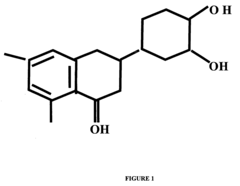
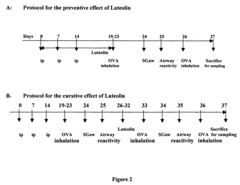
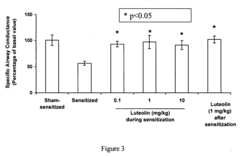
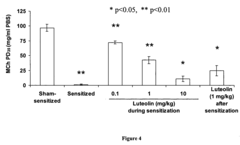
Method of treating and/or preventing asthma using natural compound luteolin
PatentInactiveUS20040191327A1
Innovation
- Administration of a therapeutically effective dose of Luteolin, a naturally occurring flavonoid, which increases IFN-gamma levels, decreases IL-5, IL-4, and IgE levels, and inhibits airway constriction and hyperreactivity, thereby addressing the inflammatory mechanisms underlying asthma.
Controlling transgene expression across the skin
PatentInactiveEP2473606A1
Innovation
- Development of a skin-permeating compound, such as phloretin, and corresponding vectors that utilize the Pseudomonas putida DOT-T1 E-derived bacterial repressor TtgR to control transgene expression, enabling reversible and adjustable expression through topical application, allowing for transdermal induction of therapeutic proteins.
Safety and Toxicology Considerations
When evaluating the safety profiles of Luteolin and Phloretin, comprehensive toxicological assessment is essential for their potential therapeutic applications. Both compounds demonstrate generally favorable safety profiles in preclinical studies, with Luteolin showing minimal toxicity at therapeutic doses in animal models. However, at high concentrations (>50 μM), Luteolin may exhibit cytotoxic effects on normal cells, particularly hepatocytes, necessitating careful dosage considerations for clinical applications.
Phloretin similarly demonstrates low toxicity in standard models, though its bioavailability presents challenges that may require higher administered doses to achieve therapeutic effects. This raises potential concerns about dose-dependent toxicity that warrant further investigation through systematic dose-escalation studies.
Regarding genotoxicity and mutagenicity, both compounds have been subjected to Ames tests and chromosomal aberration assays. Current evidence suggests neither compound exhibits significant DNA-damaging potential at therapeutic concentrations, though long-term studies remain limited. Luteolin has demonstrated some pro-oxidant activity at high doses in certain cellular environments, which requires monitoring in extended-use scenarios.
Pharmacokinetic considerations reveal important differences between these compounds. Luteolin undergoes extensive first-pass metabolism in the liver, primarily through glucuronidation and sulfation, potentially limiting its systemic bioavailability. Phloretin shows different metabolic patterns with somewhat better stability in circulation but faces challenges crossing certain biological barriers.
Drug interaction profiles represent another critical safety consideration. Luteolin has demonstrated inhibitory effects on several cytochrome P450 enzymes, particularly CYP1A2 and CYP3A4, suggesting potential for drug interactions when co-administered with medications metabolized by these pathways. Phloretin shows less pronounced effects on drug-metabolizing enzymes but may influence certain drug transporters, particularly P-glycoprotein.
Regulatory considerations for both compounds remain complex, as neither has received full FDA approval for therapeutic applications. Their current classification as dietary supplements or food additives subjects them to different regulatory frameworks than pharmaceutical compounds. This regulatory status impacts the extent of required safety testing and post-market surveillance.
Future safety research priorities should include expanded chronic toxicity studies, particularly focusing on reproductive and developmental toxicity, carcinogenicity assessments through two-species lifetime studies, and investigation of potential immunomodulatory effects that might present safety concerns in specific patient populations.
Phloretin similarly demonstrates low toxicity in standard models, though its bioavailability presents challenges that may require higher administered doses to achieve therapeutic effects. This raises potential concerns about dose-dependent toxicity that warrant further investigation through systematic dose-escalation studies.
Regarding genotoxicity and mutagenicity, both compounds have been subjected to Ames tests and chromosomal aberration assays. Current evidence suggests neither compound exhibits significant DNA-damaging potential at therapeutic concentrations, though long-term studies remain limited. Luteolin has demonstrated some pro-oxidant activity at high doses in certain cellular environments, which requires monitoring in extended-use scenarios.
Pharmacokinetic considerations reveal important differences between these compounds. Luteolin undergoes extensive first-pass metabolism in the liver, primarily through glucuronidation and sulfation, potentially limiting its systemic bioavailability. Phloretin shows different metabolic patterns with somewhat better stability in circulation but faces challenges crossing certain biological barriers.
Drug interaction profiles represent another critical safety consideration. Luteolin has demonstrated inhibitory effects on several cytochrome P450 enzymes, particularly CYP1A2 and CYP3A4, suggesting potential for drug interactions when co-administered with medications metabolized by these pathways. Phloretin shows less pronounced effects on drug-metabolizing enzymes but may influence certain drug transporters, particularly P-glycoprotein.
Regulatory considerations for both compounds remain complex, as neither has received full FDA approval for therapeutic applications. Their current classification as dietary supplements or food additives subjects them to different regulatory frameworks than pharmaceutical compounds. This regulatory status impacts the extent of required safety testing and post-market surveillance.
Future safety research priorities should include expanded chronic toxicity studies, particularly focusing on reproductive and developmental toxicity, carcinogenicity assessments through two-species lifetime studies, and investigation of potential immunomodulatory effects that might present safety concerns in specific patient populations.
Regulatory Framework for Flavonoid Applications
The regulatory landscape governing flavonoid applications spans multiple jurisdictions and frameworks, with significant variations in how luteolin and phloretin are classified and regulated. In the United States, the Food and Drug Administration (FDA) categorizes these compounds differently depending on their intended use. When incorporated into dietary supplements, both flavonoids fall under the Dietary Supplement Health and Education Act (DSHEA) of 1994, requiring manufacturers to ensure safety before marketing but not requiring pre-approval. However, therapeutic claims trigger stricter pharmaceutical regulations.
The European Food Safety Authority (EFSA) has established specific guidelines for flavonoid-containing products, with Novel Food Regulation (EU) 2015/2283 potentially applicable to concentrated extracts of luteolin or phloretin. Health claims related to these compounds must be scientifically substantiated and pre-approved under Regulation (EC) No 1924/2006, with the EFSA maintaining a stringent evaluation process for such claims.
In cosmetic applications, the EU Cosmetic Products Regulation (EC) No 1223/2009 governs safety assessments for both compounds, while the International Cooperation on Cosmetics Regulation (ICCR) provides harmonized approaches across major markets. Notably, the concentration limits differ between luteolin and phloretin based on their respective safety profiles and potential for skin sensitization.
Regulatory frameworks in Asia present additional complexity, with Japan's FOSHU (Foods for Specified Health Uses) system and China's Health Food Registration process imposing distinct requirements for flavonoid-containing products. South Korea has recently updated its functional ingredient list to include specific parameters for luteolin and phloretin applications in health functional foods.
Environmental regulations also impact the industrial production of these flavonoids, with the European REACH (Registration, Evaluation, Authorization and Restriction of Chemicals) regulation requiring environmental impact assessments for large-scale production. Similarly, the EPA in the United States monitors potential environmental effects under the Toxic Substances Control Act.
Recent regulatory developments include the FDA's 2022 draft guidance on botanical drug development, which may streamline approval pathways for luteolin and phloretin-based therapeutics. Additionally, the WHO's Traditional Medicine Strategy 2014-2023 has encouraged national regulatory frameworks to develop specific provisions for plant-derived bioactive compounds, potentially affecting global harmonization efforts for flavonoid regulations.
Compliance challenges remain significant, particularly regarding dosage standardization, quality control parameters, and appropriate labeling requirements across different regulatory frameworks. These challenges necessitate comprehensive regulatory strategies for organizations developing products containing either luteolin or phloretin.
The European Food Safety Authority (EFSA) has established specific guidelines for flavonoid-containing products, with Novel Food Regulation (EU) 2015/2283 potentially applicable to concentrated extracts of luteolin or phloretin. Health claims related to these compounds must be scientifically substantiated and pre-approved under Regulation (EC) No 1924/2006, with the EFSA maintaining a stringent evaluation process for such claims.
In cosmetic applications, the EU Cosmetic Products Regulation (EC) No 1223/2009 governs safety assessments for both compounds, while the International Cooperation on Cosmetics Regulation (ICCR) provides harmonized approaches across major markets. Notably, the concentration limits differ between luteolin and phloretin based on their respective safety profiles and potential for skin sensitization.
Regulatory frameworks in Asia present additional complexity, with Japan's FOSHU (Foods for Specified Health Uses) system and China's Health Food Registration process imposing distinct requirements for flavonoid-containing products. South Korea has recently updated its functional ingredient list to include specific parameters for luteolin and phloretin applications in health functional foods.
Environmental regulations also impact the industrial production of these flavonoids, with the European REACH (Registration, Evaluation, Authorization and Restriction of Chemicals) regulation requiring environmental impact assessments for large-scale production. Similarly, the EPA in the United States monitors potential environmental effects under the Toxic Substances Control Act.
Recent regulatory developments include the FDA's 2022 draft guidance on botanical drug development, which may streamline approval pathways for luteolin and phloretin-based therapeutics. Additionally, the WHO's Traditional Medicine Strategy 2014-2023 has encouraged national regulatory frameworks to develop specific provisions for plant-derived bioactive compounds, potentially affecting global harmonization efforts for flavonoid regulations.
Compliance challenges remain significant, particularly regarding dosage standardization, quality control parameters, and appropriate labeling requirements across different regulatory frameworks. These challenges necessitate comprehensive regulatory strategies for organizations developing products containing either luteolin or phloretin.
Unlock deeper insights with PatSnap Eureka Quick Research — get a full tech report to explore trends and direct your research. Try now!
Generate Your Research Report Instantly with AI Agent
Supercharge your innovation with PatSnap Eureka AI Agent Platform!