

Methane Pyrolysis: Hydrogen Storage Solutions.
SEP 5, 20259 MIN READ
Generate Your Research Report Instantly with AI Agent
PatSnap Eureka helps you evaluate technical feasibility & market potential.
Methane Pyrolysis Background and Objectives
Methane pyrolysis represents a significant advancement in hydrogen production technologies, offering a cleaner alternative to traditional methods. The process involves the thermal decomposition of methane (CH₄) into hydrogen (H₂) and solid carbon, without producing carbon dioxide emissions. This technology has evolved considerably since its conceptual development in the early 20th century, with substantial progress occurring in the past two decades as global focus on decarbonization has intensified.
The evolution of methane pyrolysis has been marked by several key technological breakthroughs, including the development of various reactor designs such as fluidized bed reactors, molten metal reactors, and plasma-based systems. Each iteration has aimed to address efficiency limitations, carbon handling challenges, and energy requirements that previously hindered commercial viability.
Current research trajectories indicate a growing convergence between methane pyrolysis and hydrogen storage solutions, creating an integrated approach to clean energy systems. This convergence addresses one of hydrogen economy's most persistent challenges: the efficient storage and transportation of hydrogen after production. By developing technologies that can seamlessly connect production with storage, the overall efficiency and economic viability of hydrogen as an energy carrier improves substantially.
The primary technical objective of current methane pyrolysis research is to achieve cost-competitive hydrogen production at scale while maintaining zero carbon emissions. This involves optimizing reactor designs to increase conversion efficiency, developing innovative catalysts to reduce reaction temperatures, and creating effective carbon sequestration or utilization pathways for the solid carbon byproduct.
Secondary objectives include reducing the energy intensity of the process, enhancing system durability for continuous operation, and developing modular designs that can be deployed across various scales and locations. These objectives align with broader energy transition goals of creating distributed, resilient energy systems that can operate independently of centralized infrastructure.
From a strategic perspective, methane pyrolysis represents a potential bridge technology that leverages existing natural gas infrastructure while enabling transition to a hydrogen economy. This dual-use capability makes it particularly attractive for regions with established natural gas networks seeking pathways to decarbonization without wholesale infrastructure replacement.
The technology's development is increasingly influenced by policy frameworks supporting clean hydrogen production, with several countries including methane pyrolysis in their hydrogen roadmaps. These policy signals have accelerated research investment and commercial pilot projects, creating momentum for further technological refinement and scale-up efforts in the coming decade.
The evolution of methane pyrolysis has been marked by several key technological breakthroughs, including the development of various reactor designs such as fluidized bed reactors, molten metal reactors, and plasma-based systems. Each iteration has aimed to address efficiency limitations, carbon handling challenges, and energy requirements that previously hindered commercial viability.
Current research trajectories indicate a growing convergence between methane pyrolysis and hydrogen storage solutions, creating an integrated approach to clean energy systems. This convergence addresses one of hydrogen economy's most persistent challenges: the efficient storage and transportation of hydrogen after production. By developing technologies that can seamlessly connect production with storage, the overall efficiency and economic viability of hydrogen as an energy carrier improves substantially.
The primary technical objective of current methane pyrolysis research is to achieve cost-competitive hydrogen production at scale while maintaining zero carbon emissions. This involves optimizing reactor designs to increase conversion efficiency, developing innovative catalysts to reduce reaction temperatures, and creating effective carbon sequestration or utilization pathways for the solid carbon byproduct.
Secondary objectives include reducing the energy intensity of the process, enhancing system durability for continuous operation, and developing modular designs that can be deployed across various scales and locations. These objectives align with broader energy transition goals of creating distributed, resilient energy systems that can operate independently of centralized infrastructure.
From a strategic perspective, methane pyrolysis represents a potential bridge technology that leverages existing natural gas infrastructure while enabling transition to a hydrogen economy. This dual-use capability makes it particularly attractive for regions with established natural gas networks seeking pathways to decarbonization without wholesale infrastructure replacement.
The technology's development is increasingly influenced by policy frameworks supporting clean hydrogen production, with several countries including methane pyrolysis in their hydrogen roadmaps. These policy signals have accelerated research investment and commercial pilot projects, creating momentum for further technological refinement and scale-up efforts in the coming decade.
Hydrogen Storage Market Analysis
The global hydrogen storage market is experiencing significant growth, driven by the increasing focus on clean energy solutions and the transition away from fossil fuels. As of 2023, the market is valued at approximately 15 billion USD, with projections indicating a compound annual growth rate (CAGR) of 8-10% through 2030. This growth trajectory is primarily fueled by expanding applications in transportation, power generation, and industrial processes.
Methane pyrolysis presents a compelling value proposition within this market, as it offers a pathway to produce hydrogen with significantly lower carbon emissions compared to traditional steam methane reforming methods. The resulting solid carbon byproduct creates additional revenue streams, enhancing the economic viability of hydrogen production and storage solutions based on this technology.
Regional analysis reveals distinct market characteristics across different geographies. Europe leads in hydrogen storage infrastructure development, particularly in Germany and the Netherlands, where government initiatives strongly support hydrogen economy development. Asia-Pacific represents the fastest-growing market, with China, Japan, and South Korea making substantial investments in hydrogen technologies as part of their decarbonization strategies.
Consumer demand patterns indicate increasing interest from both industrial and transportation sectors. Industrial applications currently dominate the market share at approximately 65%, while transportation applications are growing at the fastest rate, particularly in regions with developed hydrogen refueling infrastructure.
Market segmentation by storage type shows that physical storage methods (compressed gas, liquid hydrogen, and solid-state) collectively hold about 70% of the market share, while chemical storage solutions (including those potentially compatible with methane pyrolysis outputs) account for the remaining 30%.
Key market drivers include stringent environmental regulations, government subsidies for clean energy technologies, and corporate sustainability commitments. The European Green Deal and similar initiatives in Asia are creating favorable market conditions for hydrogen storage solutions, particularly those with lower carbon footprints like methane pyrolysis-derived hydrogen.
Barriers to market adoption include high infrastructure costs, technological limitations in storage efficiency, and competition from other renewable energy solutions. The levelized cost of hydrogen storage remains a significant challenge, with current estimates ranging from 3-7 USD per kilogram depending on the storage method and scale.
Market forecasts suggest that innovations in storage materials and methods could reduce costs by 40-50% over the next decade, potentially accelerating adoption rates across various sectors and creating new opportunities for methane pyrolysis-based hydrogen storage solutions.
Methane pyrolysis presents a compelling value proposition within this market, as it offers a pathway to produce hydrogen with significantly lower carbon emissions compared to traditional steam methane reforming methods. The resulting solid carbon byproduct creates additional revenue streams, enhancing the economic viability of hydrogen production and storage solutions based on this technology.
Regional analysis reveals distinct market characteristics across different geographies. Europe leads in hydrogen storage infrastructure development, particularly in Germany and the Netherlands, where government initiatives strongly support hydrogen economy development. Asia-Pacific represents the fastest-growing market, with China, Japan, and South Korea making substantial investments in hydrogen technologies as part of their decarbonization strategies.
Consumer demand patterns indicate increasing interest from both industrial and transportation sectors. Industrial applications currently dominate the market share at approximately 65%, while transportation applications are growing at the fastest rate, particularly in regions with developed hydrogen refueling infrastructure.
Market segmentation by storage type shows that physical storage methods (compressed gas, liquid hydrogen, and solid-state) collectively hold about 70% of the market share, while chemical storage solutions (including those potentially compatible with methane pyrolysis outputs) account for the remaining 30%.
Key market drivers include stringent environmental regulations, government subsidies for clean energy technologies, and corporate sustainability commitments. The European Green Deal and similar initiatives in Asia are creating favorable market conditions for hydrogen storage solutions, particularly those with lower carbon footprints like methane pyrolysis-derived hydrogen.
Barriers to market adoption include high infrastructure costs, technological limitations in storage efficiency, and competition from other renewable energy solutions. The levelized cost of hydrogen storage remains a significant challenge, with current estimates ranging from 3-7 USD per kilogram depending on the storage method and scale.
Market forecasts suggest that innovations in storage materials and methods could reduce costs by 40-50% over the next decade, potentially accelerating adoption rates across various sectors and creating new opportunities for methane pyrolysis-based hydrogen storage solutions.
Technical Challenges in Methane Pyrolysis
Methane pyrolysis represents a promising pathway for hydrogen production, yet it faces significant technical hurdles that impede its widespread commercial adoption. The primary challenge lies in the high energy requirements for breaking the strong carbon-hydrogen bonds in methane molecules. Current pyrolysis processes typically operate at temperatures between 700-1200°C, necessitating substantial energy input that compromises the overall efficiency and economic viability of the process.
Catalyst development remains another critical challenge. While various catalysts including nickel, iron, and carbon-based materials have shown potential, they suffer from rapid deactivation due to carbon deposition. This carbon fouling significantly reduces catalyst lifespan and process efficiency, requiring frequent regeneration or replacement cycles that increase operational costs and system complexity.
Reactor design presents multifaceted challenges in methane pyrolysis. Traditional fixed-bed reactors struggle with heat transfer limitations and carbon management issues. Fluidized bed systems offer improved heat transfer but face challenges with particle attrition and separation. Molten metal reactors, while promising for continuous carbon removal, introduce complexities in materials selection due to the corrosive nature of molten metals at high temperatures.
Carbon management represents perhaps the most significant operational challenge. The pyrolysis process generates solid carbon that must be continuously removed to prevent system clogging and catalyst deactivation. Current separation technologies are energy-intensive and often incomplete, leading to system inefficiencies and maintenance requirements that hamper continuous operation.
Scale-up challenges further complicate commercial implementation. Laboratory-scale successes have proven difficult to translate to industrial scales due to heat transfer limitations, carbon handling complexities, and catalyst performance degradation at larger volumes. The thermal management becomes increasingly problematic as reactor size increases, creating temperature gradients that affect reaction kinetics and product quality.
Materials science limitations also constrain advancement, as reactor components must withstand extreme temperatures, potential hydrogen embrittlement, and carbon deposition while maintaining structural integrity over extended operational periods. Current materials often face accelerated degradation under these harsh conditions, limiting system longevity and reliability.
Process integration with hydrogen storage solutions introduces additional complexities. The purification of hydrogen from pyrolysis products requires additional processing steps that add cost and energy requirements. Furthermore, integrating pyrolysis systems with downstream storage technologies necessitates careful consideration of pressure, purity, and flow rate requirements that may not align optimally with pyrolysis output characteristics.
Catalyst development remains another critical challenge. While various catalysts including nickel, iron, and carbon-based materials have shown potential, they suffer from rapid deactivation due to carbon deposition. This carbon fouling significantly reduces catalyst lifespan and process efficiency, requiring frequent regeneration or replacement cycles that increase operational costs and system complexity.
Reactor design presents multifaceted challenges in methane pyrolysis. Traditional fixed-bed reactors struggle with heat transfer limitations and carbon management issues. Fluidized bed systems offer improved heat transfer but face challenges with particle attrition and separation. Molten metal reactors, while promising for continuous carbon removal, introduce complexities in materials selection due to the corrosive nature of molten metals at high temperatures.
Carbon management represents perhaps the most significant operational challenge. The pyrolysis process generates solid carbon that must be continuously removed to prevent system clogging and catalyst deactivation. Current separation technologies are energy-intensive and often incomplete, leading to system inefficiencies and maintenance requirements that hamper continuous operation.
Scale-up challenges further complicate commercial implementation. Laboratory-scale successes have proven difficult to translate to industrial scales due to heat transfer limitations, carbon handling complexities, and catalyst performance degradation at larger volumes. The thermal management becomes increasingly problematic as reactor size increases, creating temperature gradients that affect reaction kinetics and product quality.
Materials science limitations also constrain advancement, as reactor components must withstand extreme temperatures, potential hydrogen embrittlement, and carbon deposition while maintaining structural integrity over extended operational periods. Current materials often face accelerated degradation under these harsh conditions, limiting system longevity and reliability.
Process integration with hydrogen storage solutions introduces additional complexities. The purification of hydrogen from pyrolysis products requires additional processing steps that add cost and energy requirements. Furthermore, integrating pyrolysis systems with downstream storage technologies necessitates careful consideration of pressure, purity, and flow rate requirements that may not align optimally with pyrolysis output characteristics.
Current Methane Pyrolysis Methods
01 Methane pyrolysis for hydrogen production
Methane pyrolysis is a process that decomposes methane into hydrogen and solid carbon without producing CO2. This technique offers a cleaner alternative to traditional hydrogen production methods like steam methane reforming. The process typically involves high temperatures and catalysts to break down methane molecules efficiently, resulting in hydrogen that can be stored and used as a clean energy carrier.- Methane pyrolysis for hydrogen production: Methane pyrolysis is a process that decomposes methane into hydrogen and solid carbon without producing CO2. This technique offers a cleaner alternative to traditional hydrogen production methods like steam methane reforming. The process typically involves high temperatures and catalysts to break down methane molecules efficiently, resulting in hydrogen that can be stored and used as a clean energy carrier while sequestering carbon in solid form.
- Advanced hydrogen storage technologies: Various technologies have been developed for efficient hydrogen storage following methane pyrolysis. These include metal hydrides, chemical carriers, and advanced composite materials that can absorb and release hydrogen under controlled conditions. These storage solutions address hydrogen's low volumetric energy density challenge by binding hydrogen atoms to materials that can safely store and release them when needed for energy applications.
- Integrated pyrolysis and storage systems: Integrated systems combine methane pyrolysis with immediate hydrogen storage solutions in a single process train. These systems optimize energy efficiency by capturing heat from the pyrolysis reaction for use in storage processes. The integration reduces energy losses between production and storage steps, creating more economical hydrogen energy systems with smaller footprints and improved overall efficiency.
- Carbon management in methane pyrolysis: Effective carbon management is crucial in methane pyrolysis hydrogen production systems. The solid carbon byproduct can be captured, processed, and utilized in various applications including construction materials, soil amendments, or advanced carbon materials. This carbon sequestration aspect makes methane pyrolysis particularly attractive as a low-emission hydrogen production method, potentially creating additional value streams from what would otherwise be waste carbon.
- Catalytic innovations for pyrolysis efficiency: Novel catalysts significantly improve the efficiency and economics of methane pyrolysis for hydrogen production. These catalysts lower the activation energy required for methane decomposition, allowing the process to operate at lower temperatures while maintaining high conversion rates. Recent innovations include transition metal-based catalysts, carbon-supported catalysts, and molten metal systems that facilitate continuous carbon separation while maintaining catalyst activity over extended operation periods.
02 Carbon-based materials for hydrogen storage
The solid carbon byproduct from methane pyrolysis can be utilized for hydrogen storage applications. These carbon materials, including carbon nanotubes, graphene, and activated carbon, offer high surface areas and porosity that facilitate hydrogen adsorption. By engineering the structure and properties of these carbon materials, hydrogen storage capacity can be significantly enhanced, making them valuable components in hydrogen storage systems.Expand Specific Solutions03 Metal hydride systems for hydrogen storage
Metal hydrides represent an important class of materials for hydrogen storage in conjunction with methane pyrolysis systems. These compounds can absorb and release hydrogen through chemical reactions, offering high volumetric storage densities. Various metal alloys and complex hydrides have been developed to optimize hydrogen storage capacity, kinetics, and operating conditions, providing efficient solutions for storing hydrogen produced from methane pyrolysis.Expand Specific Solutions04 Integrated systems for methane pyrolysis and hydrogen storage
Integrated systems combine methane pyrolysis reactors with hydrogen storage technologies to create efficient end-to-end solutions. These systems often incorporate heat management, pressure regulation, and purification components to optimize the overall process efficiency. By integrating production and storage in a single system, energy losses can be minimized, and the practical implementation of methane pyrolysis for hydrogen production and storage becomes more economically viable.Expand Specific Solutions05 Catalytic methods for enhanced methane pyrolysis
Advanced catalysts play a crucial role in improving the efficiency of methane pyrolysis for hydrogen production. Various catalytic materials, including transition metals, metal oxides, and carbon-based catalysts, have been developed to lower the activation energy required for methane decomposition. These catalysts can operate at lower temperatures, increase hydrogen yield, and improve the quality of carbon byproducts, making the overall process more suitable for practical hydrogen storage applications.Expand Specific Solutions
Industry Leaders in Hydrogen Storage Solutions
Methane pyrolysis for hydrogen storage is in an early growth phase, with a market expected to expand significantly due to increasing clean energy demands. The technology is approaching commercial viability, with varying maturity levels across key players. Companies like Toyota Motor Corp., Molten Industries, and GRZ Technologies are advancing innovative storage solutions, while research institutions such as Southwest Research Institute and Korea Research Institute of Chemical Technology contribute fundamental breakthroughs. SINOPEC and China Petroleum & Chemical Corp. are leveraging their industrial scale to accelerate adoption. The competitive landscape features both established energy corporations and specialized startups developing proprietary technologies to address efficiency, cost, and scalability challenges in hydrogen storage applications.
GRZ Technologies SA
Technical Solution: GRZ Technologies has pioneered advanced metal hydride-based systems specifically designed for hydrogen storage from methane pyrolysis processes. Their proprietary HYCO technology utilizes specialized metal alloys (primarily Ti-Fe-Mn compositions) that can absorb hydrogen at moderate pressures (30-50 bar) and near-ambient temperatures. The system achieves remarkable volumetric storage densities exceeding 40 g/L, surpassing compressed gas storage at similar pressures. GRZ's innovation includes a thermal management system that controls the exothermic absorption and endothermic desorption processes, enabling rapid charging and discharging cycles. Their integrated solution connects directly to methane pyrolysis units, capturing hydrogen as it's produced and storing it without intermediate compression steps. The modular design allows for scalable implementation from small distributed systems to industrial-scale applications, with demonstrated cycle stability exceeding 10,000 absorption-desorption cycles without significant capacity degradation.
Strengths: Higher volumetric storage density than compressed gas at equivalent pressures; operates at near-ambient temperatures; inherently safer than high-pressure systems; modular and scalable design. Weaknesses: Weight penalties from metal hydride materials limit mobile applications; requires precise thermal management; higher capital costs compared to conventional compressed storage.
Molten Industries Inc.
Technical Solution: Molten Industries has developed an innovative methane pyrolysis technology using molten metals as catalysts for hydrogen production. Their process operates at temperatures around 1000°C where methane bubbles through a molten metal bath (typically nickel or iron-based alloys), catalytically decomposing into hydrogen gas and solid carbon. The system employs a continuous carbon removal mechanism that prevents catalyst deactivation, allowing for uninterrupted operation. The produced hydrogen achieves 99.99% purity without additional purification steps, and the solid carbon byproduct is extracted in a form suitable for materials applications. Their integrated storage solution combines metal hydride technologies with compression systems, enabling hydrogen to be stored at moderate pressures (100-300 bar) with enhanced volumetric density compared to conventional compressed gas storage.
Strengths: Zero-CO2 emissions during hydrogen production; valuable carbon byproduct that can offset production costs; lower energy requirements compared to electrolysis. Weaknesses: High operating temperatures require significant thermal management; molten metal handling presents safety and maintenance challenges; storage solution still faces scaling limitations for industrial applications.
Critical Patents in Pyrolysis-Based Hydrogen Storage
Exploitation of natural hydrogen deposits using methane pyrolysis
PatentWO2025073666A1
Innovation
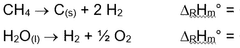
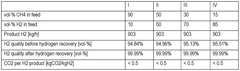
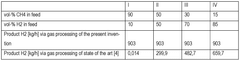
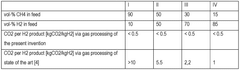
- A process involving methane pyrolysis, where natural hydrogen-hydrocarbon mixtures are fed into a hydrocarbon pyrolysis unit, causing the methane to decompose into hydrogen and solid carbon, with the solid carbon being separated from the hydrogen product stream.
Hydrogen storage power plant, and method for operating same
PatentPendingUS20250264050A1
Innovation
- A hydrogen storage power plant combining pyrolysis and/or plasmalysis with a hydrogen combustion engine using a closed noble gas cycle, allowing operation with low-purity hydrogen and enhancing thermal efficiency.


Carbon Management Strategies
Carbon management strategies are critical components in the methane pyrolysis hydrogen production ecosystem, as this process generates solid carbon as a byproduct. Effective carbon management can transform what would otherwise be a waste product into a valuable resource, enhancing the economic viability of methane pyrolysis while contributing to circular economy principles.
The solid carbon produced through methane pyrolysis typically takes the form of carbon black or graphite, depending on the specific process conditions. These carbon materials have established markets in various industries, including rubber manufacturing, plastics, printing inks, and battery production. By developing purification and processing techniques, the carbon byproduct can meet commercial specifications, creating additional revenue streams that offset hydrogen production costs.
Advanced carbon utilization pathways are emerging as promising areas for research and development. Carbon materials from methane pyrolysis can be processed into high-value products such as carbon nanotubes, graphene, and carbon fibers. These materials command premium prices in electronics, aerospace, and advanced materials markets, potentially transforming the economics of hydrogen production through methane pyrolysis.
Carbon sequestration represents another management strategy, particularly for lower-grade carbon that cannot be economically upgraded. The solid carbon can be safely stored in depleted mines or used in construction materials, effectively removing carbon from the atmospheric cycle. This approach aligns with carbon capture objectives while avoiding the complexities associated with gaseous CO2 sequestration.
Integration with existing carbon markets and trading mechanisms presents opportunities for additional value creation. As carbon pricing mechanisms mature globally, the ability to demonstrate permanent carbon sequestration through solid carbon storage could generate carbon credits, further improving the economic case for methane pyrolysis.
Supply chain development for carbon products remains a challenge that requires attention. Establishing reliable logistics networks, quality control systems, and market relationships will be essential for realizing the full value of carbon byproducts. Industry partnerships between hydrogen producers and carbon-consuming industries could facilitate this development, creating mutually beneficial arrangements that support the scaling of methane pyrolysis technology.
Regulatory frameworks will significantly influence carbon management strategies. Policies that recognize and incentivize permanent carbon sequestration through solid carbon storage could accelerate adoption of methane pyrolysis. Similarly, standards for carbon quality and certification systems for carbon-derived products will be necessary to support market development and consumer confidence.
The solid carbon produced through methane pyrolysis typically takes the form of carbon black or graphite, depending on the specific process conditions. These carbon materials have established markets in various industries, including rubber manufacturing, plastics, printing inks, and battery production. By developing purification and processing techniques, the carbon byproduct can meet commercial specifications, creating additional revenue streams that offset hydrogen production costs.
Advanced carbon utilization pathways are emerging as promising areas for research and development. Carbon materials from methane pyrolysis can be processed into high-value products such as carbon nanotubes, graphene, and carbon fibers. These materials command premium prices in electronics, aerospace, and advanced materials markets, potentially transforming the economics of hydrogen production through methane pyrolysis.
Carbon sequestration represents another management strategy, particularly for lower-grade carbon that cannot be economically upgraded. The solid carbon can be safely stored in depleted mines or used in construction materials, effectively removing carbon from the atmospheric cycle. This approach aligns with carbon capture objectives while avoiding the complexities associated with gaseous CO2 sequestration.
Integration with existing carbon markets and trading mechanisms presents opportunities for additional value creation. As carbon pricing mechanisms mature globally, the ability to demonstrate permanent carbon sequestration through solid carbon storage could generate carbon credits, further improving the economic case for methane pyrolysis.
Supply chain development for carbon products remains a challenge that requires attention. Establishing reliable logistics networks, quality control systems, and market relationships will be essential for realizing the full value of carbon byproducts. Industry partnerships between hydrogen producers and carbon-consuming industries could facilitate this development, creating mutually beneficial arrangements that support the scaling of methane pyrolysis technology.
Regulatory frameworks will significantly influence carbon management strategies. Policies that recognize and incentivize permanent carbon sequestration through solid carbon storage could accelerate adoption of methane pyrolysis. Similarly, standards for carbon quality and certification systems for carbon-derived products will be necessary to support market development and consumer confidence.
Economic Viability Assessment
The economic viability of methane pyrolysis for hydrogen storage solutions hinges on several interconnected factors that determine its commercial feasibility. Current cost analyses indicate that methane pyrolysis requires approximately $1.50-2.50 per kilogram of hydrogen produced, positioning it competitively between steam methane reforming ($1.00-1.50/kg) and electrolysis ($3.00-6.00/kg). This middle-ground cost structure presents both opportunities and challenges for market adoption.
Capital expenditure requirements for methane pyrolysis facilities vary significantly based on technology selection, with molten metal reactors demanding higher initial investment but offering superior operational efficiency compared to thermal plasma or catalytic systems. Industry projections suggest that a commercial-scale facility capable of producing 50,000 tons of hydrogen annually requires capital investment ranging from $150-300 million, with payback periods estimated between 5-8 years depending on market conditions.
Energy efficiency metrics reveal that methane pyrolysis consumes approximately 15-18 kWh per kilogram of hydrogen produced, substantially lower than the 50-55 kWh required by electrolysis methods. This efficiency advantage translates to operational cost savings of 40-60% compared to green hydrogen production pathways, though still higher than traditional gray hydrogen production methods.
The solid carbon byproduct represents a significant economic opportunity, with potential to offset 20-30% of production costs if high-quality carbon black or graphene can be produced and marketed effectively. Current carbon markets value these products between $500-5,000 per ton depending on purity and structural characteristics, though market volatility remains a concern for long-term revenue projections.
Scaling economics demonstrate promising cost reduction potential, with modeling suggesting that doubling production capacity could reduce per-unit costs by 15-20% through economies of scale. However, these projections depend heavily on technological maturation and supply chain development that remain in early stages for many pyrolysis approaches.
Regulatory frameworks significantly impact economic viability, with carbon pricing mechanisms and hydrogen subsidies playing decisive roles in investment decisions. Jurisdictions with carbon prices exceeding $50-70 per ton of CO2 equivalent substantially improve the competitive position of pyrolysis against conventional hydrogen production methods, while targeted hydrogen production incentives of $0.50-1.00 per kilogram could accelerate market adoption timelines by 3-5 years according to industry analyses.
Capital expenditure requirements for methane pyrolysis facilities vary significantly based on technology selection, with molten metal reactors demanding higher initial investment but offering superior operational efficiency compared to thermal plasma or catalytic systems. Industry projections suggest that a commercial-scale facility capable of producing 50,000 tons of hydrogen annually requires capital investment ranging from $150-300 million, with payback periods estimated between 5-8 years depending on market conditions.
Energy efficiency metrics reveal that methane pyrolysis consumes approximately 15-18 kWh per kilogram of hydrogen produced, substantially lower than the 50-55 kWh required by electrolysis methods. This efficiency advantage translates to operational cost savings of 40-60% compared to green hydrogen production pathways, though still higher than traditional gray hydrogen production methods.
The solid carbon byproduct represents a significant economic opportunity, with potential to offset 20-30% of production costs if high-quality carbon black or graphene can be produced and marketed effectively. Current carbon markets value these products between $500-5,000 per ton depending on purity and structural characteristics, though market volatility remains a concern for long-term revenue projections.
Scaling economics demonstrate promising cost reduction potential, with modeling suggesting that doubling production capacity could reduce per-unit costs by 15-20% through economies of scale. However, these projections depend heavily on technological maturation and supply chain development that remain in early stages for many pyrolysis approaches.
Regulatory frameworks significantly impact economic viability, with carbon pricing mechanisms and hydrogen subsidies playing decisive roles in investment decisions. Jurisdictions with carbon prices exceeding $50-70 per ton of CO2 equivalent substantially improve the competitive position of pyrolysis against conventional hydrogen production methods, while targeted hydrogen production incentives of $0.50-1.00 per kilogram could accelerate market adoption timelines by 3-5 years according to industry analyses.
Unlock deeper insights with PatSnap Eureka Quick Research — get a full tech report to explore trends and direct your research. Try now!
Generate Your Research Report Instantly with AI Agent
Supercharge your innovation with PatSnap Eureka AI Agent Platform!