Model Predictive Control In Process Automation Systems
SEP 8, 20259 MIN READ
Generate Your Research Report Instantly with AI Agent
Patsnap Eureka helps you evaluate technical feasibility & market potential.
MPC Evolution and Objectives in Process Automation
Model Predictive Control (MPC) emerged in the late 1970s as a revolutionary approach to process control, initially developed to address the complex control challenges in petroleum refineries and petrochemical plants. The evolution of MPC has been closely tied to advancements in computing power, mathematical optimization techniques, and process modeling capabilities. Early implementations were limited by computational constraints, but as technology progressed, MPC applications expanded across various industrial sectors.
The fundamental concept of MPC involves using a dynamic model of the process to predict future behavior and optimize control actions over a finite time horizon. This predictive capability represents a significant departure from traditional PID controllers, which rely solely on past errors. The evolution of MPC has seen several generations of technology, from the initial Dynamic Matrix Control (DMC) algorithm to more sophisticated variants incorporating nonlinear models and stochastic elements.
In the 1990s, MPC witnessed substantial theoretical developments, including stability guarantees and robust formulations to handle model uncertainties. The 2000s brought increased integration with state estimation techniques and the development of economic MPC, which directly incorporates business objectives into the control formulation. Recent advances focus on distributed MPC architectures for large-scale systems and learning-based approaches that leverage process data to improve model accuracy.
The primary objective of MPC in process automation is to optimize plant operations while respecting operational constraints. This includes maintaining product quality specifications, ensuring safe operation within equipment limitations, and maximizing economic performance. MPC achieves these objectives by simultaneously handling multivariable interactions, constraints, and time delays—characteristics that make traditional control approaches inadequate for complex processes.
Another critical objective is reducing process variability, which enables operation closer to constraint boundaries and improves overall efficiency. By anticipating future disturbances and system responses, MPC provides proactive control actions rather than reactive corrections, resulting in smoother operation and fewer quality excursions.
In modern industrial settings, MPC objectives have expanded to include energy efficiency optimization, emissions reduction, and adaptation to changing market conditions. The technology now aims to support sustainable manufacturing by balancing economic performance with environmental impact. Additionally, as industrial processes become increasingly integrated, MPC objectives include coordinating multiple units and optimizing entire production chains rather than isolated processes.
The evolution trajectory suggests future MPC development will focus on self-adapting algorithms, integration with artificial intelligence for improved modeling, and seamless incorporation into Industrial Internet of Things (IIoT) frameworks to support the digital transformation of process industries.
The fundamental concept of MPC involves using a dynamic model of the process to predict future behavior and optimize control actions over a finite time horizon. This predictive capability represents a significant departure from traditional PID controllers, which rely solely on past errors. The evolution of MPC has seen several generations of technology, from the initial Dynamic Matrix Control (DMC) algorithm to more sophisticated variants incorporating nonlinear models and stochastic elements.
In the 1990s, MPC witnessed substantial theoretical developments, including stability guarantees and robust formulations to handle model uncertainties. The 2000s brought increased integration with state estimation techniques and the development of economic MPC, which directly incorporates business objectives into the control formulation. Recent advances focus on distributed MPC architectures for large-scale systems and learning-based approaches that leverage process data to improve model accuracy.
The primary objective of MPC in process automation is to optimize plant operations while respecting operational constraints. This includes maintaining product quality specifications, ensuring safe operation within equipment limitations, and maximizing economic performance. MPC achieves these objectives by simultaneously handling multivariable interactions, constraints, and time delays—characteristics that make traditional control approaches inadequate for complex processes.
Another critical objective is reducing process variability, which enables operation closer to constraint boundaries and improves overall efficiency. By anticipating future disturbances and system responses, MPC provides proactive control actions rather than reactive corrections, resulting in smoother operation and fewer quality excursions.
In modern industrial settings, MPC objectives have expanded to include energy efficiency optimization, emissions reduction, and adaptation to changing market conditions. The technology now aims to support sustainable manufacturing by balancing economic performance with environmental impact. Additionally, as industrial processes become increasingly integrated, MPC objectives include coordinating multiple units and optimizing entire production chains rather than isolated processes.
The evolution trajectory suggests future MPC development will focus on self-adapting algorithms, integration with artificial intelligence for improved modeling, and seamless incorporation into Industrial Internet of Things (IIoT) frameworks to support the digital transformation of process industries.
Industrial Demand for Advanced Control Solutions
The industrial landscape has witnessed a significant shift towards advanced control solutions, with Model Predictive Control (MPC) emerging as a critical technology for process automation systems. Market research indicates that the global advanced process control market reached approximately $1.4 billion in 2022 and is projected to grow at a CAGR of 8.2% through 2030, driven primarily by the need for operational efficiency and sustainability in manufacturing processes.
Industries such as oil and gas, petrochemicals, power generation, and pharmaceuticals are increasingly demanding sophisticated control solutions that can handle complex process dynamics, multiple constraints, and optimization objectives simultaneously. Traditional PID controllers, while still widely used, cannot effectively address these multivariable control challenges, creating a substantial market gap that MPC technology fills effectively.
Energy efficiency requirements and stringent environmental regulations have become significant market drivers. Companies face mounting pressure to reduce carbon footprints while maintaining production targets, with many jurisdictions implementing carbon pricing mechanisms that directly impact operational costs. MPC systems offer tangible benefits in this regard, with documented cases showing 2-5% reductions in energy consumption and 5-15% improvements in throughput across various process industries.
The COVID-19 pandemic accelerated automation trends, as manufacturers sought to maintain operations with reduced on-site personnel. This shift highlighted the value of advanced control solutions that can operate reliably with minimal human intervention, further stimulating market demand for MPC technologies that enable remote monitoring and autonomous operation capabilities.
Regional analysis reveals varying adoption rates, with North America and Europe leading implementation due to their mature industrial bases and regulatory environments. However, the Asia-Pacific region represents the fastest-growing market segment, with China and India making substantial investments in industrial modernization programs that incorporate advanced control technologies.
End-users increasingly demand solutions that integrate seamlessly with existing infrastructure while providing clear return on investment metrics. Case studies from major chemical producers demonstrate that well-implemented MPC projects typically achieve ROI within 6-18 months, primarily through reduced variability, improved product quality, and decreased energy consumption.
The market also shows growing interest in cloud-based and software-as-a-service MPC solutions, particularly among mid-sized manufacturers seeking to implement advanced control without significant capital expenditure. This trend is reshaping vendor offerings, with increasing emphasis on scalable, modular solutions that can grow with customer needs.
Industries such as oil and gas, petrochemicals, power generation, and pharmaceuticals are increasingly demanding sophisticated control solutions that can handle complex process dynamics, multiple constraints, and optimization objectives simultaneously. Traditional PID controllers, while still widely used, cannot effectively address these multivariable control challenges, creating a substantial market gap that MPC technology fills effectively.
Energy efficiency requirements and stringent environmental regulations have become significant market drivers. Companies face mounting pressure to reduce carbon footprints while maintaining production targets, with many jurisdictions implementing carbon pricing mechanisms that directly impact operational costs. MPC systems offer tangible benefits in this regard, with documented cases showing 2-5% reductions in energy consumption and 5-15% improvements in throughput across various process industries.
The COVID-19 pandemic accelerated automation trends, as manufacturers sought to maintain operations with reduced on-site personnel. This shift highlighted the value of advanced control solutions that can operate reliably with minimal human intervention, further stimulating market demand for MPC technologies that enable remote monitoring and autonomous operation capabilities.
Regional analysis reveals varying adoption rates, with North America and Europe leading implementation due to their mature industrial bases and regulatory environments. However, the Asia-Pacific region represents the fastest-growing market segment, with China and India making substantial investments in industrial modernization programs that incorporate advanced control technologies.
End-users increasingly demand solutions that integrate seamlessly with existing infrastructure while providing clear return on investment metrics. Case studies from major chemical producers demonstrate that well-implemented MPC projects typically achieve ROI within 6-18 months, primarily through reduced variability, improved product quality, and decreased energy consumption.
The market also shows growing interest in cloud-based and software-as-a-service MPC solutions, particularly among mid-sized manufacturers seeking to implement advanced control without significant capital expenditure. This trend is reshaping vendor offerings, with increasing emphasis on scalable, modular solutions that can grow with customer needs.
Current MPC Implementation Challenges
Despite the significant advancements in Model Predictive Control (MPC) technology, several critical challenges continue to impede its widespread implementation in process automation systems. One of the most persistent obstacles is the complexity of developing accurate process models. MPC performance is fundamentally dependent on the quality of the underlying model, yet many industrial processes exhibit nonlinear, time-varying behaviors that are difficult to capture mathematically. This model-reality mismatch often leads to suboptimal control performance in real-world applications.
Computational burden remains another significant challenge, particularly for large-scale systems with numerous variables and constraints. Although computing power has increased substantially, the real-time optimization requirements of MPC still pose difficulties for complex processes with fast dynamics. This is especially problematic in industries like petrochemicals and pharmaceuticals, where process time constants can vary dramatically across different unit operations.
Implementation costs present a substantial barrier to MPC adoption, especially for small and medium-sized enterprises. The expenses associated with system identification, model development, controller design, and commissioning can be prohibitive. Additionally, the specialized expertise required for MPC implementation is not readily available in many industrial settings, creating a knowledge gap that further complicates deployment.
Robustness and reliability concerns also persist in practical MPC applications. Controllers must maintain performance despite process disturbances, measurement noise, and model uncertainties. Current MPC formulations often struggle to balance robustness with performance, particularly when faced with significant plant-model mismatch or unexpected process changes.
Integration challenges with existing control infrastructure represent another major hurdle. Many industrial facilities operate with legacy distributed control systems (DCS) that were not designed with advanced control strategies in mind. The communication protocols, data handling capabilities, and computational resources of these systems may be insufficient for seamless MPC integration, necessitating costly upgrades or complex workarounds.
Maintenance and sustainability of MPC solutions over time present ongoing challenges. As processes evolve or equipment ages, models become less accurate, requiring regular updates and retuning. This maintenance burden is often underestimated during initial implementation, leading to degraded performance or even abandonment of MPC systems over time.
Regulatory compliance and validation requirements add another layer of complexity, particularly in highly regulated industries such as pharmaceuticals and food processing. Demonstrating that an MPC system consistently meets regulatory standards can be time-consuming and resource-intensive, creating additional barriers to implementation.
Computational burden remains another significant challenge, particularly for large-scale systems with numerous variables and constraints. Although computing power has increased substantially, the real-time optimization requirements of MPC still pose difficulties for complex processes with fast dynamics. This is especially problematic in industries like petrochemicals and pharmaceuticals, where process time constants can vary dramatically across different unit operations.
Implementation costs present a substantial barrier to MPC adoption, especially for small and medium-sized enterprises. The expenses associated with system identification, model development, controller design, and commissioning can be prohibitive. Additionally, the specialized expertise required for MPC implementation is not readily available in many industrial settings, creating a knowledge gap that further complicates deployment.
Robustness and reliability concerns also persist in practical MPC applications. Controllers must maintain performance despite process disturbances, measurement noise, and model uncertainties. Current MPC formulations often struggle to balance robustness with performance, particularly when faced with significant plant-model mismatch or unexpected process changes.
Integration challenges with existing control infrastructure represent another major hurdle. Many industrial facilities operate with legacy distributed control systems (DCS) that were not designed with advanced control strategies in mind. The communication protocols, data handling capabilities, and computational resources of these systems may be insufficient for seamless MPC integration, necessitating costly upgrades or complex workarounds.
Maintenance and sustainability of MPC solutions over time present ongoing challenges. As processes evolve or equipment ages, models become less accurate, requiring regular updates and retuning. This maintenance burden is often underestimated during initial implementation, leading to degraded performance or even abandonment of MPC systems over time.
Regulatory compliance and validation requirements add another layer of complexity, particularly in highly regulated industries such as pharmaceuticals and food processing. Demonstrating that an MPC system consistently meets regulatory standards can be time-consuming and resource-intensive, creating additional barriers to implementation.
Contemporary MPC Architectures and Frameworks
01 Industrial process control applications of MPC
Model Predictive Control (MPC) is widely applied in industrial processes to optimize operations and improve efficiency. These applications include manufacturing systems, chemical processes, and production lines where MPC algorithms predict future behaviors based on process models and adjust control parameters accordingly. The implementation of MPC in these settings allows for better handling of constraints, multivariable interactions, and disturbances, resulting in more stable and efficient industrial operations.- Industrial process control applications of MPC: Model Predictive Control (MPC) is widely implemented in industrial process control systems to optimize operations and improve efficiency. These applications include manufacturing processes, chemical plants, and production lines where MPC algorithms predict future process behaviors and calculate optimal control actions. The technology enables real-time adjustments based on multiple variables and constraints, resulting in more stable operations, reduced energy consumption, and improved product quality.
- Energy management and optimization using MPC: Model Predictive Control strategies are employed in energy management systems to optimize power generation, distribution, and consumption. These controllers predict energy demands and environmental conditions to balance supply and demand efficiently. MPC algorithms can manage complex energy systems including renewable energy sources, battery storage systems, and grid interactions while considering constraints such as cost, emissions, and equipment limitations.
- Vehicle and transportation control systems: MPC technology is applied in advanced vehicle control systems and transportation infrastructure to improve safety, efficiency, and performance. These applications include autonomous driving systems, adaptive cruise control, engine management, and traffic flow optimization. The predictive capabilities allow vehicles to anticipate road conditions, optimize fuel consumption, and maintain stable control even in challenging situations.
- MPC algorithm development and computational methods: Innovations in MPC algorithm design focus on improving computational efficiency, robustness, and real-time performance. These developments include new mathematical formulations, optimization techniques, and numerical methods that enable faster solution times and implementation on embedded systems. Advanced algorithms address challenges such as model uncertainty, disturbance rejection, and handling of nonlinear systems while maintaining stability and performance guarantees.
- Manufacturing and production process optimization: MPC systems are specifically designed for manufacturing and production processes to optimize product quality, reduce waste, and increase throughput. These applications include textile manufacturing, semiconductor processing, material handling, and batch production systems. The controllers coordinate multiple process variables simultaneously while respecting equipment constraints and quality requirements, leading to more consistent products and reduced operational costs.
02 Energy management and optimization using MPC
MPC techniques are employed in energy systems to optimize consumption, distribution, and generation. These control strategies help balance supply and demand while considering constraints such as equipment limitations and operational costs. By predicting future energy needs and system behavior, MPC algorithms can proactively adjust parameters to minimize energy usage, reduce costs, and enhance sustainability in applications ranging from building climate control to power grid management.Expand Specific Solutions03 Advanced MPC algorithm development and implementation
Innovations in MPC algorithm design focus on improving computational efficiency, robustness, and handling of complex systems. These developments include enhanced mathematical formulations, optimization techniques, and integration with machine learning approaches. Advanced MPC implementations address challenges such as model uncertainty, nonlinear dynamics, and real-time computation requirements, enabling more effective control solutions for increasingly complex systems.Expand Specific Solutions04 MPC applications in automotive and transportation systems
Model Predictive Control is increasingly utilized in automotive and transportation applications for vehicle dynamics control, autonomous driving, and traffic management. These implementations leverage predictive capabilities to anticipate road conditions, optimize vehicle trajectories, and enhance safety features. MPC frameworks in transportation systems can coordinate multiple vehicles, manage traffic flow, and improve fuel efficiency while maintaining passenger comfort and adhering to operational constraints.Expand Specific Solutions05 Integration of MPC with other technologies and systems
Modern MPC implementations are increasingly integrated with complementary technologies such as artificial intelligence, digital twins, and Internet of Things (IoT) platforms. These integrations enhance the capabilities of predictive control by incorporating real-time data streams, adaptive modeling, and advanced optimization techniques. Combined systems leverage the strengths of multiple approaches to address complex control challenges in diverse fields including manufacturing, healthcare, and smart infrastructure.Expand Specific Solutions
Leading MPC Technology Providers and Integrators
Model Predictive Control (MPC) in process automation systems is currently in a growth phase, with the market expanding due to increasing demand for optimized industrial processes. The global MPC market is estimated to be worth several billion dollars, growing at 8-10% annually. Technologically, MPC has reached moderate maturity with established players like Honeywell, Siemens, ABB, and Emerson (Fisher-Rosemount) leading implementation in various industries. These companies have developed sophisticated MPC platforms with proven ROI. Newer entrants like NVIDIA are bringing advanced computing capabilities, while traditional automation companies such as Yokogawa, Mitsubishi Electric, and Rockwell Automation continue to enhance their MPC offerings. Academic institutions like Tsinghua University and KAIST are contributing significant research to advance theoretical frameworks and practical applications.
Fisher-Rosemount Systems, Inc.
Technical Solution: Fisher-Rosemount Systems has developed DeltaV Predict, an advanced Model Predictive Control (MPC) solution integrated within their DeltaV distributed control system. Their approach implements multivariable predictive control algorithms that simultaneously handle multiple process variables, constraints, and objectives. The system utilizes dynamic process models that capture the relationships between manipulated variables and controlled variables, allowing for anticipatory control actions based on predicted future behavior. DeltaV Predict employs a unique two-step deployment methodology: first building accurate process models through automated step testing, then implementing control strategies that optimize process performance while respecting operational constraints[1]. Their technology includes adaptive modeling capabilities that automatically update the internal models based on actual process responses, ensuring sustained performance despite process changes over time[3].
Strengths: Seamless integration with existing DeltaV control systems, reducing implementation complexity; adaptive modeling capabilities that maintain performance as processes change. Weaknesses: Requires significant process knowledge for initial configuration; may have higher computational demands than traditional PID control strategies.
Honeywell International Technologies Ltd.
Technical Solution: Honeywell's Profit Controller is their flagship Model Predictive Control solution for process automation systems. The technology employs multivariable control algorithms that predict future process behavior using dynamic models and calculate optimal control moves to achieve desired setpoints while respecting constraints. Honeywell's implementation features a patented steady-state target optimization layer that continuously recalculates the most economically advantageous operating points based on current process conditions and business objectives[2]. Their MPC technology incorporates robust horizon prediction capabilities that account for model uncertainties and disturbances, making control actions more resilient to process variations. Profit Controller integrates with Honeywell's Profit Suite, which includes tools for model identification, controller performance monitoring, and economic optimization, creating a comprehensive MPC ecosystem that spans from initial implementation through ongoing maintenance[4]. The system also features automated step testing capabilities that significantly reduce the time required for model development.
Strengths: Comprehensive suite of tools for model development, implementation, and maintenance; strong integration with economic optimization layers for business-driven control. Weaknesses: Complex implementation requiring specialized expertise; higher initial investment compared to conventional control strategies.
Breakthrough Patents in Predictive Control Methods
Deep causal learning for advanced model predictive control
PatentPendingUS20230060325A1
Innovation
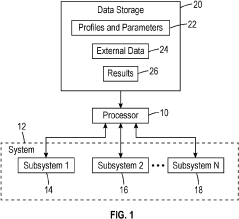
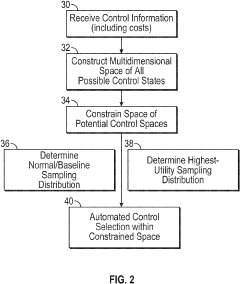
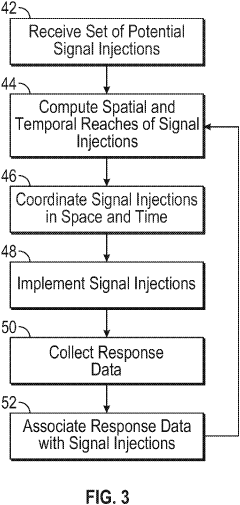
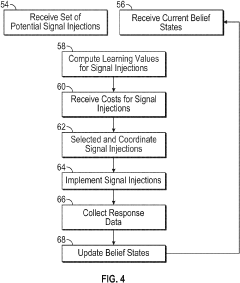
- Deep Causal Learning (DCL) introduces randomized controlled signals to subsystems, computes confidence intervals for causal relationships, and uses time-varying Jacobian and Hessian matrices to predict optimal control moves, accounting for non-linearities and temporal dynamics, thereby refining the internal model for MPC.
Model predictive control systems for process automation plants
PatentWO2024182167A1
Innovation
- The implementation of a model predictive control (MPC) system that includes multiple MPC models corresponding to different operating states, allowing for automatic or manual switching based on current state parameters, and the use of clustering algorithms and online model estimation to dynamically adjust process models, ensuring accurate control across varying operational conditions.


Real-time Computing Requirements for MPC Systems
Model Predictive Control (MPC) systems in process automation demand stringent real-time computing capabilities to ensure optimal performance. The computational requirements for MPC implementation are primarily driven by the complexity of the optimization problem that must be solved within each control interval. For industrial processes with sampling times ranging from milliseconds to minutes, the optimization algorithm must consistently deliver solutions before the next control action is required.
The computational burden of MPC systems stems from several factors. First, the prediction horizon length directly impacts calculation complexity, with longer horizons requiring more computational resources but potentially yielding better control performance. Second, the model complexity—including the number of states, inputs, and outputs—exponentially increases the computational load. Third, constraint handling, particularly for systems with numerous operational constraints, significantly adds to the computational requirements.
Hardware specifications for real-time MPC implementation vary based on application demands. High-speed processes may require dedicated industrial computers with multi-core processors operating at 3+ GHz, while slower processes might function adequately on standard industrial controllers. Memory requirements typically range from 4GB to 16GB RAM, depending on the model size and optimization complexity. Some critical applications utilize specialized hardware accelerators such as FPGAs or GPUs to parallelize optimization calculations.
Software architecture plays an equally crucial role in meeting real-time requirements. Efficient implementation demands optimized numerical algorithms, particularly for matrix operations that dominate MPC calculations. Modern MPC systems increasingly employ specialized solvers like OSQP, qpOASES, or FORCES Pro, which are specifically designed for real-time optimization problems. These solvers implement techniques such as warm-starting, early termination, and explicit MPC formulations to reduce computation time.
Latency management represents another critical aspect of real-time MPC systems. The total latency—from sensor measurement to control action implementation—must remain within strict bounds to maintain control stability. This necessitates efficient I/O handling, minimal communication overhead, and deterministic execution patterns. Many industrial MPC implementations utilize real-time operating systems (RTOS) like VxWorks, QNX, or real-time Linux variants to ensure predictable execution timing and minimize jitter.
As industrial processes grow more complex, distributed computing architectures are increasingly employed to meet real-time requirements. These architectures distribute the computational load across multiple processors or even separate computing nodes, enabling more complex models and longer prediction horizons while maintaining real-time performance. Edge computing solutions are also emerging as viable options for implementing MPC closer to the process, reducing communication latencies and improving overall system responsiveness.
The computational burden of MPC systems stems from several factors. First, the prediction horizon length directly impacts calculation complexity, with longer horizons requiring more computational resources but potentially yielding better control performance. Second, the model complexity—including the number of states, inputs, and outputs—exponentially increases the computational load. Third, constraint handling, particularly for systems with numerous operational constraints, significantly adds to the computational requirements.
Hardware specifications for real-time MPC implementation vary based on application demands. High-speed processes may require dedicated industrial computers with multi-core processors operating at 3+ GHz, while slower processes might function adequately on standard industrial controllers. Memory requirements typically range from 4GB to 16GB RAM, depending on the model size and optimization complexity. Some critical applications utilize specialized hardware accelerators such as FPGAs or GPUs to parallelize optimization calculations.
Software architecture plays an equally crucial role in meeting real-time requirements. Efficient implementation demands optimized numerical algorithms, particularly for matrix operations that dominate MPC calculations. Modern MPC systems increasingly employ specialized solvers like OSQP, qpOASES, or FORCES Pro, which are specifically designed for real-time optimization problems. These solvers implement techniques such as warm-starting, early termination, and explicit MPC formulations to reduce computation time.
Latency management represents another critical aspect of real-time MPC systems. The total latency—from sensor measurement to control action implementation—must remain within strict bounds to maintain control stability. This necessitates efficient I/O handling, minimal communication overhead, and deterministic execution patterns. Many industrial MPC implementations utilize real-time operating systems (RTOS) like VxWorks, QNX, or real-time Linux variants to ensure predictable execution timing and minimize jitter.
As industrial processes grow more complex, distributed computing architectures are increasingly employed to meet real-time requirements. These architectures distribute the computational load across multiple processors or even separate computing nodes, enabling more complex models and longer prediction horizons while maintaining real-time performance. Edge computing solutions are also emerging as viable options for implementing MPC closer to the process, reducing communication latencies and improving overall system responsiveness.
Industry-specific MPC Applications
Model Predictive Control (MPC) has been successfully implemented across diverse industrial sectors, demonstrating its versatility and effectiveness in process automation. In the oil and gas industry, MPC applications have revolutionized refinery operations by optimizing distillation columns, catalytic crackers, and hydrotreating units. These implementations have consistently delivered 2-5% improvements in throughput and 10-15% reductions in energy consumption, while maintaining strict product quality specifications.
The petrochemical sector has embraced MPC for polymerization reactors, where precise control of molecular weight distribution and product properties is critical. Companies like BASF and Dow Chemical have reported significant improvements in product consistency and reduced grade transition times by up to 40% after implementing advanced MPC strategies.
Power generation represents another significant application domain, with MPC being deployed in conventional thermal power plants and renewable energy systems. In coal-fired plants, MPC algorithms manage complex boiler dynamics while balancing emissions control and efficiency. For renewable energy integration, MPC has proven valuable in managing grid stability with intermittent power sources, reducing frequency deviations by up to 30% compared to conventional control methods.
The pharmaceutical and bioprocessing industries have adopted MPC for batch processes and continuous manufacturing lines. FDA's Quality by Design initiative has accelerated MPC adoption in these sectors, with documented benefits including 25-30% reductions in batch-to-batch variability and significant improvements in process reliability.
Mining and mineral processing operations utilize MPC for grinding circuits, flotation cells, and leaching processes. Companies like Rio Tinto and BHP have reported 3-7% increases in recovery rates and substantial reductions in reagent consumption through MPC implementation.
The pulp and paper industry applies MPC to control complex variables in digesters, bleaching sequences, and paper machines. Mills implementing MPC have achieved more consistent product quality while reducing steam consumption by 5-10% and chemical usage by similar margins.
Food and beverage processing represents an emerging application area, with MPC being used for spray drying, fermentation, and thermal processing. These implementations have demonstrated improved product consistency and reduced energy costs while maintaining strict food safety parameters.
The petrochemical sector has embraced MPC for polymerization reactors, where precise control of molecular weight distribution and product properties is critical. Companies like BASF and Dow Chemical have reported significant improvements in product consistency and reduced grade transition times by up to 40% after implementing advanced MPC strategies.
Power generation represents another significant application domain, with MPC being deployed in conventional thermal power plants and renewable energy systems. In coal-fired plants, MPC algorithms manage complex boiler dynamics while balancing emissions control and efficiency. For renewable energy integration, MPC has proven valuable in managing grid stability with intermittent power sources, reducing frequency deviations by up to 30% compared to conventional control methods.
The pharmaceutical and bioprocessing industries have adopted MPC for batch processes and continuous manufacturing lines. FDA's Quality by Design initiative has accelerated MPC adoption in these sectors, with documented benefits including 25-30% reductions in batch-to-batch variability and significant improvements in process reliability.
Mining and mineral processing operations utilize MPC for grinding circuits, flotation cells, and leaching processes. Companies like Rio Tinto and BHP have reported 3-7% increases in recovery rates and substantial reductions in reagent consumption through MPC implementation.
The pulp and paper industry applies MPC to control complex variables in digesters, bleaching sequences, and paper machines. Mills implementing MPC have achieved more consistent product quality while reducing steam consumption by 5-10% and chemical usage by similar margins.
Food and beverage processing represents an emerging application area, with MPC being used for spray drying, fermentation, and thermal processing. These implementations have demonstrated improved product consistency and reduced energy costs while maintaining strict food safety parameters.
Unlock deeper insights with Patsnap Eureka Quick Research — get a full tech report to explore trends and direct your research. Try now!
Generate Your Research Report Instantly with AI Agent
Supercharge your innovation with Patsnap Eureka AI Agent Platform!