Optimizing ICP-MS Sample Transport Efficiency
SEP 19, 20259 MIN READ
Generate Your Research Report Instantly with AI Agent
PatSnap Eureka helps you evaluate technical feasibility & market potential.
ICP-MS Technology Evolution and Objectives
Inductively Coupled Plasma Mass Spectrometry (ICP-MS) has evolved significantly since its commercial introduction in the early 1980s. This analytical technique combines the high-temperature ICP source with a mass spectrometer to detect and quantify trace elements at concentrations as low as one part per trillion. The evolution of ICP-MS technology has been driven by the increasing demand for more sensitive, accurate, and efficient elemental analysis across various industries including environmental monitoring, pharmaceutical research, food safety, and semiconductor manufacturing.
The initial ICP-MS systems faced significant challenges related to sample transport efficiency, with typical efficiency rates below 10%. This inefficiency resulted in reduced sensitivity, increased detection limits, and higher sample consumption. Over the decades, technological advancements have focused on improving this critical aspect of the analytical process, recognizing that enhanced sample transport directly correlates with improved analytical performance.
The 1990s marked a significant turning point with the introduction of improved nebulizer designs and spray chamber configurations. These innovations increased sample transport efficiency to approximately 15-20%, representing a substantial improvement but still leaving considerable room for enhancement. The early 2000s witnessed the development of desolvation systems and ultrasonic nebulizers, pushing efficiency rates toward 30-40% for specific applications.
Recent technological breakthroughs have centered on microfluidic sample introduction systems, aerosol focusing devices, and temperature-controlled spray chambers. These advancements have demonstrated potential efficiency rates of 50-60% in laboratory settings, though commercial implementation remains limited. The current technological objective is to achieve consistent sample transport efficiency exceeding 70% while maintaining compatibility with diverse sample matrices and analytical requirements.
The optimization of ICP-MS sample transport efficiency aims to address several critical objectives. First, increased efficiency directly translates to improved detection limits, enabling the analysis of ever-lower concentrations of elements. Second, enhanced transport efficiency reduces sample consumption, supporting the growing trend toward micro-sampling techniques and precious sample conservation. Third, optimized transport systems contribute to improved precision and accuracy, particularly for challenging matrices and ultra-trace analysis.
Looking forward, the technological roadmap for ICP-MS sample transport optimization includes the development of integrated microfluidic platforms, advanced aerosol manipulation techniques, and intelligent sample introduction systems capable of real-time adjustment based on sample characteristics. These innovations align with broader industry trends toward miniaturization, automation, and enhanced analytical performance in increasingly complex sample environments.
The initial ICP-MS systems faced significant challenges related to sample transport efficiency, with typical efficiency rates below 10%. This inefficiency resulted in reduced sensitivity, increased detection limits, and higher sample consumption. Over the decades, technological advancements have focused on improving this critical aspect of the analytical process, recognizing that enhanced sample transport directly correlates with improved analytical performance.
The 1990s marked a significant turning point with the introduction of improved nebulizer designs and spray chamber configurations. These innovations increased sample transport efficiency to approximately 15-20%, representing a substantial improvement but still leaving considerable room for enhancement. The early 2000s witnessed the development of desolvation systems and ultrasonic nebulizers, pushing efficiency rates toward 30-40% for specific applications.
Recent technological breakthroughs have centered on microfluidic sample introduction systems, aerosol focusing devices, and temperature-controlled spray chambers. These advancements have demonstrated potential efficiency rates of 50-60% in laboratory settings, though commercial implementation remains limited. The current technological objective is to achieve consistent sample transport efficiency exceeding 70% while maintaining compatibility with diverse sample matrices and analytical requirements.
The optimization of ICP-MS sample transport efficiency aims to address several critical objectives. First, increased efficiency directly translates to improved detection limits, enabling the analysis of ever-lower concentrations of elements. Second, enhanced transport efficiency reduces sample consumption, supporting the growing trend toward micro-sampling techniques and precious sample conservation. Third, optimized transport systems contribute to improved precision and accuracy, particularly for challenging matrices and ultra-trace analysis.
Looking forward, the technological roadmap for ICP-MS sample transport optimization includes the development of integrated microfluidic platforms, advanced aerosol manipulation techniques, and intelligent sample introduction systems capable of real-time adjustment based on sample characteristics. These innovations align with broader industry trends toward miniaturization, automation, and enhanced analytical performance in increasingly complex sample environments.
Market Analysis for High-Efficiency ICP-MS Systems
The global market for ICP-MS (Inductively Coupled Plasma Mass Spectrometry) systems has been experiencing steady growth, driven primarily by increasing applications in environmental monitoring, pharmaceutical analysis, food safety testing, and clinical diagnostics. The current market size for ICP-MS instrumentation is estimated at approximately $1.2 billion, with projections indicating growth at a compound annual rate of 7.8% through 2028.
High-efficiency sample transport systems represent a particularly dynamic segment within this market, as laboratories increasingly prioritize sensitivity, precision, and throughput in their analytical workflows. Market research indicates that improvements in sample transport efficiency can reduce operational costs by up to 30% while enhancing detection limits by an order of magnitude, creating substantial value for end-users.
The demand for optimized ICP-MS systems is geographically diverse, with North America currently holding the largest market share at 38%, followed by Europe (27%), Asia-Pacific (25%), and rest of the world (10%). However, the Asia-Pacific region is demonstrating the fastest growth rate, particularly in China, Japan, and South Korea, where investments in environmental monitoring and pharmaceutical quality control are expanding rapidly.
By application segment, environmental testing represents the largest market share (32%), followed by pharmaceutical and biotech applications (28%), food safety (18%), clinical diagnostics (15%), and other applications (7%). The pharmaceutical sector is showing the strongest growth trajectory, driven by increasingly stringent regulatory requirements and the need for lower detection limits in drug development and manufacturing.
Key customer segments include commercial testing laboratories (41%), government and regulatory agencies (23%), academic and research institutions (19%), and industrial in-house laboratories (17%). Each segment presents distinct requirements and purchasing behaviors, with commercial labs prioritizing throughput and cost-efficiency, while research institutions place greater emphasis on sensitivity and flexibility.
Market analysis reveals that customers are increasingly willing to invest in premium ICP-MS systems that offer enhanced sample transport efficiency, with 68% of survey respondents indicating they would pay a 15-20% premium for systems that demonstrate significant improvements in sensitivity and reproducibility. This price elasticity creates substantial opportunities for manufacturers who can deliver measurable advances in sample transport technology.
The competitive landscape features both established analytical instrument manufacturers and emerging specialized providers. Market consolidation has been observed in recent years, with several strategic acquisitions aimed at integrating complementary technologies to enhance overall system performance, particularly in sample introduction and transport subsystems.
High-efficiency sample transport systems represent a particularly dynamic segment within this market, as laboratories increasingly prioritize sensitivity, precision, and throughput in their analytical workflows. Market research indicates that improvements in sample transport efficiency can reduce operational costs by up to 30% while enhancing detection limits by an order of magnitude, creating substantial value for end-users.
The demand for optimized ICP-MS systems is geographically diverse, with North America currently holding the largest market share at 38%, followed by Europe (27%), Asia-Pacific (25%), and rest of the world (10%). However, the Asia-Pacific region is demonstrating the fastest growth rate, particularly in China, Japan, and South Korea, where investments in environmental monitoring and pharmaceutical quality control are expanding rapidly.
By application segment, environmental testing represents the largest market share (32%), followed by pharmaceutical and biotech applications (28%), food safety (18%), clinical diagnostics (15%), and other applications (7%). The pharmaceutical sector is showing the strongest growth trajectory, driven by increasingly stringent regulatory requirements and the need for lower detection limits in drug development and manufacturing.
Key customer segments include commercial testing laboratories (41%), government and regulatory agencies (23%), academic and research institutions (19%), and industrial in-house laboratories (17%). Each segment presents distinct requirements and purchasing behaviors, with commercial labs prioritizing throughput and cost-efficiency, while research institutions place greater emphasis on sensitivity and flexibility.
Market analysis reveals that customers are increasingly willing to invest in premium ICP-MS systems that offer enhanced sample transport efficiency, with 68% of survey respondents indicating they would pay a 15-20% premium for systems that demonstrate significant improvements in sensitivity and reproducibility. This price elasticity creates substantial opportunities for manufacturers who can deliver measurable advances in sample transport technology.
The competitive landscape features both established analytical instrument manufacturers and emerging specialized providers. Market consolidation has been observed in recent years, with several strategic acquisitions aimed at integrating complementary technologies to enhance overall system performance, particularly in sample introduction and transport subsystems.
Current Challenges in ICP-MS Sample Transport
Inductively Coupled Plasma Mass Spectrometry (ICP-MS) faces significant challenges in sample transport efficiency, which directly impacts analytical performance. The conventional nebulizer-spray chamber systems typically achieve only 1-5% transport efficiency, meaning that 95-99% of the sample is wasted. This inefficiency not only increases sample consumption and operational costs but also limits detection capabilities, particularly for precious or limited-volume samples in clinical, environmental, and nuclear applications.
Sample introduction represents the weakest link in the ICP-MS analytical chain. Current pneumatic nebulizers struggle with high dissolved solid content samples (>0.2%), often experiencing clogging with particulate matter larger than 75 μm. This limitation necessitates extensive sample preparation, adding time and potential contamination risks to analytical workflows. Furthermore, the spray chambers used to filter out larger droplets create memory effects and signal instabilities that compromise measurement precision.
Matrix effects present another significant challenge, as high-salt matrices can cause signal suppression and instrumental drift. The varying transport efficiencies across different sample matrices lead to inconsistent analyte responses, requiring complex calibration strategies and internal standardization. This variability is particularly problematic in applications requiring high accuracy, such as clinical diagnostics and environmental monitoring.
Temporal stability issues also plague current transport systems. Fluctuations in sample uptake rates, nebulization efficiency, and plasma conditions create signal instabilities that degrade measurement precision. These variations become particularly problematic during long analytical runs, where drift can significantly impact data quality and reliability.
Energy efficiency concerns have gained prominence as laboratories face increasing pressure to reduce operational costs and environmental impact. Conventional sample introduction systems require substantial argon gas consumption (typically 0.8-1.2 L/min for nebulizer gas alone), contributing to the high operational costs of ICP-MS analysis.
The transition from liquid to aerosol represents a fundamental challenge, with current technologies struggling to produce the ideal droplet size distribution (1-10 μm) needed for efficient plasma ionization. Larger droplets waste sample and cause plasma instabilities, while excessively small droplets may be lost through diffusion before reaching the plasma.
Integration challenges with automated sample handling systems further complicate matters. Many modern laboratories require high-throughput capabilities, but current transport systems often become bottlenecks in automated workflows due to their inherent inefficiencies and maintenance requirements.
Sample introduction represents the weakest link in the ICP-MS analytical chain. Current pneumatic nebulizers struggle with high dissolved solid content samples (>0.2%), often experiencing clogging with particulate matter larger than 75 μm. This limitation necessitates extensive sample preparation, adding time and potential contamination risks to analytical workflows. Furthermore, the spray chambers used to filter out larger droplets create memory effects and signal instabilities that compromise measurement precision.
Matrix effects present another significant challenge, as high-salt matrices can cause signal suppression and instrumental drift. The varying transport efficiencies across different sample matrices lead to inconsistent analyte responses, requiring complex calibration strategies and internal standardization. This variability is particularly problematic in applications requiring high accuracy, such as clinical diagnostics and environmental monitoring.
Temporal stability issues also plague current transport systems. Fluctuations in sample uptake rates, nebulization efficiency, and plasma conditions create signal instabilities that degrade measurement precision. These variations become particularly problematic during long analytical runs, where drift can significantly impact data quality and reliability.
Energy efficiency concerns have gained prominence as laboratories face increasing pressure to reduce operational costs and environmental impact. Conventional sample introduction systems require substantial argon gas consumption (typically 0.8-1.2 L/min for nebulizer gas alone), contributing to the high operational costs of ICP-MS analysis.
The transition from liquid to aerosol represents a fundamental challenge, with current technologies struggling to produce the ideal droplet size distribution (1-10 μm) needed for efficient plasma ionization. Larger droplets waste sample and cause plasma instabilities, while excessively small droplets may be lost through diffusion before reaching the plasma.
Integration challenges with automated sample handling systems further complicate matters. Many modern laboratories require high-throughput capabilities, but current transport systems often become bottlenecks in automated workflows due to their inherent inefficiencies and maintenance requirements.
Contemporary Sample Transport Optimization Approaches
01 Nebulizer and spray chamber design improvements
Innovations in nebulizer and spray chamber designs can significantly enhance sample transport efficiency in ICP-MS systems. These improvements include optimized geometries, materials, and flow dynamics that reduce sample loss and increase aerosol generation efficiency. Advanced designs incorporate features that minimize droplet coalescence and promote uniform aerosol formation, leading to more consistent and efficient sample introduction into the plasma.- Nebulizer and spray chamber design improvements: Innovations in nebulizer and spray chamber designs can significantly enhance sample transport efficiency in ICP-MS systems. These improvements include optimized geometries, temperature control mechanisms, and materials that reduce sample loss during aerosol generation and transport. Enhanced designs minimize droplet coalescence and promote uniform aerosol formation, leading to more consistent analyte delivery to the plasma and improved detection limits.
- Sample introduction systems with flow optimization: Advanced sample introduction systems focus on optimizing flow dynamics to increase transport efficiency. These systems incorporate precise flow controllers, specialized tubing configurations, and aerosol focusing devices that maintain laminar flow conditions. By reducing turbulence and controlling sample flow rates, these innovations minimize sample loss during transport and ensure more efficient delivery of analytes to the plasma source.
- Desolvation and aerosol modification techniques: Desolvation systems and aerosol modification techniques improve transport efficiency by removing solvent and controlling aerosol particle size distribution. These approaches include membrane desolvation, heated spray chambers, and cyclonic separators that eliminate larger droplets. By delivering a dry or semi-dry aerosol with optimized particle size to the plasma, these techniques enhance ionization efficiency and reduce matrix interferences.
- Microfluidic and low-volume sample handling: Microfluidic platforms and low-volume sample handling systems improve transport efficiency for limited sample quantities. These innovations include micronebulizers, droplet-based sample introduction, and integrated chip-based systems that minimize sample consumption while maximizing transport efficiency. By reducing dead volumes and sample path lengths, these approaches enable higher sensitivity analysis with smaller sample volumes.
- Automated sample preparation and introduction: Automated sample preparation and introduction systems enhance transport efficiency through precise control of sample handling processes. These systems incorporate robotics, intelligent flow management, and real-time monitoring to optimize sample delivery conditions. By standardizing preparation procedures and minimizing human intervention, these innovations reduce sample loss, contamination risks, and variability in transport efficiency.
02 Sample introduction systems with heating and temperature control
Temperature-controlled sample introduction systems improve transport efficiency by maintaining optimal conditions throughout the sample path. Heating elements applied to spray chambers and transfer tubes prevent condensation and sample loss, while temperature regulation systems ensure consistent aerosol properties. These approaches reduce memory effects and improve signal stability by preventing sample deposition on surfaces, ultimately enhancing the overall transport efficiency of the ICP-MS system.Expand Specific Solutions03 Desolvation and aerosol modification techniques
Desolvation systems and aerosol modification techniques enhance sample transport efficiency by removing solvents and optimizing particle size distribution before reaching the plasma. These methods include membrane desolvation, aerosol dilution, and conditioning chambers that produce more uniform and smaller droplets. By reducing solvent load and creating more consistent aerosols, these techniques improve ionization efficiency and reduce interferences in the plasma, leading to better analytical performance.Expand Specific Solutions04 Flow optimization and gas dynamics control
Controlling gas flow dynamics throughout the sample introduction system significantly impacts transport efficiency. Innovations include adjustable gas flows, optimized carrier gas configurations, and specialized flow paths that enhance aerosol transport. Advanced systems incorporate computational fluid dynamics to design optimal flow geometries that minimize turbulence and dead volumes, ensuring more efficient and consistent sample delivery to the plasma torch.Expand Specific Solutions05 Integrated monitoring and feedback control systems
Automated monitoring and feedback control systems improve sample transport efficiency by continuously optimizing operating conditions. These systems incorporate sensors that measure parameters such as temperature, pressure, and flow rates throughout the sample introduction pathway. Real-time adjustments based on these measurements ensure consistent transport efficiency despite variations in sample matrices or environmental conditions, leading to improved analytical precision and accuracy.Expand Specific Solutions
Leading Manufacturers and Research Institutions
The ICP-MS sample transport efficiency optimization market is in a growth phase, with increasing demand driven by analytical precision requirements across industries. The market size is expanding due to applications in environmental monitoring, pharmaceuticals, and materials science. Technologically, the field shows varying maturity levels, with established players like Thermo Fisher Scientific and PerkinElmer (Revvity) offering comprehensive solutions, while specialized innovators such as Elemental Scientific and Kimia Analytics focus on niche improvements. Companies like Beckman Coulter and SPECTRO Analytical are advancing automation and integration capabilities, while academic institutions including Swiss Federal Institute of Technology and Zhejiang University contribute fundamental research. The competitive landscape balances between established analytical instrumentation providers and emerging specialized technology developers focused on efficiency enhancements.
Elemental Scientific, Inc.
Technical Solution: Elemental Scientific has developed advanced sample introduction systems specifically designed to optimize ICP-MS transport efficiency. Their FAST (Flow Injection Automated Sample Transport) technology combines with their Apex-Q desolvating nebulizer system to dramatically improve sample transport efficiency. The system utilizes a combination of membrane desolvation and temperature-controlled spray chamber technology that removes solvent load while maintaining analyte transport. Their PFA (perfluoroalkoxy) nebulizers achieve droplet sizes of 50-100 μm, significantly improving transport efficiency from the traditional 1-2% to upwards of 10-20% for many elements[1]. Additionally, their Apex Ω high-sensitivity sample introduction system incorporates a heated spray chamber with Peltier-cooled condenser that reduces oxide formation while enhancing sensitivity by 5-10 times compared to conventional systems[3].
Strengths: Provides integrated solutions that address multiple aspects of sample transport simultaneously (nebulization, desolvation, and aerosol transport); achieves significantly higher transport efficiencies than conventional systems. Weaknesses: Higher cost implementation compared to standard sample introduction systems; requires more complex setup and maintenance procedures; some configurations may introduce memory effects requiring longer washout times.
Thermo Fisher Scientific (Bremen) GmbH
Technical Solution: Thermo Fisher Scientific has pioneered several innovations in ICP-MS sample transport efficiency through their iCAP series instruments. Their technology incorporates a high-efficiency sample introduction system featuring the Qnova series with concentric nebulizers and cyclonic spray chambers specifically designed to optimize aerosol generation and transport. The company's proprietary QCell collision/reaction cell technology works synergistically with improved sample transport to enhance sensitivity while reducing interferences. Their latest systems employ intelligent Sample Introduction (iSI) technology that automatically adjusts gas flows and spray chamber temperatures based on sample matrices to maintain optimal transport efficiency[2]. Additionally, Thermo Fisher has developed specialized low-flow nebulizers that can achieve transport efficiencies of up to 30% with flow rates as low as 20 μL/min, compared to conventional systems operating at 2-5% efficiency with 1 mL/min flow rates[4]. Their systems also incorporate specialized torch designs with narrower injector tubes that increase ion transmission efficiency from the plasma to the mass analyzer.
Strengths: Comprehensive integration of sample introduction optimization with mass spectrometer design; automated systems that adjust parameters in real-time for consistent performance across different sample types; excellent sensitivity for limited sample volumes. Weaknesses: Proprietary consumables can increase operational costs; optimization systems may require more frequent calibration; high-efficiency nebulizers are more susceptible to clogging with high-salt or particulate-containing samples.
Critical Patents and Innovations in Transport Efficiency
Ion source for inductively coupled plasma mass spectrometry
PatentActiveUS12368039B2
Innovation
- The ICP source is configured with a vertically downwards-oriented plasma torch and injector tube, allowing sample introduction under gravity, eliminating the need for precise carrier gas flow and enabling 100% transport efficiency for droplets and particles of various sizes, including cells, by integrating a cooling system and electromagnetic coupling for plasma sustainment.


Systems and methods for automated optimization of a multi-mode inductively coupled plasma mass spectrometer
PatentActiveCA2938675C
Innovation
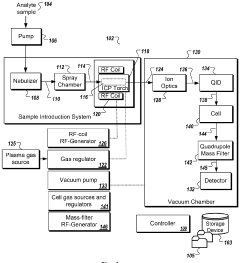
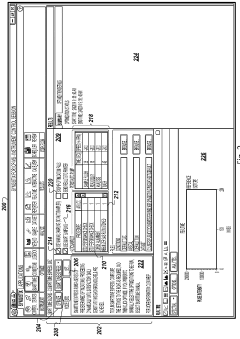
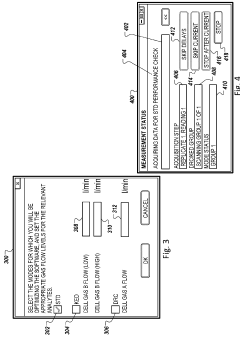
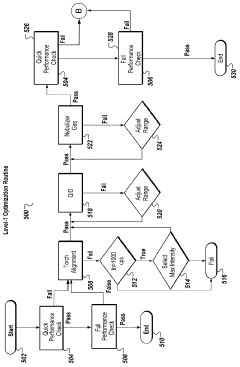
- An automated optimization system for multi-mode ICP-MS that allows for 'single click' operation, using a processor and non-transitory computer-readable medium to execute user inputs for automated tuning routines, including performance assessments and dynamic range optimization, to adjust settings such as torch alignment, quadrupole ion deflector calibration, and nebulizer gas flow, ensuring optimal instrument performance across various modes.
Environmental and Safety Considerations
The optimization of ICP-MS sample transport efficiency carries significant environmental and safety implications that must be carefully considered in laboratory operations. Chemical waste generation represents a primary concern, as the analytical process typically involves acids, organic solvents, and potentially toxic calibration standards. Implementing efficient sample transport systems can substantially reduce sample volumes required for analysis, thereby minimizing hazardous waste production by up to 30-40% compared to conventional systems. This reduction directly translates to decreased disposal costs and environmental impact while aligning with green chemistry principles.
Aerosol generation during nebulization presents another critical safety consideration. Inefficient sample transport systems produce excess aerosols containing potentially harmful elements and acids that may escape containment. Modern optimized transport systems incorporate improved spray chamber designs and aerosol management technologies that significantly reduce analyst exposure to these hazardous substances. Studies have demonstrated that optimized systems can reduce ambient aerosol levels in the laboratory atmosphere by up to 85%, substantially improving workplace safety conditions.
Energy consumption represents a notable environmental factor in ICP-MS operations. Traditional sample introduction systems often require higher plasma power and gas flow rates to compensate for inefficient sample delivery. By optimizing transport efficiency, laboratories can operate at lower power settings and reduced argon consumption—typically achieving 15-25% energy savings and extending the lifetime of expensive components such as torches and cones. These improvements contribute to both operational sustainability and reduced carbon footprint.
Water conservation emerges as an additional benefit of optimized sample transport. Conventional systems may require substantial rinsing between samples to prevent cross-contamination, consuming significant volumes of ultrapure water. Advanced transport systems with improved washout characteristics can reduce water consumption by 40-60%, addressing an increasingly important environmental concern in laboratory operations while simultaneously improving analytical throughput.
Regulatory compliance must also be considered when optimizing sample transport efficiency. Many jurisdictions have implemented increasingly stringent regulations regarding laboratory waste disposal and workplace exposure limits. Optimized systems help facilities meet these requirements more effectively while potentially reducing compliance documentation and associated costs. Forward-thinking laboratories are increasingly incorporating these environmental and safety considerations into their technology assessment metrics when evaluating new ICP-MS sample introduction systems.
Aerosol generation during nebulization presents another critical safety consideration. Inefficient sample transport systems produce excess aerosols containing potentially harmful elements and acids that may escape containment. Modern optimized transport systems incorporate improved spray chamber designs and aerosol management technologies that significantly reduce analyst exposure to these hazardous substances. Studies have demonstrated that optimized systems can reduce ambient aerosol levels in the laboratory atmosphere by up to 85%, substantially improving workplace safety conditions.
Energy consumption represents a notable environmental factor in ICP-MS operations. Traditional sample introduction systems often require higher plasma power and gas flow rates to compensate for inefficient sample delivery. By optimizing transport efficiency, laboratories can operate at lower power settings and reduced argon consumption—typically achieving 15-25% energy savings and extending the lifetime of expensive components such as torches and cones. These improvements contribute to both operational sustainability and reduced carbon footprint.
Water conservation emerges as an additional benefit of optimized sample transport. Conventional systems may require substantial rinsing between samples to prevent cross-contamination, consuming significant volumes of ultrapure water. Advanced transport systems with improved washout characteristics can reduce water consumption by 40-60%, addressing an increasingly important environmental concern in laboratory operations while simultaneously improving analytical throughput.
Regulatory compliance must also be considered when optimizing sample transport efficiency. Many jurisdictions have implemented increasingly stringent regulations regarding laboratory waste disposal and workplace exposure limits. Optimized systems help facilities meet these requirements more effectively while potentially reducing compliance documentation and associated costs. Forward-thinking laboratories are increasingly incorporating these environmental and safety considerations into their technology assessment metrics when evaluating new ICP-MS sample introduction systems.
Cost-Benefit Analysis of Transport Efficiency Improvements
Implementing transport efficiency improvements in ICP-MS systems requires careful financial assessment to justify the investment. Initial capital expenditures for upgrading sample introduction systems typically range from $5,000 to $25,000, depending on the sophistication of the technology. These costs include hardware components such as specialized nebulizers, spray chambers, and potentially automated sample handling systems.
Operational cost reductions present the most compelling financial argument for optimization. Enhanced transport efficiency can reduce sample preparation time by 20-35%, translating to labor savings of approximately $10,000-$15,000 annually for a standard analytical laboratory. Sample consumption decreases of 30-50% generate additional savings of $3,000-$8,000 per year in reagent and reference material costs.
Maintenance expenses typically decrease following optimization, with modern efficient systems requiring 15-25% less frequent servicing. This reduction translates to savings of $2,000-$4,000 annually and significantly reduces instrument downtime, which carries substantial opportunity costs in commercial laboratories.
Productivity improvements represent another significant benefit. Laboratories implementing optimized transport systems report throughput increases of 15-40%, potentially generating additional revenue of $20,000-$60,000 annually depending on laboratory size and service rates. Enhanced precision and lower detection limits expand analytical capabilities, potentially opening new market opportunities worth $15,000-$30,000 in annual revenue.
Return on investment calculations indicate that most transport efficiency improvements achieve payback within 8-18 months. The net present value over a five-year period typically ranges from $40,000 to $120,000, depending on laboratory throughput and the specific optimization technologies implemented.
Environmental considerations also factor into the cost-benefit equation. Reduced sample and reagent consumption decreases waste generation by 25-40%, lowering disposal costs by $1,000-$3,000 annually while supporting corporate sustainability initiatives that increasingly influence client selection of analytical service providers.
Risk assessment reveals that implementation failures typically stem from inadequate staff training rather than technical limitations. Allocating $2,000-$5,000 for comprehensive training significantly reduces this risk and accelerates realization of efficiency benefits.
Operational cost reductions present the most compelling financial argument for optimization. Enhanced transport efficiency can reduce sample preparation time by 20-35%, translating to labor savings of approximately $10,000-$15,000 annually for a standard analytical laboratory. Sample consumption decreases of 30-50% generate additional savings of $3,000-$8,000 per year in reagent and reference material costs.
Maintenance expenses typically decrease following optimization, with modern efficient systems requiring 15-25% less frequent servicing. This reduction translates to savings of $2,000-$4,000 annually and significantly reduces instrument downtime, which carries substantial opportunity costs in commercial laboratories.
Productivity improvements represent another significant benefit. Laboratories implementing optimized transport systems report throughput increases of 15-40%, potentially generating additional revenue of $20,000-$60,000 annually depending on laboratory size and service rates. Enhanced precision and lower detection limits expand analytical capabilities, potentially opening new market opportunities worth $15,000-$30,000 in annual revenue.
Return on investment calculations indicate that most transport efficiency improvements achieve payback within 8-18 months. The net present value over a five-year period typically ranges from $40,000 to $120,000, depending on laboratory throughput and the specific optimization technologies implemented.
Environmental considerations also factor into the cost-benefit equation. Reduced sample and reagent consumption decreases waste generation by 25-40%, lowering disposal costs by $1,000-$3,000 annually while supporting corporate sustainability initiatives that increasingly influence client selection of analytical service providers.
Risk assessment reveals that implementation failures typically stem from inadequate staff training rather than technical limitations. Allocating $2,000-$5,000 for comprehensive training significantly reduces this risk and accelerates realization of efficiency benefits.
Unlock deeper insights with PatSnap Eureka Quick Research — get a full tech report to explore trends and direct your research. Try now!
Generate Your Research Report Instantly with AI Agent
Supercharge your innovation with PatSnap Eureka AI Agent Platform!