QNED: Bridging the Gap in Display Technology
JUN 19, 20259 MIN READ
Generate Your Research Report Instantly with AI Agent
Patsnap Eureka helps you evaluate technical feasibility & market potential.
QNED Technology Overview
QNED (Quantum Nano Emitting Diode) technology represents a significant advancement in display technology, bridging the gap between traditional LED and OLED displays. This innovative approach combines the best features of both technologies to create a superior viewing experience.
At its core, QNED utilizes quantum dots and nanorod LEDs to produce vibrant, high-contrast images with exceptional color accuracy. The technology employs a matrix of miniature LEDs as the backlight source, which is then filtered through layers of quantum dots. This combination allows for precise control over light emission and color reproduction, resulting in deeper blacks, brighter whites, and a wider color gamut than conventional LCD displays.
One of the key advantages of QNED is its ability to achieve high peak brightness levels while maintaining energy efficiency. The quantum dots used in QNED displays are highly efficient at converting blue light from the LED backlighting into red and green light, reducing energy loss and heat generation. This efficiency translates to improved power consumption and longer display lifespans compared to OLED technology.
QNED also addresses some of the limitations of OLED displays, such as burn-in and degradation over time. By using inorganic materials for light emission, QNED panels are less susceptible to these issues, potentially offering greater longevity and consistent performance throughout the display's lifespan.
The implementation of QNED technology involves several layers working in harmony. The backlight layer consists of miniature LEDs, which provide precise local dimming capabilities. This is followed by a quantum dot layer that converts the blue light into red and green, creating a full-color spectrum. A liquid crystal layer then modulates the light to create the final image, similar to traditional LCD displays but with significantly improved contrast and color accuracy.
QNED's potential applications extend beyond consumer electronics. The technology's high brightness and color accuracy make it suitable for professional-grade monitors used in content creation, medical imaging, and other fields requiring precise color reproduction. Additionally, QNED's energy efficiency and durability make it an attractive option for large-format displays in public spaces and outdoor environments.
As QNED technology continues to evolve, researchers and manufacturers are focusing on further miniaturization of the LED components, improving quantum dot efficiency, and refining manufacturing processes to reduce costs. These advancements aim to make QNED displays more accessible to a wider range of products and applications, potentially revolutionizing the display industry in the coming years.
At its core, QNED utilizes quantum dots and nanorod LEDs to produce vibrant, high-contrast images with exceptional color accuracy. The technology employs a matrix of miniature LEDs as the backlight source, which is then filtered through layers of quantum dots. This combination allows for precise control over light emission and color reproduction, resulting in deeper blacks, brighter whites, and a wider color gamut than conventional LCD displays.
One of the key advantages of QNED is its ability to achieve high peak brightness levels while maintaining energy efficiency. The quantum dots used in QNED displays are highly efficient at converting blue light from the LED backlighting into red and green light, reducing energy loss and heat generation. This efficiency translates to improved power consumption and longer display lifespans compared to OLED technology.
QNED also addresses some of the limitations of OLED displays, such as burn-in and degradation over time. By using inorganic materials for light emission, QNED panels are less susceptible to these issues, potentially offering greater longevity and consistent performance throughout the display's lifespan.
The implementation of QNED technology involves several layers working in harmony. The backlight layer consists of miniature LEDs, which provide precise local dimming capabilities. This is followed by a quantum dot layer that converts the blue light into red and green, creating a full-color spectrum. A liquid crystal layer then modulates the light to create the final image, similar to traditional LCD displays but with significantly improved contrast and color accuracy.
QNED's potential applications extend beyond consumer electronics. The technology's high brightness and color accuracy make it suitable for professional-grade monitors used in content creation, medical imaging, and other fields requiring precise color reproduction. Additionally, QNED's energy efficiency and durability make it an attractive option for large-format displays in public spaces and outdoor environments.
As QNED technology continues to evolve, researchers and manufacturers are focusing on further miniaturization of the LED components, improving quantum dot efficiency, and refining manufacturing processes to reduce costs. These advancements aim to make QNED displays more accessible to a wider range of products and applications, potentially revolutionizing the display industry in the coming years.
Display Market Trends
The display market has been experiencing significant growth and transformation in recent years, driven by technological advancements and changing consumer preferences. The global display market size reached $148 billion in 2020 and is projected to grow at a CAGR of 3.5% from 2021 to 2028. This growth is primarily fueled by the increasing demand for high-quality displays in various applications, including smartphones, televisions, laptops, and automotive displays.
One of the most notable trends in the display market is the shift towards larger screen sizes and higher resolutions. Consumers are increasingly demanding larger displays for their televisions and monitors, with 4K and 8K resolutions becoming more prevalent. This trend is particularly evident in the television segment, where the average screen size has been steadily increasing year over year.
Another significant trend is the adoption of OLED (Organic Light-Emitting Diode) technology. OLED displays offer superior picture quality, deeper blacks, and better energy efficiency compared to traditional LCD displays. The OLED market is expected to grow rapidly, with a projected CAGR of 12.9% from 2021 to 2028. This growth is driven by the increasing use of OLED displays in smartphones, televisions, and wearable devices.
The automotive display market is also experiencing rapid growth, with a projected CAGR of 8.2% from 2021 to 2028. This growth is driven by the increasing integration of advanced driver assistance systems (ADAS) and infotainment systems in vehicles. Automotive displays are becoming larger, more interactive, and more sophisticated, with features such as touch screens, head-up displays, and digital instrument clusters.
Flexible and foldable displays represent another emerging trend in the display market. These displays offer new form factors and design possibilities for smartphones, tablets, and wearable devices. While still in the early stages of adoption, flexible displays are expected to gain significant traction in the coming years, with a projected CAGR of 35.1% from 2021 to 2028.
The display market is also seeing increased demand for energy-efficient and environmentally friendly technologies. This trend is driving the development of new display technologies that consume less power and use more sustainable materials. Mini-LED and micro-LED technologies are gaining attention as potential alternatives to OLED, offering high brightness, energy efficiency, and long lifespan.
In conclusion, the display market is evolving rapidly, with trends towards larger screens, higher resolutions, OLED technology, automotive displays, flexible displays, and energy-efficient solutions. These trends are shaping the future of display technology and creating new opportunities for innovation and market growth.
One of the most notable trends in the display market is the shift towards larger screen sizes and higher resolutions. Consumers are increasingly demanding larger displays for their televisions and monitors, with 4K and 8K resolutions becoming more prevalent. This trend is particularly evident in the television segment, where the average screen size has been steadily increasing year over year.
Another significant trend is the adoption of OLED (Organic Light-Emitting Diode) technology. OLED displays offer superior picture quality, deeper blacks, and better energy efficiency compared to traditional LCD displays. The OLED market is expected to grow rapidly, with a projected CAGR of 12.9% from 2021 to 2028. This growth is driven by the increasing use of OLED displays in smartphones, televisions, and wearable devices.
The automotive display market is also experiencing rapid growth, with a projected CAGR of 8.2% from 2021 to 2028. This growth is driven by the increasing integration of advanced driver assistance systems (ADAS) and infotainment systems in vehicles. Automotive displays are becoming larger, more interactive, and more sophisticated, with features such as touch screens, head-up displays, and digital instrument clusters.
Flexible and foldable displays represent another emerging trend in the display market. These displays offer new form factors and design possibilities for smartphones, tablets, and wearable devices. While still in the early stages of adoption, flexible displays are expected to gain significant traction in the coming years, with a projected CAGR of 35.1% from 2021 to 2028.
The display market is also seeing increased demand for energy-efficient and environmentally friendly technologies. This trend is driving the development of new display technologies that consume less power and use more sustainable materials. Mini-LED and micro-LED technologies are gaining attention as potential alternatives to OLED, offering high brightness, energy efficiency, and long lifespan.
In conclusion, the display market is evolving rapidly, with trends towards larger screens, higher resolutions, OLED technology, automotive displays, flexible displays, and energy-efficient solutions. These trends are shaping the future of display technology and creating new opportunities for innovation and market growth.
QNED Technical Challenges
QNED (Quantum Nano Emitting Diode) technology faces several significant technical challenges that need to be addressed for its successful implementation and widespread adoption in the display industry.
One of the primary challenges is achieving consistent and uniform quantum dot (QD) synthesis and deposition. The performance of QNED displays heavily relies on the quality and uniformity of the quantum dots used. Producing QDs with precise size, shape, and composition on a large scale remains a complex process. Variations in these parameters can lead to color inconsistencies and reduced display quality.
Another major hurdle is the development of efficient and stable blue QDs. While red and green QDs have shown promising results, blue QDs still lag in terms of efficiency and longevity. This imbalance affects the overall color gamut and power consumption of QNED displays. Researchers are exploring various materials and structures to improve blue QD performance without compromising stability.
The integration of QDs with micro-LEDs presents its own set of challenges. Achieving precise alignment and bonding between the QDs and micro-LEDs is crucial for optimal light emission and color conversion. This process requires advanced manufacturing techniques and equipment, which are still being refined for large-scale production.
Thermal management is another critical issue in QNED technology. The high current densities in micro-LEDs can generate significant heat, potentially degrading the QDs and affecting display performance. Developing effective heat dissipation mechanisms without increasing the overall thickness of the display is a complex engineering challenge.
Long-term stability and reliability of QNED displays are also areas of concern. QDs can be sensitive to environmental factors such as moisture and oxygen, which can lead to degradation over time. Encapsulation techniques that protect the QDs while maintaining their optical properties are being actively researched.
Furthermore, scaling up QNED technology for mass production presents significant challenges. Current manufacturing processes for QDs and micro-LEDs are complex and costly. Developing more efficient and cost-effective production methods is crucial for making QNED displays commercially viable.
Lastly, optimizing the driving circuits and control systems for QNED displays is an ongoing challenge. These displays require precise control of current and voltage to each micro-LED, necessitating advanced driver ICs and backplane technologies. Balancing performance with power efficiency in these control systems is essential for the success of QNED technology in various applications, from small mobile devices to large-format displays.
One of the primary challenges is achieving consistent and uniform quantum dot (QD) synthesis and deposition. The performance of QNED displays heavily relies on the quality and uniformity of the quantum dots used. Producing QDs with precise size, shape, and composition on a large scale remains a complex process. Variations in these parameters can lead to color inconsistencies and reduced display quality.
Another major hurdle is the development of efficient and stable blue QDs. While red and green QDs have shown promising results, blue QDs still lag in terms of efficiency and longevity. This imbalance affects the overall color gamut and power consumption of QNED displays. Researchers are exploring various materials and structures to improve blue QD performance without compromising stability.
The integration of QDs with micro-LEDs presents its own set of challenges. Achieving precise alignment and bonding between the QDs and micro-LEDs is crucial for optimal light emission and color conversion. This process requires advanced manufacturing techniques and equipment, which are still being refined for large-scale production.
Thermal management is another critical issue in QNED technology. The high current densities in micro-LEDs can generate significant heat, potentially degrading the QDs and affecting display performance. Developing effective heat dissipation mechanisms without increasing the overall thickness of the display is a complex engineering challenge.
Long-term stability and reliability of QNED displays are also areas of concern. QDs can be sensitive to environmental factors such as moisture and oxygen, which can lead to degradation over time. Encapsulation techniques that protect the QDs while maintaining their optical properties are being actively researched.
Furthermore, scaling up QNED technology for mass production presents significant challenges. Current manufacturing processes for QDs and micro-LEDs are complex and costly. Developing more efficient and cost-effective production methods is crucial for making QNED displays commercially viable.
Lastly, optimizing the driving circuits and control systems for QNED displays is an ongoing challenge. These displays require precise control of current and voltage to each micro-LED, necessitating advanced driver ICs and backplane technologies. Balancing performance with power efficiency in these control systems is essential for the success of QNED technology in various applications, from small mobile devices to large-format displays.
Current QNED Solutions
01 Quantum dot structure and composition
QNED displays utilize advanced quantum dot structures and compositions to enhance display quality. These include optimized core-shell structures, specific material combinations, and precise control of quantum dot size and distribution. These innovations contribute to improved color gamut, brightness, and overall display performance.- Quantum dot enhancement for QNED displays: QNED displays utilize quantum dots to enhance color performance and brightness. These nanoscale semiconductor particles emit light of specific wavelengths when excited, resulting in improved color gamut and efficiency. The integration of quantum dots with nano-LED technology allows for better control over light emission and color accuracy.
- Nano-LED structure and fabrication: The development of nano-scale LED structures is crucial for QNED display quality. Advanced fabrication techniques are employed to create ultra-small LEDs with high efficiency and precise control. These methods include epitaxial growth processes, nanolithography, and selective area epitaxy to achieve uniform and high-density nano-LED arrays.
- Color conversion and light management: QNED displays employ sophisticated color conversion techniques and light management systems to optimize display quality. This includes the use of color filters, phosphors, and advanced optical designs to enhance color purity, contrast, and viewing angles. Light extraction and distribution methods are implemented to improve overall efficiency and uniformity of the display.
- Driving and control mechanisms: Advanced driving and control mechanisms are essential for maintaining high display quality in QNED technology. This includes the development of precise current control systems, active matrix backplanes, and sophisticated algorithms for managing individual nano-LEDs. These systems ensure uniform brightness, prevent crosstalk, and enable high refresh rates for superior image quality.
- Integration with display panel technologies: The integration of QNED technology with existing and emerging display panel technologies is crucial for overall display quality. This involves combining nano-LED arrays with advanced TFT backplanes, incorporating them into flexible or transparent substrates, and developing hybrid display solutions that leverage the strengths of multiple technologies to achieve superior performance.
02 Light-emitting layer design
The design of the light-emitting layer in QNED displays is crucial for achieving high display quality. This includes the development of multi-layered structures, incorporation of charge transport materials, and optimization of quantum dot concentration. These advancements lead to enhanced efficiency, color purity, and longevity of the display.Expand Specific Solutions03 Electrode and encapsulation technologies
Improved electrode materials and encapsulation techniques play a significant role in QNED display quality. This includes the development of transparent conductive electrodes, barrier layers to prevent moisture and oxygen ingress, and advanced packaging methods. These enhancements contribute to better device stability, longer lifespan, and improved overall performance.Expand Specific Solutions04 Color conversion and management
QNED displays employ sophisticated color conversion and management techniques to achieve superior image quality. This includes the use of color filters, phosphors, and advanced algorithms for color mapping and calibration. These technologies enable wider color gamut, improved color accuracy, and enhanced HDR performance.Expand Specific Solutions05 Integration with other display technologies
QNED technology is often integrated with other display technologies to further enhance performance. This includes combination with OLED, micro-LED, or traditional LCD backplanes. Such hybrid approaches leverage the strengths of multiple technologies to achieve superior brightness, contrast, and energy efficiency in displays.Expand Specific Solutions
QNED Industry Players
QNED technology represents an emerging frontier in display innovation, currently in its early development stage. The market for QNED displays is nascent but shows significant growth potential, driven by increasing demand for high-quality, energy-efficient displays. While the technology is still evolving, major players like Samsung Display, LG Display, and BOE Technology Group are investing heavily in research and development. These companies are at various stages of technological maturity, with LG Display leading in commercialization efforts. Other firms like TCL China Star Optoelectronics and Japan Display are also making strides, indicating a competitive landscape with diverse technological approaches and market strategies.
BOE Technology Group Co., Ltd.
Technical Solution: BOE has been actively developing QNED technology, which combines quantum dots with mini-LED backlighting. Their approach involves using a blue mini-LED backlight to excite red and green quantum dots, creating a display with high brightness, wide color gamut, and improved contrast. BOE's QNED panels utilize advanced quantum dot color conversion technology and precise light control algorithms to achieve superior image quality. The company has also focused on improving the manufacturing process to enhance yield rates and reduce production costs.
Strengths: High brightness and wide color gamut, improved contrast ratio, energy efficiency. Weaknesses: Complex manufacturing process, potential for color shift over time, higher initial cost compared to traditional LCD.
Samsung Display Co., Ltd.
Technical Solution: Samsung Display has been investing heavily in QNED technology as part of its next-generation display strategy. Their approach combines quantum dot color conversion with nanorod LED technology. Samsung's QNED displays use ultra-small nanorod LEDs as the light source, which are then used to excite quantum dots for color conversion. This results in displays with exceptional brightness, contrast, and color accuracy. Samsung has also been working on improving the stability and lifespan of their QNED panels through advanced encapsulation techniques and materials engineering.
Strengths: Excellent picture quality, potential for very thin and flexible displays, low power consumption. Weaknesses: Challenges in mass production, potential for burn-in issues, higher cost compared to current technologies.
QNED Core Innovations
Asymmetric binocular near-eye display
PatentWO2023248108A1
Innovation
- The introduction of an asymmetric binocular near-eye display system, where each optical system for the left and right eyes is unique and not symmetric around the center of the nose bridge, allowing for increased field of view and resolution by exploiting the binocular effect, with each eye's brain selecting the highest quality image information for a unified visual experience.


Inkjet head and method of ejecting ink using the same
PatentActiveUS11845276B2
Innovation
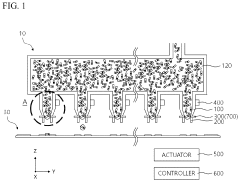
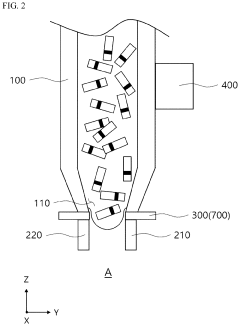
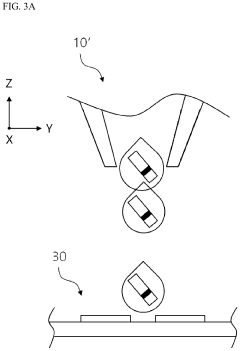
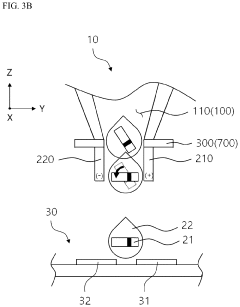
- An inkjet head with nozzles and pairs of electrodes that apply an electrode voltage to the light-emitting elements, including a first and second piezoelectric element, and a controller to independently control the electrode voltage, allowing for precise arrangement of light-emitting elements on a substrate with separate electrodes before and during the jetting process.
QNED Manufacturing Process
The QNED (Quantum Nano Emitting Diode) manufacturing process represents a significant advancement in display technology, combining the strengths of quantum dot and mini-LED technologies. This process involves several intricate steps, each crucial for achieving the high-quality display output that QNED promises.
The foundation of QNED manufacturing lies in the production of quantum dots, typically composed of semiconductor nanocrystals. These quantum dots are synthesized through precise chemical processes, controlling their size and composition to achieve specific light emission properties. The uniformity and quality of these quantum dots are paramount, as they directly influence the color accuracy and brightness of the final display.
Once the quantum dots are prepared, they are integrated into a film structure. This film serves as the color conversion layer in the QNED display. The process of incorporating quantum dots into the film requires advanced coating techniques to ensure even distribution and prevent aggregation, which could lead to inconsistent color output.
The next critical step in QNED manufacturing is the production of the mini-LED backlight. These miniature LEDs are fabricated using semiconductor manufacturing techniques, including epitaxial growth, photolithography, and etching. The size and uniformity of these LEDs are crucial factors, as they determine the granularity of local dimming and overall brightness control.
Assembly of the QNED panel involves precise alignment and bonding of multiple layers. The quantum dot film is carefully positioned over the mini-LED array, with additional optical films added to enhance light distribution and viewing angles. This multi-layer structure is then integrated with the TFT (Thin-Film Transistor) substrate, which controls individual pixel activation.
Quality control is a critical aspect of QNED manufacturing. Each stage of production undergoes rigorous testing, including spectral analysis of quantum dots, uniformity checks for the mini-LED array, and comprehensive display performance evaluations. Advanced imaging systems and colorimeters are employed to ensure color accuracy, brightness uniformity, and contrast ratios meet the high standards expected of QNED displays.
The final stages of QNED manufacturing involve the integration of driving electronics and protective enclosures. The complex circuitry required to control the mini-LED backlight and quantum dot layer necessitates sophisticated PCB design and assembly techniques. Thermal management is also a key consideration, with heat dissipation solutions integrated to maintain optimal performance and longevity of the display.
The foundation of QNED manufacturing lies in the production of quantum dots, typically composed of semiconductor nanocrystals. These quantum dots are synthesized through precise chemical processes, controlling their size and composition to achieve specific light emission properties. The uniformity and quality of these quantum dots are paramount, as they directly influence the color accuracy and brightness of the final display.
Once the quantum dots are prepared, they are integrated into a film structure. This film serves as the color conversion layer in the QNED display. The process of incorporating quantum dots into the film requires advanced coating techniques to ensure even distribution and prevent aggregation, which could lead to inconsistent color output.
The next critical step in QNED manufacturing is the production of the mini-LED backlight. These miniature LEDs are fabricated using semiconductor manufacturing techniques, including epitaxial growth, photolithography, and etching. The size and uniformity of these LEDs are crucial factors, as they determine the granularity of local dimming and overall brightness control.
Assembly of the QNED panel involves precise alignment and bonding of multiple layers. The quantum dot film is carefully positioned over the mini-LED array, with additional optical films added to enhance light distribution and viewing angles. This multi-layer structure is then integrated with the TFT (Thin-Film Transistor) substrate, which controls individual pixel activation.
Quality control is a critical aspect of QNED manufacturing. Each stage of production undergoes rigorous testing, including spectral analysis of quantum dots, uniformity checks for the mini-LED array, and comprehensive display performance evaluations. Advanced imaging systems and colorimeters are employed to ensure color accuracy, brightness uniformity, and contrast ratios meet the high standards expected of QNED displays.
The final stages of QNED manufacturing involve the integration of driving electronics and protective enclosures. The complex circuitry required to control the mini-LED backlight and quantum dot layer necessitates sophisticated PCB design and assembly techniques. Thermal management is also a key consideration, with heat dissipation solutions integrated to maintain optimal performance and longevity of the display.
QNED Energy Efficiency
QNED (Quantum Nano Emitting Diode) technology represents a significant advancement in display energy efficiency, addressing one of the most critical challenges in modern display technology. This innovative approach combines the benefits of quantum dot technology with the precision of nanoLED structures, resulting in a display solution that offers superior energy performance compared to traditional LED and OLED displays.
The energy efficiency of QNED displays stems from several key factors. Firstly, the quantum dot layer allows for precise color tuning, enabling the production of a wide color gamut with minimal energy loss. This is achieved through the quantum dots' ability to emit specific wavelengths of light when excited, reducing the need for color filters that typically absorb a significant portion of light output in conventional displays.
Furthermore, the nanoLED structure in QNED displays contributes to improved energy efficiency by enabling better light management. The nanoscale size of these LEDs allows for more precise control over light emission, reducing light leakage and improving overall luminous efficacy. This results in less energy being wasted as heat, a common issue in traditional LED backlighting systems.
QNED technology also addresses the power consumption challenges associated with high dynamic range (HDR) content. By leveraging the inherent brightness capabilities of nanoLEDs and the color purity of quantum dots, QNED displays can achieve higher peak brightness levels while consuming less power than conventional LCD or OLED displays. This is particularly beneficial for displaying HDR content, which requires a wider range of brightness levels.
The local dimming capabilities of QNED displays further enhance energy efficiency. By allowing for precise control of individual nanoLED zones, the display can selectively dim or turn off areas of the screen that do not require illumination, significantly reducing power consumption in darker scenes or when displaying content with varying brightness levels.
Moreover, QNED technology shows promise in reducing the overall power requirements for larger display formats. As display sizes continue to increase, particularly in the television and digital signage markets, the energy efficiency of QNED becomes increasingly valuable. The technology's ability to maintain high brightness and color accuracy at lower power levels makes it an attractive option for large-format displays where energy consumption is a critical consideration.
In summary, QNED technology offers a compelling solution to the energy efficiency challenges faced by the display industry. By combining quantum dot color conversion with nanoLED light emission, QNED displays achieve superior energy performance while maintaining high image quality. This advancement not only contributes to reduced power consumption but also aligns with global efforts to develop more sustainable and environmentally friendly display technologies.
The energy efficiency of QNED displays stems from several key factors. Firstly, the quantum dot layer allows for precise color tuning, enabling the production of a wide color gamut with minimal energy loss. This is achieved through the quantum dots' ability to emit specific wavelengths of light when excited, reducing the need for color filters that typically absorb a significant portion of light output in conventional displays.
Furthermore, the nanoLED structure in QNED displays contributes to improved energy efficiency by enabling better light management. The nanoscale size of these LEDs allows for more precise control over light emission, reducing light leakage and improving overall luminous efficacy. This results in less energy being wasted as heat, a common issue in traditional LED backlighting systems.
QNED technology also addresses the power consumption challenges associated with high dynamic range (HDR) content. By leveraging the inherent brightness capabilities of nanoLEDs and the color purity of quantum dots, QNED displays can achieve higher peak brightness levels while consuming less power than conventional LCD or OLED displays. This is particularly beneficial for displaying HDR content, which requires a wider range of brightness levels.
The local dimming capabilities of QNED displays further enhance energy efficiency. By allowing for precise control of individual nanoLED zones, the display can selectively dim or turn off areas of the screen that do not require illumination, significantly reducing power consumption in darker scenes or when displaying content with varying brightness levels.
Moreover, QNED technology shows promise in reducing the overall power requirements for larger display formats. As display sizes continue to increase, particularly in the television and digital signage markets, the energy efficiency of QNED becomes increasingly valuable. The technology's ability to maintain high brightness and color accuracy at lower power levels makes it an attractive option for large-format displays where energy consumption is a critical consideration.
In summary, QNED technology offers a compelling solution to the energy efficiency challenges faced by the display industry. By combining quantum dot color conversion with nanoLED light emission, QNED displays achieve superior energy performance while maintaining high image quality. This advancement not only contributes to reduced power consumption but also aligns with global efforts to develop more sustainable and environmentally friendly display technologies.
Unlock deeper insights with Patsnap Eureka Quick Research — get a full tech report to explore trends and direct your research. Try now!
Generate Your Research Report Instantly with AI Agent
Supercharge your innovation with Patsnap Eureka AI Agent Platform!