Photoactive Zeolites for Environmental Pollutant Degradation
AUG 11, 20259 MIN READ
Generate Your Research Report Instantly with AI Agent
Patsnap Eureka helps you evaluate technical feasibility & market potential.
Photoactive Zeolites: Background and Objectives
Photoactive zeolites have emerged as a promising solution for environmental pollutant degradation, combining the unique properties of zeolites with photocatalytic capabilities. The development of these materials represents a significant advancement in the field of environmental remediation, addressing the growing concern over water and air pollution.
The evolution of photoactive zeolites can be traced back to the discovery of zeolites in the 18th century and their subsequent synthetic production in the mid-20th century. Initially valued for their molecular sieving and ion-exchange properties, zeolites found applications in various industries, including petrochemicals and water treatment. The integration of photocatalytic properties into zeolite structures marks a new era in their application, particularly in environmental pollution control.
The primary objective of research on photoactive zeolites is to develop highly efficient, sustainable, and cost-effective materials for the degradation of environmental pollutants. These materials aim to harness solar energy or artificial light sources to initiate photocatalytic reactions, breaking down complex organic pollutants into harmless substances. The ultimate goal is to create a technology that can be widely implemented in water and air purification systems, contributing to global efforts in environmental protection.
Recent technological advancements have focused on enhancing the photocatalytic activity of zeolites through various strategies. These include the incorporation of transition metal ions, the creation of hierarchical pore structures, and the development of composite materials combining zeolites with other photocatalysts. The trend is moving towards designing zeolites with broader light absorption spectra, improved charge separation, and increased active sites for pollutant adsorption and degradation.
The potential impact of photoactive zeolites extends beyond traditional water treatment applications. Researchers are exploring their use in air purification systems, self-cleaning surfaces, and even in the production of hydrogen as a clean energy source. This versatility underscores the importance of continued research and development in this field.
As environmental regulations become more stringent worldwide, the demand for efficient pollutant degradation technologies is expected to grow. Photoactive zeolites offer a sustainable alternative to conventional treatment methods, aligning with global initiatives for green technologies and circular economy principles. The research in this area is driven by the need to address persistent organic pollutants, emerging contaminants, and the increasing complexity of industrial effluents.
The development of photoactive zeolites represents a convergence of materials science, photochemistry, and environmental engineering. This interdisciplinary approach is crucial for overcoming current limitations and pushing the boundaries of pollutant degradation efficiency. As research progresses, the focus is not only on improving performance but also on scaling up production and implementing these materials in real-world applications.
The evolution of photoactive zeolites can be traced back to the discovery of zeolites in the 18th century and their subsequent synthetic production in the mid-20th century. Initially valued for their molecular sieving and ion-exchange properties, zeolites found applications in various industries, including petrochemicals and water treatment. The integration of photocatalytic properties into zeolite structures marks a new era in their application, particularly in environmental pollution control.
The primary objective of research on photoactive zeolites is to develop highly efficient, sustainable, and cost-effective materials for the degradation of environmental pollutants. These materials aim to harness solar energy or artificial light sources to initiate photocatalytic reactions, breaking down complex organic pollutants into harmless substances. The ultimate goal is to create a technology that can be widely implemented in water and air purification systems, contributing to global efforts in environmental protection.
Recent technological advancements have focused on enhancing the photocatalytic activity of zeolites through various strategies. These include the incorporation of transition metal ions, the creation of hierarchical pore structures, and the development of composite materials combining zeolites with other photocatalysts. The trend is moving towards designing zeolites with broader light absorption spectra, improved charge separation, and increased active sites for pollutant adsorption and degradation.
The potential impact of photoactive zeolites extends beyond traditional water treatment applications. Researchers are exploring their use in air purification systems, self-cleaning surfaces, and even in the production of hydrogen as a clean energy source. This versatility underscores the importance of continued research and development in this field.
As environmental regulations become more stringent worldwide, the demand for efficient pollutant degradation technologies is expected to grow. Photoactive zeolites offer a sustainable alternative to conventional treatment methods, aligning with global initiatives for green technologies and circular economy principles. The research in this area is driven by the need to address persistent organic pollutants, emerging contaminants, and the increasing complexity of industrial effluents.
The development of photoactive zeolites represents a convergence of materials science, photochemistry, and environmental engineering. This interdisciplinary approach is crucial for overcoming current limitations and pushing the boundaries of pollutant degradation efficiency. As research progresses, the focus is not only on improving performance but also on scaling up production and implementing these materials in real-world applications.
Environmental Pollutant Degradation Market Analysis
The environmental pollutant degradation market has been experiencing significant growth due to increasing awareness of environmental issues and stringent regulations worldwide. The global market for environmental remediation technologies is projected to reach substantial figures in the coming years, driven by the urgent need to address various forms of pollution in air, water, and soil.
Water treatment represents a major segment of this market, with a focus on removing contaminants from industrial effluents, municipal wastewater, and drinking water sources. The demand for advanced oxidation processes, including photocatalytic degradation using materials like photoactive zeolites, is particularly strong in this sector. These technologies offer efficient removal of persistent organic pollutants, pharmaceuticals, and other emerging contaminants that traditional treatment methods struggle to eliminate.
Air pollution control is another crucial area driving market growth, especially in urban areas and industrial zones. Photoactive materials are being explored for their potential in degrading volatile organic compounds (VOCs) and other airborne pollutants, both in indoor and outdoor environments. This application is gaining traction in countries grappling with severe air quality issues.
Soil remediation represents a smaller but growing segment of the market. Photoactive zeolites and similar materials show promise in treating contaminated soils, particularly in brownfield sites and areas affected by industrial activities. The ability of these materials to degrade organic pollutants in situ makes them attractive for large-scale soil remediation projects.
The Asia-Pacific region is expected to witness the highest growth rate in the environmental pollutant degradation market. Rapid industrialization, urbanization, and increasing environmental concerns in countries like China and India are driving this trend. North America and Europe continue to be significant markets, with a focus on upgrading existing treatment infrastructure and adopting more sustainable technologies.
Key market drivers include stringent environmental regulations, growing public awareness of health risks associated with pollution, and technological advancements in materials science. The development of more efficient and cost-effective photoactive materials, including zeolites, is expected to further boost market growth by making these technologies more accessible to a wider range of applications and industries.
However, challenges such as high initial costs, technical complexities in large-scale implementation, and competition from established treatment methods may hinder market growth. Overcoming these barriers through continued research, development, and demonstration of the long-term benefits of photoactive materials will be crucial for expanding their market share in environmental remediation applications.
Water treatment represents a major segment of this market, with a focus on removing contaminants from industrial effluents, municipal wastewater, and drinking water sources. The demand for advanced oxidation processes, including photocatalytic degradation using materials like photoactive zeolites, is particularly strong in this sector. These technologies offer efficient removal of persistent organic pollutants, pharmaceuticals, and other emerging contaminants that traditional treatment methods struggle to eliminate.
Air pollution control is another crucial area driving market growth, especially in urban areas and industrial zones. Photoactive materials are being explored for their potential in degrading volatile organic compounds (VOCs) and other airborne pollutants, both in indoor and outdoor environments. This application is gaining traction in countries grappling with severe air quality issues.
Soil remediation represents a smaller but growing segment of the market. Photoactive zeolites and similar materials show promise in treating contaminated soils, particularly in brownfield sites and areas affected by industrial activities. The ability of these materials to degrade organic pollutants in situ makes them attractive for large-scale soil remediation projects.
The Asia-Pacific region is expected to witness the highest growth rate in the environmental pollutant degradation market. Rapid industrialization, urbanization, and increasing environmental concerns in countries like China and India are driving this trend. North America and Europe continue to be significant markets, with a focus on upgrading existing treatment infrastructure and adopting more sustainable technologies.
Key market drivers include stringent environmental regulations, growing public awareness of health risks associated with pollution, and technological advancements in materials science. The development of more efficient and cost-effective photoactive materials, including zeolites, is expected to further boost market growth by making these technologies more accessible to a wider range of applications and industries.
However, challenges such as high initial costs, technical complexities in large-scale implementation, and competition from established treatment methods may hinder market growth. Overcoming these barriers through continued research, development, and demonstration of the long-term benefits of photoactive materials will be crucial for expanding their market share in environmental remediation applications.
Current Challenges in Photoactive Zeolite Technology
Despite significant advancements in photoactive zeolite technology for environmental pollutant degradation, several challenges persist that hinder its widespread application and optimal performance. One of the primary obstacles is the limited light absorption range of many zeolite-based photocatalysts. Most zeolites exhibit absorption primarily in the UV region, which accounts for only a small portion of the solar spectrum. This limitation significantly reduces the overall efficiency of the photocatalytic process under natural sunlight conditions.
Another critical challenge is the rapid recombination of photogenerated electron-hole pairs within the zeolite structure. This phenomenon drastically reduces the quantum yield of the photocatalytic reaction, as the charge carriers recombine before they can participate in the degradation of pollutants. Developing strategies to effectively separate and prolong the lifetime of these charge carriers remains a key focus area for researchers in the field.
The stability and durability of photoactive zeolites under prolonged exposure to harsh environmental conditions also pose significant challenges. Factors such as pH variations, temperature fluctuations, and the presence of various ionic species in wastewater can lead to structural degradation or deactivation of the zeolite catalysts over time. Enhancing the long-term stability of these materials without compromising their photocatalytic activity is crucial for their practical implementation in real-world environmental remediation scenarios.
Mass transfer limitations within the zeolite pore structure present another hurdle in achieving optimal pollutant degradation rates. The microporous nature of zeolites can restrict the diffusion of larger pollutant molecules to active sites, potentially reducing the overall efficiency of the photocatalytic process. Developing hierarchical pore structures or optimizing pore sizes to facilitate better mass transfer while maintaining high surface area remains an active area of research.
The synthesis of photoactive zeolites with controlled and reproducible properties on a large scale is yet another challenge facing the field. Current synthesis methods often result in variations in particle size, morphology, and distribution of active sites, which can lead to inconsistent performance across different batches. Developing scalable and cost-effective synthesis protocols that ensure uniform and high-quality photoactive zeolites is essential for their commercial viability and widespread adoption.
Lastly, the selective degradation of target pollutants in complex environmental matrices remains a significant challenge. Many real-world applications involve the presence of multiple pollutants and interfering substances, which can compete for active sites or hinder the degradation process. Enhancing the selectivity of photoactive zeolites towards specific pollutants while maintaining high overall degradation efficiency is crucial for addressing diverse environmental contamination scenarios.
Another critical challenge is the rapid recombination of photogenerated electron-hole pairs within the zeolite structure. This phenomenon drastically reduces the quantum yield of the photocatalytic reaction, as the charge carriers recombine before they can participate in the degradation of pollutants. Developing strategies to effectively separate and prolong the lifetime of these charge carriers remains a key focus area for researchers in the field.
The stability and durability of photoactive zeolites under prolonged exposure to harsh environmental conditions also pose significant challenges. Factors such as pH variations, temperature fluctuations, and the presence of various ionic species in wastewater can lead to structural degradation or deactivation of the zeolite catalysts over time. Enhancing the long-term stability of these materials without compromising their photocatalytic activity is crucial for their practical implementation in real-world environmental remediation scenarios.
Mass transfer limitations within the zeolite pore structure present another hurdle in achieving optimal pollutant degradation rates. The microporous nature of zeolites can restrict the diffusion of larger pollutant molecules to active sites, potentially reducing the overall efficiency of the photocatalytic process. Developing hierarchical pore structures or optimizing pore sizes to facilitate better mass transfer while maintaining high surface area remains an active area of research.
The synthesis of photoactive zeolites with controlled and reproducible properties on a large scale is yet another challenge facing the field. Current synthesis methods often result in variations in particle size, morphology, and distribution of active sites, which can lead to inconsistent performance across different batches. Developing scalable and cost-effective synthesis protocols that ensure uniform and high-quality photoactive zeolites is essential for their commercial viability and widespread adoption.
Lastly, the selective degradation of target pollutants in complex environmental matrices remains a significant challenge. Many real-world applications involve the presence of multiple pollutants and interfering substances, which can compete for active sites or hinder the degradation process. Enhancing the selectivity of photoactive zeolites towards specific pollutants while maintaining high overall degradation efficiency is crucial for addressing diverse environmental contamination scenarios.
Existing Photoactive Zeolite Synthesis Methods
01 Zeolite-based photocatalysts for pollutant degradation
Zeolites are used as supports for photocatalytic materials to enhance their efficiency in degrading pollutants. These composite materials combine the high surface area and adsorption properties of zeolites with the photocatalytic activity of semiconductors, resulting in improved pollutant removal from water and air.- Zeolite-based photocatalysts for pollutant degradation: Zeolites are modified with photoactive materials to create efficient photocatalysts for the degradation of various pollutants. These composite materials combine the high surface area and adsorption properties of zeolites with the photocatalytic activity of semiconductors, enhancing the overall pollutant degradation efficiency.
- Metal-doped zeolites for enhanced photocatalytic activity: Incorporating metal ions or nanoparticles into zeolite structures improves their photocatalytic performance. These metal-doped zeolites exhibit enhanced light absorption, charge separation, and catalytic activity, leading to more effective degradation of organic and inorganic pollutants under various light sources.
- Zeolite-based composite materials for water treatment: Composite materials combining zeolites with other functional components, such as graphene oxide or carbon nanotubes, are developed for water treatment applications. These materials exhibit synergistic effects, improving pollutant adsorption and photocatalytic degradation efficiency in aqueous environments.
- Visible light-responsive zeolite photocatalysts: Zeolites are modified to extend their photoresponse into the visible light region, enabling more efficient utilization of solar energy for pollutant degradation. This is achieved through various strategies, such as dye sensitization, coupling with narrow bandgap semiconductors, or creating oxygen vacancies in the zeolite structure.
- Zeolite-based air purification systems: Photoactive zeolites are incorporated into air purification systems for the degradation of airborne pollutants and volatile organic compounds. These systems utilize the high adsorption capacity of zeolites combined with photocatalytic activity to effectively remove and degrade various air contaminants, improving indoor air quality.
02 Metal-doped zeolites for enhanced photocatalytic activity
Incorporating metal ions or nanoparticles into zeolite structures can significantly improve their photocatalytic performance. These metal-doped zeolites exhibit enhanced light absorption and charge separation, leading to more efficient degradation of organic pollutants under visible light irradiation.Expand Specific Solutions03 Zeolite-based photocatalytic reactors and systems
Innovative reactor designs and systems incorporating photoactive zeolites have been developed for large-scale pollutant treatment. These systems optimize light distribution, mass transfer, and contact time between the photocatalyst and pollutants, resulting in improved degradation efficiency and practical applicability.Expand Specific Solutions04 Zeolite-supported semiconductor composites
Combining zeolites with semiconductor materials such as TiO2, ZnO, or graphene oxide creates synergistic effects that enhance photocatalytic activity. These composites benefit from the zeolite's high surface area and the semiconductor's light-harvesting properties, resulting in improved pollutant degradation under both UV and visible light.Expand Specific Solutions05 Functionalized zeolites for selective pollutant removal
Zeolites can be functionalized with specific organic groups or molecules to target particular pollutants. This selective approach allows for more efficient removal of specific contaminants from complex mixtures, making the photocatalytic degradation process more effective for real-world applications in water and air purification.Expand Specific Solutions
Key Players in Photoactive Zeolite Research
The research on photoactive zeolites for environmental pollutant degradation is in a developing stage, with growing market potential due to increasing environmental concerns. The technology's maturity varies among key players, with academic institutions like Virginia Tech, Nanjing University, and Shanghai Ocean University leading in fundamental research. Companies such as IFP Energies Nouvelles and Vale SA are exploring practical applications. The competitive landscape is diverse, involving collaborations between universities and industry partners. As environmental regulations tighten globally, this field is expected to see significant growth, attracting more players and investment in the coming years.
Nanjing University
Technical Solution: Nanjing University has developed innovative photoactive zeolites for environmental pollutant degradation. Their approach involves incorporating titanium dioxide (TiO2) nanoparticles into zeolite frameworks, creating a synergistic effect that enhances photocatalytic activity[1]. The university's researchers have successfully synthesized TiO2-loaded zeolites with improved visible light absorption and increased surface area, leading to more efficient degradation of organic pollutants in water[2]. They have also explored the use of noble metal doping to further enhance the photocatalytic performance of these materials[3]. Recent studies have shown that their photoactive zeolites can effectively degrade a wide range of pollutants, including dyes, pharmaceuticals, and pesticides, under both UV and visible light irradiation[4].
Strengths: High photocatalytic efficiency, improved visible light absorption, and versatility in pollutant degradation. Weaknesses: Potential high production costs and challenges in large-scale synthesis and application.
Helmholtz-Zentrum für Umweltforschung GmbH - UFZ
Technical Solution: Helmholtz-Zentrum für Umweltforschung (UFZ) has made significant advancements in the field of photoactive zeolites for environmental pollutant degradation. Their research focuses on developing novel zeolite-based photocatalysts with enhanced stability and efficiency. UFZ scientists have successfully synthesized hierarchical zeolites with improved mass transfer properties and increased accessibility to active sites[1]. These materials have shown exceptional performance in the photocatalytic degradation of persistent organic pollutants in water and air[2]. UFZ has also pioneered the use of in-situ characterization techniques to understand the mechanisms of pollutant degradation on zeolite surfaces, leading to optimized catalyst designs[3]. Recent studies have demonstrated the potential of their photoactive zeolites in treating complex industrial wastewater and removing emerging contaminants such as microplastics[4].
Strengths: Advanced synthesis techniques, in-depth mechanistic understanding, and applicability to complex environmental matrices. Weaknesses: Potential high energy requirements for activation and challenges in catalyst recovery after treatment.
Innovations in Zeolite Photocatalytic Properties
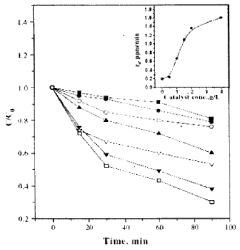
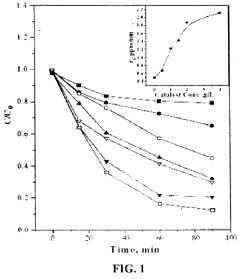
Method for preparation of catalyst, its activity and method for treatment of textyle wastewater
PatentInactiveIN900DEL2009A
Innovation
- A method for preparing metal-organic framework materials using the hydrothermal technique with transition and lanthanide metals, specifically Manganese and Gadolinium, combined with pyridine-2,3-carboxylic acid, to create a catalyst capable of photocatalytic degradation of textile dyes like Orange G, Rhodamine B, and Remazol Brilliant Blue R, utilizing characterization techniques like XRD, TGA, and IR spectroscopy.
Environmental Regulations and Policies
Environmental regulations and policies play a crucial role in shaping the research and development of photoactive zeolites for environmental pollutant degradation. These regulations provide the framework and incentives for advancing technologies that address environmental concerns and promote sustainable practices.
At the international level, agreements such as the Paris Agreement and the United Nations Sustainable Development Goals have set ambitious targets for reducing pollution and mitigating climate change. These global initiatives have spurred national and regional governments to implement stricter environmental regulations, creating a demand for innovative solutions like photoactive zeolites.
In the United States, the Environmental Protection Agency (EPA) has established stringent standards for water and air quality through legislation such as the Clean Water Act and the Clean Air Act. These regulations have driven research into advanced treatment technologies, including the use of photoactive zeolites for pollutant degradation. The EPA's Toxic Substances Control Act (TSCA) also regulates the production and use of chemicals, further emphasizing the need for environmentally friendly alternatives.
The European Union has implemented comprehensive environmental policies, including the Registration, Evaluation, Authorization, and Restriction of Chemicals (REACH) regulation. This legislation aims to protect human health and the environment from the risks posed by chemicals, encouraging the development of safer alternatives such as photoactive zeolites for pollutant removal.
In China, the government has introduced the Action Plan for Air Pollution Prevention and Control and the Water Pollution Prevention and Control Action Plan. These initiatives have led to increased investment in research and development of advanced pollution control technologies, including photoactive zeolites.
Many countries have also implemented policies to promote the adoption of green technologies and circular economy principles. These policies often include financial incentives, such as tax breaks or subsidies, for companies that invest in environmentally friendly technologies like photoactive zeolites for pollutant degradation.
The growing emphasis on corporate social responsibility and environmental, social, and governance (ESG) criteria has further incentivized businesses to invest in sustainable technologies. This trend has created a favorable market environment for the development and commercialization of photoactive zeolites and other advanced environmental remediation solutions.
As environmental regulations continue to evolve and become more stringent, the demand for efficient and cost-effective pollutant degradation technologies is expected to increase. This regulatory landscape provides a strong foundation for ongoing research and development in the field of photoactive zeolites, driving innovation and fostering collaboration between academia, industry, and government agencies.
At the international level, agreements such as the Paris Agreement and the United Nations Sustainable Development Goals have set ambitious targets for reducing pollution and mitigating climate change. These global initiatives have spurred national and regional governments to implement stricter environmental regulations, creating a demand for innovative solutions like photoactive zeolites.
In the United States, the Environmental Protection Agency (EPA) has established stringent standards for water and air quality through legislation such as the Clean Water Act and the Clean Air Act. These regulations have driven research into advanced treatment technologies, including the use of photoactive zeolites for pollutant degradation. The EPA's Toxic Substances Control Act (TSCA) also regulates the production and use of chemicals, further emphasizing the need for environmentally friendly alternatives.
The European Union has implemented comprehensive environmental policies, including the Registration, Evaluation, Authorization, and Restriction of Chemicals (REACH) regulation. This legislation aims to protect human health and the environment from the risks posed by chemicals, encouraging the development of safer alternatives such as photoactive zeolites for pollutant removal.
In China, the government has introduced the Action Plan for Air Pollution Prevention and Control and the Water Pollution Prevention and Control Action Plan. These initiatives have led to increased investment in research and development of advanced pollution control technologies, including photoactive zeolites.
Many countries have also implemented policies to promote the adoption of green technologies and circular economy principles. These policies often include financial incentives, such as tax breaks or subsidies, for companies that invest in environmentally friendly technologies like photoactive zeolites for pollutant degradation.
The growing emphasis on corporate social responsibility and environmental, social, and governance (ESG) criteria has further incentivized businesses to invest in sustainable technologies. This trend has created a favorable market environment for the development and commercialization of photoactive zeolites and other advanced environmental remediation solutions.
As environmental regulations continue to evolve and become more stringent, the demand for efficient and cost-effective pollutant degradation technologies is expected to increase. This regulatory landscape provides a strong foundation for ongoing research and development in the field of photoactive zeolites, driving innovation and fostering collaboration between academia, industry, and government agencies.
Scalability and Industrial Application Potential
The scalability and industrial application potential of photoactive zeolites for environmental pollutant degradation are significant factors in determining their widespread adoption and commercial viability. These materials have shown promising results in laboratory-scale experiments, but their transition to large-scale industrial applications requires careful consideration of several key aspects.
One of the primary advantages of photoactive zeolites is their potential for scalable production. Zeolites are already widely used in various industrial processes, and established manufacturing techniques can be adapted to incorporate photoactive components. This existing infrastructure provides a solid foundation for scaling up production to meet industrial demands. However, ensuring consistent quality and performance across large batches remains a challenge that needs to be addressed through rigorous quality control measures and standardized production protocols.
The versatility of photoactive zeolites in treating different types of environmental pollutants enhances their industrial application potential. These materials can be tailored to target specific contaminants, making them suitable for a wide range of industries, including wastewater treatment, air purification, and soil remediation. This adaptability allows for the development of customized solutions for various industrial sectors, potentially expanding the market for photoactive zeolite-based technologies.
In terms of operational scalability, photoactive zeolites offer several advantages. Their solid-state nature and stability make them suitable for use in continuous flow systems, which are essential for large-scale industrial applications. Additionally, their regenerative properties and potential for long-term use can significantly reduce operational costs and material consumption over time. However, the efficiency of pollutant degradation at industrial scales needs to be thoroughly evaluated to ensure economic viability.
The integration of photoactive zeolites into existing industrial processes presents both opportunities and challenges. On one hand, these materials can be incorporated into current treatment systems with relatively minor modifications, reducing implementation costs. On the other hand, optimizing the light exposure and reaction conditions for large-scale operations may require significant engineering efforts and potentially new equipment designs.
Environmental regulations and sustainability goals are driving industries to adopt more efficient and eco-friendly pollutant treatment technologies. Photoactive zeolites align well with these objectives, offering a potentially low-energy, chemical-free approach to pollutant degradation. This alignment with regulatory trends and corporate sustainability initiatives enhances the long-term industrial application potential of these materials.
One of the primary advantages of photoactive zeolites is their potential for scalable production. Zeolites are already widely used in various industrial processes, and established manufacturing techniques can be adapted to incorporate photoactive components. This existing infrastructure provides a solid foundation for scaling up production to meet industrial demands. However, ensuring consistent quality and performance across large batches remains a challenge that needs to be addressed through rigorous quality control measures and standardized production protocols.
The versatility of photoactive zeolites in treating different types of environmental pollutants enhances their industrial application potential. These materials can be tailored to target specific contaminants, making them suitable for a wide range of industries, including wastewater treatment, air purification, and soil remediation. This adaptability allows for the development of customized solutions for various industrial sectors, potentially expanding the market for photoactive zeolite-based technologies.
In terms of operational scalability, photoactive zeolites offer several advantages. Their solid-state nature and stability make them suitable for use in continuous flow systems, which are essential for large-scale industrial applications. Additionally, their regenerative properties and potential for long-term use can significantly reduce operational costs and material consumption over time. However, the efficiency of pollutant degradation at industrial scales needs to be thoroughly evaluated to ensure economic viability.
The integration of photoactive zeolites into existing industrial processes presents both opportunities and challenges. On one hand, these materials can be incorporated into current treatment systems with relatively minor modifications, reducing implementation costs. On the other hand, optimizing the light exposure and reaction conditions for large-scale operations may require significant engineering efforts and potentially new equipment designs.
Environmental regulations and sustainability goals are driving industries to adopt more efficient and eco-friendly pollutant treatment technologies. Photoactive zeolites align well with these objectives, offering a potentially low-energy, chemical-free approach to pollutant degradation. This alignment with regulatory trends and corporate sustainability initiatives enhances the long-term industrial application potential of these materials.
Unlock deeper insights with Patsnap Eureka Quick Research — get a full tech report to explore trends and direct your research. Try now!
Generate Your Research Report Instantly with AI Agent
Supercharge your innovation with Patsnap Eureka AI Agent Platform!