

Silicone Rubber: Redefining Soft Robotics
JUL 8, 20259 MIN READ
Generate Your Research Report Instantly with AI Agent
PatSnap Eureka helps you evaluate technical feasibility & market potential.
Silicone Rubber Evolution
Silicone rubber has undergone a remarkable evolution since its inception in the 1940s, transforming from a niche material to a cornerstone of soft robotics. Initially developed as an insulator for electrical applications, silicone rubber's unique properties quickly garnered attention across various industries. Its flexibility, durability, and biocompatibility opened doors to numerous applications, particularly in medical devices and consumer products.
The 1960s and 1970s saw significant advancements in silicone rubber formulations, with researchers developing new curing methods and additives to enhance its mechanical properties. This period marked the beginning of silicone rubber's journey into more specialized applications, including aerospace and automotive industries. The material's ability to withstand extreme temperatures and maintain its properties under harsh conditions made it invaluable in these sectors.
As the field of robotics began to emerge in the 1980s and 1990s, silicone rubber found a new frontier. Traditional rigid robots faced limitations in interacting with delicate objects and operating in unstructured environments. Silicone rubber's inherent softness and flexibility presented a solution to these challenges, laying the groundwork for soft robotics. Early experiments with silicone-based actuators and sensors demonstrated the material's potential to create more adaptable and safer robotic systems.
The turn of the millennium brought about a paradigm shift in robotics, with increased focus on biomimetic designs. Silicone rubber's ability to mimic biological tissues made it the material of choice for creating lifelike robotic structures. Researchers began developing sophisticated fabrication techniques, such as 3D printing and molding processes, specifically tailored for silicone rubber. These advancements allowed for the creation of complex, multi-material structures that could closely emulate natural movements and interactions.
In recent years, the integration of silicone rubber with other emerging technologies has further expanded its capabilities in soft robotics. The development of stretchable electronics and smart materials has enabled the creation of highly responsive and adaptive robotic systems. Silicone-based soft robots now incorporate features such as self-healing, shape memory, and even the ability to change color or texture in response to stimuli.
The evolution of silicone rubber in soft robotics continues to accelerate, driven by interdisciplinary collaborations and cutting-edge research. As we look to the future, the material promises to play a pivotal role in developing more advanced, safer, and more intuitive robotic systems that can seamlessly integrate with human environments and activities.
The 1960s and 1970s saw significant advancements in silicone rubber formulations, with researchers developing new curing methods and additives to enhance its mechanical properties. This period marked the beginning of silicone rubber's journey into more specialized applications, including aerospace and automotive industries. The material's ability to withstand extreme temperatures and maintain its properties under harsh conditions made it invaluable in these sectors.
As the field of robotics began to emerge in the 1980s and 1990s, silicone rubber found a new frontier. Traditional rigid robots faced limitations in interacting with delicate objects and operating in unstructured environments. Silicone rubber's inherent softness and flexibility presented a solution to these challenges, laying the groundwork for soft robotics. Early experiments with silicone-based actuators and sensors demonstrated the material's potential to create more adaptable and safer robotic systems.
The turn of the millennium brought about a paradigm shift in robotics, with increased focus on biomimetic designs. Silicone rubber's ability to mimic biological tissues made it the material of choice for creating lifelike robotic structures. Researchers began developing sophisticated fabrication techniques, such as 3D printing and molding processes, specifically tailored for silicone rubber. These advancements allowed for the creation of complex, multi-material structures that could closely emulate natural movements and interactions.
In recent years, the integration of silicone rubber with other emerging technologies has further expanded its capabilities in soft robotics. The development of stretchable electronics and smart materials has enabled the creation of highly responsive and adaptive robotic systems. Silicone-based soft robots now incorporate features such as self-healing, shape memory, and even the ability to change color or texture in response to stimuli.
The evolution of silicone rubber in soft robotics continues to accelerate, driven by interdisciplinary collaborations and cutting-edge research. As we look to the future, the material promises to play a pivotal role in developing more advanced, safer, and more intuitive robotic systems that can seamlessly integrate with human environments and activities.
Soft Robotics Market Trends
The soft robotics market is experiencing significant growth and transformation, driven by advancements in materials science, particularly in the field of silicone rubber. This market is projected to expand rapidly in the coming years, with increasing adoption across various industries such as healthcare, manufacturing, and aerospace.
One of the key trends in the soft robotics market is the growing demand for more versatile and adaptable robotic systems. Traditional rigid robots have limitations in terms of flexibility and safety when interacting with humans or delicate objects. Soft robots, enabled by silicone rubber technology, offer a solution to these challenges by providing compliant and adaptable structures that can safely interact with their environment.
The healthcare sector is emerging as a major driver of the soft robotics market. Silicone-based soft robots are being developed for applications such as minimally invasive surgery, rehabilitation devices, and prosthetics. These robots can navigate complex anatomical structures and provide gentle manipulation, reducing the risk of tissue damage and improving patient outcomes.
In the manufacturing industry, soft robotic grippers and manipulators are gaining traction for handling delicate or irregularly shaped objects. The ability of silicone-based soft robots to conform to various shapes makes them ideal for tasks such as fruit picking, packaging, and assembly of fragile components.
The wearable technology segment is another area where soft robotics is making significant inroads. Silicone-based soft exoskeletons and assistive devices are being developed to enhance human performance and provide support for individuals with mobility impairments.
Environmental monitoring and exploration represent emerging applications for soft robotics. Silicone-based soft robots can navigate challenging terrains and aquatic environments, making them suitable for tasks such as ocean exploration, disaster response, and ecological research.
As the soft robotics market continues to evolve, there is a growing focus on developing more advanced control systems and sensors that can fully leverage the capabilities of silicone-based soft structures. This includes the integration of artificial intelligence and machine learning algorithms to enhance the adaptability and decision-making capabilities of soft robots.
The market is also witnessing increased collaboration between academic institutions, research organizations, and industry players to accelerate innovation in soft robotics. This collaborative approach is driving the development of new materials, fabrication techniques, and applications for silicone-based soft robots.
One of the key trends in the soft robotics market is the growing demand for more versatile and adaptable robotic systems. Traditional rigid robots have limitations in terms of flexibility and safety when interacting with humans or delicate objects. Soft robots, enabled by silicone rubber technology, offer a solution to these challenges by providing compliant and adaptable structures that can safely interact with their environment.
The healthcare sector is emerging as a major driver of the soft robotics market. Silicone-based soft robots are being developed for applications such as minimally invasive surgery, rehabilitation devices, and prosthetics. These robots can navigate complex anatomical structures and provide gentle manipulation, reducing the risk of tissue damage and improving patient outcomes.
In the manufacturing industry, soft robotic grippers and manipulators are gaining traction for handling delicate or irregularly shaped objects. The ability of silicone-based soft robots to conform to various shapes makes them ideal for tasks such as fruit picking, packaging, and assembly of fragile components.
The wearable technology segment is another area where soft robotics is making significant inroads. Silicone-based soft exoskeletons and assistive devices are being developed to enhance human performance and provide support for individuals with mobility impairments.
Environmental monitoring and exploration represent emerging applications for soft robotics. Silicone-based soft robots can navigate challenging terrains and aquatic environments, making them suitable for tasks such as ocean exploration, disaster response, and ecological research.
As the soft robotics market continues to evolve, there is a growing focus on developing more advanced control systems and sensors that can fully leverage the capabilities of silicone-based soft structures. This includes the integration of artificial intelligence and machine learning algorithms to enhance the adaptability and decision-making capabilities of soft robots.
The market is also witnessing increased collaboration between academic institutions, research organizations, and industry players to accelerate innovation in soft robotics. This collaborative approach is driving the development of new materials, fabrication techniques, and applications for silicone-based soft robots.
Silicone Challenges in Robotics
Silicone rubber has emerged as a transformative material in the field of soft robotics, offering unprecedented flexibility and adaptability. However, its integration into robotic systems presents several significant challenges that researchers and engineers must address. One of the primary obstacles is the inherent softness and compliance of silicone rubber, which, while beneficial for certain applications, can lead to difficulties in precise control and positioning of robotic components.
The non-linear behavior of silicone rubber under stress and strain complicates the development of accurate mathematical models for predicting and controlling robot movements. This unpredictability is exacerbated by the material's viscoelastic properties, which cause time-dependent deformation and recovery. As a result, traditional control algorithms designed for rigid robots often prove inadequate when applied to soft silicone-based systems.
Another challenge lies in the integration of sensors and actuators within silicone rubber structures. The material's elasticity can interfere with the functionality of embedded electronic components, potentially leading to signal distortion or mechanical failure. Moreover, creating reliable and durable connections between soft silicone parts and rigid electronic elements remains a significant engineering hurdle.
The manufacturing processes for silicone-based soft robots also present unique challenges. Achieving consistent material properties and geometries across different batches of silicone rubber can be difficult, potentially leading to variations in robot performance. Additionally, the creation of complex internal structures within silicone components, such as channels for pneumatic actuation, requires advanced fabrication techniques that are still being refined.
Durability and longevity of silicone rubber in robotic applications is another area of concern. The material's susceptibility to degradation under certain environmental conditions, such as exposure to UV light or certain chemicals, can limit the operational lifespan of soft robots. Furthermore, the repeated deformation cycles that soft robots undergo can lead to material fatigue and eventual failure, necessitating the development of more robust silicone formulations.
The biocompatibility of silicone rubber, while generally considered an advantage, also introduces challenges in terms of sterilization and maintenance, particularly for soft robots intended for medical or food handling applications. Ensuring that these robots can be effectively cleaned and sterilized without compromising their structural integrity or performance is a critical consideration.
As the field of soft robotics continues to evolve, addressing these silicone-related challenges will be crucial for realizing the full potential of this innovative technology. Overcoming these obstacles will require interdisciplinary collaboration, combining expertise in materials science, robotics, control theory, and manufacturing to develop novel solutions and push the boundaries of what is possible with silicone-based soft robots.
The non-linear behavior of silicone rubber under stress and strain complicates the development of accurate mathematical models for predicting and controlling robot movements. This unpredictability is exacerbated by the material's viscoelastic properties, which cause time-dependent deformation and recovery. As a result, traditional control algorithms designed for rigid robots often prove inadequate when applied to soft silicone-based systems.
Another challenge lies in the integration of sensors and actuators within silicone rubber structures. The material's elasticity can interfere with the functionality of embedded electronic components, potentially leading to signal distortion or mechanical failure. Moreover, creating reliable and durable connections between soft silicone parts and rigid electronic elements remains a significant engineering hurdle.
The manufacturing processes for silicone-based soft robots also present unique challenges. Achieving consistent material properties and geometries across different batches of silicone rubber can be difficult, potentially leading to variations in robot performance. Additionally, the creation of complex internal structures within silicone components, such as channels for pneumatic actuation, requires advanced fabrication techniques that are still being refined.
Durability and longevity of silicone rubber in robotic applications is another area of concern. The material's susceptibility to degradation under certain environmental conditions, such as exposure to UV light or certain chemicals, can limit the operational lifespan of soft robots. Furthermore, the repeated deformation cycles that soft robots undergo can lead to material fatigue and eventual failure, necessitating the development of more robust silicone formulations.
The biocompatibility of silicone rubber, while generally considered an advantage, also introduces challenges in terms of sterilization and maintenance, particularly for soft robots intended for medical or food handling applications. Ensuring that these robots can be effectively cleaned and sterilized without compromising their structural integrity or performance is a critical consideration.
As the field of soft robotics continues to evolve, addressing these silicone-related challenges will be crucial for realizing the full potential of this innovative technology. Overcoming these obstacles will require interdisciplinary collaboration, combining expertise in materials science, robotics, control theory, and manufacturing to develop novel solutions and push the boundaries of what is possible with silicone-based soft robots.
Current Silicone Solutions
01 Composition of silicone rubber for softness
The softness of silicone rubber can be controlled by adjusting its composition. This includes the use of specific silicone polymers, fillers, and additives. The ratio of these components and the molecular weight of the silicone polymers play crucial roles in determining the final softness of the rubber.- Composition adjustments for softness: The softness of silicone rubber can be controlled by adjusting the composition of the material. This includes varying the ratio of different silicone polymers, adding softening agents, or incorporating specific fillers. The balance of these components can significantly influence the final softness and flexibility of the silicone rubber product.
- Crosslinking density modification: Altering the crosslinking density in silicone rubber formulations can affect its softness. Lower crosslinking density typically results in softer, more flexible rubber. This can be achieved by adjusting the amount or type of crosslinking agents, curing conditions, or by using specific catalysts that control the crosslinking process.
- Incorporation of specialty additives: Certain additives can be incorporated into silicone rubber formulations to enhance softness. These may include plasticizers, elastomers, or other specialty chemicals that interact with the silicone polymer network to increase flexibility and reduce hardness. The selection and concentration of these additives are crucial for achieving the desired softness.
- Molecular weight and structure optimization: The molecular weight and structure of the silicone polymers used in rubber formulations play a significant role in determining softness. Higher molecular weight polymers or those with specific side-chain structures can contribute to increased softness. Tailoring these molecular characteristics allows for the development of silicone rubbers with customized softness properties.
- Processing and curing techniques: The processing and curing methods employed in silicone rubber production can impact the final softness. This includes factors such as mixing techniques, curing temperature and time, and post-curing treatments. Optimizing these parameters can lead to silicone rubber products with enhanced softness and improved overall physical properties.
02 Crosslinking density and curing methods
The softness of silicone rubber is significantly influenced by its crosslinking density and curing methods. Lower crosslinking density generally results in softer rubber. Various curing methods, including heat curing, room temperature vulcanization (RTV), and UV curing, can be employed to achieve different levels of softness.Expand Specific Solutions03 Incorporation of softening agents
Softening agents can be incorporated into silicone rubber formulations to enhance softness. These agents may include low molecular weight silicone oils, organic plasticizers, or specific silicone-based additives that reduce the overall hardness of the cured rubber.Expand Specific Solutions04 Blending with other elastomers
Silicone rubber can be blended with other elastomers or polymers to modify its softness. This approach allows for fine-tuning of the rubber's properties, including softness, while potentially enhancing other characteristics such as tear strength or chemical resistance.Expand Specific Solutions05 Surface modification techniques
Surface modification techniques can be applied to silicone rubber to enhance its perceived softness. These may include plasma treatment, chemical etching, or the application of soft coatings. Such techniques can alter the surface properties of the rubber without significantly changing its bulk characteristics.Expand Specific Solutions
Key Soft Robotics Players
The silicone rubber market for soft robotics is in a growth phase, driven by increasing demand for flexible and adaptive robotic systems. The market size is expanding rapidly, with applications spanning healthcare, manufacturing, and consumer electronics. Technological maturity varies, with companies like Shin-Etsu Chemical and Wacker Chemie leading in material development. Academic institutions such as Harvard College and National University of Singapore are advancing research in soft robotics applications. Emerging players like Oxipital AI are integrating AI and machine vision with soft robotics, indicating a trend towards more sophisticated and intelligent systems. The competitive landscape is diverse, with collaboration between industry and academia driving innovation in this evolving field.
President & Fellows of Harvard College
Technical Solution: Harvard's approach to soft robotics using silicone rubber involves the development of highly stretchable and self-healing materials. They have created a hybrid material combining silicone rubber with ionic conductors, allowing for the fabrication of soft actuators and sensors with enhanced durability and functionality[1]. This material can stretch up to 600% of its original length while maintaining conductivity, enabling the creation of soft robots capable of complex movements and sensing capabilities[2]. Harvard researchers have also developed a technique called "magnetic 3D printing" to create soft actuators with programmable ferromagnetic domains, allowing for precise control of shape and movement in response to external magnetic fields[3].
Strengths: Highly stretchable and self-healing properties, enhanced durability, and precise control of shape and movement. Weaknesses: Potential limitations in strength and load-bearing capacity compared to traditional rigid robotics.
Shin-Etsu Chemical Co., Ltd.
Technical Solution: Shin-Etsu Chemical, a leading silicone manufacturer, has developed specialized silicone rubber compounds for soft robotics applications. Their approach focuses on creating silicone elastomers with tailored properties such as high elongation, low hardness, and excellent tear strength[4]. They have introduced a range of liquid silicone rubber (LSR) materials specifically designed for 3D printing and additive manufacturing of soft robotic components[5]. These materials offer rapid prototyping capabilities and enable the production of complex geometries essential for soft robotic structures. Shin-Etsu has also developed electrically conductive silicone rubbers that can be used for creating flexible sensors and actuators in soft robotics[6].
Strengths: Wide range of specialized silicone rubber compounds, expertise in material formulation, and established manufacturing processes. Weaknesses: May lack direct experience in robotic system integration and control.
Silicone Innovations Analysis
Devices and methods directed to sensing using synthetic materials
PatentPendingUS20230294307A1
Innovation
- A stretchable synthetic membrane material integrated with a network of patterned conductive or semiconductive sections, which are electrically coupled to sensors, allowing for sensing of environmental parameters like proximity, capacitance, temperature, and impedance without straining under large deformations, using methods like 3D printing and laser ablation for customization and low-cost manufacturing.


Method for producing an elastic and flexible fiber with optical, electrical or microfluidic functionality
PatentInactiveUS20220152905A1
Innovation
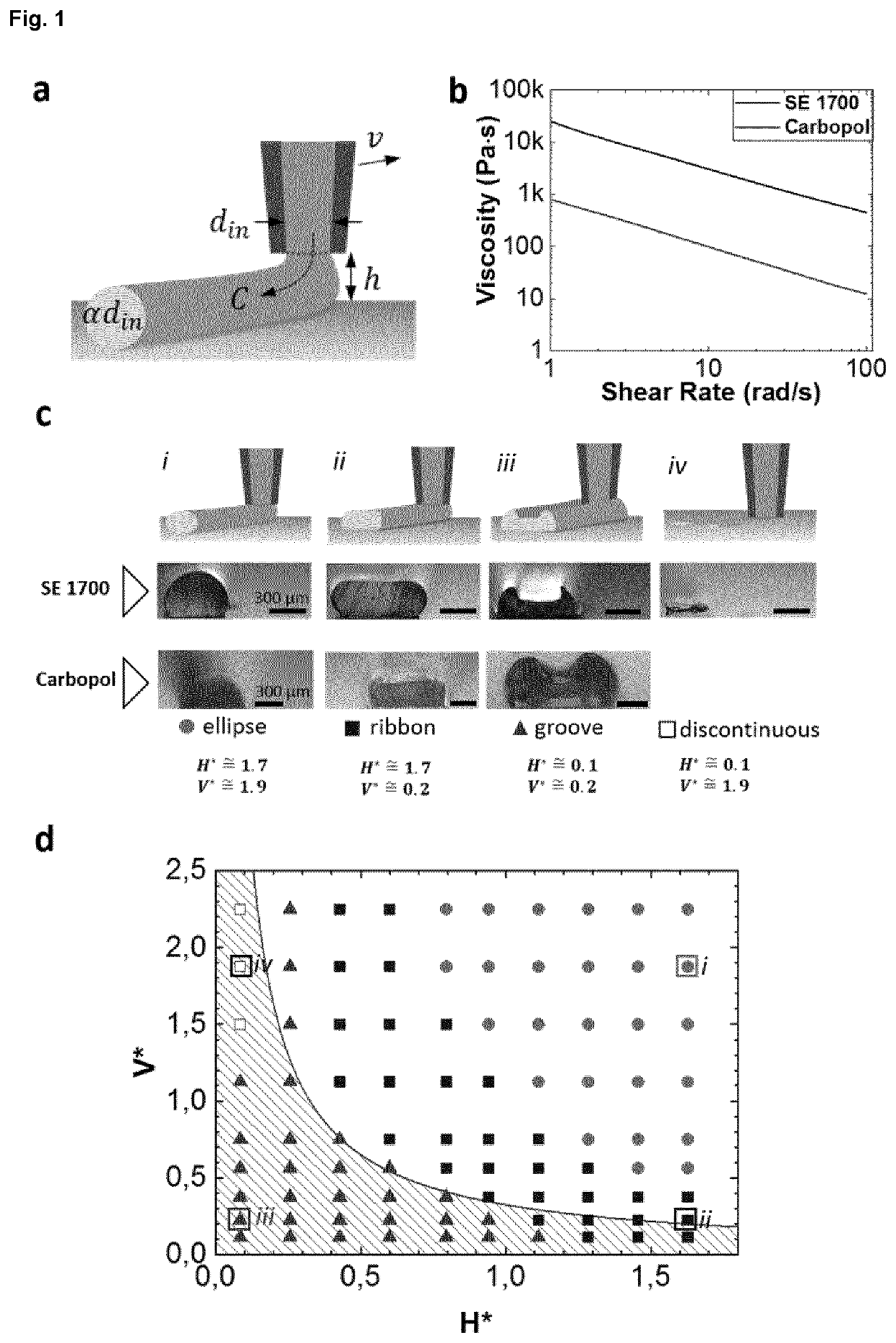
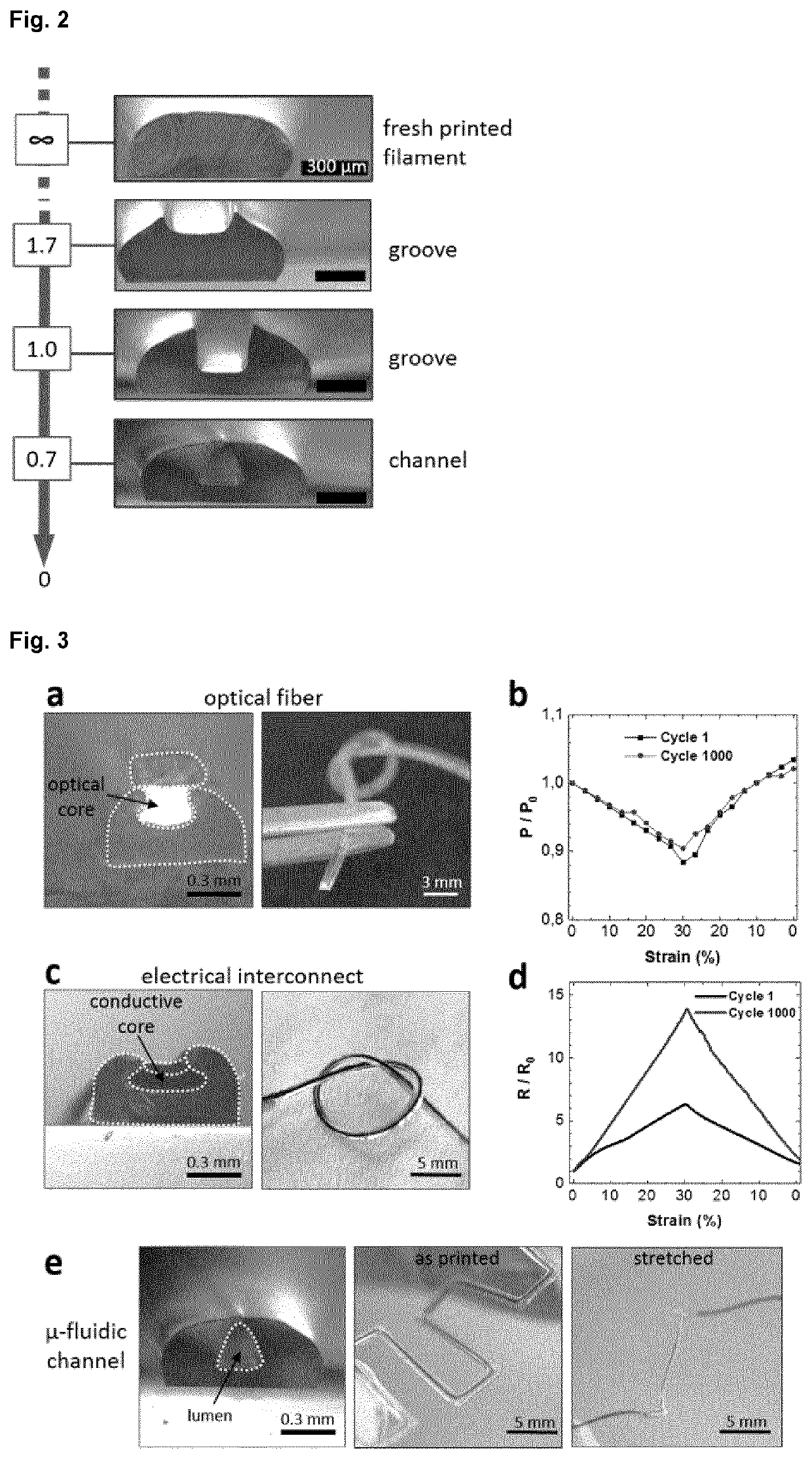
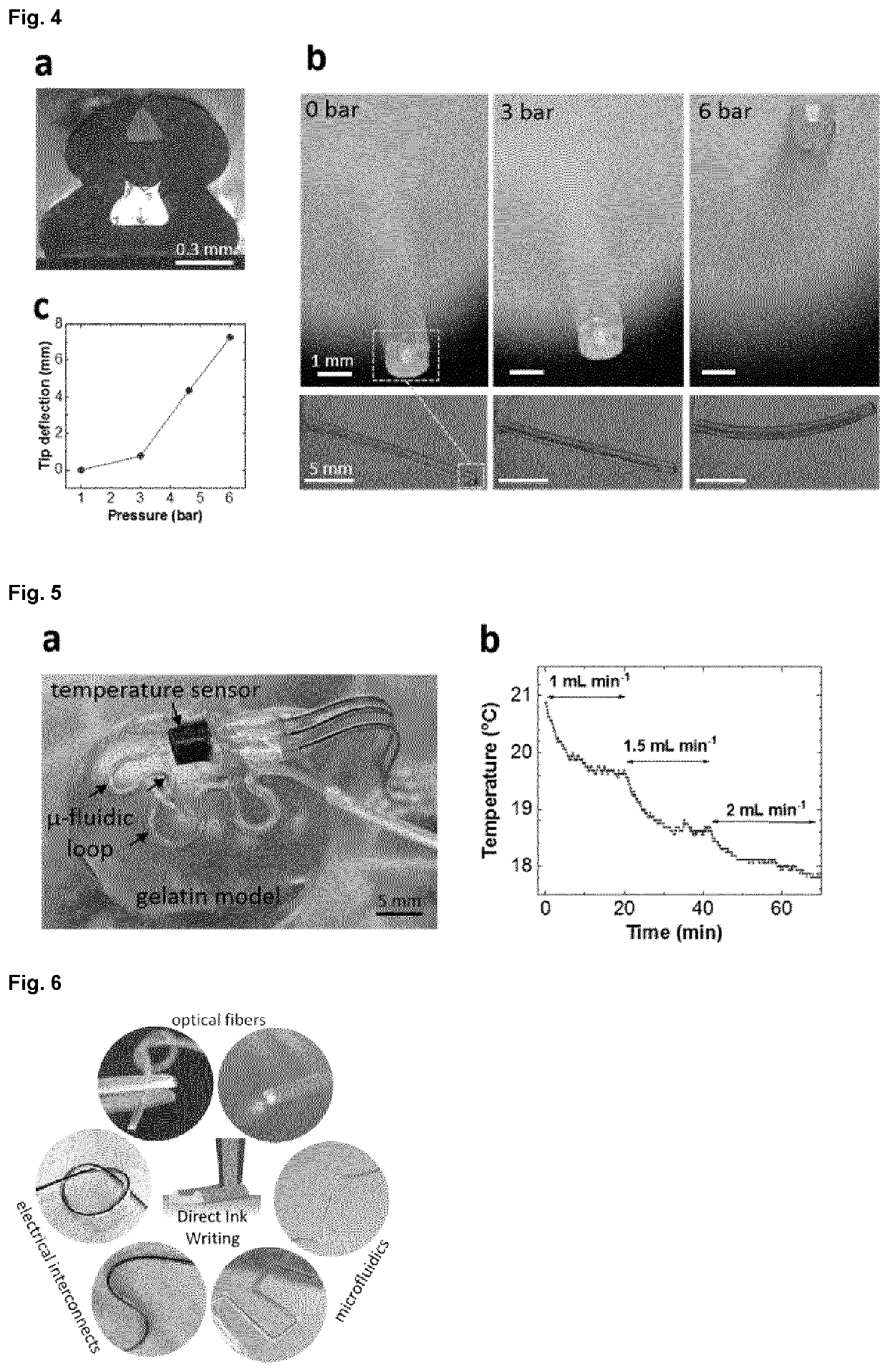
- The method involves controlling the nozzle height and velocity relative to the substrate to produce fibers with non-circular cross-sectional geometries, such as elliptical, ribbon, or grooved shapes, by adjusting the translational speed of the nozzle to be slower than the extrusion speed and/or maintaining the nozzle closer to the substrate than its inner diameter, allowing for the creation of fibers with predetermined geometries using standard DIW devices.

Regulatory Framework
The regulatory framework surrounding silicone rubber in soft robotics is a complex and evolving landscape. As this technology continues to advance and find applications in various sectors, regulatory bodies are working to establish guidelines that ensure safety, quality, and ethical use.
In the United States, the Food and Drug Administration (FDA) plays a crucial role in regulating silicone rubber used in medical devices and soft robotics applications in healthcare. The FDA's Center for Devices and Radiological Health (CDRH) oversees the approval process for medical devices, including those incorporating silicone rubber components. Manufacturers must demonstrate compliance with Good Manufacturing Practices (GMP) and provide extensive safety and efficacy data.
The European Union has implemented the Medical Device Regulation (MDR) and In Vitro Diagnostic Regulation (IVDR), which came into full effect in 2021 and 2022, respectively. These regulations set stringent requirements for medical devices, including those utilizing silicone rubber in soft robotics applications. Manufacturers must obtain CE marking to indicate compliance with EU health, safety, and environmental protection standards.
In the industrial sector, the Occupational Safety and Health Administration (OSHA) in the United States and the European Agency for Safety and Health at Work (EU-OSHA) in Europe provide guidelines for the safe use of silicone rubber in manufacturing processes and end-products. These agencies focus on worker safety and exposure limits to potentially harmful substances used in silicone rubber production.
Environmental regulations also play a significant role in shaping the silicone rubber industry. The European Union's REACH (Registration, Evaluation, Authorization, and Restriction of Chemicals) regulation requires manufacturers and importers to assess and manage the risks associated with substances they manufacture or import. This includes silicone rubber and its components, ensuring environmental and health protection throughout the supply chain.
As soft robotics applications expand into consumer products, regulatory bodies such as the Consumer Product Safety Commission (CPSC) in the United States and the European Consumer Centre Network (ECC-Net) in Europe are developing guidelines to ensure product safety and consumer protection. These regulations address issues such as material toxicity, durability, and potential hazards associated with silicone rubber-based soft robotic devices.
The International Organization for Standardization (ISO) has developed several standards relevant to silicone rubber in soft robotics, including ISO 2859 for sampling procedures and ISO 3302 for tolerances. These standards help ensure consistency and quality in manufacturing processes across the global industry.
As the field of soft robotics continues to evolve, regulatory frameworks are likely to adapt and expand. Emerging areas of focus include data privacy and security for soft robotic devices with embedded sensors, as well as ethical considerations surrounding human-robot interaction. Stakeholders in the silicone rubber and soft robotics industries must stay informed about these regulatory developments to ensure compliance and maintain public trust in this transformative technology.
In the United States, the Food and Drug Administration (FDA) plays a crucial role in regulating silicone rubber used in medical devices and soft robotics applications in healthcare. The FDA's Center for Devices and Radiological Health (CDRH) oversees the approval process for medical devices, including those incorporating silicone rubber components. Manufacturers must demonstrate compliance with Good Manufacturing Practices (GMP) and provide extensive safety and efficacy data.
The European Union has implemented the Medical Device Regulation (MDR) and In Vitro Diagnostic Regulation (IVDR), which came into full effect in 2021 and 2022, respectively. These regulations set stringent requirements for medical devices, including those utilizing silicone rubber in soft robotics applications. Manufacturers must obtain CE marking to indicate compliance with EU health, safety, and environmental protection standards.
In the industrial sector, the Occupational Safety and Health Administration (OSHA) in the United States and the European Agency for Safety and Health at Work (EU-OSHA) in Europe provide guidelines for the safe use of silicone rubber in manufacturing processes and end-products. These agencies focus on worker safety and exposure limits to potentially harmful substances used in silicone rubber production.
Environmental regulations also play a significant role in shaping the silicone rubber industry. The European Union's REACH (Registration, Evaluation, Authorization, and Restriction of Chemicals) regulation requires manufacturers and importers to assess and manage the risks associated with substances they manufacture or import. This includes silicone rubber and its components, ensuring environmental and health protection throughout the supply chain.
As soft robotics applications expand into consumer products, regulatory bodies such as the Consumer Product Safety Commission (CPSC) in the United States and the European Consumer Centre Network (ECC-Net) in Europe are developing guidelines to ensure product safety and consumer protection. These regulations address issues such as material toxicity, durability, and potential hazards associated with silicone rubber-based soft robotic devices.
The International Organization for Standardization (ISO) has developed several standards relevant to silicone rubber in soft robotics, including ISO 2859 for sampling procedures and ISO 3302 for tolerances. These standards help ensure consistency and quality in manufacturing processes across the global industry.
As the field of soft robotics continues to evolve, regulatory frameworks are likely to adapt and expand. Emerging areas of focus include data privacy and security for soft robotic devices with embedded sensors, as well as ethical considerations surrounding human-robot interaction. Stakeholders in the silicone rubber and soft robotics industries must stay informed about these regulatory developments to ensure compliance and maintain public trust in this transformative technology.
Environmental Impact
The environmental impact of silicone rubber in soft robotics is a crucial consideration as this technology continues to advance. Silicone rubber, while offering numerous benefits for soft robotics applications, also presents certain environmental challenges that must be addressed.
One of the primary environmental concerns associated with silicone rubber is its production process. The manufacturing of silicone rubber involves the use of various chemicals and energy-intensive processes, which can contribute to greenhouse gas emissions and resource depletion. However, compared to traditional rigid materials used in robotics, silicone rubber production generally has a lower environmental footprint due to its lower processing temperatures and energy requirements.
The durability and longevity of silicone rubber products in soft robotics can have both positive and negative environmental implications. On one hand, the material's resilience and resistance to wear and tear can lead to longer-lasting products, reducing the need for frequent replacements and potentially decreasing overall waste. On the other hand, the extended lifespan of silicone rubber components may delay the adoption of more environmentally friendly alternatives as they become available.
End-of-life considerations for silicone rubber in soft robotics pose significant environmental challenges. While silicone rubber is theoretically recyclable, the complex nature of soft robotic systems often makes recycling difficult in practice. The integration of silicone rubber with other materials and electronic components can complicate the separation and recycling processes, potentially leading to increased waste in landfills.
However, ongoing research and development efforts are focused on improving the environmental profile of silicone rubber in soft robotics. These initiatives include the development of bio-based silicone alternatives, which aim to reduce reliance on petroleum-derived raw materials. Additionally, advancements in recycling technologies and design-for-disassembly approaches are being explored to enhance the recyclability and overall sustainability of soft robotic systems.
The potential for silicone rubber soft robots to contribute to environmental monitoring and conservation efforts should also be considered. These flexible and adaptable robots can be deployed in sensitive ecosystems for data collection and environmental assessment, potentially aiding in conservation efforts and minimizing human impact on fragile environments.
As the field of soft robotics continues to evolve, it is crucial for researchers and manufacturers to prioritize environmental considerations in the design, production, and disposal of silicone rubber-based systems. By addressing these challenges and leveraging the unique properties of silicone rubber, the soft robotics industry can work towards more sustainable and environmentally friendly solutions.
One of the primary environmental concerns associated with silicone rubber is its production process. The manufacturing of silicone rubber involves the use of various chemicals and energy-intensive processes, which can contribute to greenhouse gas emissions and resource depletion. However, compared to traditional rigid materials used in robotics, silicone rubber production generally has a lower environmental footprint due to its lower processing temperatures and energy requirements.
The durability and longevity of silicone rubber products in soft robotics can have both positive and negative environmental implications. On one hand, the material's resilience and resistance to wear and tear can lead to longer-lasting products, reducing the need for frequent replacements and potentially decreasing overall waste. On the other hand, the extended lifespan of silicone rubber components may delay the adoption of more environmentally friendly alternatives as they become available.
End-of-life considerations for silicone rubber in soft robotics pose significant environmental challenges. While silicone rubber is theoretically recyclable, the complex nature of soft robotic systems often makes recycling difficult in practice. The integration of silicone rubber with other materials and electronic components can complicate the separation and recycling processes, potentially leading to increased waste in landfills.
However, ongoing research and development efforts are focused on improving the environmental profile of silicone rubber in soft robotics. These initiatives include the development of bio-based silicone alternatives, which aim to reduce reliance on petroleum-derived raw materials. Additionally, advancements in recycling technologies and design-for-disassembly approaches are being explored to enhance the recyclability and overall sustainability of soft robotic systems.
The potential for silicone rubber soft robots to contribute to environmental monitoring and conservation efforts should also be considered. These flexible and adaptable robots can be deployed in sensitive ecosystems for data collection and environmental assessment, potentially aiding in conservation efforts and minimizing human impact on fragile environments.
As the field of soft robotics continues to evolve, it is crucial for researchers and manufacturers to prioritize environmental considerations in the design, production, and disposal of silicone rubber-based systems. By addressing these challenges and leveraging the unique properties of silicone rubber, the soft robotics industry can work towards more sustainable and environmentally friendly solutions.
Unlock deeper insights with PatSnap Eureka Quick Research — get a full tech report to explore trends and direct your research. Try now!
Generate Your Research Report Instantly with AI Agent
Supercharge your innovation with PatSnap Eureka AI Agent Platform!