
Solid-State Transformers Vs Stage Transformers: Setup Simplicity
APR 20, 20269 MIN READ
Generate Your Research Report Instantly with AI Agent
Patsnap Eureka helps you evaluate technical feasibility & market potential.
SST vs Stage Transformer Background and Objectives
The electrical power infrastructure has undergone significant transformation since the late 19th century, evolving from simple direct current systems to complex alternating current networks that span continents. Traditional stage transformers, based on electromagnetic induction principles, have served as the backbone of power distribution systems for over a century. These devices have proven their reliability through decades of operation, establishing standardized designs and maintenance protocols that form the foundation of modern electrical grids.
The emergence of solid-state transformers represents a paradigm shift in power conversion technology, driven by advances in semiconductor materials and power electronics. Unlike conventional transformers that rely purely on magnetic coupling, SSTs integrate sophisticated electronic control systems with high-frequency switching capabilities. This technological evolution reflects the industry's response to increasing demands for grid flexibility, renewable energy integration, and enhanced power quality management.
The complexity of modern electrical systems has intensified the focus on setup simplicity as a critical design parameter. Traditional stage transformers benefit from straightforward installation procedures developed over decades of field experience. Their passive nature eliminates the need for complex programming or calibration, making them accessible to technicians with standard electrical training. The installation process typically involves mechanical mounting, electrical connections, and basic protection system integration.
In contrast, solid-state transformers introduce additional layers of complexity through their electronic control systems, communication interfaces, and advanced protection algorithms. While these features enable superior performance characteristics, they also demand specialized knowledge for proper configuration and commissioning. The setup process often requires software programming, parameter optimization, and integration with digital control systems.
The industry's pursuit of setup simplification stems from practical considerations including installation costs, commissioning time, and maintenance requirements. Simplified setup procedures reduce the risk of configuration errors, minimize specialized training requirements, and accelerate project deployment timelines. This becomes particularly crucial in large-scale infrastructure projects where installation efficiency directly impacts overall project economics.
The objective of comparing setup simplicity between solid-state and stage transformers encompasses multiple dimensions including physical installation requirements, electrical configuration complexity, commissioning procedures, and ongoing maintenance considerations. Understanding these differences enables informed decision-making regarding technology selection based on specific application requirements, available technical expertise, and project constraints.
The emergence of solid-state transformers represents a paradigm shift in power conversion technology, driven by advances in semiconductor materials and power electronics. Unlike conventional transformers that rely purely on magnetic coupling, SSTs integrate sophisticated electronic control systems with high-frequency switching capabilities. This technological evolution reflects the industry's response to increasing demands for grid flexibility, renewable energy integration, and enhanced power quality management.
The complexity of modern electrical systems has intensified the focus on setup simplicity as a critical design parameter. Traditional stage transformers benefit from straightforward installation procedures developed over decades of field experience. Their passive nature eliminates the need for complex programming or calibration, making them accessible to technicians with standard electrical training. The installation process typically involves mechanical mounting, electrical connections, and basic protection system integration.
In contrast, solid-state transformers introduce additional layers of complexity through their electronic control systems, communication interfaces, and advanced protection algorithms. While these features enable superior performance characteristics, they also demand specialized knowledge for proper configuration and commissioning. The setup process often requires software programming, parameter optimization, and integration with digital control systems.
The industry's pursuit of setup simplification stems from practical considerations including installation costs, commissioning time, and maintenance requirements. Simplified setup procedures reduce the risk of configuration errors, minimize specialized training requirements, and accelerate project deployment timelines. This becomes particularly crucial in large-scale infrastructure projects where installation efficiency directly impacts overall project economics.
The objective of comparing setup simplicity between solid-state and stage transformers encompasses multiple dimensions including physical installation requirements, electrical configuration complexity, commissioning procedures, and ongoing maintenance considerations. Understanding these differences enables informed decision-making regarding technology selection based on specific application requirements, available technical expertise, and project constraints.
Market Demand for Simplified Transformer Setup Solutions
The global transformer market is experiencing unprecedented demand for simplified installation and maintenance solutions, driven by the rapid expansion of renewable energy infrastructure and smart grid implementations. Traditional staged transformers, while proven and reliable, require complex multi-component installations involving separate cooling systems, protection circuits, and control units. This complexity translates to extended installation timelines, specialized workforce requirements, and higher operational costs that are increasingly challenging for utilities and industrial operators to manage.
Solid-state transformers are emerging as a compelling alternative, offering integrated functionality that significantly reduces setup complexity. Unlike conventional transformers that require extensive auxiliary equipment and intricate wiring configurations, solid-state solutions provide plug-and-play capabilities with built-in power electronics, control systems, and monitoring functions. This integration addresses a critical market pain point where installation complexity often accounts for substantial project delays and cost overruns.
The industrial sector demonstrates particularly strong demand for simplified transformer solutions, especially in manufacturing facilities where downtime during installation directly impacts production schedules. Data centers represent another high-growth segment, where rapid deployment capabilities and space efficiency are paramount. These facilities require transformer solutions that can be quickly integrated without extensive infrastructure modifications or prolonged commissioning periods.
Utility companies are increasingly prioritizing transformer technologies that reduce field installation complexity and minimize the need for specialized technical expertise. The shortage of skilled electrical technicians in many regions has intensified this demand, making setup simplicity a competitive differentiator rather than merely a convenience feature. Grid modernization initiatives further amplify this trend, as utilities seek solutions that enable faster network upgrades and expansions.
Emerging markets present significant opportunities for simplified transformer solutions, where infrastructure development often occurs in remote locations with limited technical support availability. The ability to deploy transformer systems with minimal on-site complexity and reduced dependency on specialized installation teams becomes crucial for project feasibility and economic viability in these regions.
Solid-state transformers are emerging as a compelling alternative, offering integrated functionality that significantly reduces setup complexity. Unlike conventional transformers that require extensive auxiliary equipment and intricate wiring configurations, solid-state solutions provide plug-and-play capabilities with built-in power electronics, control systems, and monitoring functions. This integration addresses a critical market pain point where installation complexity often accounts for substantial project delays and cost overruns.
The industrial sector demonstrates particularly strong demand for simplified transformer solutions, especially in manufacturing facilities where downtime during installation directly impacts production schedules. Data centers represent another high-growth segment, where rapid deployment capabilities and space efficiency are paramount. These facilities require transformer solutions that can be quickly integrated without extensive infrastructure modifications or prolonged commissioning periods.
Utility companies are increasingly prioritizing transformer technologies that reduce field installation complexity and minimize the need for specialized technical expertise. The shortage of skilled electrical technicians in many regions has intensified this demand, making setup simplicity a competitive differentiator rather than merely a convenience feature. Grid modernization initiatives further amplify this trend, as utilities seek solutions that enable faster network upgrades and expansions.
Emerging markets present significant opportunities for simplified transformer solutions, where infrastructure development often occurs in remote locations with limited technical support availability. The ability to deploy transformer systems with minimal on-site complexity and reduced dependency on specialized installation teams becomes crucial for project feasibility and economic viability in these regions.
Current Setup Complexity Challenges in Transformer Technologies
Traditional stage transformers present significant setup complexity challenges that have persisted throughout their decades of deployment in power systems. The installation process typically requires extensive site preparation, including substantial concrete foundations capable of supporting weights ranging from several tons to hundreds of tons depending on power ratings. These foundations must cure for weeks before transformer installation can proceed, creating extended project timelines and increased labor costs.
The physical infrastructure requirements extend beyond foundations to include specialized oil containment systems, fire suppression equipment, and environmental protection measures. Stage transformers require dedicated transformer yards with specific clearance requirements, often necessitating acquisition of additional land and complex zoning approvals. The high-voltage bushings and associated switchgear demand precise alignment and extensive testing procedures that require specialized expertise and equipment.
Cooling system integration represents another layer of complexity, particularly for larger units requiring forced air or oil circulation systems. These auxiliary systems introduce additional failure points and maintenance requirements while demanding separate power supplies and control systems. The interconnection of cooling pumps, fans, and monitoring equipment creates intricate dependency chains that complicate both installation and ongoing operations.
Oil handling and processing constitute major logistical challenges during setup. Transformer oil must be transported, filtered, degassed, and carefully introduced to prevent contamination or air bubble formation. This process requires specialized equipment and trained personnel, often extending installation schedules by several days or weeks. Environmental regulations surrounding oil storage and handling add additional compliance layers and documentation requirements.
Solid-state transformers face distinctly different but equally complex setup challenges. While eliminating many mechanical installation issues, SSTs introduce sophisticated power electronics integration requirements. The setup process demands precise coordination between multiple power conversion stages, each requiring individual commissioning and testing protocols. High-frequency switching components necessitate careful electromagnetic interference mitigation through specialized shielding and grounding techniques.
Thermal management systems in SSTs require intricate cooling loop integration with precise temperature monitoring and control algorithms. Unlike passive cooling in traditional transformers, SST thermal systems demand active management with multiple sensors, controllers, and backup systems. The setup process must ensure proper coolant flow, pressure regulation, and fail-safe operation modes.
Control system integration presents perhaps the greatest setup complexity for SSTs. Multiple microprocessors, communication interfaces, and protection algorithms must be coordinated and tested as integrated systems. The commissioning process requires extensive software configuration, parameter optimization, and interoperability testing with existing grid infrastructure, often requiring specialized programming expertise and extended testing periods.
The physical infrastructure requirements extend beyond foundations to include specialized oil containment systems, fire suppression equipment, and environmental protection measures. Stage transformers require dedicated transformer yards with specific clearance requirements, often necessitating acquisition of additional land and complex zoning approvals. The high-voltage bushings and associated switchgear demand precise alignment and extensive testing procedures that require specialized expertise and equipment.
Cooling system integration represents another layer of complexity, particularly for larger units requiring forced air or oil circulation systems. These auxiliary systems introduce additional failure points and maintenance requirements while demanding separate power supplies and control systems. The interconnection of cooling pumps, fans, and monitoring equipment creates intricate dependency chains that complicate both installation and ongoing operations.
Oil handling and processing constitute major logistical challenges during setup. Transformer oil must be transported, filtered, degassed, and carefully introduced to prevent contamination or air bubble formation. This process requires specialized equipment and trained personnel, often extending installation schedules by several days or weeks. Environmental regulations surrounding oil storage and handling add additional compliance layers and documentation requirements.
Solid-state transformers face distinctly different but equally complex setup challenges. While eliminating many mechanical installation issues, SSTs introduce sophisticated power electronics integration requirements. The setup process demands precise coordination between multiple power conversion stages, each requiring individual commissioning and testing protocols. High-frequency switching components necessitate careful electromagnetic interference mitigation through specialized shielding and grounding techniques.
Thermal management systems in SSTs require intricate cooling loop integration with precise temperature monitoring and control algorithms. Unlike passive cooling in traditional transformers, SST thermal systems demand active management with multiple sensors, controllers, and backup systems. The setup process must ensure proper coolant flow, pressure regulation, and fail-safe operation modes.
Control system integration presents perhaps the greatest setup complexity for SSTs. Multiple microprocessors, communication interfaces, and protection algorithms must be coordinated and tested as integrated systems. The commissioning process requires extensive software configuration, parameter optimization, and interoperability testing with existing grid infrastructure, often requiring specialized programming expertise and extended testing periods.
Existing Setup Simplification Solutions and Methods
01 Modular design and simplified installation of solid-state transformers
Solid-state transformers can be designed with modular architectures that simplify installation and setup processes. These designs incorporate standardized interfaces and plug-and-play components that reduce installation time and complexity. The modular approach allows for easier maintenance, scalability, and replacement of individual components without requiring complete system reconfiguration.- Modular design and simplified installation of solid-state transformers: Solid-state transformers can be designed with modular architectures that simplify installation and setup processes. These designs incorporate standardized interfaces and plug-and-play components that reduce installation time and complexity. The modular approach allows for easier maintenance, scalability, and field deployment without requiring extensive technical expertise during setup.
- Integrated control systems for automated configuration: Advanced control systems can be integrated into transformer designs to enable automated configuration and self-commissioning capabilities. These systems utilize intelligent algorithms and sensors to automatically detect operating conditions and adjust parameters accordingly. This automation significantly reduces the manual setup requirements and minimizes the potential for configuration errors during installation.
- Compact multi-stage transformer architectures: Multi-stage transformer configurations can be designed in compact formats that simplify physical installation and reduce space requirements. These architectures integrate multiple conversion stages into unified housings with optimized thermal management and electromagnetic shielding. The compact design reduces the complexity of interconnections and mounting procedures while maintaining high performance.
- Standardized mounting and connection interfaces: Transformer systems can incorporate standardized mounting brackets, connection terminals, and interface protocols that facilitate rapid deployment. These standardized components enable compatibility across different installation environments and reduce the need for custom adaptation. Quick-connect terminals and universal mounting systems allow for tool-free or minimal-tool installation procedures.
- Pre-configured power stage modules with simplified wiring: Power stage modules can be pre-configured and pre-tested at the factory level to minimize on-site setup requirements. These modules feature simplified wiring schemes with clearly labeled connections and integrated protection circuits. The pre-configuration approach reduces installation errors and allows for faster commissioning by eliminating complex parameter programming during field installation.
02 Integrated control systems for automated configuration
Advanced control systems can be integrated into transformer setups to enable automated configuration and commissioning. These systems utilize intelligent algorithms and self-diagnostic capabilities to automatically detect system parameters, optimize settings, and reduce manual configuration requirements. The integration of digital control interfaces simplifies the setup process and minimizes the need for specialized technical expertise during installation.Expand Specific Solutions03 Compact and lightweight construction for stage applications
Transformer designs optimized for stage and portable applications feature compact form factors and reduced weight while maintaining performance characteristics. These designs utilize advanced materials and construction techniques to minimize physical footprint and facilitate transportation and setup. The lightweight construction enables rapid deployment and repositioning in temporary or mobile installations.Expand Specific Solutions04 Standardized mounting and connection systems
Simplified mounting mechanisms and standardized electrical connection systems reduce setup complexity for both solid-state and stage transformers. These systems incorporate quick-release mounting brackets, standardized connector types, and color-coded wiring schemes that facilitate rapid installation and reduce the potential for connection errors. The standardization enables compatibility across different equipment and reduces training requirements for installation personnel.Expand Specific Solutions05 Pre-configured and pre-tested transformer assemblies
Manufacturing approaches that deliver pre-configured and factory-tested transformer assemblies significantly reduce on-site setup requirements. These assemblies undergo complete testing and configuration at the manufacturing facility, ensuring that units arrive ready for immediate deployment with minimal field adjustments. This approach reduces installation time, improves reliability, and minimizes the risk of configuration errors during setup.Expand Specific Solutions
Key Players in SST and Stage Transformer Industry
The solid-state transformer market is in its early commercialization phase, transitioning from research and development to practical deployment. The industry shows significant growth potential with increasing demand for smart grid infrastructure and renewable energy integration. Market size remains relatively small compared to traditional transformers but is expanding rapidly due to digitalization trends and grid modernization initiatives. Technology maturity varies considerably across market players. Established companies like ABB Ltd., Hitachi Energy Ltd., and Schneider Electric demonstrate advanced capabilities with proven track records in power electronics. Delta Electronics and Huawei Digital Power Technologies are leveraging their power management expertise to develop competitive solutions. Academic institutions including Zhejiang University, Nanyang Technological University, and Columbia University contribute fundamental research advancing the technology. Emerging specialists like IONATE Ltd. focus specifically on hybrid intelligent transformer solutions, while traditional power companies such as Sungrow Power Supply and Power Integrations adapt their existing technologies. The competitive landscape reflects a mix of mature industrial giants, innovative technology companies, and research institutions driving technological advancement.
Huawei Digital Power Technologies Co Ltd
Technical Solution: Huawei Digital Power has developed solid-state transformer solutions that emphasize installation simplicity through their digital-native approach. Their SST systems feature cloud-based configuration and monitoring, allowing remote setup and commissioning without on-site technical expertise. The modular design incorporates standardized connection interfaces and automated testing procedures that significantly reduce installation complexity. Huawei's approach integrates power conversion, protection, and communication functions in a single unit, eliminating the need for multiple discrete components typical in stage transformer setups. Their AI-powered optimization algorithms automatically adjust operating parameters based on grid conditions, reducing manual configuration requirements. The compact design with integrated cooling systems and simplified cable management reduces installation footprint and complexity by up to 70% compared to traditional transformer installations.
Advantages: Cloud-based remote configuration, AI-powered automatic optimization, highly integrated design reducing component count. Disadvantages: Dependence on digital infrastructure and potential cybersecurity vulnerabilities.
Power Integrations, Inc.
Technical Solution: Power Integrations specializes in solid-state transformer controller ICs and power management solutions that simplify system design and installation. Their SST solutions focus on reducing component count and simplifying control circuitry compared to traditional multi-stage transformer systems. The company's integrated controller chips combine power factor correction, voltage regulation, and protection functions in single packages, eliminating the need for multiple discrete control boards. Their design approach emphasizes plug-and-play functionality with pre-programmed control algorithms that automatically adapt to different grid conditions. The simplified control architecture reduces wiring complexity and eliminates many external components required in conventional transformer protection and control systems. Power Integrations' solutions enable faster installation through standardized interfaces and reduced calibration requirements, making SST deployment more accessible to standard electrical contractors.
Advantages: Highly integrated controller solutions, reduced component count, simplified control architecture. Disadvantages: Limited to specific power ranges and may require custom solutions for high-power applications.
Core Innovations in Transformer Setup Optimization
Single stage synchronous solid state transformer system
PatentWO2024263345A1
Innovation
- A single stage synchronous solid state transformer system is implemented using a current controlled bridge and a voltage controlled bridge coupled by a transformer and resonant impedance, with a synchronous average harmonic current (SAHC) compensator to control line current and transformer current, and a pulse width modulated voltage applied to the load, achieving power factor correction and isolated DC to DC conversion.


Solid state transformer controller
PatentActiveUS20230402936A1
Innovation
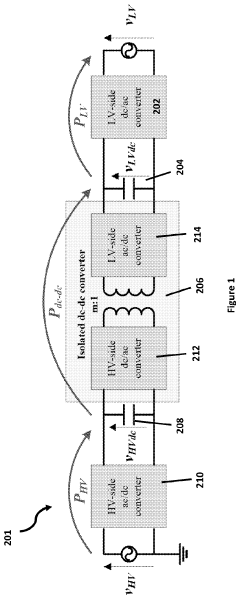
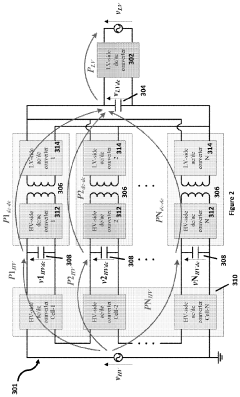
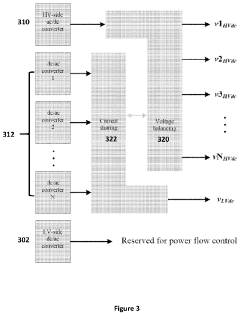
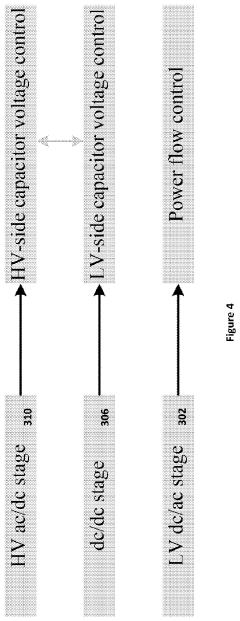
- A decoupled control system for SSTs, comprising a stored energy controller, power flow controller, and energy balancing controllers, each configured to operate independently to manage energy within capacitors, eliminate voltage ripples, and regulate power flow without requiring voltage balancing or power sharing mechanisms, allowing for separate deployment of stages and reduced hardware requirements.
Grid Integration Standards and Regulatory Requirements
The integration of solid-state transformers and traditional stage transformers into electrical grids requires adherence to distinct regulatory frameworks and technical standards. Both technologies must comply with fundamental grid codes such as IEEE 1547 for distributed energy resources and IEC 61850 for communication protocols in electrical substations. However, the regulatory landscape presents unique challenges for each transformer type due to their different operational characteristics and installation requirements.
Solid-state transformers face more complex regulatory scrutiny due to their advanced power electronics components and bidirectional power flow capabilities. These devices must meet stringent electromagnetic compatibility standards under IEC 61000 series, particularly regarding harmonic distortion and switching frequency emissions. Additionally, cybersecurity regulations become critical as SSTs often incorporate digital communication interfaces and smart grid functionalities, requiring compliance with NERC CIP standards for critical infrastructure protection.
Traditional stage transformers benefit from well-established regulatory pathways, with decades of standardization under IEC 60076 series and IEEE C57 standards. Their approval processes are typically more streamlined, as utilities and regulatory bodies possess extensive experience with conventional transformer technologies. Installation permits and grid connection approvals generally follow predictable timelines and requirements.
Grid integration standards for both technologies emphasize power quality requirements, including voltage regulation, fault current contribution, and protection coordination. However, SSTs must additionally demonstrate compliance with emerging standards for energy storage integration and renewable energy interface requirements, as defined in IEEE 2030 series standards.
Regulatory requirements also differ significantly in terms of testing and certification procedures. While traditional transformers undergo standardized factory acceptance tests, SSTs require additional validation of their control algorithms, communication protocols, and grid support functions. This extended certification process can impact project timelines and deployment strategies, particularly in jurisdictions with evolving smart grid regulations.
The regulatory environment continues to evolve as grid modernization initiatives advance, with new standards emerging specifically for power electronic-based grid assets. Understanding these regulatory nuances is essential for successful transformer selection and deployment in contemporary electrical infrastructure projects.
Solid-state transformers face more complex regulatory scrutiny due to their advanced power electronics components and bidirectional power flow capabilities. These devices must meet stringent electromagnetic compatibility standards under IEC 61000 series, particularly regarding harmonic distortion and switching frequency emissions. Additionally, cybersecurity regulations become critical as SSTs often incorporate digital communication interfaces and smart grid functionalities, requiring compliance with NERC CIP standards for critical infrastructure protection.
Traditional stage transformers benefit from well-established regulatory pathways, with decades of standardization under IEC 60076 series and IEEE C57 standards. Their approval processes are typically more streamlined, as utilities and regulatory bodies possess extensive experience with conventional transformer technologies. Installation permits and grid connection approvals generally follow predictable timelines and requirements.
Grid integration standards for both technologies emphasize power quality requirements, including voltage regulation, fault current contribution, and protection coordination. However, SSTs must additionally demonstrate compliance with emerging standards for energy storage integration and renewable energy interface requirements, as defined in IEEE 2030 series standards.
Regulatory requirements also differ significantly in terms of testing and certification procedures. While traditional transformers undergo standardized factory acceptance tests, SSTs require additional validation of their control algorithms, communication protocols, and grid support functions. This extended certification process can impact project timelines and deployment strategies, particularly in jurisdictions with evolving smart grid regulations.
The regulatory environment continues to evolve as grid modernization initiatives advance, with new standards emerging specifically for power electronic-based grid assets. Understanding these regulatory nuances is essential for successful transformer selection and deployment in contemporary electrical infrastructure projects.
Cost-Benefit Analysis of Setup Complexity Reduction
The economic implications of setup complexity reduction between solid-state transformers and traditional stage transformers present a compelling case for investment prioritization. Initial capital expenditure analysis reveals that while solid-state transformers command higher upfront costs, the simplified installation process significantly reduces labor expenses and project timelines. Traditional stage transformers require extensive auxiliary equipment, complex cooling systems, and specialized installation procedures that can extend deployment schedules by 30-40% compared to solid-state alternatives.
Labor cost reduction emerges as a primary economic driver when evaluating setup simplification benefits. Solid-state transformers eliminate the need for specialized technicians familiar with oil handling, complex tap changer mechanisms, and intricate protection schemes. The plug-and-play nature of solid-state systems reduces installation crew requirements from typically 8-12 personnel to 4-6 personnel, while simultaneously shortening installation windows from weeks to days. This workforce optimization translates to immediate cost savings of 25-35% in deployment expenses.
Infrastructure preparation costs demonstrate substantial variance between the two technologies. Traditional stage transformers necessitate reinforced foundations, oil containment systems, fire suppression infrastructure, and extensive cable management solutions. Solid-state transformers, with their compact form factor and reduced weight, require minimal civil works and simplified electrical connections. The elimination of oil-related safety infrastructure alone can reduce site preparation costs by 40-50% in typical installations.
Operational readiness timelines significantly impact project economics through reduced time-to-revenue metrics. Solid-state transformers achieve operational status within 24-48 hours post-installation, compared to 1-2 weeks required for traditional transformer commissioning. This accelerated deployment schedule translates to earlier revenue generation, particularly critical in commercial and industrial applications where downtime directly impacts profitability.
Long-term maintenance cost projections favor solid-state solutions due to reduced complexity in monitoring and diagnostic systems. The digital nature of solid-state transformers enables predictive maintenance algorithms and remote monitoring capabilities, reducing scheduled maintenance interventions by approximately 60%. Traditional transformers require regular oil analysis, mechanical component inspections, and periodic overhauls that collectively represent 15-20% of total lifecycle costs.
Risk mitigation benefits provide additional economic value through reduced insurance premiums and regulatory compliance costs. The elimination of oil-filled equipment reduces environmental liability exposure and simplifies permitting processes, particularly in urban installations where environmental regulations are stringent.
Labor cost reduction emerges as a primary economic driver when evaluating setup simplification benefits. Solid-state transformers eliminate the need for specialized technicians familiar with oil handling, complex tap changer mechanisms, and intricate protection schemes. The plug-and-play nature of solid-state systems reduces installation crew requirements from typically 8-12 personnel to 4-6 personnel, while simultaneously shortening installation windows from weeks to days. This workforce optimization translates to immediate cost savings of 25-35% in deployment expenses.
Infrastructure preparation costs demonstrate substantial variance between the two technologies. Traditional stage transformers necessitate reinforced foundations, oil containment systems, fire suppression infrastructure, and extensive cable management solutions. Solid-state transformers, with their compact form factor and reduced weight, require minimal civil works and simplified electrical connections. The elimination of oil-related safety infrastructure alone can reduce site preparation costs by 40-50% in typical installations.
Operational readiness timelines significantly impact project economics through reduced time-to-revenue metrics. Solid-state transformers achieve operational status within 24-48 hours post-installation, compared to 1-2 weeks required for traditional transformer commissioning. This accelerated deployment schedule translates to earlier revenue generation, particularly critical in commercial and industrial applications where downtime directly impacts profitability.
Long-term maintenance cost projections favor solid-state solutions due to reduced complexity in monitoring and diagnostic systems. The digital nature of solid-state transformers enables predictive maintenance algorithms and remote monitoring capabilities, reducing scheduled maintenance interventions by approximately 60%. Traditional transformers require regular oil analysis, mechanical component inspections, and periodic overhauls that collectively represent 15-20% of total lifecycle costs.
Risk mitigation benefits provide additional economic value through reduced insurance premiums and regulatory compliance costs. The elimination of oil-filled equipment reduces environmental liability exposure and simplifies permitting processes, particularly in urban installations where environmental regulations are stringent.
Unlock deeper insights with Patsnap Eureka Quick Research — get a full tech report to explore trends and direct your research. Try now!
Generate Your Research Report Instantly with AI Agent
Supercharge your innovation with Patsnap Eureka AI Agent Platform!