

TIM Performance vs Pressure
MAR 27, 20269 MIN READ
Generate Your Research Report Instantly with AI Agent
PatSnap Eureka helps you evaluate technical feasibility & market potential.
TIM Pressure Performance Background and Objectives
Thermal Interface Materials (TIMs) have emerged as critical components in modern electronic systems, serving as the essential bridge between heat-generating components and heat dissipation solutions. As electronic devices continue to evolve toward higher power densities and more compact form factors, the thermal management challenges have intensified significantly. The relationship between TIM performance and applied pressure represents a fundamental aspect of thermal interface design that directly impacts system reliability, performance, and longevity.
The historical development of TIM technology traces back to the early days of semiconductor packaging, where simple thermal greases and pads were sufficient for basic heat dissipation needs. However, the exponential growth in processing power, particularly in CPUs, GPUs, and power electronics, has driven the demand for more sophisticated thermal interface solutions. The evolution from basic silicone-based compounds to advanced materials incorporating metal particles, carbon nanotubes, and phase-change materials reflects the industry's response to increasingly stringent thermal requirements.
The pressure-performance relationship in TIMs has become increasingly critical as manufacturers seek to optimize thermal conductivity while managing mechanical stress on sensitive components. This relationship is particularly complex because it involves multiple physical phenomena, including material deformation, air void elimination, and contact resistance reduction. Understanding how different TIM formulations respond to varying pressure levels is essential for achieving optimal thermal performance without compromising component integrity.
Current technological objectives focus on developing TIM solutions that can deliver consistent thermal performance across a wide range of applied pressures while maintaining long-term stability. The industry seeks materials that can achieve maximum thermal conductivity at relatively low pressures to minimize mechanical stress on delicate semiconductor packages and printed circuit boards. Additionally, there is a growing emphasis on developing pressure-sensitive TIMs that can adapt to dynamic loading conditions in applications such as automotive electronics and aerospace systems.
The convergence of advanced materials science, nanotechnology, and precision manufacturing techniques has opened new possibilities for pressure-optimized TIM designs. These developments aim to address the fundamental trade-offs between thermal performance, mechanical compliance, and application versatility that have historically constrained TIM effectiveness in high-performance electronic systems.
The historical development of TIM technology traces back to the early days of semiconductor packaging, where simple thermal greases and pads were sufficient for basic heat dissipation needs. However, the exponential growth in processing power, particularly in CPUs, GPUs, and power electronics, has driven the demand for more sophisticated thermal interface solutions. The evolution from basic silicone-based compounds to advanced materials incorporating metal particles, carbon nanotubes, and phase-change materials reflects the industry's response to increasingly stringent thermal requirements.
The pressure-performance relationship in TIMs has become increasingly critical as manufacturers seek to optimize thermal conductivity while managing mechanical stress on sensitive components. This relationship is particularly complex because it involves multiple physical phenomena, including material deformation, air void elimination, and contact resistance reduction. Understanding how different TIM formulations respond to varying pressure levels is essential for achieving optimal thermal performance without compromising component integrity.
Current technological objectives focus on developing TIM solutions that can deliver consistent thermal performance across a wide range of applied pressures while maintaining long-term stability. The industry seeks materials that can achieve maximum thermal conductivity at relatively low pressures to minimize mechanical stress on delicate semiconductor packages and printed circuit boards. Additionally, there is a growing emphasis on developing pressure-sensitive TIMs that can adapt to dynamic loading conditions in applications such as automotive electronics and aerospace systems.
The convergence of advanced materials science, nanotechnology, and precision manufacturing techniques has opened new possibilities for pressure-optimized TIM designs. These developments aim to address the fundamental trade-offs between thermal performance, mechanical compliance, and application versatility that have historically constrained TIM effectiveness in high-performance electronic systems.
Market Demand for Pressure-Resistant TIM Solutions
The global electronics industry faces mounting pressure to develop thermal interface materials that maintain superior performance under mechanical stress conditions. This demand stems from the continuous miniaturization of electronic devices, where components are increasingly subjected to mounting pressures, clamping forces, and mechanical constraints that can significantly impact thermal management effectiveness.
Data centers and high-performance computing applications represent the largest market segment driving this demand. Server processors and graphics processing units require robust thermal solutions that can withstand substantial mounting pressures from heat sink assemblies while maintaining optimal thermal conductivity. The reliability requirements in these environments necessitate TIM solutions that demonstrate consistent performance across varying pressure conditions throughout extended operational lifecycles.
Automotive electronics constitute another rapidly expanding market segment, particularly with the proliferation of electric vehicles and advanced driver assistance systems. Power electronics modules in electric vehicle inverters and battery management systems operate under significant mechanical stress due to vibration, thermal cycling, and mounting constraints. These applications demand TIM solutions that can maintain thermal performance integrity under dynamic pressure variations while meeting automotive reliability standards.
Consumer electronics manufacturers increasingly seek pressure-resistant TIM solutions to address thermal challenges in ultra-thin devices. Smartphones, tablets, and laptops require thermal interface materials that can function effectively under the mechanical constraints imposed by compact form factors and lightweight construction requirements. The trend toward higher power densities in portable devices amplifies the need for TIM materials that resist performance degradation under mounting pressure.
Industrial and aerospace applications present specialized market opportunities for advanced pressure-resistant TIM solutions. These sectors require materials capable of maintaining thermal performance under extreme mechanical loading conditions while meeting stringent reliability and longevity requirements. The growing adoption of power electronics in industrial automation and renewable energy systems further expands market demand.
The semiconductor packaging industry drives significant demand for TIM solutions that can accommodate the mechanical stresses inherent in advanced packaging technologies. Three-dimensional integrated circuits and system-in-package designs create complex thermal management challenges where traditional TIM materials may experience performance degradation under assembly pressures and thermal cycling conditions.
Market growth is further accelerated by increasing awareness of the relationship between mechanical stress and thermal performance degradation in existing TIM solutions, prompting manufacturers to seek more robust alternatives that can deliver consistent thermal management across diverse operating conditions.
Data centers and high-performance computing applications represent the largest market segment driving this demand. Server processors and graphics processing units require robust thermal solutions that can withstand substantial mounting pressures from heat sink assemblies while maintaining optimal thermal conductivity. The reliability requirements in these environments necessitate TIM solutions that demonstrate consistent performance across varying pressure conditions throughout extended operational lifecycles.
Automotive electronics constitute another rapidly expanding market segment, particularly with the proliferation of electric vehicles and advanced driver assistance systems. Power electronics modules in electric vehicle inverters and battery management systems operate under significant mechanical stress due to vibration, thermal cycling, and mounting constraints. These applications demand TIM solutions that can maintain thermal performance integrity under dynamic pressure variations while meeting automotive reliability standards.
Consumer electronics manufacturers increasingly seek pressure-resistant TIM solutions to address thermal challenges in ultra-thin devices. Smartphones, tablets, and laptops require thermal interface materials that can function effectively under the mechanical constraints imposed by compact form factors and lightweight construction requirements. The trend toward higher power densities in portable devices amplifies the need for TIM materials that resist performance degradation under mounting pressure.
Industrial and aerospace applications present specialized market opportunities for advanced pressure-resistant TIM solutions. These sectors require materials capable of maintaining thermal performance under extreme mechanical loading conditions while meeting stringent reliability and longevity requirements. The growing adoption of power electronics in industrial automation and renewable energy systems further expands market demand.
The semiconductor packaging industry drives significant demand for TIM solutions that can accommodate the mechanical stresses inherent in advanced packaging technologies. Three-dimensional integrated circuits and system-in-package designs create complex thermal management challenges where traditional TIM materials may experience performance degradation under assembly pressures and thermal cycling conditions.
Market growth is further accelerated by increasing awareness of the relationship between mechanical stress and thermal performance degradation in existing TIM solutions, prompting manufacturers to seek more robust alternatives that can deliver consistent thermal management across diverse operating conditions.
Current TIM Pressure Performance Status and Challenges
Thermal Interface Materials currently exhibit significant performance variations under different pressure conditions, presenting both opportunities and limitations in thermal management applications. The relationship between applied pressure and thermal conductivity in TIMs follows complex patterns that vary substantially across different material categories and formulations.
Gap-filling TIMs, including thermal greases and phase change materials, demonstrate notable pressure sensitivity with thermal performance typically improving under moderate compression forces ranging from 10 to 100 psi. However, excessive pressure beyond optimal thresholds can lead to material displacement, creating air gaps that severely compromise thermal transfer efficiency. This pressure-dependent behavior creates challenges in maintaining consistent performance across varying assembly tolerances and operational conditions.
Solid TIM solutions, such as thermal pads and graphite sheets, exhibit different pressure response characteristics compared to their liquid counterparts. While these materials generally show improved conformability and reduced contact resistance under pressure, they face limitations in terms of maximum achievable thermal conductivity and potential mechanical degradation under sustained high-pressure conditions.
Current industry standards reveal significant gaps in pressure-performance characterization methodologies. Most manufacturers provide thermal conductivity data under standardized test conditions that may not accurately reflect real-world application scenarios. The lack of comprehensive pressure-temperature mapping creates uncertainty in system design and performance prediction, particularly in applications with dynamic loading conditions.
Manufacturing consistency represents another critical challenge in pressure-dependent TIM performance. Variations in material thickness, surface finish, and component flatness directly impact the pressure distribution and subsequent thermal performance. These manufacturing tolerances can result in performance variations of 20-30% even within the same product batch.
Emerging applications in high-power electronics and automotive systems demand TIMs that maintain stable performance across broader pressure ranges while withstanding mechanical stress cycles. Current solutions often require trade-offs between optimal thermal performance and mechanical reliability, limiting their effectiveness in next-generation thermal management systems.
The integration of advanced measurement techniques and real-time monitoring capabilities remains limited in current TIM implementations. This constraint hinders the development of adaptive thermal management systems that could optimize pressure application based on dynamic thermal loads and environmental conditions.
Gap-filling TIMs, including thermal greases and phase change materials, demonstrate notable pressure sensitivity with thermal performance typically improving under moderate compression forces ranging from 10 to 100 psi. However, excessive pressure beyond optimal thresholds can lead to material displacement, creating air gaps that severely compromise thermal transfer efficiency. This pressure-dependent behavior creates challenges in maintaining consistent performance across varying assembly tolerances and operational conditions.
Solid TIM solutions, such as thermal pads and graphite sheets, exhibit different pressure response characteristics compared to their liquid counterparts. While these materials generally show improved conformability and reduced contact resistance under pressure, they face limitations in terms of maximum achievable thermal conductivity and potential mechanical degradation under sustained high-pressure conditions.
Current industry standards reveal significant gaps in pressure-performance characterization methodologies. Most manufacturers provide thermal conductivity data under standardized test conditions that may not accurately reflect real-world application scenarios. The lack of comprehensive pressure-temperature mapping creates uncertainty in system design and performance prediction, particularly in applications with dynamic loading conditions.
Manufacturing consistency represents another critical challenge in pressure-dependent TIM performance. Variations in material thickness, surface finish, and component flatness directly impact the pressure distribution and subsequent thermal performance. These manufacturing tolerances can result in performance variations of 20-30% even within the same product batch.
Emerging applications in high-power electronics and automotive systems demand TIMs that maintain stable performance across broader pressure ranges while withstanding mechanical stress cycles. Current solutions often require trade-offs between optimal thermal performance and mechanical reliability, limiting their effectiveness in next-generation thermal management systems.
The integration of advanced measurement techniques and real-time monitoring capabilities remains limited in current TIM implementations. This constraint hinders the development of adaptive thermal management systems that could optimize pressure application based on dynamic thermal loads and environmental conditions.
Existing TIM Pressure Optimization Solutions
01 Thermal interface material composition and formulation
Development of thermal interface materials with specific compositions to enhance heat transfer properties. These materials are formulated with various components including polymers, fillers, and additives to achieve optimal thermal conductivity and mechanical properties. The formulations focus on achieving the right balance between thermal performance and ease of application.- Thermal interface material composition and formulation: Thermal interface materials (TIMs) can be formulated with specific compositions to enhance thermal conductivity and heat dissipation performance. These materials typically include thermally conductive fillers, polymer matrices, and additives that optimize the interface between heat-generating components and heat sinks. The formulation focuses on achieving low thermal resistance while maintaining mechanical stability and ease of application.
- Phase change materials for thermal management: Phase change materials can be incorporated into thermal interface solutions to improve heat transfer efficiency. These materials undergo phase transitions at specific temperatures, absorbing or releasing thermal energy to maintain optimal operating temperatures. The integration of phase change materials helps manage thermal spikes and provides consistent thermal performance across varying operational conditions.
- Nanoparticle-enhanced thermal conductivity: The incorporation of nanoparticles into thermal interface materials significantly enhances thermal conductivity. Various types of nanoparticles, including metallic, ceramic, and carbon-based materials, can be dispersed within the matrix to create efficient thermal pathways. This approach improves heat dissipation while maintaining desirable mechanical and processing properties of the thermal interface material.
- Application methods and dispensing techniques: Advanced application methods and dispensing techniques are critical for optimizing thermal interface material performance. These techniques ensure uniform coverage, controlled thickness, and proper wetting of surfaces to minimize thermal resistance. Automated dispensing systems and precision application processes help achieve consistent performance and reduce manufacturing variability.
- Testing and characterization of thermal performance: Comprehensive testing and characterization methods are essential for evaluating thermal interface material performance. These methods include thermal resistance measurements, thermal conductivity testing, and reliability assessments under various environmental conditions. Standardized testing protocols help ensure that thermal interface materials meet performance specifications and maintain stability throughout their operational lifetime.
02 High thermal conductivity filler materials
Incorporation of high thermal conductivity fillers such as metal particles, carbon-based materials, or ceramic particles to improve the overall thermal performance of interface materials. These fillers are selected and processed to maximize heat dissipation while maintaining material stability and workability. The particle size, shape, and distribution of fillers are optimized for enhanced performance.Expand Specific Solutions03 Application methods and processing techniques
Various methods for applying and processing thermal interface materials to ensure uniform coverage and optimal contact between heat-generating components and heat sinks. These techniques include dispensing, printing, and curing processes that affect the final performance characteristics. The methods are designed to minimize thermal resistance and improve reliability.Expand Specific Solutions04 Phase change and conformable thermal materials
Development of thermal interface materials that can change phase or conform to surface irregularities to improve thermal contact. These materials are designed to flow or soften at operating temperatures to fill air gaps and reduce thermal resistance. The conformability ensures better surface contact and enhanced heat transfer efficiency.Expand Specific Solutions05 Durability and long-term stability enhancement
Improvements in thermal interface materials to ensure long-term performance stability under various operating conditions including thermal cycling, mechanical stress, and environmental exposure. These enhancements focus on preventing degradation, maintaining thermal conductivity over time, and ensuring reliable operation throughout the product lifecycle. Material formulations are optimized for resistance to pump-out, dry-out, and other failure mechanisms.Expand Specific Solutions
Key Players in High-Performance TIM Industry
The TIM (Thermal Interface Material) performance versus pressure technology landscape represents a mature yet evolving market driven by increasing thermal management demands across electronics, automotive, and industrial sectors. The industry is experiencing steady growth with market expansion fueled by miniaturization trends and higher power densities in electronic devices. Technology maturity varies significantly among key players, with semiconductor leaders like Intel Corp., Taiwan Semiconductor Manufacturing Co., Samsung Electronics, and QUALCOMM driving advanced material requirements. Automotive giants including Robert Bosch GmbH, Jaguar Land Rover, and Bridgestone Corp. are pushing performance boundaries for electric vehicle applications. Material specialists such as Dow Silicones Corp., ExxonMobil Chemical Patents, and Schunk Kohlenstofftechnik GmbH are developing next-generation solutions, while emerging players like BNNT Materials LLC are exploring breakthrough nanotube technologies, indicating a competitive landscape balancing established solutions with innovative approaches.
Intel Corp.
Technical Solution: Intel has developed sophisticated thermal interface materials as part of their processor packaging technology, addressing the critical relationship between mounting pressure and thermal performance. Their TIM solutions incorporate advanced metallurgical approaches including liquid metal interfaces and pressure-optimized thermal compounds that maintain consistent thermal conductivity across varying contact pressures. Intel's technology addresses the challenge of achieving optimal thermal performance while accommodating manufacturing tolerances in processor mounting systems. Their research includes pressure-mapping studies to optimize TIM formulations for specific pressure ranges, ensuring maximum heat transfer efficiency in high-performance computing applications where thermal management is paramount for maintaining processor performance and reliability.
Strengths: Cutting-edge research capabilities and deep understanding of high-performance thermal management. Weaknesses: Solutions primarily designed for specific processor applications with limited availability for external customers.
Taiwan Semiconductor Manufacturing Co., Ltd.
Technical Solution: TSMC has developed advanced thermal interface materials for semiconductor packaging applications where precise pressure control is essential for optimal thermal performance. Their TIM technology incorporates innovative polymer-based solutions with thermally conductive nanoparticles that demonstrate stable thermal resistance across different assembly pressures. The company's approach focuses on maintaining consistent thermal conductivity in advanced packaging technologies including 3D stacking and system-in-package solutions where pressure variations can significantly impact thermal management. TSMC's TIM solutions are engineered to accommodate the mechanical stresses encountered in advanced semiconductor packaging while preserving thermal performance, particularly important for high-density chip configurations where thermal hotspots must be effectively managed.
Strengths: Leading-edge semiconductor packaging expertise and advanced materials characterization capabilities. Weaknesses: Technology primarily focused on semiconductor applications with limited diversification to other industries.
Core Innovations in Pressure-Enhanced TIM Technologies
Thermal interface material
PatentWO2019211707A1
Innovation
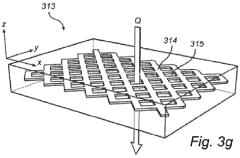
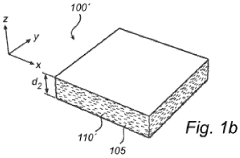
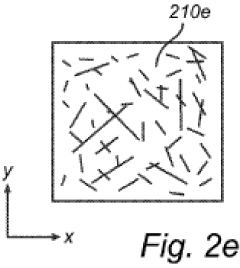
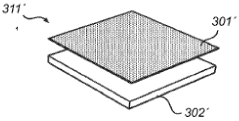
- A TIM comprising multiple heat conductive layers, including continuous and discontinuous layers with parallel-spaced heat conductive strips that expand laterally and contact each other upon compression, achieving high thermal conductivity (1.5 W/mK or more) with a compression rate of 30% or more at a compressive force of 10 kgf/cm², allowing for easy compression with less pressure.


Thermal interface material
PatentActiveIN7138CHENP2014A
Innovation
- A TIM with an activable shrinkage material that increases in thickness upon activation, providing enhanced contact pressure and robustness by expanding in the z-direction, thus eliminating the need for external pressure and addressing surface curvature and roughness, using heat-sensitive fibers or monomers that polymerize or expand to enhance thermal interface performance.
Thermal Management Standards and Compliance Requirements
The thermal management industry operates under a comprehensive framework of standards and compliance requirements that directly impact TIM performance evaluation under pressure conditions. These regulatory frameworks establish baseline performance criteria, testing methodologies, and safety parameters that manufacturers must adhere to when developing and deploying thermal interface materials in pressure-sensitive applications.
International standards organizations, including ASTM International, IEC, and ISO, have established specific testing protocols for thermal interface materials under mechanical stress conditions. ASTM D5470 remains the primary standard for thermal transmission properties measurement, while newer standards like ASTM D5961 address thermal impedance under applied pressure. These standards mandate specific pressure application ranges, typically from 10 to 200 psi, ensuring consistent evaluation methodologies across different manufacturers and applications.
Industry-specific compliance requirements vary significantly across sectors. Automotive applications must meet AEC-Q200 qualification standards, which include thermal cycling tests under sustained mechanical pressure to simulate real-world mounting conditions. Aerospace applications require adherence to MIL-STD specifications that encompass extreme pressure variations and thermal performance stability. Consumer electronics follow JEDEC standards, particularly JESD51 series, which define thermal measurement methodologies for semiconductor packages under various mounting pressures.
Regulatory bodies increasingly emphasize environmental compliance alongside thermal performance standards. RoHS and REACH regulations restrict hazardous substances in TIM formulations, while simultaneously requiring maintained thermal efficiency under operational pressures. This dual requirement drives innovation in eco-friendly TIM compositions that must demonstrate consistent thermal conductivity across specified pressure ranges without compromising environmental safety standards.
Emerging compliance trends focus on long-term reliability testing under sustained pressure conditions. New draft standards propose accelerated aging protocols that combine thermal cycling with constant mechanical stress, reflecting real-world application scenarios where TIMs experience continuous pressure over extended operational periods. These evolving requirements necessitate comprehensive documentation of pressure-dependent thermal performance degradation patterns and establishment of minimum acceptable performance thresholds throughout product lifecycles.
International standards organizations, including ASTM International, IEC, and ISO, have established specific testing protocols for thermal interface materials under mechanical stress conditions. ASTM D5470 remains the primary standard for thermal transmission properties measurement, while newer standards like ASTM D5961 address thermal impedance under applied pressure. These standards mandate specific pressure application ranges, typically from 10 to 200 psi, ensuring consistent evaluation methodologies across different manufacturers and applications.
Industry-specific compliance requirements vary significantly across sectors. Automotive applications must meet AEC-Q200 qualification standards, which include thermal cycling tests under sustained mechanical pressure to simulate real-world mounting conditions. Aerospace applications require adherence to MIL-STD specifications that encompass extreme pressure variations and thermal performance stability. Consumer electronics follow JEDEC standards, particularly JESD51 series, which define thermal measurement methodologies for semiconductor packages under various mounting pressures.
Regulatory bodies increasingly emphasize environmental compliance alongside thermal performance standards. RoHS and REACH regulations restrict hazardous substances in TIM formulations, while simultaneously requiring maintained thermal efficiency under operational pressures. This dual requirement drives innovation in eco-friendly TIM compositions that must demonstrate consistent thermal conductivity across specified pressure ranges without compromising environmental safety standards.
Emerging compliance trends focus on long-term reliability testing under sustained pressure conditions. New draft standards propose accelerated aging protocols that combine thermal cycling with constant mechanical stress, reflecting real-world application scenarios where TIMs experience continuous pressure over extended operational periods. These evolving requirements necessitate comprehensive documentation of pressure-dependent thermal performance degradation patterns and establishment of minimum acceptable performance thresholds throughout product lifecycles.
Reliability Testing Protocols for TIM Pressure Applications
Establishing comprehensive reliability testing protocols for TIM pressure applications requires a systematic approach that addresses the unique challenges posed by varying pressure conditions in thermal management systems. These protocols must account for the dynamic nature of pressure-induced performance variations while ensuring reproducible and meaningful test results across different application scenarios.
The foundation of effective reliability testing lies in developing standardized pressure application methodologies that simulate real-world operating conditions. Testing protocols should incorporate both static and dynamic pressure scenarios, ranging from initial assembly pressures to operational stress variations encountered during thermal cycling. Critical parameters include pressure uniformity across the TIM interface, loading rate consistency, and long-term pressure stability maintenance throughout extended test durations.
Temperature cycling protocols under controlled pressure conditions form a crucial component of reliability assessment. These tests must evaluate TIM performance degradation patterns when subjected to simultaneous thermal and mechanical stress. The protocols should define specific temperature ranges, cycling rates, and pressure maintenance requirements that reflect actual application environments, particularly in high-performance computing and automotive electronics applications.
Accelerated aging methodologies specifically designed for pressure-sensitive TIM applications require careful consideration of stress acceleration factors. Traditional thermal aging approaches must be modified to incorporate pressure-related degradation mechanisms, including material creep, bond line thickness variations, and interfacial adhesion changes. These protocols should establish correlation factors between accelerated test conditions and real-world operational lifespans.
Measurement standardization represents another critical aspect of reliability testing protocols. Consistent thermal resistance measurement techniques under controlled pressure conditions ensure data comparability across different test facilities and time periods. Protocols must specify measurement equipment calibration procedures, sample preparation methods, and environmental control requirements to minimize measurement uncertainties.
Documentation and traceability requirements for pressure-based reliability testing demand comprehensive data recording systems that capture both thermal performance metrics and mechanical property changes throughout test sequences. These protocols should establish clear pass/fail criteria, statistical analysis methods, and reporting formats that enable effective comparison of different TIM formulations and application techniques under various pressure scenarios.
The foundation of effective reliability testing lies in developing standardized pressure application methodologies that simulate real-world operating conditions. Testing protocols should incorporate both static and dynamic pressure scenarios, ranging from initial assembly pressures to operational stress variations encountered during thermal cycling. Critical parameters include pressure uniformity across the TIM interface, loading rate consistency, and long-term pressure stability maintenance throughout extended test durations.
Temperature cycling protocols under controlled pressure conditions form a crucial component of reliability assessment. These tests must evaluate TIM performance degradation patterns when subjected to simultaneous thermal and mechanical stress. The protocols should define specific temperature ranges, cycling rates, and pressure maintenance requirements that reflect actual application environments, particularly in high-performance computing and automotive electronics applications.
Accelerated aging methodologies specifically designed for pressure-sensitive TIM applications require careful consideration of stress acceleration factors. Traditional thermal aging approaches must be modified to incorporate pressure-related degradation mechanisms, including material creep, bond line thickness variations, and interfacial adhesion changes. These protocols should establish correlation factors between accelerated test conditions and real-world operational lifespans.
Measurement standardization represents another critical aspect of reliability testing protocols. Consistent thermal resistance measurement techniques under controlled pressure conditions ensure data comparability across different test facilities and time periods. Protocols must specify measurement equipment calibration procedures, sample preparation methods, and environmental control requirements to minimize measurement uncertainties.
Documentation and traceability requirements for pressure-based reliability testing demand comprehensive data recording systems that capture both thermal performance metrics and mechanical property changes throughout test sequences. These protocols should establish clear pass/fail criteria, statistical analysis methods, and reporting formats that enable effective comparison of different TIM formulations and application techniques under various pressure scenarios.
Unlock deeper insights with PatSnap Eureka Quick Research — get a full tech report to explore trends and direct your research. Try now!
Generate Your Research Report Instantly with AI Agent
Supercharge your innovation with PatSnap Eureka AI Agent Platform!