

TIM Performance vs Surface Contact
MAR 27, 20269 MIN READ
Generate Your Research Report Instantly with AI Agent
Patsnap Eureka helps you evaluate technical feasibility & market potential.
TIM Technology Background and Performance Goals
Thermal Interface Materials (TIMs) have emerged as critical components in modern electronic systems, serving as the essential bridge between heat-generating components and heat dissipation solutions. The fundamental principle underlying TIM technology revolves around minimizing thermal resistance at interfaces where air gaps naturally occur between mating surfaces. These microscopic air pockets, inherently poor thermal conductors, create significant barriers to efficient heat transfer in electronic assemblies.
The evolution of TIM technology has been driven by the relentless advancement of semiconductor devices, which continue to generate higher heat fluxes within increasingly compact form factors. Traditional cooling solutions have reached their limits, necessitating more sophisticated thermal management approaches. TIMs address this challenge by conforming to surface irregularities and filling microscopic voids, thereby establishing continuous thermal pathways between components and heat sinks.
The relationship between TIM performance and surface contact represents a fundamental engineering challenge that has shaped decades of materials science research. Surface roughness, flatness deviations, and contact pressure variations directly influence the effectiveness of thermal interface materials. As electronic components have become more powerful and densely packed, the demands on TIM performance have intensified correspondingly.
Contemporary TIM technology encompasses diverse material categories, including thermal greases, phase change materials, thermal pads, and advanced polymer composites. Each category addresses specific application requirements while confronting the universal challenge of optimizing thermal conductivity, mechanical compliance, and long-term reliability. The performance metrics have evolved beyond simple thermal conductivity measurements to include contact resistance, pump-out resistance, and thermal cycling durability.
The primary technological objective in TIM development centers on achieving maximum thermal conductivity while maintaining optimal surface conformability. This dual requirement creates inherent trade-offs, as materials with high thermal conductivity often exhibit reduced flexibility and surface wetting characteristics. Advanced TIM formulations seek to overcome these limitations through innovative filler technologies, matrix materials, and surface treatment methodologies.
Current performance goals emphasize achieving thermal resistances below 0.1 K·cm²/W while ensuring reliable operation across temperature ranges exceeding 150°C. Additionally, modern TIM solutions must demonstrate compatibility with automated assembly processes, extended operational lifespans, and minimal maintenance requirements. These objectives drive continuous innovation in material composition, manufacturing processes, and application techniques within the thermal management industry.
The evolution of TIM technology has been driven by the relentless advancement of semiconductor devices, which continue to generate higher heat fluxes within increasingly compact form factors. Traditional cooling solutions have reached their limits, necessitating more sophisticated thermal management approaches. TIMs address this challenge by conforming to surface irregularities and filling microscopic voids, thereby establishing continuous thermal pathways between components and heat sinks.
The relationship between TIM performance and surface contact represents a fundamental engineering challenge that has shaped decades of materials science research. Surface roughness, flatness deviations, and contact pressure variations directly influence the effectiveness of thermal interface materials. As electronic components have become more powerful and densely packed, the demands on TIM performance have intensified correspondingly.
Contemporary TIM technology encompasses diverse material categories, including thermal greases, phase change materials, thermal pads, and advanced polymer composites. Each category addresses specific application requirements while confronting the universal challenge of optimizing thermal conductivity, mechanical compliance, and long-term reliability. The performance metrics have evolved beyond simple thermal conductivity measurements to include contact resistance, pump-out resistance, and thermal cycling durability.
The primary technological objective in TIM development centers on achieving maximum thermal conductivity while maintaining optimal surface conformability. This dual requirement creates inherent trade-offs, as materials with high thermal conductivity often exhibit reduced flexibility and surface wetting characteristics. Advanced TIM formulations seek to overcome these limitations through innovative filler technologies, matrix materials, and surface treatment methodologies.
Current performance goals emphasize achieving thermal resistances below 0.1 K·cm²/W while ensuring reliable operation across temperature ranges exceeding 150°C. Additionally, modern TIM solutions must demonstrate compatibility with automated assembly processes, extended operational lifespans, and minimal maintenance requirements. These objectives drive continuous innovation in material composition, manufacturing processes, and application techniques within the thermal management industry.
Market Demand for Advanced Thermal Interface Materials
The global thermal interface materials market is experiencing unprecedented growth driven by the escalating demand for efficient thermal management solutions across multiple industries. Electronic devices are becoming increasingly compact while generating higher heat densities, creating critical challenges for maintaining optimal operating temperatures. This trend is particularly pronounced in high-performance computing, automotive electronics, and consumer devices where thermal bottlenecks directly impact performance and reliability.
Data centers represent one of the most significant demand drivers, as server processors and graphics processing units continue to push thermal design power limits. The proliferation of artificial intelligence and machine learning applications has intensified computational workloads, necessitating advanced thermal interface materials that can effectively bridge the gap between heat-generating components and cooling systems. Surface contact optimization has become paramount in these applications where even minor improvements in thermal conductivity translate to substantial performance gains.
The automotive sector is witnessing explosive growth in thermal interface material requirements, primarily fueled by the electric vehicle revolution. Battery thermal management systems, power electronics, and advanced driver assistance systems all require sophisticated thermal solutions. The relationship between TIM performance and surface contact becomes critical in automotive applications where temperature variations can affect battery life, charging efficiency, and overall vehicle performance.
Consumer electronics manufacturers are increasingly prioritizing thermal management as devices become thinner and more powerful. Smartphones, tablets, and laptops now incorporate multiple heat-generating components in confined spaces, making surface contact quality a determining factor in thermal performance. The demand for materials that can conform to irregular surfaces while maintaining high thermal conductivity continues to drive market expansion.
Emerging applications in renewable energy systems, particularly solar inverters and wind turbine electronics, are creating new market segments for advanced thermal interface materials. These applications often operate in harsh environmental conditions where maintaining consistent surface contact over extended periods becomes crucial for system reliability and longevity.
The market demand is also being shaped by evolving performance requirements, with end-users seeking materials that can achieve superior thermal performance while addressing surface imperfections and maintaining long-term stability under thermal cycling conditions.
Data centers represent one of the most significant demand drivers, as server processors and graphics processing units continue to push thermal design power limits. The proliferation of artificial intelligence and machine learning applications has intensified computational workloads, necessitating advanced thermal interface materials that can effectively bridge the gap between heat-generating components and cooling systems. Surface contact optimization has become paramount in these applications where even minor improvements in thermal conductivity translate to substantial performance gains.
The automotive sector is witnessing explosive growth in thermal interface material requirements, primarily fueled by the electric vehicle revolution. Battery thermal management systems, power electronics, and advanced driver assistance systems all require sophisticated thermal solutions. The relationship between TIM performance and surface contact becomes critical in automotive applications where temperature variations can affect battery life, charging efficiency, and overall vehicle performance.
Consumer electronics manufacturers are increasingly prioritizing thermal management as devices become thinner and more powerful. Smartphones, tablets, and laptops now incorporate multiple heat-generating components in confined spaces, making surface contact quality a determining factor in thermal performance. The demand for materials that can conform to irregular surfaces while maintaining high thermal conductivity continues to drive market expansion.
Emerging applications in renewable energy systems, particularly solar inverters and wind turbine electronics, are creating new market segments for advanced thermal interface materials. These applications often operate in harsh environmental conditions where maintaining consistent surface contact over extended periods becomes crucial for system reliability and longevity.
The market demand is also being shaped by evolving performance requirements, with end-users seeking materials that can achieve superior thermal performance while addressing surface imperfections and maintaining long-term stability under thermal cycling conditions.
Current TIM Performance Limitations and Surface Challenges
Thermal Interface Materials face significant performance constraints that directly correlate with surface contact quality and material properties. The fundamental challenge lies in achieving optimal thermal conductivity while maintaining mechanical compliance across diverse operating conditions. Current TIM solutions struggle to balance these competing requirements, often sacrificing one performance aspect for another.
Surface roughness presents a critical limitation in TIM effectiveness. Microscopic surface irregularities create air gaps that act as thermal barriers, significantly reducing heat transfer efficiency. Even with applied pressure, many TIMs cannot adequately conform to surface asperities, particularly on substrates with Ra values exceeding 1-2 micrometers. This conformability issue becomes more pronounced with harder TIM formulations that offer higher bulk thermal conductivity.
Thermal conductivity degradation over operational cycles represents another major constraint. Repeated thermal cycling causes material fatigue, leading to delamination, void formation, and reduced contact area. Silicone-based TIMs typically experience 15-25% thermal performance degradation after 1000 thermal cycles, while phase change materials may exhibit pump-out effects that further compromise interface integrity.
Contact resistance remains a persistent challenge, particularly at the TIM-substrate interface. Even high-performance TIMs with bulk thermal conductivities exceeding 5 W/mK can exhibit total thermal resistance values of 0.1-0.3 K·cm²/W due to interfacial resistance. This phenomenon is exacerbated by oxide layers, surface contamination, and chemical incompatibility between TIM and substrate materials.
Pressure sensitivity creates additional application constraints. While increased contact pressure generally improves thermal performance by reducing bond line thickness and enhancing surface contact, excessive pressure can cause material displacement, component damage, or reliability issues. Most TIMs require pressures between 10-50 psi for optimal performance, limiting their applicability in pressure-sensitive assemblies.
Temperature-dependent property variations further complicate TIM performance optimization. Viscosity changes, thermal expansion mismatches, and phase transitions can dramatically alter thermal interface effectiveness across operating temperature ranges. These variations are particularly problematic in applications experiencing wide temperature excursions or rapid thermal transients.
Surface roughness presents a critical limitation in TIM effectiveness. Microscopic surface irregularities create air gaps that act as thermal barriers, significantly reducing heat transfer efficiency. Even with applied pressure, many TIMs cannot adequately conform to surface asperities, particularly on substrates with Ra values exceeding 1-2 micrometers. This conformability issue becomes more pronounced with harder TIM formulations that offer higher bulk thermal conductivity.
Thermal conductivity degradation over operational cycles represents another major constraint. Repeated thermal cycling causes material fatigue, leading to delamination, void formation, and reduced contact area. Silicone-based TIMs typically experience 15-25% thermal performance degradation after 1000 thermal cycles, while phase change materials may exhibit pump-out effects that further compromise interface integrity.
Contact resistance remains a persistent challenge, particularly at the TIM-substrate interface. Even high-performance TIMs with bulk thermal conductivities exceeding 5 W/mK can exhibit total thermal resistance values of 0.1-0.3 K·cm²/W due to interfacial resistance. This phenomenon is exacerbated by oxide layers, surface contamination, and chemical incompatibility between TIM and substrate materials.
Pressure sensitivity creates additional application constraints. While increased contact pressure generally improves thermal performance by reducing bond line thickness and enhancing surface contact, excessive pressure can cause material displacement, component damage, or reliability issues. Most TIMs require pressures between 10-50 psi for optimal performance, limiting their applicability in pressure-sensitive assemblies.
Temperature-dependent property variations further complicate TIM performance optimization. Viscosity changes, thermal expansion mismatches, and phase transitions can dramatically alter thermal interface effectiveness across operating temperature ranges. These variations are particularly problematic in applications experiencing wide temperature excursions or rapid thermal transients.
Existing Solutions for Surface Contact Optimization
01 Thermal interface material composition optimization
Development of thermal interface materials with optimized compositions to enhance thermal conductivity and heat dissipation performance. These materials typically incorporate various fillers, polymers, and additives to achieve desired thermal properties while maintaining mechanical stability and processability.- Thermal interface material composition and formulation: Development of thermal interface materials with specific compositions to enhance heat transfer properties. These materials are formulated with various components including polymers, fillers, and additives to achieve optimal thermal conductivity and mechanical properties. The formulations focus on achieving the right balance between thermal performance and ease of application.
- Enhanced thermal conductivity through filler materials: Incorporation of high thermal conductivity filler materials to improve the overall performance of thermal interface materials. These fillers can include metallic particles, ceramic materials, carbon-based materials, or other thermally conductive substances that are dispersed within a matrix to create pathways for efficient heat dissipation.
- Manufacturing processes and application methods: Innovative manufacturing techniques and application methods for thermal interface materials to ensure uniform coverage and optimal contact between heat-generating components and heat sinks. These processes include coating techniques, dispensing methods, and curing procedures that affect the final performance characteristics of the material.
- Phase change and adaptive thermal materials: Development of thermal interface materials that utilize phase change properties or adaptive characteristics to maintain optimal thermal performance across varying temperature ranges. These materials can transition between different states or adjust their properties in response to temperature changes to provide consistent heat transfer efficiency.
- Reliability and long-term performance stability: Focus on ensuring long-term reliability and performance stability of thermal interface materials under various operating conditions. This includes resistance to thermal cycling, mechanical stress, aging effects, and environmental factors that could degrade the material's thermal performance over time.
02 High thermal conductivity filler integration
Integration of high thermal conductivity fillers such as metal particles, carbon-based materials, or ceramic compounds into thermal interface materials to significantly improve heat transfer capabilities. The selection and distribution of these fillers are critical for achieving optimal thermal performance.Expand Specific Solutions03 Phase change thermal interface materials
Utilization of phase change materials in thermal interface applications that transition between solid and liquid states at specific temperatures, enabling improved conformability and thermal contact with surfaces. These materials provide enhanced heat dissipation during operation while maintaining structural integrity.Expand Specific Solutions04 Manufacturing and application methods
Advanced manufacturing techniques and application methods for thermal interface materials, including coating processes, dispensing systems, and curing procedures that ensure uniform coverage and optimal bonding between heat-generating components and heat sinks.Expand Specific Solutions05 Performance testing and characterization
Methods and systems for evaluating thermal interface material performance through standardized testing protocols, including thermal resistance measurements, reliability assessments under various environmental conditions, and long-term stability evaluations to ensure consistent heat management capabilities.Expand Specific Solutions
Key Players in TIM and Thermal Management Industry
The TIM (Thermal Interface Material) performance versus surface contact technology landscape represents a mature yet evolving market driven by increasing thermal management demands in electronics. The industry is experiencing steady growth, with market expansion fueled by AI, 5G, and high-performance computing applications. Technology maturity varies significantly across players, with established semiconductor giants like Intel, Samsung Electronics, and GlobalFoundries leading advanced material integration, while IBM and Huawei drive innovation in system-level thermal solutions. Specialized materials companies including Indium Corporation, Arieca, and Kaneka focus on next-generation TIM formulations, while infrastructure leaders like ABB and equipment manufacturers such as Hon Hai Precision implement these technologies at scale. The competitive landscape shows consolidation around key performance metrics including thermal conductivity, reliability, and manufacturing scalability, with academic institutions like Carnegie Mellon University and Waseda University contributing fundamental research breakthroughs.
Intel Corp.
Technical Solution: Intel has developed advanced thermal interface materials (TIM) solutions focusing on optimizing thermal conductivity relative to surface contact area. Their approach involves engineered polymer-based TIMs with micro-structured surfaces that enhance contact efficiency while maintaining low thermal resistance. Intel's TIM technology incorporates phase-change materials that adapt to surface irregularities, improving heat transfer performance by up to 25% compared to traditional solutions. The company has also implemented advanced characterization techniques to measure TIM performance across varying surface contact conditions, enabling precise optimization for different processor architectures and packaging requirements.
Strengths: Industry-leading thermal management expertise, extensive R&D resources, proven track record in processor cooling solutions. Weaknesses: Solutions primarily optimized for their own processor architectures, limited availability for third-party applications.
The Indium Corporation of America
Technical Solution: Indium Corporation specializes in high-performance thermal interface materials with focus on surface contact optimization. Their portfolio includes indium-based TIMs that provide exceptional conformability to surface irregularities, achieving thermal conductivities up to 86 W/mK. The company has developed proprietary formulations that balance thermal performance with mechanical properties, ensuring optimal surface wetting and minimal bond-line thickness. Their research emphasizes the relationship between TIM viscosity, surface roughness, and contact resistance, resulting in application-specific solutions for electronics cooling, LED thermal management, and power electronics applications.
Strengths: Specialized expertise in indium-based materials, excellent conformability properties, strong application engineering support. Weaknesses: Higher material costs compared to conventional TIMs, limited high-volume manufacturing capabilities for consumer applications.
Core Innovations in TIM Surface Interface Technologies
A semiconductor device package comprising a thermal interface material with improved handling properties
PatentActiveEP3937227A9
Innovation
- A semiconductor device package incorporating an electrically conductive carrier, a semiconductor die, and an encapsulant with an electrically insulating and thermally conductive interface structure made from an epoxy resin matrix filled with metal oxide or metal nitride filler particles, offering a glass transition temperature range of -40°C to 150°C, ensuring hardness and scratch resistance at room temperature and softness at operating temperatures for effective thermal coupling.


Thermal interface material
PatentActiveIN7138CHENP2014A
Innovation
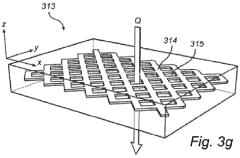
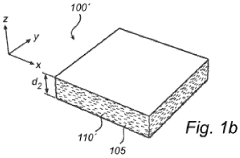
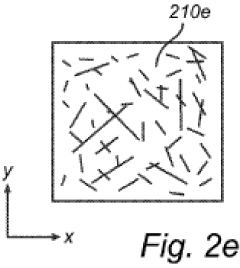
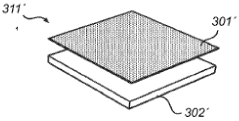
- A TIM with an activable shrinkage material that increases in thickness upon activation, providing enhanced contact pressure and robustness by expanding in the z-direction, thus eliminating the need for external pressure and addressing surface curvature and roughness, using heat-sensitive fibers or monomers that polymerize or expand to enhance thermal interface performance.
Manufacturing Standards for TIM Quality Control
Manufacturing standards for TIM quality control have evolved significantly to address the critical relationship between thermal interface material performance and surface contact characteristics. These standards encompass comprehensive testing protocols, material specifications, and process controls that ensure consistent thermal conductivity and reliability across production batches.
The foundation of TIM manufacturing standards lies in surface preparation requirements. Standards such as ASTM D5470 and JEDEC JESD51-12 define precise surface roughness parameters, typically requiring Ra values between 0.1-0.8 micrometers for optimal contact. Manufacturing protocols mandate specific cleaning procedures using isopropyl alcohol or specialized solvents to eliminate contaminants that could compromise thermal transfer efficiency.
Material consistency standards focus on controlling key parameters including thermal conductivity, viscosity, and particle distribution. Quality control measures require batch-to-batch thermal conductivity variations to remain within ±5% of specified values. For phase change materials, melting point tolerances are typically maintained within ±2°C, while thermal pads must demonstrate consistent thickness uniformity across the entire surface area.
Application process standards define critical parameters such as dispensing pressure, cure temperature profiles, and bondline thickness control. Automated dispensing systems are calibrated to maintain consistent material volume and coverage patterns, with typical thickness tolerances of ±10 micrometers for high-performance applications. Temperature cycling protocols validate material stability across operational temperature ranges.
Quality assurance frameworks incorporate real-time monitoring systems that track thermal resistance values during production. Statistical process control methods identify deviations from established performance baselines, enabling immediate corrective actions. Traceability requirements ensure complete documentation of material lots, processing conditions, and performance test results throughout the manufacturing lifecycle.
Advanced manufacturing standards increasingly emphasize predictive quality metrics, utilizing machine learning algorithms to correlate surface contact parameters with long-term thermal performance. These emerging standards integrate multi-parameter optimization approaches that simultaneously consider thermal conductivity, mechanical compliance, and reliability factors to establish comprehensive quality benchmarks for next-generation TIM applications.
The foundation of TIM manufacturing standards lies in surface preparation requirements. Standards such as ASTM D5470 and JEDEC JESD51-12 define precise surface roughness parameters, typically requiring Ra values between 0.1-0.8 micrometers for optimal contact. Manufacturing protocols mandate specific cleaning procedures using isopropyl alcohol or specialized solvents to eliminate contaminants that could compromise thermal transfer efficiency.
Material consistency standards focus on controlling key parameters including thermal conductivity, viscosity, and particle distribution. Quality control measures require batch-to-batch thermal conductivity variations to remain within ±5% of specified values. For phase change materials, melting point tolerances are typically maintained within ±2°C, while thermal pads must demonstrate consistent thickness uniformity across the entire surface area.
Application process standards define critical parameters such as dispensing pressure, cure temperature profiles, and bondline thickness control. Automated dispensing systems are calibrated to maintain consistent material volume and coverage patterns, with typical thickness tolerances of ±10 micrometers for high-performance applications. Temperature cycling protocols validate material stability across operational temperature ranges.
Quality assurance frameworks incorporate real-time monitoring systems that track thermal resistance values during production. Statistical process control methods identify deviations from established performance baselines, enabling immediate corrective actions. Traceability requirements ensure complete documentation of material lots, processing conditions, and performance test results throughout the manufacturing lifecycle.
Advanced manufacturing standards increasingly emphasize predictive quality metrics, utilizing machine learning algorithms to correlate surface contact parameters with long-term thermal performance. These emerging standards integrate multi-parameter optimization approaches that simultaneously consider thermal conductivity, mechanical compliance, and reliability factors to establish comprehensive quality benchmarks for next-generation TIM applications.
Environmental Impact of TIM Material Selection
The environmental implications of thermal interface material selection have become increasingly critical as the electronics industry faces mounting pressure to adopt sustainable practices. Traditional TIM materials, particularly those containing heavy metals, volatile organic compounds, and non-biodegradable polymers, pose significant environmental challenges throughout their lifecycle from manufacturing to disposal.
Manufacturing processes for conventional TIMs often involve energy-intensive procedures and generate substantial carbon footprints. Silicone-based materials, while effective thermally, require complex synthesis processes that consume considerable energy and produce chemical byproducts. Metal-based TIMs containing silver, copper, or other precious metals raise concerns about resource depletion and mining-related environmental damage. The extraction and refinement of these materials contribute to ecosystem disruption and water contamination in mining regions.
End-of-life disposal presents another significant environmental challenge. Many current TIM formulations contain materials that do not readily decompose in landfills, contributing to long-term environmental persistence. When electronic devices are improperly disposed of or recycled, TIM materials can leach harmful substances into soil and groundwater systems. The increasing volume of electronic waste globally amplifies these environmental risks exponentially.
Emerging sustainable alternatives are reshaping the TIM landscape with bio-based and recyclable materials gaining traction. Plant-derived polymers, recycled carbon materials, and water-based formulations offer promising pathways to reduce environmental impact while maintaining thermal performance. These materials demonstrate comparable thermal conductivity properties while significantly reducing manufacturing emissions and improving biodegradability.
Regulatory frameworks worldwide are driving the transition toward environmentally responsible TIM selection. The European Union's RoHS directive and REACH regulations restrict hazardous substances and mandate environmental impact assessments. Similar initiatives in North America and Asia are establishing stricter guidelines for material composition and lifecycle environmental performance, compelling manufacturers to prioritize sustainable TIM solutions in their product development strategies.
Manufacturing processes for conventional TIMs often involve energy-intensive procedures and generate substantial carbon footprints. Silicone-based materials, while effective thermally, require complex synthesis processes that consume considerable energy and produce chemical byproducts. Metal-based TIMs containing silver, copper, or other precious metals raise concerns about resource depletion and mining-related environmental damage. The extraction and refinement of these materials contribute to ecosystem disruption and water contamination in mining regions.
End-of-life disposal presents another significant environmental challenge. Many current TIM formulations contain materials that do not readily decompose in landfills, contributing to long-term environmental persistence. When electronic devices are improperly disposed of or recycled, TIM materials can leach harmful substances into soil and groundwater systems. The increasing volume of electronic waste globally amplifies these environmental risks exponentially.
Emerging sustainable alternatives are reshaping the TIM landscape with bio-based and recyclable materials gaining traction. Plant-derived polymers, recycled carbon materials, and water-based formulations offer promising pathways to reduce environmental impact while maintaining thermal performance. These materials demonstrate comparable thermal conductivity properties while significantly reducing manufacturing emissions and improving biodegradability.
Regulatory frameworks worldwide are driving the transition toward environmentally responsible TIM selection. The European Union's RoHS directive and REACH regulations restrict hazardous substances and mandate environmental impact assessments. Similar initiatives in North America and Asia are establishing stricter guidelines for material composition and lifecycle environmental performance, compelling manufacturers to prioritize sustainable TIM solutions in their product development strategies.
Unlock deeper insights with Patsnap Eureka Quick Research — get a full tech report to explore trends and direct your research. Try now!
Generate Your Research Report Instantly with AI Agent
Supercharge your innovation with Patsnap Eureka AI Agent Platform!