

TIM Performance vs Long-Term Stability
MAR 27, 20269 MIN READ
Generate Your Research Report Instantly with AI Agent
Patsnap Eureka helps you evaluate technical feasibility & market potential.
TIM Technology Background and Performance Goals
Thermal Interface Materials (TIMs) represent a critical component class in modern electronic thermal management systems, serving as the essential bridge between heat-generating components and heat dissipation solutions. These materials have evolved from simple thermal greases to sophisticated engineered solutions that address the ever-increasing thermal challenges in contemporary electronics. The fundamental purpose of TIMs is to eliminate air gaps and minimize thermal resistance at interfaces between surfaces with different thermal expansion coefficients.
The historical development of TIM technology traces back to the early days of semiconductor packaging, where basic silicone-based thermal compounds were first introduced in the 1960s. As electronic devices became more powerful and compact, the thermal management requirements intensified dramatically. The progression moved through several distinct phases: from basic thermal greases to filled polymers, then to advanced materials incorporating metallic particles, carbon-based fillers, and eventually to cutting-edge solutions featuring graphene, carbon nanotubes, and phase-change materials.
Current market demands have created a complex set of performance requirements that often present conflicting objectives. High thermal conductivity remains the primary performance metric, with modern applications requiring values exceeding 5 W/mK for premium applications. However, this performance must be maintained across extended operational periods, often spanning 10-15 years in automotive applications or 20+ years in industrial settings. The challenge intensifies when considering the diverse operating environments, from consumer electronics experiencing moderate thermal cycling to aerospace applications facing extreme temperature variations.
The fundamental tension between immediate thermal performance and long-term stability stems from the inherent material science challenges. High-performance TIMs typically achieve superior thermal conductivity through high filler loading of thermally conductive particles. However, these same formulations often exhibit greater susceptibility to degradation mechanisms including filler settling, matrix oxidation, and interfacial delamination over time.
Modern TIM technology goals encompass achieving thermal conductivity values of 8-15 W/mK while maintaining stable performance over operational lifetimes exceeding 100,000 thermal cycles. Additionally, the industry seeks solutions that can accommodate increasing power densities, now approaching 200 W/cm² in high-performance computing applications, while ensuring reliability across temperature ranges from -40°C to 150°C. These ambitious targets drive continuous innovation in material formulations, manufacturing processes, and application methodologies.
The historical development of TIM technology traces back to the early days of semiconductor packaging, where basic silicone-based thermal compounds were first introduced in the 1960s. As electronic devices became more powerful and compact, the thermal management requirements intensified dramatically. The progression moved through several distinct phases: from basic thermal greases to filled polymers, then to advanced materials incorporating metallic particles, carbon-based fillers, and eventually to cutting-edge solutions featuring graphene, carbon nanotubes, and phase-change materials.
Current market demands have created a complex set of performance requirements that often present conflicting objectives. High thermal conductivity remains the primary performance metric, with modern applications requiring values exceeding 5 W/mK for premium applications. However, this performance must be maintained across extended operational periods, often spanning 10-15 years in automotive applications or 20+ years in industrial settings. The challenge intensifies when considering the diverse operating environments, from consumer electronics experiencing moderate thermal cycling to aerospace applications facing extreme temperature variations.
The fundamental tension between immediate thermal performance and long-term stability stems from the inherent material science challenges. High-performance TIMs typically achieve superior thermal conductivity through high filler loading of thermally conductive particles. However, these same formulations often exhibit greater susceptibility to degradation mechanisms including filler settling, matrix oxidation, and interfacial delamination over time.
Modern TIM technology goals encompass achieving thermal conductivity values of 8-15 W/mK while maintaining stable performance over operational lifetimes exceeding 100,000 thermal cycles. Additionally, the industry seeks solutions that can accommodate increasing power densities, now approaching 200 W/cm² in high-performance computing applications, while ensuring reliability across temperature ranges from -40°C to 150°C. These ambitious targets drive continuous innovation in material formulations, manufacturing processes, and application methodologies.
Market Demand for High-Performance TIM Solutions
The global thermal interface materials market is experiencing unprecedented growth driven by the escalating demand for efficient heat management solutions across multiple industries. Electronic devices are becoming increasingly compact while simultaneously generating more heat, creating a critical need for TIM solutions that can deliver superior thermal conductivity without compromising long-term reliability. This fundamental challenge has positioned thermal management as a key differentiator in product design and performance optimization.
Data centers represent one of the most significant growth drivers for high-performance TIM solutions. As cloud computing and artificial intelligence applications expand rapidly, server processors and graphics processing units are generating substantially higher heat loads. The demand for TIM materials capable of maintaining consistent thermal performance over extended operational periods has become paramount, as data center operators seek to minimize maintenance costs while maximizing system uptime and reliability.
The automotive industry is undergoing a transformative shift toward electrification, creating substantial new market opportunities for advanced TIM solutions. Electric vehicle battery packs, power electronics, and charging infrastructure require thermal management materials that can withstand extreme temperature cycling while maintaining stable thermal properties over vehicle lifespans exceeding ten years. This sector particularly values TIM solutions that demonstrate minimal degradation under continuous thermal stress and mechanical vibration.
Consumer electronics manufacturers are increasingly prioritizing thermal management as device performance continues to advance. Smartphones, laptops, and gaming devices require TIM materials that can efficiently dissipate heat from high-performance processors while maintaining structural integrity throughout product lifecycles. The market demand emphasizes solutions that balance immediate thermal performance with long-term stability to ensure consistent user experience and device longevity.
Industrial applications, including power generation, telecommunications infrastructure, and manufacturing equipment, represent another substantial market segment seeking high-performance TIM solutions. These applications typically require materials that can operate reliably in harsh environments while maintaining thermal efficiency over decades of continuous operation. The emphasis on predictable long-term performance drives demand for TIM materials with proven stability characteristics and minimal property degradation over time.
Emerging technologies such as renewable energy systems, electric aircraft, and advanced computing architectures are creating new market segments with increasingly stringent thermal management requirements. These applications demand TIM solutions that can simultaneously deliver exceptional thermal performance and demonstrate reliable long-term stability under challenging operational conditions, further expanding the addressable market for advanced thermal interface materials.
Data centers represent one of the most significant growth drivers for high-performance TIM solutions. As cloud computing and artificial intelligence applications expand rapidly, server processors and graphics processing units are generating substantially higher heat loads. The demand for TIM materials capable of maintaining consistent thermal performance over extended operational periods has become paramount, as data center operators seek to minimize maintenance costs while maximizing system uptime and reliability.
The automotive industry is undergoing a transformative shift toward electrification, creating substantial new market opportunities for advanced TIM solutions. Electric vehicle battery packs, power electronics, and charging infrastructure require thermal management materials that can withstand extreme temperature cycling while maintaining stable thermal properties over vehicle lifespans exceeding ten years. This sector particularly values TIM solutions that demonstrate minimal degradation under continuous thermal stress and mechanical vibration.
Consumer electronics manufacturers are increasingly prioritizing thermal management as device performance continues to advance. Smartphones, laptops, and gaming devices require TIM materials that can efficiently dissipate heat from high-performance processors while maintaining structural integrity throughout product lifecycles. The market demand emphasizes solutions that balance immediate thermal performance with long-term stability to ensure consistent user experience and device longevity.
Industrial applications, including power generation, telecommunications infrastructure, and manufacturing equipment, represent another substantial market segment seeking high-performance TIM solutions. These applications typically require materials that can operate reliably in harsh environments while maintaining thermal efficiency over decades of continuous operation. The emphasis on predictable long-term performance drives demand for TIM materials with proven stability characteristics and minimal property degradation over time.
Emerging technologies such as renewable energy systems, electric aircraft, and advanced computing architectures are creating new market segments with increasingly stringent thermal management requirements. These applications demand TIM solutions that can simultaneously deliver exceptional thermal performance and demonstrate reliable long-term stability under challenging operational conditions, further expanding the addressable market for advanced thermal interface materials.
Current TIM Performance and Stability Challenges
Thermal Interface Materials face a fundamental trade-off between achieving optimal thermal performance and maintaining long-term operational stability. Current TIM technologies struggle to simultaneously deliver low thermal resistance, high thermal conductivity, and sustained performance over extended operational periods. This challenge becomes particularly acute in high-power density applications where thermal cycling, mechanical stress, and environmental factors continuously impact material integrity.
Traditional thermal greases, while offering excellent initial thermal performance with thermal conductivities ranging from 3-12 W/mK, suffer from significant pump-out effects and oil separation over time. These materials experience viscosity changes, component migration, and interfacial degradation that can increase thermal resistance by 20-40% within the first year of operation. The organic carrier fluids are particularly susceptible to thermal degradation at temperatures exceeding 85°C, leading to hardening and reduced wettability.
Phase change materials present another category of performance-stability conflicts. While PCMs provide superior gap-filling capabilities and maintain consistent thermal paths during initial deployment, they face challenges related to phase transition stability over multiple thermal cycles. Repeated melting and solidification can cause material redistribution, void formation, and changes in crystalline structure that compromise long-term thermal performance.
Thermal pads and gap fillers, designed for improved stability and ease of handling, typically sacrifice thermal performance for longevity. These materials often exhibit thermal conductivities in the 1-6 W/mK range, significantly lower than liquid alternatives, while still experiencing compression set, thermal aging, and interfacial adhesion degradation over extended periods.
Metal-based TIMs, including liquid metals and sintered materials, offer exceptional thermal conductivity but introduce new stability challenges. Liquid metal alloys can experience oxidation, electromigration, and corrosion issues that affect both thermal and electrical properties. Sintered materials may suffer from thermal expansion mismatch, cracking, and delamination under thermal cycling conditions.
The semiconductor industry's push toward higher power densities and longer operational lifespans has intensified these challenges. Modern processors and power electronics generate heat fluxes exceeding 100 W/cm², while automotive and aerospace applications demand 15-20 year operational lifetimes with minimal performance degradation. Current TIM solutions struggle to meet these dual requirements simultaneously.
Accelerated aging tests reveal that most conventional TIMs experience measurable performance degradation within 1000-2000 thermal cycles, with some materials showing complete failure modes including delamination, cracking, or chemical decomposition. This degradation directly impacts system reliability and necessitates either conservative thermal designs or frequent maintenance interventions.
Traditional thermal greases, while offering excellent initial thermal performance with thermal conductivities ranging from 3-12 W/mK, suffer from significant pump-out effects and oil separation over time. These materials experience viscosity changes, component migration, and interfacial degradation that can increase thermal resistance by 20-40% within the first year of operation. The organic carrier fluids are particularly susceptible to thermal degradation at temperatures exceeding 85°C, leading to hardening and reduced wettability.
Phase change materials present another category of performance-stability conflicts. While PCMs provide superior gap-filling capabilities and maintain consistent thermal paths during initial deployment, they face challenges related to phase transition stability over multiple thermal cycles. Repeated melting and solidification can cause material redistribution, void formation, and changes in crystalline structure that compromise long-term thermal performance.
Thermal pads and gap fillers, designed for improved stability and ease of handling, typically sacrifice thermal performance for longevity. These materials often exhibit thermal conductivities in the 1-6 W/mK range, significantly lower than liquid alternatives, while still experiencing compression set, thermal aging, and interfacial adhesion degradation over extended periods.
Metal-based TIMs, including liquid metals and sintered materials, offer exceptional thermal conductivity but introduce new stability challenges. Liquid metal alloys can experience oxidation, electromigration, and corrosion issues that affect both thermal and electrical properties. Sintered materials may suffer from thermal expansion mismatch, cracking, and delamination under thermal cycling conditions.
The semiconductor industry's push toward higher power densities and longer operational lifespans has intensified these challenges. Modern processors and power electronics generate heat fluxes exceeding 100 W/cm², while automotive and aerospace applications demand 15-20 year operational lifetimes with minimal performance degradation. Current TIM solutions struggle to meet these dual requirements simultaneously.
Accelerated aging tests reveal that most conventional TIMs experience measurable performance degradation within 1000-2000 thermal cycles, with some materials showing complete failure modes including delamination, cracking, or chemical decomposition. This degradation directly impacts system reliability and necessitates either conservative thermal designs or frequent maintenance interventions.
Existing TIM Solutions for Performance-Stability Balance
01 Thermal interface material composition optimization
Thermal interface materials (TIM) can be formulated with specific compositions to enhance thermal conductivity and performance. The selection of base materials, fillers, and additives plays a crucial role in achieving optimal heat transfer properties. Advanced formulations may include metal particles, ceramic fillers, or carbon-based materials to improve thermal performance while maintaining mechanical stability.- Material composition and formulation for enhanced TIM performance: Thermal interface materials can be formulated with specific compositions including polymeric matrices, fillers, and additives to optimize thermal conductivity and performance. The selection of base materials such as silicones, epoxies, or phase change materials combined with thermally conductive fillers like metal oxides, nitrides, or carbon-based materials significantly impacts the overall thermal performance. Proper formulation ensures effective heat dissipation between components while maintaining mechanical integrity.
- Stability enhancement through chemical modification and crosslinking: Long-term stability of thermal interface materials can be achieved through chemical modifications, crosslinking mechanisms, and the incorporation of stabilizing agents. These approaches prevent degradation, phase separation, and property changes over extended periods of thermal cycling and environmental exposure. Chemical bonding structures and polymer network designs contribute to maintaining consistent performance characteristics throughout the product lifecycle.
- Testing methods and performance evaluation protocols: Comprehensive testing methodologies are employed to assess thermal interface material performance and long-term stability. These include thermal resistance measurements, thermal cycling tests, aging studies under various environmental conditions, and mechanical property evaluations. Standardized protocols enable the prediction of material behavior over time and ensure reliability in real-world applications.
- Multilayer and composite structures for improved durability: Advanced thermal interface materials utilize multilayer configurations and composite structures to enhance both performance and long-term stability. These designs combine different material layers with complementary properties, providing improved thermal conductivity while addressing issues such as pump-out, delamination, and thermal degradation. The layered approach allows for optimization of both interface contact and bulk thermal transport properties.
- Environmental resistance and protective mechanisms: Ensuring long-term stability requires incorporating protective mechanisms against environmental factors such as oxidation, moisture, temperature extremes, and chemical exposure. Encapsulation techniques, barrier layers, and the use of environmentally resistant base materials help maintain thermal interface material properties over extended operational periods. These protective strategies prevent performance degradation and extend the functional lifetime of the materials.
02 Long-term thermal stability enhancement
Ensuring long-term stability of thermal interface materials requires careful consideration of material degradation, thermal cycling resistance, and aging effects. Stabilizers and protective additives can be incorporated to prevent oxidation, phase separation, and performance degradation over extended operational periods. Testing protocols for accelerated aging help predict material behavior under prolonged thermal stress.Expand Specific Solutions03 Mechanical properties and reliability
The mechanical integrity of thermal interface materials is essential for maintaining consistent performance over time. Properties such as elasticity, adhesion strength, and resistance to pump-out effects must be optimized. Materials should maintain their structural integrity under thermal expansion and contraction cycles while providing reliable thermal contact between surfaces.Expand Specific Solutions04 Application methods and interface optimization
The performance of thermal interface materials is significantly influenced by application techniques and interface preparation. Proper surface treatment, controlled thickness application, and elimination of air gaps are critical factors. Advanced dispensing methods and curing processes can improve contact uniformity and reduce thermal resistance at interfaces.Expand Specific Solutions05 Performance testing and characterization
Comprehensive testing methodologies are essential for evaluating thermal interface material performance and stability. Measurement techniques include thermal resistance testing, thermal cycling analysis, and long-term reliability assessment. Standardized testing protocols help ensure consistent performance evaluation and enable comparison between different material formulations.Expand Specific Solutions
Key Players in TIM Industry and Market Analysis
The TIM (Thermal Interface Material) performance versus long-term stability challenge represents a mature yet evolving market segment within the broader thermal management industry. The market demonstrates significant scale, driven by increasing thermal demands in electronics, automotive, and telecommunications sectors. Technology maturity varies considerably across market players, with established semiconductor giants like Taiwan Semiconductor Manufacturing, Micron Technology, and Qualcomm leading advanced material integration, while telecommunications leaders including Huawei Technologies, Ericsson, and SK Telecom drive application-specific innovations. Consumer electronics manufacturers such as LG Electronics and Toshiba focus on cost-effective solutions, whereas specialized firms like Synaptics and Lumentum Operations pursue niche high-performance applications. Research institutions including University of Rochester and Southeast University contribute fundamental materials science breakthroughs. The competitive landscape reflects a transition from traditional thermal solutions toward next-generation materials that balance immediate performance requirements with extended operational reliability, indicating an industry approaching technological inflection points in material science and manufacturing processes.
Taiwan Semiconductor Manufacturing Co., Ltd.
Technical Solution: TSMC has developed advanced Thermal Interface Material (TIM) solutions specifically for high-performance semiconductor packaging. Their approach focuses on optimizing thermal conductivity while maintaining long-term reliability through proprietary polymer-based TIMs with enhanced filler materials. The company employs rigorous thermal cycling tests and accelerated aging protocols to ensure TIM performance remains stable over extended operational periods. Their solutions achieve thermal conductivity values exceeding 3 W/mK while demonstrating minimal degradation after 1000+ thermal cycles, making them suitable for advanced node processors and high-power applications.
Strengths: Industry-leading manufacturing capabilities and extensive reliability testing protocols. Weaknesses: High development costs and complex integration requirements for advanced packaging solutions.
QUALCOMM, Inc.
Technical Solution: Qualcomm has implemented innovative TIM strategies in their mobile processor designs, focusing on ultra-thin thermal interface materials that balance performance with long-term stability. Their approach utilizes advanced carbon-based fillers and optimized polymer matrices to achieve consistent thermal performance across varying environmental conditions. The company's TIM solutions are specifically engineered for mobile applications where space constraints and thermal cycling are critical factors. Their materials maintain thermal conductivity above 2.5 W/mK while showing less than 5% performance degradation over 5-year operational lifespans under typical mobile usage patterns.
Strengths: Optimized for mobile applications with excellent miniaturization capabilities. Weaknesses: Limited applicability to high-power desktop or server applications requiring higher thermal conductivity.
Core Innovations in Long-Term Stable TIM Materials
Using in situ capacitance measurements to monitor the stability of interface materials in complex PCB assemblies and other structures
PatentInactiveUS20190323983A1
Innovation
- The use of in-situ capacitance measurements between electrodes on opposite sides of a gap filled with TIM, subjected to changing physical conditions, allows for real-time monitoring of electrical capacitance, enabling precise measurement of bond line thickness and thermal performance, even in complex assemblies with multiple components sharing a common heat spreader.
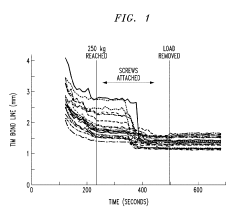
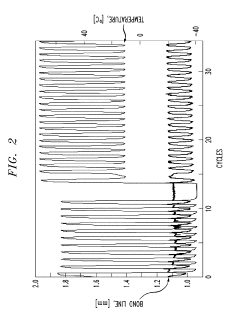
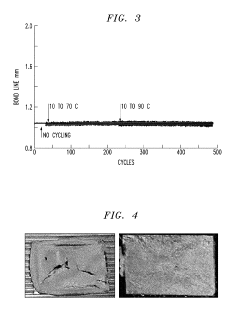
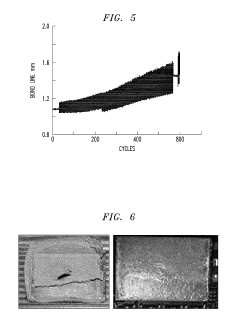
A semiconductor device package comprising a thermal interface material with improved handling properties
PatentActiveEP3937227A9
Innovation
- A semiconductor device package incorporating an electrically conductive carrier, a semiconductor die, and an encapsulant with an electrically insulating and thermally conductive interface structure made from an epoxy resin matrix filled with metal oxide or metal nitride filler particles, offering a glass transition temperature range of -40°C to 150°C, ensuring hardness and scratch resistance at room temperature and softness at operating temperatures for effective thermal coupling.


Reliability Testing Standards for TIM Applications
The establishment of comprehensive reliability testing standards for Thermal Interface Material (TIM) applications has become increasingly critical as electronic systems demand higher performance and extended operational lifespans. Current industry standards primarily focus on short-term thermal performance metrics, often overlooking the complex degradation mechanisms that affect long-term stability. This gap necessitates the development of standardized testing protocols that can accurately predict TIM behavior over extended periods under realistic operating conditions.
Existing reliability testing frameworks, including ASTM D5470 and JEDEC JESD51 series, provide foundational thermal resistance measurement methodologies but lack comprehensive aging and stress testing requirements. These standards typically evaluate initial thermal performance without addressing critical factors such as pump-out effects, thermal cycling degradation, and interfacial bond line thickness variations over time. The absence of standardized accelerated aging protocols makes it challenging to compare different TIM solutions objectively.
Industry consensus is emerging around the need for multi-parameter testing standards that incorporate thermal cycling, humidity exposure, mechanical stress, and extended temperature exposure protocols. Proposed testing methodologies should include baseline thermal performance characterization followed by systematic aging under controlled stress conditions, with periodic performance evaluations to track degradation patterns. Temperature cycling protocols ranging from -40°C to 125°C, humidity testing at 85°C/85% RH, and mechanical compression cycling represent essential components of comprehensive reliability assessment.
Advanced testing standards must also address application-specific requirements, recognizing that automotive, aerospace, and consumer electronics applications present distinct reliability challenges. Standardized test durations, failure criteria definitions, and statistical analysis methodologies will enable meaningful performance comparisons across different TIM technologies. The integration of real-time monitoring capabilities and accelerated testing correlation factors will enhance the predictive accuracy of reliability assessments.
Future reliability testing standards should incorporate emerging measurement techniques, including in-situ thermal resistance monitoring and advanced characterization methods that can detect early-stage degradation indicators. These enhanced standards will provide manufacturers and end-users with reliable tools for TIM selection and qualification, ultimately supporting the development of more durable thermal management solutions.
Existing reliability testing frameworks, including ASTM D5470 and JEDEC JESD51 series, provide foundational thermal resistance measurement methodologies but lack comprehensive aging and stress testing requirements. These standards typically evaluate initial thermal performance without addressing critical factors such as pump-out effects, thermal cycling degradation, and interfacial bond line thickness variations over time. The absence of standardized accelerated aging protocols makes it challenging to compare different TIM solutions objectively.
Industry consensus is emerging around the need for multi-parameter testing standards that incorporate thermal cycling, humidity exposure, mechanical stress, and extended temperature exposure protocols. Proposed testing methodologies should include baseline thermal performance characterization followed by systematic aging under controlled stress conditions, with periodic performance evaluations to track degradation patterns. Temperature cycling protocols ranging from -40°C to 125°C, humidity testing at 85°C/85% RH, and mechanical compression cycling represent essential components of comprehensive reliability assessment.
Advanced testing standards must also address application-specific requirements, recognizing that automotive, aerospace, and consumer electronics applications present distinct reliability challenges. Standardized test durations, failure criteria definitions, and statistical analysis methodologies will enable meaningful performance comparisons across different TIM technologies. The integration of real-time monitoring capabilities and accelerated testing correlation factors will enhance the predictive accuracy of reliability assessments.
Future reliability testing standards should incorporate emerging measurement techniques, including in-situ thermal resistance monitoring and advanced characterization methods that can detect early-stage degradation indicators. These enhanced standards will provide manufacturers and end-users with reliable tools for TIM selection and qualification, ultimately supporting the development of more durable thermal management solutions.
Cost-Performance Trade-offs in TIM Selection Strategy
The selection of thermal interface materials involves a complex balance between initial investment costs and long-term performance benefits. Premium TIM solutions typically command higher upfront prices but deliver superior thermal conductivity, extended operational lifespans, and enhanced reliability metrics. This cost-performance relationship becomes particularly critical in high-volume manufacturing scenarios where material costs directly impact product margins.
Budget-conscious approaches often favor lower-cost TIM options such as basic thermal pads or standard thermal greases. While these solutions reduce immediate procurement expenses, they may compromise thermal performance and require more frequent maintenance cycles. The trade-off manifests in reduced heat dissipation efficiency, potentially leading to higher operating temperatures and accelerated component degradation over time.
Mid-tier TIM solutions represent a strategic compromise, offering improved thermal performance compared to basic options while maintaining reasonable cost structures. Phase change materials and engineered thermal compounds in this category provide enhanced thermal conductivity without the premium pricing of advanced solutions like liquid metals or specialized nano-enhanced formulations.
Enterprise-grade applications typically justify higher TIM investments through total cost of ownership calculations. Advanced materials such as graphene-enhanced compounds or high-performance thermal interface films deliver exceptional thermal conductivity ratings exceeding 10 W/mK, supporting demanding thermal management requirements in data centers and high-performance computing environments.
The economic evaluation framework must incorporate factors beyond material costs, including application complexity, rework expenses, and warranty implications. Automated dispensing systems may favor liquid TIM formulations despite higher material costs due to reduced labor requirements and improved application consistency. Conversely, manual assembly processes might benefit from pre-formed thermal pads that eliminate dispensing equipment investments while ensuring predictable thermal performance across production volumes.
Long-term cost considerations include thermal degradation rates, pump-out resistance, and maintenance scheduling requirements. Premium TIM solutions often demonstrate superior aging characteristics, maintaining thermal performance over extended operational periods and reducing system-level maintenance costs through improved reliability profiles.
Budget-conscious approaches often favor lower-cost TIM options such as basic thermal pads or standard thermal greases. While these solutions reduce immediate procurement expenses, they may compromise thermal performance and require more frequent maintenance cycles. The trade-off manifests in reduced heat dissipation efficiency, potentially leading to higher operating temperatures and accelerated component degradation over time.
Mid-tier TIM solutions represent a strategic compromise, offering improved thermal performance compared to basic options while maintaining reasonable cost structures. Phase change materials and engineered thermal compounds in this category provide enhanced thermal conductivity without the premium pricing of advanced solutions like liquid metals or specialized nano-enhanced formulations.
Enterprise-grade applications typically justify higher TIM investments through total cost of ownership calculations. Advanced materials such as graphene-enhanced compounds or high-performance thermal interface films deliver exceptional thermal conductivity ratings exceeding 10 W/mK, supporting demanding thermal management requirements in data centers and high-performance computing environments.
The economic evaluation framework must incorporate factors beyond material costs, including application complexity, rework expenses, and warranty implications. Automated dispensing systems may favor liquid TIM formulations despite higher material costs due to reduced labor requirements and improved application consistency. Conversely, manual assembly processes might benefit from pre-formed thermal pads that eliminate dispensing equipment investments while ensuring predictable thermal performance across production volumes.
Long-term cost considerations include thermal degradation rates, pump-out resistance, and maintenance scheduling requirements. Premium TIM solutions often demonstrate superior aging characteristics, maintaining thermal performance over extended operational periods and reducing system-level maintenance costs through improved reliability profiles.
Unlock deeper insights with Patsnap Eureka Quick Research — get a full tech report to explore trends and direct your research. Try now!
Generate Your Research Report Instantly with AI Agent
Supercharge your innovation with Patsnap Eureka AI Agent Platform!