

TIM Performance vs Heat Transfer Efficiency
MAR 27, 20269 MIN READ
Generate Your Research Report Instantly with AI Agent
PatSnap Eureka helps you evaluate technical feasibility & market potential.
TIM Technology Background and Thermal Goals
Thermal Interface Materials (TIMs) have emerged as critical components in modern electronic systems, serving as the essential bridge between heat-generating components and heat dissipation solutions. The fundamental challenge lies in minimizing thermal resistance while maintaining mechanical integrity and long-term reliability. As electronic devices continue to shrink in size while increasing in power density, the thermal management bottleneck has shifted from traditional cooling solutions to the interface materials themselves.
The evolution of TIM technology spans several decades, beginning with simple thermal greases in the 1970s and progressing through phase change materials, thermal pads, and advanced engineered solutions. Early implementations focused primarily on filling air gaps between surfaces, but modern applications demand materials that can handle power densities exceeding 200 W/cm² in high-performance computing applications. This progression reflects the industry's growing understanding that thermal interface resistance often represents the largest thermal bottleneck in electronic cooling systems.
Contemporary TIM applications face increasingly demanding requirements across multiple performance vectors. Thermal conductivity targets have escalated from 1-3 W/mK for basic applications to over 15 W/mK for premium solutions, while simultaneously requiring minimal bond line thickness, typically below 25 micrometers. The challenge intensifies when considering that thermal performance must be maintained across temperature cycling, mechanical stress, and extended operational lifetimes exceeding 10 years in automotive and industrial applications.
The primary technical objectives driving current TIM research center on achieving optimal heat transfer efficiency while addressing practical implementation constraints. Key performance targets include maximizing bulk thermal conductivity, minimizing contact thermal resistance, ensuring uniform material distribution, and maintaining stable properties under operational stress. These objectives must be balanced against manufacturing considerations such as application methods, curing requirements, and cost constraints.
Advanced TIM development increasingly focuses on multi-functional performance, where materials must simultaneously provide thermal management, electrical insulation, mechanical compliance, and chemical stability. The integration of nanoscale fillers, engineered surface treatments, and hybrid material architectures represents the current frontier in achieving these comprehensive performance goals while maintaining the reliability standards required for mission-critical applications.
The evolution of TIM technology spans several decades, beginning with simple thermal greases in the 1970s and progressing through phase change materials, thermal pads, and advanced engineered solutions. Early implementations focused primarily on filling air gaps between surfaces, but modern applications demand materials that can handle power densities exceeding 200 W/cm² in high-performance computing applications. This progression reflects the industry's growing understanding that thermal interface resistance often represents the largest thermal bottleneck in electronic cooling systems.
Contemporary TIM applications face increasingly demanding requirements across multiple performance vectors. Thermal conductivity targets have escalated from 1-3 W/mK for basic applications to over 15 W/mK for premium solutions, while simultaneously requiring minimal bond line thickness, typically below 25 micrometers. The challenge intensifies when considering that thermal performance must be maintained across temperature cycling, mechanical stress, and extended operational lifetimes exceeding 10 years in automotive and industrial applications.
The primary technical objectives driving current TIM research center on achieving optimal heat transfer efficiency while addressing practical implementation constraints. Key performance targets include maximizing bulk thermal conductivity, minimizing contact thermal resistance, ensuring uniform material distribution, and maintaining stable properties under operational stress. These objectives must be balanced against manufacturing considerations such as application methods, curing requirements, and cost constraints.
Advanced TIM development increasingly focuses on multi-functional performance, where materials must simultaneously provide thermal management, electrical insulation, mechanical compliance, and chemical stability. The integration of nanoscale fillers, engineered surface treatments, and hybrid material architectures represents the current frontier in achieving these comprehensive performance goals while maintaining the reliability standards required for mission-critical applications.
Market Demand for High-Performance TIM Solutions
The global thermal interface materials market is experiencing unprecedented growth driven by the exponential increase in electronic device performance and miniaturization demands. Modern electronic systems generate significantly higher heat densities, creating critical thermal management challenges that require advanced TIM solutions with superior heat transfer efficiency. This surge in thermal requirements spans across multiple industries, from consumer electronics to automotive and industrial applications.
Data centers represent one of the most demanding market segments for high-performance TIM solutions. The continuous evolution toward higher processing power and increased server density has created substantial thermal bottlenecks that conventional thermal interface materials cannot adequately address. Cloud computing infrastructure expansion and the proliferation of artificial intelligence workloads further intensify these thermal management requirements, driving demand for TIM materials with exceptional thermal conductivity and long-term reliability.
The automotive industry's transition toward electric vehicles and autonomous driving systems has emerged as another significant growth driver. Electric vehicle battery thermal management systems require specialized TIM solutions to maintain optimal operating temperatures and ensure safety. Advanced driver assistance systems and autonomous vehicle computing platforms generate substantial heat loads in confined spaces, necessitating high-performance thermal interface materials with enhanced heat dissipation capabilities.
Consumer electronics continue to push thermal management boundaries as manufacturers integrate more powerful processors into increasingly compact form factors. Smartphones, tablets, and laptops require TIM solutions that can efficiently transfer heat while maintaining thin profiles and lightweight characteristics. The gaming industry's demand for high-performance graphics processing units further amplifies the need for advanced thermal interface materials.
Industrial applications, including power electronics, renewable energy systems, and telecommunications infrastructure, represent substantial market opportunities for high-performance TIM solutions. Power semiconductor devices operating at elevated temperatures require thermal interface materials with exceptional thermal conductivity and thermal stability to ensure reliable operation and extended service life.
The market demand is increasingly shifting toward TIM solutions that offer not only superior thermal performance but also enhanced durability, environmental resistance, and manufacturing compatibility. This trend reflects the industry's recognition that thermal interface material performance directly impacts overall system reliability and operational efficiency across diverse applications.
Data centers represent one of the most demanding market segments for high-performance TIM solutions. The continuous evolution toward higher processing power and increased server density has created substantial thermal bottlenecks that conventional thermal interface materials cannot adequately address. Cloud computing infrastructure expansion and the proliferation of artificial intelligence workloads further intensify these thermal management requirements, driving demand for TIM materials with exceptional thermal conductivity and long-term reliability.
The automotive industry's transition toward electric vehicles and autonomous driving systems has emerged as another significant growth driver. Electric vehicle battery thermal management systems require specialized TIM solutions to maintain optimal operating temperatures and ensure safety. Advanced driver assistance systems and autonomous vehicle computing platforms generate substantial heat loads in confined spaces, necessitating high-performance thermal interface materials with enhanced heat dissipation capabilities.
Consumer electronics continue to push thermal management boundaries as manufacturers integrate more powerful processors into increasingly compact form factors. Smartphones, tablets, and laptops require TIM solutions that can efficiently transfer heat while maintaining thin profiles and lightweight characteristics. The gaming industry's demand for high-performance graphics processing units further amplifies the need for advanced thermal interface materials.
Industrial applications, including power electronics, renewable energy systems, and telecommunications infrastructure, represent substantial market opportunities for high-performance TIM solutions. Power semiconductor devices operating at elevated temperatures require thermal interface materials with exceptional thermal conductivity and thermal stability to ensure reliable operation and extended service life.
The market demand is increasingly shifting toward TIM solutions that offer not only superior thermal performance but also enhanced durability, environmental resistance, and manufacturing compatibility. This trend reflects the industry's recognition that thermal interface material performance directly impacts overall system reliability and operational efficiency across diverse applications.
Current TIM Performance Limitations and Challenges
Thermal Interface Materials face significant performance limitations that directly impact their heat transfer efficiency in modern electronic applications. The primary challenge lies in achieving optimal thermal conductivity while maintaining mechanical reliability and long-term stability. Most conventional TIMs exhibit thermal conductivity values ranging from 1-8 W/mK, which falls short of the requirements for high-performance computing systems and advanced semiconductor devices that generate increasingly higher heat flux densities.
The thermal resistance at interfaces represents a critical bottleneck in heat dissipation pathways. Even high-quality TIMs struggle with contact resistance issues, where microscopic air gaps and surface roughness create thermal barriers. This phenomenon becomes more pronounced as component miniaturization increases, leading to higher power densities that exceed the heat removal capabilities of existing TIM solutions.
Material degradation under thermal cycling presents another substantial challenge. Repeated heating and cooling cycles cause TIMs to experience thermal expansion and contraction, leading to delamination, cracking, and void formation. These degradation mechanisms progressively reduce thermal performance over time, with some materials showing up to 30% performance degradation after 1000 thermal cycles.
Pump-out effects in liquid-based TIMs create additional reliability concerns. Under mechanical stress and temperature variations, these materials tend to migrate away from the interface, creating dry spots that significantly increase thermal resistance. This phenomenon is particularly problematic in mobile devices and automotive applications where vibration and mechanical stress are common.
The trade-off between thermal performance and processability remains a persistent challenge. High-performance TIMs often require specialized application techniques, controlled environments, or curing processes that increase manufacturing complexity and costs. Additionally, achieving uniform thickness control across large surfaces while maintaining consistent thermal properties proves difficult with current material formulations.
Compatibility issues with different substrate materials and surface finishes further complicate TIM selection and implementation. Chemical interactions between TIMs and component materials can lead to corrosion, material degradation, or performance reduction, limiting the universal applicability of high-performance thermal interface solutions in diverse electronic systems.
The thermal resistance at interfaces represents a critical bottleneck in heat dissipation pathways. Even high-quality TIMs struggle with contact resistance issues, where microscopic air gaps and surface roughness create thermal barriers. This phenomenon becomes more pronounced as component miniaturization increases, leading to higher power densities that exceed the heat removal capabilities of existing TIM solutions.
Material degradation under thermal cycling presents another substantial challenge. Repeated heating and cooling cycles cause TIMs to experience thermal expansion and contraction, leading to delamination, cracking, and void formation. These degradation mechanisms progressively reduce thermal performance over time, with some materials showing up to 30% performance degradation after 1000 thermal cycles.
Pump-out effects in liquid-based TIMs create additional reliability concerns. Under mechanical stress and temperature variations, these materials tend to migrate away from the interface, creating dry spots that significantly increase thermal resistance. This phenomenon is particularly problematic in mobile devices and automotive applications where vibration and mechanical stress are common.
The trade-off between thermal performance and processability remains a persistent challenge. High-performance TIMs often require specialized application techniques, controlled environments, or curing processes that increase manufacturing complexity and costs. Additionally, achieving uniform thickness control across large surfaces while maintaining consistent thermal properties proves difficult with current material formulations.
Compatibility issues with different substrate materials and surface finishes further complicate TIM selection and implementation. Chemical interactions between TIMs and component materials can lead to corrosion, material degradation, or performance reduction, limiting the universal applicability of high-performance thermal interface solutions in diverse electronic systems.
Existing TIM Solutions and Heat Transfer Methods
01 Thermal interface materials with enhanced thermal conductivity
Thermal interface materials (TIMs) can be formulated with high thermal conductivity fillers to improve heat transfer efficiency between heat-generating components and heat sinks. These materials typically incorporate thermally conductive particles such as metal oxides, carbon-based materials, or ceramic fillers dispersed in a polymer matrix. The optimization of filler content, particle size distribution, and surface treatment can significantly enhance the overall thermal performance of the interface material.- Thermal interface materials with enhanced thermal conductivity: Thermal interface materials (TIMs) can be formulated with high thermal conductivity fillers to improve heat transfer efficiency between heat-generating components and heat sinks. These materials typically incorporate thermally conductive particles such as metal oxides, carbon-based materials, or ceramic fillers dispersed in a polymer matrix. The optimization of filler loading, particle size distribution, and surface treatment can significantly enhance the overall thermal performance of the interface material.
- Phase change materials for thermal management: Phase change materials can be incorporated into thermal interface solutions to improve heat transfer efficiency through latent heat absorption. These materials undergo phase transitions at specific temperatures, absorbing or releasing thermal energy during the process. The integration of phase change materials in thermal management systems provides enhanced temperature regulation and thermal buffering capabilities, particularly useful in applications with variable heat loads.
- Composite thermal interface materials with multi-layer structures: Multi-layer composite structures can be designed to optimize thermal interface performance by combining materials with different thermal properties. These structures may include layers with varying thermal conductivities, mechanical compliance, and adhesion characteristics. The layered approach allows for tailored thermal resistance reduction while maintaining mechanical flexibility and reliability under thermal cycling conditions.
- Surface modification and treatment techniques: Surface modification techniques can be applied to thermal interface materials to enhance wetting properties and reduce contact thermal resistance. These methods include plasma treatment, chemical functionalization, and surface roughening to improve interfacial contact between the thermal interface material and mating surfaces. Enhanced surface characteristics lead to reduced air gaps and improved heat transfer pathways across the interface.
- Flexible and conformable thermal interface solutions: Flexible thermal interface materials are designed to accommodate surface irregularities and maintain thermal contact under mechanical stress and thermal expansion. These materials combine thermal conductivity with mechanical compliance through the use of elastomeric matrices, soft fillers, or engineered microstructures. The conformability ensures consistent thermal performance across non-planar surfaces and during operational conditions involving vibration or thermal cycling.
02 Phase change materials for thermal management
Phase change materials can be incorporated into thermal interface solutions to improve heat transfer efficiency through latent heat absorption. These materials undergo phase transitions at specific temperatures, absorbing or releasing thermal energy during the process. The integration of phase change materials in thermal management systems provides enhanced temperature regulation and thermal buffering capabilities, particularly useful for applications with variable heat loads.Expand Specific Solutions03 Composite thermal interface materials with multi-layer structures
Multi-layer composite structures can be designed to optimize thermal interface performance by combining materials with different thermal properties. These structures may include layers with varying thermal conductivities, compliance characteristics, and adhesion properties to maximize heat transfer while maintaining mechanical stability. The layered approach allows for customization of thermal and mechanical properties to meet specific application requirements.Expand Specific Solutions04 Surface modification and interface optimization techniques
Surface treatment and interface engineering methods can significantly improve the contact between thermal interface materials and mating surfaces, reducing thermal contact resistance. These techniques include surface roughness optimization, chemical functionalization, and the application of adhesion promoters. Proper interface preparation and material application methods ensure minimal air gaps and maximum contact area, leading to improved heat transfer efficiency.Expand Specific Solutions05 Flexible and conformable thermal interface solutions
Flexible thermal interface materials with high conformability can adapt to surface irregularities and maintain effective thermal contact under mechanical stress or thermal cycling. These materials combine thermal conductivity with mechanical compliance, allowing them to fill gaps and maintain contact pressure across varying surface topographies. The flexibility and resilience of these materials ensure consistent thermal performance over extended operational periods and under dynamic conditions.Expand Specific Solutions
Key Players in TIM and Thermal Management Industry
The TIM (Thermal Interface Materials) performance versus heat transfer efficiency research field represents a mature yet rapidly evolving market driven by increasing thermal management demands in electronics and automotive sectors. The industry is experiencing significant growth, with market size expanding due to rising power densities in semiconductors and electric vehicles. Technology maturity varies across segments, with established players like Intel, NVIDIA, and Samsung Electronics driving advanced material requirements, while companies such as 3M Innovative Properties, Dow Silicones, and Indium Corporation lead in specialized TIM solutions. Manufacturing giants including Hon Hai Precision and Huawei Technologies integrate these materials into high-volume production. The competitive landscape shows convergence between material suppliers, semiconductor manufacturers, and research institutions like Industrial Technology Research Institute, indicating a collaborative ecosystem focused on optimizing thermal performance for next-generation applications in computing, automotive, and consumer electronics markets.
Intel Corp.
Technical Solution: Intel has developed advanced thermal interface materials focusing on high-performance computing applications. Their TIM solutions utilize phase change materials and metal-filled polymers to achieve thermal conductivity ranging from 3-8 W/mK. Intel's approach emphasizes optimizing the balance between thermal performance and mechanical properties, particularly for processor packaging where consistent heat transfer is critical. Their research includes novel carbon nanotube-enhanced TIMs and liquid metal solutions for next-generation processors, targeting thermal resistance reduction of up to 40% compared to traditional materials.
Strengths: Strong integration with semiconductor packaging, extensive R&D resources, proven scalability for mass production. Weaknesses: Limited focus on non-semiconductor applications, higher cost compared to commodity TIM solutions.
3M Innovative Properties Co.
Technical Solution: 3M has developed a comprehensive portfolio of thermal interface materials including gap fillers, thermal pads, and phase change materials. Their technology focuses on achieving thermal conductivities ranging from 1-17 W/mK depending on application requirements. 3M's approach utilizes proprietary filler technologies including boron nitride, aluminum oxide, and synthetic diamond particles in various polymer matrices. Their research emphasizes ease of application, reworkability, and environmental stability. Recent developments include ultra-thin TIM solutions for mobile devices and high-performance materials for automotive electronics, with particular attention to maintaining thermal performance across wide temperature ranges from -40°C to 200°C.
Strengths: Broad material science expertise, diverse product portfolio, strong manufacturing capabilities, excellent application support. Weaknesses: Higher cost for premium solutions, complex material selection process for optimal performance matching.
Core Innovations in TIM Performance Enhancement
Melting temperature adjustable metal thermal interface materials and packaged semiconductors including thereof
PatentActiveUS7952192B2
Innovation
- A metal thermal interface material (TIM) composed of 20-98 wt% indium, 0.03-4 wt% gallium, and at least one element of bismuth, tin, silver, or zinc, allowing for adjustable melting temperatures and a broad range, preventing overheating and accommodating thermal stress, with gallium content affecting the initial melting temperature and range.


A thermal interface material, an integrated circuit assembly, and a method for thermally connecting layers
PatentPendingUS20250069987A1
Innovation
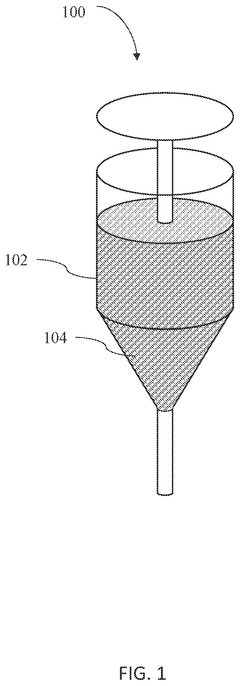
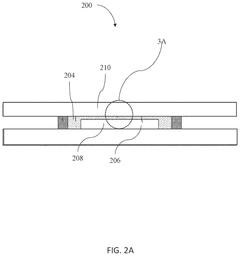
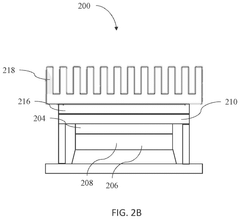
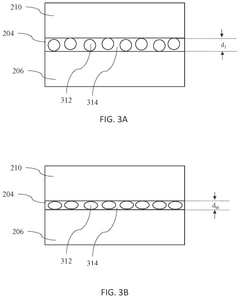
- A thermal interface material comprising 8% to 70% by volume of a polymer component and at least 30% by volume of liquid metal droplets, where the polymer component is composed of specific polymers with varying molecular weights and includes polybutadiene, enabling strong adhesion, stretchability, and low thermal resistance.
Environmental Regulations for TIM Materials
The regulatory landscape for Thermal Interface Materials (TIM) has become increasingly stringent as environmental consciousness grows across global markets. The European Union's RoHS (Restriction of Hazardous Substances) directive serves as a primary framework, limiting the use of lead, mercury, cadmium, hexavalent chromium, and specific flame retardants in electronic components, including TIM materials. This regulation directly impacts traditional solder-based TIMs and certain polymer formulations that historically contained restricted substances.
REACH (Registration, Evaluation, Authorization and Restriction of Chemicals) regulation further complicates TIM material selection by requiring comprehensive chemical safety assessments for substances produced or imported in quantities exceeding one ton annually. TIM manufacturers must provide detailed documentation regarding chemical composition, environmental fate, and potential health impacts, significantly influencing material development strategies and supply chain management.
North American regulations, particularly EPA's TSCA (Toxic Substances Control Act) and various state-level initiatives like California's Proposition 65, impose additional compliance requirements. These regulations mandate disclosure of potentially carcinogenic or reproductive toxins, affecting silicone-based TIMs containing certain catalysts and metal-filled thermal compounds. The regulatory divergence between regions creates complex compliance matrices for global TIM suppliers.
Emerging regulations focus on lifecycle environmental impact, including carbon footprint assessments and end-of-life recyclability requirements. The EU's proposed "Right to Repair" legislation and circular economy initiatives are driving demand for TIM materials that facilitate component disassembly and material recovery. This regulatory trend particularly affects permanent adhesive TIMs and encourages development of reversible thermal interface solutions.
Industry standards organizations like IEC and JEDEC are incorporating environmental compliance requirements into thermal management specifications, creating integrated frameworks that address both performance and regulatory compliance. These evolving standards require TIM manufacturers to balance thermal efficiency optimization with environmental regulatory adherence, fundamentally reshaping material selection criteria and development priorities in the thermal management industry.
REACH (Registration, Evaluation, Authorization and Restriction of Chemicals) regulation further complicates TIM material selection by requiring comprehensive chemical safety assessments for substances produced or imported in quantities exceeding one ton annually. TIM manufacturers must provide detailed documentation regarding chemical composition, environmental fate, and potential health impacts, significantly influencing material development strategies and supply chain management.
North American regulations, particularly EPA's TSCA (Toxic Substances Control Act) and various state-level initiatives like California's Proposition 65, impose additional compliance requirements. These regulations mandate disclosure of potentially carcinogenic or reproductive toxins, affecting silicone-based TIMs containing certain catalysts and metal-filled thermal compounds. The regulatory divergence between regions creates complex compliance matrices for global TIM suppliers.
Emerging regulations focus on lifecycle environmental impact, including carbon footprint assessments and end-of-life recyclability requirements. The EU's proposed "Right to Repair" legislation and circular economy initiatives are driving demand for TIM materials that facilitate component disassembly and material recovery. This regulatory trend particularly affects permanent adhesive TIMs and encourages development of reversible thermal interface solutions.
Industry standards organizations like IEC and JEDEC are incorporating environmental compliance requirements into thermal management specifications, creating integrated frameworks that address both performance and regulatory compliance. These evolving standards require TIM manufacturers to balance thermal efficiency optimization with environmental regulatory adherence, fundamentally reshaping material selection criteria and development priorities in the thermal management industry.
Cost-Performance Trade-offs in TIM Selection
The selection of thermal interface materials involves a complex balance between cost considerations and thermal performance requirements, where organizations must carefully evaluate multiple factors to achieve optimal value propositions. Cost-performance trade-offs represent one of the most critical decision-making frameworks in TIM selection processes, as thermal management solutions can vary dramatically in price while delivering different levels of heat transfer efficiency.
Premium TIM solutions such as liquid metal interfaces and advanced phase change materials typically offer superior thermal conductivity ranging from 20-80 W/mK, but command significantly higher unit costs compared to conventional thermal greases or pads. These high-performance materials justify their premium pricing in applications where thermal efficiency directly impacts system reliability, performance, or operational lifespan, particularly in high-power density electronics and mission-critical thermal management scenarios.
Mid-range TIM options, including silicone-based thermal compounds and graphite-based materials, provide balanced cost-performance characteristics with thermal conductivities between 3-15 W/mK at moderate price points. These solutions often represent the optimal choice for mainstream applications where adequate thermal performance must be achieved within reasonable budget constraints, offering sufficient heat transfer capabilities without excessive material costs.
Budget-oriented TIM selections typically involve basic thermal greases or standard thermal pads with conductivities below 5 W/mK, suitable for low-power applications or cost-sensitive designs where minimal thermal management requirements exist. While these materials offer limited thermal performance, they provide essential heat transfer improvement over air gaps at minimal cost impact.
The total cost of ownership analysis extends beyond initial material costs to include application complexity, rework potential, and long-term reliability factors. High-performance TIMs may require specialized application equipment or controlled environmental conditions, adding implementation costs that must be weighed against their superior thermal benefits and potentially reduced system cooling requirements.
Volume considerations significantly influence cost-performance calculations, as bulk purchasing agreements and manufacturing scale effects can substantially alter the economic equation for different TIM categories, making premium materials more accessible for high-volume production scenarios while potentially limiting options for low-volume specialized applications.
Premium TIM solutions such as liquid metal interfaces and advanced phase change materials typically offer superior thermal conductivity ranging from 20-80 W/mK, but command significantly higher unit costs compared to conventional thermal greases or pads. These high-performance materials justify their premium pricing in applications where thermal efficiency directly impacts system reliability, performance, or operational lifespan, particularly in high-power density electronics and mission-critical thermal management scenarios.
Mid-range TIM options, including silicone-based thermal compounds and graphite-based materials, provide balanced cost-performance characteristics with thermal conductivities between 3-15 W/mK at moderate price points. These solutions often represent the optimal choice for mainstream applications where adequate thermal performance must be achieved within reasonable budget constraints, offering sufficient heat transfer capabilities without excessive material costs.
Budget-oriented TIM selections typically involve basic thermal greases or standard thermal pads with conductivities below 5 W/mK, suitable for low-power applications or cost-sensitive designs where minimal thermal management requirements exist. While these materials offer limited thermal performance, they provide essential heat transfer improvement over air gaps at minimal cost impact.
The total cost of ownership analysis extends beyond initial material costs to include application complexity, rework potential, and long-term reliability factors. High-performance TIMs may require specialized application equipment or controlled environmental conditions, adding implementation costs that must be weighed against their superior thermal benefits and potentially reduced system cooling requirements.
Volume considerations significantly influence cost-performance calculations, as bulk purchasing agreements and manufacturing scale effects can substantially alter the economic equation for different TIM categories, making premium materials more accessible for high-volume production scenarios while potentially limiting options for low-volume specialized applications.
Unlock deeper insights with PatSnap Eureka Quick Research — get a full tech report to explore trends and direct your research. Try now!
Generate Your Research Report Instantly with AI Agent
Supercharge your innovation with PatSnap Eureka AI Agent Platform!