

TIM Performance vs Material Deformation
MAR 27, 20269 MIN READ
Generate Your Research Report Instantly with AI Agent
Patsnap Eureka helps you evaluate technical feasibility & market potential.
TIM Technology Background and Performance Goals
Thermal Interface Materials (TIMs) have emerged as critical components in modern electronic systems, serving as the essential bridge between heat-generating components and heat dissipation solutions. The fundamental purpose of TIMs is to fill microscopic air gaps and surface irregularities between mating surfaces, thereby reducing thermal resistance and enhancing heat transfer efficiency. As electronic devices continue to miniaturize while simultaneously increasing in power density, the thermal management challenges have intensified exponentially.
The evolution of TIM technology traces back to the early days of semiconductor packaging, where simple thermal greases and pads were sufficient for basic heat dissipation needs. However, the rapid advancement of processor speeds, graphics processing units, and high-power LED applications has driven the demand for more sophisticated thermal interface solutions. Traditional materials such as silicone-based thermal compounds and phase-change materials have gradually given way to advanced formulations incorporating metallic fillers, carbon nanotubes, and graphene derivatives.
Contemporary TIM applications span across diverse sectors including consumer electronics, automotive electronics, telecommunications infrastructure, and industrial power systems. Each application domain presents unique thermal and mechanical requirements, necessitating tailored material properties and performance characteristics. The automotive industry, in particular, has introduced stringent reliability requirements due to extreme operating conditions and extended service life expectations.
The primary performance objectives for modern TIMs encompass achieving ultra-low thermal resistance while maintaining mechanical integrity under various stress conditions. Thermal conductivity targets have progressively increased from 1-3 W/mK for conventional materials to 5-15 W/mK for high-performance applications. Simultaneously, the industry demands materials that can withstand thermal cycling, mechanical vibration, and long-term aging without significant performance degradation.
Material deformation characteristics have become increasingly critical as electronic assemblies experience thermal expansion mismatches, mechanical stresses from mounting systems, and dynamic loading conditions during operation. The ability of TIMs to accommodate these deformations while preserving thermal performance represents a fundamental challenge that drives ongoing research and development efforts in this field.
The evolution of TIM technology traces back to the early days of semiconductor packaging, where simple thermal greases and pads were sufficient for basic heat dissipation needs. However, the rapid advancement of processor speeds, graphics processing units, and high-power LED applications has driven the demand for more sophisticated thermal interface solutions. Traditional materials such as silicone-based thermal compounds and phase-change materials have gradually given way to advanced formulations incorporating metallic fillers, carbon nanotubes, and graphene derivatives.
Contemporary TIM applications span across diverse sectors including consumer electronics, automotive electronics, telecommunications infrastructure, and industrial power systems. Each application domain presents unique thermal and mechanical requirements, necessitating tailored material properties and performance characteristics. The automotive industry, in particular, has introduced stringent reliability requirements due to extreme operating conditions and extended service life expectations.
The primary performance objectives for modern TIMs encompass achieving ultra-low thermal resistance while maintaining mechanical integrity under various stress conditions. Thermal conductivity targets have progressively increased from 1-3 W/mK for conventional materials to 5-15 W/mK for high-performance applications. Simultaneously, the industry demands materials that can withstand thermal cycling, mechanical vibration, and long-term aging without significant performance degradation.
Material deformation characteristics have become increasingly critical as electronic assemblies experience thermal expansion mismatches, mechanical stresses from mounting systems, and dynamic loading conditions during operation. The ability of TIMs to accommodate these deformations while preserving thermal performance represents a fundamental challenge that drives ongoing research and development efforts in this field.
Market Demand for Advanced TIM Solutions
The global thermal interface materials market is experiencing unprecedented growth driven by the escalating demand for efficient thermal management solutions across multiple industries. Electronic devices are becoming increasingly compact while generating higher heat densities, creating critical challenges for thermal dissipation. This trend is particularly pronounced in high-performance computing, automotive electronics, and consumer devices where thermal bottlenecks directly impact performance and reliability.
Data centers represent one of the most significant demand drivers for advanced TIM solutions. The proliferation of artificial intelligence workloads and cloud computing services has intensified the need for superior thermal management materials that can maintain optimal operating temperatures while accommodating mechanical stresses from thermal cycling and vibration. Traditional thermal interface materials often fail under these demanding conditions due to material degradation and deformation-related performance losses.
The automotive sector is witnessing a paradigm shift toward electrification, with electric vehicles requiring sophisticated thermal management systems for battery packs, power electronics, and charging infrastructure. These applications demand TIM solutions that can withstand extreme temperature variations, mechanical vibrations, and long-term reliability requirements while maintaining consistent thermal performance throughout the vehicle's operational lifetime.
Consumer electronics manufacturers are increasingly prioritizing thermal interface materials that can adapt to device miniaturization trends without compromising thermal efficiency. Smartphones, tablets, and wearable devices require ultra-thin TIM solutions that maintain thermal conductivity while accommodating flexural stresses from daily usage patterns. The market demand extends beyond basic thermal conductivity to include materials that resist pump-out effects and maintain interface integrity under repeated mechanical loading.
Industrial applications in power generation, renewable energy systems, and manufacturing equipment are driving demand for robust TIM solutions capable of operating in harsh environments. These sectors require materials that demonstrate stable thermal performance despite exposure to temperature cycling, mechanical vibrations, and chemical exposure while maintaining long-term reliability standards.
The telecommunications infrastructure expansion, particularly with deployment of advanced wireless technologies, has created substantial market opportunities for high-performance thermal interface materials. Base stations, network equipment, and edge computing devices require TIM solutions that can handle increased power densities while maintaining operational reliability in outdoor environments subject to temperature fluctuations and mechanical stresses.
Data centers represent one of the most significant demand drivers for advanced TIM solutions. The proliferation of artificial intelligence workloads and cloud computing services has intensified the need for superior thermal management materials that can maintain optimal operating temperatures while accommodating mechanical stresses from thermal cycling and vibration. Traditional thermal interface materials often fail under these demanding conditions due to material degradation and deformation-related performance losses.
The automotive sector is witnessing a paradigm shift toward electrification, with electric vehicles requiring sophisticated thermal management systems for battery packs, power electronics, and charging infrastructure. These applications demand TIM solutions that can withstand extreme temperature variations, mechanical vibrations, and long-term reliability requirements while maintaining consistent thermal performance throughout the vehicle's operational lifetime.
Consumer electronics manufacturers are increasingly prioritizing thermal interface materials that can adapt to device miniaturization trends without compromising thermal efficiency. Smartphones, tablets, and wearable devices require ultra-thin TIM solutions that maintain thermal conductivity while accommodating flexural stresses from daily usage patterns. The market demand extends beyond basic thermal conductivity to include materials that resist pump-out effects and maintain interface integrity under repeated mechanical loading.
Industrial applications in power generation, renewable energy systems, and manufacturing equipment are driving demand for robust TIM solutions capable of operating in harsh environments. These sectors require materials that demonstrate stable thermal performance despite exposure to temperature cycling, mechanical vibrations, and chemical exposure while maintaining long-term reliability standards.
The telecommunications infrastructure expansion, particularly with deployment of advanced wireless technologies, has created substantial market opportunities for high-performance thermal interface materials. Base stations, network equipment, and edge computing devices require TIM solutions that can handle increased power densities while maintaining operational reliability in outdoor environments subject to temperature fluctuations and mechanical stresses.
Current TIM Performance and Deformation Challenges
Thermal Interface Materials currently face significant performance limitations that directly correlate with their mechanical deformation characteristics. Traditional TIMs, including thermal greases, phase change materials, and thermal pads, exhibit thermal conductivity values ranging from 1-15 W/mK, which falls substantially short of the requirements for next-generation high-power electronic devices. The fundamental challenge lies in the inverse relationship between thermal performance and mechanical compliance, where materials optimized for heat transfer often demonstrate poor deformation properties.
Silicon-based thermal greases, while offering reasonable thermal conductivity of 3-8 W/mK, suffer from pump-out effects and degradation under thermal cycling. These materials experience viscosity changes and filler particle migration when subjected to repeated compression and expansion cycles, leading to interface gap formation and thermal resistance increase. The deformation behavior becomes particularly problematic in applications with coefficient of thermal expansion mismatches between substrates.
Metal-filled polymer composites represent another category facing deformation-related challenges. Although these materials can achieve thermal conductivities exceeding 10 W/mK through high filler loading, they typically exhibit reduced flexibility and increased brittleness. The rigid filler networks necessary for enhanced thermal pathways compromise the material's ability to accommodate surface irregularities and maintain intimate contact under varying mechanical stresses.
Phase change materials demonstrate temperature-dependent deformation characteristics that create operational challenges. While these materials can flow and fill microscopic gaps at activation temperatures, they may experience excessive softening or hardening outside optimal temperature ranges. This behavior leads to inconsistent contact pressure distribution and potential material displacement during device operation.
Emerging graphene and carbon nanotube-enhanced TIMs show promise for improved thermal performance but introduce new deformation complexities. The anisotropic nature of these fillers creates directional dependencies in both thermal and mechanical properties. Achieving uniform dispersion while maintaining processability remains a critical challenge, as agglomeration leads to stress concentration points and non-uniform deformation behavior.
The industry currently lacks standardized testing protocols that adequately characterize the relationship between thermal performance degradation and mechanical deformation. Existing evaluation methods often assess thermal and mechanical properties independently, failing to capture the dynamic interactions that occur during real-world operating conditions. This gap in characterization methodology hinders the development of next-generation TIMs that can simultaneously optimize thermal conductivity and deformation resilience.
Silicon-based thermal greases, while offering reasonable thermal conductivity of 3-8 W/mK, suffer from pump-out effects and degradation under thermal cycling. These materials experience viscosity changes and filler particle migration when subjected to repeated compression and expansion cycles, leading to interface gap formation and thermal resistance increase. The deformation behavior becomes particularly problematic in applications with coefficient of thermal expansion mismatches between substrates.
Metal-filled polymer composites represent another category facing deformation-related challenges. Although these materials can achieve thermal conductivities exceeding 10 W/mK through high filler loading, they typically exhibit reduced flexibility and increased brittleness. The rigid filler networks necessary for enhanced thermal pathways compromise the material's ability to accommodate surface irregularities and maintain intimate contact under varying mechanical stresses.
Phase change materials demonstrate temperature-dependent deformation characteristics that create operational challenges. While these materials can flow and fill microscopic gaps at activation temperatures, they may experience excessive softening or hardening outside optimal temperature ranges. This behavior leads to inconsistent contact pressure distribution and potential material displacement during device operation.
Emerging graphene and carbon nanotube-enhanced TIMs show promise for improved thermal performance but introduce new deformation complexities. The anisotropic nature of these fillers creates directional dependencies in both thermal and mechanical properties. Achieving uniform dispersion while maintaining processability remains a critical challenge, as agglomeration leads to stress concentration points and non-uniform deformation behavior.
The industry currently lacks standardized testing protocols that adequately characterize the relationship between thermal performance degradation and mechanical deformation. Existing evaluation methods often assess thermal and mechanical properties independently, failing to capture the dynamic interactions that occur during real-world operating conditions. This gap in characterization methodology hinders the development of next-generation TIMs that can simultaneously optimize thermal conductivity and deformation resilience.
Existing TIM Performance Enhancement Solutions
01 TIM composition with enhanced thermal conductivity
Thermal interface materials can be formulated with specific filler materials and matrix compositions to enhance thermal conductivity while maintaining mechanical properties. The selection of thermally conductive particles, their size distribution, and volume fraction significantly impacts the overall thermal performance. Advanced formulations incorporate multiple types of conductive fillers to create synergistic effects that optimize heat transfer pathways.- TIM composition with enhanced thermal conductivity: Thermal interface materials can be formulated with specific filler materials and matrix compositions to enhance thermal conductivity while maintaining mechanical properties. The selection of thermally conductive particles, their size distribution, and concentration in the polymer matrix significantly affects the overall thermal performance. Advanced formulations incorporate multiple types of conductive fillers to create synergistic effects that improve heat transfer efficiency.
- Deformation resistance and mechanical stability: Thermal interface materials must maintain their structural integrity under thermal cycling and mechanical stress. Materials are designed with specific rheological properties and elastic modulus to resist deformation during assembly and operation. The incorporation of reinforcing agents and cross-linking mechanisms helps maintain dimensional stability while ensuring adequate conformability to surface irregularities.
- Phase change and conformability optimization: Phase change thermal interface materials are engineered to transition at specific temperatures, allowing them to flow and conform to mating surfaces while solidifying during operation. This approach minimizes thermal resistance by eliminating air gaps and ensuring intimate contact between components. The material's viscosity profile and phase transition characteristics are carefully controlled to balance conformability with structural stability.
- Compression and bond line thickness control: The performance of thermal interface materials is highly dependent on achieving optimal bond line thickness through controlled compression. Materials are formulated to exhibit specific compression characteristics that prevent over-thinning or excessive squeeze-out while maintaining sufficient thermal pathway. Compression modulus and recovery properties are engineered to accommodate manufacturing tolerances and thermal expansion differences.
- Long-term reliability and pump-out resistance: Thermal interface materials must resist degradation and maintain performance over extended operational periods under thermal cycling conditions. Pump-out resistance is achieved through proper material formulation that prevents migration of the interface material from the contact area. The materials are designed with appropriate adhesion properties and cohesive strength to withstand repeated thermal expansion and contraction cycles without compromising the thermal interface.
02 Deformation resistance and mechanical stability
Materials designed to resist deformation under thermal cycling and mechanical stress are critical for maintaining long-term interface contact. The incorporation of specific polymeric matrices and reinforcement structures helps maintain dimensional stability during operation. These formulations balance flexibility for initial application with rigidity to prevent pump-out and material migration over time.Expand Specific Solutions03 Phase change and conformability properties
Phase change materials that transition at specific temperatures enable improved surface conformability and reduced thermal resistance. These materials flow to fill microscopic surface irregularities when heated, then solidify to maintain contact. The phase transition characteristics are engineered to occur within operational temperature ranges while preventing excessive material flow that could cause deformation issues.Expand Specific Solutions04 Compression and bondline thickness control
Controlling material behavior under compression is essential for achieving optimal bondline thickness and minimizing thermal resistance. Formulations incorporate spacer particles or structural elements that prevent over-compression while ensuring adequate contact pressure. The compression characteristics are designed to accommodate component tolerances and prevent excessive deformation that could compromise thermal performance.Expand Specific Solutions05 Reliability under thermal and mechanical cycling
Materials engineered for long-term reliability maintain performance through repeated thermal and mechanical cycling without degradation or deformation. The formulations address coefficient of thermal expansion mismatches and stress accumulation through flexible yet stable matrix designs. Testing protocols evaluate pump-out resistance, adhesion retention, and thermal performance stability over extended operational lifetimes.Expand Specific Solutions
Key Players in TIM Industry Analysis
The TIM (Thermal Interface Material) performance versus material deformation research field represents a mature yet rapidly evolving market driven by increasing thermal management demands in electronics and automotive sectors. The industry has reached a growth phase with significant market expansion, particularly in high-performance computing and electric vehicle applications. Technology maturity varies considerably across market players, with established semiconductor giants like Intel Corp., Taiwan Semiconductor Manufacturing Co., and NVIDIA Corp. leading advanced TIM integration for next-generation processors. Material specialists including Dow Silicones Corp., 3M Innovative Properties Co., and LG Chem Ltd. demonstrate sophisticated polymer and composite technologies. Automotive leaders such as DENSO Corp. and Robert Bosch GmbH focus on automotive-grade thermal solutions, while emerging players like Arieca Inc. pioneer innovative stretchable thermal composites. Research institutions including Carnegie Mellon University and Beijing University of Chemical Technology contribute fundamental deformation mechanics understanding, indicating strong academic-industry collaboration driving technological advancement.
Intel Corp.
Technical Solution: Intel has developed advanced thermal interface materials (TIMs) with focus on maintaining thermal conductivity under mechanical stress and deformation. Their research involves polymer-based TIMs with embedded thermally conductive fillers that maintain performance during package warpage and thermal cycling. Intel's approach includes characterization of TIM mechanical properties under various deformation conditions, studying how compression and shear forces affect thermal resistance. They utilize specialized testing methodologies to evaluate TIM performance degradation under repeated mechanical stress, particularly for high-performance processor applications where package deformation is critical.
Strengths: Extensive experience in high-performance computing thermal management, advanced characterization capabilities. Weaknesses: Focus primarily on silicon-based applications, limited material diversity compared to specialized TIM manufacturers.
Resonac Corp.
Technical Solution: Resonac Corporation specializes in developing thermally conductive materials with enhanced mechanical properties for semiconductor packaging applications. Their TIM solutions incorporate advanced polymer matrices with optimized filler loading to balance thermal performance and mechanical flexibility. The company focuses on understanding the relationship between material deformation characteristics and thermal conductivity retention, developing materials that maintain stable thermal pathways even under significant mechanical stress. Their research includes novel filler surface treatments and polymer chemistry modifications to improve deformation resistance while preserving thermal performance in demanding electronic applications.
Strengths: Strong materials science expertise, focus on semiconductor packaging applications. Weaknesses: Smaller market presence compared to major TIM suppliers, limited global distribution network.
Core TIM Deformation Resistance Innovations
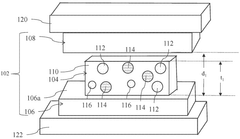
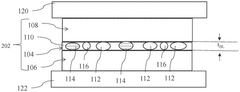
Thermal interface materials comprising deformable particles, circuit assemblies formed therefrom, and methods of manufacture thereof
PatentWO2025014994A1
Innovation
- A thermal interface material comprising a polymer component, liquid metal droplets, and deformable particles, where the deformable particles exhibit a significant decrease in storage modulus in response to temperature or pressure changes, allowing for controlled compression and enhanced distribution of liquid metal droplets for improved thermal conductivity.
Thermal interface material
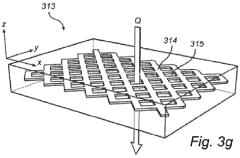
PatentActiveIN7138CHENP2014A
Innovation
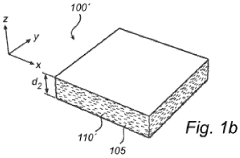
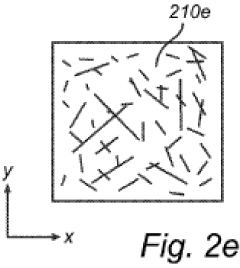
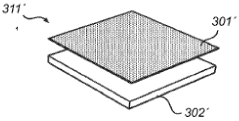
- A TIM with an activable shrinkage material that increases in thickness upon activation, providing enhanced contact pressure and robustness by expanding in the z-direction, thus eliminating the need for external pressure and addressing surface curvature and roughness, using heat-sensitive fibers or monomers that polymerize or expand to enhance thermal interface performance.
Thermal Management Standards and Regulations
The thermal management industry operates within a complex regulatory framework that encompasses multiple international, national, and industry-specific standards. These regulations directly impact TIM performance evaluation methodologies and material deformation testing protocols, establishing baseline requirements for thermal interface materials across various applications.
International standards organizations such as ISO, IEC, and ASTM have developed comprehensive testing methodologies for thermal interface materials. ISO 22007 series provides standardized methods for measuring thermal conductivity and thermal diffusivity, while ASTM D5470 establishes protocols for thermal transmission properties of thermally conductive electrical insulation materials. These standards define specific test conditions, sample preparation methods, and measurement procedures that directly influence how TIM performance is evaluated against material deformation characteristics.
Industry-specific regulations vary significantly across sectors, with automotive, aerospace, and electronics industries maintaining distinct requirements. The automotive sector follows AEC-Q200 qualification standards, which mandate thermal cycling tests that inherently evaluate material deformation under thermal stress. Aerospace applications adhere to NASA outgassing requirements (NASA-STD-6016) and military specifications (MIL-STD-810) that address material stability under extreme conditions.
Electronic device regulations, particularly those governed by IPC standards and UL safety requirements, establish thermal performance benchmarks while considering long-term material integrity. IPC-2221 provides guidelines for thermal management in printed circuit boards, while UL 746B addresses polymeric materials used in electrical equipment, including thermal interface applications.
Emerging regulatory trends focus on environmental compliance and sustainability. RoHS (Restriction of Hazardous Substances) and REACH (Registration, Evaluation, Authorization, and Restriction of Chemicals) regulations increasingly influence TIM material selection and performance testing protocols. These environmental standards require manufacturers to balance thermal performance optimization with material deformation characteristics while ensuring compliance with chemical composition restrictions.
Regional variations in thermal management standards create additional complexity. European EN standards, Japanese JIS specifications, and Chinese GB standards each present unique testing requirements and performance criteria. These regional differences necessitate comprehensive understanding of local regulatory landscapes when developing TIM solutions that must maintain performance while minimizing material deformation across global markets.
International standards organizations such as ISO, IEC, and ASTM have developed comprehensive testing methodologies for thermal interface materials. ISO 22007 series provides standardized methods for measuring thermal conductivity and thermal diffusivity, while ASTM D5470 establishes protocols for thermal transmission properties of thermally conductive electrical insulation materials. These standards define specific test conditions, sample preparation methods, and measurement procedures that directly influence how TIM performance is evaluated against material deformation characteristics.
Industry-specific regulations vary significantly across sectors, with automotive, aerospace, and electronics industries maintaining distinct requirements. The automotive sector follows AEC-Q200 qualification standards, which mandate thermal cycling tests that inherently evaluate material deformation under thermal stress. Aerospace applications adhere to NASA outgassing requirements (NASA-STD-6016) and military specifications (MIL-STD-810) that address material stability under extreme conditions.
Electronic device regulations, particularly those governed by IPC standards and UL safety requirements, establish thermal performance benchmarks while considering long-term material integrity. IPC-2221 provides guidelines for thermal management in printed circuit boards, while UL 746B addresses polymeric materials used in electrical equipment, including thermal interface applications.
Emerging regulatory trends focus on environmental compliance and sustainability. RoHS (Restriction of Hazardous Substances) and REACH (Registration, Evaluation, Authorization, and Restriction of Chemicals) regulations increasingly influence TIM material selection and performance testing protocols. These environmental standards require manufacturers to balance thermal performance optimization with material deformation characteristics while ensuring compliance with chemical composition restrictions.
Regional variations in thermal management standards create additional complexity. European EN standards, Japanese JIS specifications, and Chinese GB standards each present unique testing requirements and performance criteria. These regional differences necessitate comprehensive understanding of local regulatory landscapes when developing TIM solutions that must maintain performance while minimizing material deformation across global markets.
Environmental Impact of TIM Materials
The environmental implications of thermal interface materials (TIM) have become increasingly critical as the electronics industry faces mounting pressure to adopt sustainable practices. Traditional TIM materials, particularly those containing heavy metals, volatile organic compounds, and non-biodegradable polymers, pose significant environmental challenges throughout their lifecycle from manufacturing to disposal.
Manufacturing processes for conventional TIM materials often involve energy-intensive procedures and generate substantial carbon emissions. Silicone-based TIMs, while effective thermally, require complex synthesis processes that consume considerable energy and produce chemical byproducts. Metal-based TIMs containing indium, gallium, or other rare earth elements contribute to resource depletion concerns, as these materials require extensive mining operations with associated environmental degradation.
The relationship between material deformation and environmental impact presents unique challenges. TIMs designed to maintain performance under mechanical stress often incorporate additives and stabilizers that may compromise biodegradability. Pump-out resistant formulations typically contain cross-linking agents and fillers that extend material lifespan but complicate end-of-life processing.
Emerging bio-based alternatives show promise in reducing environmental footprint while maintaining adequate thermal performance. Plant-derived polymers and natural wax-based formulations offer improved biodegradability, though their deformation characteristics under thermal cycling may differ from conventional materials. These alternatives often demonstrate acceptable thermal conductivity while providing superior environmental profiles.
Recycling and disposal considerations are paramount when evaluating TIM environmental impact. Materials that maintain structural integrity under deformation may facilitate easier removal and recycling processes. However, TIMs that undergo permanent deformation or chemical changes during operation present challenges for material recovery and reprocessing.
Life cycle assessment studies indicate that TIM environmental impact extends beyond material composition to include packaging, transportation, and application methods. Water-based formulations generally exhibit lower environmental impact compared to solvent-based alternatives, though their performance under mechanical stress requires careful evaluation to ensure long-term reliability and minimize replacement frequency.
Manufacturing processes for conventional TIM materials often involve energy-intensive procedures and generate substantial carbon emissions. Silicone-based TIMs, while effective thermally, require complex synthesis processes that consume considerable energy and produce chemical byproducts. Metal-based TIMs containing indium, gallium, or other rare earth elements contribute to resource depletion concerns, as these materials require extensive mining operations with associated environmental degradation.
The relationship between material deformation and environmental impact presents unique challenges. TIMs designed to maintain performance under mechanical stress often incorporate additives and stabilizers that may compromise biodegradability. Pump-out resistant formulations typically contain cross-linking agents and fillers that extend material lifespan but complicate end-of-life processing.
Emerging bio-based alternatives show promise in reducing environmental footprint while maintaining adequate thermal performance. Plant-derived polymers and natural wax-based formulations offer improved biodegradability, though their deformation characteristics under thermal cycling may differ from conventional materials. These alternatives often demonstrate acceptable thermal conductivity while providing superior environmental profiles.
Recycling and disposal considerations are paramount when evaluating TIM environmental impact. Materials that maintain structural integrity under deformation may facilitate easier removal and recycling processes. However, TIMs that undergo permanent deformation or chemical changes during operation present challenges for material recovery and reprocessing.
Life cycle assessment studies indicate that TIM environmental impact extends beyond material composition to include packaging, transportation, and application methods. Water-based formulations generally exhibit lower environmental impact compared to solvent-based alternatives, though their performance under mechanical stress requires careful evaluation to ensure long-term reliability and minimize replacement frequency.
Unlock deeper insights with Patsnap Eureka Quick Research — get a full tech report to explore trends and direct your research. Try now!
Generate Your Research Report Instantly with AI Agent
Supercharge your innovation with Patsnap Eureka AI Agent Platform!