

TIM Performance vs Thermal Expansion
MAR 27, 20269 MIN READ
Generate Your Research Report Instantly with AI Agent
Patsnap Eureka helps you evaluate technical feasibility & market potential.
TIM Thermal Performance Background and Research Objectives
Thermal Interface Materials (TIMs) have emerged as critical components in modern electronic systems, serving as the essential bridge between heat-generating components and heat dissipation solutions. As electronic devices continue to miniaturize while simultaneously increasing in power density, the thermal management challenges have intensified exponentially. TIMs play a pivotal role in ensuring efficient heat transfer from processors, graphics cards, power electronics, and other high-performance components to heat sinks, thermal spreaders, and cooling systems.
The evolution of TIM technology has been driven by the relentless pursuit of higher thermal conductivity, lower thermal resistance, and improved reliability under varying operational conditions. Traditional thermal interface solutions, including thermal greases, phase change materials, thermal pads, and advanced materials like liquid metals, have undergone significant refinements to meet increasingly stringent performance requirements. However, the relationship between thermal performance and thermal expansion characteristics has become a critical consideration that directly impacts long-term reliability and system performance.
Thermal expansion mismatch between TIMs and adjacent components creates mechanical stresses that can lead to delamination, crack formation, and subsequent thermal resistance degradation. This phenomenon becomes particularly pronounced in applications experiencing wide temperature cycling, such as automotive electronics, aerospace systems, and high-performance computing platforms. The coefficient of thermal expansion (CTE) compatibility between TIMs and substrate materials has emerged as a fundamental design parameter that significantly influences the durability and effectiveness of thermal management solutions.
Current research objectives focus on establishing comprehensive correlations between TIM thermal performance metrics and thermal expansion behaviors under various operating conditions. Key research goals include developing predictive models for thermal resistance evolution as a function of thermal cycling, identifying optimal CTE ranges for different application scenarios, and creating standardized testing methodologies that accurately simulate real-world thermal expansion effects on TIM performance.
The investigation aims to advance understanding of how thermal expansion-induced mechanical stresses affect heat transfer efficiency, interface stability, and long-term reliability. This research will provide critical insights for developing next-generation TIM formulations that maintain superior thermal performance while exhibiting enhanced mechanical compatibility with diverse substrate materials and operating environments.
The evolution of TIM technology has been driven by the relentless pursuit of higher thermal conductivity, lower thermal resistance, and improved reliability under varying operational conditions. Traditional thermal interface solutions, including thermal greases, phase change materials, thermal pads, and advanced materials like liquid metals, have undergone significant refinements to meet increasingly stringent performance requirements. However, the relationship between thermal performance and thermal expansion characteristics has become a critical consideration that directly impacts long-term reliability and system performance.
Thermal expansion mismatch between TIMs and adjacent components creates mechanical stresses that can lead to delamination, crack formation, and subsequent thermal resistance degradation. This phenomenon becomes particularly pronounced in applications experiencing wide temperature cycling, such as automotive electronics, aerospace systems, and high-performance computing platforms. The coefficient of thermal expansion (CTE) compatibility between TIMs and substrate materials has emerged as a fundamental design parameter that significantly influences the durability and effectiveness of thermal management solutions.
Current research objectives focus on establishing comprehensive correlations between TIM thermal performance metrics and thermal expansion behaviors under various operating conditions. Key research goals include developing predictive models for thermal resistance evolution as a function of thermal cycling, identifying optimal CTE ranges for different application scenarios, and creating standardized testing methodologies that accurately simulate real-world thermal expansion effects on TIM performance.
The investigation aims to advance understanding of how thermal expansion-induced mechanical stresses affect heat transfer efficiency, interface stability, and long-term reliability. This research will provide critical insights for developing next-generation TIM formulations that maintain superior thermal performance while exhibiting enhanced mechanical compatibility with diverse substrate materials and operating environments.
Market Demand for Advanced Thermal Interface Materials
The global thermal interface materials market is experiencing unprecedented growth driven by the exponential expansion of electronic devices and the increasing demand for efficient thermal management solutions. Consumer electronics, automotive electronics, telecommunications infrastructure, and data centers represent the primary demand drivers, with each sector requiring specialized TIM solutions to address unique thermal challenges.
Data centers and cloud computing infrastructure constitute one of the most significant growth segments for advanced TIMs. The proliferation of artificial intelligence, machine learning, and high-performance computing applications has created an urgent need for materials that can effectively manage heat dissipation while maintaining long-term reliability under varying thermal expansion conditions. Server processors, graphics processing units, and memory modules require TIMs that can accommodate repeated thermal cycling without degrading performance.
The automotive industry presents another rapidly expanding market opportunity, particularly with the accelerated adoption of electric vehicles and autonomous driving technologies. Power electronics, battery management systems, and advanced driver assistance systems generate substantial heat loads that must be managed efficiently. The automotive environment introduces additional complexity due to extreme temperature variations, vibrations, and long-term durability requirements, creating demand for TIMs with superior thermal expansion compatibility.
Consumer electronics continue to drive volume demand as devices become increasingly compact while incorporating more powerful processors. Smartphones, tablets, laptops, and gaming devices require ultra-thin TIM solutions that can maintain thermal performance despite miniaturization constraints. The trend toward higher power densities in smaller form factors intensifies the need for materials that can accommodate thermal expansion mismatches between different components.
Emerging applications in renewable energy systems, particularly solar inverters and wind turbine power electronics, are creating new market segments for specialized TIMs. These applications demand materials capable of withstanding harsh environmental conditions while maintaining thermal performance over extended operational lifespans.
The telecommunications sector's transition to advanced wireless technologies is generating substantial demand for high-performance TIMs in base stations, network equipment, and edge computing infrastructure. These applications require materials that can handle high-frequency thermal cycling while maintaining consistent thermal conductivity and mechanical integrity.
Market demand is increasingly focused on materials that can simultaneously address thermal performance and thermal expansion challenges, reflecting the industry's recognition that these properties are fundamentally interconnected in determining long-term system reliability and performance.
Data centers and cloud computing infrastructure constitute one of the most significant growth segments for advanced TIMs. The proliferation of artificial intelligence, machine learning, and high-performance computing applications has created an urgent need for materials that can effectively manage heat dissipation while maintaining long-term reliability under varying thermal expansion conditions. Server processors, graphics processing units, and memory modules require TIMs that can accommodate repeated thermal cycling without degrading performance.
The automotive industry presents another rapidly expanding market opportunity, particularly with the accelerated adoption of electric vehicles and autonomous driving technologies. Power electronics, battery management systems, and advanced driver assistance systems generate substantial heat loads that must be managed efficiently. The automotive environment introduces additional complexity due to extreme temperature variations, vibrations, and long-term durability requirements, creating demand for TIMs with superior thermal expansion compatibility.
Consumer electronics continue to drive volume demand as devices become increasingly compact while incorporating more powerful processors. Smartphones, tablets, laptops, and gaming devices require ultra-thin TIM solutions that can maintain thermal performance despite miniaturization constraints. The trend toward higher power densities in smaller form factors intensifies the need for materials that can accommodate thermal expansion mismatches between different components.
Emerging applications in renewable energy systems, particularly solar inverters and wind turbine power electronics, are creating new market segments for specialized TIMs. These applications demand materials capable of withstanding harsh environmental conditions while maintaining thermal performance over extended operational lifespans.
The telecommunications sector's transition to advanced wireless technologies is generating substantial demand for high-performance TIMs in base stations, network equipment, and edge computing infrastructure. These applications require materials that can handle high-frequency thermal cycling while maintaining consistent thermal conductivity and mechanical integrity.
Market demand is increasingly focused on materials that can simultaneously address thermal performance and thermal expansion challenges, reflecting the industry's recognition that these properties are fundamentally interconnected in determining long-term system reliability and performance.
Current TIM Performance Limitations and Thermal Expansion Issues
Thermal Interface Materials currently face significant performance limitations that directly correlate with thermal expansion challenges in electronic systems. The primary constraint lies in the fundamental trade-off between thermal conductivity and mechanical compliance. High-performance TIMs with superior thermal conductivity, such as metal-based materials, often exhibit poor conformability to surface irregularities and limited ability to accommodate thermal expansion mismatches between components.
Interface resistance remains a critical bottleneck in TIM performance, particularly under thermal cycling conditions. As electronic components undergo repeated heating and cooling cycles, the differential thermal expansion between substrates and heat sinks creates mechanical stress at the TIM interface. This stress leads to delamination, void formation, and progressive degradation of thermal contact, resulting in increased thermal resistance over time.
Pump-out phenomena represent another significant limitation affecting long-term TIM reliability. During thermal cycling, the expansion and contraction of adjacent materials can cause TIM displacement from the interface region. This is particularly problematic for liquid and paste-based TIMs, where the material gradually migrates away from critical heat transfer areas, leaving gaps that severely compromise thermal performance.
Material property degradation under thermal stress poses additional challenges for current TIM solutions. Polymer-based TIMs experience molecular chain scission and cross-linking changes when subjected to repeated thermal expansion cycles. These chemical modifications alter the material's thermal conductivity, viscosity, and adhesion properties, leading to unpredictable performance variations in real-world applications.
The coefficient of thermal expansion mismatch between TIMs and adjacent materials creates substantial mechanical stress concentrations. Silicon dies typically have CTEs around 3-4 ppm/°C, while copper heat spreaders exhibit CTEs of approximately 17 ppm/°C. TIMs must bridge this significant expansion differential while maintaining effective thermal contact, a requirement that current materials struggle to fulfill consistently.
Thickness variation control presents ongoing challenges in TIM application processes. Thermal expansion effects are highly sensitive to bondline thickness, yet achieving uniform, thin bondlines across large interface areas remains difficult. Non-uniform thickness distribution creates localized stress concentrations and thermal hot spots that compromise overall system thermal performance and reliability.
Interface resistance remains a critical bottleneck in TIM performance, particularly under thermal cycling conditions. As electronic components undergo repeated heating and cooling cycles, the differential thermal expansion between substrates and heat sinks creates mechanical stress at the TIM interface. This stress leads to delamination, void formation, and progressive degradation of thermal contact, resulting in increased thermal resistance over time.
Pump-out phenomena represent another significant limitation affecting long-term TIM reliability. During thermal cycling, the expansion and contraction of adjacent materials can cause TIM displacement from the interface region. This is particularly problematic for liquid and paste-based TIMs, where the material gradually migrates away from critical heat transfer areas, leaving gaps that severely compromise thermal performance.
Material property degradation under thermal stress poses additional challenges for current TIM solutions. Polymer-based TIMs experience molecular chain scission and cross-linking changes when subjected to repeated thermal expansion cycles. These chemical modifications alter the material's thermal conductivity, viscosity, and adhesion properties, leading to unpredictable performance variations in real-world applications.
The coefficient of thermal expansion mismatch between TIMs and adjacent materials creates substantial mechanical stress concentrations. Silicon dies typically have CTEs around 3-4 ppm/°C, while copper heat spreaders exhibit CTEs of approximately 17 ppm/°C. TIMs must bridge this significant expansion differential while maintaining effective thermal contact, a requirement that current materials struggle to fulfill consistently.
Thickness variation control presents ongoing challenges in TIM application processes. Thermal expansion effects are highly sensitive to bondline thickness, yet achieving uniform, thin bondlines across large interface areas remains difficult. Non-uniform thickness distribution creates localized stress concentrations and thermal hot spots that compromise overall system thermal performance and reliability.
Existing TIM Solutions for Thermal Expansion Management
01 Low thermal expansion coefficient materials for TIM applications
Thermal interface materials can be formulated with low thermal expansion coefficient materials to minimize dimensional changes during temperature cycling. These materials help maintain stable contact between heat-generating components and heat sinks across varying thermal conditions. The use of fillers and matrix materials with matched thermal expansion properties ensures consistent thermal performance and prevents delamination or gap formation at interfaces.- Low thermal expansion coefficient materials for TIM applications: Thermal interface materials can be formulated with low thermal expansion coefficient materials to minimize dimensional changes during temperature cycling. These materials help maintain consistent contact between surfaces and reduce thermal stress at interfaces. The use of fillers with matched thermal expansion properties ensures stable performance across operating temperature ranges.
- Composite TIM structures with controlled thermal expansion: Multi-layer or composite thermal interface materials can be designed with specific layers having different thermal expansion characteristics to compensate for mismatches between joined components. These structures may incorporate metal matrices, polymer bases, or ceramic fillers arranged to provide both effective heat transfer and dimensional stability. The layered approach allows optimization of both thermal conductivity and mechanical compliance.
- Phase change materials with thermal expansion management: Phase change thermal interface materials are formulated to address thermal expansion issues through their ability to flow and conform to surface irregularities during temperature changes. These materials can accommodate differential expansion between substrates while maintaining thermal contact. Additives and matrix materials are selected to control the expansion behavior during phase transitions.
- Particle-filled TIM with thermal expansion matching: Thermal interface materials incorporating specific particle fillers can be engineered to match the thermal expansion coefficients of adjacent materials. The selection of filler type, size, shape, and loading percentage allows tuning of both thermal conductivity and expansion properties. These formulations may include metallic, ceramic, or carbon-based particles in polymer or other matrices.
- Testing and characterization methods for TIM thermal expansion: Specialized testing methodologies and apparatus are used to evaluate thermal interface material performance under thermal cycling conditions. These methods measure changes in thermal resistance, bond line thickness, and interface pressure as temperature varies. Characterization techniques help predict long-term reliability and performance degradation due to thermal expansion mismatch.
02 Composite TIM structures with controlled thermal expansion
Multi-layer or composite thermal interface materials can be designed with specific layer arrangements to control overall thermal expansion behavior. By combining materials with different thermal expansion characteristics, the composite structure can achieve desired expansion properties while maintaining high thermal conductivity. This approach allows for optimization of both thermal performance and mechanical stability under thermal cycling conditions.Expand Specific Solutions03 Thermal expansion compensation mechanisms in TIM designs
Advanced thermal interface material designs incorporate mechanical features or compliant structures that accommodate thermal expansion mismatches between mating surfaces. These designs may include flexible elements, spring-loaded components, or phase-change materials that adapt to dimensional changes during operation. Such mechanisms ensure continuous thermal contact and consistent heat transfer performance despite thermal expansion differences.Expand Specific Solutions04 High thermal conductivity fillers with matched expansion properties
Thermal interface materials can be enhanced with high thermal conductivity fillers that are selected not only for their heat transfer capabilities but also for their thermal expansion compatibility with the polymer matrix and substrate materials. The selection and distribution of these fillers significantly impacts both the thermal performance and the dimensional stability of the interface material under thermal stress.Expand Specific Solutions05 Testing and characterization methods for TIM thermal expansion
Specialized testing methodologies and characterization techniques are employed to evaluate thermal interface material performance under thermal cycling conditions. These methods assess both thermal conductivity changes and dimensional stability as materials undergo repeated heating and cooling cycles. Measurement systems and protocols help predict long-term reliability and performance degradation due to thermal expansion effects.Expand Specific Solutions
Key Players in TIM and Thermal Management Industry
The TIM (Thermal Interface Materials) performance versus thermal expansion research field represents a mature yet rapidly evolving market driven by increasing thermal management demands in electronics and semiconductors. The industry is experiencing significant growth, with market expansion fueled by advanced computing, 5G infrastructure, and electric vehicle applications. Technology maturity varies considerably across market players, with established semiconductor giants like Intel Corp., Taiwan Semiconductor Manufacturing Co., and IBM leading in advanced thermal solutions integration. Material specialists including 3M Innovative Properties Co., Indium Corporation, and Jones Tech PLC demonstrate high technical sophistication in specialized TIM formulations. Meanwhile, diversified technology companies such as Apple Inc., Huawei Technologies, and Hon Hai Precision represent strong application-driven innovation. The competitive landscape shows a clear bifurcation between materials innovation leaders and system integration experts, with emerging players like BNNT Materials introducing breakthrough nanotechnology solutions that could disrupt traditional thermal management approaches.
Intel Corp.
Technical Solution: Intel has developed advanced thermal interface materials (TIMs) specifically designed to address thermal expansion challenges in high-performance processors. Their TIM solutions utilize phase-change materials and metal-filled polymers that maintain consistent thermal conductivity across temperature cycles while accommodating coefficient of thermal expansion (CTE) mismatches between silicon dies and heat spreaders. Intel's research focuses on optimizing TIM thickness and material composition to minimize thermal resistance while providing mechanical compliance during thermal cycling, achieving thermal conductivity values exceeding 5 W/mK with low bond-line thickness below 50 micrometers.
Strengths: Industry-leading expertise in semiconductor thermal management, extensive R&D resources, proven track record in high-volume manufacturing. Weaknesses: Solutions primarily optimized for their own processor architectures, limited availability for third-party applications.
The Indium Corporation of America
Technical Solution: Indium Corporation specializes in developing high-performance thermal interface materials that address thermal expansion coefficient mismatches in electronic assemblies. Their TIM portfolio includes indium-based alloys, phase-change materials, and thermally conductive gap fillers engineered to maintain reliable thermal paths during thermal cycling. The company's research emphasizes materials that can accommodate CTE differences between substrates while maintaining low thermal resistance, with products achieving thermal conductivity ranging from 1-80 W/mK depending on application requirements. Their solutions are particularly effective in power electronics and LED applications where thermal expansion stress can cause interface degradation.
Strengths: Specialized expertise in indium-based materials, comprehensive TIM product portfolio, strong application engineering support. Weaknesses: Higher material costs compared to conventional solutions, limited scalability for very high-volume consumer applications.
Core Innovations in TIM Thermal Expansion Research
Lead-free solder paste as thermal interface material
PatentActiveUS20200235033A1
Innovation
- A solder paste composition comprising a solder powder, high melting temperature particles, and flux, with a volume ratio of solder powder to high melting temperature particles between 5:1 and 1.5, that forms intermetallic compounds to maintain the solder joint's integrity and prevent volume loss during reflow, and uses an epoxy flux for adhesion without requiring metallized surfaces.


Thermal interface material
PatentActiveIN7138CHENP2014A
Innovation
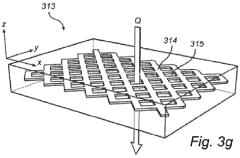
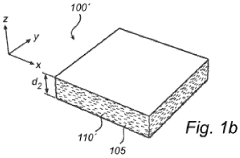
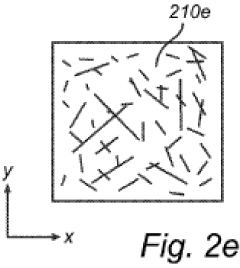
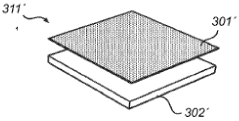
- A TIM with an activable shrinkage material that increases in thickness upon activation, providing enhanced contact pressure and robustness by expanding in the z-direction, thus eliminating the need for external pressure and addressing surface curvature and roughness, using heat-sensitive fibers or monomers that polymerize or expand to enhance thermal interface performance.
Material Safety Standards for Thermal Interface Applications
Material safety standards for thermal interface applications represent a critical framework governing the development, manufacturing, and deployment of TIM materials across various industries. These standards encompass comprehensive guidelines addressing chemical composition limits, toxicity thresholds, flammability ratings, and environmental impact assessments. Regulatory bodies including UL, IEC, RoHS, and REACH have established specific requirements that directly influence TIM formulation strategies and performance optimization approaches.
The relationship between thermal expansion characteristics and material safety compliance creates significant design constraints for TIM manufacturers. Materials exhibiting favorable thermal expansion properties may contain substances that conflict with safety regulations, necessitating careful balance between performance and compliance. For instance, certain metal-filled thermal compounds that provide excellent thermal conductivity and controlled expansion coefficients may incorporate heavy metals or volatile organic compounds that exceed permissible safety limits.
Flammability standards such as UL 94 and IEC 60695 impose strict requirements on TIM materials, particularly those used in high-temperature applications where thermal expansion effects are most pronounced. These standards evaluate ignition resistance, flame spread rates, and combustion byproduct toxicity under various thermal stress conditions. TIM materials must demonstrate consistent safety performance across their operational temperature ranges, including during thermal cycling events that induce expansion and contraction stresses.
Chemical safety regulations significantly impact TIM formulation approaches, especially regarding volatile compound emissions and long-term stability. Materials experiencing repeated thermal expansion cycles may exhibit accelerated aging, potentially releasing hazardous substances or degrading into unsafe compounds. REACH compliance requires comprehensive assessment of substance migration and decomposition products under thermal stress conditions, directly linking expansion behavior to safety performance evaluation.
Occupational safety standards for TIM handling and application processes must account for thermal expansion-related risks during manufacturing and installation procedures. Workers may encounter elevated exposure risks when processing materials at temperatures where expansion effects become significant, requiring specialized safety protocols and protective equipment specifications tailored to thermal interface applications.
The relationship between thermal expansion characteristics and material safety compliance creates significant design constraints for TIM manufacturers. Materials exhibiting favorable thermal expansion properties may contain substances that conflict with safety regulations, necessitating careful balance between performance and compliance. For instance, certain metal-filled thermal compounds that provide excellent thermal conductivity and controlled expansion coefficients may incorporate heavy metals or volatile organic compounds that exceed permissible safety limits.
Flammability standards such as UL 94 and IEC 60695 impose strict requirements on TIM materials, particularly those used in high-temperature applications where thermal expansion effects are most pronounced. These standards evaluate ignition resistance, flame spread rates, and combustion byproduct toxicity under various thermal stress conditions. TIM materials must demonstrate consistent safety performance across their operational temperature ranges, including during thermal cycling events that induce expansion and contraction stresses.
Chemical safety regulations significantly impact TIM formulation approaches, especially regarding volatile compound emissions and long-term stability. Materials experiencing repeated thermal expansion cycles may exhibit accelerated aging, potentially releasing hazardous substances or degrading into unsafe compounds. REACH compliance requires comprehensive assessment of substance migration and decomposition products under thermal stress conditions, directly linking expansion behavior to safety performance evaluation.
Occupational safety standards for TIM handling and application processes must account for thermal expansion-related risks during manufacturing and installation procedures. Workers may encounter elevated exposure risks when processing materials at temperatures where expansion effects become significant, requiring specialized safety protocols and protective equipment specifications tailored to thermal interface applications.
Reliability Testing Methods for TIM Thermal Cycling
Thermal cycling reliability testing represents a critical methodology for evaluating TIM performance under repeated thermal expansion and contraction conditions. This testing approach simulates real-world operational scenarios where electronic components experience continuous temperature fluctuations, causing materials to expand and contract at different rates based on their coefficient of thermal expansion (CTE) values.
The fundamental principle of thermal cycling testing involves subjecting TIM samples to predetermined temperature ranges with controlled heating and cooling rates. Standard test protocols typically employ temperature ranges from -40°C to +125°C or -55°C to +150°C, depending on application requirements. The cycling frequency and dwell times at extreme temperatures are carefully calibrated to accelerate aging effects while maintaining relevance to actual operating conditions.
Key performance metrics monitored during thermal cycling include thermal resistance evolution, bond line thickness stability, and interfacial adhesion integrity. Advanced testing setups incorporate real-time thermal resistance measurements using calibrated thermocouples and heat flux sensors, enabling continuous monitoring of TIM degradation throughout the cycling process. This approach provides valuable insights into failure mechanisms and performance degradation patterns.
Standardized testing methodologies follow established protocols such as JEDEC JESD22-A104 and IPC-9701A, which define specific test conditions, sample preparation procedures, and acceptance criteria. These standards ensure reproducibility and enable meaningful comparison between different TIM formulations and suppliers.
Modern thermal cycling test equipment features precise temperature control systems, automated data acquisition capabilities, and multi-zone testing chambers that can accommodate various sample configurations simultaneously. Some advanced systems integrate mechanical stress application to simulate combined thermal and mechanical loading conditions, providing more comprehensive reliability assessment.
Failure analysis techniques employed during thermal cycling testing include cross-sectional microscopy, scanning electron microscopy (SEM), and energy-dispersive X-ray spectroscopy (EDS) to identify degradation mechanisms such as delamination, void formation, or chemical decomposition. These analytical methods help correlate performance changes with underlying material modifications.
The duration of thermal cycling tests typically ranges from hundreds to thousands of cycles, with specific requirements determined by target application lifetimes and acceleration factors. Statistical analysis of test results enables prediction of field performance and establishment of reliability confidence levels for different operating conditions.
The fundamental principle of thermal cycling testing involves subjecting TIM samples to predetermined temperature ranges with controlled heating and cooling rates. Standard test protocols typically employ temperature ranges from -40°C to +125°C or -55°C to +150°C, depending on application requirements. The cycling frequency and dwell times at extreme temperatures are carefully calibrated to accelerate aging effects while maintaining relevance to actual operating conditions.
Key performance metrics monitored during thermal cycling include thermal resistance evolution, bond line thickness stability, and interfacial adhesion integrity. Advanced testing setups incorporate real-time thermal resistance measurements using calibrated thermocouples and heat flux sensors, enabling continuous monitoring of TIM degradation throughout the cycling process. This approach provides valuable insights into failure mechanisms and performance degradation patterns.
Standardized testing methodologies follow established protocols such as JEDEC JESD22-A104 and IPC-9701A, which define specific test conditions, sample preparation procedures, and acceptance criteria. These standards ensure reproducibility and enable meaningful comparison between different TIM formulations and suppliers.
Modern thermal cycling test equipment features precise temperature control systems, automated data acquisition capabilities, and multi-zone testing chambers that can accommodate various sample configurations simultaneously. Some advanced systems integrate mechanical stress application to simulate combined thermal and mechanical loading conditions, providing more comprehensive reliability assessment.
Failure analysis techniques employed during thermal cycling testing include cross-sectional microscopy, scanning electron microscopy (SEM), and energy-dispersive X-ray spectroscopy (EDS) to identify degradation mechanisms such as delamination, void formation, or chemical decomposition. These analytical methods help correlate performance changes with underlying material modifications.
The duration of thermal cycling tests typically ranges from hundreds to thousands of cycles, with specific requirements determined by target application lifetimes and acceleration factors. Statistical analysis of test results enables prediction of field performance and establishment of reliability confidence levels for different operating conditions.
Unlock deeper insights with Patsnap Eureka Quick Research — get a full tech report to explore trends and direct your research. Try now!
Generate Your Research Report Instantly with AI Agent
Supercharge your innovation with Patsnap Eureka AI Agent Platform!