

TIM Performance vs System Reliability
MAR 27, 20269 MIN READ
Generate Your Research Report Instantly with AI Agent
Patsnap Eureka helps you evaluate technical feasibility & market potential.
TIM Technology Background and Performance Goals
Thermal Interface Materials (TIMs) have emerged as critical components in modern electronic systems, serving as the essential bridge between heat-generating components and heat dissipation solutions. The fundamental challenge lies in achieving optimal thermal conductivity while maintaining long-term system reliability under various operating conditions. This technology has evolved from simple thermal greases to sophisticated engineered materials incorporating advanced fillers, polymers, and phase-change materials.
The primary performance goal of TIM technology centers on maximizing thermal conductivity to ensure efficient heat transfer from processors, power electronics, and other heat-generating components to heat sinks or cooling systems. Modern applications demand thermal conductivity values ranging from 1 W/mK for basic applications to over 15 W/mK for high-performance computing systems. However, achieving superior thermal performance often introduces trade-offs with mechanical properties, application characteristics, and long-term stability.
System reliability requirements have become increasingly stringent as electronic devices operate under more demanding conditions with extended lifecycles. TIMs must maintain consistent performance across temperature cycling from -40°C to 150°C, resist degradation from thermal aging, and withstand mechanical stresses from thermal expansion mismatches. The reliability challenge is compounded by the need for materials to maintain their interface integrity over thousands of thermal cycles without pump-out, dry-out, or significant thermal resistance increase.
The evolution of TIM technology has been driven by the exponential increase in power densities in electronic systems, particularly in data centers, automotive electronics, and mobile devices. Traditional silicone-based thermal greases, while cost-effective, often fail to meet the dual requirements of high performance and long-term reliability. This has led to the development of advanced material systems including metal-filled polymers, carbon nanotube composites, graphene-enhanced formulations, and liquid metal solutions.
Current technological objectives focus on developing TIMs that can achieve thermal conductivity exceeding 10 W/mK while maintaining operational stability for over 10 years under continuous thermal cycling. Additionally, the industry seeks materials with improved wettability, reduced bond-line thickness capabilities, and enhanced reworkability for manufacturing and maintenance operations. The ultimate goal involves creating intelligent TIM solutions that can adapt to varying thermal loads while providing predictable long-term performance characteristics essential for mission-critical applications.
The primary performance goal of TIM technology centers on maximizing thermal conductivity to ensure efficient heat transfer from processors, power electronics, and other heat-generating components to heat sinks or cooling systems. Modern applications demand thermal conductivity values ranging from 1 W/mK for basic applications to over 15 W/mK for high-performance computing systems. However, achieving superior thermal performance often introduces trade-offs with mechanical properties, application characteristics, and long-term stability.
System reliability requirements have become increasingly stringent as electronic devices operate under more demanding conditions with extended lifecycles. TIMs must maintain consistent performance across temperature cycling from -40°C to 150°C, resist degradation from thermal aging, and withstand mechanical stresses from thermal expansion mismatches. The reliability challenge is compounded by the need for materials to maintain their interface integrity over thousands of thermal cycles without pump-out, dry-out, or significant thermal resistance increase.
The evolution of TIM technology has been driven by the exponential increase in power densities in electronic systems, particularly in data centers, automotive electronics, and mobile devices. Traditional silicone-based thermal greases, while cost-effective, often fail to meet the dual requirements of high performance and long-term reliability. This has led to the development of advanced material systems including metal-filled polymers, carbon nanotube composites, graphene-enhanced formulations, and liquid metal solutions.
Current technological objectives focus on developing TIMs that can achieve thermal conductivity exceeding 10 W/mK while maintaining operational stability for over 10 years under continuous thermal cycling. Additionally, the industry seeks materials with improved wettability, reduced bond-line thickness capabilities, and enhanced reworkability for manufacturing and maintenance operations. The ultimate goal involves creating intelligent TIM solutions that can adapt to varying thermal loads while providing predictable long-term performance characteristics essential for mission-critical applications.
Market Demand for High-Performance TIM Solutions
The global thermal interface materials market is experiencing unprecedented growth driven by the escalating demand for efficient thermal management solutions across multiple industries. Data centers, which consume substantial energy and generate significant heat loads, represent one of the most critical application segments. The proliferation of cloud computing, artificial intelligence workloads, and edge computing infrastructure has intensified the need for advanced TIM solutions that can maintain optimal operating temperatures while ensuring long-term system reliability.
Consumer electronics manufacturers face mounting pressure to deliver increasingly powerful devices within compact form factors. Smartphones, tablets, gaming consoles, and laptops require sophisticated thermal management to prevent performance throttling and extend component lifespan. The integration of high-performance processors, graphics units, and memory modules in these devices creates complex thermal challenges that demand innovative TIM solutions capable of handling varying thermal loads while maintaining mechanical integrity over extended operational periods.
The automotive sector presents a rapidly expanding market opportunity, particularly with the accelerated adoption of electric vehicles and autonomous driving technologies. Power electronics, battery management systems, and advanced driver assistance systems generate substantial heat that must be effectively dissipated to ensure safety and reliability. Automotive applications impose stringent requirements for TIM performance under extreme temperature variations, vibration, and long-term durability expectations that can span decades.
Industrial automation and manufacturing equipment represent another significant demand driver, where thermal management directly impacts production efficiency and equipment longevity. High-power motor drives, industrial computing systems, and process control electronics require robust thermal solutions that can operate reliably in harsh environmental conditions while minimizing maintenance requirements.
The telecommunications infrastructure sector, including 5G base stations and network equipment, demands TIM solutions that can handle high power densities while maintaining consistent performance across varying environmental conditions. The deployment of edge computing nodes and distributed antenna systems further amplifies the need for reliable thermal management solutions that can operate autonomously with minimal maintenance intervention.
Emerging applications in renewable energy systems, particularly solar inverters and energy storage systems, are creating new market segments with specific thermal management requirements. These applications often operate in challenging outdoor environments and require TIM solutions that can maintain performance over extended periods while withstanding temperature cycling and environmental stresses.
Consumer electronics manufacturers face mounting pressure to deliver increasingly powerful devices within compact form factors. Smartphones, tablets, gaming consoles, and laptops require sophisticated thermal management to prevent performance throttling and extend component lifespan. The integration of high-performance processors, graphics units, and memory modules in these devices creates complex thermal challenges that demand innovative TIM solutions capable of handling varying thermal loads while maintaining mechanical integrity over extended operational periods.
The automotive sector presents a rapidly expanding market opportunity, particularly with the accelerated adoption of electric vehicles and autonomous driving technologies. Power electronics, battery management systems, and advanced driver assistance systems generate substantial heat that must be effectively dissipated to ensure safety and reliability. Automotive applications impose stringent requirements for TIM performance under extreme temperature variations, vibration, and long-term durability expectations that can span decades.
Industrial automation and manufacturing equipment represent another significant demand driver, where thermal management directly impacts production efficiency and equipment longevity. High-power motor drives, industrial computing systems, and process control electronics require robust thermal solutions that can operate reliably in harsh environmental conditions while minimizing maintenance requirements.
The telecommunications infrastructure sector, including 5G base stations and network equipment, demands TIM solutions that can handle high power densities while maintaining consistent performance across varying environmental conditions. The deployment of edge computing nodes and distributed antenna systems further amplifies the need for reliable thermal management solutions that can operate autonomously with minimal maintenance intervention.
Emerging applications in renewable energy systems, particularly solar inverters and energy storage systems, are creating new market segments with specific thermal management requirements. These applications often operate in challenging outdoor environments and require TIM solutions that can maintain performance over extended periods while withstanding temperature cycling and environmental stresses.
Current TIM Performance-Reliability Trade-offs
The thermal interface material (TIM) industry currently faces a fundamental trade-off between achieving optimal thermal performance and maintaining long-term system reliability. This balance represents one of the most critical challenges in thermal management, as engineers must navigate between maximizing heat dissipation efficiency and ensuring sustained operational integrity across diverse application environments.
High-performance TIMs, particularly those incorporating advanced materials like liquid metals, carbon nanotubes, and graphene composites, demonstrate exceptional thermal conductivity values ranging from 10 to 400 W/mK. However, these materials often exhibit reliability concerns including pump-out effects, thermal cycling degradation, and chemical incompatibility with substrate materials. Liquid metal TIMs, while offering superior thermal performance, present corrosion risks and electrical conductivity issues that can compromise system safety and longevity.
Traditional silicone-based TIMs maintain their market dominance due to proven reliability characteristics, including stable performance across temperature cycles, chemical inertness, and predictable aging behavior. These materials typically offer thermal conductivity values between 1-8 W/mK, significantly lower than advanced alternatives, but provide consistent performance over extended operational periods exceeding 10-15 years in demanding applications.
Phase change materials (PCMs) represent an intermediate solution, offering improved thermal performance compared to traditional compounds while maintaining reasonable reliability profiles. However, PCMs face challenges related to material migration, void formation during phase transitions, and performance degradation under repeated thermal cycling conditions.
The automotive and aerospace sectors exemplify this trade-off dilemma most acutely. High-performance computing applications demand maximum thermal conductivity to manage increasing power densities, yet automotive electronics require 15-20 year operational lifespans under extreme environmental conditions. This creates a complex optimization problem where thermal performance gains must be weighed against potential reliability risks and associated warranty costs.
Current industry approaches involve developing hybrid solutions that combine multiple TIM technologies within single systems, implementing redundant thermal pathways, and establishing comprehensive accelerated aging protocols to predict long-term performance. These strategies attempt to bridge the performance-reliability gap while maintaining cost-effectiveness and manufacturing scalability across high-volume production environments.
High-performance TIMs, particularly those incorporating advanced materials like liquid metals, carbon nanotubes, and graphene composites, demonstrate exceptional thermal conductivity values ranging from 10 to 400 W/mK. However, these materials often exhibit reliability concerns including pump-out effects, thermal cycling degradation, and chemical incompatibility with substrate materials. Liquid metal TIMs, while offering superior thermal performance, present corrosion risks and electrical conductivity issues that can compromise system safety and longevity.
Traditional silicone-based TIMs maintain their market dominance due to proven reliability characteristics, including stable performance across temperature cycles, chemical inertness, and predictable aging behavior. These materials typically offer thermal conductivity values between 1-8 W/mK, significantly lower than advanced alternatives, but provide consistent performance over extended operational periods exceeding 10-15 years in demanding applications.
Phase change materials (PCMs) represent an intermediate solution, offering improved thermal performance compared to traditional compounds while maintaining reasonable reliability profiles. However, PCMs face challenges related to material migration, void formation during phase transitions, and performance degradation under repeated thermal cycling conditions.
The automotive and aerospace sectors exemplify this trade-off dilemma most acutely. High-performance computing applications demand maximum thermal conductivity to manage increasing power densities, yet automotive electronics require 15-20 year operational lifespans under extreme environmental conditions. This creates a complex optimization problem where thermal performance gains must be weighed against potential reliability risks and associated warranty costs.
Current industry approaches involve developing hybrid solutions that combine multiple TIM technologies within single systems, implementing redundant thermal pathways, and establishing comprehensive accelerated aging protocols to predict long-term performance. These strategies attempt to bridge the performance-reliability gap while maintaining cost-effectiveness and manufacturing scalability across high-volume production environments.
Existing TIM Performance Enhancement Solutions
01 Thermal interface material composition optimization
Thermal interface materials can be formulated with specific compositions to enhance thermal conductivity and heat dissipation performance. The optimization involves selecting appropriate base materials, fillers, and additives to achieve desired thermal properties. Advanced formulations may include nano-particles, metal oxides, or carbon-based materials to improve heat transfer efficiency between components.- Thermal interface material composition optimization: Thermal interface materials can be formulated with specific compositions to enhance thermal conductivity and heat dissipation performance. The optimization involves selecting appropriate base materials, fillers, and additives to achieve desired thermal properties. Advanced formulations may include nano-particles, metal oxides, or carbon-based materials to improve heat transfer efficiency between surfaces.
- Reliability testing and quality assurance methods: Comprehensive testing methodologies are employed to evaluate the long-term reliability and performance stability of thermal interface materials. These methods include thermal cycling tests, aging tests, and stress tests under various environmental conditions. Quality assurance protocols ensure consistent performance across different operating temperatures and mechanical stresses.
- Application and dispensing techniques: Proper application methods are critical for achieving optimal thermal interface material performance. Techniques include controlled dispensing systems, automated application processes, and methods to ensure uniform coverage and minimal void formation. The application process directly impacts the thermal resistance and overall reliability of the interface.
- Performance monitoring and measurement systems: Advanced monitoring systems are developed to measure and track thermal interface material performance in real-time applications. These systems utilize sensors and diagnostic tools to assess thermal resistance, heat transfer efficiency, and material degradation over time. Measurement techniques enable predictive maintenance and performance optimization.
- Material stability and degradation prevention: Strategies are implemented to enhance the long-term stability of thermal interface materials and prevent performance degradation. This includes the use of stabilizers, protective coatings, and formulation adjustments to resist oxidation, pump-out effects, and thermal decomposition. Material stability is crucial for maintaining consistent performance throughout the product lifecycle.
02 Reliability testing and qualification methods
Comprehensive testing methodologies are employed to evaluate the long-term reliability and performance stability of thermal interface materials under various operating conditions. These methods include thermal cycling tests, aging tests, and stress tests to assess material degradation, adhesion properties, and thermal resistance over time. Qualification procedures ensure materials meet industry standards and application requirements.Expand Specific Solutions03 Application and dispensing techniques
Proper application methods are critical for achieving optimal thermal interface material performance. Techniques include controlled dispensing systems, screen printing, stencil printing, and automated application processes that ensure uniform coverage and appropriate thickness. These methods minimize voids and air gaps while maintaining consistent bond line thickness for reliable thermal management.Expand Specific Solutions04 Phase change and thermal management materials
Phase change materials offer dynamic thermal management capabilities by absorbing and releasing heat during phase transitions. These materials can adapt to varying thermal loads and provide enhanced performance in applications with fluctuating temperature requirements. The integration of phase change properties improves overall system reliability by preventing thermal excursions and maintaining stable operating temperatures.Expand Specific Solutions05 Multi-layer and composite thermal interface structures
Advanced thermal interface solutions utilize multi-layer architectures and composite structures to optimize both performance and reliability. These designs may incorporate different material layers with complementary properties, such as combining high thermal conductivity layers with compliant layers to accommodate thermal expansion mismatches. Composite structures enhance mechanical stability while maintaining superior thermal performance across diverse operating conditions.Expand Specific Solutions
Key Players in TIM Industry
The TIM (Thermal Interface Material) performance versus system reliability landscape represents a mature yet evolving market driven by increasing thermal management demands in electronics. Major technology companies like IBM, Intel, Huawei, and Qualcomm are actively developing advanced TIM solutions to address heat dissipation challenges in high-performance computing systems. The market shows significant growth potential, particularly in data centers and mobile devices, with established players like Toshiba, LG Electronics, and Micron Technology investing heavily in thermal management innovations. Academic institutions including Beihang University and Huazhong University of Science & Technology contribute fundamental research, while companies like Thales and Siemens focus on specialized applications. The technology maturity varies across segments, with traditional TIMs being well-established while next-generation materials like graphene-based solutions remain in development phases, creating opportunities for breakthrough innovations.
International Business Machines Corp.
Technical Solution: IBM has developed comprehensive TIM (Thermal Interface Material) solutions focusing on advanced thermal management for high-performance computing systems. Their approach integrates liquid metal TIMs with AI-driven thermal monitoring systems that can predict thermal hotspots before they impact system reliability. The company's TIM technology utilizes phase-change materials combined with carbon nanotube composites to achieve thermal conductivity exceeding 15 W/mK while maintaining long-term stability. IBM's solution includes real-time thermal mapping algorithms that dynamically adjust system performance to prevent thermal-induced failures, ensuring 99.9% system uptime in enterprise environments.
Strengths: Proven enterprise-grade reliability, advanced AI integration for predictive thermal management. Weaknesses: Higher cost implementation, complex integration requirements for existing systems.
Huawei Technologies Co., Ltd.
Technical Solution: Huawei has developed innovative TIM solutions specifically designed for 5G base stations and data center applications where performance and reliability are critical. Their proprietary graphene-enhanced TIM formulations achieve thermal conductivity of 12-18 W/mK while maintaining operational stability across temperature ranges from -40°C to 150°C. The company's approach includes multi-layer TIM architectures that provide redundant thermal pathways, ensuring continued heat dissipation even if one layer degrades. Huawei's TIM technology incorporates self-healing polymers that can recover from minor thermal stress damage, extending system lifespan by 30% compared to conventional solutions.
Strengths: Excellent temperature range performance, self-healing capabilities for extended reliability. Weaknesses: Limited availability in some markets, relatively new technology with less long-term field data.
Core Innovations in Reliability-Performance Balance
Melting temperature adjustable metal thermal interface materials and packaged semiconductors including thereof
PatentActiveUS7952192B2
Innovation
- A metal thermal interface material (TIM) composed of 20-98 wt% indium, 0.03-4 wt% gallium, and at least one element of bismuth, tin, silver, or zinc, allowing for adjustable melting temperatures and a broad range, preventing overheating and accommodating thermal stress, with gallium content affecting the initial melting temperature and range.


A thermal interface material, an integrated circuit assembly, and a method for thermally connecting layers
PatentPendingUS20250069987A1
Innovation
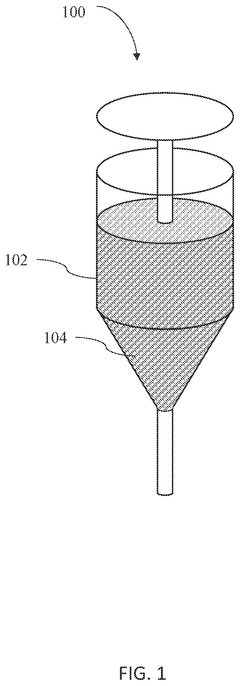
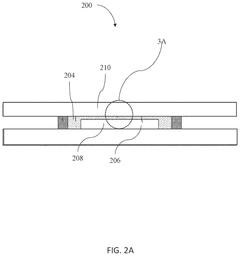
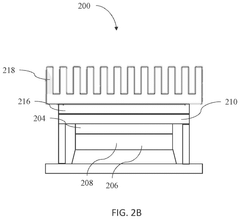
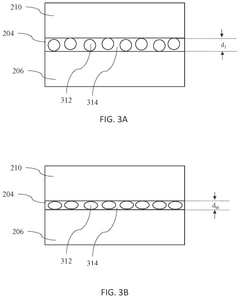
- A thermal interface material comprising 8% to 70% by volume of a polymer component and at least 30% by volume of liquid metal droplets, where the polymer component is composed of specific polymers with varying molecular weights and includes polybutadiene, enabling strong adhesion, stretchability, and low thermal resistance.
Environmental Standards for TIM Applications
Environmental standards for Thermal Interface Material (TIM) applications have become increasingly critical as electronic systems operate in diverse and demanding conditions. These standards establish the framework for evaluating TIM performance under various environmental stresses, ensuring reliable thermal management across different operational scenarios.
Temperature cycling standards, such as JEDEC JESD22-A104 and IEC 60068-2-14, define the thermal stress testing protocols for TIM applications. These standards specify temperature ranges from -55°C to +150°C with controlled ramp rates and dwell times. The cycling requirements evaluate TIM stability, adhesion retention, and thermal conductivity degradation over extended periods. Military-grade applications often require compliance with MIL-STD-810 Method 503, which encompasses more severe temperature excursions and rapid transition rates.
Humidity and moisture resistance standards play a crucial role in TIM qualification processes. IEC 60068-2-78 establishes damp heat testing procedures, while ASTM D2247 addresses fungus resistance requirements. These standards evaluate TIM performance under high humidity conditions, assessing potential degradation mechanisms such as hydrolysis, corrosion promotion, and thermal conductivity reduction. The 85°C/85% relative humidity test condition has become the industry benchmark for accelerated aging assessments.
Vibration and mechanical stress standards address TIM performance under dynamic loading conditions. MIL-STD-202 Method 204 and IEC 60068-2-6 define sinusoidal vibration testing parameters, while random vibration requirements follow MIL-STD-810 Method 514. These standards evaluate TIM adhesion strength, pump-out resistance, and interface integrity under mechanical stress. Shock testing protocols per MIL-STD-810 Method 516 assess TIM performance during sudden impact events.
Chemical compatibility standards ensure TIM materials maintain performance when exposed to various substances. ASTM D543 provides chemical resistance testing methodology, while ISO 175 addresses plastic material exposure to liquid chemicals. These standards evaluate TIM degradation when exposed to cleaning solvents, conformal coatings, and other manufacturing chemicals commonly encountered in electronic assembly processes.
Outgassing standards, particularly ASTM E595 and ESA PSS-01-702, establish volatile condensable material limits for space and sensitive applications. These requirements ensure TIM materials do not contaminate optical surfaces or sensitive components through vapor deposition. The standards specify maximum total mass loss and collected volatile condensable materials percentages under vacuum conditions at elevated temperatures.
Temperature cycling standards, such as JEDEC JESD22-A104 and IEC 60068-2-14, define the thermal stress testing protocols for TIM applications. These standards specify temperature ranges from -55°C to +150°C with controlled ramp rates and dwell times. The cycling requirements evaluate TIM stability, adhesion retention, and thermal conductivity degradation over extended periods. Military-grade applications often require compliance with MIL-STD-810 Method 503, which encompasses more severe temperature excursions and rapid transition rates.
Humidity and moisture resistance standards play a crucial role in TIM qualification processes. IEC 60068-2-78 establishes damp heat testing procedures, while ASTM D2247 addresses fungus resistance requirements. These standards evaluate TIM performance under high humidity conditions, assessing potential degradation mechanisms such as hydrolysis, corrosion promotion, and thermal conductivity reduction. The 85°C/85% relative humidity test condition has become the industry benchmark for accelerated aging assessments.
Vibration and mechanical stress standards address TIM performance under dynamic loading conditions. MIL-STD-202 Method 204 and IEC 60068-2-6 define sinusoidal vibration testing parameters, while random vibration requirements follow MIL-STD-810 Method 514. These standards evaluate TIM adhesion strength, pump-out resistance, and interface integrity under mechanical stress. Shock testing protocols per MIL-STD-810 Method 516 assess TIM performance during sudden impact events.
Chemical compatibility standards ensure TIM materials maintain performance when exposed to various substances. ASTM D543 provides chemical resistance testing methodology, while ISO 175 addresses plastic material exposure to liquid chemicals. These standards evaluate TIM degradation when exposed to cleaning solvents, conformal coatings, and other manufacturing chemicals commonly encountered in electronic assembly processes.
Outgassing standards, particularly ASTM E595 and ESA PSS-01-702, establish volatile condensable material limits for space and sensitive applications. These requirements ensure TIM materials do not contaminate optical surfaces or sensitive components through vapor deposition. The standards specify maximum total mass loss and collected volatile condensable materials percentages under vacuum conditions at elevated temperatures.
Quality Assurance in TIM Performance Testing
Quality assurance in TIM (Thermal Interface Material) performance testing represents a critical framework for ensuring consistent and reliable thermal management solutions across diverse applications. The establishment of robust QA protocols directly addresses the fundamental tension between achieving optimal thermal performance and maintaining long-term system reliability, requiring comprehensive testing methodologies that validate both immediate performance metrics and sustained operational characteristics.
The foundation of effective QA in TIM testing lies in developing standardized test protocols that encompass multiple performance dimensions simultaneously. These protocols must evaluate thermal conductivity, thermal resistance, and heat dissipation efficiency while concurrently assessing material stability, adhesion properties, and degradation resistance under various environmental conditions. The integration of accelerated aging tests, thermal cycling protocols, and stress testing ensures that performance validation extends beyond initial measurements to predict long-term reliability outcomes.
Critical QA parameters include establishing precise measurement tolerances for thermal performance metrics, typically maintaining thermal conductivity variations within ±5% across production batches. Temperature cycling protocols should span operational ranges from -40°C to 150°C with defined ramp rates and dwell times to simulate real-world thermal stress conditions. Humidity exposure testing at 85% relative humidity and elevated temperatures validates material stability in challenging environmental conditions.
Statistical process control implementation enables continuous monitoring of TIM performance consistency through control charts and capability studies. These tools identify process variations that could compromise either thermal performance or reliability, allowing for proactive adjustments before quality issues impact end-user applications. Sample size determination follows statistical significance requirements, typically requiring minimum sample sizes of 30 units for meaningful performance distribution analysis.
Documentation and traceability systems form essential QA components, maintaining comprehensive records of material composition, manufacturing parameters, test conditions, and performance results. This documentation enables root cause analysis when performance anomalies occur and supports continuous improvement initiatives. Calibration protocols for thermal testing equipment ensure measurement accuracy and repeatability across different testing facilities and time periods.
The validation of QA effectiveness requires correlation studies between laboratory test results and field performance data, establishing confidence intervals for performance predictions and reliability projections. These correlations enable refinement of testing protocols and acceptance criteria, ensuring that QA processes accurately predict real-world performance outcomes while maintaining appropriate safety margins for system reliability requirements.
The foundation of effective QA in TIM testing lies in developing standardized test protocols that encompass multiple performance dimensions simultaneously. These protocols must evaluate thermal conductivity, thermal resistance, and heat dissipation efficiency while concurrently assessing material stability, adhesion properties, and degradation resistance under various environmental conditions. The integration of accelerated aging tests, thermal cycling protocols, and stress testing ensures that performance validation extends beyond initial measurements to predict long-term reliability outcomes.
Critical QA parameters include establishing precise measurement tolerances for thermal performance metrics, typically maintaining thermal conductivity variations within ±5% across production batches. Temperature cycling protocols should span operational ranges from -40°C to 150°C with defined ramp rates and dwell times to simulate real-world thermal stress conditions. Humidity exposure testing at 85% relative humidity and elevated temperatures validates material stability in challenging environmental conditions.
Statistical process control implementation enables continuous monitoring of TIM performance consistency through control charts and capability studies. These tools identify process variations that could compromise either thermal performance or reliability, allowing for proactive adjustments before quality issues impact end-user applications. Sample size determination follows statistical significance requirements, typically requiring minimum sample sizes of 30 units for meaningful performance distribution analysis.
Documentation and traceability systems form essential QA components, maintaining comprehensive records of material composition, manufacturing parameters, test conditions, and performance results. This documentation enables root cause analysis when performance anomalies occur and supports continuous improvement initiatives. Calibration protocols for thermal testing equipment ensure measurement accuracy and repeatability across different testing facilities and time periods.
The validation of QA effectiveness requires correlation studies between laboratory test results and field performance data, establishing confidence intervals for performance predictions and reliability projections. These correlations enable refinement of testing protocols and acceptance criteria, ensuring that QA processes accurately predict real-world performance outcomes while maintaining appropriate safety margins for system reliability requirements.
Unlock deeper insights with Patsnap Eureka Quick Research — get a full tech report to explore trends and direct your research. Try now!
Generate Your Research Report Instantly with AI Agent
Supercharge your innovation with Patsnap Eureka AI Agent Platform!