

TIM Performance vs Thermal Performance
MAR 27, 20269 MIN READ
Generate Your Research Report Instantly with AI Agent
Patsnap Eureka helps you evaluate technical feasibility & market potential.
TIM Technology Background and Performance Goals
Thermal Interface Materials (TIMs) have emerged as critical components in modern electronic systems, serving as the essential bridge between heat-generating components and heat dissipation solutions. The fundamental purpose of TIMs is to fill microscopic air gaps and surface irregularities between mating surfaces, thereby reducing thermal resistance and enhancing heat transfer efficiency. As electronic devices continue to miniaturize while simultaneously increasing in power density, the demand for high-performance TIMs has intensified dramatically.
The evolution of TIM technology can be traced back to the early days of semiconductor packaging, where simple thermal greases and pads were sufficient for basic heat management requirements. However, the exponential growth in processing power and the advent of multi-core processors, high-performance graphics cards, and advanced server architectures have fundamentally transformed the thermal management landscape. Modern electronic systems generate heat fluxes that can exceed 100 W/cm², creating unprecedented challenges for thermal interface solutions.
Contemporary TIM applications span across diverse sectors including consumer electronics, automotive systems, telecommunications infrastructure, data centers, and aerospace applications. Each application domain presents unique performance requirements, operating conditions, and reliability constraints. Consumer electronics demand cost-effective solutions with moderate performance, while aerospace applications require materials that can withstand extreme temperature variations and maintain performance over extended operational lifespans.
The primary performance objectives for modern TIMs encompass multiple critical parameters that must be optimized simultaneously. Thermal conductivity remains the most fundamental metric, with advanced materials targeting values exceeding 10 W/mK. However, thermal conductivity alone is insufficient to characterize TIM performance, as thermal resistance, which incorporates both material properties and interface characteristics, provides a more comprehensive performance indicator.
Mechanical properties constitute another crucial performance dimension, including compression modulus, adhesion strength, and long-term stability under thermal cycling conditions. The material must maintain consistent performance across temperature ranges spanning from -40°C to 150°C or higher, depending on the application requirements. Additionally, electrical insulation properties are essential in most applications to prevent short circuits while maintaining optimal thermal performance.
Reliability and longevity targets for modern TIMs typically specify operational lifetimes exceeding 10 years under continuous thermal stress, with minimal degradation in thermal performance. This requirement drives the development of chemically stable formulations that resist oxidation, phase separation, and mechanical degradation over extended periods.
The evolution of TIM technology can be traced back to the early days of semiconductor packaging, where simple thermal greases and pads were sufficient for basic heat management requirements. However, the exponential growth in processing power and the advent of multi-core processors, high-performance graphics cards, and advanced server architectures have fundamentally transformed the thermal management landscape. Modern electronic systems generate heat fluxes that can exceed 100 W/cm², creating unprecedented challenges for thermal interface solutions.
Contemporary TIM applications span across diverse sectors including consumer electronics, automotive systems, telecommunications infrastructure, data centers, and aerospace applications. Each application domain presents unique performance requirements, operating conditions, and reliability constraints. Consumer electronics demand cost-effective solutions with moderate performance, while aerospace applications require materials that can withstand extreme temperature variations and maintain performance over extended operational lifespans.
The primary performance objectives for modern TIMs encompass multiple critical parameters that must be optimized simultaneously. Thermal conductivity remains the most fundamental metric, with advanced materials targeting values exceeding 10 W/mK. However, thermal conductivity alone is insufficient to characterize TIM performance, as thermal resistance, which incorporates both material properties and interface characteristics, provides a more comprehensive performance indicator.
Mechanical properties constitute another crucial performance dimension, including compression modulus, adhesion strength, and long-term stability under thermal cycling conditions. The material must maintain consistent performance across temperature ranges spanning from -40°C to 150°C or higher, depending on the application requirements. Additionally, electrical insulation properties are essential in most applications to prevent short circuits while maintaining optimal thermal performance.
Reliability and longevity targets for modern TIMs typically specify operational lifetimes exceeding 10 years under continuous thermal stress, with minimal degradation in thermal performance. This requirement drives the development of chemically stable formulations that resist oxidation, phase separation, and mechanical degradation over extended periods.
Market Demand for Advanced Thermal Interface Materials
The global electronics industry's relentless pursuit of miniaturization and enhanced performance has created an unprecedented demand for advanced thermal interface materials. As electronic devices become increasingly compact while generating higher heat densities, traditional thermal management solutions are reaching their performance limits. This technological evolution has positioned TIMs as critical components in maintaining device reliability and performance across multiple sectors.
Consumer electronics represent the largest market segment driving TIM demand, with smartphones, tablets, and laptops requiring increasingly sophisticated thermal solutions. The proliferation of high-performance processors, graphics units, and 5G components has intensified heat generation within confined spaces, necessitating materials that can efficiently transfer heat while maintaining electrical isolation. Gaming devices and virtual reality systems further amplify this demand due to their intensive computational requirements.
The automotive sector has emerged as a rapidly expanding market for advanced TIMs, particularly with the accelerated adoption of electric vehicles and autonomous driving technologies. Power electronics, battery management systems, and advanced driver assistance systems generate substantial heat loads that require reliable thermal management. The automotive industry's stringent reliability requirements and extended operational lifespans demand TIMs with superior long-term stability and performance consistency.
Data center infrastructure represents another significant growth driver, as cloud computing and artificial intelligence applications push server hardware to unprecedented performance levels. High-density server configurations and advanced cooling architectures require TIMs capable of handling extreme thermal loads while maintaining operational efficiency. The increasing deployment of edge computing facilities further expands this market segment.
Industrial applications, including power generation, telecommunications infrastructure, and manufacturing equipment, continue to drive steady demand for specialized TIMs. These applications often require materials capable of withstanding harsh environmental conditions while delivering consistent thermal performance over extended periods.
The market landscape is characterized by increasing performance requirements, with end-users demanding TIMs that offer lower thermal resistance, improved reliability, and enhanced processability. Environmental regulations and sustainability concerns are also shaping market preferences, driving demand for materials with reduced environmental impact and improved recyclability. This evolving market dynamic creates substantial opportunities for innovative TIM solutions that can address both performance and sustainability requirements.
Consumer electronics represent the largest market segment driving TIM demand, with smartphones, tablets, and laptops requiring increasingly sophisticated thermal solutions. The proliferation of high-performance processors, graphics units, and 5G components has intensified heat generation within confined spaces, necessitating materials that can efficiently transfer heat while maintaining electrical isolation. Gaming devices and virtual reality systems further amplify this demand due to their intensive computational requirements.
The automotive sector has emerged as a rapidly expanding market for advanced TIMs, particularly with the accelerated adoption of electric vehicles and autonomous driving technologies. Power electronics, battery management systems, and advanced driver assistance systems generate substantial heat loads that require reliable thermal management. The automotive industry's stringent reliability requirements and extended operational lifespans demand TIMs with superior long-term stability and performance consistency.
Data center infrastructure represents another significant growth driver, as cloud computing and artificial intelligence applications push server hardware to unprecedented performance levels. High-density server configurations and advanced cooling architectures require TIMs capable of handling extreme thermal loads while maintaining operational efficiency. The increasing deployment of edge computing facilities further expands this market segment.
Industrial applications, including power generation, telecommunications infrastructure, and manufacturing equipment, continue to drive steady demand for specialized TIMs. These applications often require materials capable of withstanding harsh environmental conditions while delivering consistent thermal performance over extended periods.
The market landscape is characterized by increasing performance requirements, with end-users demanding TIMs that offer lower thermal resistance, improved reliability, and enhanced processability. Environmental regulations and sustainability concerns are also shaping market preferences, driving demand for materials with reduced environmental impact and improved recyclability. This evolving market dynamic creates substantial opportunities for innovative TIM solutions that can address both performance and sustainability requirements.
Current TIM Performance Challenges and Limitations
Thermal Interface Materials face significant performance challenges that directly impact their effectiveness in thermal management applications. The primary limitation lies in the inherent trade-off between thermal conductivity and mechanical properties. High thermal conductivity materials often exhibit poor conformability and adhesion characteristics, while materials with excellent mechanical properties typically demonstrate reduced thermal performance. This fundamental contradiction creates substantial barriers to achieving optimal thermal interface solutions.
Contact resistance represents another critical challenge in TIM performance evaluation. The interface between TIM and mating surfaces introduces thermal resistance that can significantly degrade overall heat transfer efficiency. Surface roughness, contamination, and inadequate wetting properties contribute to increased contact resistance, particularly problematic in applications requiring ultra-low thermal resistance. Current measurement methodologies struggle to accurately quantify these interface effects under real-world operating conditions.
Temperature cycling and long-term stability present substantial reliability concerns for existing TIM solutions. Many materials experience degradation in thermal properties due to thermal expansion mismatch, oxidation, or phase separation over extended operating periods. Silicone-based materials suffer from oil bleeding and hardening, while metal-filled compounds face particle settling and matrix degradation. These aging effects result in progressive performance deterioration that is difficult to predict and quantify.
Thickness dependency creates additional complexity in TIM performance characterization. Optimal thermal performance typically requires minimal bond line thickness, yet practical applications often demand thicker interfaces to accommodate surface irregularities and assembly tolerances. Current materials exhibit non-linear thermal resistance behavior with varying thickness, making performance prediction challenging across different application scenarios.
Manufacturing and application constraints further limit TIM effectiveness. Many high-performance materials require specialized handling procedures, controlled atmosphere processing, or precise curing conditions that are incompatible with high-volume manufacturing environments. Dispensing accuracy, void formation, and process repeatability remain significant challenges for automated assembly processes.
Standardization gaps in testing methodologies create inconsistencies in performance evaluation across different suppliers and applications. Existing test standards often fail to replicate actual operating conditions, leading to discrepancies between laboratory measurements and field performance. The lack of standardized accelerated aging protocols makes long-term reliability assessment particularly challenging for emerging TIM technologies.
Contact resistance represents another critical challenge in TIM performance evaluation. The interface between TIM and mating surfaces introduces thermal resistance that can significantly degrade overall heat transfer efficiency. Surface roughness, contamination, and inadequate wetting properties contribute to increased contact resistance, particularly problematic in applications requiring ultra-low thermal resistance. Current measurement methodologies struggle to accurately quantify these interface effects under real-world operating conditions.
Temperature cycling and long-term stability present substantial reliability concerns for existing TIM solutions. Many materials experience degradation in thermal properties due to thermal expansion mismatch, oxidation, or phase separation over extended operating periods. Silicone-based materials suffer from oil bleeding and hardening, while metal-filled compounds face particle settling and matrix degradation. These aging effects result in progressive performance deterioration that is difficult to predict and quantify.
Thickness dependency creates additional complexity in TIM performance characterization. Optimal thermal performance typically requires minimal bond line thickness, yet practical applications often demand thicker interfaces to accommodate surface irregularities and assembly tolerances. Current materials exhibit non-linear thermal resistance behavior with varying thickness, making performance prediction challenging across different application scenarios.
Manufacturing and application constraints further limit TIM effectiveness. Many high-performance materials require specialized handling procedures, controlled atmosphere processing, or precise curing conditions that are incompatible with high-volume manufacturing environments. Dispensing accuracy, void formation, and process repeatability remain significant challenges for automated assembly processes.
Standardization gaps in testing methodologies create inconsistencies in performance evaluation across different suppliers and applications. Existing test standards often fail to replicate actual operating conditions, leading to discrepancies between laboratory measurements and field performance. The lack of standardized accelerated aging protocols makes long-term reliability assessment particularly challenging for emerging TIM technologies.
Existing TIM Solutions and Performance Metrics
01 Thermal interface material composition optimization
Development of thermal interface materials with optimized compositions to enhance thermal conductivity and heat dissipation performance. These materials typically incorporate various fillers, polymers, and additives to achieve desired thermal properties while maintaining mechanical stability and ease of application.- Thermal interface material composition and formulation: Development of thermal interface materials with specific compositions to enhance heat transfer properties. These materials typically include thermally conductive fillers, polymer matrices, and additives that improve the interface between heat-generating components and heat sinks. The formulation focuses on achieving optimal thermal conductivity while maintaining mechanical properties and ease of application.
- Manufacturing methods for thermal interface materials: Various manufacturing processes and techniques for producing thermal interface materials with improved performance characteristics. These methods include mixing procedures, curing processes, and application techniques that ensure uniform distribution of conductive particles and optimal bonding properties. The manufacturing approach significantly impacts the final thermal performance and reliability of the material.
- Thermal conductivity enhancement through filler materials: Incorporation of various thermally conductive filler materials to improve heat dissipation capabilities. These fillers may include metallic particles, ceramic materials, carbon-based materials, or combinations thereof. The selection and distribution of filler materials directly influence the thermal conductivity and overall performance of the interface material.
- Application methods and dispensing systems: Techniques and systems for applying thermal interface materials to electronic components and heat management systems. These include automated dispensing methods, screen printing, stenciling, and other application processes that ensure consistent thickness and coverage. Proper application methods are critical for achieving optimal thermal performance and preventing air gaps.
- Performance testing and characterization methods: Methods and systems for evaluating and characterizing the thermal performance of interface materials. These include measurement techniques for thermal resistance, thermal conductivity, and long-term reliability under various operating conditions. Testing protocols help ensure that materials meet specified performance requirements and maintain stability over their operational lifetime.
02 High thermal conductivity filler integration
Integration of high thermal conductivity fillers such as metal particles, carbon-based materials, or ceramic compounds into thermal interface materials to significantly improve heat transfer capabilities. The selection and distribution of these fillers are critical for achieving optimal thermal performance.Expand Specific Solutions03 Phase change thermal interface materials
Utilization of phase change materials in thermal interface applications that transition between solid and liquid states at specific temperatures, enabling improved conformability and thermal contact with surfaces. These materials provide enhanced performance by filling microscopic gaps and reducing thermal resistance.Expand Specific Solutions04 Manufacturing and application methods
Advanced manufacturing processes and application techniques for thermal interface materials, including dispensing methods, curing processes, and surface preparation protocols. These methods ensure uniform coverage, optimal thickness control, and reliable bonding between components.Expand Specific Solutions05 Performance testing and characterization
Comprehensive testing methodologies and characterization techniques for evaluating thermal interface material performance, including thermal resistance measurements, reliability testing under various environmental conditions, and long-term stability assessments to ensure consistent performance in real-world applications.Expand Specific Solutions
Key Players in TIM and Thermal Management Industry
The thermal interface materials (TIM) market is experiencing rapid growth driven by increasing demand for efficient thermal management in high-performance electronics. The industry is in a mature development stage with established players like Intel, TSMC, and NVIDIA driving innovation through advanced semiconductor applications. Market leaders including 3M, Indium Corporation, and Laird Technologies have developed sophisticated TIM solutions ranging from traditional thermal pads to advanced phase-change materials. Technology maturity varies significantly across segments, with companies like Resonac and Honeywell advancing next-generation materials while research institutions such as Industrial Technology Research Institute and Dalian University of Technology contribute fundamental breakthroughs. The competitive landscape shows consolidation among major suppliers serving diverse applications from consumer electronics (Apple, Huawei) to industrial systems (Bosch, GE), indicating a market transitioning toward specialized, high-performance solutions.
Intel Corp.
Technical Solution: Intel develops advanced thermal interface materials (TIMs) specifically designed for high-performance processors and data center applications. Their TIM solutions focus on optimizing thermal conductivity while maintaining electrical isolation properties. Intel's approach involves using polymer-based TIMs with metallic fillers to achieve thermal conductivity values ranging from 3-8 W/mK, enabling efficient heat transfer from CPU dies to heat spreaders. The company emphasizes reliability testing under thermal cycling conditions and has developed proprietary formulations that maintain performance stability over extended operational periods. Their TIM research includes phase-change materials and liquid metal interfaces for next-generation processors requiring enhanced thermal management capabilities.
Strengths: Extensive experience in semiconductor thermal management, strong R&D capabilities, proven reliability in high-performance computing applications. Weaknesses: Solutions primarily optimized for specific Intel architectures, potentially higher costs compared to generic alternatives.
The Indium Corporation of America
Technical Solution: Indium Corporation develops advanced thermal interface materials including solder-based TIMs, thermal greases, and phase-change materials for high-performance electronic applications. Their approach utilizes indium-based alloys and specialized metal-filled polymers to achieve exceptional thermal conductivity values exceeding 15 W/mK in some formulations. The company's TIM solutions are particularly focused on applications requiring both high thermal performance and reliable electrical connections, such as power electronics and RF applications. Indium Corporation's research emphasizes low-temperature processing capabilities and materials that can accommodate thermal expansion mismatches between different substrate materials. Their product portfolio includes both permanent and reworkable TIM solutions designed for various assembly and maintenance requirements in electronic systems.
Strengths: Exceptional thermal performance capabilities, specialized expertise in metal-based TIMs, strong technical support, proven reliability in demanding applications. Weaknesses: Higher material costs compared to polymer-based alternatives, may require specialized handling and processing techniques.
Core Innovations in High-Performance TIM Materials
A semiconductor device package comprising a thermal interface material with improved handling properties
PatentActiveEP3937227A9
Innovation
- A semiconductor device package incorporating an electrically conductive carrier, a semiconductor die, and an encapsulant with an electrically insulating and thermally conductive interface structure made from an epoxy resin matrix filled with metal oxide or metal nitride filler particles, offering a glass transition temperature range of -40°C to 150°C, ensuring hardness and scratch resistance at room temperature and softness at operating temperatures for effective thermal coupling.


Thermal interface material
PatentActiveIN7138CHENP2014A
Innovation
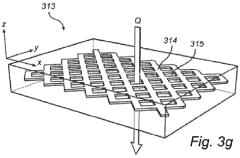
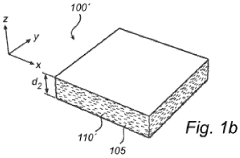
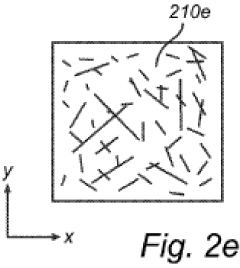
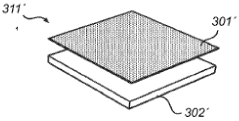
- A TIM with an activable shrinkage material that increases in thickness upon activation, providing enhanced contact pressure and robustness by expanding in the z-direction, thus eliminating the need for external pressure and addressing surface curvature and roughness, using heat-sensitive fibers or monomers that polymerize or expand to enhance thermal interface performance.
Environmental Standards for TIM Materials
Environmental standards for Thermal Interface Materials (TIM) have become increasingly stringent as electronic devices proliferate across diverse applications and geographic regions. These standards encompass multiple regulatory frameworks that govern material composition, manufacturing processes, and end-of-life disposal requirements. The primary environmental regulations affecting TIM materials include RoHS (Restriction of Hazardous Substances), REACH (Registration, Evaluation, Authorization and Restriction of Chemicals), and various regional environmental protection standards.
RoHS compliance represents a fundamental requirement for TIM materials used in electronic equipment, restricting the use of lead, mercury, cadmium, hexavalent chromium, and specific brominated flame retardants. This regulation has driven significant innovation in TIM formulations, particularly affecting solder-based thermal interface solutions and metal-filled polymer matrices. Manufacturers have developed alternative formulations using silver, copper, and aluminum fillers while maintaining thermal performance characteristics.
REACH regulation imposes comprehensive chemical safety requirements, mandating detailed registration and safety assessment of chemical substances used in TIM production. This includes evaluation of potential environmental and health impacts throughout the material lifecycle. The regulation particularly affects organic thermal interface materials, silicone-based compounds, and phase change materials that contain complex chemical formulations.
Regional environmental standards add additional complexity to TIM material compliance. California's Proposition 65 requires disclosure of chemicals known to cause cancer or reproductive harm, while various Asian markets have implemented similar restrictions. These standards often overlap but may have different threshold limits and testing methodologies, requiring manufacturers to navigate multiple compliance frameworks simultaneously.
Emerging environmental standards focus on sustainability metrics, including carbon footprint assessment, recyclability requirements, and bio-based material content. These evolving standards are beginning to influence TIM material selection criteria, particularly in automotive and renewable energy applications where environmental impact considerations are increasingly important. The trend toward circular economy principles is driving development of recyclable and biodegradable thermal interface solutions.
Testing and certification requirements for environmental compliance add significant complexity to TIM material development timelines and costs. Materials must undergo extensive chemical analysis, leachate testing, and lifecycle assessment studies to demonstrate compliance with applicable standards. This regulatory landscape continues to evolve, requiring ongoing monitoring and adaptation of material formulations to maintain market access across global markets.
RoHS compliance represents a fundamental requirement for TIM materials used in electronic equipment, restricting the use of lead, mercury, cadmium, hexavalent chromium, and specific brominated flame retardants. This regulation has driven significant innovation in TIM formulations, particularly affecting solder-based thermal interface solutions and metal-filled polymer matrices. Manufacturers have developed alternative formulations using silver, copper, and aluminum fillers while maintaining thermal performance characteristics.
REACH regulation imposes comprehensive chemical safety requirements, mandating detailed registration and safety assessment of chemical substances used in TIM production. This includes evaluation of potential environmental and health impacts throughout the material lifecycle. The regulation particularly affects organic thermal interface materials, silicone-based compounds, and phase change materials that contain complex chemical formulations.
Regional environmental standards add additional complexity to TIM material compliance. California's Proposition 65 requires disclosure of chemicals known to cause cancer or reproductive harm, while various Asian markets have implemented similar restrictions. These standards often overlap but may have different threshold limits and testing methodologies, requiring manufacturers to navigate multiple compliance frameworks simultaneously.
Emerging environmental standards focus on sustainability metrics, including carbon footprint assessment, recyclability requirements, and bio-based material content. These evolving standards are beginning to influence TIM material selection criteria, particularly in automotive and renewable energy applications where environmental impact considerations are increasingly important. The trend toward circular economy principles is driving development of recyclable and biodegradable thermal interface solutions.
Testing and certification requirements for environmental compliance add significant complexity to TIM material development timelines and costs. Materials must undergo extensive chemical analysis, leachate testing, and lifecycle assessment studies to demonstrate compliance with applicable standards. This regulatory landscape continues to evolve, requiring ongoing monitoring and adaptation of material formulations to maintain market access across global markets.
TIM Testing and Characterization Methodologies
Thermal Interface Material (TIM) testing and characterization methodologies encompass a comprehensive suite of measurement techniques designed to evaluate both thermal and mechanical performance parameters. These methodologies are essential for establishing correlations between material properties and real-world thermal management effectiveness in electronic applications.
Thermal conductivity measurement represents the cornerstone of TIM characterization, typically employing steady-state and transient methods. The ASTM D5470 standard provides the most widely adopted framework for measuring thermal resistance and conductivity of TIMs under controlled conditions. This method utilizes a guarded hot plate apparatus with calibrated reference materials to establish accurate thermal property baselines. Laser flash analysis offers an alternative approach, particularly valuable for thin film TIMs, enabling rapid thermal diffusivity measurements that can be converted to thermal conductivity values.
Contact resistance characterization requires specialized methodologies that account for interface phenomena between TIM and substrate materials. The total thermal resistance measurement combines bulk material thermal resistance with contact resistances at both interfaces. Advanced techniques employ temperature-sensitive parameter (TSP) measurements using semiconductor devices as heat sources, providing more realistic assessment conditions that mirror actual application environments.
Mechanical property evaluation encompasses viscosity measurements for liquid TIMs, compression testing for gap fillers, and adhesion strength assessment for phase-change materials. Rheological characterization using controlled stress rheometers determines flow behavior under various temperature and shear rate conditions, critical for understanding pump-out resistance and long-term reliability.
Accelerated aging protocols simulate extended operational conditions through thermal cycling, humidity exposure, and mechanical stress testing. These methodologies evaluate TIM degradation mechanisms and predict service life performance. Thermal impedance monitoring throughout aging cycles provides quantitative metrics for performance retention assessment.
Standardized test fixtures and measurement protocols ensure reproducible results across different laboratories and applications. Proper sample preparation, including surface roughness control and contamination prevention, significantly impacts measurement accuracy and reliability of characterization data.
Thermal conductivity measurement represents the cornerstone of TIM characterization, typically employing steady-state and transient methods. The ASTM D5470 standard provides the most widely adopted framework for measuring thermal resistance and conductivity of TIMs under controlled conditions. This method utilizes a guarded hot plate apparatus with calibrated reference materials to establish accurate thermal property baselines. Laser flash analysis offers an alternative approach, particularly valuable for thin film TIMs, enabling rapid thermal diffusivity measurements that can be converted to thermal conductivity values.
Contact resistance characterization requires specialized methodologies that account for interface phenomena between TIM and substrate materials. The total thermal resistance measurement combines bulk material thermal resistance with contact resistances at both interfaces. Advanced techniques employ temperature-sensitive parameter (TSP) measurements using semiconductor devices as heat sources, providing more realistic assessment conditions that mirror actual application environments.
Mechanical property evaluation encompasses viscosity measurements for liquid TIMs, compression testing for gap fillers, and adhesion strength assessment for phase-change materials. Rheological characterization using controlled stress rheometers determines flow behavior under various temperature and shear rate conditions, critical for understanding pump-out resistance and long-term reliability.
Accelerated aging protocols simulate extended operational conditions through thermal cycling, humidity exposure, and mechanical stress testing. These methodologies evaluate TIM degradation mechanisms and predict service life performance. Thermal impedance monitoring throughout aging cycles provides quantitative metrics for performance retention assessment.
Standardized test fixtures and measurement protocols ensure reproducible results across different laboratories and applications. Proper sample preparation, including surface roughness control and contamination prevention, significantly impacts measurement accuracy and reliability of characterization data.
Unlock deeper insights with Patsnap Eureka Quick Research — get a full tech report to explore trends and direct your research. Try now!
Generate Your Research Report Instantly with AI Agent
Supercharge your innovation with Patsnap Eureka AI Agent Platform!